Imperial Street was eerily quiet on a recent Tuesday afternoon in the Arts District. The scrim from the Lineage cold storage warehouse fire in Boyle Heights, just across the L.A. River, hung over downtown. The only pedestrians passing by one vacant dirt lot near 6th Street were a couple of teens on BMX bikes wearing smoke-blocking face masks.
In a few months, this vacant lot will be a very different scene. It will soon become the outdoor patio of Origin, an ambitious new indoor-outdoor nightclub and live music venue from two veteran promoters in L.A.’s underground electronic scene. The pair hope to turn the property at the foot of the 6th Street Bridge into a beacon of club music in a once-bustling, lately-beleaguered neighborhood.
Electronic music helped entice fans into downtown’s revitalization in the 2000s. Given Central City’s post-pandemic troubles, amid a boom in dance music across culture more broadly, Origin’s founders hope the scene can do it again.
“People will be like, ‘I don’t go to downtown anymore, it’s so sketchy now, my car got broken into last time and I feel weird letting a girl walk to a car by herself.’ I think some of that deters people from coming to downtown even if you have a cool place and a cool party,” Origin’s co-founder Roni Mehrabian said.
A thriving new music venue in the heart of the Arts District “would revitalize business and foot traffic and people going out,” he added. “It would be one thing that would actually translate into people feeling OK here again.”
Origin’s building will be familiar to L.A. ravers. The former Lot 613 was a semi-permanent pop-up music venue used by various promoters over the years. Its neighborhood is both bougie (walking distance to SoHo Warehouse, Dover Street Market and Girl & the Goat) and gritty. The new 6th Street Bridge, hailed as a civic landmark just steps away, was promptly stripped of its wiring by vandals and now sits pitch black at night.
“Downtown Los Angeles is one of the city’s most important economic and cultural centers, but there’s no question that the post-COVID years have been difficult for its small businesses, hospitality workers, restaurants, bars, venues and cultural institutions,” said City Councilmember Ysabel Jurado, who represents downtown Los Angeles. Jurado recently created a Downtown L.A. public safety and hospitality task force, and introduced a motion to explore dedicated “Entertainment Zones” in downtown that would make it easier for nightlife and cultural venues to open and operate “in a way that is safe, structured, locally controlled, and responsive to community priorities.”
Downtown has seen a few bright spots on the venue map, with newly-opened Pacific Electric in Chinatown and a revamped Bar Franca in the Historic Core. But with the dwindling of the much-loved Resident, there are just a few places nearby to see music or go dancing in the Arts District other than roving warehouse parties.
For Mehrabian and Cyril Bitar, the founder of the long-running Minimal Effort party, the chance came when Lot 613’s owners approached them about building out a full club and concert venue in the space once used for one-off shows and film shoots.
Mehrabian recalled seeing acts like Tale Of Us and Solomun at Lot 613 in their early days. (“There was a nostalgic feeling, thinking of those old shows with people that are now playing Coachella,” he said.) In a time when acts like Fred Again.. and John Summit are Gen Z fixtures and the underground is bustling with invention, the genre interest was primed.
“We’ve been doing events for 20 years in L.A., and when this opportunity came, we immediately jumped on it,” Bitar said. “I think the scene is booming right now with a lot of really good talent. Ten-plus years ago, when I first moved here to L.A., I felt like my generation coming up was not as educated with music as it is now. Now all these young kids, they know what’s coming up.”
“There’s a market for smaller stuff, because people don’t want to necessarily go to 10,000-person shows,” Mehrabian added. “It comes back down to knowing your audience, where it’s not driven by the fact that you have Fred Again.. performing. It’s a place where it’s familiar and everyone knows each other.”
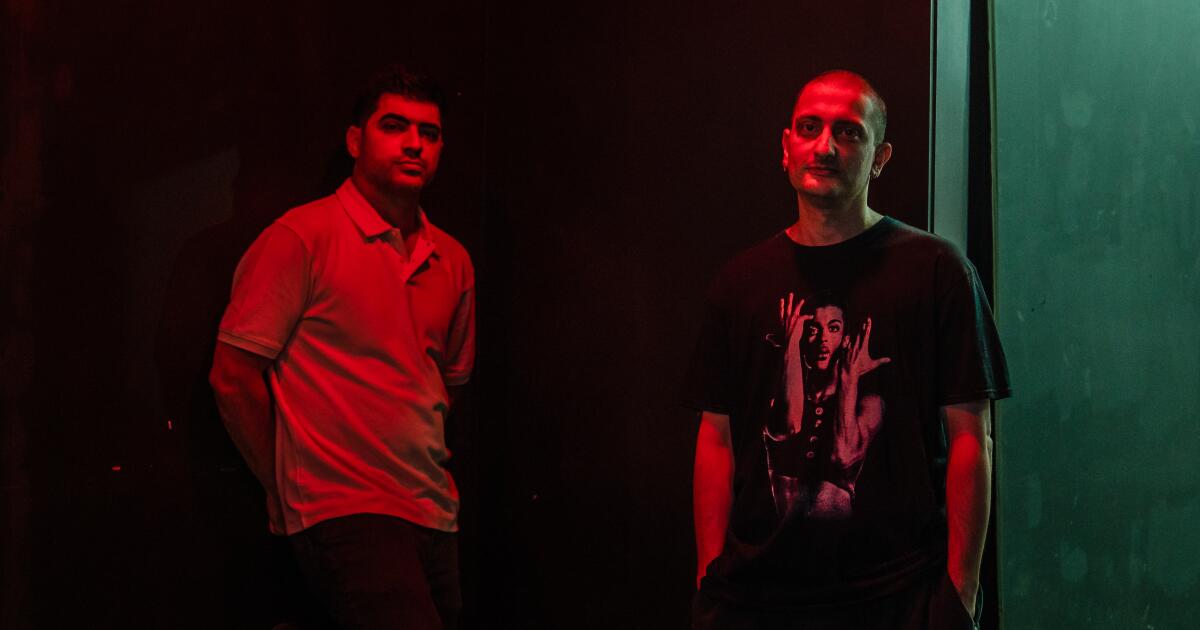
Promoters Cyril Bitar, left, and Roni Mehrabian at Origin.
(Ariana Drehsler / For The Times)
The venue is very much under construction at the moment — what had been Lot 613 is a gutted shell and a dirt lot. But under the design direction of Marc Dizon, who helmed the late Brooklyn Mirage in New York as well as Spotlight in Hollywood and Hakkasan in Las Vegas — Origin hopes to preserve the moody urban warehouse vibe, with a top-flight sound system and a sprawling open-air patio for DJ and band performances. (Bitar said “Blade Runner” was a natural mood board for the decayed-futurism vibe.)
There’s isn’t much real estate in L.A. where you could easily build a roughly 1,000-capacity club where daytime community and art events can seamlessly shift into an Afro-house evening party outside, with a hard rave bill with DJs Ross From Friends or Chaos in the CBD come nightfall.
“My number one thing was the patio. When we first understood how flexible we are here, we knew there isn’t any venue in L.A. that is modular like this, where we can do a show in the daytime and then right at 11, have another complete show inside,” Bitar said.
They plan to do the booking in house, to add a dance music option in downtown that isn’t from the mega-promoter duopoly or an after-hours gig.
“We’re proud to be independent,” Bitar said. “Most venues are ran by these big dance music conglomerates, and there’s no room for smaller promoters. We want to create this environment here where, if you have something good and you believe in it, we’d love to have you.”
Origin is a notable investment in downtown nightlife at a time when the area is on edge. The Arts District is better off than many areas there, but between generational businesses closing and street chaos raising fears of residents and visitors alike, the pair will have to make a case to get its core audience back downtown to go clubbing.
“I think it’s reached a climax of ‘All right, we’ve got to fix this, and we got to bring in some energy, some business, some life, some culture,’” Mehrabian said. “It’s unfortunate what happened post-COVID. Downtown was becoming a good place to live, a lot of people wanted to move there. I had a lot of friends that were living in high-rise buildings that all eventually moved out. But I think we’re at an interesting cusp where city officials, citizens, everybody is just kind of like, ‘We’ve got to fix this,’ and I think we can play into that.”

Promoters Roni Mehrabian, left, and Cyril Bitar at Origin.
(Ariana Drehsler/For The Times)
Origin’s building has been a music venue on an industrial and retail strip in the Arts District for years, and isn’t likely to see much opposition. However, in Boyle Heights, just over a darkened 6th Street Bridge, locals have mixed feelings about a plan to tax business owners in a section between 1st and 7th streets (a popular drag for soundstages and concerts like Olivia Rodrigo’s pop-up and the dance music-centric Skyline festival) to create a Business Improvement District with private security and sanitation.
“Venues like Origin can be an important part of that recovery when they are responsibly run and community-minded,” Jurado said. “Small music and nightlife venues create jobs, support local artists and entrepreneurs, bring people back to downtown, and help create the kind of active, walkable neighborhoods where businesses can thrive and streets feel safer in the evening. I don’t see economic recovery, cultural life and public safety as competing priorities. In a healthy downtown, they reinforce each other.”
Downtown’s troubles are well-known; what exactly to do about them is still being decided. With a huge surplus of commercial space sitting fallow in the area, the flexibility and creativity of club music might be a natural fit to repopulate the area with foot traffic and revelers.
“This is gonna sound like a cliche, but if you build it, they will come,” Bitar said. “I think a lot of people would rather come here than go to Hollywood. It will help the overall outlook on downtown because right now downtown has cool stuff, but I don’t think downtown has a full club for this scene. We want to re-create downtown as a destination.”
The pair is eyeing late summer for a doors-open debut, with an open-air block party that will close Imperial Street for dancing. “We all want to see downtown booming,” Bitar added. “Hopefully we can play a good part in that.”

Imperial Street was eerily quiet on a recent Tuesday afternoon in the Arts District. The scrim from the Lineage cold storage warehouse fire in Boyle Heights, just across the L.A. River, hung over downtown. The only pedestrians passing by one vacant dirt lot near 6th Street were a couple of teens on BMX bikes wearing smoke-blocking face masks.
In a few months, this vacant lot will be a very different scene. It will soon become the outdoor patio of Origin, an ambitious new indoor-outdoor nightclub and live music venue from two veteran promoters in L.A.’s underground electronic scene. The pair hope to turn the property at the foot of the 6th Street Bridge into a beacon of club music in a once-bustling, lately-beleaguered neighborhood.
Electronic music helped entice fans into downtown’s revitalization in the 2000s. Given Central City’s post-pandemic troubles, amid a boom in dance music across culture more broadly, Origin’s founders hope the scene can do it again.
“People will be like, ‘I don’t go to downtown anymore, it’s so sketchy now, my car got broken into last time and I feel weird letting a girl walk to a car by herself.’ I think some of that deters people from coming to downtown even if you have a cool place and a cool party,” Origin’s co-founder Roni Mehrabian said.
A thriving new music venue in the heart of the Arts District “would revitalize business and foot traffic and people going out,” he added. “It would be one thing that would actually translate into people feeling OK here again.”
Origin’s building will be familiar to L.A. ravers. The former Lot 613 was a semi-permanent pop-up music venue used by various promoters over the years. Its neighborhood is both bougie (walking distance to SoHo Warehouse, Dover Street Market and Girl & the Goat) and gritty. The new 6th Street Bridge, hailed as a civic landmark just steps away, was promptly stripped of its wiring by vandals and now sits pitch black at night.
“Downtown Los Angeles is one of the city’s most important economic and cultural centers, but there’s no question that the post-COVID years have been difficult for its small businesses, hospitality workers, restaurants, bars, venues and cultural institutions,” said City Councilmember Ysabel Jurado, who represents downtown Los Angeles. Jurado recently created a Downtown L.A. public safety and hospitality task force, and introduced a motion to explore dedicated “Entertainment Zones” in downtown that would make it easier for nightlife and cultural venues to open and operate “in a way that is safe, structured, locally controlled, and responsive to community priorities.”
Downtown has seen a few bright spots on the venue map, with newly-opened Pacific Electric in Chinatown and a revamped Bar Franca in the Historic Core. But with the dwindling of the much-loved Resident, there are just a few places nearby to see music or go dancing in the Arts District other than roving warehouse parties.
For Mehrabian and Cyril Bitar, the founder of the long-running Minimal Effort party, the chance came when Lot 613’s owners approached them about building out a full club and concert venue in the space once used for one-off shows and film shoots.
Mehrabian recalled seeing acts like Tale Of Us and Solomun at Lot 613 in their early days. (“There was a nostalgic feeling, thinking of those old shows with people that are now playing Coachella,” he said.) In a time when acts like Fred Again.. and John Summit are Gen Z fixtures and the underground is bustling with invention, the genre interest was primed.
“We’ve been doing events for 20 years in L.A., and when this opportunity came, we immediately jumped on it,” Bitar said. “I think the scene is booming right now with a lot of really good talent. Ten-plus years ago, when I first moved here to L.A., I felt like my generation coming up was not as educated with music as it is now. Now all these young kids, they know what’s coming up.”
“There’s a market for smaller stuff, because people don’t want to necessarily go to 10,000-person shows,” Mehrabian added. “It comes back down to knowing your audience, where it’s not driven by the fact that you have Fred Again.. performing. It’s a place where it’s familiar and everyone knows each other.”
Promoters Cyril Bitar, left, and Roni Mehrabian at Origin.
(Ariana Drehsler / For The Times)
The venue is very much under construction at the moment — what had been Lot 613 is a gutted shell and a dirt lot. But under the design direction of Marc Dizon, who helmed the late Brooklyn Mirage in New York as well as Spotlight in Hollywood and Hakkasan in Las Vegas — Origin hopes to preserve the moody urban warehouse vibe, with a top-flight sound system and a sprawling open-air patio for DJ and band performances. (Bitar said “Blade Runner” was a natural mood board for the decayed-futurism vibe.)
There’s isn’t much real estate in L.A. where you could easily build a roughly 1,000-capacity club where daytime community and art events can seamlessly shift into an Afro-house evening party outside, with a hard rave bill with DJs Ross From Friends or Chaos in the CBD come nightfall.
“My number one thing was the patio. When we first understood how flexible we are here, we knew there isn’t any venue in L.A. that is modular like this, where we can do a show in the daytime and then right at 11, have another complete show inside,” Bitar said.
They plan to do the booking in house, to add a dance music option in downtown that isn’t from the mega-promoter duopoly or an after-hours gig.
“We’re proud to be independent,” Bitar said. “Most venues are ran by these big dance music conglomerates, and there’s no room for smaller promoters. We want to create this environment here where, if you have something good and you believe in it, we’d love to have you.”
Origin is a notable investment in downtown nightlife at a time when the area is on edge. The Arts District is better off than many areas there, but between generational businesses closing and street chaos raising fears of residents and visitors alike, the pair will have to make a case to get its core audience back downtown to go clubbing.
“I think it’s reached a climax of ‘All right, we’ve got to fix this, and we got to bring in some energy, some business, some life, some culture,’” Mehrabian said. “It’s unfortunate what happened post-COVID. Downtown was becoming a good place to live, a lot of people wanted to move there. I had a lot of friends that were living in high-rise buildings that all eventually moved out. But I think we’re at an interesting cusp where city officials, citizens, everybody is just kind of like, ‘We’ve got to fix this,’ and I think we can play into that.”
Promoters Roni Mehrabian, left, and Cyril Bitar at Origin.
(Ariana Drehsler/For The Times)
Origin’s building has been a music venue on an industrial and retail strip in the Arts District for years, and isn’t likely to see much opposition. However, in Boyle Heights, just over a darkened 6th Street Bridge, locals have mixed feelings about a plan to tax business owners in a section between 1st and 7th streets (a popular drag for soundstages and concerts like Olivia Rodrigo’s pop-up and the dance music-centric Skyline festival) to create a Business Improvement District with private security and sanitation.
“Venues like Origin can be an important part of that recovery when they are responsibly run and community-minded,” Jurado said. “Small music and nightlife venues create jobs, support local artists and entrepreneurs, bring people back to downtown, and help create the kind of active, walkable neighborhoods where businesses can thrive and streets feel safer in the evening. I don’t see economic recovery, cultural life and public safety as competing priorities. In a healthy downtown, they reinforce each other.”
Downtown’s troubles are well-known; what exactly to do about them is still being decided. With a huge surplus of commercial space sitting fallow in the area, the flexibility and creativity of club music might be a natural fit to repopulate the area with foot traffic and revelers.
“This is gonna sound like a cliche, but if you build it, they will come,” Bitar said. “I think a lot of people would rather come here than go to Hollywood. It will help the overall outlook on downtown because right now downtown has cool stuff, but I don’t think downtown has a full club for this scene. We want to re-create downtown as a destination.”
The pair is eyeing late summer for a doors-open debut, with an open-air block party that will close Imperial Street for dancing. “We all want to see downtown booming,” Bitar added. “Hopefully we can play a good part in that.”

Imperial Street was eerily quiet on a recent Tuesday afternoon in the Arts District. The scrim from the Lineage cold storage warehouse fire in Boyle Heights, just across the L.A. River, hung over downtown. The only pedestrians passing by one vacant dirt lot near 6th Street were a couple of teens on BMX bikes wearing smoke-blocking face masks.
In a few months, this vacant lot will be a very different scene. It will soon become the outdoor patio of Origin, an ambitious new indoor-outdoor nightclub and live music venue from two veteran promoters in L.A.’s underground electronic scene. The pair hope to turn the property at the foot of the 6th Street Bridge into a beacon of club music in a once-bustling, lately-beleaguered neighborhood.
Electronic music helped entice fans into downtown’s revitalization in the 2000s. Given Central City’s post-pandemic troubles, amid a boom in dance music across culture more broadly, Origin’s founders hope the scene can do it again.
“People will be like, ‘I don’t go to downtown anymore, it’s so sketchy now, my car got broken into last time and I feel weird letting a girl walk to a car by herself.’ I think some of that deters people from coming to downtown even if you have a cool place and a cool party,” Origin’s co-founder Roni Mehrabian said.
A thriving new music venue in the heart of the Arts District “would revitalize business and foot traffic and people going out,” he added. “It would be one thing that would actually translate into people feeling OK here again.”
Origin’s building will be familiar to L.A. ravers. The former Lot 613 was a semi-permanent pop-up music venue used by various promoters over the years. Its neighborhood is both bougie (walking distance to SoHo Warehouse, Dover Street Market and Girl & the Goat) and gritty. The new 6th Street Bridge, hailed as a civic landmark just steps away, was promptly stripped of its wiring by vandals and now sits pitch black at night.
“Downtown Los Angeles is one of the city’s most important economic and cultural centers, but there’s no question that the post-COVID years have been difficult for its small businesses, hospitality workers, restaurants, bars, venues and cultural institutions,” said City Councilmember Ysabel Jurado, who represents downtown Los Angeles. Jurado recently created a Downtown L.A. public safety and hospitality task force, and introduced a motion to explore dedicated “Entertainment Zones” in downtown that would make it easier for nightlife and cultural venues to open and operate “in a way that is safe, structured, locally controlled, and responsive to community priorities.”
Downtown has seen a few bright spots on the venue map, with newly-opened Pacific Electric in Chinatown and a revamped Bar Franca in the Historic Core. But with the dwindling of the much-loved Resident, there are just a few places nearby to see music or go dancing in the Arts District other than roving warehouse parties.
For Mehrabian and Cyril Bitar, the founder of the long-running Minimal Effort party, the chance came when Lot 613’s owners approached them about building out a full club and concert venue in the space once used for one-off shows and film shoots.
Mehrabian recalled seeing acts like Tale Of Us and Solomun at Lot 613 in their early days. (“There was a nostalgic feeling, thinking of those old shows with people that are now playing Coachella,” he said.) In a time when acts like Fred Again.. and John Summit are Gen Z fixtures and the underground is bustling with invention, the genre interest was primed.
“We’ve been doing events for 20 years in L.A., and when this opportunity came, we immediately jumped on it,” Bitar said. “I think the scene is booming right now with a lot of really good talent. Ten-plus years ago, when I first moved here to L.A., I felt like my generation coming up was not as educated with music as it is now. Now all these young kids, they know what’s coming up.”
“There’s a market for smaller stuff, because people don’t want to necessarily go to 10,000-person shows,” Mehrabian added. “It comes back down to knowing your audience, where it’s not driven by the fact that you have Fred Again.. performing. It’s a place where it’s familiar and everyone knows each other.”
Promoters Cyril Bitar, left, and Roni Mehrabian at Origin.
(Ariana Drehsler / For The Times)
The venue is very much under construction at the moment — what had been Lot 613 is a gutted shell and a dirt lot. But under the design direction of Marc Dizon, who helmed the late Brooklyn Mirage in New York as well as Spotlight in Hollywood and Hakkasan in Las Vegas — Origin hopes to preserve the moody urban warehouse vibe, with a top-flight sound system and a sprawling open-air patio for DJ and band performances. (Bitar said “Blade Runner” was a natural mood board for the decayed-futurism vibe.)
There’s isn’t much real estate in L.A. where you could easily build a roughly 1,000-capacity club where daytime community and art events can seamlessly shift into an Afro-house evening party outside, with a hard rave bill with DJs Ross From Friends or Chaos in the CBD come nightfall.
“My number one thing was the patio. When we first understood how flexible we are here, we knew there isn’t any venue in L.A. that is modular like this, where we can do a show in the daytime and then right at 11, have another complete show inside,” Bitar said.
They plan to do the booking in house, to add a dance music option in downtown that isn’t from the mega-promoter duopoly or an after-hours gig.
“We’re proud to be independent,” Bitar said. “Most venues are ran by these big dance music conglomerates, and there’s no room for smaller promoters. We want to create this environment here where, if you have something good and you believe in it, we’d love to have you.”
Origin is a notable investment in downtown nightlife at a time when the area is on edge. The Arts District is better off than many areas there, but between generational businesses closing and street chaos raising fears of residents and visitors alike, the pair will have to make a case to get its core audience back downtown to go clubbing.
“I think it’s reached a climax of ‘All right, we’ve got to fix this, and we got to bring in some energy, some business, some life, some culture,’” Mehrabian said. “It’s unfortunate what happened post-COVID. Downtown was becoming a good place to live, a lot of people wanted to move there. I had a lot of friends that were living in high-rise buildings that all eventually moved out. But I think we’re at an interesting cusp where city officials, citizens, everybody is just kind of like, ‘We’ve got to fix this,’ and I think we can play into that.”
Promoters Roni Mehrabian, left, and Cyril Bitar at Origin.
(Ariana Drehsler/For The Times)
Origin’s building has been a music venue on an industrial and retail strip in the Arts District for years, and isn’t likely to see much opposition. However, in Boyle Heights, just over a darkened 6th Street Bridge, locals have mixed feelings about a plan to tax business owners in a section between 1st and 7th streets (a popular drag for soundstages and concerts like Olivia Rodrigo’s pop-up and the dance music-centric Skyline festival) to create a Business Improvement District with private security and sanitation.
“Venues like Origin can be an important part of that recovery when they are responsibly run and community-minded,” Jurado said. “Small music and nightlife venues create jobs, support local artists and entrepreneurs, bring people back to downtown, and help create the kind of active, walkable neighborhoods where businesses can thrive and streets feel safer in the evening. I don’t see economic recovery, cultural life and public safety as competing priorities. In a healthy downtown, they reinforce each other.”
Downtown’s troubles are well-known; what exactly to do about them is still being decided. With a huge surplus of commercial space sitting fallow in the area, the flexibility and creativity of club music might be a natural fit to repopulate the area with foot traffic and revelers.
“This is gonna sound like a cliche, but if you build it, they will come,” Bitar said. “I think a lot of people would rather come here than go to Hollywood. It will help the overall outlook on downtown because right now downtown has cool stuff, but I don’t think downtown has a full club for this scene. We want to re-create downtown as a destination.”
The pair is eyeing late summer for a doors-open debut, with an open-air block party that will close Imperial Street for dancing. “We all want to see downtown booming,” Bitar added. “Hopefully we can play a good part in that.”
Imperial Street was eerily quiet on a recent Tuesday afternoon in the Arts District. The scrim from the Lineage cold storage warehouse fire in Boyle Heights, just across the L.A. River, hung over downtown. The only pedestrians passing by one vacant dirt lot near 6th Street were a couple of teens on BMX bikes wearing smoke-blocking face masks.
In a few months, this vacant lot will be a very different scene. It will soon become the outdoor patio of Origin, an ambitious new indoor-outdoor nightclub and live music venue from two veteran promoters in L.A.’s underground electronic scene. The pair hope to turn the property at the foot of the 6th Street Bridge into a beacon of club music in a once-bustling, lately-beleaguered neighborhood.
Electronic music helped entice fans into downtown’s revitalization in the 2000s. Given Central City’s post-pandemic troubles, amid a boom in dance music across culture more broadly, Origin’s founders hope the scene can do it again.
“People will be like, ‘I don’t go to downtown anymore, it’s so sketchy now, my car got broken into last time and I feel weird letting a girl walk to a car by herself.’ I think some of that deters people from coming to downtown even if you have a cool place and a cool party,” Origin’s co-founder Roni Mehrabian said.
A thriving new music venue in the heart of the Arts District “would revitalize business and foot traffic and people going out,” he added. “It would be one thing that would actually translate into people feeling OK here again.”
Origin’s building will be familiar to L.A. ravers. The former Lot 613 was a semi-permanent pop-up music venue used by various promoters over the years. Its neighborhood is both bougie (walking distance to SoHo Warehouse, Dover Street Market and Girl & the Goat) and gritty. The new 6th Street Bridge, hailed as a civic landmark just steps away, was promptly stripped of its wiring by vandals and now sits pitch black at night.
“Downtown Los Angeles is one of the city’s most important economic and cultural centers, but there’s no question that the post-COVID years have been difficult for its small businesses, hospitality workers, restaurants, bars, venues and cultural institutions,” said City Councilmember Ysabel Jurado, who represents downtown Los Angeles. Jurado recently created a Downtown L.A. public safety and hospitality task force, and introduced a motion to explore dedicated “Entertainment Zones” in downtown that would make it easier for nightlife and cultural venues to open and operate “in a way that is safe, structured, locally controlled, and responsive to community priorities.”
Downtown has seen a few bright spots on the venue map, with newly-opened Pacific Electric in Chinatown and a revamped Bar Franca in the Historic Core. But with the dwindling of the much-loved Resident, there are just a few places nearby to see music or go dancing in the Arts District other than roving warehouse parties.
For Mehrabian and Cyril Bitar, the founder of the long-running Minimal Effort party, the chance came when Lot 613’s owners approached them about building out a full club and concert venue in the space once used for one-off shows and film shoots.
Mehrabian recalled seeing acts like Tale Of Us and Solomun at Lot 613 in their early days. (“There was a nostalgic feeling, thinking of those old shows with people that are now playing Coachella,” he said.) In a time when acts like Fred Again.. and John Summit are Gen Z fixtures and the underground is bustling with invention, the genre interest was primed.
“We’ve been doing events for 20 years in L.A., and when this opportunity came, we immediately jumped on it,” Bitar said. “I think the scene is booming right now with a lot of really good talent. Ten-plus years ago, when I first moved here to L.A., I felt like my generation coming up was not as educated with music as it is now. Now all these young kids, they know what’s coming up.”
“There’s a market for smaller stuff, because people don’t want to necessarily go to 10,000-person shows,” Mehrabian added. “It comes back down to knowing your audience, where it’s not driven by the fact that you have Fred Again.. performing. It’s a place where it’s familiar and everyone knows each other.”
Promoters Cyril Bitar, left, and Roni Mehrabian at Origin.
(Ariana Drehsler / For The Times)
The venue is very much under construction at the moment — what had been Lot 613 is a gutted shell and a dirt lot. But under the design direction of Marc Dizon, who helmed the late Brooklyn Mirage in New York as well as Spotlight in Hollywood and Hakkasan in Las Vegas — Origin hopes to preserve the moody urban warehouse vibe, with a top-flight sound system and a sprawling open-air patio for DJ and band performances. (Bitar said “Blade Runner” was a natural mood board for the decayed-futurism vibe.)
There’s isn’t much real estate in L.A. where you could easily build a roughly 1,000-capacity club where daytime community and art events can seamlessly shift into an Afro-house evening party outside, with a hard rave bill with DJs Ross From Friends or Chaos in the CBD come nightfall.
“My number one thing was the patio. When we first understood how flexible we are here, we knew there isn’t any venue in L.A. that is modular like this, where we can do a show in the daytime and then right at 11, have another complete show inside,” Bitar said.
They plan to do the booking in house, to add a dance music option in downtown that isn’t from the mega-promoter duopoly or an after-hours gig.
“We’re proud to be independent,” Bitar said. “Most venues are ran by these big dance music conglomerates, and there’s no room for smaller promoters. We want to create this environment here where, if you have something good and you believe in it, we’d love to have you.”
Origin is a notable investment in downtown nightlife at a time when the area is on edge. The Arts District is better off than many areas there, but between generational businesses closing and street chaos raising fears of residents and visitors alike, the pair will have to make a case to get its core audience back downtown to go clubbing.
“I think it’s reached a climax of ‘All right, we’ve got to fix this, and we got to bring in some energy, some business, some life, some culture,’” Mehrabian said. “It’s unfortunate what happened post-COVID. Downtown was becoming a good place to live, a lot of people wanted to move there. I had a lot of friends that were living in high-rise buildings that all eventually moved out. But I think we’re at an interesting cusp where city officials, citizens, everybody is just kind of like, ‘We’ve got to fix this,’ and I think we can play into that.”
Promoters Roni Mehrabian, left, and Cyril Bitar at Origin.
(Ariana Drehsler/For The Times)
Origin’s building has been a music venue on an industrial and retail strip in the Arts District for years, and isn’t likely to see much opposition. However, in Boyle Heights, just over a darkened 6th Street Bridge, locals have mixed feelings about a plan to tax business owners in a section between 1st and 7th streets (a popular drag for soundstages and concerts like Olivia Rodrigo’s pop-up and the dance music-centric Skyline festival) to create a Business Improvement District with private security and sanitation.
“Venues like Origin can be an important part of that recovery when they are responsibly run and community-minded,” Jurado said. “Small music and nightlife venues create jobs, support local artists and entrepreneurs, bring people back to downtown, and help create the kind of active, walkable neighborhoods where businesses can thrive and streets feel safer in the evening. I don’t see economic recovery, cultural life and public safety as competing priorities. In a healthy downtown, they reinforce each other.”
Downtown’s troubles are well-known; what exactly to do about them is still being decided. With a huge surplus of commercial space sitting fallow in the area, the flexibility and creativity of club music might be a natural fit to repopulate the area with foot traffic and revelers.
“This is gonna sound like a cliche, but if you build it, they will come,” Bitar said. “I think a lot of people would rather come here than go to Hollywood. It will help the overall outlook on downtown because right now downtown has cool stuff, but I don’t think downtown has a full club for this scene. We want to re-create downtown as a destination.”
The pair is eyeing late summer for a doors-open debut, with an open-air block party that will close Imperial Street for dancing. “We all want to see downtown booming,” Bitar added. “Hopefully we can play a good part in that.”

Imperial Street was eerily quiet on a recent Tuesday afternoon in the Arts District. The scrim from the Lineage cold storage warehouse fire in Boyle Heights, just across the L.A. River, hung over downtown. The only pedestrians passing by one vacant dirt lot near 6th Street were a couple of teens on BMX bikes wearing smoke-blocking face masks.
In a few months, this vacant lot will be a very different scene. It will soon become the outdoor patio of Origin, an ambitious new indoor-outdoor nightclub and live music venue from two veteran promoters in L.A.’s underground electronic scene. The pair hope to turn the property at the foot of the 6th Street Bridge into a beacon of club music in a once-bustling, lately-beleaguered neighborhood.
Electronic music helped entice fans into downtown’s revitalization in the 2000s. Given Central City’s post-pandemic troubles, amid a boom in dance music across culture more broadly, Origin’s founders hope the scene can do it again.
“People will be like, ‘I don’t go to downtown anymore, it’s so sketchy now, my car got broken into last time and I feel weird letting a girl walk to a car by herself.’ I think some of that deters people from coming to downtown even if you have a cool place and a cool party,” Origin’s co-founder Roni Mehrabian said.
A thriving new music venue in the heart of the Arts District “would revitalize business and foot traffic and people going out,” he added. “It would be one thing that would actually translate into people feeling OK here again.”
Origin’s building will be familiar to L.A. ravers. The former Lot 613 was a semi-permanent pop-up music venue used by various promoters over the years. Its neighborhood is both bougie (walking distance to SoHo Warehouse, Dover Street Market and Girl & the Goat) and gritty. The new 6th Street Bridge, hailed as a civic landmark just steps away, was promptly stripped of its wiring by vandals and now sits pitch black at night.
“Downtown Los Angeles is one of the city’s most important economic and cultural centers, but there’s no question that the post-COVID years have been difficult for its small businesses, hospitality workers, restaurants, bars, venues and cultural institutions,” said City Councilmember Ysabel Jurado, who represents downtown Los Angeles. Jurado recently created a Downtown L.A. public safety and hospitality task force, and introduced a motion to explore dedicated “Entertainment Zones” in downtown that would make it easier for nightlife and cultural venues to open and operate “in a way that is safe, structured, locally controlled, and responsive to community priorities.”
Downtown has seen a few bright spots on the venue map, with newly-opened Pacific Electric in Chinatown and a revamped Bar Franca in the Historic Core. But with the dwindling of the much-loved Resident, there are just a few places nearby to see music or go dancing in the Arts District other than roving warehouse parties.
For Mehrabian and Cyril Bitar, the founder of the long-running Minimal Effort party, the chance came when Lot 613’s owners approached them about building out a full club and concert venue in the space once used for one-off shows and film shoots.
Mehrabian recalled seeing acts like Tale Of Us and Solomun at Lot 613 in their early days. (“There was a nostalgic feeling, thinking of those old shows with people that are now playing Coachella,” he said.) In a time when acts like Fred Again.. and John Summit are Gen Z fixtures and the underground is bustling with invention, the genre interest was primed.
“We’ve been doing events for 20 years in L.A., and when this opportunity came, we immediately jumped on it,” Bitar said. “I think the scene is booming right now with a lot of really good talent. Ten-plus years ago, when I first moved here to L.A., I felt like my generation coming up was not as educated with music as it is now. Now all these young kids, they know what’s coming up.”
“There’s a market for smaller stuff, because people don’t want to necessarily go to 10,000-person shows,” Mehrabian added. “It comes back down to knowing your audience, where it’s not driven by the fact that you have Fred Again.. performing. It’s a place where it’s familiar and everyone knows each other.”
Promoters Cyril Bitar, left, and Roni Mehrabian at Origin.
(Ariana Drehsler / For The Times)
The venue is very much under construction at the moment — what had been Lot 613 is a gutted shell and a dirt lot. But under the design direction of Marc Dizon, who helmed the late Brooklyn Mirage in New York as well as Spotlight in Hollywood and Hakkasan in Las Vegas — Origin hopes to preserve the moody urban warehouse vibe, with a top-flight sound system and a sprawling open-air patio for DJ and band performances. (Bitar said “Blade Runner” was a natural mood board for the decayed-futurism vibe.)
There’s isn’t much real estate in L.A. where you could easily build a roughly 1,000-capacity club where daytime community and art events can seamlessly shift into an Afro-house evening party outside, with a hard rave bill with DJs Ross From Friends or Chaos in the CBD come nightfall.
“My number one thing was the patio. When we first understood how flexible we are here, we knew there isn’t any venue in L.A. that is modular like this, where we can do a show in the daytime and then right at 11, have another complete show inside,” Bitar said.
They plan to do the booking in house, to add a dance music option in downtown that isn’t from the mega-promoter duopoly or an after-hours gig.
“We’re proud to be independent,” Bitar said. “Most venues are ran by these big dance music conglomerates, and there’s no room for smaller promoters. We want to create this environment here where, if you have something good and you believe in it, we’d love to have you.”
Origin is a notable investment in downtown nightlife at a time when the area is on edge. The Arts District is better off than many areas there, but between generational businesses closing and street chaos raising fears of residents and visitors alike, the pair will have to make a case to get its core audience back downtown to go clubbing.
“I think it’s reached a climax of ‘All right, we’ve got to fix this, and we got to bring in some energy, some business, some life, some culture,’” Mehrabian said. “It’s unfortunate what happened post-COVID. Downtown was becoming a good place to live, a lot of people wanted to move there. I had a lot of friends that were living in high-rise buildings that all eventually moved out. But I think we’re at an interesting cusp where city officials, citizens, everybody is just kind of like, ‘We’ve got to fix this,’ and I think we can play into that.”
Promoters Roni Mehrabian, left, and Cyril Bitar at Origin.
(Ariana Drehsler/For The Times)
Origin’s building has been a music venue on an industrial and retail strip in the Arts District for years, and isn’t likely to see much opposition. However, in Boyle Heights, just over a darkened 6th Street Bridge, locals have mixed feelings about a plan to tax business owners in a section between 1st and 7th streets (a popular drag for soundstages and concerts like Olivia Rodrigo’s pop-up and the dance music-centric Skyline festival) to create a Business Improvement District with private security and sanitation.
“Venues like Origin can be an important part of that recovery when they are responsibly run and community-minded,” Jurado said. “Small music and nightlife venues create jobs, support local artists and entrepreneurs, bring people back to downtown, and help create the kind of active, walkable neighborhoods where businesses can thrive and streets feel safer in the evening. I don’t see economic recovery, cultural life and public safety as competing priorities. In a healthy downtown, they reinforce each other.”
Downtown’s troubles are well-known; what exactly to do about them is still being decided. With a huge surplus of commercial space sitting fallow in the area, the flexibility and creativity of club music might be a natural fit to repopulate the area with foot traffic and revelers.
“This is gonna sound like a cliche, but if you build it, they will come,” Bitar said. “I think a lot of people would rather come here than go to Hollywood. It will help the overall outlook on downtown because right now downtown has cool stuff, but I don’t think downtown has a full club for this scene. We want to re-create downtown as a destination.”
The pair is eyeing late summer for a doors-open debut, with an open-air block party that will close Imperial Street for dancing. “We all want to see downtown booming,” Bitar added. “Hopefully we can play a good part in that.”
Imperial Street was eerily quiet on a recent Tuesday afternoon in the Arts District. The scrim from the Lineage cold storage warehouse fire in Boyle Heights, just across the L.A. River, hung over downtown. The only pedestrians passing by one vacant dirt lot near 6th Street were a couple of teens on BMX bikes wearing smoke-blocking face masks.
In a few months, this vacant lot will be a very different scene. It will soon become the outdoor patio of Origin, an ambitious new indoor-outdoor nightclub and live music venue from two veteran promoters in L.A.’s underground electronic scene. The pair hope to turn the property at the foot of the 6th Street Bridge into a beacon of club music in a once-bustling, lately-beleaguered neighborhood.
Electronic music helped entice fans into downtown’s revitalization in the 2000s. Given Central City’s post-pandemic troubles, amid a boom in dance music across culture more broadly, Origin’s founders hope the scene can do it again.
“People will be like, ‘I don’t go to downtown anymore, it’s so sketchy now, my car got broken into last time and I feel weird letting a girl walk to a car by herself.’ I think some of that deters people from coming to downtown even if you have a cool place and a cool party,” Origin’s co-founder Roni Mehrabian said.
A thriving new music venue in the heart of the Arts District “would revitalize business and foot traffic and people going out,” he added. “It would be one thing that would actually translate into people feeling OK here again.”
Origin’s building will be familiar to L.A. ravers. The former Lot 613 was a semi-permanent pop-up music venue used by various promoters over the years. Its neighborhood is both bougie (walking distance to SoHo Warehouse, Dover Street Market and Girl & the Goat) and gritty. The new 6th Street Bridge, hailed as a civic landmark just steps away, was promptly stripped of its wiring by vandals and now sits pitch black at night.
“Downtown Los Angeles is one of the city’s most important economic and cultural centers, but there’s no question that the post-COVID years have been difficult for its small businesses, hospitality workers, restaurants, bars, venues and cultural institutions,” said City Councilmember Ysabel Jurado, who represents downtown Los Angeles. Jurado recently created a Downtown L.A. public safety and hospitality task force, and introduced a motion to explore dedicated “Entertainment Zones” in downtown that would make it easier for nightlife and cultural venues to open and operate “in a way that is safe, structured, locally controlled, and responsive to community priorities.”
Downtown has seen a few bright spots on the venue map, with newly-opened Pacific Electric in Chinatown and a revamped Bar Franca in the Historic Core. But with the dwindling of the much-loved Resident, there are just a few places nearby to see music or go dancing in the Arts District other than roving warehouse parties.
For Mehrabian and Cyril Bitar, the founder of the long-running Minimal Effort party, the chance came when Lot 613’s owners approached them about building out a full club and concert venue in the space once used for one-off shows and film shoots.
Mehrabian recalled seeing acts like Tale Of Us and Solomun at Lot 613 in their early days. (“There was a nostalgic feeling, thinking of those old shows with people that are now playing Coachella,” he said.) In a time when acts like Fred Again.. and John Summit are Gen Z fixtures and the underground is bustling with invention, the genre interest was primed.
“We’ve been doing events for 20 years in L.A., and when this opportunity came, we immediately jumped on it,” Bitar said. “I think the scene is booming right now with a lot of really good talent. Ten-plus years ago, when I first moved here to L.A., I felt like my generation coming up was not as educated with music as it is now. Now all these young kids, they know what’s coming up.”
“There’s a market for smaller stuff, because people don’t want to necessarily go to 10,000-person shows,” Mehrabian added. “It comes back down to knowing your audience, where it’s not driven by the fact that you have Fred Again.. performing. It’s a place where it’s familiar and everyone knows each other.”
Promoters Cyril Bitar, left, and Roni Mehrabian at Origin.
(Ariana Drehsler / For The Times)
The venue is very much under construction at the moment — what had been Lot 613 is a gutted shell and a dirt lot. But under the design direction of Marc Dizon, who helmed the late Brooklyn Mirage in New York as well as Spotlight in Hollywood and Hakkasan in Las Vegas — Origin hopes to preserve the moody urban warehouse vibe, with a top-flight sound system and a sprawling open-air patio for DJ and band performances. (Bitar said “Blade Runner” was a natural mood board for the decayed-futurism vibe.)
There’s isn’t much real estate in L.A. where you could easily build a roughly 1,000-capacity club where daytime community and art events can seamlessly shift into an Afro-house evening party outside, with a hard rave bill with DJs Ross From Friends or Chaos in the CBD come nightfall.
“My number one thing was the patio. When we first understood how flexible we are here, we knew there isn’t any venue in L.A. that is modular like this, where we can do a show in the daytime and then right at 11, have another complete show inside,” Bitar said.
They plan to do the booking in house, to add a dance music option in downtown that isn’t from the mega-promoter duopoly or an after-hours gig.
“We’re proud to be independent,” Bitar said. “Most venues are ran by these big dance music conglomerates, and there’s no room for smaller promoters. We want to create this environment here where, if you have something good and you believe in it, we’d love to have you.”
Origin is a notable investment in downtown nightlife at a time when the area is on edge. The Arts District is better off than many areas there, but between generational businesses closing and street chaos raising fears of residents and visitors alike, the pair will have to make a case to get its core audience back downtown to go clubbing.
“I think it’s reached a climax of ‘All right, we’ve got to fix this, and we got to bring in some energy, some business, some life, some culture,’” Mehrabian said. “It’s unfortunate what happened post-COVID. Downtown was becoming a good place to live, a lot of people wanted to move there. I had a lot of friends that were living in high-rise buildings that all eventually moved out. But I think we’re at an interesting cusp where city officials, citizens, everybody is just kind of like, ‘We’ve got to fix this,’ and I think we can play into that.”
Promoters Roni Mehrabian, left, and Cyril Bitar at Origin.
(Ariana Drehsler/For The Times)
Origin’s building has been a music venue on an industrial and retail strip in the Arts District for years, and isn’t likely to see much opposition. However, in Boyle Heights, just over a darkened 6th Street Bridge, locals have mixed feelings about a plan to tax business owners in a section between 1st and 7th streets (a popular drag for soundstages and concerts like Olivia Rodrigo’s pop-up and the dance music-centric Skyline festival) to create a Business Improvement District with private security and sanitation.
“Venues like Origin can be an important part of that recovery when they are responsibly run and community-minded,” Jurado said. “Small music and nightlife venues create jobs, support local artists and entrepreneurs, bring people back to downtown, and help create the kind of active, walkable neighborhoods where businesses can thrive and streets feel safer in the evening. I don’t see economic recovery, cultural life and public safety as competing priorities. In a healthy downtown, they reinforce each other.”
Downtown’s troubles are well-known; what exactly to do about them is still being decided. With a huge surplus of commercial space sitting fallow in the area, the flexibility and creativity of club music might be a natural fit to repopulate the area with foot traffic and revelers.
“This is gonna sound like a cliche, but if you build it, they will come,” Bitar said. “I think a lot of people would rather come here than go to Hollywood. It will help the overall outlook on downtown because right now downtown has cool stuff, but I don’t think downtown has a full club for this scene. We want to re-create downtown as a destination.”
The pair is eyeing late summer for a doors-open debut, with an open-air block party that will close Imperial Street for dancing. “We all want to see downtown booming,” Bitar added. “Hopefully we can play a good part in that.”
Imperial Street was eerily quiet on a recent Tuesday afternoon in the Arts District. The scrim from the Lineage cold storage warehouse fire in Boyle Heights, just across the L.A. River, hung over downtown. The only pedestrians passing by one vacant dirt lot near 6th Street were a couple of teens on BMX bikes wearing smoke-blocking face masks.
In a few months, this vacant lot will be a very different scene. It will soon become the outdoor patio of Origin, an ambitious new indoor-outdoor nightclub and live music venue from two veteran promoters in L.A.’s underground electronic scene. The pair hope to turn the property at the foot of the 6th Street Bridge into a beacon of club music in a once-bustling, lately-beleaguered neighborhood.
Electronic music helped entice fans into downtown’s revitalization in the 2000s. Given Central City’s post-pandemic troubles, amid a boom in dance music across culture more broadly, Origin’s founders hope the scene can do it again.
“People will be like, ‘I don’t go to downtown anymore, it’s so sketchy now, my car got broken into last time and I feel weird letting a girl walk to a car by herself.’ I think some of that deters people from coming to downtown even if you have a cool place and a cool party,” Origin’s co-founder Roni Mehrabian said.
A thriving new music venue in the heart of the Arts District “would revitalize business and foot traffic and people going out,” he added. “It would be one thing that would actually translate into people feeling OK here again.”
Origin’s building will be familiar to L.A. ravers. The former Lot 613 was a semi-permanent pop-up music venue used by various promoters over the years. Its neighborhood is both bougie (walking distance to SoHo Warehouse, Dover Street Market and Girl & the Goat) and gritty. The new 6th Street Bridge, hailed as a civic landmark just steps away, was promptly stripped of its wiring by vandals and now sits pitch black at night.
“Downtown Los Angeles is one of the city’s most important economic and cultural centers, but there’s no question that the post-COVID years have been difficult for its small businesses, hospitality workers, restaurants, bars, venues and cultural institutions,” said City Councilmember Ysabel Jurado, who represents downtown Los Angeles. Jurado recently created a Downtown L.A. public safety and hospitality task force, and introduced a motion to explore dedicated “Entertainment Zones” in downtown that would make it easier for nightlife and cultural venues to open and operate “in a way that is safe, structured, locally controlled, and responsive to community priorities.”
Downtown has seen a few bright spots on the venue map, with newly-opened Pacific Electric in Chinatown and a revamped Bar Franca in the Historic Core. But with the dwindling of the much-loved Resident, there are just a few places nearby to see music or go dancing in the Arts District other than roving warehouse parties.
For Mehrabian and Cyril Bitar, the founder of the long-running Minimal Effort party, the chance came when Lot 613’s owners approached them about building out a full club and concert venue in the space once used for one-off shows and film shoots.
Mehrabian recalled seeing acts like Tale Of Us and Solomun at Lot 613 in their early days. (“There was a nostalgic feeling, thinking of those old shows with people that are now playing Coachella,” he said.) In a time when acts like Fred Again.. and John Summit are Gen Z fixtures and the underground is bustling with invention, the genre interest was primed.
“We’ve been doing events for 20 years in L.A., and when this opportunity came, we immediately jumped on it,” Bitar said. “I think the scene is booming right now with a lot of really good talent. Ten-plus years ago, when I first moved here to L.A., I felt like my generation coming up was not as educated with music as it is now. Now all these young kids, they know what’s coming up.”
“There’s a market for smaller stuff, because people don’t want to necessarily go to 10,000-person shows,” Mehrabian added. “It comes back down to knowing your audience, where it’s not driven by the fact that you have Fred Again.. performing. It’s a place where it’s familiar and everyone knows each other.”
Promoters Cyril Bitar, left, and Roni Mehrabian at Origin.
(Ariana Drehsler / For The Times)
The venue is very much under construction at the moment — what had been Lot 613 is a gutted shell and a dirt lot. But under the design direction of Marc Dizon, who helmed the late Brooklyn Mirage in New York as well as Spotlight in Hollywood and Hakkasan in Las Vegas — Origin hopes to preserve the moody urban warehouse vibe, with a top-flight sound system and a sprawling open-air patio for DJ and band performances. (Bitar said “Blade Runner” was a natural mood board for the decayed-futurism vibe.)
There’s isn’t much real estate in L.A. where you could easily build a roughly 1,000-capacity club where daytime community and art events can seamlessly shift into an Afro-house evening party outside, with a hard rave bill with DJs Ross From Friends or Chaos in the CBD come nightfall.
“My number one thing was the patio. When we first understood how flexible we are here, we knew there isn’t any venue in L.A. that is modular like this, where we can do a show in the daytime and then right at 11, have another complete show inside,” Bitar said.
They plan to do the booking in house, to add a dance music option in downtown that isn’t from the mega-promoter duopoly or an after-hours gig.
“We’re proud to be independent,” Bitar said. “Most venues are ran by these big dance music conglomerates, and there’s no room for smaller promoters. We want to create this environment here where, if you have something good and you believe in it, we’d love to have you.”
Origin is a notable investment in downtown nightlife at a time when the area is on edge. The Arts District is better off than many areas there, but between generational businesses closing and street chaos raising fears of residents and visitors alike, the pair will have to make a case to get its core audience back downtown to go clubbing.
“I think it’s reached a climax of ‘All right, we’ve got to fix this, and we got to bring in some energy, some business, some life, some culture,’” Mehrabian said. “It’s unfortunate what happened post-COVID. Downtown was becoming a good place to live, a lot of people wanted to move there. I had a lot of friends that were living in high-rise buildings that all eventually moved out. But I think we’re at an interesting cusp where city officials, citizens, everybody is just kind of like, ‘We’ve got to fix this,’ and I think we can play into that.”
Promoters Roni Mehrabian, left, and Cyril Bitar at Origin.
(Ariana Drehsler/For The Times)
Origin’s building has been a music venue on an industrial and retail strip in the Arts District for years, and isn’t likely to see much opposition. However, in Boyle Heights, just over a darkened 6th Street Bridge, locals have mixed feelings about a plan to tax business owners in a section between 1st and 7th streets (a popular drag for soundstages and concerts like Olivia Rodrigo’s pop-up and the dance music-centric Skyline festival) to create a Business Improvement District with private security and sanitation.
“Venues like Origin can be an important part of that recovery when they are responsibly run and community-minded,” Jurado said. “Small music and nightlife venues create jobs, support local artists and entrepreneurs, bring people back to downtown, and help create the kind of active, walkable neighborhoods where businesses can thrive and streets feel safer in the evening. I don’t see economic recovery, cultural life and public safety as competing priorities. In a healthy downtown, they reinforce each other.”
Downtown’s troubles are well-known; what exactly to do about them is still being decided. With a huge surplus of commercial space sitting fallow in the area, the flexibility and creativity of club music might be a natural fit to repopulate the area with foot traffic and revelers.
“This is gonna sound like a cliche, but if you build it, they will come,” Bitar said. “I think a lot of people would rather come here than go to Hollywood. It will help the overall outlook on downtown because right now downtown has cool stuff, but I don’t think downtown has a full club for this scene. We want to re-create downtown as a destination.”
The pair is eyeing late summer for a doors-open debut, with an open-air block party that will close Imperial Street for dancing. “We all want to see downtown booming,” Bitar added. “Hopefully we can play a good part in that.”
Imperial Street was eerily quiet on a recent Tuesday afternoon in the Arts District. The scrim from the Lineage cold storage warehouse fire in Boyle Heights, just across the L.A. River, hung over downtown. The only pedestrians passing by one vacant dirt lot near 6th Street were a couple of teens on BMX bikes wearing smoke-blocking face masks.
In a few months, this vacant lot will be a very different scene. It will soon become the outdoor patio of Origin, an ambitious new indoor-outdoor nightclub and live music venue from two veteran promoters in L.A.’s underground electronic scene. The pair hope to turn the property at the foot of the 6th Street Bridge into a beacon of club music in a once-bustling, lately-beleaguered neighborhood.
Electronic music helped entice fans into downtown’s revitalization in the 2000s. Given Central City’s post-pandemic troubles, amid a boom in dance music across culture more broadly, Origin’s founders hope the scene can do it again.
“People will be like, ‘I don’t go to downtown anymore, it’s so sketchy now, my car got broken into last time and I feel weird letting a girl walk to a car by herself.’ I think some of that deters people from coming to downtown even if you have a cool place and a cool party,” Origin’s co-founder Roni Mehrabian said.
A thriving new music venue in the heart of the Arts District “would revitalize business and foot traffic and people going out,” he added. “It would be one thing that would actually translate into people feeling OK here again.”
Origin’s building will be familiar to L.A. ravers. The former Lot 613 was a semi-permanent pop-up music venue used by various promoters over the years. Its neighborhood is both bougie (walking distance to SoHo Warehouse, Dover Street Market and Girl & the Goat) and gritty. The new 6th Street Bridge, hailed as a civic landmark just steps away, was promptly stripped of its wiring by vandals and now sits pitch black at night.
“Downtown Los Angeles is one of the city’s most important economic and cultural centers, but there’s no question that the post-COVID years have been difficult for its small businesses, hospitality workers, restaurants, bars, venues and cultural institutions,” said City Councilmember Ysabel Jurado, who represents downtown Los Angeles. Jurado recently created a Downtown L.A. public safety and hospitality task force, and introduced a motion to explore dedicated “Entertainment Zones” in downtown that would make it easier for nightlife and cultural venues to open and operate “in a way that is safe, structured, locally controlled, and responsive to community priorities.”
Downtown has seen a few bright spots on the venue map, with newly-opened Pacific Electric in Chinatown and a revamped Bar Franca in the Historic Core. But with the dwindling of the much-loved Resident, there are just a few places nearby to see music or go dancing in the Arts District other than roving warehouse parties.
For Mehrabian and Cyril Bitar, the founder of the long-running Minimal Effort party, the chance came when Lot 613’s owners approached them about building out a full club and concert venue in the space once used for one-off shows and film shoots.
Mehrabian recalled seeing acts like Tale Of Us and Solomun at Lot 613 in their early days. (“There was a nostalgic feeling, thinking of those old shows with people that are now playing Coachella,” he said.) In a time when acts like Fred Again.. and John Summit are Gen Z fixtures and the underground is bustling with invention, the genre interest was primed.
“We’ve been doing events for 20 years in L.A., and when this opportunity came, we immediately jumped on it,” Bitar said. “I think the scene is booming right now with a lot of really good talent. Ten-plus years ago, when I first moved here to L.A., I felt like my generation coming up was not as educated with music as it is now. Now all these young kids, they know what’s coming up.”
“There’s a market for smaller stuff, because people don’t want to necessarily go to 10,000-person shows,” Mehrabian added. “It comes back down to knowing your audience, where it’s not driven by the fact that you have Fred Again.. performing. It’s a place where it’s familiar and everyone knows each other.”
Promoters Cyril Bitar, left, and Roni Mehrabian at Origin.
(Ariana Drehsler / For The Times)
The venue is very much under construction at the moment — what had been Lot 613 is a gutted shell and a dirt lot. But under the design direction of Marc Dizon, who helmed the late Brooklyn Mirage in New York as well as Spotlight in Hollywood and Hakkasan in Las Vegas — Origin hopes to preserve the moody urban warehouse vibe, with a top-flight sound system and a sprawling open-air patio for DJ and band performances. (Bitar said “Blade Runner” was a natural mood board for the decayed-futurism vibe.)
There’s isn’t much real estate in L.A. where you could easily build a roughly 1,000-capacity club where daytime community and art events can seamlessly shift into an Afro-house evening party outside, with a hard rave bill with DJs Ross From Friends or Chaos in the CBD come nightfall.
“My number one thing was the patio. When we first understood how flexible we are here, we knew there isn’t any venue in L.A. that is modular like this, where we can do a show in the daytime and then right at 11, have another complete show inside,” Bitar said.
They plan to do the booking in house, to add a dance music option in downtown that isn’t from the mega-promoter duopoly or an after-hours gig.
“We’re proud to be independent,” Bitar said. “Most venues are ran by these big dance music conglomerates, and there’s no room for smaller promoters. We want to create this environment here where, if you have something good and you believe in it, we’d love to have you.”
Origin is a notable investment in downtown nightlife at a time when the area is on edge. The Arts District is better off than many areas there, but between generational businesses closing and street chaos raising fears of residents and visitors alike, the pair will have to make a case to get its core audience back downtown to go clubbing.
“I think it’s reached a climax of ‘All right, we’ve got to fix this, and we got to bring in some energy, some business, some life, some culture,’” Mehrabian said. “It’s unfortunate what happened post-COVID. Downtown was becoming a good place to live, a lot of people wanted to move there. I had a lot of friends that were living in high-rise buildings that all eventually moved out. But I think we’re at an interesting cusp where city officials, citizens, everybody is just kind of like, ‘We’ve got to fix this,’ and I think we can play into that.”
Promoters Roni Mehrabian, left, and Cyril Bitar at Origin.
(Ariana Drehsler/For The Times)
Origin’s building has been a music venue on an industrial and retail strip in the Arts District for years, and isn’t likely to see much opposition. However, in Boyle Heights, just over a darkened 6th Street Bridge, locals have mixed feelings about a plan to tax business owners in a section between 1st and 7th streets (a popular drag for soundstages and concerts like Olivia Rodrigo’s pop-up and the dance music-centric Skyline festival) to create a Business Improvement District with private security and sanitation.
“Venues like Origin can be an important part of that recovery when they are responsibly run and community-minded,” Jurado said. “Small music and nightlife venues create jobs, support local artists and entrepreneurs, bring people back to downtown, and help create the kind of active, walkable neighborhoods where businesses can thrive and streets feel safer in the evening. I don’t see economic recovery, cultural life and public safety as competing priorities. In a healthy downtown, they reinforce each other.”
Downtown’s troubles are well-known; what exactly to do about them is still being decided. With a huge surplus of commercial space sitting fallow in the area, the flexibility and creativity of club music might be a natural fit to repopulate the area with foot traffic and revelers.
“This is gonna sound like a cliche, but if you build it, they will come,” Bitar said. “I think a lot of people would rather come here than go to Hollywood. It will help the overall outlook on downtown because right now downtown has cool stuff, but I don’t think downtown has a full club for this scene. We want to re-create downtown as a destination.”
The pair is eyeing late summer for a doors-open debut, with an open-air block party that will close Imperial Street for dancing. “We all want to see downtown booming,” Bitar added. “Hopefully we can play a good part in that.”