

After watching the enjoyable birth-of-a-disaster documentary “Boorman and the Devil,” about the ill-fated gestation of John Boorman’s “Exorcist II: The Heretic,” you’ll surely marvel that anyone thought the mysterious film would satisfy moviegoers’ hunger for second helpings of date-night Satanism.
David Kittredge’s deeply researched, lightning-paced explication of a great director’s most infamous bomb is, in a curiously heartfelt way, meaningful. Across a rollicking tale of hubris, excitement, compromise and curses, it’s good to be reminded that even when money is no object and when auteurs ruled Hollywood, every movie is some kind of miracle — just for having gotten completed.
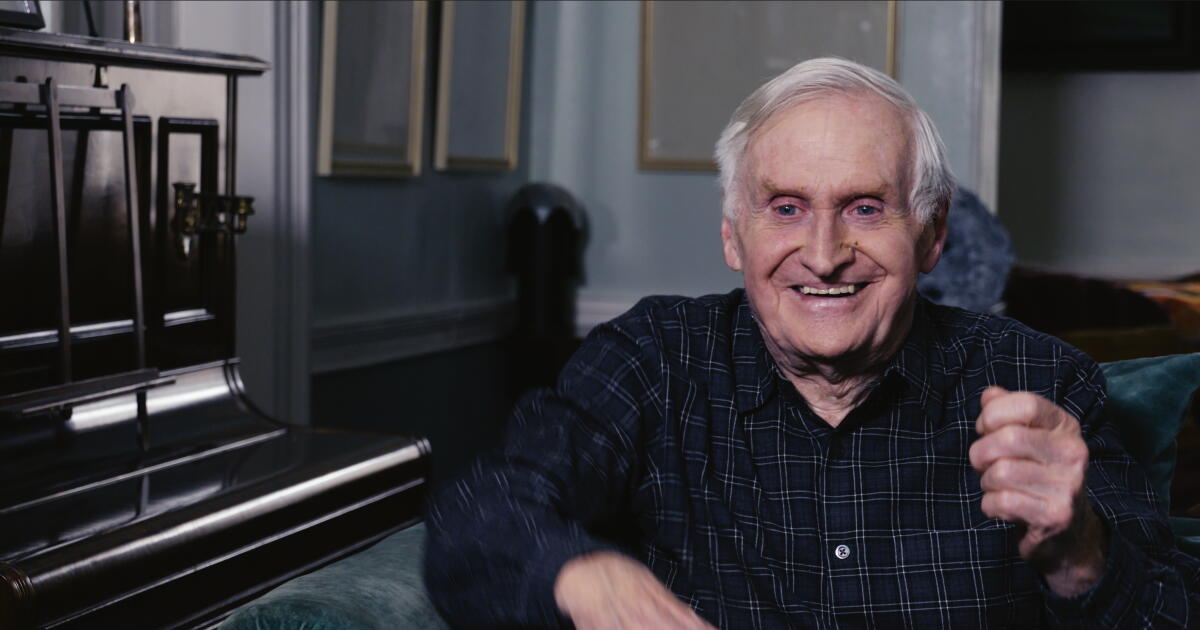
Filmmaker Kittredge trekked to Ireland and convinced the knighted, retired Boorman to recount his experience, which he does with sincerity, humor and, where appropriate, a charmingly genteel defensiveness. A wider shot of the interview shows the filmmaker comfortably ensconced between two props: the sword from 1981’s “Excalibur” slightly in front and, behind him on a table, a miniature of that angry godhead from his nutty, Connery-in-a-mankini sci-fi flop “Zardoz.” The placement feels resonant, since Boorman was always operating between poles of glinting victory and laughable failure.
Any movie, of course, is many things. Interviewee Linda Blair wanted a big payday, top billing and the chance to work with Richard Burton, but not to have to tap dance (she lost that one). Louise Fletcher, also interviewed and a lovely presence, wanted a fulfilling artistic experience and got chaos. Burton, meanwhile (amusingly rendered in animation), was a line-forgetting alcoholic who, Boorman drolly remarks, “couldn’t act from the neck down.”
Kittredge wisely includes testimonials from many below-the-line crew who speak openly of pride in the movie’s ambitions but also how quickly damage control overcame everything. Complicated in-camera effects — matte work, ghost glass, early Steadicam usage — promised artistic mastery, but not necessarily thrills or coherence. Then Boorman became deathly ill from ingesting swirled-up sand on their soundstage, and it seemed as if the production’s plagues were getting compounded, which ironically had nothing to do with the thousands of imported locusts. Also, who exactly was mysterious creative adviser and new-ending generator Rospo Pallenberg, besides being roundly disliked?
The film skillfully repurposes its clips snark. (There’s even footage of original “The Exorcist” director William Friedkin in later years enjoying some schadenfreude.) But Kittredge is also appreciative of Boorman’s honesty in articulating the exquisite hurt of the movie’s wretched journey, out of which emerges a better, poignant understanding of his extraordinary, fascinating career and the place of “The Heretic” in it.
The goal of a vibrant autopsy like this, after all, isn’t to reclaim a terrible movie as secretly great — even if the likes of Joe Dante, Karyn Kusama and some established film critics make a case to sample its madness. There’s a truth about fiascoes that often gets lost: Before a movie can exist in a nightmare of badness, its makers must live, suffer and persevere in a necessary dream of greatness. How would we get any of them otherwise?
‘Boorman and the Devil’
Not rated
Running time: 1 hour, 52 minutes
Playing: Opens Friday, Sept. 4 in limited release

After watching the enjoyable birth-of-a-disaster documentary “Boorman and the Devil,” about the ill-fated gestation of John Boorman’s “Exorcist II: The Heretic,” you’ll surely marvel that anyone thought the mysterious film would satisfy moviegoers’ hunger for second helpings of date-night Satanism.
David Kittredge’s deeply researched, lightning-paced explication of a great director’s most infamous bomb is, in a curiously heartfelt way, meaningful. Across a rollicking tale of hubris, excitement, compromise and curses, it’s good to be reminded that even when money is no object and when auteurs ruled Hollywood, every movie is some kind of miracle — just for having gotten completed.
Filmmaker Kittredge trekked to Ireland and convinced the knighted, retired Boorman to recount his experience, which he does with sincerity, humor and, where appropriate, a charmingly genteel defensiveness. A wider shot of the interview shows the filmmaker comfortably ensconced between two props: the sword from 1981’s “Excalibur” slightly in front and, behind him on a table, a miniature of that angry godhead from his nutty, Connery-in-a-mankini sci-fi flop “Zardoz.” The placement feels resonant, since Boorman was always operating between poles of glinting victory and laughable failure.
Any movie, of course, is many things. Interviewee Linda Blair wanted a big payday, top billing and the chance to work with Richard Burton, but not to have to tap dance (she lost that one). Louise Fletcher, also interviewed and a lovely presence, wanted a fulfilling artistic experience and got chaos. Burton, meanwhile (amusingly rendered in animation), was a line-forgetting alcoholic who, Boorman drolly remarks, “couldn’t act from the neck down.”
Kittredge wisely includes testimonials from many below-the-line crew who speak openly of pride in the movie’s ambitions but also how quickly damage control overcame everything. Complicated in-camera effects — matte work, ghost glass, early Steadicam usage — promised artistic mastery, but not necessarily thrills or coherence. Then Boorman became deathly ill from ingesting swirled-up sand on their soundstage, and it seemed as if the production’s plagues were getting compounded, which ironically had nothing to do with the thousands of imported locusts. Also, who exactly was mysterious creative adviser and new-ending generator Rospo Pallenberg, besides being roundly disliked?
The film skillfully repurposes its clips snark. (There’s even footage of original “The Exorcist” director William Friedkin in later years enjoying some schadenfreude.) But Kittredge is also appreciative of Boorman’s honesty in articulating the exquisite hurt of the movie’s wretched journey, out of which emerges a better, poignant understanding of his extraordinary, fascinating career and the place of “The Heretic” in it.
The goal of a vibrant autopsy like this, after all, isn’t to reclaim a terrible movie as secretly great — even if the likes of Joe Dante, Karyn Kusama and some established film critics make a case to sample its madness. There’s a truth about fiascoes that often gets lost: Before a movie can exist in a nightmare of badness, its makers must live, suffer and persevere in a necessary dream of greatness. How would we get any of them otherwise?
‘Boorman and the Devil’
Not rated
Running time: 1 hour, 52 minutes
Playing: Opens Friday, Sept. 4 in limited release

After watching the enjoyable birth-of-a-disaster documentary “Boorman and the Devil,” about the ill-fated gestation of John Boorman’s “Exorcist II: The Heretic,” you’ll surely marvel that anyone thought the mysterious film would satisfy moviegoers’ hunger for second helpings of date-night Satanism.
David Kittredge’s deeply researched, lightning-paced explication of a great director’s most infamous bomb is, in a curiously heartfelt way, meaningful. Across a rollicking tale of hubris, excitement, compromise and curses, it’s good to be reminded that even when money is no object and when auteurs ruled Hollywood, every movie is some kind of miracle — just for having gotten completed.
Filmmaker Kittredge trekked to Ireland and convinced the knighted, retired Boorman to recount his experience, which he does with sincerity, humor and, where appropriate, a charmingly genteel defensiveness. A wider shot of the interview shows the filmmaker comfortably ensconced between two props: the sword from 1981’s “Excalibur” slightly in front and, behind him on a table, a miniature of that angry godhead from his nutty, Connery-in-a-mankini sci-fi flop “Zardoz.” The placement feels resonant, since Boorman was always operating between poles of glinting victory and laughable failure.
Any movie, of course, is many things. Interviewee Linda Blair wanted a big payday, top billing and the chance to work with Richard Burton, but not to have to tap dance (she lost that one). Louise Fletcher, also interviewed and a lovely presence, wanted a fulfilling artistic experience and got chaos. Burton, meanwhile (amusingly rendered in animation), was a line-forgetting alcoholic who, Boorman drolly remarks, “couldn’t act from the neck down.”
Kittredge wisely includes testimonials from many below-the-line crew who speak openly of pride in the movie’s ambitions but also how quickly damage control overcame everything. Complicated in-camera effects — matte work, ghost glass, early Steadicam usage — promised artistic mastery, but not necessarily thrills or coherence. Then Boorman became deathly ill from ingesting swirled-up sand on their soundstage, and it seemed as if the production’s plagues were getting compounded, which ironically had nothing to do with the thousands of imported locusts. Also, who exactly was mysterious creative adviser and new-ending generator Rospo Pallenberg, besides being roundly disliked?
The film skillfully repurposes its clips snark. (There’s even footage of original “The Exorcist” director William Friedkin in later years enjoying some schadenfreude.) But Kittredge is also appreciative of Boorman’s honesty in articulating the exquisite hurt of the movie’s wretched journey, out of which emerges a better, poignant understanding of his extraordinary, fascinating career and the place of “The Heretic” in it.
The goal of a vibrant autopsy like this, after all, isn’t to reclaim a terrible movie as secretly great — even if the likes of Joe Dante, Karyn Kusama and some established film critics make a case to sample its madness. There’s a truth about fiascoes that often gets lost: Before a movie can exist in a nightmare of badness, its makers must live, suffer and persevere in a necessary dream of greatness. How would we get any of them otherwise?
‘Boorman and the Devil’
Not rated
Running time: 1 hour, 52 minutes
Playing: Opens Friday, Sept. 4 in limited release
After watching the enjoyable birth-of-a-disaster documentary “Boorman and the Devil,” about the ill-fated gestation of John Boorman’s “Exorcist II: The Heretic,” you’ll surely marvel that anyone thought the mysterious film would satisfy moviegoers’ hunger for second helpings of date-night Satanism.
David Kittredge’s deeply researched, lightning-paced explication of a great director’s most infamous bomb is, in a curiously heartfelt way, meaningful. Across a rollicking tale of hubris, excitement, compromise and curses, it’s good to be reminded that even when money is no object and when auteurs ruled Hollywood, every movie is some kind of miracle — just for having gotten completed.
Filmmaker Kittredge trekked to Ireland and convinced the knighted, retired Boorman to recount his experience, which he does with sincerity, humor and, where appropriate, a charmingly genteel defensiveness. A wider shot of the interview shows the filmmaker comfortably ensconced between two props: the sword from 1981’s “Excalibur” slightly in front and, behind him on a table, a miniature of that angry godhead from his nutty, Connery-in-a-mankini sci-fi flop “Zardoz.” The placement feels resonant, since Boorman was always operating between poles of glinting victory and laughable failure.
Any movie, of course, is many things. Interviewee Linda Blair wanted a big payday, top billing and the chance to work with Richard Burton, but not to have to tap dance (she lost that one). Louise Fletcher, also interviewed and a lovely presence, wanted a fulfilling artistic experience and got chaos. Burton, meanwhile (amusingly rendered in animation), was a line-forgetting alcoholic who, Boorman drolly remarks, “couldn’t act from the neck down.”
Kittredge wisely includes testimonials from many below-the-line crew who speak openly of pride in the movie’s ambitions but also how quickly damage control overcame everything. Complicated in-camera effects — matte work, ghost glass, early Steadicam usage — promised artistic mastery, but not necessarily thrills or coherence. Then Boorman became deathly ill from ingesting swirled-up sand on their soundstage, and it seemed as if the production’s plagues were getting compounded, which ironically had nothing to do with the thousands of imported locusts. Also, who exactly was mysterious creative adviser and new-ending generator Rospo Pallenberg, besides being roundly disliked?
The film skillfully repurposes its clips snark. (There’s even footage of original “The Exorcist” director William Friedkin in later years enjoying some schadenfreude.) But Kittredge is also appreciative of Boorman’s honesty in articulating the exquisite hurt of the movie’s wretched journey, out of which emerges a better, poignant understanding of his extraordinary, fascinating career and the place of “The Heretic” in it.
The goal of a vibrant autopsy like this, after all, isn’t to reclaim a terrible movie as secretly great — even if the likes of Joe Dante, Karyn Kusama and some established film critics make a case to sample its madness. There’s a truth about fiascoes that often gets lost: Before a movie can exist in a nightmare of badness, its makers must live, suffer and persevere in a necessary dream of greatness. How would we get any of them otherwise?
‘Boorman and the Devil’
Not rated
Running time: 1 hour, 52 minutes
Playing: Opens Friday, Sept. 4 in limited release

After watching the enjoyable birth-of-a-disaster documentary “Boorman and the Devil,” about the ill-fated gestation of John Boorman’s “Exorcist II: The Heretic,” you’ll surely marvel that anyone thought the mysterious film would satisfy moviegoers’ hunger for second helpings of date-night Satanism.
David Kittredge’s deeply researched, lightning-paced explication of a great director’s most infamous bomb is, in a curiously heartfelt way, meaningful. Across a rollicking tale of hubris, excitement, compromise and curses, it’s good to be reminded that even when money is no object and when auteurs ruled Hollywood, every movie is some kind of miracle — just for having gotten completed.
Filmmaker Kittredge trekked to Ireland and convinced the knighted, retired Boorman to recount his experience, which he does with sincerity, humor and, where appropriate, a charmingly genteel defensiveness. A wider shot of the interview shows the filmmaker comfortably ensconced between two props: the sword from 1981’s “Excalibur” slightly in front and, behind him on a table, a miniature of that angry godhead from his nutty, Connery-in-a-mankini sci-fi flop “Zardoz.” The placement feels resonant, since Boorman was always operating between poles of glinting victory and laughable failure.
Any movie, of course, is many things. Interviewee Linda Blair wanted a big payday, top billing and the chance to work with Richard Burton, but not to have to tap dance (she lost that one). Louise Fletcher, also interviewed and a lovely presence, wanted a fulfilling artistic experience and got chaos. Burton, meanwhile (amusingly rendered in animation), was a line-forgetting alcoholic who, Boorman drolly remarks, “couldn’t act from the neck down.”
Kittredge wisely includes testimonials from many below-the-line crew who speak openly of pride in the movie’s ambitions but also how quickly damage control overcame everything. Complicated in-camera effects — matte work, ghost glass, early Steadicam usage — promised artistic mastery, but not necessarily thrills or coherence. Then Boorman became deathly ill from ingesting swirled-up sand on their soundstage, and it seemed as if the production’s plagues were getting compounded, which ironically had nothing to do with the thousands of imported locusts. Also, who exactly was mysterious creative adviser and new-ending generator Rospo Pallenberg, besides being roundly disliked?
The film skillfully repurposes its clips snark. (There’s even footage of original “The Exorcist” director William Friedkin in later years enjoying some schadenfreude.) But Kittredge is also appreciative of Boorman’s honesty in articulating the exquisite hurt of the movie’s wretched journey, out of which emerges a better, poignant understanding of his extraordinary, fascinating career and the place of “The Heretic” in it.
The goal of a vibrant autopsy like this, after all, isn’t to reclaim a terrible movie as secretly great — even if the likes of Joe Dante, Karyn Kusama and some established film critics make a case to sample its madness. There’s a truth about fiascoes that often gets lost: Before a movie can exist in a nightmare of badness, its makers must live, suffer and persevere in a necessary dream of greatness. How would we get any of them otherwise?
‘Boorman and the Devil’
Not rated
Running time: 1 hour, 52 minutes
Playing: Opens Friday, Sept. 4 in limited release
After watching the enjoyable birth-of-a-disaster documentary “Boorman and the Devil,” about the ill-fated gestation of John Boorman’s “Exorcist II: The Heretic,” you’ll surely marvel that anyone thought the mysterious film would satisfy moviegoers’ hunger for second helpings of date-night Satanism.
David Kittredge’s deeply researched, lightning-paced explication of a great director’s most infamous bomb is, in a curiously heartfelt way, meaningful. Across a rollicking tale of hubris, excitement, compromise and curses, it’s good to be reminded that even when money is no object and when auteurs ruled Hollywood, every movie is some kind of miracle — just for having gotten completed.
Filmmaker Kittredge trekked to Ireland and convinced the knighted, retired Boorman to recount his experience, which he does with sincerity, humor and, where appropriate, a charmingly genteel defensiveness. A wider shot of the interview shows the filmmaker comfortably ensconced between two props: the sword from 1981’s “Excalibur” slightly in front and, behind him on a table, a miniature of that angry godhead from his nutty, Connery-in-a-mankini sci-fi flop “Zardoz.” The placement feels resonant, since Boorman was always operating between poles of glinting victory and laughable failure.
Any movie, of course, is many things. Interviewee Linda Blair wanted a big payday, top billing and the chance to work with Richard Burton, but not to have to tap dance (she lost that one). Louise Fletcher, also interviewed and a lovely presence, wanted a fulfilling artistic experience and got chaos. Burton, meanwhile (amusingly rendered in animation), was a line-forgetting alcoholic who, Boorman drolly remarks, “couldn’t act from the neck down.”
Kittredge wisely includes testimonials from many below-the-line crew who speak openly of pride in the movie’s ambitions but also how quickly damage control overcame everything. Complicated in-camera effects — matte work, ghost glass, early Steadicam usage — promised artistic mastery, but not necessarily thrills or coherence. Then Boorman became deathly ill from ingesting swirled-up sand on their soundstage, and it seemed as if the production’s plagues were getting compounded, which ironically had nothing to do with the thousands of imported locusts. Also, who exactly was mysterious creative adviser and new-ending generator Rospo Pallenberg, besides being roundly disliked?
The film skillfully repurposes its clips snark. (There’s even footage of original “The Exorcist” director William Friedkin in later years enjoying some schadenfreude.) But Kittredge is also appreciative of Boorman’s honesty in articulating the exquisite hurt of the movie’s wretched journey, out of which emerges a better, poignant understanding of his extraordinary, fascinating career and the place of “The Heretic” in it.
The goal of a vibrant autopsy like this, after all, isn’t to reclaim a terrible movie as secretly great — even if the likes of Joe Dante, Karyn Kusama and some established film critics make a case to sample its madness. There’s a truth about fiascoes that often gets lost: Before a movie can exist in a nightmare of badness, its makers must live, suffer and persevere in a necessary dream of greatness. How would we get any of them otherwise?
‘Boorman and the Devil’
Not rated
Running time: 1 hour, 52 minutes
Playing: Opens Friday, Sept. 4 in limited release
After watching the enjoyable birth-of-a-disaster documentary “Boorman and the Devil,” about the ill-fated gestation of John Boorman’s “Exorcist II: The Heretic,” you’ll surely marvel that anyone thought the mysterious film would satisfy moviegoers’ hunger for second helpings of date-night Satanism.
David Kittredge’s deeply researched, lightning-paced explication of a great director’s most infamous bomb is, in a curiously heartfelt way, meaningful. Across a rollicking tale of hubris, excitement, compromise and curses, it’s good to be reminded that even when money is no object and when auteurs ruled Hollywood, every movie is some kind of miracle — just for having gotten completed.
Filmmaker Kittredge trekked to Ireland and convinced the knighted, retired Boorman to recount his experience, which he does with sincerity, humor and, where appropriate, a charmingly genteel defensiveness. A wider shot of the interview shows the filmmaker comfortably ensconced between two props: the sword from 1981’s “Excalibur” slightly in front and, behind him on a table, a miniature of that angry godhead from his nutty, Connery-in-a-mankini sci-fi flop “Zardoz.” The placement feels resonant, since Boorman was always operating between poles of glinting victory and laughable failure.
Any movie, of course, is many things. Interviewee Linda Blair wanted a big payday, top billing and the chance to work with Richard Burton, but not to have to tap dance (she lost that one). Louise Fletcher, also interviewed and a lovely presence, wanted a fulfilling artistic experience and got chaos. Burton, meanwhile (amusingly rendered in animation), was a line-forgetting alcoholic who, Boorman drolly remarks, “couldn’t act from the neck down.”
Kittredge wisely includes testimonials from many below-the-line crew who speak openly of pride in the movie’s ambitions but also how quickly damage control overcame everything. Complicated in-camera effects — matte work, ghost glass, early Steadicam usage — promised artistic mastery, but not necessarily thrills or coherence. Then Boorman became deathly ill from ingesting swirled-up sand on their soundstage, and it seemed as if the production’s plagues were getting compounded, which ironically had nothing to do with the thousands of imported locusts. Also, who exactly was mysterious creative adviser and new-ending generator Rospo Pallenberg, besides being roundly disliked?
The film skillfully repurposes its clips snark. (There’s even footage of original “The Exorcist” director William Friedkin in later years enjoying some schadenfreude.) But Kittredge is also appreciative of Boorman’s honesty in articulating the exquisite hurt of the movie’s wretched journey, out of which emerges a better, poignant understanding of his extraordinary, fascinating career and the place of “The Heretic” in it.
The goal of a vibrant autopsy like this, after all, isn’t to reclaim a terrible movie as secretly great — even if the likes of Joe Dante, Karyn Kusama and some established film critics make a case to sample its madness. There’s a truth about fiascoes that often gets lost: Before a movie can exist in a nightmare of badness, its makers must live, suffer and persevere in a necessary dream of greatness. How would we get any of them otherwise?
‘Boorman and the Devil’
Not rated
Running time: 1 hour, 52 minutes
Playing: Opens Friday, Sept. 4 in limited release
After watching the enjoyable birth-of-a-disaster documentary “Boorman and the Devil,” about the ill-fated gestation of John Boorman’s “Exorcist II: The Heretic,” you’ll surely marvel that anyone thought the mysterious film would satisfy moviegoers’ hunger for second helpings of date-night Satanism.
David Kittredge’s deeply researched, lightning-paced explication of a great director’s most infamous bomb is, in a curiously heartfelt way, meaningful. Across a rollicking tale of hubris, excitement, compromise and curses, it’s good to be reminded that even when money is no object and when auteurs ruled Hollywood, every movie is some kind of miracle — just for having gotten completed.
Filmmaker Kittredge trekked to Ireland and convinced the knighted, retired Boorman to recount his experience, which he does with sincerity, humor and, where appropriate, a charmingly genteel defensiveness. A wider shot of the interview shows the filmmaker comfortably ensconced between two props: the sword from 1981’s “Excalibur” slightly in front and, behind him on a table, a miniature of that angry godhead from his nutty, Connery-in-a-mankini sci-fi flop “Zardoz.” The placement feels resonant, since Boorman was always operating between poles of glinting victory and laughable failure.
Any movie, of course, is many things. Interviewee Linda Blair wanted a big payday, top billing and the chance to work with Richard Burton, but not to have to tap dance (she lost that one). Louise Fletcher, also interviewed and a lovely presence, wanted a fulfilling artistic experience and got chaos. Burton, meanwhile (amusingly rendered in animation), was a line-forgetting alcoholic who, Boorman drolly remarks, “couldn’t act from the neck down.”
Kittredge wisely includes testimonials from many below-the-line crew who speak openly of pride in the movie’s ambitions but also how quickly damage control overcame everything. Complicated in-camera effects — matte work, ghost glass, early Steadicam usage — promised artistic mastery, but not necessarily thrills or coherence. Then Boorman became deathly ill from ingesting swirled-up sand on their soundstage, and it seemed as if the production’s plagues were getting compounded, which ironically had nothing to do with the thousands of imported locusts. Also, who exactly was mysterious creative adviser and new-ending generator Rospo Pallenberg, besides being roundly disliked?
The film skillfully repurposes its clips snark. (There’s even footage of original “The Exorcist” director William Friedkin in later years enjoying some schadenfreude.) But Kittredge is also appreciative of Boorman’s honesty in articulating the exquisite hurt of the movie’s wretched journey, out of which emerges a better, poignant understanding of his extraordinary, fascinating career and the place of “The Heretic” in it.
The goal of a vibrant autopsy like this, after all, isn’t to reclaim a terrible movie as secretly great — even if the likes of Joe Dante, Karyn Kusama and some established film critics make a case to sample its madness. There’s a truth about fiascoes that often gets lost: Before a movie can exist in a nightmare of badness, its makers must live, suffer and persevere in a necessary dream of greatness. How would we get any of them otherwise?
‘Boorman and the Devil’
Not rated
Running time: 1 hour, 52 minutes
Playing: Opens Friday, Sept. 4 in limited release


