

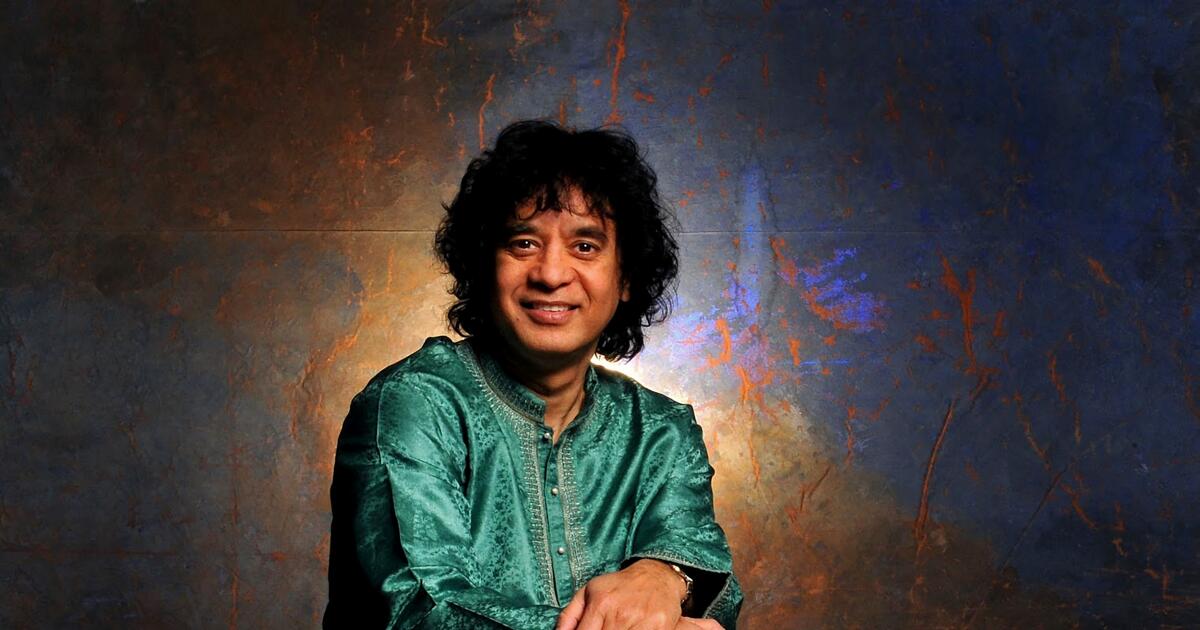

Zakir Hussain, an internationally renowned tabla player and composer who helped integrate Indian classical sound into Western music, has died at age 73.
Hussain died Sunday afternoon in San Francisco of idiopathic pulmonary fibrosis, a chronic lung disease, his family said in a statement.
Lauded as “the greatest tabla player of his generation,” the statement said, Hussain throughout his decades-long career aimed to blend musical genres and came to be regarded as “a chief architect of the contemporary world music movement.”
For his efforts, Hussain has been awarded with accolades including the Sangeet Natak Akademi Award, India’s most elite honor for performing artists, SFJazz’s Lifetime Achievement Award and the Aga Khan Award, per his family’s statement.
Earlier this year, Hussain became the first Indian to receive three Grammy Awards in one night.
“He leaves behind an extraordinary legacy cherished by countless music lovers around the globe, with an influence that will resonate for generations to come,” the statement said.
Born March 9, 1951, in Mumbai, Hussain gleaned his tabla drumming skills from his father, Allarakha Khan, who served as sitar master Ravi Shankar’s accompanist during the peak of Shankar’s career, according to the Allarakha Foundation.
“A child prodigy,” according to his family, Hussain began studying under his father at age 7, a representative for Hussain confirmed. Like his father, he collaborated with Shankar, as well as a number of other famed Indian musicians including Ali Akbar Khan and Shivkumar Sharma.
After moving to the United States in 1970, Hussain vastly expanded his musical network.
“[Hussain’s] groundbreaking work with Western musicians brought Indian classical music to an international audience,” his family’s statement said, “cementing his status as a global cultural ambassador.”
Alongside prominent guitarist John McLaughlin, Hussain in 1973 formed the fusion band Shakti, which yielded influential albums such as “Shakti With John McLaughlin” and “A Handful of Beauty.”
“The encounters between jazz, rock and Indian music that took place between guitarist McLaughlin, tabla player Hussain, violinist L. Shankar and ghatam (clay pot) percussionist T.H. Vinayakram provided eye- and ear-opening opportunities to experience a breadth of music that reached well beyond the then-commonly accepted musical orbits of the United States and Europe,” the late music critic Don Heckman wrote about Shakti in a 2000 article for The Times.
Hussain also counted Mickey Hart of the Grateful Dead among his closest friends and music partners. The two collaborated on albums “Planet Drum” (1991) and “Global Drum Project” (2007), the latter of which won Hussain his first Grammy.
“Zakir Hussain was my brother for over 50 years, my closest collaborator, and my dearest friend. Over the years we have shared places reserved only for those whose lives are totally engulfed by drums,” Hart wrote in a statement to The Times, adding that the pair lived together for a time on his California ranch.
“[Hussain’s] knowledge of both western and eastern world rhythms was unequaled. He had perfect pitch and total recall for the most complicated rhythmic cycles,” Hart wrote. “His instruments were like the rains, dense sheets of sounds performed like blurs of lightning-fast fingers on small, tuned drums. With the skill of a surgeon, he weaved a rhythmic spell with each finger at the most rapid speeds that can be imaginable.
“The world will never be the same without him,” he wrote.
In recent years, Hussain has served as an educator in residence at Princeton University and Stanford University and, in 2015, was appointed Regents Lecturer at UC Berkeley, his family’s statement said. In 1991, he founded the independent record label Moment Records.
Hussain is survived by his wife, Antonia Minnecola; his daughters, Anisa Qureshi (her husband, Taylor Phillips, and their daughter, Zara) and Isabella Qureshi; his brothers, Taufiq Qureshi and Fazal Qureshi; and his sister, Khurshid Aulia.

Zakir Hussain, an internationally renowned tabla player and composer who helped integrate Indian classical sound into Western music, has died at age 73.
Hussain died Sunday afternoon in San Francisco of idiopathic pulmonary fibrosis, a chronic lung disease, his family said in a statement.
Lauded as “the greatest tabla player of his generation,” the statement said, Hussain throughout his decades-long career aimed to blend musical genres and came to be regarded as “a chief architect of the contemporary world music movement.”
For his efforts, Hussain has been awarded with accolades including the Sangeet Natak Akademi Award, India’s most elite honor for performing artists, SFJazz’s Lifetime Achievement Award and the Aga Khan Award, per his family’s statement.
Earlier this year, Hussain became the first Indian to receive three Grammy Awards in one night.
“He leaves behind an extraordinary legacy cherished by countless music lovers around the globe, with an influence that will resonate for generations to come,” the statement said.
Born March 9, 1951, in Mumbai, Hussain gleaned his tabla drumming skills from his father, Allarakha Khan, who served as sitar master Ravi Shankar’s accompanist during the peak of Shankar’s career, according to the Allarakha Foundation.
“A child prodigy,” according to his family, Hussain began studying under his father at age 7, a representative for Hussain confirmed. Like his father, he collaborated with Shankar, as well as a number of other famed Indian musicians including Ali Akbar Khan and Shivkumar Sharma.
After moving to the United States in 1970, Hussain vastly expanded his musical network.
“[Hussain’s] groundbreaking work with Western musicians brought Indian classical music to an international audience,” his family’s statement said, “cementing his status as a global cultural ambassador.”
Alongside prominent guitarist John McLaughlin, Hussain in 1973 formed the fusion band Shakti, which yielded influential albums such as “Shakti With John McLaughlin” and “A Handful of Beauty.”
“The encounters between jazz, rock and Indian music that took place between guitarist McLaughlin, tabla player Hussain, violinist L. Shankar and ghatam (clay pot) percussionist T.H. Vinayakram provided eye- and ear-opening opportunities to experience a breadth of music that reached well beyond the then-commonly accepted musical orbits of the United States and Europe,” the late music critic Don Heckman wrote about Shakti in a 2000 article for The Times.
Hussain also counted Mickey Hart of the Grateful Dead among his closest friends and music partners. The two collaborated on albums “Planet Drum” (1991) and “Global Drum Project” (2007), the latter of which won Hussain his first Grammy.
“Zakir Hussain was my brother for over 50 years, my closest collaborator, and my dearest friend. Over the years we have shared places reserved only for those whose lives are totally engulfed by drums,” Hart wrote in a statement to The Times, adding that the pair lived together for a time on his California ranch.
“[Hussain’s] knowledge of both western and eastern world rhythms was unequaled. He had perfect pitch and total recall for the most complicated rhythmic cycles,” Hart wrote. “His instruments were like the rains, dense sheets of sounds performed like blurs of lightning-fast fingers on small, tuned drums. With the skill of a surgeon, he weaved a rhythmic spell with each finger at the most rapid speeds that can be imaginable.
“The world will never be the same without him,” he wrote.
In recent years, Hussain has served as an educator in residence at Princeton University and Stanford University and, in 2015, was appointed Regents Lecturer at UC Berkeley, his family’s statement said. In 1991, he founded the independent record label Moment Records.
Hussain is survived by his wife, Antonia Minnecola; his daughters, Anisa Qureshi (her husband, Taylor Phillips, and their daughter, Zara) and Isabella Qureshi; his brothers, Taufiq Qureshi and Fazal Qureshi; and his sister, Khurshid Aulia.

Zakir Hussain, an internationally renowned tabla player and composer who helped integrate Indian classical sound into Western music, has died at age 73.
Hussain died Sunday afternoon in San Francisco of idiopathic pulmonary fibrosis, a chronic lung disease, his family said in a statement.
Lauded as “the greatest tabla player of his generation,” the statement said, Hussain throughout his decades-long career aimed to blend musical genres and came to be regarded as “a chief architect of the contemporary world music movement.”
For his efforts, Hussain has been awarded with accolades including the Sangeet Natak Akademi Award, India’s most elite honor for performing artists, SFJazz’s Lifetime Achievement Award and the Aga Khan Award, per his family’s statement.
Earlier this year, Hussain became the first Indian to receive three Grammy Awards in one night.
“He leaves behind an extraordinary legacy cherished by countless music lovers around the globe, with an influence that will resonate for generations to come,” the statement said.
Born March 9, 1951, in Mumbai, Hussain gleaned his tabla drumming skills from his father, Allarakha Khan, who served as sitar master Ravi Shankar’s accompanist during the peak of Shankar’s career, according to the Allarakha Foundation.
“A child prodigy,” according to his family, Hussain began studying under his father at age 7, a representative for Hussain confirmed. Like his father, he collaborated with Shankar, as well as a number of other famed Indian musicians including Ali Akbar Khan and Shivkumar Sharma.
After moving to the United States in 1970, Hussain vastly expanded his musical network.
“[Hussain’s] groundbreaking work with Western musicians brought Indian classical music to an international audience,” his family’s statement said, “cementing his status as a global cultural ambassador.”
Alongside prominent guitarist John McLaughlin, Hussain in 1973 formed the fusion band Shakti, which yielded influential albums such as “Shakti With John McLaughlin” and “A Handful of Beauty.”
“The encounters between jazz, rock and Indian music that took place between guitarist McLaughlin, tabla player Hussain, violinist L. Shankar and ghatam (clay pot) percussionist T.H. Vinayakram provided eye- and ear-opening opportunities to experience a breadth of music that reached well beyond the then-commonly accepted musical orbits of the United States and Europe,” the late music critic Don Heckman wrote about Shakti in a 2000 article for The Times.
Hussain also counted Mickey Hart of the Grateful Dead among his closest friends and music partners. The two collaborated on albums “Planet Drum” (1991) and “Global Drum Project” (2007), the latter of which won Hussain his first Grammy.
“Zakir Hussain was my brother for over 50 years, my closest collaborator, and my dearest friend. Over the years we have shared places reserved only for those whose lives are totally engulfed by drums,” Hart wrote in a statement to The Times, adding that the pair lived together for a time on his California ranch.
“[Hussain’s] knowledge of both western and eastern world rhythms was unequaled. He had perfect pitch and total recall for the most complicated rhythmic cycles,” Hart wrote. “His instruments were like the rains, dense sheets of sounds performed like blurs of lightning-fast fingers on small, tuned drums. With the skill of a surgeon, he weaved a rhythmic spell with each finger at the most rapid speeds that can be imaginable.
“The world will never be the same without him,” he wrote.
In recent years, Hussain has served as an educator in residence at Princeton University and Stanford University and, in 2015, was appointed Regents Lecturer at UC Berkeley, his family’s statement said. In 1991, he founded the independent record label Moment Records.
Hussain is survived by his wife, Antonia Minnecola; his daughters, Anisa Qureshi (her husband, Taylor Phillips, and their daughter, Zara) and Isabella Qureshi; his brothers, Taufiq Qureshi and Fazal Qureshi; and his sister, Khurshid Aulia.
Zakir Hussain, an internationally renowned tabla player and composer who helped integrate Indian classical sound into Western music, has died at age 73.
Hussain died Sunday afternoon in San Francisco of idiopathic pulmonary fibrosis, a chronic lung disease, his family said in a statement.
Lauded as “the greatest tabla player of his generation,” the statement said, Hussain throughout his decades-long career aimed to blend musical genres and came to be regarded as “a chief architect of the contemporary world music movement.”
For his efforts, Hussain has been awarded with accolades including the Sangeet Natak Akademi Award, India’s most elite honor for performing artists, SFJazz’s Lifetime Achievement Award and the Aga Khan Award, per his family’s statement.
Earlier this year, Hussain became the first Indian to receive three Grammy Awards in one night.
“He leaves behind an extraordinary legacy cherished by countless music lovers around the globe, with an influence that will resonate for generations to come,” the statement said.
Born March 9, 1951, in Mumbai, Hussain gleaned his tabla drumming skills from his father, Allarakha Khan, who served as sitar master Ravi Shankar’s accompanist during the peak of Shankar’s career, according to the Allarakha Foundation.
“A child prodigy,” according to his family, Hussain began studying under his father at age 7, a representative for Hussain confirmed. Like his father, he collaborated with Shankar, as well as a number of other famed Indian musicians including Ali Akbar Khan and Shivkumar Sharma.
After moving to the United States in 1970, Hussain vastly expanded his musical network.
“[Hussain’s] groundbreaking work with Western musicians brought Indian classical music to an international audience,” his family’s statement said, “cementing his status as a global cultural ambassador.”
Alongside prominent guitarist John McLaughlin, Hussain in 1973 formed the fusion band Shakti, which yielded influential albums such as “Shakti With John McLaughlin” and “A Handful of Beauty.”
“The encounters between jazz, rock and Indian music that took place between guitarist McLaughlin, tabla player Hussain, violinist L. Shankar and ghatam (clay pot) percussionist T.H. Vinayakram provided eye- and ear-opening opportunities to experience a breadth of music that reached well beyond the then-commonly accepted musical orbits of the United States and Europe,” the late music critic Don Heckman wrote about Shakti in a 2000 article for The Times.
Hussain also counted Mickey Hart of the Grateful Dead among his closest friends and music partners. The two collaborated on albums “Planet Drum” (1991) and “Global Drum Project” (2007), the latter of which won Hussain his first Grammy.
“Zakir Hussain was my brother for over 50 years, my closest collaborator, and my dearest friend. Over the years we have shared places reserved only for those whose lives are totally engulfed by drums,” Hart wrote in a statement to The Times, adding that the pair lived together for a time on his California ranch.
“[Hussain’s] knowledge of both western and eastern world rhythms was unequaled. He had perfect pitch and total recall for the most complicated rhythmic cycles,” Hart wrote. “His instruments were like the rains, dense sheets of sounds performed like blurs of lightning-fast fingers on small, tuned drums. With the skill of a surgeon, he weaved a rhythmic spell with each finger at the most rapid speeds that can be imaginable.
“The world will never be the same without him,” he wrote.
In recent years, Hussain has served as an educator in residence at Princeton University and Stanford University and, in 2015, was appointed Regents Lecturer at UC Berkeley, his family’s statement said. In 1991, he founded the independent record label Moment Records.
Hussain is survived by his wife, Antonia Minnecola; his daughters, Anisa Qureshi (her husband, Taylor Phillips, and their daughter, Zara) and Isabella Qureshi; his brothers, Taufiq Qureshi and Fazal Qureshi; and his sister, Khurshid Aulia.


