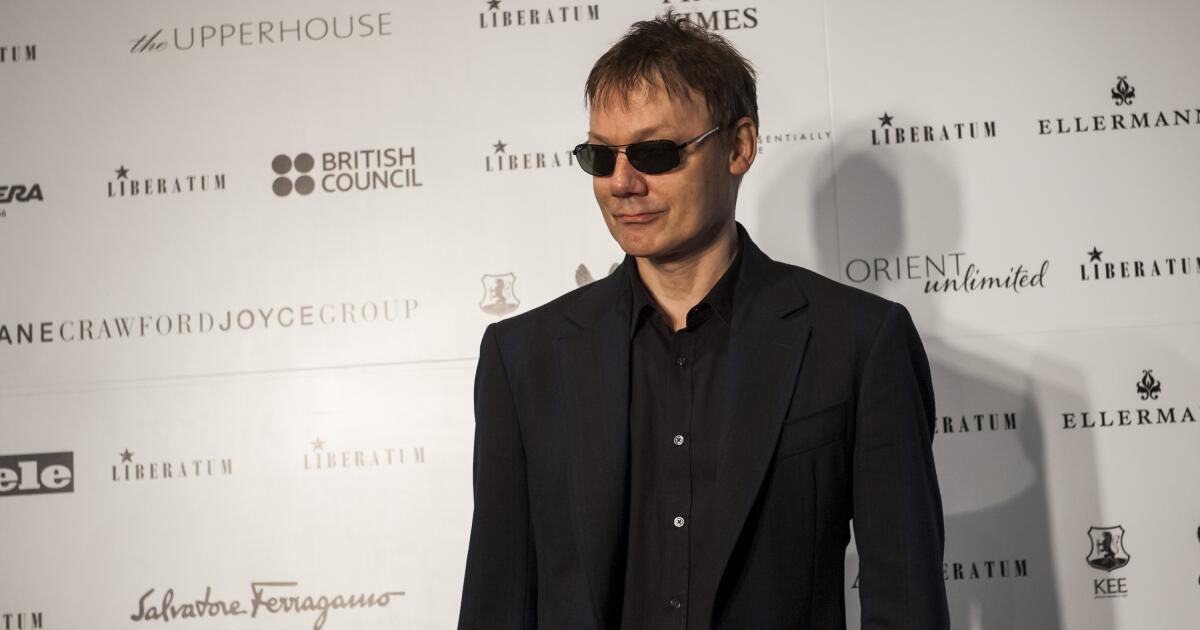
William Orbit, the English musician and producer best known for his work with Madonna on her beloved 1998 album “Ray of Light,” died on July 23. He was 69.
His family announced his death Friday in an Instagram post that said he died at home but didn’t specify a cause. “He will be greatly missed by us and by so many whose lives he touched through his music, friendship and kindness,” the post reads.
Born William Wainwright in London in 1956, Orbit had already established himself in the worlds of dance music and movie soundtracks — he composed the score for the 1986 hockey movie “Youngblood,” with Rob Lowe and Patrick Swayze — when he linked up with Madonna at a moment of deep personal change for the pop superstar, who’d given birth to her first child and immersed herself in a variety of spiritual practices. Together the two developed a lush yet energetic sound that combined guitars, synths and throbbing club beats.
“Ray of Light,” which sold more than 4 million copies in the United States alone, spun off hit singles including “Frozen,” “The Power of Good-Bye” and the exuberant title track; the LP was nominated for album of the year at the Grammy Awards — Madonna’s only nod for that prestigious prize — and won the award for pop vocal album. Orbit won three Grammys in all over the course of his career.
In 2021, Orbit took pains in an interview with the Guardian to share credit for “Ray of Light” with the singer herself. Madonna, he said, is “a fabulous producer. When it says ‘produced by Madonna and William Orbit,’ people don’t always give her the credit for that. But she’s as responsible as me.”

Orbit and Madonna collaborated again for “Beautiful Stranger,” a Grammy-winning single from the soundtrack of 1999’s “Austin Powers: The Spy Who Shagged Me,” and for an electro-pop cover of Don McLean’s “American Pie” that featured in the 2000 movie “The Next Best Thing,” in which Madonna starred.


He also worked with Blur, U2, Beth Orton, Pink and All Saints, and he made music under his own name, including a 2000 LP, “Pieces in a Modern Style,” with high-tech interpretations of classical pieces by the likes of Samuel Barber and Erik Satie.