
Wednesday, April 15, 2026
Washington DC
New York
Toronto
Distribution: (800) 510 9863
Press ID
  • Login
RH NEWSROOM National News and Press Releases. Local and Regional Perspectives. Media Advisories.
Yonkers Observer
  • Home
  • World
  • Politics
  • Finance
  • Technology
  • Health
  • Culture
  • Entertainment
  • Trend
No Result
View All Result
  • Home
  • World
  • Politics
  • Finance
  • Technology
  • Health
  • Culture
  • Entertainment
  • Trend
No Result
View All Result
Yonkers Observer
No Result
View All Result
Home Health

Where to find the best cold tofu dishes in Los Angeles

by Yonkers Observer Report
August 12, 2024
in Health
Share on FacebookShare on Twitter

“Simple is better.”

Morihiro Onodera is telling me about the different flavors of tofu he’s made over the years. The chef behind Morihiro restaurant in Atwater Village is one of the most revered sushi masters in the country. He’s also been making his own tofu since he was a child on his family’s farm in Fujisawa, Japan.

Onodera has made tofu with pureed sweet white summer corn when it’s in season. He’s even made tofu with beets.

“It looked really unique,” he says with a laugh. But as with most things, he says, simple is better.

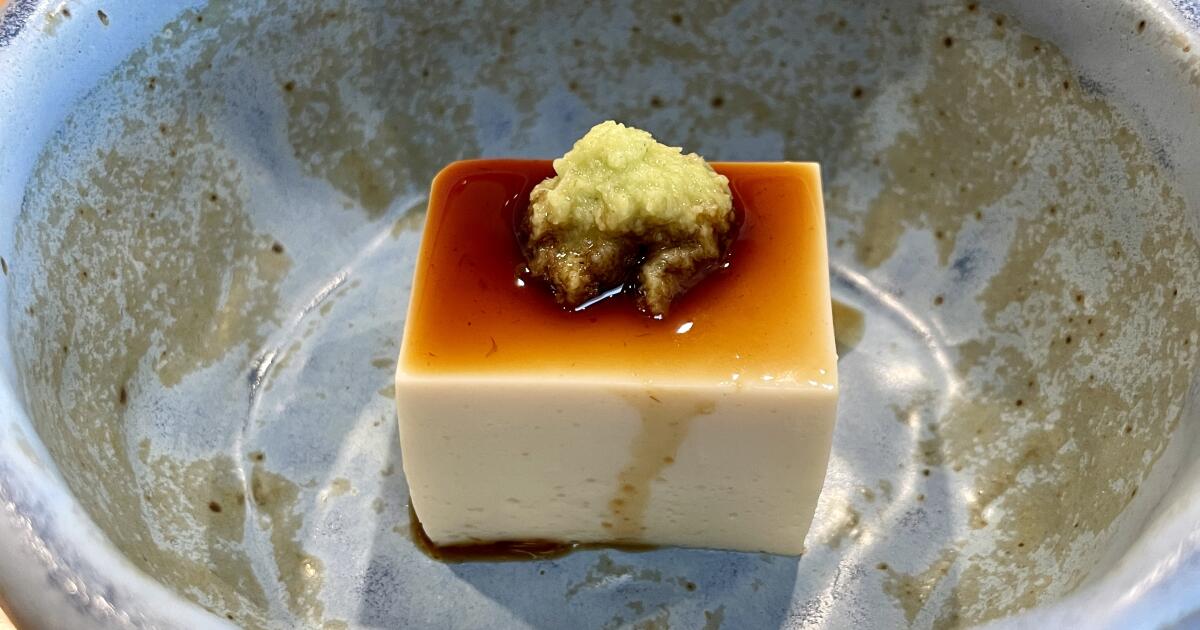
Chef Mori’s signature tofu at Morihiro

Chef Mori Onodera at Morihiro. The chef serves his signature tofu at the start of each omakase meal at the bar.

(Shelby Moore / For The Times)

Omakase at the Morihiro sushi bar starts with a block of fresh tofu, adorned simply with his own soy sauce and a small heap of fresh wasabi. It’s the same way he’s presented the dish for the past 23 years, since he first started serving homemade tofu at his namesake Mori Sushi restaurant in 2001.

“I remember nobody was serving homemade tofu back then, and I like serving very special tofu,” he says.

Onodera used to make his own soy milk, spending three to four hours on each batch before turning it into tofu. Now, he sources his soy milk from a producer in Kyoto, Japan, and continues to prepare fresh tofu each day for the restaurant.

The tofu arrives as your first course, sitting in a green-speckled blue ceramic bowl the chef also made himself. For years, Onodera has made pottery for his restaurants, as well as a few others around town, including Providence and Mélisse.

The milky-colored tofu is darkened by a few drops of soy sauce and a small heap of fresh wasabi.

I like to spread the wasabi over the top, distributing it evenly across the smooth surface. The tofu is more than silky, creamier than a custard and softer than you’re imagining. It’s a texture unique to Onodera’s tofu, with a nutty soy milk flavor that’s just as singular.

The soy sauce that will accompany your nigiri later in the meal is bolstered with sake and konbu. The soy sauce used to dress the tofu is thicker and richer, its umami coming from both tamari and soy sauce, sugar and maguro flakes.

The wasabi sharpens each spoonful with a nose-tingling freshness.

What follows the tofu is a meal of seasonal vegetables, grilled fish, fried shellfish, artfully prepared nigiri and dessert worthy of the highest celebration. But those six spoonfuls of tofu at the start are pure bliss.

Tofu with salsa macha at Yess

The tofu with salsa macha from Yess restaurant in the Arts District.

The tofu with salsa macha from Yess restaurant in the Arts District.

(Jenn Harris / Los Angeles Times)

My affinity for the cold tofu at Yess, chef Junya Yamasaki’s restaurant in the Arts District, has little to do with the actual block of good, cold tofu and a lot to do with the fact that it’s drowning in my favorite condiment.

Yamasaki thought about making a more traditional cold tofu for his Japanese restaurant, blanketing the dish in shaved bonito, ginger and scallions. Or maybe he could make mala sauce, inspired by the time he spent in Sichuan, China, and his friendship with Jing Gao, founder of the Fly by Jing Sichuan chili crisp products. Eventually, he landed on salsa macha.

“Here in L.A., you want to do something a bit more fun and original,” Yamasaki says. “I also love Mexican food, and Mexican food is pretty much Los Angeles’ food. I also love salsa macha.”

He thought about the similarities between Sichuan chili crisp and salsa macha, their respective sources of heat, crunch and umami. Yamasaki’s version starts with sauteeing minced ginger and garlic in rice brain oil. He reserves the oil, then adds dried guajillo, chile de árbol and cascabel chiles to the softened ginger and garlic. To give the sauce a savory backbone, Yamasaki incorporates red miso, black vinegar and mirin. Then he pours the hot rice bran oil over the mixture.

To ensure the various nuts and seeds in his salsa stay crisp, he toasts the almonds, pumpkin seeds and sesame seeds separately, then adds them after the hot oil.

Chef Junya Yamasak prepares dishes inside the large open kitchen at Yess restaurant

Chef Junya Yamasak prepares dishes inside the large open kitchen at Yess restaurant in the Arts District.

(Mariah Tauger / Los Angeles Times)

Before the salsa, Yamasaki places a spoonful of diced cucumber and radish over the square of Meji tofu, along with a drizzle of tamari. Then he ladles on enough of the salsa macha to completely saturate the block of tofu. The nuts, seeds and rehydrated dried chile flakes collect at the top in a small clump while the oil and vinegar threatens to spill over the sides of the plate.

The juxtaposition of soft, cold tofu and hot, crunchy salsa is hard to resist. When the tofu was gone, I used my spoon to scoop up the leftover salsa macha, treating the ultra chunky condiment as its own side dish. If Yamasaki ever bottles his salsa, I suspect I’ll eat it straight from the jar.

“Simple is better.”

Morihiro Onodera is telling me about the different flavors of tofu he’s made over the years. The chef behind Morihiro restaurant in Atwater Village is one of the most revered sushi masters in the country. He’s also been making his own tofu since he was a child on his family’s farm in Fujisawa, Japan.

Onodera has made tofu with pureed sweet white summer corn when it’s in season. He’s even made tofu with beets.

“It looked really unique,” he says with a laugh. But as with most things, he says, simple is better.

Chef Mori’s signature tofu at Morihiro

Chef Mori Onodera at Morihiro. The chef serves his signature tofu at the start of each omakase meal at the bar.

(Shelby Moore / For The Times)

Omakase at the Morihiro sushi bar starts with a block of fresh tofu, adorned simply with his own soy sauce and a small heap of fresh wasabi. It’s the same way he’s presented the dish for the past 23 years, since he first started serving homemade tofu at his namesake Mori Sushi restaurant in 2001.

“I remember nobody was serving homemade tofu back then, and I like serving very special tofu,” he says.

Onodera used to make his own soy milk, spending three to four hours on each batch before turning it into tofu. Now, he sources his soy milk from a producer in Kyoto, Japan, and continues to prepare fresh tofu each day for the restaurant.

The tofu arrives as your first course, sitting in a green-speckled blue ceramic bowl the chef also made himself. For years, Onodera has made pottery for his restaurants, as well as a few others around town, including Providence and Mélisse.

The milky-colored tofu is darkened by a few drops of soy sauce and a small heap of fresh wasabi.

I like to spread the wasabi over the top, distributing it evenly across the smooth surface. The tofu is more than silky, creamier than a custard and softer than you’re imagining. It’s a texture unique to Onodera’s tofu, with a nutty soy milk flavor that’s just as singular.

The soy sauce that will accompany your nigiri later in the meal is bolstered with sake and konbu. The soy sauce used to dress the tofu is thicker and richer, its umami coming from both tamari and soy sauce, sugar and maguro flakes.

The wasabi sharpens each spoonful with a nose-tingling freshness.

What follows the tofu is a meal of seasonal vegetables, grilled fish, fried shellfish, artfully prepared nigiri and dessert worthy of the highest celebration. But those six spoonfuls of tofu at the start are pure bliss.

Tofu with salsa macha at Yess

The tofu with salsa macha from Yess restaurant in the Arts District.

The tofu with salsa macha from Yess restaurant in the Arts District.

(Jenn Harris / Los Angeles Times)

My affinity for the cold tofu at Yess, chef Junya Yamasaki’s restaurant in the Arts District, has little to do with the actual block of good, cold tofu and a lot to do with the fact that it’s drowning in my favorite condiment.

Yamasaki thought about making a more traditional cold tofu for his Japanese restaurant, blanketing the dish in shaved bonito, ginger and scallions. Or maybe he could make mala sauce, inspired by the time he spent in Sichuan, China, and his friendship with Jing Gao, founder of the Fly by Jing Sichuan chili crisp products. Eventually, he landed on salsa macha.

“Here in L.A., you want to do something a bit more fun and original,” Yamasaki says. “I also love Mexican food, and Mexican food is pretty much Los Angeles’ food. I also love salsa macha.”

He thought about the similarities between Sichuan chili crisp and salsa macha, their respective sources of heat, crunch and umami. Yamasaki’s version starts with sauteeing minced ginger and garlic in rice brain oil. He reserves the oil, then adds dried guajillo, chile de árbol and cascabel chiles to the softened ginger and garlic. To give the sauce a savory backbone, Yamasaki incorporates red miso, black vinegar and mirin. Then he pours the hot rice bran oil over the mixture.

To ensure the various nuts and seeds in his salsa stay crisp, he toasts the almonds, pumpkin seeds and sesame seeds separately, then adds them after the hot oil.

Chef Junya Yamasak prepares dishes inside the large open kitchen at Yess restaurant

Chef Junya Yamasak prepares dishes inside the large open kitchen at Yess restaurant in the Arts District.

(Mariah Tauger / Los Angeles Times)

Before the salsa, Yamasaki places a spoonful of diced cucumber and radish over the square of Meji tofu, along with a drizzle of tamari. Then he ladles on enough of the salsa macha to completely saturate the block of tofu. The nuts, seeds and rehydrated dried chile flakes collect at the top in a small clump while the oil and vinegar threatens to spill over the sides of the plate.

The juxtaposition of soft, cold tofu and hot, crunchy salsa is hard to resist. When the tofu was gone, I used my spoon to scoop up the leftover salsa macha, treating the ultra chunky condiment as its own side dish. If Yamasaki ever bottles his salsa, I suspect I’ll eat it straight from the jar.

“Simple is better.”

Morihiro Onodera is telling me about the different flavors of tofu he’s made over the years. The chef behind Morihiro restaurant in Atwater Village is one of the most revered sushi masters in the country. He’s also been making his own tofu since he was a child on his family’s farm in Fujisawa, Japan.

Onodera has made tofu with pureed sweet white summer corn when it’s in season. He’s even made tofu with beets.

“It looked really unique,” he says with a laugh. But as with most things, he says, simple is better.

Chef Mori’s signature tofu at Morihiro

Chef Mori Onodera at Morihiro. The chef serves his signature tofu at the start of each omakase meal at the bar.

(Shelby Moore / For The Times)

Omakase at the Morihiro sushi bar starts with a block of fresh tofu, adorned simply with his own soy sauce and a small heap of fresh wasabi. It’s the same way he’s presented the dish for the past 23 years, since he first started serving homemade tofu at his namesake Mori Sushi restaurant in 2001.

“I remember nobody was serving homemade tofu back then, and I like serving very special tofu,” he says.

Onodera used to make his own soy milk, spending three to four hours on each batch before turning it into tofu. Now, he sources his soy milk from a producer in Kyoto, Japan, and continues to prepare fresh tofu each day for the restaurant.

The tofu arrives as your first course, sitting in a green-speckled blue ceramic bowl the chef also made himself. For years, Onodera has made pottery for his restaurants, as well as a few others around town, including Providence and Mélisse.

The milky-colored tofu is darkened by a few drops of soy sauce and a small heap of fresh wasabi.

I like to spread the wasabi over the top, distributing it evenly across the smooth surface. The tofu is more than silky, creamier than a custard and softer than you’re imagining. It’s a texture unique to Onodera’s tofu, with a nutty soy milk flavor that’s just as singular.

The soy sauce that will accompany your nigiri later in the meal is bolstered with sake and konbu. The soy sauce used to dress the tofu is thicker and richer, its umami coming from both tamari and soy sauce, sugar and maguro flakes.

The wasabi sharpens each spoonful with a nose-tingling freshness.

What follows the tofu is a meal of seasonal vegetables, grilled fish, fried shellfish, artfully prepared nigiri and dessert worthy of the highest celebration. But those six spoonfuls of tofu at the start are pure bliss.

Tofu with salsa macha at Yess

The tofu with salsa macha from Yess restaurant in the Arts District.

The tofu with salsa macha from Yess restaurant in the Arts District.

(Jenn Harris / Los Angeles Times)

My affinity for the cold tofu at Yess, chef Junya Yamasaki’s restaurant in the Arts District, has little to do with the actual block of good, cold tofu and a lot to do with the fact that it’s drowning in my favorite condiment.

Yamasaki thought about making a more traditional cold tofu for his Japanese restaurant, blanketing the dish in shaved bonito, ginger and scallions. Or maybe he could make mala sauce, inspired by the time he spent in Sichuan, China, and his friendship with Jing Gao, founder of the Fly by Jing Sichuan chili crisp products. Eventually, he landed on salsa macha.

“Here in L.A., you want to do something a bit more fun and original,” Yamasaki says. “I also love Mexican food, and Mexican food is pretty much Los Angeles’ food. I also love salsa macha.”

He thought about the similarities between Sichuan chili crisp and salsa macha, their respective sources of heat, crunch and umami. Yamasaki’s version starts with sauteeing minced ginger and garlic in rice brain oil. He reserves the oil, then adds dried guajillo, chile de árbol and cascabel chiles to the softened ginger and garlic. To give the sauce a savory backbone, Yamasaki incorporates red miso, black vinegar and mirin. Then he pours the hot rice bran oil over the mixture.

To ensure the various nuts and seeds in his salsa stay crisp, he toasts the almonds, pumpkin seeds and sesame seeds separately, then adds them after the hot oil.

Chef Junya Yamasak prepares dishes inside the large open kitchen at Yess restaurant

Chef Junya Yamasak prepares dishes inside the large open kitchen at Yess restaurant in the Arts District.

(Mariah Tauger / Los Angeles Times)

Before the salsa, Yamasaki places a spoonful of diced cucumber and radish over the square of Meji tofu, along with a drizzle of tamari. Then he ladles on enough of the salsa macha to completely saturate the block of tofu. The nuts, seeds and rehydrated dried chile flakes collect at the top in a small clump while the oil and vinegar threatens to spill over the sides of the plate.

The juxtaposition of soft, cold tofu and hot, crunchy salsa is hard to resist. When the tofu was gone, I used my spoon to scoop up the leftover salsa macha, treating the ultra chunky condiment as its own side dish. If Yamasaki ever bottles his salsa, I suspect I’ll eat it straight from the jar.


“Simple is better.”

Morihiro Onodera is telling me about the different flavors of tofu he’s made over the years. The chef behind Morihiro restaurant in Atwater Village is one of the most revered sushi masters in the country. He’s also been making his own tofu since he was a child on his family’s farm in Fujisawa, Japan.

Onodera has made tofu with pureed sweet white summer corn when it’s in season. He’s even made tofu with beets.

“It looked really unique,” he says with a laugh. But as with most things, he says, simple is better.

Chef Mori’s signature tofu at Morihiro

Chef Mori Onodera at Morihiro. The chef serves his signature tofu at the start of each omakase meal at the bar.

(Shelby Moore / For The Times)

Omakase at the Morihiro sushi bar starts with a block of fresh tofu, adorned simply with his own soy sauce and a small heap of fresh wasabi. It’s the same way he’s presented the dish for the past 23 years, since he first started serving homemade tofu at his namesake Mori Sushi restaurant in 2001.

“I remember nobody was serving homemade tofu back then, and I like serving very special tofu,” he says.

Onodera used to make his own soy milk, spending three to four hours on each batch before turning it into tofu. Now, he sources his soy milk from a producer in Kyoto, Japan, and continues to prepare fresh tofu each day for the restaurant.

The tofu arrives as your first course, sitting in a green-speckled blue ceramic bowl the chef also made himself. For years, Onodera has made pottery for his restaurants, as well as a few others around town, including Providence and Mélisse.

The milky-colored tofu is darkened by a few drops of soy sauce and a small heap of fresh wasabi.

I like to spread the wasabi over the top, distributing it evenly across the smooth surface. The tofu is more than silky, creamier than a custard and softer than you’re imagining. It’s a texture unique to Onodera’s tofu, with a nutty soy milk flavor that’s just as singular.

The soy sauce that will accompany your nigiri later in the meal is bolstered with sake and konbu. The soy sauce used to dress the tofu is thicker and richer, its umami coming from both tamari and soy sauce, sugar and maguro flakes.

The wasabi sharpens each spoonful with a nose-tingling freshness.

What follows the tofu is a meal of seasonal vegetables, grilled fish, fried shellfish, artfully prepared nigiri and dessert worthy of the highest celebration. But those six spoonfuls of tofu at the start are pure bliss.

Tofu with salsa macha at Yess

The tofu with salsa macha from Yess restaurant in the Arts District.

The tofu with salsa macha from Yess restaurant in the Arts District.

(Jenn Harris / Los Angeles Times)

My affinity for the cold tofu at Yess, chef Junya Yamasaki’s restaurant in the Arts District, has little to do with the actual block of good, cold tofu and a lot to do with the fact that it’s drowning in my favorite condiment.

Yamasaki thought about making a more traditional cold tofu for his Japanese restaurant, blanketing the dish in shaved bonito, ginger and scallions. Or maybe he could make mala sauce, inspired by the time he spent in Sichuan, China, and his friendship with Jing Gao, founder of the Fly by Jing Sichuan chili crisp products. Eventually, he landed on salsa macha.

“Here in L.A., you want to do something a bit more fun and original,” Yamasaki says. “I also love Mexican food, and Mexican food is pretty much Los Angeles’ food. I also love salsa macha.”

He thought about the similarities between Sichuan chili crisp and salsa macha, their respective sources of heat, crunch and umami. Yamasaki’s version starts with sauteeing minced ginger and garlic in rice brain oil. He reserves the oil, then adds dried guajillo, chile de árbol and cascabel chiles to the softened ginger and garlic. To give the sauce a savory backbone, Yamasaki incorporates red miso, black vinegar and mirin. Then he pours the hot rice bran oil over the mixture.

To ensure the various nuts and seeds in his salsa stay crisp, he toasts the almonds, pumpkin seeds and sesame seeds separately, then adds them after the hot oil.

Chef Junya Yamasak prepares dishes inside the large open kitchen at Yess restaurant

Chef Junya Yamasak prepares dishes inside the large open kitchen at Yess restaurant in the Arts District.

(Mariah Tauger / Los Angeles Times)

Before the salsa, Yamasaki places a spoonful of diced cucumber and radish over the square of Meji tofu, along with a drizzle of tamari. Then he ladles on enough of the salsa macha to completely saturate the block of tofu. The nuts, seeds and rehydrated dried chile flakes collect at the top in a small clump while the oil and vinegar threatens to spill over the sides of the plate.

The juxtaposition of soft, cold tofu and hot, crunchy salsa is hard to resist. When the tofu was gone, I used my spoon to scoop up the leftover salsa macha, treating the ultra chunky condiment as its own side dish. If Yamasaki ever bottles his salsa, I suspect I’ll eat it straight from the jar.

“Simple is better.”

Morihiro Onodera is telling me about the different flavors of tofu he’s made over the years. The chef behind Morihiro restaurant in Atwater Village is one of the most revered sushi masters in the country. He’s also been making his own tofu since he was a child on his family’s farm in Fujisawa, Japan.

Onodera has made tofu with pureed sweet white summer corn when it’s in season. He’s even made tofu with beets.

“It looked really unique,” he says with a laugh. But as with most things, he says, simple is better.

Chef Mori’s signature tofu at Morihiro

Chef Mori Onodera at Morihiro. The chef serves his signature tofu at the start of each omakase meal at the bar.

(Shelby Moore / For The Times)

Omakase at the Morihiro sushi bar starts with a block of fresh tofu, adorned simply with his own soy sauce and a small heap of fresh wasabi. It’s the same way he’s presented the dish for the past 23 years, since he first started serving homemade tofu at his namesake Mori Sushi restaurant in 2001.

“I remember nobody was serving homemade tofu back then, and I like serving very special tofu,” he says.

Onodera used to make his own soy milk, spending three to four hours on each batch before turning it into tofu. Now, he sources his soy milk from a producer in Kyoto, Japan, and continues to prepare fresh tofu each day for the restaurant.

The tofu arrives as your first course, sitting in a green-speckled blue ceramic bowl the chef also made himself. For years, Onodera has made pottery for his restaurants, as well as a few others around town, including Providence and Mélisse.

The milky-colored tofu is darkened by a few drops of soy sauce and a small heap of fresh wasabi.

I like to spread the wasabi over the top, distributing it evenly across the smooth surface. The tofu is more than silky, creamier than a custard and softer than you’re imagining. It’s a texture unique to Onodera’s tofu, with a nutty soy milk flavor that’s just as singular.

The soy sauce that will accompany your nigiri later in the meal is bolstered with sake and konbu. The soy sauce used to dress the tofu is thicker and richer, its umami coming from both tamari and soy sauce, sugar and maguro flakes.

The wasabi sharpens each spoonful with a nose-tingling freshness.

What follows the tofu is a meal of seasonal vegetables, grilled fish, fried shellfish, artfully prepared nigiri and dessert worthy of the highest celebration. But those six spoonfuls of tofu at the start are pure bliss.

Tofu with salsa macha at Yess

The tofu with salsa macha from Yess restaurant in the Arts District.

The tofu with salsa macha from Yess restaurant in the Arts District.

(Jenn Harris / Los Angeles Times)

My affinity for the cold tofu at Yess, chef Junya Yamasaki’s restaurant in the Arts District, has little to do with the actual block of good, cold tofu and a lot to do with the fact that it’s drowning in my favorite condiment.

Yamasaki thought about making a more traditional cold tofu for his Japanese restaurant, blanketing the dish in shaved bonito, ginger and scallions. Or maybe he could make mala sauce, inspired by the time he spent in Sichuan, China, and his friendship with Jing Gao, founder of the Fly by Jing Sichuan chili crisp products. Eventually, he landed on salsa macha.

“Here in L.A., you want to do something a bit more fun and original,” Yamasaki says. “I also love Mexican food, and Mexican food is pretty much Los Angeles’ food. I also love salsa macha.”

He thought about the similarities between Sichuan chili crisp and salsa macha, their respective sources of heat, crunch and umami. Yamasaki’s version starts with sauteeing minced ginger and garlic in rice brain oil. He reserves the oil, then adds dried guajillo, chile de árbol and cascabel chiles to the softened ginger and garlic. To give the sauce a savory backbone, Yamasaki incorporates red miso, black vinegar and mirin. Then he pours the hot rice bran oil over the mixture.

To ensure the various nuts and seeds in his salsa stay crisp, he toasts the almonds, pumpkin seeds and sesame seeds separately, then adds them after the hot oil.

Chef Junya Yamasak prepares dishes inside the large open kitchen at Yess restaurant

Chef Junya Yamasak prepares dishes inside the large open kitchen at Yess restaurant in the Arts District.

(Mariah Tauger / Los Angeles Times)

Before the salsa, Yamasaki places a spoonful of diced cucumber and radish over the square of Meji tofu, along with a drizzle of tamari. Then he ladles on enough of the salsa macha to completely saturate the block of tofu. The nuts, seeds and rehydrated dried chile flakes collect at the top in a small clump while the oil and vinegar threatens to spill over the sides of the plate.

The juxtaposition of soft, cold tofu and hot, crunchy salsa is hard to resist. When the tofu was gone, I used my spoon to scoop up the leftover salsa macha, treating the ultra chunky condiment as its own side dish. If Yamasaki ever bottles his salsa, I suspect I’ll eat it straight from the jar.

“Simple is better.”

Morihiro Onodera is telling me about the different flavors of tofu he’s made over the years. The chef behind Morihiro restaurant in Atwater Village is one of the most revered sushi masters in the country. He’s also been making his own tofu since he was a child on his family’s farm in Fujisawa, Japan.

Onodera has made tofu with pureed sweet white summer corn when it’s in season. He’s even made tofu with beets.

“It looked really unique,” he says with a laugh. But as with most things, he says, simple is better.

Chef Mori’s signature tofu at Morihiro

Chef Mori Onodera at Morihiro. The chef serves his signature tofu at the start of each omakase meal at the bar.

(Shelby Moore / For The Times)

Omakase at the Morihiro sushi bar starts with a block of fresh tofu, adorned simply with his own soy sauce and a small heap of fresh wasabi. It’s the same way he’s presented the dish for the past 23 years, since he first started serving homemade tofu at his namesake Mori Sushi restaurant in 2001.

“I remember nobody was serving homemade tofu back then, and I like serving very special tofu,” he says.

Onodera used to make his own soy milk, spending three to four hours on each batch before turning it into tofu. Now, he sources his soy milk from a producer in Kyoto, Japan, and continues to prepare fresh tofu each day for the restaurant.

The tofu arrives as your first course, sitting in a green-speckled blue ceramic bowl the chef also made himself. For years, Onodera has made pottery for his restaurants, as well as a few others around town, including Providence and Mélisse.

The milky-colored tofu is darkened by a few drops of soy sauce and a small heap of fresh wasabi.

I like to spread the wasabi over the top, distributing it evenly across the smooth surface. The tofu is more than silky, creamier than a custard and softer than you’re imagining. It’s a texture unique to Onodera’s tofu, with a nutty soy milk flavor that’s just as singular.

The soy sauce that will accompany your nigiri later in the meal is bolstered with sake and konbu. The soy sauce used to dress the tofu is thicker and richer, its umami coming from both tamari and soy sauce, sugar and maguro flakes.

The wasabi sharpens each spoonful with a nose-tingling freshness.

What follows the tofu is a meal of seasonal vegetables, grilled fish, fried shellfish, artfully prepared nigiri and dessert worthy of the highest celebration. But those six spoonfuls of tofu at the start are pure bliss.

Tofu with salsa macha at Yess

The tofu with salsa macha from Yess restaurant in the Arts District.

The tofu with salsa macha from Yess restaurant in the Arts District.

(Jenn Harris / Los Angeles Times)

My affinity for the cold tofu at Yess, chef Junya Yamasaki’s restaurant in the Arts District, has little to do with the actual block of good, cold tofu and a lot to do with the fact that it’s drowning in my favorite condiment.

Yamasaki thought about making a more traditional cold tofu for his Japanese restaurant, blanketing the dish in shaved bonito, ginger and scallions. Or maybe he could make mala sauce, inspired by the time he spent in Sichuan, China, and his friendship with Jing Gao, founder of the Fly by Jing Sichuan chili crisp products. Eventually, he landed on salsa macha.

“Here in L.A., you want to do something a bit more fun and original,” Yamasaki says. “I also love Mexican food, and Mexican food is pretty much Los Angeles’ food. I also love salsa macha.”

He thought about the similarities between Sichuan chili crisp and salsa macha, their respective sources of heat, crunch and umami. Yamasaki’s version starts with sauteeing minced ginger and garlic in rice brain oil. He reserves the oil, then adds dried guajillo, chile de árbol and cascabel chiles to the softened ginger and garlic. To give the sauce a savory backbone, Yamasaki incorporates red miso, black vinegar and mirin. Then he pours the hot rice bran oil over the mixture.

To ensure the various nuts and seeds in his salsa stay crisp, he toasts the almonds, pumpkin seeds and sesame seeds separately, then adds them after the hot oil.

Chef Junya Yamasak prepares dishes inside the large open kitchen at Yess restaurant

Chef Junya Yamasak prepares dishes inside the large open kitchen at Yess restaurant in the Arts District.

(Mariah Tauger / Los Angeles Times)

Before the salsa, Yamasaki places a spoonful of diced cucumber and radish over the square of Meji tofu, along with a drizzle of tamari. Then he ladles on enough of the salsa macha to completely saturate the block of tofu. The nuts, seeds and rehydrated dried chile flakes collect at the top in a small clump while the oil and vinegar threatens to spill over the sides of the plate.

The juxtaposition of soft, cold tofu and hot, crunchy salsa is hard to resist. When the tofu was gone, I used my spoon to scoop up the leftover salsa macha, treating the ultra chunky condiment as its own side dish. If Yamasaki ever bottles his salsa, I suspect I’ll eat it straight from the jar.

“Simple is better.”

Morihiro Onodera is telling me about the different flavors of tofu he’s made over the years. The chef behind Morihiro restaurant in Atwater Village is one of the most revered sushi masters in the country. He’s also been making his own tofu since he was a child on his family’s farm in Fujisawa, Japan.

Onodera has made tofu with pureed sweet white summer corn when it’s in season. He’s even made tofu with beets.

“It looked really unique,” he says with a laugh. But as with most things, he says, simple is better.

Chef Mori’s signature tofu at Morihiro

Chef Mori Onodera at Morihiro. The chef serves his signature tofu at the start of each omakase meal at the bar.

(Shelby Moore / For The Times)

Omakase at the Morihiro sushi bar starts with a block of fresh tofu, adorned simply with his own soy sauce and a small heap of fresh wasabi. It’s the same way he’s presented the dish for the past 23 years, since he first started serving homemade tofu at his namesake Mori Sushi restaurant in 2001.

“I remember nobody was serving homemade tofu back then, and I like serving very special tofu,” he says.

Onodera used to make his own soy milk, spending three to four hours on each batch before turning it into tofu. Now, he sources his soy milk from a producer in Kyoto, Japan, and continues to prepare fresh tofu each day for the restaurant.

The tofu arrives as your first course, sitting in a green-speckled blue ceramic bowl the chef also made himself. For years, Onodera has made pottery for his restaurants, as well as a few others around town, including Providence and Mélisse.

The milky-colored tofu is darkened by a few drops of soy sauce and a small heap of fresh wasabi.

I like to spread the wasabi over the top, distributing it evenly across the smooth surface. The tofu is more than silky, creamier than a custard and softer than you’re imagining. It’s a texture unique to Onodera’s tofu, with a nutty soy milk flavor that’s just as singular.

The soy sauce that will accompany your nigiri later in the meal is bolstered with sake and konbu. The soy sauce used to dress the tofu is thicker and richer, its umami coming from both tamari and soy sauce, sugar and maguro flakes.

The wasabi sharpens each spoonful with a nose-tingling freshness.

What follows the tofu is a meal of seasonal vegetables, grilled fish, fried shellfish, artfully prepared nigiri and dessert worthy of the highest celebration. But those six spoonfuls of tofu at the start are pure bliss.

Tofu with salsa macha at Yess

The tofu with salsa macha from Yess restaurant in the Arts District.

The tofu with salsa macha from Yess restaurant in the Arts District.

(Jenn Harris / Los Angeles Times)

My affinity for the cold tofu at Yess, chef Junya Yamasaki’s restaurant in the Arts District, has little to do with the actual block of good, cold tofu and a lot to do with the fact that it’s drowning in my favorite condiment.

Yamasaki thought about making a more traditional cold tofu for his Japanese restaurant, blanketing the dish in shaved bonito, ginger and scallions. Or maybe he could make mala sauce, inspired by the time he spent in Sichuan, China, and his friendship with Jing Gao, founder of the Fly by Jing Sichuan chili crisp products. Eventually, he landed on salsa macha.

“Here in L.A., you want to do something a bit more fun and original,” Yamasaki says. “I also love Mexican food, and Mexican food is pretty much Los Angeles’ food. I also love salsa macha.”

He thought about the similarities between Sichuan chili crisp and salsa macha, their respective sources of heat, crunch and umami. Yamasaki’s version starts with sauteeing minced ginger and garlic in rice brain oil. He reserves the oil, then adds dried guajillo, chile de árbol and cascabel chiles to the softened ginger and garlic. To give the sauce a savory backbone, Yamasaki incorporates red miso, black vinegar and mirin. Then he pours the hot rice bran oil over the mixture.

To ensure the various nuts and seeds in his salsa stay crisp, he toasts the almonds, pumpkin seeds and sesame seeds separately, then adds them after the hot oil.

Chef Junya Yamasak prepares dishes inside the large open kitchen at Yess restaurant

Chef Junya Yamasak prepares dishes inside the large open kitchen at Yess restaurant in the Arts District.

(Mariah Tauger / Los Angeles Times)

Before the salsa, Yamasaki places a spoonful of diced cucumber and radish over the square of Meji tofu, along with a drizzle of tamari. Then he ladles on enough of the salsa macha to completely saturate the block of tofu. The nuts, seeds and rehydrated dried chile flakes collect at the top in a small clump while the oil and vinegar threatens to spill over the sides of the plate.

The juxtaposition of soft, cold tofu and hot, crunchy salsa is hard to resist. When the tofu was gone, I used my spoon to scoop up the leftover salsa macha, treating the ultra chunky condiment as its own side dish. If Yamasaki ever bottles his salsa, I suspect I’ll eat it straight from the jar.

“Simple is better.”

Morihiro Onodera is telling me about the different flavors of tofu he’s made over the years. The chef behind Morihiro restaurant in Atwater Village is one of the most revered sushi masters in the country. He’s also been making his own tofu since he was a child on his family’s farm in Fujisawa, Japan.

Onodera has made tofu with pureed sweet white summer corn when it’s in season. He’s even made tofu with beets.

“It looked really unique,” he says with a laugh. But as with most things, he says, simple is better.

Chef Mori’s signature tofu at Morihiro

Chef Mori Onodera at Morihiro. The chef serves his signature tofu at the start of each omakase meal at the bar.

(Shelby Moore / For The Times)

Omakase at the Morihiro sushi bar starts with a block of fresh tofu, adorned simply with his own soy sauce and a small heap of fresh wasabi. It’s the same way he’s presented the dish for the past 23 years, since he first started serving homemade tofu at his namesake Mori Sushi restaurant in 2001.

“I remember nobody was serving homemade tofu back then, and I like serving very special tofu,” he says.

Onodera used to make his own soy milk, spending three to four hours on each batch before turning it into tofu. Now, he sources his soy milk from a producer in Kyoto, Japan, and continues to prepare fresh tofu each day for the restaurant.

The tofu arrives as your first course, sitting in a green-speckled blue ceramic bowl the chef also made himself. For years, Onodera has made pottery for his restaurants, as well as a few others around town, including Providence and Mélisse.

The milky-colored tofu is darkened by a few drops of soy sauce and a small heap of fresh wasabi.

I like to spread the wasabi over the top, distributing it evenly across the smooth surface. The tofu is more than silky, creamier than a custard and softer than you’re imagining. It’s a texture unique to Onodera’s tofu, with a nutty soy milk flavor that’s just as singular.

The soy sauce that will accompany your nigiri later in the meal is bolstered with sake and konbu. The soy sauce used to dress the tofu is thicker and richer, its umami coming from both tamari and soy sauce, sugar and maguro flakes.

The wasabi sharpens each spoonful with a nose-tingling freshness.

What follows the tofu is a meal of seasonal vegetables, grilled fish, fried shellfish, artfully prepared nigiri and dessert worthy of the highest celebration. But those six spoonfuls of tofu at the start are pure bliss.

Tofu with salsa macha at Yess

The tofu with salsa macha from Yess restaurant in the Arts District.

The tofu with salsa macha from Yess restaurant in the Arts District.

(Jenn Harris / Los Angeles Times)

My affinity for the cold tofu at Yess, chef Junya Yamasaki’s restaurant in the Arts District, has little to do with the actual block of good, cold tofu and a lot to do with the fact that it’s drowning in my favorite condiment.

Yamasaki thought about making a more traditional cold tofu for his Japanese restaurant, blanketing the dish in shaved bonito, ginger and scallions. Or maybe he could make mala sauce, inspired by the time he spent in Sichuan, China, and his friendship with Jing Gao, founder of the Fly by Jing Sichuan chili crisp products. Eventually, he landed on salsa macha.

“Here in L.A., you want to do something a bit more fun and original,” Yamasaki says. “I also love Mexican food, and Mexican food is pretty much Los Angeles’ food. I also love salsa macha.”

He thought about the similarities between Sichuan chili crisp and salsa macha, their respective sources of heat, crunch and umami. Yamasaki’s version starts with sauteeing minced ginger and garlic in rice brain oil. He reserves the oil, then adds dried guajillo, chile de árbol and cascabel chiles to the softened ginger and garlic. To give the sauce a savory backbone, Yamasaki incorporates red miso, black vinegar and mirin. Then he pours the hot rice bran oil over the mixture.

To ensure the various nuts and seeds in his salsa stay crisp, he toasts the almonds, pumpkin seeds and sesame seeds separately, then adds them after the hot oil.

Chef Junya Yamasak prepares dishes inside the large open kitchen at Yess restaurant

Chef Junya Yamasak prepares dishes inside the large open kitchen at Yess restaurant in the Arts District.

(Mariah Tauger / Los Angeles Times)

Before the salsa, Yamasaki places a spoonful of diced cucumber and radish over the square of Meji tofu, along with a drizzle of tamari. Then he ladles on enough of the salsa macha to completely saturate the block of tofu. The nuts, seeds and rehydrated dried chile flakes collect at the top in a small clump while the oil and vinegar threatens to spill over the sides of the plate.

The juxtaposition of soft, cold tofu and hot, crunchy salsa is hard to resist. When the tofu was gone, I used my spoon to scoop up the leftover salsa macha, treating the ultra chunky condiment as its own side dish. If Yamasaki ever bottles his salsa, I suspect I’ll eat it straight from the jar.

Leave a Reply Cancel reply

Your email address will not be published. Required fields are marked *

Recommended

‘Owning Manhattan’: Ryan Serhant on moving from Bravo to Netflix

2 years ago

Netflix is a Joke 2024 announces lineup with Ali Wong, Chris Rock, David Letterman and more

2 years ago

How COVID, People.com and Peter inspired Curtis Sittenfeld’s new literary pop satire

3 years ago

Your Wednesday Briefing: Biden’s Re-Election Bid

3 years ago
Yonkers Observer

© 2025 Yonkers Observer or its affiliated companies.

Navigate Site

  • About
  • Advertise
  • Terms & Conditions
  • Privacy Policy
  • Disclaimer
  • Contact

Follow Us

No Result
View All Result
  • Home
  • World
  • Politics
  • Finance
  • Technology
  • Health
  • Culture
  • Entertainment
  • Trend

© 2025 Yonkers Observer or its affiliated companies.

Welcome Back!

Login to your account below

Forgotten Password?

Retrieve your password

Please enter your username or email address to reset your password.

Log In