
Kalina Borkiewicz, Malika Khurana, Karthik Patanjali and Bedel Saget
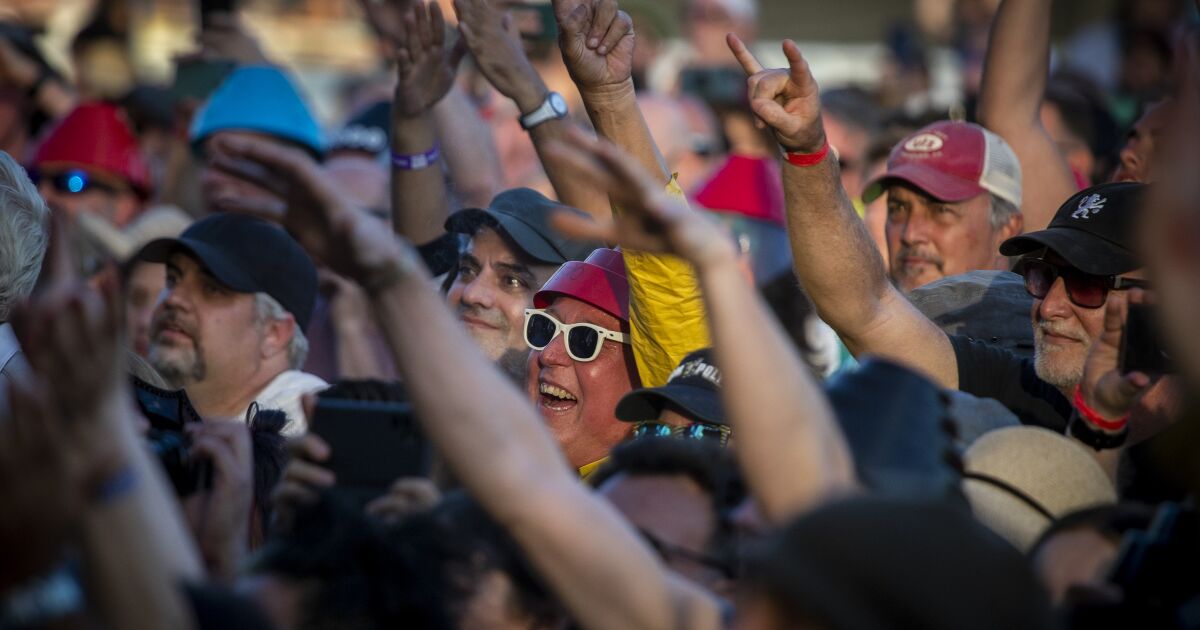
The sizable support Vice President Kamala Harris has generated at her rallies has rattled former President Donald J. Trump, who has emphasized, and frequently exaggerated, his crowd sizes for years. He has said, often repeating falsehoods, that his crowds are much larger than Ms. Harris’s, and the Harris campaign has returned with their own jabs about the enthusiasm of Trump rallygoers.
We attended six rallies — every campaign event that the candidates held within a three-week period in August — across six states, taking photographs and capturing video and 360-degree footage, to analyze which claims on crowd sizes hold weight. The analysis found that, despite Mr. Trump’s claims, both candidates draw comparably big audiences.
On a Friday night, Mr. Trump drew 11,500 people to the Desert Diamond Arena in Glendale, Ariz. Here’s what it looked like:
Photographs and composite by Kalina Borkiewicz and Karthik Patanjali
On a Tuesday night during the weeklong Democratic National Convention in late August, Ms. Harris drew 12,800 to a campaign event at the Fiserv Forum in Milwaukee, Wis. Here’s a scene from that rally:
Photographs and composite by Malika Khurana and Bedel Saget
The four other campaign events that The Times attended were similarly packed, with audience members generally filling up the space designated for the event. The rallies took place at venues with maximum capacities ranging from 6,800 to 19,300 people, though in some cases sections of seating were cordoned off, and additional seating or standing-only areas were added.
Wilkes-Barre, Pa., Aug. 17
Justin Sullivan/Getty Images (Las Vegas), Christian Monterrosa/Agence France-Presse — Getty Images (Savannah), Michael Ciaglo/Getty Images (Bozeman), Doug Mills/The New York Times (Wilkes-Barre)
For each of the six events, The Times counted the number of people visible in footage taken just after each candidate began their speech, also accounting for people in dimly lit and obscured areas. This number does not represent the people that may have left early, before the footage was captured, or arrived late.
Crowd size estimates at campaign events
Harris
| Sat., Aug. 10 | Las Vegas | 6,200 |
| Tue., Aug. 20 | Milwaukee, Wis. | 12,800 |
| Thu., Aug. 29 | Savannah, Ga. | 6,200 |
Trump
| Fri., Aug. 9 | Bozeman, Mont. | 4,300 |
| Sat., Aug. 17 | Wilkes-Barre, Pa. | 5,900 |
| Fri., Aug. 23 | Glendale, Ariz. | 11,500 |
Experts say that crowd sizes at rallies do not have a direct relationship to winning or losing an election. For one, event organizers may strategically choose venues with a small capacity, like college campus buildings where only a few hundred can attend. The day of the week and time of day can also affect the size of the crowd and when people decide to arrive or leave.
Still, crowd sizes have been a sensitive subject for Mr. Trump throughout his political career, his fixation intensifying as of late as enthusiasm has ballooned for the new Democratic ticket. Mr. Trump falsely claimed that photographs of the crowds at Ms. Harris’s events are doctored using A.I.
In response, the Harris campaign posted a video compilation of moments during Mr. Trump’s rallies in which audience members are seen yawning, and also wrote in a separate post on Truth Social that members of Mr. Trump’s audience left the event in Pennsylvania early, “leaving even more empty seats.”
The Times found that people did leave early from two of three of Mr. Trump’s events, including while he was delivering his speech.
Photographs taken over the course of Mr. Trump’s rallies show where people left their seats. Below is a series of photographs from his Aug. 17 rally in Wilkes-Barre, Pa., taken at 13 minutes and just over 1 hour into his speech.
Examples of crowd thinning during Trump’s speech in Wilkes-Barre, Pa.
Malika Khurana and Karthik Patanjali
And this shows where seats emptied out an hour into Mr. Trump’s speech at the Aug. 23 rally in Glendale, Ariz.
Examples of crowd thinning during Trump’s speech in Glendale, Ariz.
Kalina Borkiewicz and Karthik Patanjali
The longer duration of a Trump event compared with a Harris one may have contributed to a greater number of early exits. Trump rallygoers typically arrived earlier in the day, and opening speeches tended to start earlier and last longer. Of the six rallies The Times attended, Mr. Trump spoke for four times as long as Ms. Harris.
How long the rallies lasted
Note: The start time for each rally is determined by when the doors were scheduled to open.
The New York Times
Despite the limited connection between crowd size and election outcomes, the very public sparring between the two campaigns over the metric indicates that it at the very least carries some political significance.
Large, enthusiastic crowds can also help energize the candidate themselves as they give their speech, said Todd Belt, the director of the Political Management program at George Washington University. It can also contribute to a “bandwagon effect,” showing those who aren’t there in person that the enthusiasm for a candidate is real.
“Even though I do believe these kinds of events don’t change people’s minds, what it does is it makes people feel like you’re not alone,” said Betsy Reiser, 62, an attendee at a rally for Harris in Savannah, Ga. “It is very important to feel like you belong.”
The Times took 360-degree photographs at two-minute intervals and panoramic photographs at 15-minute intervals at the rallies, from the time doors opened through the end of the events. To establish the estimated crowd size, The Times manually counted individuals in a single photographic panorama shortly before or during the candidate’s speech, when crowd density was expected to be highest. The count was then rounded to the nearest hundred.
Note: Green dots represent the people Times reporters manually counted in the arena.
Graphic by Kalina Borkiewicz, photograph and composite by Malika Khurana and Bedel Saget
Areas that were obstructed from the view of our cameras were photographed and analyzed separately, then combined with the main count where needed. Photographs were compiled into a single composite image that shows a 360-degree view of the arena. Photograph timestamps, cross-referenced with official campaign information and recorded broadcasts, were used to determine speaking time.

Kalina Borkiewicz, Malika Khurana, Karthik Patanjali and Bedel Saget
The sizable support Vice President Kamala Harris has generated at her rallies has rattled former President Donald J. Trump, who has emphasized, and frequently exaggerated, his crowd sizes for years. He has said, often repeating falsehoods, that his crowds are much larger than Ms. Harris’s, and the Harris campaign has returned with their own jabs about the enthusiasm of Trump rallygoers.
We attended six rallies — every campaign event that the candidates held within a three-week period in August — across six states, taking photographs and capturing video and 360-degree footage, to analyze which claims on crowd sizes hold weight. The analysis found that, despite Mr. Trump’s claims, both candidates draw comparably big audiences.
On a Friday night, Mr. Trump drew 11,500 people to the Desert Diamond Arena in Glendale, Ariz. Here’s what it looked like:
Photographs and composite by Kalina Borkiewicz and Karthik Patanjali
On a Tuesday night during the weeklong Democratic National Convention in late August, Ms. Harris drew 12,800 to a campaign event at the Fiserv Forum in Milwaukee, Wis. Here’s a scene from that rally:
Photographs and composite by Malika Khurana and Bedel Saget
The four other campaign events that The Times attended were similarly packed, with audience members generally filling up the space designated for the event. The rallies took place at venues with maximum capacities ranging from 6,800 to 19,300 people, though in some cases sections of seating were cordoned off, and additional seating or standing-only areas were added.
Wilkes-Barre, Pa., Aug. 17
Justin Sullivan/Getty Images (Las Vegas), Christian Monterrosa/Agence France-Presse — Getty Images (Savannah), Michael Ciaglo/Getty Images (Bozeman), Doug Mills/The New York Times (Wilkes-Barre)
For each of the six events, The Times counted the number of people visible in footage taken just after each candidate began their speech, also accounting for people in dimly lit and obscured areas. This number does not represent the people that may have left early, before the footage was captured, or arrived late.
Crowd size estimates at campaign events
Harris
| Sat., Aug. 10 | Las Vegas | 6,200 |
| Tue., Aug. 20 | Milwaukee, Wis. | 12,800 |
| Thu., Aug. 29 | Savannah, Ga. | 6,200 |
Trump
| Fri., Aug. 9 | Bozeman, Mont. | 4,300 |
| Sat., Aug. 17 | Wilkes-Barre, Pa. | 5,900 |
| Fri., Aug. 23 | Glendale, Ariz. | 11,500 |
Experts say that crowd sizes at rallies do not have a direct relationship to winning or losing an election. For one, event organizers may strategically choose venues with a small capacity, like college campus buildings where only a few hundred can attend. The day of the week and time of day can also affect the size of the crowd and when people decide to arrive or leave.
Still, crowd sizes have been a sensitive subject for Mr. Trump throughout his political career, his fixation intensifying as of late as enthusiasm has ballooned for the new Democratic ticket. Mr. Trump falsely claimed that photographs of the crowds at Ms. Harris’s events are doctored using A.I.
In response, the Harris campaign posted a video compilation of moments during Mr. Trump’s rallies in which audience members are seen yawning, and also wrote in a separate post on Truth Social that members of Mr. Trump’s audience left the event in Pennsylvania early, “leaving even more empty seats.”
The Times found that people did leave early from two of three of Mr. Trump’s events, including while he was delivering his speech.
Photographs taken over the course of Mr. Trump’s rallies show where people left their seats. Below is a series of photographs from his Aug. 17 rally in Wilkes-Barre, Pa., taken at 13 minutes and just over 1 hour into his speech.
Examples of crowd thinning during Trump’s speech in Wilkes-Barre, Pa.
Malika Khurana and Karthik Patanjali
And this shows where seats emptied out an hour into Mr. Trump’s speech at the Aug. 23 rally in Glendale, Ariz.
Examples of crowd thinning during Trump’s speech in Glendale, Ariz.
Kalina Borkiewicz and Karthik Patanjali
The longer duration of a Trump event compared with a Harris one may have contributed to a greater number of early exits. Trump rallygoers typically arrived earlier in the day, and opening speeches tended to start earlier and last longer. Of the six rallies The Times attended, Mr. Trump spoke for four times as long as Ms. Harris.
How long the rallies lasted
Note: The start time for each rally is determined by when the doors were scheduled to open.
The New York Times
Despite the limited connection between crowd size and election outcomes, the very public sparring between the two campaigns over the metric indicates that it at the very least carries some political significance.
Large, enthusiastic crowds can also help energize the candidate themselves as they give their speech, said Todd Belt, the director of the Political Management program at George Washington University. It can also contribute to a “bandwagon effect,” showing those who aren’t there in person that the enthusiasm for a candidate is real.
“Even though I do believe these kinds of events don’t change people’s minds, what it does is it makes people feel like you’re not alone,” said Betsy Reiser, 62, an attendee at a rally for Harris in Savannah, Ga. “It is very important to feel like you belong.”
The Times took 360-degree photographs at two-minute intervals and panoramic photographs at 15-minute intervals at the rallies, from the time doors opened through the end of the events. To establish the estimated crowd size, The Times manually counted individuals in a single photographic panorama shortly before or during the candidate’s speech, when crowd density was expected to be highest. The count was then rounded to the nearest hundred.
Note: Green dots represent the people Times reporters manually counted in the arena.
Graphic by Kalina Borkiewicz, photograph and composite by Malika Khurana and Bedel Saget
Areas that were obstructed from the view of our cameras were photographed and analyzed separately, then combined with the main count where needed. Photographs were compiled into a single composite image that shows a 360-degree view of the arena. Photograph timestamps, cross-referenced with official campaign information and recorded broadcasts, were used to determine speaking time.

Kalina Borkiewicz, Malika Khurana, Karthik Patanjali and Bedel Saget
The sizable support Vice President Kamala Harris has generated at her rallies has rattled former President Donald J. Trump, who has emphasized, and frequently exaggerated, his crowd sizes for years. He has said, often repeating falsehoods, that his crowds are much larger than Ms. Harris’s, and the Harris campaign has returned with their own jabs about the enthusiasm of Trump rallygoers.
We attended six rallies — every campaign event that the candidates held within a three-week period in August — across six states, taking photographs and capturing video and 360-degree footage, to analyze which claims on crowd sizes hold weight. The analysis found that, despite Mr. Trump’s claims, both candidates draw comparably big audiences.
On a Friday night, Mr. Trump drew 11,500 people to the Desert Diamond Arena in Glendale, Ariz. Here’s what it looked like:
Photographs and composite by Kalina Borkiewicz and Karthik Patanjali
On a Tuesday night during the weeklong Democratic National Convention in late August, Ms. Harris drew 12,800 to a campaign event at the Fiserv Forum in Milwaukee, Wis. Here’s a scene from that rally:
Photographs and composite by Malika Khurana and Bedel Saget
The four other campaign events that The Times attended were similarly packed, with audience members generally filling up the space designated for the event. The rallies took place at venues with maximum capacities ranging from 6,800 to 19,300 people, though in some cases sections of seating were cordoned off, and additional seating or standing-only areas were added.
Wilkes-Barre, Pa., Aug. 17
Justin Sullivan/Getty Images (Las Vegas), Christian Monterrosa/Agence France-Presse — Getty Images (Savannah), Michael Ciaglo/Getty Images (Bozeman), Doug Mills/The New York Times (Wilkes-Barre)
For each of the six events, The Times counted the number of people visible in footage taken just after each candidate began their speech, also accounting for people in dimly lit and obscured areas. This number does not represent the people that may have left early, before the footage was captured, or arrived late.
Crowd size estimates at campaign events
Harris
| Sat., Aug. 10 | Las Vegas | 6,200 |
| Tue., Aug. 20 | Milwaukee, Wis. | 12,800 |
| Thu., Aug. 29 | Savannah, Ga. | 6,200 |
Trump
| Fri., Aug. 9 | Bozeman, Mont. | 4,300 |
| Sat., Aug. 17 | Wilkes-Barre, Pa. | 5,900 |
| Fri., Aug. 23 | Glendale, Ariz. | 11,500 |
Experts say that crowd sizes at rallies do not have a direct relationship to winning or losing an election. For one, event organizers may strategically choose venues with a small capacity, like college campus buildings where only a few hundred can attend. The day of the week and time of day can also affect the size of the crowd and when people decide to arrive or leave.
Still, crowd sizes have been a sensitive subject for Mr. Trump throughout his political career, his fixation intensifying as of late as enthusiasm has ballooned for the new Democratic ticket. Mr. Trump falsely claimed that photographs of the crowds at Ms. Harris’s events are doctored using A.I.
In response, the Harris campaign posted a video compilation of moments during Mr. Trump’s rallies in which audience members are seen yawning, and also wrote in a separate post on Truth Social that members of Mr. Trump’s audience left the event in Pennsylvania early, “leaving even more empty seats.”
The Times found that people did leave early from two of three of Mr. Trump’s events, including while he was delivering his speech.
Photographs taken over the course of Mr. Trump’s rallies show where people left their seats. Below is a series of photographs from his Aug. 17 rally in Wilkes-Barre, Pa., taken at 13 minutes and just over 1 hour into his speech.
Examples of crowd thinning during Trump’s speech in Wilkes-Barre, Pa.
Malika Khurana and Karthik Patanjali
And this shows where seats emptied out an hour into Mr. Trump’s speech at the Aug. 23 rally in Glendale, Ariz.
Examples of crowd thinning during Trump’s speech in Glendale, Ariz.
Kalina Borkiewicz and Karthik Patanjali
The longer duration of a Trump event compared with a Harris one may have contributed to a greater number of early exits. Trump rallygoers typically arrived earlier in the day, and opening speeches tended to start earlier and last longer. Of the six rallies The Times attended, Mr. Trump spoke for four times as long as Ms. Harris.
How long the rallies lasted
Note: The start time for each rally is determined by when the doors were scheduled to open.
The New York Times
Despite the limited connection between crowd size and election outcomes, the very public sparring between the two campaigns over the metric indicates that it at the very least carries some political significance.
Large, enthusiastic crowds can also help energize the candidate themselves as they give their speech, said Todd Belt, the director of the Political Management program at George Washington University. It can also contribute to a “bandwagon effect,” showing those who aren’t there in person that the enthusiasm for a candidate is real.
“Even though I do believe these kinds of events don’t change people’s minds, what it does is it makes people feel like you’re not alone,” said Betsy Reiser, 62, an attendee at a rally for Harris in Savannah, Ga. “It is very important to feel like you belong.”
The Times took 360-degree photographs at two-minute intervals and panoramic photographs at 15-minute intervals at the rallies, from the time doors opened through the end of the events. To establish the estimated crowd size, The Times manually counted individuals in a single photographic panorama shortly before or during the candidate’s speech, when crowd density was expected to be highest. The count was then rounded to the nearest hundred.
Note: Green dots represent the people Times reporters manually counted in the arena.
Graphic by Kalina Borkiewicz, photograph and composite by Malika Khurana and Bedel Saget
Areas that were obstructed from the view of our cameras were photographed and analyzed separately, then combined with the main count where needed. Photographs were compiled into a single composite image that shows a 360-degree view of the arena. Photograph timestamps, cross-referenced with official campaign information and recorded broadcasts, were used to determine speaking time.
Kalina Borkiewicz, Malika Khurana, Karthik Patanjali and Bedel Saget
The sizable support Vice President Kamala Harris has generated at her rallies has rattled former President Donald J. Trump, who has emphasized, and frequently exaggerated, his crowd sizes for years. He has said, often repeating falsehoods, that his crowds are much larger than Ms. Harris’s, and the Harris campaign has returned with their own jabs about the enthusiasm of Trump rallygoers.
We attended six rallies — every campaign event that the candidates held within a three-week period in August — across six states, taking photographs and capturing video and 360-degree footage, to analyze which claims on crowd sizes hold weight. The analysis found that, despite Mr. Trump’s claims, both candidates draw comparably big audiences.
On a Friday night, Mr. Trump drew 11,500 people to the Desert Diamond Arena in Glendale, Ariz. Here’s what it looked like:
Photographs and composite by Kalina Borkiewicz and Karthik Patanjali
On a Tuesday night during the weeklong Democratic National Convention in late August, Ms. Harris drew 12,800 to a campaign event at the Fiserv Forum in Milwaukee, Wis. Here’s a scene from that rally:
Photographs and composite by Malika Khurana and Bedel Saget
The four other campaign events that The Times attended were similarly packed, with audience members generally filling up the space designated for the event. The rallies took place at venues with maximum capacities ranging from 6,800 to 19,300 people, though in some cases sections of seating were cordoned off, and additional seating or standing-only areas were added.
Wilkes-Barre, Pa., Aug. 17
Justin Sullivan/Getty Images (Las Vegas), Christian Monterrosa/Agence France-Presse — Getty Images (Savannah), Michael Ciaglo/Getty Images (Bozeman), Doug Mills/The New York Times (Wilkes-Barre)
For each of the six events, The Times counted the number of people visible in footage taken just after each candidate began their speech, also accounting for people in dimly lit and obscured areas. This number does not represent the people that may have left early, before the footage was captured, or arrived late.
Crowd size estimates at campaign events
Harris
| Sat., Aug. 10 | Las Vegas | 6,200 |
| Tue., Aug. 20 | Milwaukee, Wis. | 12,800 |
| Thu., Aug. 29 | Savannah, Ga. | 6,200 |
Trump
| Fri., Aug. 9 | Bozeman, Mont. | 4,300 |
| Sat., Aug. 17 | Wilkes-Barre, Pa. | 5,900 |
| Fri., Aug. 23 | Glendale, Ariz. | 11,500 |
Experts say that crowd sizes at rallies do not have a direct relationship to winning or losing an election. For one, event organizers may strategically choose venues with a small capacity, like college campus buildings where only a few hundred can attend. The day of the week and time of day can also affect the size of the crowd and when people decide to arrive or leave.
Still, crowd sizes have been a sensitive subject for Mr. Trump throughout his political career, his fixation intensifying as of late as enthusiasm has ballooned for the new Democratic ticket. Mr. Trump falsely claimed that photographs of the crowds at Ms. Harris’s events are doctored using A.I.
In response, the Harris campaign posted a video compilation of moments during Mr. Trump’s rallies in which audience members are seen yawning, and also wrote in a separate post on Truth Social that members of Mr. Trump’s audience left the event in Pennsylvania early, “leaving even more empty seats.”
The Times found that people did leave early from two of three of Mr. Trump’s events, including while he was delivering his speech.
Photographs taken over the course of Mr. Trump’s rallies show where people left their seats. Below is a series of photographs from his Aug. 17 rally in Wilkes-Barre, Pa., taken at 13 minutes and just over 1 hour into his speech.
Examples of crowd thinning during Trump’s speech in Wilkes-Barre, Pa.
Malika Khurana and Karthik Patanjali
And this shows where seats emptied out an hour into Mr. Trump’s speech at the Aug. 23 rally in Glendale, Ariz.
Examples of crowd thinning during Trump’s speech in Glendale, Ariz.
Kalina Borkiewicz and Karthik Patanjali
The longer duration of a Trump event compared with a Harris one may have contributed to a greater number of early exits. Trump rallygoers typically arrived earlier in the day, and opening speeches tended to start earlier and last longer. Of the six rallies The Times attended, Mr. Trump spoke for four times as long as Ms. Harris.
How long the rallies lasted
Note: The start time for each rally is determined by when the doors were scheduled to open.
The New York Times
Despite the limited connection between crowd size and election outcomes, the very public sparring between the two campaigns over the metric indicates that it at the very least carries some political significance.
Large, enthusiastic crowds can also help energize the candidate themselves as they give their speech, said Todd Belt, the director of the Political Management program at George Washington University. It can also contribute to a “bandwagon effect,” showing those who aren’t there in person that the enthusiasm for a candidate is real.
“Even though I do believe these kinds of events don’t change people’s minds, what it does is it makes people feel like you’re not alone,” said Betsy Reiser, 62, an attendee at a rally for Harris in Savannah, Ga. “It is very important to feel like you belong.”
The Times took 360-degree photographs at two-minute intervals and panoramic photographs at 15-minute intervals at the rallies, from the time doors opened through the end of the events. To establish the estimated crowd size, The Times manually counted individuals in a single photographic panorama shortly before or during the candidate’s speech, when crowd density was expected to be highest. The count was then rounded to the nearest hundred.
Note: Green dots represent the people Times reporters manually counted in the arena.
Graphic by Kalina Borkiewicz, photograph and composite by Malika Khurana and Bedel Saget
Areas that were obstructed from the view of our cameras were photographed and analyzed separately, then combined with the main count where needed. Photographs were compiled into a single composite image that shows a 360-degree view of the arena. Photograph timestamps, cross-referenced with official campaign information and recorded broadcasts, were used to determine speaking time.

Kalina Borkiewicz, Malika Khurana, Karthik Patanjali and Bedel Saget
The sizable support Vice President Kamala Harris has generated at her rallies has rattled former President Donald J. Trump, who has emphasized, and frequently exaggerated, his crowd sizes for years. He has said, often repeating falsehoods, that his crowds are much larger than Ms. Harris’s, and the Harris campaign has returned with their own jabs about the enthusiasm of Trump rallygoers.
We attended six rallies — every campaign event that the candidates held within a three-week period in August — across six states, taking photographs and capturing video and 360-degree footage, to analyze which claims on crowd sizes hold weight. The analysis found that, despite Mr. Trump’s claims, both candidates draw comparably big audiences.
On a Friday night, Mr. Trump drew 11,500 people to the Desert Diamond Arena in Glendale, Ariz. Here’s what it looked like:
Photographs and composite by Kalina Borkiewicz and Karthik Patanjali
On a Tuesday night during the weeklong Democratic National Convention in late August, Ms. Harris drew 12,800 to a campaign event at the Fiserv Forum in Milwaukee, Wis. Here’s a scene from that rally:
Photographs and composite by Malika Khurana and Bedel Saget
The four other campaign events that The Times attended were similarly packed, with audience members generally filling up the space designated for the event. The rallies took place at venues with maximum capacities ranging from 6,800 to 19,300 people, though in some cases sections of seating were cordoned off, and additional seating or standing-only areas were added.
Wilkes-Barre, Pa., Aug. 17
Justin Sullivan/Getty Images (Las Vegas), Christian Monterrosa/Agence France-Presse — Getty Images (Savannah), Michael Ciaglo/Getty Images (Bozeman), Doug Mills/The New York Times (Wilkes-Barre)
For each of the six events, The Times counted the number of people visible in footage taken just after each candidate began their speech, also accounting for people in dimly lit and obscured areas. This number does not represent the people that may have left early, before the footage was captured, or arrived late.
Crowd size estimates at campaign events
Harris
| Sat., Aug. 10 | Las Vegas | 6,200 |
| Tue., Aug. 20 | Milwaukee, Wis. | 12,800 |
| Thu., Aug. 29 | Savannah, Ga. | 6,200 |
Trump
| Fri., Aug. 9 | Bozeman, Mont. | 4,300 |
| Sat., Aug. 17 | Wilkes-Barre, Pa. | 5,900 |
| Fri., Aug. 23 | Glendale, Ariz. | 11,500 |
Experts say that crowd sizes at rallies do not have a direct relationship to winning or losing an election. For one, event organizers may strategically choose venues with a small capacity, like college campus buildings where only a few hundred can attend. The day of the week and time of day can also affect the size of the crowd and when people decide to arrive or leave.
Still, crowd sizes have been a sensitive subject for Mr. Trump throughout his political career, his fixation intensifying as of late as enthusiasm has ballooned for the new Democratic ticket. Mr. Trump falsely claimed that photographs of the crowds at Ms. Harris’s events are doctored using A.I.
In response, the Harris campaign posted a video compilation of moments during Mr. Trump’s rallies in which audience members are seen yawning, and also wrote in a separate post on Truth Social that members of Mr. Trump’s audience left the event in Pennsylvania early, “leaving even more empty seats.”
The Times found that people did leave early from two of three of Mr. Trump’s events, including while he was delivering his speech.
Photographs taken over the course of Mr. Trump’s rallies show where people left their seats. Below is a series of photographs from his Aug. 17 rally in Wilkes-Barre, Pa., taken at 13 minutes and just over 1 hour into his speech.
Examples of crowd thinning during Trump’s speech in Wilkes-Barre, Pa.
Malika Khurana and Karthik Patanjali
And this shows where seats emptied out an hour into Mr. Trump’s speech at the Aug. 23 rally in Glendale, Ariz.
Examples of crowd thinning during Trump’s speech in Glendale, Ariz.
Kalina Borkiewicz and Karthik Patanjali
The longer duration of a Trump event compared with a Harris one may have contributed to a greater number of early exits. Trump rallygoers typically arrived earlier in the day, and opening speeches tended to start earlier and last longer. Of the six rallies The Times attended, Mr. Trump spoke for four times as long as Ms. Harris.
How long the rallies lasted
Note: The start time for each rally is determined by when the doors were scheduled to open.
The New York Times
Despite the limited connection between crowd size and election outcomes, the very public sparring between the two campaigns over the metric indicates that it at the very least carries some political significance.
Large, enthusiastic crowds can also help energize the candidate themselves as they give their speech, said Todd Belt, the director of the Political Management program at George Washington University. It can also contribute to a “bandwagon effect,” showing those who aren’t there in person that the enthusiasm for a candidate is real.
“Even though I do believe these kinds of events don’t change people’s minds, what it does is it makes people feel like you’re not alone,” said Betsy Reiser, 62, an attendee at a rally for Harris in Savannah, Ga. “It is very important to feel like you belong.”
The Times took 360-degree photographs at two-minute intervals and panoramic photographs at 15-minute intervals at the rallies, from the time doors opened through the end of the events. To establish the estimated crowd size, The Times manually counted individuals in a single photographic panorama shortly before or during the candidate’s speech, when crowd density was expected to be highest. The count was then rounded to the nearest hundred.
Note: Green dots represent the people Times reporters manually counted in the arena.
Graphic by Kalina Borkiewicz, photograph and composite by Malika Khurana and Bedel Saget
Areas that were obstructed from the view of our cameras were photographed and analyzed separately, then combined with the main count where needed. Photographs were compiled into a single composite image that shows a 360-degree view of the arena. Photograph timestamps, cross-referenced with official campaign information and recorded broadcasts, were used to determine speaking time.
Kalina Borkiewicz, Malika Khurana, Karthik Patanjali and Bedel Saget
The sizable support Vice President Kamala Harris has generated at her rallies has rattled former President Donald J. Trump, who has emphasized, and frequently exaggerated, his crowd sizes for years. He has said, often repeating falsehoods, that his crowds are much larger than Ms. Harris’s, and the Harris campaign has returned with their own jabs about the enthusiasm of Trump rallygoers.
We attended six rallies — every campaign event that the candidates held within a three-week period in August — across six states, taking photographs and capturing video and 360-degree footage, to analyze which claims on crowd sizes hold weight. The analysis found that, despite Mr. Trump’s claims, both candidates draw comparably big audiences.
On a Friday night, Mr. Trump drew 11,500 people to the Desert Diamond Arena in Glendale, Ariz. Here’s what it looked like:
Photographs and composite by Kalina Borkiewicz and Karthik Patanjali
On a Tuesday night during the weeklong Democratic National Convention in late August, Ms. Harris drew 12,800 to a campaign event at the Fiserv Forum in Milwaukee, Wis. Here’s a scene from that rally:
Photographs and composite by Malika Khurana and Bedel Saget
The four other campaign events that The Times attended were similarly packed, with audience members generally filling up the space designated for the event. The rallies took place at venues with maximum capacities ranging from 6,800 to 19,300 people, though in some cases sections of seating were cordoned off, and additional seating or standing-only areas were added.
Wilkes-Barre, Pa., Aug. 17
Justin Sullivan/Getty Images (Las Vegas), Christian Monterrosa/Agence France-Presse — Getty Images (Savannah), Michael Ciaglo/Getty Images (Bozeman), Doug Mills/The New York Times (Wilkes-Barre)
For each of the six events, The Times counted the number of people visible in footage taken just after each candidate began their speech, also accounting for people in dimly lit and obscured areas. This number does not represent the people that may have left early, before the footage was captured, or arrived late.
Crowd size estimates at campaign events
Harris
| Sat., Aug. 10 | Las Vegas | 6,200 |
| Tue., Aug. 20 | Milwaukee, Wis. | 12,800 |
| Thu., Aug. 29 | Savannah, Ga. | 6,200 |
Trump
| Fri., Aug. 9 | Bozeman, Mont. | 4,300 |
| Sat., Aug. 17 | Wilkes-Barre, Pa. | 5,900 |
| Fri., Aug. 23 | Glendale, Ariz. | 11,500 |
Experts say that crowd sizes at rallies do not have a direct relationship to winning or losing an election. For one, event organizers may strategically choose venues with a small capacity, like college campus buildings where only a few hundred can attend. The day of the week and time of day can also affect the size of the crowd and when people decide to arrive or leave.
Still, crowd sizes have been a sensitive subject for Mr. Trump throughout his political career, his fixation intensifying as of late as enthusiasm has ballooned for the new Democratic ticket. Mr. Trump falsely claimed that photographs of the crowds at Ms. Harris’s events are doctored using A.I.
In response, the Harris campaign posted a video compilation of moments during Mr. Trump’s rallies in which audience members are seen yawning, and also wrote in a separate post on Truth Social that members of Mr. Trump’s audience left the event in Pennsylvania early, “leaving even more empty seats.”
The Times found that people did leave early from two of three of Mr. Trump’s events, including while he was delivering his speech.
Photographs taken over the course of Mr. Trump’s rallies show where people left their seats. Below is a series of photographs from his Aug. 17 rally in Wilkes-Barre, Pa., taken at 13 minutes and just over 1 hour into his speech.
Examples of crowd thinning during Trump’s speech in Wilkes-Barre, Pa.
Malika Khurana and Karthik Patanjali
And this shows where seats emptied out an hour into Mr. Trump’s speech at the Aug. 23 rally in Glendale, Ariz.
Examples of crowd thinning during Trump’s speech in Glendale, Ariz.
Kalina Borkiewicz and Karthik Patanjali
The longer duration of a Trump event compared with a Harris one may have contributed to a greater number of early exits. Trump rallygoers typically arrived earlier in the day, and opening speeches tended to start earlier and last longer. Of the six rallies The Times attended, Mr. Trump spoke for four times as long as Ms. Harris.
How long the rallies lasted
Note: The start time for each rally is determined by when the doors were scheduled to open.
The New York Times
Despite the limited connection between crowd size and election outcomes, the very public sparring between the two campaigns over the metric indicates that it at the very least carries some political significance.
Large, enthusiastic crowds can also help energize the candidate themselves as they give their speech, said Todd Belt, the director of the Political Management program at George Washington University. It can also contribute to a “bandwagon effect,” showing those who aren’t there in person that the enthusiasm for a candidate is real.
“Even though I do believe these kinds of events don’t change people’s minds, what it does is it makes people feel like you’re not alone,” said Betsy Reiser, 62, an attendee at a rally for Harris in Savannah, Ga. “It is very important to feel like you belong.”
The Times took 360-degree photographs at two-minute intervals and panoramic photographs at 15-minute intervals at the rallies, from the time doors opened through the end of the events. To establish the estimated crowd size, The Times manually counted individuals in a single photographic panorama shortly before or during the candidate’s speech, when crowd density was expected to be highest. The count was then rounded to the nearest hundred.
Note: Green dots represent the people Times reporters manually counted in the arena.
Graphic by Kalina Borkiewicz, photograph and composite by Malika Khurana and Bedel Saget
Areas that were obstructed from the view of our cameras were photographed and analyzed separately, then combined with the main count where needed. Photographs were compiled into a single composite image that shows a 360-degree view of the arena. Photograph timestamps, cross-referenced with official campaign information and recorded broadcasts, were used to determine speaking time.
Kalina Borkiewicz, Malika Khurana, Karthik Patanjali and Bedel Saget
The sizable support Vice President Kamala Harris has generated at her rallies has rattled former President Donald J. Trump, who has emphasized, and frequently exaggerated, his crowd sizes for years. He has said, often repeating falsehoods, that his crowds are much larger than Ms. Harris’s, and the Harris campaign has returned with their own jabs about the enthusiasm of Trump rallygoers.
We attended six rallies — every campaign event that the candidates held within a three-week period in August — across six states, taking photographs and capturing video and 360-degree footage, to analyze which claims on crowd sizes hold weight. The analysis found that, despite Mr. Trump’s claims, both candidates draw comparably big audiences.
On a Friday night, Mr. Trump drew 11,500 people to the Desert Diamond Arena in Glendale, Ariz. Here’s what it looked like:
Photographs and composite by Kalina Borkiewicz and Karthik Patanjali
On a Tuesday night during the weeklong Democratic National Convention in late August, Ms. Harris drew 12,800 to a campaign event at the Fiserv Forum in Milwaukee, Wis. Here’s a scene from that rally:
Photographs and composite by Malika Khurana and Bedel Saget
The four other campaign events that The Times attended were similarly packed, with audience members generally filling up the space designated for the event. The rallies took place at venues with maximum capacities ranging from 6,800 to 19,300 people, though in some cases sections of seating were cordoned off, and additional seating or standing-only areas were added.
Wilkes-Barre, Pa., Aug. 17
Justin Sullivan/Getty Images (Las Vegas), Christian Monterrosa/Agence France-Presse — Getty Images (Savannah), Michael Ciaglo/Getty Images (Bozeman), Doug Mills/The New York Times (Wilkes-Barre)
For each of the six events, The Times counted the number of people visible in footage taken just after each candidate began their speech, also accounting for people in dimly lit and obscured areas. This number does not represent the people that may have left early, before the footage was captured, or arrived late.
Crowd size estimates at campaign events
Harris
| Sat., Aug. 10 | Las Vegas | 6,200 |
| Tue., Aug. 20 | Milwaukee, Wis. | 12,800 |
| Thu., Aug. 29 | Savannah, Ga. | 6,200 |
Trump
| Fri., Aug. 9 | Bozeman, Mont. | 4,300 |
| Sat., Aug. 17 | Wilkes-Barre, Pa. | 5,900 |
| Fri., Aug. 23 | Glendale, Ariz. | 11,500 |
Experts say that crowd sizes at rallies do not have a direct relationship to winning or losing an election. For one, event organizers may strategically choose venues with a small capacity, like college campus buildings where only a few hundred can attend. The day of the week and time of day can also affect the size of the crowd and when people decide to arrive or leave.
Still, crowd sizes have been a sensitive subject for Mr. Trump throughout his political career, his fixation intensifying as of late as enthusiasm has ballooned for the new Democratic ticket. Mr. Trump falsely claimed that photographs of the crowds at Ms. Harris’s events are doctored using A.I.
In response, the Harris campaign posted a video compilation of moments during Mr. Trump’s rallies in which audience members are seen yawning, and also wrote in a separate post on Truth Social that members of Mr. Trump’s audience left the event in Pennsylvania early, “leaving even more empty seats.”
The Times found that people did leave early from two of three of Mr. Trump’s events, including while he was delivering his speech.
Photographs taken over the course of Mr. Trump’s rallies show where people left their seats. Below is a series of photographs from his Aug. 17 rally in Wilkes-Barre, Pa., taken at 13 minutes and just over 1 hour into his speech.
Examples of crowd thinning during Trump’s speech in Wilkes-Barre, Pa.
Malika Khurana and Karthik Patanjali
And this shows where seats emptied out an hour into Mr. Trump’s speech at the Aug. 23 rally in Glendale, Ariz.
Examples of crowd thinning during Trump’s speech in Glendale, Ariz.
Kalina Borkiewicz and Karthik Patanjali
The longer duration of a Trump event compared with a Harris one may have contributed to a greater number of early exits. Trump rallygoers typically arrived earlier in the day, and opening speeches tended to start earlier and last longer. Of the six rallies The Times attended, Mr. Trump spoke for four times as long as Ms. Harris.
How long the rallies lasted
Note: The start time for each rally is determined by when the doors were scheduled to open.
The New York Times
Despite the limited connection between crowd size and election outcomes, the very public sparring between the two campaigns over the metric indicates that it at the very least carries some political significance.
Large, enthusiastic crowds can also help energize the candidate themselves as they give their speech, said Todd Belt, the director of the Political Management program at George Washington University. It can also contribute to a “bandwagon effect,” showing those who aren’t there in person that the enthusiasm for a candidate is real.
“Even though I do believe these kinds of events don’t change people’s minds, what it does is it makes people feel like you’re not alone,” said Betsy Reiser, 62, an attendee at a rally for Harris in Savannah, Ga. “It is very important to feel like you belong.”
The Times took 360-degree photographs at two-minute intervals and panoramic photographs at 15-minute intervals at the rallies, from the time doors opened through the end of the events. To establish the estimated crowd size, The Times manually counted individuals in a single photographic panorama shortly before or during the candidate’s speech, when crowd density was expected to be highest. The count was then rounded to the nearest hundred.
Note: Green dots represent the people Times reporters manually counted in the arena.
Graphic by Kalina Borkiewicz, photograph and composite by Malika Khurana and Bedel Saget
Areas that were obstructed from the view of our cameras were photographed and analyzed separately, then combined with the main count where needed. Photographs were compiled into a single composite image that shows a 360-degree view of the arena. Photograph timestamps, cross-referenced with official campaign information and recorded broadcasts, were used to determine speaking time.
Kalina Borkiewicz, Malika Khurana, Karthik Patanjali and Bedel Saget
The sizable support Vice President Kamala Harris has generated at her rallies has rattled former President Donald J. Trump, who has emphasized, and frequently exaggerated, his crowd sizes for years. He has said, often repeating falsehoods, that his crowds are much larger than Ms. Harris’s, and the Harris campaign has returned with their own jabs about the enthusiasm of Trump rallygoers.
We attended six rallies — every campaign event that the candidates held within a three-week period in August — across six states, taking photographs and capturing video and 360-degree footage, to analyze which claims on crowd sizes hold weight. The analysis found that, despite Mr. Trump’s claims, both candidates draw comparably big audiences.
On a Friday night, Mr. Trump drew 11,500 people to the Desert Diamond Arena in Glendale, Ariz. Here’s what it looked like:
Photographs and composite by Kalina Borkiewicz and Karthik Patanjali
On a Tuesday night during the weeklong Democratic National Convention in late August, Ms. Harris drew 12,800 to a campaign event at the Fiserv Forum in Milwaukee, Wis. Here’s a scene from that rally:
Photographs and composite by Malika Khurana and Bedel Saget
The four other campaign events that The Times attended were similarly packed, with audience members generally filling up the space designated for the event. The rallies took place at venues with maximum capacities ranging from 6,800 to 19,300 people, though in some cases sections of seating were cordoned off, and additional seating or standing-only areas were added.
Wilkes-Barre, Pa., Aug. 17
Justin Sullivan/Getty Images (Las Vegas), Christian Monterrosa/Agence France-Presse — Getty Images (Savannah), Michael Ciaglo/Getty Images (Bozeman), Doug Mills/The New York Times (Wilkes-Barre)
For each of the six events, The Times counted the number of people visible in footage taken just after each candidate began their speech, also accounting for people in dimly lit and obscured areas. This number does not represent the people that may have left early, before the footage was captured, or arrived late.
Crowd size estimates at campaign events
Harris
| Sat., Aug. 10 | Las Vegas | 6,200 |
| Tue., Aug. 20 | Milwaukee, Wis. | 12,800 |
| Thu., Aug. 29 | Savannah, Ga. | 6,200 |
Trump
| Fri., Aug. 9 | Bozeman, Mont. | 4,300 |
| Sat., Aug. 17 | Wilkes-Barre, Pa. | 5,900 |
| Fri., Aug. 23 | Glendale, Ariz. | 11,500 |
Experts say that crowd sizes at rallies do not have a direct relationship to winning or losing an election. For one, event organizers may strategically choose venues with a small capacity, like college campus buildings where only a few hundred can attend. The day of the week and time of day can also affect the size of the crowd and when people decide to arrive or leave.
Still, crowd sizes have been a sensitive subject for Mr. Trump throughout his political career, his fixation intensifying as of late as enthusiasm has ballooned for the new Democratic ticket. Mr. Trump falsely claimed that photographs of the crowds at Ms. Harris’s events are doctored using A.I.
In response, the Harris campaign posted a video compilation of moments during Mr. Trump’s rallies in which audience members are seen yawning, and also wrote in a separate post on Truth Social that members of Mr. Trump’s audience left the event in Pennsylvania early, “leaving even more empty seats.”
The Times found that people did leave early from two of three of Mr. Trump’s events, including while he was delivering his speech.
Photographs taken over the course of Mr. Trump’s rallies show where people left their seats. Below is a series of photographs from his Aug. 17 rally in Wilkes-Barre, Pa., taken at 13 minutes and just over 1 hour into his speech.
Examples of crowd thinning during Trump’s speech in Wilkes-Barre, Pa.
Malika Khurana and Karthik Patanjali
And this shows where seats emptied out an hour into Mr. Trump’s speech at the Aug. 23 rally in Glendale, Ariz.
Examples of crowd thinning during Trump’s speech in Glendale, Ariz.
Kalina Borkiewicz and Karthik Patanjali
The longer duration of a Trump event compared with a Harris one may have contributed to a greater number of early exits. Trump rallygoers typically arrived earlier in the day, and opening speeches tended to start earlier and last longer. Of the six rallies The Times attended, Mr. Trump spoke for four times as long as Ms. Harris.
How long the rallies lasted
Note: The start time for each rally is determined by when the doors were scheduled to open.
The New York Times
Despite the limited connection between crowd size and election outcomes, the very public sparring between the two campaigns over the metric indicates that it at the very least carries some political significance.
Large, enthusiastic crowds can also help energize the candidate themselves as they give their speech, said Todd Belt, the director of the Political Management program at George Washington University. It can also contribute to a “bandwagon effect,” showing those who aren’t there in person that the enthusiasm for a candidate is real.
“Even though I do believe these kinds of events don’t change people’s minds, what it does is it makes people feel like you’re not alone,” said Betsy Reiser, 62, an attendee at a rally for Harris in Savannah, Ga. “It is very important to feel like you belong.”
The Times took 360-degree photographs at two-minute intervals and panoramic photographs at 15-minute intervals at the rallies, from the time doors opened through the end of the events. To establish the estimated crowd size, The Times manually counted individuals in a single photographic panorama shortly before or during the candidate’s speech, when crowd density was expected to be highest. The count was then rounded to the nearest hundred.
Note: Green dots represent the people Times reporters manually counted in the arena.
Graphic by Kalina Borkiewicz, photograph and composite by Malika Khurana and Bedel Saget
Areas that were obstructed from the view of our cameras were photographed and analyzed separately, then combined with the main count where needed. Photographs were compiled into a single composite image that shows a 360-degree view of the arena. Photograph timestamps, cross-referenced with official campaign information and recorded broadcasts, were used to determine speaking time.