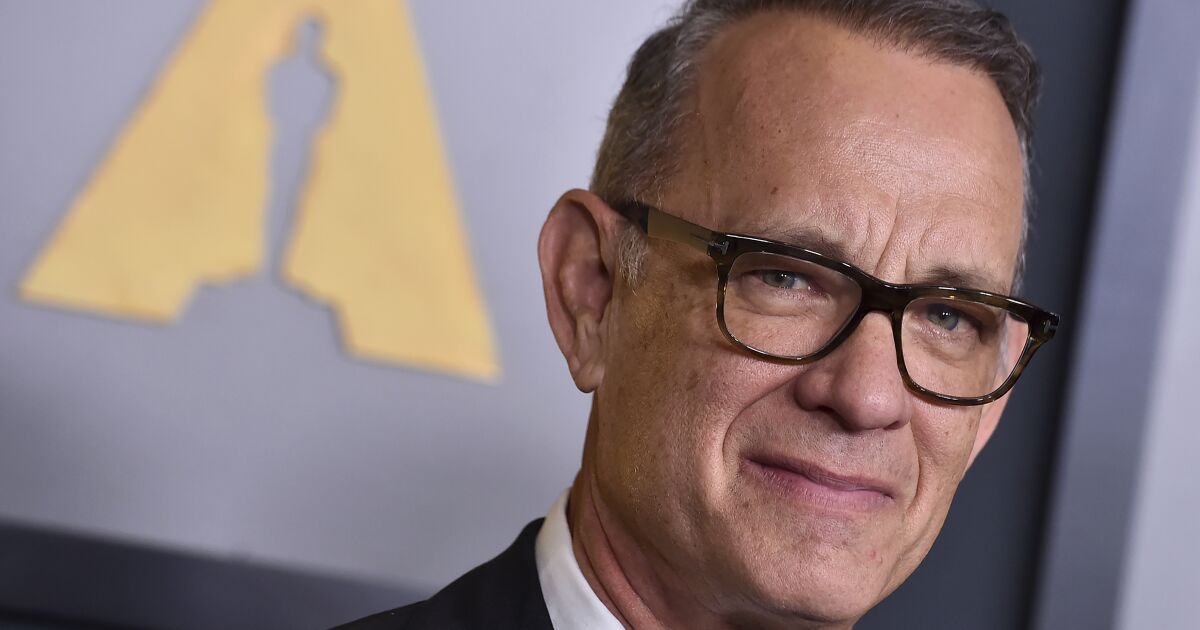
Tom Hanks knows artificial intelligence could have his likeness appearing in movies long after he’s gone. But he wonders if people will care that it’s not really him.
On an episode of “The Adam Buxton Podcast” released Friday, Hanks pondered the artistic and legal questions that come with the reality that artificial intelligence is increasingly changing the world. From symphonies written by ChatGPT to AI chatbots programmed to flirt on dating apps, it’s easy to wonder what might still be sacred. And Hanks appears to be a bit cynical.
Buxton asked Hanks if he would place legal restrictions on “who gets to use AI in order to re-create a Tom Hanks performance” when the Oscar winner is no longer acting.
“This is something that is literally part and parcel to what’s going on in the realm of intellectual property rights right now,” Hanks replied. “This has always been lingering.”
Hanks said the first time he acted in a movie that had a huge amount of his data locked in a computer and was able to re-create his likeness was with the Christmas film “The Polar Express,” which The Times called “technologically groundbreaking” following its 2004 release.
“We saw this coming. We saw that there was going to be this ability in order to take zeros and ones inside a computer and turn it into a face and a character, now that has only grown a billion-fold since then, and we see it everywhere,” he continued. “There [are] discussions going on in all of the guilds, all of the agencies, and all the legal firms in order to come up with the legal ramifications of my face, and my voice. And everybody else’s.”
Hanks said it was a “bona fide possibility” that AI would take on roles for him after he retired or died. He said he could pitch a series of seven movies that would star his 32-year-old self, and that anybody can re-create themselves at any age by way of AI or deep fake technology.
“I can be hit by a bus tomorrow. And that’s it, but my performances can go on and on and on and on and on,” he continued. “And outside of the understanding that has been done with AI or deep fake, there’ll be nothing to tell you that it’s not me and me alone. And it’s going to have some degree of of life-like quality. And that is certainly an artistic challenge, but it’s also a legal one.”
Buxton agreed that this was possible, but countered the notion. The host said people would be able to differentiate between the living, breathing Hanks and the AI Hanks, and “what will be missing is the unique choices that you made as an actor and as a person that produced certain performances.”
“Without a doubt people will be able to tell,” Hanks agreed. “But the question is, will they care?”
Buxton insisted that he would care.
“I think you might have more faith in the human condition than others,” Hanks replied. “There are some people that won’t care, that won’t make that delineation.
“AI deep fake anything will be able to lie just as well as they can tell the truth. And there are going to be some people that are going to put huge stake in what is authentic and what is not. Just as there’s going to be a ton of people that ain’t going to care.”

Tom Hanks knows artificial intelligence could have his likeness appearing in movies long after he’s gone. But he wonders if people will care that it’s not really him.
On an episode of “The Adam Buxton Podcast” released Friday, Hanks pondered the artistic and legal questions that come with the reality that artificial intelligence is increasingly changing the world. From symphonies written by ChatGPT to AI chatbots programmed to flirt on dating apps, it’s easy to wonder what might still be sacred. And Hanks appears to be a bit cynical.
Buxton asked Hanks if he would place legal restrictions on “who gets to use AI in order to re-create a Tom Hanks performance” when the Oscar winner is no longer acting.
“This is something that is literally part and parcel to what’s going on in the realm of intellectual property rights right now,” Hanks replied. “This has always been lingering.”
Hanks said the first time he acted in a movie that had a huge amount of his data locked in a computer and was able to re-create his likeness was with the Christmas film “The Polar Express,” which The Times called “technologically groundbreaking” following its 2004 release.
“We saw this coming. We saw that there was going to be this ability in order to take zeros and ones inside a computer and turn it into a face and a character, now that has only grown a billion-fold since then, and we see it everywhere,” he continued. “There [are] discussions going on in all of the guilds, all of the agencies, and all the legal firms in order to come up with the legal ramifications of my face, and my voice. And everybody else’s.”
Hanks said it was a “bona fide possibility” that AI would take on roles for him after he retired or died. He said he could pitch a series of seven movies that would star his 32-year-old self, and that anybody can re-create themselves at any age by way of AI or deep fake technology.
“I can be hit by a bus tomorrow. And that’s it, but my performances can go on and on and on and on and on,” he continued. “And outside of the understanding that has been done with AI or deep fake, there’ll be nothing to tell you that it’s not me and me alone. And it’s going to have some degree of of life-like quality. And that is certainly an artistic challenge, but it’s also a legal one.”
Buxton agreed that this was possible, but countered the notion. The host said people would be able to differentiate between the living, breathing Hanks and the AI Hanks, and “what will be missing is the unique choices that you made as an actor and as a person that produced certain performances.”
“Without a doubt people will be able to tell,” Hanks agreed. “But the question is, will they care?”
Buxton insisted that he would care.
“I think you might have more faith in the human condition than others,” Hanks replied. “There are some people that won’t care, that won’t make that delineation.
“AI deep fake anything will be able to lie just as well as they can tell the truth. And there are going to be some people that are going to put huge stake in what is authentic and what is not. Just as there’s going to be a ton of people that ain’t going to care.”

Tom Hanks knows artificial intelligence could have his likeness appearing in movies long after he’s gone. But he wonders if people will care that it’s not really him.
On an episode of “The Adam Buxton Podcast” released Friday, Hanks pondered the artistic and legal questions that come with the reality that artificial intelligence is increasingly changing the world. From symphonies written by ChatGPT to AI chatbots programmed to flirt on dating apps, it’s easy to wonder what might still be sacred. And Hanks appears to be a bit cynical.
Buxton asked Hanks if he would place legal restrictions on “who gets to use AI in order to re-create a Tom Hanks performance” when the Oscar winner is no longer acting.
“This is something that is literally part and parcel to what’s going on in the realm of intellectual property rights right now,” Hanks replied. “This has always been lingering.”
Hanks said the first time he acted in a movie that had a huge amount of his data locked in a computer and was able to re-create his likeness was with the Christmas film “The Polar Express,” which The Times called “technologically groundbreaking” following its 2004 release.
“We saw this coming. We saw that there was going to be this ability in order to take zeros and ones inside a computer and turn it into a face and a character, now that has only grown a billion-fold since then, and we see it everywhere,” he continued. “There [are] discussions going on in all of the guilds, all of the agencies, and all the legal firms in order to come up with the legal ramifications of my face, and my voice. And everybody else’s.”
Hanks said it was a “bona fide possibility” that AI would take on roles for him after he retired or died. He said he could pitch a series of seven movies that would star his 32-year-old self, and that anybody can re-create themselves at any age by way of AI or deep fake technology.
“I can be hit by a bus tomorrow. And that’s it, but my performances can go on and on and on and on and on,” he continued. “And outside of the understanding that has been done with AI or deep fake, there’ll be nothing to tell you that it’s not me and me alone. And it’s going to have some degree of of life-like quality. And that is certainly an artistic challenge, but it’s also a legal one.”
Buxton agreed that this was possible, but countered the notion. The host said people would be able to differentiate between the living, breathing Hanks and the AI Hanks, and “what will be missing is the unique choices that you made as an actor and as a person that produced certain performances.”
“Without a doubt people will be able to tell,” Hanks agreed. “But the question is, will they care?”
Buxton insisted that he would care.
“I think you might have more faith in the human condition than others,” Hanks replied. “There are some people that won’t care, that won’t make that delineation.
“AI deep fake anything will be able to lie just as well as they can tell the truth. And there are going to be some people that are going to put huge stake in what is authentic and what is not. Just as there’s going to be a ton of people that ain’t going to care.”
Tom Hanks knows artificial intelligence could have his likeness appearing in movies long after he’s gone. But he wonders if people will care that it’s not really him.
On an episode of “The Adam Buxton Podcast” released Friday, Hanks pondered the artistic and legal questions that come with the reality that artificial intelligence is increasingly changing the world. From symphonies written by ChatGPT to AI chatbots programmed to flirt on dating apps, it’s easy to wonder what might still be sacred. And Hanks appears to be a bit cynical.
Buxton asked Hanks if he would place legal restrictions on “who gets to use AI in order to re-create a Tom Hanks performance” when the Oscar winner is no longer acting.
“This is something that is literally part and parcel to what’s going on in the realm of intellectual property rights right now,” Hanks replied. “This has always been lingering.”
Hanks said the first time he acted in a movie that had a huge amount of his data locked in a computer and was able to re-create his likeness was with the Christmas film “The Polar Express,” which The Times called “technologically groundbreaking” following its 2004 release.
“We saw this coming. We saw that there was going to be this ability in order to take zeros and ones inside a computer and turn it into a face and a character, now that has only grown a billion-fold since then, and we see it everywhere,” he continued. “There [are] discussions going on in all of the guilds, all of the agencies, and all the legal firms in order to come up with the legal ramifications of my face, and my voice. And everybody else’s.”
Hanks said it was a “bona fide possibility” that AI would take on roles for him after he retired or died. He said he could pitch a series of seven movies that would star his 32-year-old self, and that anybody can re-create themselves at any age by way of AI or deep fake technology.
“I can be hit by a bus tomorrow. And that’s it, but my performances can go on and on and on and on and on,” he continued. “And outside of the understanding that has been done with AI or deep fake, there’ll be nothing to tell you that it’s not me and me alone. And it’s going to have some degree of of life-like quality. And that is certainly an artistic challenge, but it’s also a legal one.”
Buxton agreed that this was possible, but countered the notion. The host said people would be able to differentiate between the living, breathing Hanks and the AI Hanks, and “what will be missing is the unique choices that you made as an actor and as a person that produced certain performances.”
“Without a doubt people will be able to tell,” Hanks agreed. “But the question is, will they care?”
Buxton insisted that he would care.
“I think you might have more faith in the human condition than others,” Hanks replied. “There are some people that won’t care, that won’t make that delineation.
“AI deep fake anything will be able to lie just as well as they can tell the truth. And there are going to be some people that are going to put huge stake in what is authentic and what is not. Just as there’s going to be a ton of people that ain’t going to care.”

Tom Hanks knows artificial intelligence could have his likeness appearing in movies long after he’s gone. But he wonders if people will care that it’s not really him.
On an episode of “The Adam Buxton Podcast” released Friday, Hanks pondered the artistic and legal questions that come with the reality that artificial intelligence is increasingly changing the world. From symphonies written by ChatGPT to AI chatbots programmed to flirt on dating apps, it’s easy to wonder what might still be sacred. And Hanks appears to be a bit cynical.
Buxton asked Hanks if he would place legal restrictions on “who gets to use AI in order to re-create a Tom Hanks performance” when the Oscar winner is no longer acting.
“This is something that is literally part and parcel to what’s going on in the realm of intellectual property rights right now,” Hanks replied. “This has always been lingering.”
Hanks said the first time he acted in a movie that had a huge amount of his data locked in a computer and was able to re-create his likeness was with the Christmas film “The Polar Express,” which The Times called “technologically groundbreaking” following its 2004 release.
“We saw this coming. We saw that there was going to be this ability in order to take zeros and ones inside a computer and turn it into a face and a character, now that has only grown a billion-fold since then, and we see it everywhere,” he continued. “There [are] discussions going on in all of the guilds, all of the agencies, and all the legal firms in order to come up with the legal ramifications of my face, and my voice. And everybody else’s.”
Hanks said it was a “bona fide possibility” that AI would take on roles for him after he retired or died. He said he could pitch a series of seven movies that would star his 32-year-old self, and that anybody can re-create themselves at any age by way of AI or deep fake technology.
“I can be hit by a bus tomorrow. And that’s it, but my performances can go on and on and on and on and on,” he continued. “And outside of the understanding that has been done with AI or deep fake, there’ll be nothing to tell you that it’s not me and me alone. And it’s going to have some degree of of life-like quality. And that is certainly an artistic challenge, but it’s also a legal one.”
Buxton agreed that this was possible, but countered the notion. The host said people would be able to differentiate between the living, breathing Hanks and the AI Hanks, and “what will be missing is the unique choices that you made as an actor and as a person that produced certain performances.”
“Without a doubt people will be able to tell,” Hanks agreed. “But the question is, will they care?”
Buxton insisted that he would care.
“I think you might have more faith in the human condition than others,” Hanks replied. “There are some people that won’t care, that won’t make that delineation.
“AI deep fake anything will be able to lie just as well as they can tell the truth. And there are going to be some people that are going to put huge stake in what is authentic and what is not. Just as there’s going to be a ton of people that ain’t going to care.”
Tom Hanks knows artificial intelligence could have his likeness appearing in movies long after he’s gone. But he wonders if people will care that it’s not really him.
On an episode of “The Adam Buxton Podcast” released Friday, Hanks pondered the artistic and legal questions that come with the reality that artificial intelligence is increasingly changing the world. From symphonies written by ChatGPT to AI chatbots programmed to flirt on dating apps, it’s easy to wonder what might still be sacred. And Hanks appears to be a bit cynical.
Buxton asked Hanks if he would place legal restrictions on “who gets to use AI in order to re-create a Tom Hanks performance” when the Oscar winner is no longer acting.
“This is something that is literally part and parcel to what’s going on in the realm of intellectual property rights right now,” Hanks replied. “This has always been lingering.”
Hanks said the first time he acted in a movie that had a huge amount of his data locked in a computer and was able to re-create his likeness was with the Christmas film “The Polar Express,” which The Times called “technologically groundbreaking” following its 2004 release.
“We saw this coming. We saw that there was going to be this ability in order to take zeros and ones inside a computer and turn it into a face and a character, now that has only grown a billion-fold since then, and we see it everywhere,” he continued. “There [are] discussions going on in all of the guilds, all of the agencies, and all the legal firms in order to come up with the legal ramifications of my face, and my voice. And everybody else’s.”
Hanks said it was a “bona fide possibility” that AI would take on roles for him after he retired or died. He said he could pitch a series of seven movies that would star his 32-year-old self, and that anybody can re-create themselves at any age by way of AI or deep fake technology.
“I can be hit by a bus tomorrow. And that’s it, but my performances can go on and on and on and on and on,” he continued. “And outside of the understanding that has been done with AI or deep fake, there’ll be nothing to tell you that it’s not me and me alone. And it’s going to have some degree of of life-like quality. And that is certainly an artistic challenge, but it’s also a legal one.”
Buxton agreed that this was possible, but countered the notion. The host said people would be able to differentiate between the living, breathing Hanks and the AI Hanks, and “what will be missing is the unique choices that you made as an actor and as a person that produced certain performances.”
“Without a doubt people will be able to tell,” Hanks agreed. “But the question is, will they care?”
Buxton insisted that he would care.
“I think you might have more faith in the human condition than others,” Hanks replied. “There are some people that won’t care, that won’t make that delineation.
“AI deep fake anything will be able to lie just as well as they can tell the truth. And there are going to be some people that are going to put huge stake in what is authentic and what is not. Just as there’s going to be a ton of people that ain’t going to care.”
Tom Hanks knows artificial intelligence could have his likeness appearing in movies long after he’s gone. But he wonders if people will care that it’s not really him.
On an episode of “The Adam Buxton Podcast” released Friday, Hanks pondered the artistic and legal questions that come with the reality that artificial intelligence is increasingly changing the world. From symphonies written by ChatGPT to AI chatbots programmed to flirt on dating apps, it’s easy to wonder what might still be sacred. And Hanks appears to be a bit cynical.
Buxton asked Hanks if he would place legal restrictions on “who gets to use AI in order to re-create a Tom Hanks performance” when the Oscar winner is no longer acting.
“This is something that is literally part and parcel to what’s going on in the realm of intellectual property rights right now,” Hanks replied. “This has always been lingering.”
Hanks said the first time he acted in a movie that had a huge amount of his data locked in a computer and was able to re-create his likeness was with the Christmas film “The Polar Express,” which The Times called “technologically groundbreaking” following its 2004 release.
“We saw this coming. We saw that there was going to be this ability in order to take zeros and ones inside a computer and turn it into a face and a character, now that has only grown a billion-fold since then, and we see it everywhere,” he continued. “There [are] discussions going on in all of the guilds, all of the agencies, and all the legal firms in order to come up with the legal ramifications of my face, and my voice. And everybody else’s.”
Hanks said it was a “bona fide possibility” that AI would take on roles for him after he retired or died. He said he could pitch a series of seven movies that would star his 32-year-old self, and that anybody can re-create themselves at any age by way of AI or deep fake technology.
“I can be hit by a bus tomorrow. And that’s it, but my performances can go on and on and on and on and on,” he continued. “And outside of the understanding that has been done with AI or deep fake, there’ll be nothing to tell you that it’s not me and me alone. And it’s going to have some degree of of life-like quality. And that is certainly an artistic challenge, but it’s also a legal one.”
Buxton agreed that this was possible, but countered the notion. The host said people would be able to differentiate between the living, breathing Hanks and the AI Hanks, and “what will be missing is the unique choices that you made as an actor and as a person that produced certain performances.”
“Without a doubt people will be able to tell,” Hanks agreed. “But the question is, will they care?”
Buxton insisted that he would care.
“I think you might have more faith in the human condition than others,” Hanks replied. “There are some people that won’t care, that won’t make that delineation.
“AI deep fake anything will be able to lie just as well as they can tell the truth. And there are going to be some people that are going to put huge stake in what is authentic and what is not. Just as there’s going to be a ton of people that ain’t going to care.”
Tom Hanks knows artificial intelligence could have his likeness appearing in movies long after he’s gone. But he wonders if people will care that it’s not really him.
On an episode of “The Adam Buxton Podcast” released Friday, Hanks pondered the artistic and legal questions that come with the reality that artificial intelligence is increasingly changing the world. From symphonies written by ChatGPT to AI chatbots programmed to flirt on dating apps, it’s easy to wonder what might still be sacred. And Hanks appears to be a bit cynical.
Buxton asked Hanks if he would place legal restrictions on “who gets to use AI in order to re-create a Tom Hanks performance” when the Oscar winner is no longer acting.
“This is something that is literally part and parcel to what’s going on in the realm of intellectual property rights right now,” Hanks replied. “This has always been lingering.”
Hanks said the first time he acted in a movie that had a huge amount of his data locked in a computer and was able to re-create his likeness was with the Christmas film “The Polar Express,” which The Times called “technologically groundbreaking” following its 2004 release.
“We saw this coming. We saw that there was going to be this ability in order to take zeros and ones inside a computer and turn it into a face and a character, now that has only grown a billion-fold since then, and we see it everywhere,” he continued. “There [are] discussions going on in all of the guilds, all of the agencies, and all the legal firms in order to come up with the legal ramifications of my face, and my voice. And everybody else’s.”
Hanks said it was a “bona fide possibility” that AI would take on roles for him after he retired or died. He said he could pitch a series of seven movies that would star his 32-year-old self, and that anybody can re-create themselves at any age by way of AI or deep fake technology.
“I can be hit by a bus tomorrow. And that’s it, but my performances can go on and on and on and on and on,” he continued. “And outside of the understanding that has been done with AI or deep fake, there’ll be nothing to tell you that it’s not me and me alone. And it’s going to have some degree of of life-like quality. And that is certainly an artistic challenge, but it’s also a legal one.”
Buxton agreed that this was possible, but countered the notion. The host said people would be able to differentiate between the living, breathing Hanks and the AI Hanks, and “what will be missing is the unique choices that you made as an actor and as a person that produced certain performances.”
“Without a doubt people will be able to tell,” Hanks agreed. “But the question is, will they care?”
Buxton insisted that he would care.
“I think you might have more faith in the human condition than others,” Hanks replied. “There are some people that won’t care, that won’t make that delineation.
“AI deep fake anything will be able to lie just as well as they can tell the truth. And there are going to be some people that are going to put huge stake in what is authentic and what is not. Just as there’s going to be a ton of people that ain’t going to care.”