
Thursday, May 7, 2026
Washington DC
New York
Toronto
Distribution: (800) 510 9863
Press ID
  • Login
RH NEWSROOM National News and Press Releases. Local and Regional Perspectives. Media Advisories.
Yonkers Observer
  • Home
  • World
  • Politics
  • Finance
  • Technology
  • Health
  • Culture
  • Entertainment
  • Trend
No Result
View All Result
  • Home
  • World
  • Politics
  • Finance
  • Technology
  • Health
  • Culture
  • Entertainment
  • Trend
No Result
View All Result
Yonkers Observer
No Result
View All Result
Home Culture

‘The Monk and the Gun’ review: Democracy dawns in Bhutan

by Yonkers Observer Report
February 10, 2024
in Culture
Share on FacebookShare on Twitter

For the unsuspecting, a title like “The Monk and the Gun” lands like a promise: Do you prepare for a mythic showdown or a mystic parable? That was undoubtedly what Bhutanese filmmaker Pawo Choyning Dorji had in mind when he winked this second feature into existence, teasing us with signposts of violence and wisdom before winning us over with a minimalist, serenely offbeat comedy.

Some qualities of “The Monk and the Gun” will seem like natural holdovers from the Oscar-nominated film that put this Buddhist writer-director on the map, 2019’s teacher-out-of-water tale “Lunana: A Yak in the Classroom.” The new one retains his debut’s easygoing preciousness: the deadpan sense of humor, a coolly observant interest in the divide between city and country, and the sighs Dorji wants to elicit from the Himalayan landscape. (Was returning cinematographer Jigme Tenzing suddenly going to forget how to capture the most stunning vistas on earth?)

What’s different this time is a nervier story centered on elections and upheaval, sure to resonate with anyone on edge about the tenuousness of civilization. The setting is 2006, when Bhutan’s king suddenly abdicated power, allowing for the country’s first citizenship-wide vote to install a new leader, and the seeding of a belief that modernization for this picturesque outpost was just around the corner.

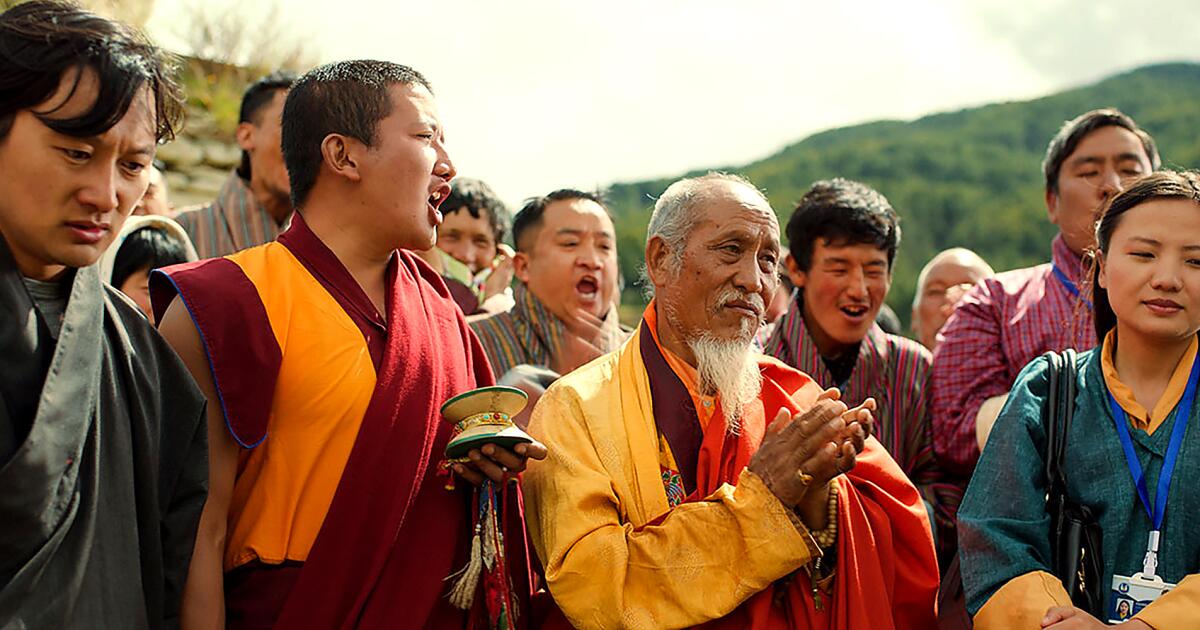
With the remote town of Ura being prepped for a mock election, Dorji is certainly having goodhearted fun with his nation’s transition to democracy, remembering the air of befuddlement from a citizenry first learning politics when they’d just gotten accustomed to television and the internet. But Americans watching the film today (and recalling the aftermath of 2020) will bring different baggage when, in the opening moments, they’re shown a religious leader grimly expressing sadness over things changing, and asking for guns so “things can be made right again.” Gulp.

That said, this is a Buddhist world, so I can safely report that eyebrows are the only things to be cocked in Dorji’s humanely conceived, gently farcical exploration of newfound political awareness. We meet a restless dad (Choeying Jatsho) bullish about his progressive candidate, even if it causes his daughter grief from her classmates, whose parents favor a more status-quo contender. His wife (Deki Lhamo) is conflict-averse, yet has been tasked with helping the visiting election officials — led by an exasperated bureaucrat (Pema Zangpo Sherpa) — stir up enthusiasm in villagers who’d rather keep their king than import a system designed to turn them against each other.

Meanwhile, dutiful monk Tashi (Tandin Wangchuk), answering the call of his venerated lama (Kelsang Choejey), isn’t even the only character in search of a firearm. An American man (Harry Einhorn) posing as a tourist has just made the long journey to tiny Ura in the hopes of securing a vintage Civil War rifle he’s learned is in the possession of a local elder. Helping facilitate that transaction is a cash-strapped young Bhutanese city dweller (Tandin Sonam), whose actions — since guns are almost entirely prohibited in the country — draw the attention of the authorities.

Dorji’s use of first-time or inexperienced actors results in a mixed bag of performances, but not to any disruptive degree: The primary color in his mosaic is a casual, even proud naivete. You could similarly fault the resolution of the gun thread for its childlike admonishment of societal ills.

But I prefer to believe that a twist with spiritual dimensions, loaded with a message of hope, is better than one built on a disingenuous approach to the way people are. At a time when extremes in discourse always seem loudest, the modest pleasures of “The Monk and the Gun” are appealingly reasonable. Brandishing new ways doesn’t have to mean holstering old ones.

‘The Monk and the Gun’

In Dzongkha and English, with English subtitles

Rating: PG-13, for some nude sculptures and smoking

Running time: 1 hour, 47 minutes

Playing: Now in limited release

For the unsuspecting, a title like “The Monk and the Gun” lands like a promise: Do you prepare for a mythic showdown or a mystic parable? That was undoubtedly what Bhutanese filmmaker Pawo Choyning Dorji had in mind when he winked this second feature into existence, teasing us with signposts of violence and wisdom before winning us over with a minimalist, serenely offbeat comedy.

Some qualities of “The Monk and the Gun” will seem like natural holdovers from the Oscar-nominated film that put this Buddhist writer-director on the map, 2019’s teacher-out-of-water tale “Lunana: A Yak in the Classroom.” The new one retains his debut’s easygoing preciousness: the deadpan sense of humor, a coolly observant interest in the divide between city and country, and the sighs Dorji wants to elicit from the Himalayan landscape. (Was returning cinematographer Jigme Tenzing suddenly going to forget how to capture the most stunning vistas on earth?)

What’s different this time is a nervier story centered on elections and upheaval, sure to resonate with anyone on edge about the tenuousness of civilization. The setting is 2006, when Bhutan’s king suddenly abdicated power, allowing for the country’s first citizenship-wide vote to install a new leader, and the seeding of a belief that modernization for this picturesque outpost was just around the corner.

With the remote town of Ura being prepped for a mock election, Dorji is certainly having goodhearted fun with his nation’s transition to democracy, remembering the air of befuddlement from a citizenry first learning politics when they’d just gotten accustomed to television and the internet. But Americans watching the film today (and recalling the aftermath of 2020) will bring different baggage when, in the opening moments, they’re shown a religious leader grimly expressing sadness over things changing, and asking for guns so “things can be made right again.” Gulp.

That said, this is a Buddhist world, so I can safely report that eyebrows are the only things to be cocked in Dorji’s humanely conceived, gently farcical exploration of newfound political awareness. We meet a restless dad (Choeying Jatsho) bullish about his progressive candidate, even if it causes his daughter grief from her classmates, whose parents favor a more status-quo contender. His wife (Deki Lhamo) is conflict-averse, yet has been tasked with helping the visiting election officials — led by an exasperated bureaucrat (Pema Zangpo Sherpa) — stir up enthusiasm in villagers who’d rather keep their king than import a system designed to turn them against each other.

Meanwhile, dutiful monk Tashi (Tandin Wangchuk), answering the call of his venerated lama (Kelsang Choejey), isn’t even the only character in search of a firearm. An American man (Harry Einhorn) posing as a tourist has just made the long journey to tiny Ura in the hopes of securing a vintage Civil War rifle he’s learned is in the possession of a local elder. Helping facilitate that transaction is a cash-strapped young Bhutanese city dweller (Tandin Sonam), whose actions — since guns are almost entirely prohibited in the country — draw the attention of the authorities.

Dorji’s use of first-time or inexperienced actors results in a mixed bag of performances, but not to any disruptive degree: The primary color in his mosaic is a casual, even proud naivete. You could similarly fault the resolution of the gun thread for its childlike admonishment of societal ills.

But I prefer to believe that a twist with spiritual dimensions, loaded with a message of hope, is better than one built on a disingenuous approach to the way people are. At a time when extremes in discourse always seem loudest, the modest pleasures of “The Monk and the Gun” are appealingly reasonable. Brandishing new ways doesn’t have to mean holstering old ones.

‘The Monk and the Gun’

In Dzongkha and English, with English subtitles

Rating: PG-13, for some nude sculptures and smoking

Running time: 1 hour, 47 minutes

Playing: Now in limited release

For the unsuspecting, a title like “The Monk and the Gun” lands like a promise: Do you prepare for a mythic showdown or a mystic parable? That was undoubtedly what Bhutanese filmmaker Pawo Choyning Dorji had in mind when he winked this second feature into existence, teasing us with signposts of violence and wisdom before winning us over with a minimalist, serenely offbeat comedy.

Some qualities of “The Monk and the Gun” will seem like natural holdovers from the Oscar-nominated film that put this Buddhist writer-director on the map, 2019’s teacher-out-of-water tale “Lunana: A Yak in the Classroom.” The new one retains his debut’s easygoing preciousness: the deadpan sense of humor, a coolly observant interest in the divide between city and country, and the sighs Dorji wants to elicit from the Himalayan landscape. (Was returning cinematographer Jigme Tenzing suddenly going to forget how to capture the most stunning vistas on earth?)

What’s different this time is a nervier story centered on elections and upheaval, sure to resonate with anyone on edge about the tenuousness of civilization. The setting is 2006, when Bhutan’s king suddenly abdicated power, allowing for the country’s first citizenship-wide vote to install a new leader, and the seeding of a belief that modernization for this picturesque outpost was just around the corner.

With the remote town of Ura being prepped for a mock election, Dorji is certainly having goodhearted fun with his nation’s transition to democracy, remembering the air of befuddlement from a citizenry first learning politics when they’d just gotten accustomed to television and the internet. But Americans watching the film today (and recalling the aftermath of 2020) will bring different baggage when, in the opening moments, they’re shown a religious leader grimly expressing sadness over things changing, and asking for guns so “things can be made right again.” Gulp.

That said, this is a Buddhist world, so I can safely report that eyebrows are the only things to be cocked in Dorji’s humanely conceived, gently farcical exploration of newfound political awareness. We meet a restless dad (Choeying Jatsho) bullish about his progressive candidate, even if it causes his daughter grief from her classmates, whose parents favor a more status-quo contender. His wife (Deki Lhamo) is conflict-averse, yet has been tasked with helping the visiting election officials — led by an exasperated bureaucrat (Pema Zangpo Sherpa) — stir up enthusiasm in villagers who’d rather keep their king than import a system designed to turn them against each other.

Meanwhile, dutiful monk Tashi (Tandin Wangchuk), answering the call of his venerated lama (Kelsang Choejey), isn’t even the only character in search of a firearm. An American man (Harry Einhorn) posing as a tourist has just made the long journey to tiny Ura in the hopes of securing a vintage Civil War rifle he’s learned is in the possession of a local elder. Helping facilitate that transaction is a cash-strapped young Bhutanese city dweller (Tandin Sonam), whose actions — since guns are almost entirely prohibited in the country — draw the attention of the authorities.

Dorji’s use of first-time or inexperienced actors results in a mixed bag of performances, but not to any disruptive degree: The primary color in his mosaic is a casual, even proud naivete. You could similarly fault the resolution of the gun thread for its childlike admonishment of societal ills.

But I prefer to believe that a twist with spiritual dimensions, loaded with a message of hope, is better than one built on a disingenuous approach to the way people are. At a time when extremes in discourse always seem loudest, the modest pleasures of “The Monk and the Gun” are appealingly reasonable. Brandishing new ways doesn’t have to mean holstering old ones.

‘The Monk and the Gun’

In Dzongkha and English, with English subtitles

Rating: PG-13, for some nude sculptures and smoking

Running time: 1 hour, 47 minutes

Playing: Now in limited release

For the unsuspecting, a title like “The Monk and the Gun” lands like a promise: Do you prepare for a mythic showdown or a mystic parable? That was undoubtedly what Bhutanese filmmaker Pawo Choyning Dorji had in mind when he winked this second feature into existence, teasing us with signposts of violence and wisdom before winning us over with a minimalist, serenely offbeat comedy.

Some qualities of “The Monk and the Gun” will seem like natural holdovers from the Oscar-nominated film that put this Buddhist writer-director on the map, 2019’s teacher-out-of-water tale “Lunana: A Yak in the Classroom.” The new one retains his debut’s easygoing preciousness: the deadpan sense of humor, a coolly observant interest in the divide between city and country, and the sighs Dorji wants to elicit from the Himalayan landscape. (Was returning cinematographer Jigme Tenzing suddenly going to forget how to capture the most stunning vistas on earth?)

What’s different this time is a nervier story centered on elections and upheaval, sure to resonate with anyone on edge about the tenuousness of civilization. The setting is 2006, when Bhutan’s king suddenly abdicated power, allowing for the country’s first citizenship-wide vote to install a new leader, and the seeding of a belief that modernization for this picturesque outpost was just around the corner.

With the remote town of Ura being prepped for a mock election, Dorji is certainly having goodhearted fun with his nation’s transition to democracy, remembering the air of befuddlement from a citizenry first learning politics when they’d just gotten accustomed to television and the internet. But Americans watching the film today (and recalling the aftermath of 2020) will bring different baggage when, in the opening moments, they’re shown a religious leader grimly expressing sadness over things changing, and asking for guns so “things can be made right again.” Gulp.

That said, this is a Buddhist world, so I can safely report that eyebrows are the only things to be cocked in Dorji’s humanely conceived, gently farcical exploration of newfound political awareness. We meet a restless dad (Choeying Jatsho) bullish about his progressive candidate, even if it causes his daughter grief from her classmates, whose parents favor a more status-quo contender. His wife (Deki Lhamo) is conflict-averse, yet has been tasked with helping the visiting election officials — led by an exasperated bureaucrat (Pema Zangpo Sherpa) — stir up enthusiasm in villagers who’d rather keep their king than import a system designed to turn them against each other.

Meanwhile, dutiful monk Tashi (Tandin Wangchuk), answering the call of his venerated lama (Kelsang Choejey), isn’t even the only character in search of a firearm. An American man (Harry Einhorn) posing as a tourist has just made the long journey to tiny Ura in the hopes of securing a vintage Civil War rifle he’s learned is in the possession of a local elder. Helping facilitate that transaction is a cash-strapped young Bhutanese city dweller (Tandin Sonam), whose actions — since guns are almost entirely prohibited in the country — draw the attention of the authorities.

Dorji’s use of first-time or inexperienced actors results in a mixed bag of performances, but not to any disruptive degree: The primary color in his mosaic is a casual, even proud naivete. You could similarly fault the resolution of the gun thread for its childlike admonishment of societal ills.

But I prefer to believe that a twist with spiritual dimensions, loaded with a message of hope, is better than one built on a disingenuous approach to the way people are. At a time when extremes in discourse always seem loudest, the modest pleasures of “The Monk and the Gun” are appealingly reasonable. Brandishing new ways doesn’t have to mean holstering old ones.

‘The Monk and the Gun’

In Dzongkha and English, with English subtitles

Rating: PG-13, for some nude sculptures and smoking

Running time: 1 hour, 47 minutes

Playing: Now in limited release

For the unsuspecting, a title like “The Monk and the Gun” lands like a promise: Do you prepare for a mythic showdown or a mystic parable? That was undoubtedly what Bhutanese filmmaker Pawo Choyning Dorji had in mind when he winked this second feature into existence, teasing us with signposts of violence and wisdom before winning us over with a minimalist, serenely offbeat comedy.

Some qualities of “The Monk and the Gun” will seem like natural holdovers from the Oscar-nominated film that put this Buddhist writer-director on the map, 2019’s teacher-out-of-water tale “Lunana: A Yak in the Classroom.” The new one retains his debut’s easygoing preciousness: the deadpan sense of humor, a coolly observant interest in the divide between city and country, and the sighs Dorji wants to elicit from the Himalayan landscape. (Was returning cinematographer Jigme Tenzing suddenly going to forget how to capture the most stunning vistas on earth?)

What’s different this time is a nervier story centered on elections and upheaval, sure to resonate with anyone on edge about the tenuousness of civilization. The setting is 2006, when Bhutan’s king suddenly abdicated power, allowing for the country’s first citizenship-wide vote to install a new leader, and the seeding of a belief that modernization for this picturesque outpost was just around the corner.

With the remote town of Ura being prepped for a mock election, Dorji is certainly having goodhearted fun with his nation’s transition to democracy, remembering the air of befuddlement from a citizenry first learning politics when they’d just gotten accustomed to television and the internet. But Americans watching the film today (and recalling the aftermath of 2020) will bring different baggage when, in the opening moments, they’re shown a religious leader grimly expressing sadness over things changing, and asking for guns so “things can be made right again.” Gulp.

That said, this is a Buddhist world, so I can safely report that eyebrows are the only things to be cocked in Dorji’s humanely conceived, gently farcical exploration of newfound political awareness. We meet a restless dad (Choeying Jatsho) bullish about his progressive candidate, even if it causes his daughter grief from her classmates, whose parents favor a more status-quo contender. His wife (Deki Lhamo) is conflict-averse, yet has been tasked with helping the visiting election officials — led by an exasperated bureaucrat (Pema Zangpo Sherpa) — stir up enthusiasm in villagers who’d rather keep their king than import a system designed to turn them against each other.

Meanwhile, dutiful monk Tashi (Tandin Wangchuk), answering the call of his venerated lama (Kelsang Choejey), isn’t even the only character in search of a firearm. An American man (Harry Einhorn) posing as a tourist has just made the long journey to tiny Ura in the hopes of securing a vintage Civil War rifle he’s learned is in the possession of a local elder. Helping facilitate that transaction is a cash-strapped young Bhutanese city dweller (Tandin Sonam), whose actions — since guns are almost entirely prohibited in the country — draw the attention of the authorities.

Dorji’s use of first-time or inexperienced actors results in a mixed bag of performances, but not to any disruptive degree: The primary color in his mosaic is a casual, even proud naivete. You could similarly fault the resolution of the gun thread for its childlike admonishment of societal ills.

But I prefer to believe that a twist with spiritual dimensions, loaded with a message of hope, is better than one built on a disingenuous approach to the way people are. At a time when extremes in discourse always seem loudest, the modest pleasures of “The Monk and the Gun” are appealingly reasonable. Brandishing new ways doesn’t have to mean holstering old ones.

‘The Monk and the Gun’

In Dzongkha and English, with English subtitles

Rating: PG-13, for some nude sculptures and smoking

Running time: 1 hour, 47 minutes

Playing: Now in limited release

For the unsuspecting, a title like “The Monk and the Gun” lands like a promise: Do you prepare for a mythic showdown or a mystic parable? That was undoubtedly what Bhutanese filmmaker Pawo Choyning Dorji had in mind when he winked this second feature into existence, teasing us with signposts of violence and wisdom before winning us over with a minimalist, serenely offbeat comedy.

Some qualities of “The Monk and the Gun” will seem like natural holdovers from the Oscar-nominated film that put this Buddhist writer-director on the map, 2019’s teacher-out-of-water tale “Lunana: A Yak in the Classroom.” The new one retains his debut’s easygoing preciousness: the deadpan sense of humor, a coolly observant interest in the divide between city and country, and the sighs Dorji wants to elicit from the Himalayan landscape. (Was returning cinematographer Jigme Tenzing suddenly going to forget how to capture the most stunning vistas on earth?)

What’s different this time is a nervier story centered on elections and upheaval, sure to resonate with anyone on edge about the tenuousness of civilization. The setting is 2006, when Bhutan’s king suddenly abdicated power, allowing for the country’s first citizenship-wide vote to install a new leader, and the seeding of a belief that modernization for this picturesque outpost was just around the corner.

With the remote town of Ura being prepped for a mock election, Dorji is certainly having goodhearted fun with his nation’s transition to democracy, remembering the air of befuddlement from a citizenry first learning politics when they’d just gotten accustomed to television and the internet. But Americans watching the film today (and recalling the aftermath of 2020) will bring different baggage when, in the opening moments, they’re shown a religious leader grimly expressing sadness over things changing, and asking for guns so “things can be made right again.” Gulp.

That said, this is a Buddhist world, so I can safely report that eyebrows are the only things to be cocked in Dorji’s humanely conceived, gently farcical exploration of newfound political awareness. We meet a restless dad (Choeying Jatsho) bullish about his progressive candidate, even if it causes his daughter grief from her classmates, whose parents favor a more status-quo contender. His wife (Deki Lhamo) is conflict-averse, yet has been tasked with helping the visiting election officials — led by an exasperated bureaucrat (Pema Zangpo Sherpa) — stir up enthusiasm in villagers who’d rather keep their king than import a system designed to turn them against each other.

Meanwhile, dutiful monk Tashi (Tandin Wangchuk), answering the call of his venerated lama (Kelsang Choejey), isn’t even the only character in search of a firearm. An American man (Harry Einhorn) posing as a tourist has just made the long journey to tiny Ura in the hopes of securing a vintage Civil War rifle he’s learned is in the possession of a local elder. Helping facilitate that transaction is a cash-strapped young Bhutanese city dweller (Tandin Sonam), whose actions — since guns are almost entirely prohibited in the country — draw the attention of the authorities.

Dorji’s use of first-time or inexperienced actors results in a mixed bag of performances, but not to any disruptive degree: The primary color in his mosaic is a casual, even proud naivete. You could similarly fault the resolution of the gun thread for its childlike admonishment of societal ills.

But I prefer to believe that a twist with spiritual dimensions, loaded with a message of hope, is better than one built on a disingenuous approach to the way people are. At a time when extremes in discourse always seem loudest, the modest pleasures of “The Monk and the Gun” are appealingly reasonable. Brandishing new ways doesn’t have to mean holstering old ones.

‘The Monk and the Gun’

In Dzongkha and English, with English subtitles

Rating: PG-13, for some nude sculptures and smoking

Running time: 1 hour, 47 minutes

Playing: Now in limited release

For the unsuspecting, a title like “The Monk and the Gun” lands like a promise: Do you prepare for a mythic showdown or a mystic parable? That was undoubtedly what Bhutanese filmmaker Pawo Choyning Dorji had in mind when he winked this second feature into existence, teasing us with signposts of violence and wisdom before winning us over with a minimalist, serenely offbeat comedy.

Some qualities of “The Monk and the Gun” will seem like natural holdovers from the Oscar-nominated film that put this Buddhist writer-director on the map, 2019’s teacher-out-of-water tale “Lunana: A Yak in the Classroom.” The new one retains his debut’s easygoing preciousness: the deadpan sense of humor, a coolly observant interest in the divide between city and country, and the sighs Dorji wants to elicit from the Himalayan landscape. (Was returning cinematographer Jigme Tenzing suddenly going to forget how to capture the most stunning vistas on earth?)

What’s different this time is a nervier story centered on elections and upheaval, sure to resonate with anyone on edge about the tenuousness of civilization. The setting is 2006, when Bhutan’s king suddenly abdicated power, allowing for the country’s first citizenship-wide vote to install a new leader, and the seeding of a belief that modernization for this picturesque outpost was just around the corner.

With the remote town of Ura being prepped for a mock election, Dorji is certainly having goodhearted fun with his nation’s transition to democracy, remembering the air of befuddlement from a citizenry first learning politics when they’d just gotten accustomed to television and the internet. But Americans watching the film today (and recalling the aftermath of 2020) will bring different baggage when, in the opening moments, they’re shown a religious leader grimly expressing sadness over things changing, and asking for guns so “things can be made right again.” Gulp.

That said, this is a Buddhist world, so I can safely report that eyebrows are the only things to be cocked in Dorji’s humanely conceived, gently farcical exploration of newfound political awareness. We meet a restless dad (Choeying Jatsho) bullish about his progressive candidate, even if it causes his daughter grief from her classmates, whose parents favor a more status-quo contender. His wife (Deki Lhamo) is conflict-averse, yet has been tasked with helping the visiting election officials — led by an exasperated bureaucrat (Pema Zangpo Sherpa) — stir up enthusiasm in villagers who’d rather keep their king than import a system designed to turn them against each other.

Meanwhile, dutiful monk Tashi (Tandin Wangchuk), answering the call of his venerated lama (Kelsang Choejey), isn’t even the only character in search of a firearm. An American man (Harry Einhorn) posing as a tourist has just made the long journey to tiny Ura in the hopes of securing a vintage Civil War rifle he’s learned is in the possession of a local elder. Helping facilitate that transaction is a cash-strapped young Bhutanese city dweller (Tandin Sonam), whose actions — since guns are almost entirely prohibited in the country — draw the attention of the authorities.

Dorji’s use of first-time or inexperienced actors results in a mixed bag of performances, but not to any disruptive degree: The primary color in his mosaic is a casual, even proud naivete. You could similarly fault the resolution of the gun thread for its childlike admonishment of societal ills.

But I prefer to believe that a twist with spiritual dimensions, loaded with a message of hope, is better than one built on a disingenuous approach to the way people are. At a time when extremes in discourse always seem loudest, the modest pleasures of “The Monk and the Gun” are appealingly reasonable. Brandishing new ways doesn’t have to mean holstering old ones.

‘The Monk and the Gun’

In Dzongkha and English, with English subtitles

Rating: PG-13, for some nude sculptures and smoking

Running time: 1 hour, 47 minutes

Playing: Now in limited release

For the unsuspecting, a title like “The Monk and the Gun” lands like a promise: Do you prepare for a mythic showdown or a mystic parable? That was undoubtedly what Bhutanese filmmaker Pawo Choyning Dorji had in mind when he winked this second feature into existence, teasing us with signposts of violence and wisdom before winning us over with a minimalist, serenely offbeat comedy.

Some qualities of “The Monk and the Gun” will seem like natural holdovers from the Oscar-nominated film that put this Buddhist writer-director on the map, 2019’s teacher-out-of-water tale “Lunana: A Yak in the Classroom.” The new one retains his debut’s easygoing preciousness: the deadpan sense of humor, a coolly observant interest in the divide between city and country, and the sighs Dorji wants to elicit from the Himalayan landscape. (Was returning cinematographer Jigme Tenzing suddenly going to forget how to capture the most stunning vistas on earth?)

What’s different this time is a nervier story centered on elections and upheaval, sure to resonate with anyone on edge about the tenuousness of civilization. The setting is 2006, when Bhutan’s king suddenly abdicated power, allowing for the country’s first citizenship-wide vote to install a new leader, and the seeding of a belief that modernization for this picturesque outpost was just around the corner.

With the remote town of Ura being prepped for a mock election, Dorji is certainly having goodhearted fun with his nation’s transition to democracy, remembering the air of befuddlement from a citizenry first learning politics when they’d just gotten accustomed to television and the internet. But Americans watching the film today (and recalling the aftermath of 2020) will bring different baggage when, in the opening moments, they’re shown a religious leader grimly expressing sadness over things changing, and asking for guns so “things can be made right again.” Gulp.

That said, this is a Buddhist world, so I can safely report that eyebrows are the only things to be cocked in Dorji’s humanely conceived, gently farcical exploration of newfound political awareness. We meet a restless dad (Choeying Jatsho) bullish about his progressive candidate, even if it causes his daughter grief from her classmates, whose parents favor a more status-quo contender. His wife (Deki Lhamo) is conflict-averse, yet has been tasked with helping the visiting election officials — led by an exasperated bureaucrat (Pema Zangpo Sherpa) — stir up enthusiasm in villagers who’d rather keep their king than import a system designed to turn them against each other.

Meanwhile, dutiful monk Tashi (Tandin Wangchuk), answering the call of his venerated lama (Kelsang Choejey), isn’t even the only character in search of a firearm. An American man (Harry Einhorn) posing as a tourist has just made the long journey to tiny Ura in the hopes of securing a vintage Civil War rifle he’s learned is in the possession of a local elder. Helping facilitate that transaction is a cash-strapped young Bhutanese city dweller (Tandin Sonam), whose actions — since guns are almost entirely prohibited in the country — draw the attention of the authorities.

Dorji’s use of first-time or inexperienced actors results in a mixed bag of performances, but not to any disruptive degree: The primary color in his mosaic is a casual, even proud naivete. You could similarly fault the resolution of the gun thread for its childlike admonishment of societal ills.

But I prefer to believe that a twist with spiritual dimensions, loaded with a message of hope, is better than one built on a disingenuous approach to the way people are. At a time when extremes in discourse always seem loudest, the modest pleasures of “The Monk and the Gun” are appealingly reasonable. Brandishing new ways doesn’t have to mean holstering old ones.

‘The Monk and the Gun’

In Dzongkha and English, with English subtitles

Rating: PG-13, for some nude sculptures and smoking

Running time: 1 hour, 47 minutes

Playing: Now in limited release

Leave a Reply Cancel reply

Your email address will not be published. Required fields are marked *

Recommended

E.U. Urges Nations to Require Negative Covid Tests for Travelers From China

3 years ago

Pentagon says Gaza pier anchored, but U.N. casts doubt on distribution

2 years ago

She Witnessed Mao’s Worst Excesses. Now She Has a Warning for the World.

3 years ago

CNN, NBC and Other News Outlets Cut Away From Trump Speech

2 years ago
Yonkers Observer

© 2025 Yonkers Observer or its affiliated companies.

Navigate Site

  • About
  • Advertise
  • Terms & Conditions
  • Privacy Policy
  • Disclaimer
  • Contact

Follow Us

No Result
View All Result
  • Home
  • World
  • Politics
  • Finance
  • Technology
  • Health
  • Culture
  • Entertainment
  • Trend

© 2025 Yonkers Observer or its affiliated companies.

Welcome Back!

Login to your account below

Forgotten Password?

Retrieve your password

Please enter your username or email address to reset your password.

Log In