Reading List
If you buy books linked on our site, The Times may earn a commission from Bookshop.org, whose fees support independent bookstores.
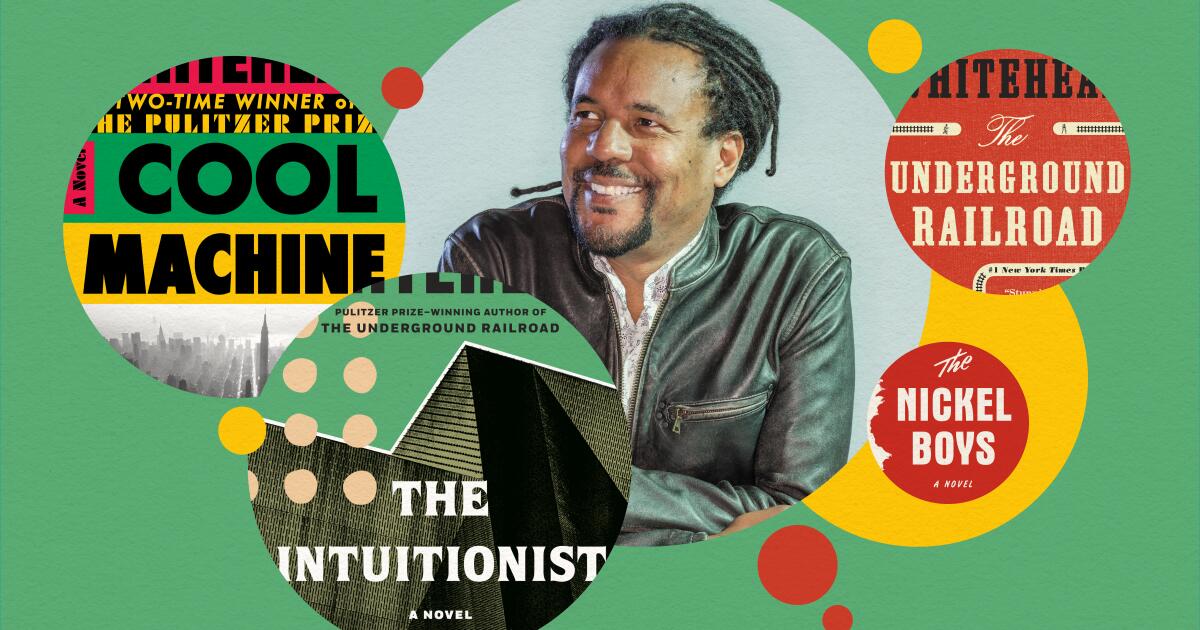
This month, “Cool Machine,” a riff on 1980s New York in the form of a tightly plotted crime novel, arrives from Colson Whitehead. It concludes his Harlem trilogy, they say. If you’d told readers two decades ago that Whitehead would become a bestselling crime novelist, they might have thought you were kidding. He started out writing innovative novels with such intellectual and stylistic punch that the MacArthur Foundation gave him a fellowship in 2002.
His written output is fun, fearless and fantastic. Where to start? Here’s a cheat sheet.
For N.Y. lovers
With “Harlem Shuffle,” Whitehead begins his crime trilogy in the 1960s in a furniture store with stylish midcentury stock whose owner, Ray Carney, is trying not to be a fence. Love the evocation of Harlem as a place with a cool interconnected community. Worry about that cousin who’s always trouble. The follow-up, “Crook Manifesto,” is set in the 1970s. All of New York City is at a nadir; Ray is on the straight and narrow, but needs an influx of cash (for Jackson Five tickets for his daughter). Then comes “Cool Machine,” secrets to be revealed when it hit shelves this week . And as a bonus, his essay collection “The Colossus of New York,” which is vivid, episodic and yet still a story: “Talking about New York is talking about the world.”
To break your heart
The novel “The Underground Railroad” comes from an imagined misunderstanding, logical for anyone who grew up riding subways: that the path to freedom for enslaved people that we call The Underground Railroad was in fact underground. In Whitehead’s hands, that imagining takes us through both time and place while making visceral the horrors of enslavement. The book won the National Book Award and the Pulitzer Prize and was adapted by Barry Jenkins into a limited series.
In a rare feat, Whitehead won the Pulitzer Prize a second time for his novel “The Nickel Boys,” another work of historical fiction dealing with the devastating effects of American racism. Based on the true story of a reform school where Black boys went missing, the novel pairs the stories of two teens, one a troublemaker and the other caught up by mistake. Barack Obama called it “a necessary read.” Cleverly structured, it seemed difficult to adapt, but director RaMell Ross made it into a brilliant film.

To blow your mind
In Whitehead’s debut novel, the not-realistic “The Intuitionist,” a Black female elevator inspector faces powerful forces aligned against her. Inflected with Thomas Pynchon-like wordplay and situations, it’s both ambitious and funny. So is “John Henry Days,” mixing narrative forms while telling the story of a Black journalist around the year 2000 going to every press junket he can, unmaking the myth of John Henry all the while. And “Apex Hides the Hurt” is a comic novel about the conflicts that arise in a small town when they hire a name consultant for a possible rebranding.
To eat your mind
Just around the time they started staggering onto TV, Colson Whitehead published a zombie novel. “Zone One” is a smart take on the shuffling hordes and pandemic survivors who try to take Manhattan back.

To beat the odds
Whitehead, an enthusiastic amateur poker player, wrote the nonfiction book “The Noble Hustle” about his entry into the World Series of Poker in Las Vegas. It was a luxurious time in media, circa 2011, when ESPN’s Grantland paid his $10,000 entry fee and said he could keep his winnings. The book, expanded from what he wrote for them, includes his training, pending divorce, joking asides and playing for high stakes.
To take to the beach
“Sag Harbor,” set in the mostly Black, affluent beach community in the Hamptons, is the closest Whitehead has come to writing a coming-of-age story. Taking place during the summer of 1985, Benji and his teenage friends banter about culture and get their first taste of freedom.

Reading List
If you buy books linked on our site, The Times may earn a commission from Bookshop.org, whose fees support independent bookstores.
This month, “Cool Machine,” a riff on 1980s New York in the form of a tightly plotted crime novel, arrives from Colson Whitehead. It concludes his Harlem trilogy, they say. If you’d told readers two decades ago that Whitehead would become a bestselling crime novelist, they might have thought you were kidding. He started out writing innovative novels with such intellectual and stylistic punch that the MacArthur Foundation gave him a fellowship in 2002.
His written output is fun, fearless and fantastic. Where to start? Here’s a cheat sheet.
For N.Y. lovers
With “Harlem Shuffle,” Whitehead begins his crime trilogy in the 1960s in a furniture store with stylish midcentury stock whose owner, Ray Carney, is trying not to be a fence. Love the evocation of Harlem as a place with a cool interconnected community. Worry about that cousin who’s always trouble. The follow-up, “Crook Manifesto,” is set in the 1970s. All of New York City is at a nadir; Ray is on the straight and narrow, but needs an influx of cash (for Jackson Five tickets for his daughter). Then comes “Cool Machine,” secrets to be revealed when it hit shelves this week . And as a bonus, his essay collection “The Colossus of New York,” which is vivid, episodic and yet still a story: “Talking about New York is talking about the world.”
To break your heart
The novel “The Underground Railroad” comes from an imagined misunderstanding, logical for anyone who grew up riding subways: that the path to freedom for enslaved people that we call The Underground Railroad was in fact underground. In Whitehead’s hands, that imagining takes us through both time and place while making visceral the horrors of enslavement. The book won the National Book Award and the Pulitzer Prize and was adapted by Barry Jenkins into a limited series.
In a rare feat, Whitehead won the Pulitzer Prize a second time for his novel “The Nickel Boys,” another work of historical fiction dealing with the devastating effects of American racism. Based on the true story of a reform school where Black boys went missing, the novel pairs the stories of two teens, one a troublemaker and the other caught up by mistake. Barack Obama called it “a necessary read.” Cleverly structured, it seemed difficult to adapt, but director RaMell Ross made it into a brilliant film.
To blow your mind
In Whitehead’s debut novel, the not-realistic “The Intuitionist,” a Black female elevator inspector faces powerful forces aligned against her. Inflected with Thomas Pynchon-like wordplay and situations, it’s both ambitious and funny. So is “John Henry Days,” mixing narrative forms while telling the story of a Black journalist around the year 2000 going to every press junket he can, unmaking the myth of John Henry all the while. And “Apex Hides the Hurt” is a comic novel about the conflicts that arise in a small town when they hire a name consultant for a possible rebranding.
To eat your mind
Just around the time they started staggering onto TV, Colson Whitehead published a zombie novel. “Zone One” is a smart take on the shuffling hordes and pandemic survivors who try to take Manhattan back.
To beat the odds
Whitehead, an enthusiastic amateur poker player, wrote the nonfiction book “The Noble Hustle” about his entry into the World Series of Poker in Las Vegas. It was a luxurious time in media, circa 2011, when ESPN’s Grantland paid his $10,000 entry fee and said he could keep his winnings. The book, expanded from what he wrote for them, includes his training, pending divorce, joking asides and playing for high stakes.
To take to the beach
“Sag Harbor,” set in the mostly Black, affluent beach community in the Hamptons, is the closest Whitehead has come to writing a coming-of-age story. Taking place during the summer of 1985, Benji and his teenage friends banter about culture and get their first taste of freedom.

Reading List
If you buy books linked on our site, The Times may earn a commission from Bookshop.org, whose fees support independent bookstores.
This month, “Cool Machine,” a riff on 1980s New York in the form of a tightly plotted crime novel, arrives from Colson Whitehead. It concludes his Harlem trilogy, they say. If you’d told readers two decades ago that Whitehead would become a bestselling crime novelist, they might have thought you were kidding. He started out writing innovative novels with such intellectual and stylistic punch that the MacArthur Foundation gave him a fellowship in 2002.
His written output is fun, fearless and fantastic. Where to start? Here’s a cheat sheet.
For N.Y. lovers
With “Harlem Shuffle,” Whitehead begins his crime trilogy in the 1960s in a furniture store with stylish midcentury stock whose owner, Ray Carney, is trying not to be a fence. Love the evocation of Harlem as a place with a cool interconnected community. Worry about that cousin who’s always trouble. The follow-up, “Crook Manifesto,” is set in the 1970s. All of New York City is at a nadir; Ray is on the straight and narrow, but needs an influx of cash (for Jackson Five tickets for his daughter). Then comes “Cool Machine,” secrets to be revealed when it hit shelves this week . And as a bonus, his essay collection “The Colossus of New York,” which is vivid, episodic and yet still a story: “Talking about New York is talking about the world.”
To break your heart
The novel “The Underground Railroad” comes from an imagined misunderstanding, logical for anyone who grew up riding subways: that the path to freedom for enslaved people that we call The Underground Railroad was in fact underground. In Whitehead’s hands, that imagining takes us through both time and place while making visceral the horrors of enslavement. The book won the National Book Award and the Pulitzer Prize and was adapted by Barry Jenkins into a limited series.
In a rare feat, Whitehead won the Pulitzer Prize a second time for his novel “The Nickel Boys,” another work of historical fiction dealing with the devastating effects of American racism. Based on the true story of a reform school where Black boys went missing, the novel pairs the stories of two teens, one a troublemaker and the other caught up by mistake. Barack Obama called it “a necessary read.” Cleverly structured, it seemed difficult to adapt, but director RaMell Ross made it into a brilliant film.
To blow your mind
In Whitehead’s debut novel, the not-realistic “The Intuitionist,” a Black female elevator inspector faces powerful forces aligned against her. Inflected with Thomas Pynchon-like wordplay and situations, it’s both ambitious and funny. So is “John Henry Days,” mixing narrative forms while telling the story of a Black journalist around the year 2000 going to every press junket he can, unmaking the myth of John Henry all the while. And “Apex Hides the Hurt” is a comic novel about the conflicts that arise in a small town when they hire a name consultant for a possible rebranding.
To eat your mind
Just around the time they started staggering onto TV, Colson Whitehead published a zombie novel. “Zone One” is a smart take on the shuffling hordes and pandemic survivors who try to take Manhattan back.
To beat the odds
Whitehead, an enthusiastic amateur poker player, wrote the nonfiction book “The Noble Hustle” about his entry into the World Series of Poker in Las Vegas. It was a luxurious time in media, circa 2011, when ESPN’s Grantland paid his $10,000 entry fee and said he could keep his winnings. The book, expanded from what he wrote for them, includes his training, pending divorce, joking asides and playing for high stakes.
To take to the beach
“Sag Harbor,” set in the mostly Black, affluent beach community in the Hamptons, is the closest Whitehead has come to writing a coming-of-age story. Taking place during the summer of 1985, Benji and his teenage friends banter about culture and get their first taste of freedom.
Reading List
If you buy books linked on our site, The Times may earn a commission from Bookshop.org, whose fees support independent bookstores.
This month, “Cool Machine,” a riff on 1980s New York in the form of a tightly plotted crime novel, arrives from Colson Whitehead. It concludes his Harlem trilogy, they say. If you’d told readers two decades ago that Whitehead would become a bestselling crime novelist, they might have thought you were kidding. He started out writing innovative novels with such intellectual and stylistic punch that the MacArthur Foundation gave him a fellowship in 2002.
His written output is fun, fearless and fantastic. Where to start? Here’s a cheat sheet.
For N.Y. lovers
With “Harlem Shuffle,” Whitehead begins his crime trilogy in the 1960s in a furniture store with stylish midcentury stock whose owner, Ray Carney, is trying not to be a fence. Love the evocation of Harlem as a place with a cool interconnected community. Worry about that cousin who’s always trouble. The follow-up, “Crook Manifesto,” is set in the 1970s. All of New York City is at a nadir; Ray is on the straight and narrow, but needs an influx of cash (for Jackson Five tickets for his daughter). Then comes “Cool Machine,” secrets to be revealed when it hit shelves this week . And as a bonus, his essay collection “The Colossus of New York,” which is vivid, episodic and yet still a story: “Talking about New York is talking about the world.”
To break your heart
The novel “The Underground Railroad” comes from an imagined misunderstanding, logical for anyone who grew up riding subways: that the path to freedom for enslaved people that we call The Underground Railroad was in fact underground. In Whitehead’s hands, that imagining takes us through both time and place while making visceral the horrors of enslavement. The book won the National Book Award and the Pulitzer Prize and was adapted by Barry Jenkins into a limited series.
In a rare feat, Whitehead won the Pulitzer Prize a second time for his novel “The Nickel Boys,” another work of historical fiction dealing with the devastating effects of American racism. Based on the true story of a reform school where Black boys went missing, the novel pairs the stories of two teens, one a troublemaker and the other caught up by mistake. Barack Obama called it “a necessary read.” Cleverly structured, it seemed difficult to adapt, but director RaMell Ross made it into a brilliant film.
To blow your mind
In Whitehead’s debut novel, the not-realistic “The Intuitionist,” a Black female elevator inspector faces powerful forces aligned against her. Inflected with Thomas Pynchon-like wordplay and situations, it’s both ambitious and funny. So is “John Henry Days,” mixing narrative forms while telling the story of a Black journalist around the year 2000 going to every press junket he can, unmaking the myth of John Henry all the while. And “Apex Hides the Hurt” is a comic novel about the conflicts that arise in a small town when they hire a name consultant for a possible rebranding.
To eat your mind
Just around the time they started staggering onto TV, Colson Whitehead published a zombie novel. “Zone One” is a smart take on the shuffling hordes and pandemic survivors who try to take Manhattan back.
To beat the odds
Whitehead, an enthusiastic amateur poker player, wrote the nonfiction book “The Noble Hustle” about his entry into the World Series of Poker in Las Vegas. It was a luxurious time in media, circa 2011, when ESPN’s Grantland paid his $10,000 entry fee and said he could keep his winnings. The book, expanded from what he wrote for them, includes his training, pending divorce, joking asides and playing for high stakes.
To take to the beach
“Sag Harbor,” set in the mostly Black, affluent beach community in the Hamptons, is the closest Whitehead has come to writing a coming-of-age story. Taking place during the summer of 1985, Benji and his teenage friends banter about culture and get their first taste of freedom.

Reading List
If you buy books linked on our site, The Times may earn a commission from Bookshop.org, whose fees support independent bookstores.
This month, “Cool Machine,” a riff on 1980s New York in the form of a tightly plotted crime novel, arrives from Colson Whitehead. It concludes his Harlem trilogy, they say. If you’d told readers two decades ago that Whitehead would become a bestselling crime novelist, they might have thought you were kidding. He started out writing innovative novels with such intellectual and stylistic punch that the MacArthur Foundation gave him a fellowship in 2002.
His written output is fun, fearless and fantastic. Where to start? Here’s a cheat sheet.
For N.Y. lovers
With “Harlem Shuffle,” Whitehead begins his crime trilogy in the 1960s in a furniture store with stylish midcentury stock whose owner, Ray Carney, is trying not to be a fence. Love the evocation of Harlem as a place with a cool interconnected community. Worry about that cousin who’s always trouble. The follow-up, “Crook Manifesto,” is set in the 1970s. All of New York City is at a nadir; Ray is on the straight and narrow, but needs an influx of cash (for Jackson Five tickets for his daughter). Then comes “Cool Machine,” secrets to be revealed when it hit shelves this week . And as a bonus, his essay collection “The Colossus of New York,” which is vivid, episodic and yet still a story: “Talking about New York is talking about the world.”
To break your heart
The novel “The Underground Railroad” comes from an imagined misunderstanding, logical for anyone who grew up riding subways: that the path to freedom for enslaved people that we call The Underground Railroad was in fact underground. In Whitehead’s hands, that imagining takes us through both time and place while making visceral the horrors of enslavement. The book won the National Book Award and the Pulitzer Prize and was adapted by Barry Jenkins into a limited series.
In a rare feat, Whitehead won the Pulitzer Prize a second time for his novel “The Nickel Boys,” another work of historical fiction dealing with the devastating effects of American racism. Based on the true story of a reform school where Black boys went missing, the novel pairs the stories of two teens, one a troublemaker and the other caught up by mistake. Barack Obama called it “a necessary read.” Cleverly structured, it seemed difficult to adapt, but director RaMell Ross made it into a brilliant film.
To blow your mind
In Whitehead’s debut novel, the not-realistic “The Intuitionist,” a Black female elevator inspector faces powerful forces aligned against her. Inflected with Thomas Pynchon-like wordplay and situations, it’s both ambitious and funny. So is “John Henry Days,” mixing narrative forms while telling the story of a Black journalist around the year 2000 going to every press junket he can, unmaking the myth of John Henry all the while. And “Apex Hides the Hurt” is a comic novel about the conflicts that arise in a small town when they hire a name consultant for a possible rebranding.
To eat your mind
Just around the time they started staggering onto TV, Colson Whitehead published a zombie novel. “Zone One” is a smart take on the shuffling hordes and pandemic survivors who try to take Manhattan back.
To beat the odds
Whitehead, an enthusiastic amateur poker player, wrote the nonfiction book “The Noble Hustle” about his entry into the World Series of Poker in Las Vegas. It was a luxurious time in media, circa 2011, when ESPN’s Grantland paid his $10,000 entry fee and said he could keep his winnings. The book, expanded from what he wrote for them, includes his training, pending divorce, joking asides and playing for high stakes.
To take to the beach
“Sag Harbor,” set in the mostly Black, affluent beach community in the Hamptons, is the closest Whitehead has come to writing a coming-of-age story. Taking place during the summer of 1985, Benji and his teenage friends banter about culture and get their first taste of freedom.
Reading List
If you buy books linked on our site, The Times may earn a commission from Bookshop.org, whose fees support independent bookstores.
This month, “Cool Machine,” a riff on 1980s New York in the form of a tightly plotted crime novel, arrives from Colson Whitehead. It concludes his Harlem trilogy, they say. If you’d told readers two decades ago that Whitehead would become a bestselling crime novelist, they might have thought you were kidding. He started out writing innovative novels with such intellectual and stylistic punch that the MacArthur Foundation gave him a fellowship in 2002.
His written output is fun, fearless and fantastic. Where to start? Here’s a cheat sheet.
For N.Y. lovers
With “Harlem Shuffle,” Whitehead begins his crime trilogy in the 1960s in a furniture store with stylish midcentury stock whose owner, Ray Carney, is trying not to be a fence. Love the evocation of Harlem as a place with a cool interconnected community. Worry about that cousin who’s always trouble. The follow-up, “Crook Manifesto,” is set in the 1970s. All of New York City is at a nadir; Ray is on the straight and narrow, but needs an influx of cash (for Jackson Five tickets for his daughter). Then comes “Cool Machine,” secrets to be revealed when it hit shelves this week . And as a bonus, his essay collection “The Colossus of New York,” which is vivid, episodic and yet still a story: “Talking about New York is talking about the world.”
To break your heart
The novel “The Underground Railroad” comes from an imagined misunderstanding, logical for anyone who grew up riding subways: that the path to freedom for enslaved people that we call The Underground Railroad was in fact underground. In Whitehead’s hands, that imagining takes us through both time and place while making visceral the horrors of enslavement. The book won the National Book Award and the Pulitzer Prize and was adapted by Barry Jenkins into a limited series.
In a rare feat, Whitehead won the Pulitzer Prize a second time for his novel “The Nickel Boys,” another work of historical fiction dealing with the devastating effects of American racism. Based on the true story of a reform school where Black boys went missing, the novel pairs the stories of two teens, one a troublemaker and the other caught up by mistake. Barack Obama called it “a necessary read.” Cleverly structured, it seemed difficult to adapt, but director RaMell Ross made it into a brilliant film.
To blow your mind
In Whitehead’s debut novel, the not-realistic “The Intuitionist,” a Black female elevator inspector faces powerful forces aligned against her. Inflected with Thomas Pynchon-like wordplay and situations, it’s both ambitious and funny. So is “John Henry Days,” mixing narrative forms while telling the story of a Black journalist around the year 2000 going to every press junket he can, unmaking the myth of John Henry all the while. And “Apex Hides the Hurt” is a comic novel about the conflicts that arise in a small town when they hire a name consultant for a possible rebranding.
To eat your mind
Just around the time they started staggering onto TV, Colson Whitehead published a zombie novel. “Zone One” is a smart take on the shuffling hordes and pandemic survivors who try to take Manhattan back.
To beat the odds
Whitehead, an enthusiastic amateur poker player, wrote the nonfiction book “The Noble Hustle” about his entry into the World Series of Poker in Las Vegas. It was a luxurious time in media, circa 2011, when ESPN’s Grantland paid his $10,000 entry fee and said he could keep his winnings. The book, expanded from what he wrote for them, includes his training, pending divorce, joking asides and playing for high stakes.
To take to the beach
“Sag Harbor,” set in the mostly Black, affluent beach community in the Hamptons, is the closest Whitehead has come to writing a coming-of-age story. Taking place during the summer of 1985, Benji and his teenage friends banter about culture and get their first taste of freedom.
Reading List
If you buy books linked on our site, The Times may earn a commission from Bookshop.org, whose fees support independent bookstores.
This month, “Cool Machine,” a riff on 1980s New York in the form of a tightly plotted crime novel, arrives from Colson Whitehead. It concludes his Harlem trilogy, they say. If you’d told readers two decades ago that Whitehead would become a bestselling crime novelist, they might have thought you were kidding. He started out writing innovative novels with such intellectual and stylistic punch that the MacArthur Foundation gave him a fellowship in 2002.
His written output is fun, fearless and fantastic. Where to start? Here’s a cheat sheet.
For N.Y. lovers
With “Harlem Shuffle,” Whitehead begins his crime trilogy in the 1960s in a furniture store with stylish midcentury stock whose owner, Ray Carney, is trying not to be a fence. Love the evocation of Harlem as a place with a cool interconnected community. Worry about that cousin who’s always trouble. The follow-up, “Crook Manifesto,” is set in the 1970s. All of New York City is at a nadir; Ray is on the straight and narrow, but needs an influx of cash (for Jackson Five tickets for his daughter). Then comes “Cool Machine,” secrets to be revealed when it hit shelves this week . And as a bonus, his essay collection “The Colossus of New York,” which is vivid, episodic and yet still a story: “Talking about New York is talking about the world.”
To break your heart
The novel “The Underground Railroad” comes from an imagined misunderstanding, logical for anyone who grew up riding subways: that the path to freedom for enslaved people that we call The Underground Railroad was in fact underground. In Whitehead’s hands, that imagining takes us through both time and place while making visceral the horrors of enslavement. The book won the National Book Award and the Pulitzer Prize and was adapted by Barry Jenkins into a limited series.
In a rare feat, Whitehead won the Pulitzer Prize a second time for his novel “The Nickel Boys,” another work of historical fiction dealing with the devastating effects of American racism. Based on the true story of a reform school where Black boys went missing, the novel pairs the stories of two teens, one a troublemaker and the other caught up by mistake. Barack Obama called it “a necessary read.” Cleverly structured, it seemed difficult to adapt, but director RaMell Ross made it into a brilliant film.
To blow your mind
In Whitehead’s debut novel, the not-realistic “The Intuitionist,” a Black female elevator inspector faces powerful forces aligned against her. Inflected with Thomas Pynchon-like wordplay and situations, it’s both ambitious and funny. So is “John Henry Days,” mixing narrative forms while telling the story of a Black journalist around the year 2000 going to every press junket he can, unmaking the myth of John Henry all the while. And “Apex Hides the Hurt” is a comic novel about the conflicts that arise in a small town when they hire a name consultant for a possible rebranding.
To eat your mind
Just around the time they started staggering onto TV, Colson Whitehead published a zombie novel. “Zone One” is a smart take on the shuffling hordes and pandemic survivors who try to take Manhattan back.
To beat the odds
Whitehead, an enthusiastic amateur poker player, wrote the nonfiction book “The Noble Hustle” about his entry into the World Series of Poker in Las Vegas. It was a luxurious time in media, circa 2011, when ESPN’s Grantland paid his $10,000 entry fee and said he could keep his winnings. The book, expanded from what he wrote for them, includes his training, pending divorce, joking asides and playing for high stakes.
To take to the beach
“Sag Harbor,” set in the mostly Black, affluent beach community in the Hamptons, is the closest Whitehead has come to writing a coming-of-age story. Taking place during the summer of 1985, Benji and his teenage friends banter about culture and get their first taste of freedom.
Reading List
If you buy books linked on our site, The Times may earn a commission from Bookshop.org, whose fees support independent bookstores.
This month, “Cool Machine,” a riff on 1980s New York in the form of a tightly plotted crime novel, arrives from Colson Whitehead. It concludes his Harlem trilogy, they say. If you’d told readers two decades ago that Whitehead would become a bestselling crime novelist, they might have thought you were kidding. He started out writing innovative novels with such intellectual and stylistic punch that the MacArthur Foundation gave him a fellowship in 2002.
His written output is fun, fearless and fantastic. Where to start? Here’s a cheat sheet.
For N.Y. lovers
With “Harlem Shuffle,” Whitehead begins his crime trilogy in the 1960s in a furniture store with stylish midcentury stock whose owner, Ray Carney, is trying not to be a fence. Love the evocation of Harlem as a place with a cool interconnected community. Worry about that cousin who’s always trouble. The follow-up, “Crook Manifesto,” is set in the 1970s. All of New York City is at a nadir; Ray is on the straight and narrow, but needs an influx of cash (for Jackson Five tickets for his daughter). Then comes “Cool Machine,” secrets to be revealed when it hit shelves this week . And as a bonus, his essay collection “The Colossus of New York,” which is vivid, episodic and yet still a story: “Talking about New York is talking about the world.”
To break your heart
The novel “The Underground Railroad” comes from an imagined misunderstanding, logical for anyone who grew up riding subways: that the path to freedom for enslaved people that we call The Underground Railroad was in fact underground. In Whitehead’s hands, that imagining takes us through both time and place while making visceral the horrors of enslavement. The book won the National Book Award and the Pulitzer Prize and was adapted by Barry Jenkins into a limited series.
In a rare feat, Whitehead won the Pulitzer Prize a second time for his novel “The Nickel Boys,” another work of historical fiction dealing with the devastating effects of American racism. Based on the true story of a reform school where Black boys went missing, the novel pairs the stories of two teens, one a troublemaker and the other caught up by mistake. Barack Obama called it “a necessary read.” Cleverly structured, it seemed difficult to adapt, but director RaMell Ross made it into a brilliant film.
To blow your mind
In Whitehead’s debut novel, the not-realistic “The Intuitionist,” a Black female elevator inspector faces powerful forces aligned against her. Inflected with Thomas Pynchon-like wordplay and situations, it’s both ambitious and funny. So is “John Henry Days,” mixing narrative forms while telling the story of a Black journalist around the year 2000 going to every press junket he can, unmaking the myth of John Henry all the while. And “Apex Hides the Hurt” is a comic novel about the conflicts that arise in a small town when they hire a name consultant for a possible rebranding.
To eat your mind
Just around the time they started staggering onto TV, Colson Whitehead published a zombie novel. “Zone One” is a smart take on the shuffling hordes and pandemic survivors who try to take Manhattan back.
To beat the odds
Whitehead, an enthusiastic amateur poker player, wrote the nonfiction book “The Noble Hustle” about his entry into the World Series of Poker in Las Vegas. It was a luxurious time in media, circa 2011, when ESPN’s Grantland paid his $10,000 entry fee and said he could keep his winnings. The book, expanded from what he wrote for them, includes his training, pending divorce, joking asides and playing for high stakes.
To take to the beach
“Sag Harbor,” set in the mostly Black, affluent beach community in the Hamptons, is the closest Whitehead has come to writing a coming-of-age story. Taking place during the summer of 1985, Benji and his teenage friends banter about culture and get their first taste of freedom.