
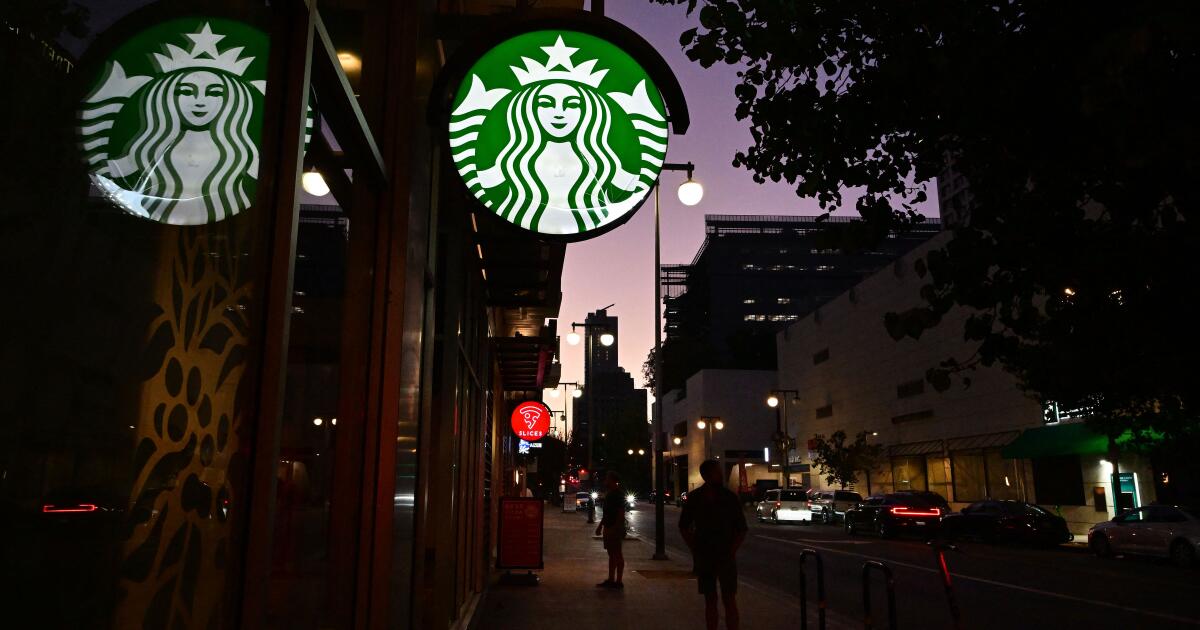
The cost to drink a milk-based Starbucks Frappuccino goes beyond the $5-plus price tag for California residents Maria Bolliger, Dawn Miller and Shunda Smith.
All three are either lactose intolerant or have a milk allergy. Ingesting any milk product, they say, can result in issues including stomach pain, digestive tract inflammation, bowel irregularities and even vomiting.
What has the trio steamed, however, is not their limitations, but the remedy offered by Starbucks.
Bolliger, Miller and Smith are suing the coffee behemoth as part of a $5-million class action alleging that Starbucks is discriminating against them and other lactose-intolerant customers by charging extra for nondairy milks. The complaint was filed earlier this month in U.S. District Court in Fresno.
“It’s about the fact that these are individuals with lactose intolerance, which is recognized as a disability by the [Americans with Disability Act],” said Keith Gibson, one of the attorneys representing the plaintiffs. “This lawsuit is about discrimination.”
Adam Cyr, a U.S. Justice Department spokesman, said in an emailed statement that the ADA requires businesses to make reasonable modifications to their ordinary policies or practices to accommodate people with disabilities.
A food allergy “may be a disability if it substantially limits a major life activity, such as eating, or a major bodily function, such as digestive function,” Cyr said.
The plaintiffs are frequent customers of Starbucks, according to Gibson. In the lawsuit, they allege that they’ve paid surcharges of 50 to 80 cents per beverage since 2018 to swap out 2% milk in favor of nonlactose alternatives such as soy, oat, coconut or almond milk.
“Starbucks created a separate, higher-priced menu, aimed at customers who cannot ingest milk,” the lawsuit claims.
The suit argues that there is no a valid reason to charge more for nondairy milks since their cost is comparable.
Whole milk costs 3 to 5 cents per fluid ounce, while half-and-half costs between 9 and 19 cents and heavy cream 17 to 32 cents an ounce, according to the lawsuit.
The complaint listed retail prices for oat and soy milk at between 6 and 7 cents per fluid ounce, and almond milk at 4 to 7 cents, for comparison.
“This is a choice for Starbucks to offer oat milk and almond milk,” Gibson said. “For these people, it’s not a choice since they can’t drink regular milk. Charging a surcharge is discrimination against them.”
A Starbucks spokesperson declined to comment on the lawsuit, but said customers could add up to 4 ounces of nondairy milk to hot or iced brewed coffee or tea, cold brew or Americano beverages at no charge. They also said that Starbucks Rewards members can redeem points to substitute nondairy alternatives for the milk in dairy-based drinks.
Charging for nondairy alternatives, the spokesperson said, is similar to charging for “other beverage customizations such as an additional espresso shot or syrup.”
Gibson also represented the plaintiffs in a $5-million class-action lawsuit against Starbucks in Florida in 2022 that also centered on the company’s charges for lactose-free alternatives. He would not say whether a settlement had been reached in that case.
That lawsuit applied only to Florida residents, while the suit filed in Fresno has nationwide implications.
The Asthma and Allergy Foundation of America did not comment on the lawsuit, but stressed that food allergies and restrictive diets can put an added financial burden on people with certain conditions.
Melanie Carver, the foundation’s chief mission officer, said it was also important for people with milk allergies to carefully screen food items and to know the signs of a possible allergic reaction.
She warned that some products that say “nondairy” on the label “are not necessarily free of cow’s milk or cow milk proteins.”
Common signs and symptoms of an allergic reaction to milk, she said, include rash, hives, itching, swelling, vomiting, diarrhea and trouble breathing.

The cost to drink a milk-based Starbucks Frappuccino goes beyond the $5-plus price tag for California residents Maria Bolliger, Dawn Miller and Shunda Smith.
All three are either lactose intolerant or have a milk allergy. Ingesting any milk product, they say, can result in issues including stomach pain, digestive tract inflammation, bowel irregularities and even vomiting.
What has the trio steamed, however, is not their limitations, but the remedy offered by Starbucks.
Bolliger, Miller and Smith are suing the coffee behemoth as part of a $5-million class action alleging that Starbucks is discriminating against them and other lactose-intolerant customers by charging extra for nondairy milks. The complaint was filed earlier this month in U.S. District Court in Fresno.
“It’s about the fact that these are individuals with lactose intolerance, which is recognized as a disability by the [Americans with Disability Act],” said Keith Gibson, one of the attorneys representing the plaintiffs. “This lawsuit is about discrimination.”
Adam Cyr, a U.S. Justice Department spokesman, said in an emailed statement that the ADA requires businesses to make reasonable modifications to their ordinary policies or practices to accommodate people with disabilities.
A food allergy “may be a disability if it substantially limits a major life activity, such as eating, or a major bodily function, such as digestive function,” Cyr said.
The plaintiffs are frequent customers of Starbucks, according to Gibson. In the lawsuit, they allege that they’ve paid surcharges of 50 to 80 cents per beverage since 2018 to swap out 2% milk in favor of nonlactose alternatives such as soy, oat, coconut or almond milk.
“Starbucks created a separate, higher-priced menu, aimed at customers who cannot ingest milk,” the lawsuit claims.
The suit argues that there is no a valid reason to charge more for nondairy milks since their cost is comparable.
Whole milk costs 3 to 5 cents per fluid ounce, while half-and-half costs between 9 and 19 cents and heavy cream 17 to 32 cents an ounce, according to the lawsuit.
The complaint listed retail prices for oat and soy milk at between 6 and 7 cents per fluid ounce, and almond milk at 4 to 7 cents, for comparison.
“This is a choice for Starbucks to offer oat milk and almond milk,” Gibson said. “For these people, it’s not a choice since they can’t drink regular milk. Charging a surcharge is discrimination against them.”
A Starbucks spokesperson declined to comment on the lawsuit, but said customers could add up to 4 ounces of nondairy milk to hot or iced brewed coffee or tea, cold brew or Americano beverages at no charge. They also said that Starbucks Rewards members can redeem points to substitute nondairy alternatives for the milk in dairy-based drinks.
Charging for nondairy alternatives, the spokesperson said, is similar to charging for “other beverage customizations such as an additional espresso shot or syrup.”
Gibson also represented the plaintiffs in a $5-million class-action lawsuit against Starbucks in Florida in 2022 that also centered on the company’s charges for lactose-free alternatives. He would not say whether a settlement had been reached in that case.
That lawsuit applied only to Florida residents, while the suit filed in Fresno has nationwide implications.
The Asthma and Allergy Foundation of America did not comment on the lawsuit, but stressed that food allergies and restrictive diets can put an added financial burden on people with certain conditions.
Melanie Carver, the foundation’s chief mission officer, said it was also important for people with milk allergies to carefully screen food items and to know the signs of a possible allergic reaction.
She warned that some products that say “nondairy” on the label “are not necessarily free of cow’s milk or cow milk proteins.”
Common signs and symptoms of an allergic reaction to milk, she said, include rash, hives, itching, swelling, vomiting, diarrhea and trouble breathing.

The cost to drink a milk-based Starbucks Frappuccino goes beyond the $5-plus price tag for California residents Maria Bolliger, Dawn Miller and Shunda Smith.
All three are either lactose intolerant or have a milk allergy. Ingesting any milk product, they say, can result in issues including stomach pain, digestive tract inflammation, bowel irregularities and even vomiting.
What has the trio steamed, however, is not their limitations, but the remedy offered by Starbucks.
Bolliger, Miller and Smith are suing the coffee behemoth as part of a $5-million class action alleging that Starbucks is discriminating against them and other lactose-intolerant customers by charging extra for nondairy milks. The complaint was filed earlier this month in U.S. District Court in Fresno.
“It’s about the fact that these are individuals with lactose intolerance, which is recognized as a disability by the [Americans with Disability Act],” said Keith Gibson, one of the attorneys representing the plaintiffs. “This lawsuit is about discrimination.”
Adam Cyr, a U.S. Justice Department spokesman, said in an emailed statement that the ADA requires businesses to make reasonable modifications to their ordinary policies or practices to accommodate people with disabilities.
A food allergy “may be a disability if it substantially limits a major life activity, such as eating, or a major bodily function, such as digestive function,” Cyr said.
The plaintiffs are frequent customers of Starbucks, according to Gibson. In the lawsuit, they allege that they’ve paid surcharges of 50 to 80 cents per beverage since 2018 to swap out 2% milk in favor of nonlactose alternatives such as soy, oat, coconut or almond milk.
“Starbucks created a separate, higher-priced menu, aimed at customers who cannot ingest milk,” the lawsuit claims.
The suit argues that there is no a valid reason to charge more for nondairy milks since their cost is comparable.
Whole milk costs 3 to 5 cents per fluid ounce, while half-and-half costs between 9 and 19 cents and heavy cream 17 to 32 cents an ounce, according to the lawsuit.
The complaint listed retail prices for oat and soy milk at between 6 and 7 cents per fluid ounce, and almond milk at 4 to 7 cents, for comparison.
“This is a choice for Starbucks to offer oat milk and almond milk,” Gibson said. “For these people, it’s not a choice since they can’t drink regular milk. Charging a surcharge is discrimination against them.”
A Starbucks spokesperson declined to comment on the lawsuit, but said customers could add up to 4 ounces of nondairy milk to hot or iced brewed coffee or tea, cold brew or Americano beverages at no charge. They also said that Starbucks Rewards members can redeem points to substitute nondairy alternatives for the milk in dairy-based drinks.
Charging for nondairy alternatives, the spokesperson said, is similar to charging for “other beverage customizations such as an additional espresso shot or syrup.”
Gibson also represented the plaintiffs in a $5-million class-action lawsuit against Starbucks in Florida in 2022 that also centered on the company’s charges for lactose-free alternatives. He would not say whether a settlement had been reached in that case.
That lawsuit applied only to Florida residents, while the suit filed in Fresno has nationwide implications.
The Asthma and Allergy Foundation of America did not comment on the lawsuit, but stressed that food allergies and restrictive diets can put an added financial burden on people with certain conditions.
Melanie Carver, the foundation’s chief mission officer, said it was also important for people with milk allergies to carefully screen food items and to know the signs of a possible allergic reaction.
She warned that some products that say “nondairy” on the label “are not necessarily free of cow’s milk or cow milk proteins.”
Common signs and symptoms of an allergic reaction to milk, she said, include rash, hives, itching, swelling, vomiting, diarrhea and trouble breathing.
The cost to drink a milk-based Starbucks Frappuccino goes beyond the $5-plus price tag for California residents Maria Bolliger, Dawn Miller and Shunda Smith.
All three are either lactose intolerant or have a milk allergy. Ingesting any milk product, they say, can result in issues including stomach pain, digestive tract inflammation, bowel irregularities and even vomiting.
What has the trio steamed, however, is not their limitations, but the remedy offered by Starbucks.
Bolliger, Miller and Smith are suing the coffee behemoth as part of a $5-million class action alleging that Starbucks is discriminating against them and other lactose-intolerant customers by charging extra for nondairy milks. The complaint was filed earlier this month in U.S. District Court in Fresno.
“It’s about the fact that these are individuals with lactose intolerance, which is recognized as a disability by the [Americans with Disability Act],” said Keith Gibson, one of the attorneys representing the plaintiffs. “This lawsuit is about discrimination.”
Adam Cyr, a U.S. Justice Department spokesman, said in an emailed statement that the ADA requires businesses to make reasonable modifications to their ordinary policies or practices to accommodate people with disabilities.
A food allergy “may be a disability if it substantially limits a major life activity, such as eating, or a major bodily function, such as digestive function,” Cyr said.
The plaintiffs are frequent customers of Starbucks, according to Gibson. In the lawsuit, they allege that they’ve paid surcharges of 50 to 80 cents per beverage since 2018 to swap out 2% milk in favor of nonlactose alternatives such as soy, oat, coconut or almond milk.
“Starbucks created a separate, higher-priced menu, aimed at customers who cannot ingest milk,” the lawsuit claims.
The suit argues that there is no a valid reason to charge more for nondairy milks since their cost is comparable.
Whole milk costs 3 to 5 cents per fluid ounce, while half-and-half costs between 9 and 19 cents and heavy cream 17 to 32 cents an ounce, according to the lawsuit.
The complaint listed retail prices for oat and soy milk at between 6 and 7 cents per fluid ounce, and almond milk at 4 to 7 cents, for comparison.
“This is a choice for Starbucks to offer oat milk and almond milk,” Gibson said. “For these people, it’s not a choice since they can’t drink regular milk. Charging a surcharge is discrimination against them.”
A Starbucks spokesperson declined to comment on the lawsuit, but said customers could add up to 4 ounces of nondairy milk to hot or iced brewed coffee or tea, cold brew or Americano beverages at no charge. They also said that Starbucks Rewards members can redeem points to substitute nondairy alternatives for the milk in dairy-based drinks.
Charging for nondairy alternatives, the spokesperson said, is similar to charging for “other beverage customizations such as an additional espresso shot or syrup.”
Gibson also represented the plaintiffs in a $5-million class-action lawsuit against Starbucks in Florida in 2022 that also centered on the company’s charges for lactose-free alternatives. He would not say whether a settlement had been reached in that case.
That lawsuit applied only to Florida residents, while the suit filed in Fresno has nationwide implications.
The Asthma and Allergy Foundation of America did not comment on the lawsuit, but stressed that food allergies and restrictive diets can put an added financial burden on people with certain conditions.
Melanie Carver, the foundation’s chief mission officer, said it was also important for people with milk allergies to carefully screen food items and to know the signs of a possible allergic reaction.
She warned that some products that say “nondairy” on the label “are not necessarily free of cow’s milk or cow milk proteins.”
Common signs and symptoms of an allergic reaction to milk, she said, include rash, hives, itching, swelling, vomiting, diarrhea and trouble breathing.

The cost to drink a milk-based Starbucks Frappuccino goes beyond the $5-plus price tag for California residents Maria Bolliger, Dawn Miller and Shunda Smith.
All three are either lactose intolerant or have a milk allergy. Ingesting any milk product, they say, can result in issues including stomach pain, digestive tract inflammation, bowel irregularities and even vomiting.
What has the trio steamed, however, is not their limitations, but the remedy offered by Starbucks.
Bolliger, Miller and Smith are suing the coffee behemoth as part of a $5-million class action alleging that Starbucks is discriminating against them and other lactose-intolerant customers by charging extra for nondairy milks. The complaint was filed earlier this month in U.S. District Court in Fresno.
“It’s about the fact that these are individuals with lactose intolerance, which is recognized as a disability by the [Americans with Disability Act],” said Keith Gibson, one of the attorneys representing the plaintiffs. “This lawsuit is about discrimination.”
Adam Cyr, a U.S. Justice Department spokesman, said in an emailed statement that the ADA requires businesses to make reasonable modifications to their ordinary policies or practices to accommodate people with disabilities.
A food allergy “may be a disability if it substantially limits a major life activity, such as eating, or a major bodily function, such as digestive function,” Cyr said.
The plaintiffs are frequent customers of Starbucks, according to Gibson. In the lawsuit, they allege that they’ve paid surcharges of 50 to 80 cents per beverage since 2018 to swap out 2% milk in favor of nonlactose alternatives such as soy, oat, coconut or almond milk.
“Starbucks created a separate, higher-priced menu, aimed at customers who cannot ingest milk,” the lawsuit claims.
The suit argues that there is no a valid reason to charge more for nondairy milks since their cost is comparable.
Whole milk costs 3 to 5 cents per fluid ounce, while half-and-half costs between 9 and 19 cents and heavy cream 17 to 32 cents an ounce, according to the lawsuit.
The complaint listed retail prices for oat and soy milk at between 6 and 7 cents per fluid ounce, and almond milk at 4 to 7 cents, for comparison.
“This is a choice for Starbucks to offer oat milk and almond milk,” Gibson said. “For these people, it’s not a choice since they can’t drink regular milk. Charging a surcharge is discrimination against them.”
A Starbucks spokesperson declined to comment on the lawsuit, but said customers could add up to 4 ounces of nondairy milk to hot or iced brewed coffee or tea, cold brew or Americano beverages at no charge. They also said that Starbucks Rewards members can redeem points to substitute nondairy alternatives for the milk in dairy-based drinks.
Charging for nondairy alternatives, the spokesperson said, is similar to charging for “other beverage customizations such as an additional espresso shot or syrup.”
Gibson also represented the plaintiffs in a $5-million class-action lawsuit against Starbucks in Florida in 2022 that also centered on the company’s charges for lactose-free alternatives. He would not say whether a settlement had been reached in that case.
That lawsuit applied only to Florida residents, while the suit filed in Fresno has nationwide implications.
The Asthma and Allergy Foundation of America did not comment on the lawsuit, but stressed that food allergies and restrictive diets can put an added financial burden on people with certain conditions.
Melanie Carver, the foundation’s chief mission officer, said it was also important for people with milk allergies to carefully screen food items and to know the signs of a possible allergic reaction.
She warned that some products that say “nondairy” on the label “are not necessarily free of cow’s milk or cow milk proteins.”
Common signs and symptoms of an allergic reaction to milk, she said, include rash, hives, itching, swelling, vomiting, diarrhea and trouble breathing.
The cost to drink a milk-based Starbucks Frappuccino goes beyond the $5-plus price tag for California residents Maria Bolliger, Dawn Miller and Shunda Smith.
All three are either lactose intolerant or have a milk allergy. Ingesting any milk product, they say, can result in issues including stomach pain, digestive tract inflammation, bowel irregularities and even vomiting.
What has the trio steamed, however, is not their limitations, but the remedy offered by Starbucks.
Bolliger, Miller and Smith are suing the coffee behemoth as part of a $5-million class action alleging that Starbucks is discriminating against them and other lactose-intolerant customers by charging extra for nondairy milks. The complaint was filed earlier this month in U.S. District Court in Fresno.
“It’s about the fact that these are individuals with lactose intolerance, which is recognized as a disability by the [Americans with Disability Act],” said Keith Gibson, one of the attorneys representing the plaintiffs. “This lawsuit is about discrimination.”
Adam Cyr, a U.S. Justice Department spokesman, said in an emailed statement that the ADA requires businesses to make reasonable modifications to their ordinary policies or practices to accommodate people with disabilities.
A food allergy “may be a disability if it substantially limits a major life activity, such as eating, or a major bodily function, such as digestive function,” Cyr said.
The plaintiffs are frequent customers of Starbucks, according to Gibson. In the lawsuit, they allege that they’ve paid surcharges of 50 to 80 cents per beverage since 2018 to swap out 2% milk in favor of nonlactose alternatives such as soy, oat, coconut or almond milk.
“Starbucks created a separate, higher-priced menu, aimed at customers who cannot ingest milk,” the lawsuit claims.
The suit argues that there is no a valid reason to charge more for nondairy milks since their cost is comparable.
Whole milk costs 3 to 5 cents per fluid ounce, while half-and-half costs between 9 and 19 cents and heavy cream 17 to 32 cents an ounce, according to the lawsuit.
The complaint listed retail prices for oat and soy milk at between 6 and 7 cents per fluid ounce, and almond milk at 4 to 7 cents, for comparison.
“This is a choice for Starbucks to offer oat milk and almond milk,” Gibson said. “For these people, it’s not a choice since they can’t drink regular milk. Charging a surcharge is discrimination against them.”
A Starbucks spokesperson declined to comment on the lawsuit, but said customers could add up to 4 ounces of nondairy milk to hot or iced brewed coffee or tea, cold brew or Americano beverages at no charge. They also said that Starbucks Rewards members can redeem points to substitute nondairy alternatives for the milk in dairy-based drinks.
Charging for nondairy alternatives, the spokesperson said, is similar to charging for “other beverage customizations such as an additional espresso shot or syrup.”
Gibson also represented the plaintiffs in a $5-million class-action lawsuit against Starbucks in Florida in 2022 that also centered on the company’s charges for lactose-free alternatives. He would not say whether a settlement had been reached in that case.
That lawsuit applied only to Florida residents, while the suit filed in Fresno has nationwide implications.
The Asthma and Allergy Foundation of America did not comment on the lawsuit, but stressed that food allergies and restrictive diets can put an added financial burden on people with certain conditions.
Melanie Carver, the foundation’s chief mission officer, said it was also important for people with milk allergies to carefully screen food items and to know the signs of a possible allergic reaction.
She warned that some products that say “nondairy” on the label “are not necessarily free of cow’s milk or cow milk proteins.”
Common signs and symptoms of an allergic reaction to milk, she said, include rash, hives, itching, swelling, vomiting, diarrhea and trouble breathing.
The cost to drink a milk-based Starbucks Frappuccino goes beyond the $5-plus price tag for California residents Maria Bolliger, Dawn Miller and Shunda Smith.
All three are either lactose intolerant or have a milk allergy. Ingesting any milk product, they say, can result in issues including stomach pain, digestive tract inflammation, bowel irregularities and even vomiting.
What has the trio steamed, however, is not their limitations, but the remedy offered by Starbucks.
Bolliger, Miller and Smith are suing the coffee behemoth as part of a $5-million class action alleging that Starbucks is discriminating against them and other lactose-intolerant customers by charging extra for nondairy milks. The complaint was filed earlier this month in U.S. District Court in Fresno.
“It’s about the fact that these are individuals with lactose intolerance, which is recognized as a disability by the [Americans with Disability Act],” said Keith Gibson, one of the attorneys representing the plaintiffs. “This lawsuit is about discrimination.”
Adam Cyr, a U.S. Justice Department spokesman, said in an emailed statement that the ADA requires businesses to make reasonable modifications to their ordinary policies or practices to accommodate people with disabilities.
A food allergy “may be a disability if it substantially limits a major life activity, such as eating, or a major bodily function, such as digestive function,” Cyr said.
The plaintiffs are frequent customers of Starbucks, according to Gibson. In the lawsuit, they allege that they’ve paid surcharges of 50 to 80 cents per beverage since 2018 to swap out 2% milk in favor of nonlactose alternatives such as soy, oat, coconut or almond milk.
“Starbucks created a separate, higher-priced menu, aimed at customers who cannot ingest milk,” the lawsuit claims.
The suit argues that there is no a valid reason to charge more for nondairy milks since their cost is comparable.
Whole milk costs 3 to 5 cents per fluid ounce, while half-and-half costs between 9 and 19 cents and heavy cream 17 to 32 cents an ounce, according to the lawsuit.
The complaint listed retail prices for oat and soy milk at between 6 and 7 cents per fluid ounce, and almond milk at 4 to 7 cents, for comparison.
“This is a choice for Starbucks to offer oat milk and almond milk,” Gibson said. “For these people, it’s not a choice since they can’t drink regular milk. Charging a surcharge is discrimination against them.”
A Starbucks spokesperson declined to comment on the lawsuit, but said customers could add up to 4 ounces of nondairy milk to hot or iced brewed coffee or tea, cold brew or Americano beverages at no charge. They also said that Starbucks Rewards members can redeem points to substitute nondairy alternatives for the milk in dairy-based drinks.
Charging for nondairy alternatives, the spokesperson said, is similar to charging for “other beverage customizations such as an additional espresso shot or syrup.”
Gibson also represented the plaintiffs in a $5-million class-action lawsuit against Starbucks in Florida in 2022 that also centered on the company’s charges for lactose-free alternatives. He would not say whether a settlement had been reached in that case.
That lawsuit applied only to Florida residents, while the suit filed in Fresno has nationwide implications.
The Asthma and Allergy Foundation of America did not comment on the lawsuit, but stressed that food allergies and restrictive diets can put an added financial burden on people with certain conditions.
Melanie Carver, the foundation’s chief mission officer, said it was also important for people with milk allergies to carefully screen food items and to know the signs of a possible allergic reaction.
She warned that some products that say “nondairy” on the label “are not necessarily free of cow’s milk or cow milk proteins.”
Common signs and symptoms of an allergic reaction to milk, she said, include rash, hives, itching, swelling, vomiting, diarrhea and trouble breathing.
The cost to drink a milk-based Starbucks Frappuccino goes beyond the $5-plus price tag for California residents Maria Bolliger, Dawn Miller and Shunda Smith.
All three are either lactose intolerant or have a milk allergy. Ingesting any milk product, they say, can result in issues including stomach pain, digestive tract inflammation, bowel irregularities and even vomiting.
What has the trio steamed, however, is not their limitations, but the remedy offered by Starbucks.
Bolliger, Miller and Smith are suing the coffee behemoth as part of a $5-million class action alleging that Starbucks is discriminating against them and other lactose-intolerant customers by charging extra for nondairy milks. The complaint was filed earlier this month in U.S. District Court in Fresno.
“It’s about the fact that these are individuals with lactose intolerance, which is recognized as a disability by the [Americans with Disability Act],” said Keith Gibson, one of the attorneys representing the plaintiffs. “This lawsuit is about discrimination.”
Adam Cyr, a U.S. Justice Department spokesman, said in an emailed statement that the ADA requires businesses to make reasonable modifications to their ordinary policies or practices to accommodate people with disabilities.
A food allergy “may be a disability if it substantially limits a major life activity, such as eating, or a major bodily function, such as digestive function,” Cyr said.
The plaintiffs are frequent customers of Starbucks, according to Gibson. In the lawsuit, they allege that they’ve paid surcharges of 50 to 80 cents per beverage since 2018 to swap out 2% milk in favor of nonlactose alternatives such as soy, oat, coconut or almond milk.
“Starbucks created a separate, higher-priced menu, aimed at customers who cannot ingest milk,” the lawsuit claims.
The suit argues that there is no a valid reason to charge more for nondairy milks since their cost is comparable.
Whole milk costs 3 to 5 cents per fluid ounce, while half-and-half costs between 9 and 19 cents and heavy cream 17 to 32 cents an ounce, according to the lawsuit.
The complaint listed retail prices for oat and soy milk at between 6 and 7 cents per fluid ounce, and almond milk at 4 to 7 cents, for comparison.
“This is a choice for Starbucks to offer oat milk and almond milk,” Gibson said. “For these people, it’s not a choice since they can’t drink regular milk. Charging a surcharge is discrimination against them.”
A Starbucks spokesperson declined to comment on the lawsuit, but said customers could add up to 4 ounces of nondairy milk to hot or iced brewed coffee or tea, cold brew or Americano beverages at no charge. They also said that Starbucks Rewards members can redeem points to substitute nondairy alternatives for the milk in dairy-based drinks.
Charging for nondairy alternatives, the spokesperson said, is similar to charging for “other beverage customizations such as an additional espresso shot or syrup.”
Gibson also represented the plaintiffs in a $5-million class-action lawsuit against Starbucks in Florida in 2022 that also centered on the company’s charges for lactose-free alternatives. He would not say whether a settlement had been reached in that case.
That lawsuit applied only to Florida residents, while the suit filed in Fresno has nationwide implications.
The Asthma and Allergy Foundation of America did not comment on the lawsuit, but stressed that food allergies and restrictive diets can put an added financial burden on people with certain conditions.
Melanie Carver, the foundation’s chief mission officer, said it was also important for people with milk allergies to carefully screen food items and to know the signs of a possible allergic reaction.
She warned that some products that say “nondairy” on the label “are not necessarily free of cow’s milk or cow milk proteins.”
Common signs and symptoms of an allergic reaction to milk, she said, include rash, hives, itching, swelling, vomiting, diarrhea and trouble breathing.


