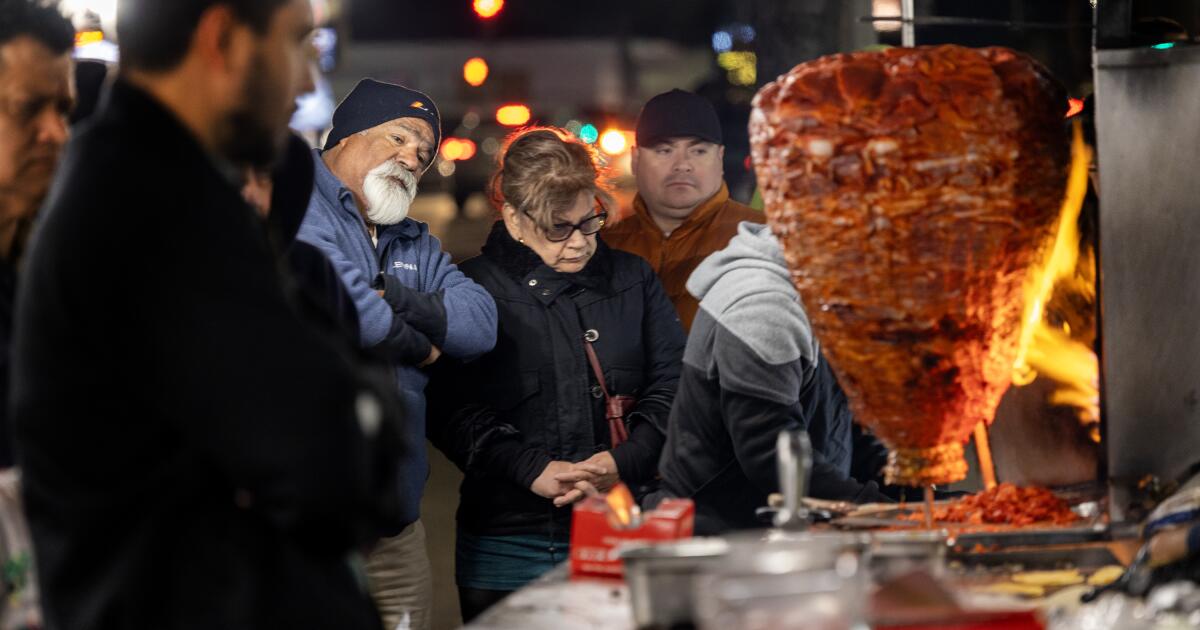
It’s been known for years that cooking indoors can taint the air in a home and cause health problems, especially when cooking without proper ventilation.
But a new study found that emissions from cooking may degrade the air quality outdoors as well.
“If you can smell it, there’s a good chance it’s impacting air quality,” researchers with the National Oceanic and Atmospheric Administration’s Chemical Sciences Laboratory recently wrote about a new study looking at the “unrecognized and underappreciated sources of urban air pollution.”
Researchers quantified the chemical compounds released when food cooks — a type of volatile organic compounds, or VOCs — along the busy, and restaurant-dense, streets of Las Vegas, finding high concentrations similar to amounts released by gas-powered cars.
The researchers found that “on average, 21% of the total mass of human-caused VOCs present in Las Vegas’ outdoor air were from cooking activities,” according to the NOAA report.
“Twenty percent is coming from cooking, and that’s about the amount that we saw coming from tailpipes,” said Matthew Coggon, a research chemist at NOAA and lead author on the study. “So basically, cooking is putting out as many volatile organic compounds as your tailpipe emissions.”
These compounds are important, he said, because they are known to react with nitrogen oxide in the atmosphere to form smog, diminishing air quality. The researchers focused on data from Las Vegas, but also included testing in Los Angeles and Boulder, Co., according to the study, which was published last month in Atmospheric Chemistry and Physics.
“We’re measuring one half of the, if you will, ‘recipe’ for smog formation,” Coggon said. “It’s an important part.”
As cars have become cleaner in recent decades, Coggon and his team have been working to track down other contributors to poor air quality — eventually leading them to emissions from cooking.
“You can pick [the aroma] up and know, ‘Oh, that’s a grill that’s cooking,’” Coggon said. “But we’ve never really been able to quantify the volatile organic compounds that come out of that.”
Until now, that is. The study found similar levels of these cooking emissions surrounding dense restaurant areas to those found in laboratory cooking studies. And extrapolating from the more limited data set collected in L.A., Coggon said he expects to see similar rates of the reactive compounds in Angelenos’ air.
But there’s a large caveat to the study, Coggon said, which is that researchers still aren’t sure how often these compounds undergo the reactions required to form ozone or particulate matter, which can be very damaging to human health.
Nevertheless, he said, it’s a safe assumption because researchers know that these compounds are very reactive. “So if something is very reactive, we expect that it will be a ozone precursor.”
Coggon said research to understand the full effect of these compounds is underway.
However, each step that helps better explain the effect of cooking’s emissions on the atmosphere is important, he said, so air quality regulators and policymakers can have the most accurate picture of what’s driving air pollution.
Currently, “models drastically underestimate how much cooking is in the atmosphere,” he said. “We can now make more informed decisions.”

It’s been known for years that cooking indoors can taint the air in a home and cause health problems, especially when cooking without proper ventilation.
But a new study found that emissions from cooking may degrade the air quality outdoors as well.
“If you can smell it, there’s a good chance it’s impacting air quality,” researchers with the National Oceanic and Atmospheric Administration’s Chemical Sciences Laboratory recently wrote about a new study looking at the “unrecognized and underappreciated sources of urban air pollution.”
Researchers quantified the chemical compounds released when food cooks — a type of volatile organic compounds, or VOCs — along the busy, and restaurant-dense, streets of Las Vegas, finding high concentrations similar to amounts released by gas-powered cars.
The researchers found that “on average, 21% of the total mass of human-caused VOCs present in Las Vegas’ outdoor air were from cooking activities,” according to the NOAA report.
“Twenty percent is coming from cooking, and that’s about the amount that we saw coming from tailpipes,” said Matthew Coggon, a research chemist at NOAA and lead author on the study. “So basically, cooking is putting out as many volatile organic compounds as your tailpipe emissions.”
These compounds are important, he said, because they are known to react with nitrogen oxide in the atmosphere to form smog, diminishing air quality. The researchers focused on data from Las Vegas, but also included testing in Los Angeles and Boulder, Co., according to the study, which was published last month in Atmospheric Chemistry and Physics.
“We’re measuring one half of the, if you will, ‘recipe’ for smog formation,” Coggon said. “It’s an important part.”
As cars have become cleaner in recent decades, Coggon and his team have been working to track down other contributors to poor air quality — eventually leading them to emissions from cooking.
“You can pick [the aroma] up and know, ‘Oh, that’s a grill that’s cooking,’” Coggon said. “But we’ve never really been able to quantify the volatile organic compounds that come out of that.”
Until now, that is. The study found similar levels of these cooking emissions surrounding dense restaurant areas to those found in laboratory cooking studies. And extrapolating from the more limited data set collected in L.A., Coggon said he expects to see similar rates of the reactive compounds in Angelenos’ air.
But there’s a large caveat to the study, Coggon said, which is that researchers still aren’t sure how often these compounds undergo the reactions required to form ozone or particulate matter, which can be very damaging to human health.
Nevertheless, he said, it’s a safe assumption because researchers know that these compounds are very reactive. “So if something is very reactive, we expect that it will be a ozone precursor.”
Coggon said research to understand the full effect of these compounds is underway.
However, each step that helps better explain the effect of cooking’s emissions on the atmosphere is important, he said, so air quality regulators and policymakers can have the most accurate picture of what’s driving air pollution.
Currently, “models drastically underestimate how much cooking is in the atmosphere,” he said. “We can now make more informed decisions.”

It’s been known for years that cooking indoors can taint the air in a home and cause health problems, especially when cooking without proper ventilation.
But a new study found that emissions from cooking may degrade the air quality outdoors as well.
“If you can smell it, there’s a good chance it’s impacting air quality,” researchers with the National Oceanic and Atmospheric Administration’s Chemical Sciences Laboratory recently wrote about a new study looking at the “unrecognized and underappreciated sources of urban air pollution.”
Researchers quantified the chemical compounds released when food cooks — a type of volatile organic compounds, or VOCs — along the busy, and restaurant-dense, streets of Las Vegas, finding high concentrations similar to amounts released by gas-powered cars.
The researchers found that “on average, 21% of the total mass of human-caused VOCs present in Las Vegas’ outdoor air were from cooking activities,” according to the NOAA report.
“Twenty percent is coming from cooking, and that’s about the amount that we saw coming from tailpipes,” said Matthew Coggon, a research chemist at NOAA and lead author on the study. “So basically, cooking is putting out as many volatile organic compounds as your tailpipe emissions.”
These compounds are important, he said, because they are known to react with nitrogen oxide in the atmosphere to form smog, diminishing air quality. The researchers focused on data from Las Vegas, but also included testing in Los Angeles and Boulder, Co., according to the study, which was published last month in Atmospheric Chemistry and Physics.
“We’re measuring one half of the, if you will, ‘recipe’ for smog formation,” Coggon said. “It’s an important part.”
As cars have become cleaner in recent decades, Coggon and his team have been working to track down other contributors to poor air quality — eventually leading them to emissions from cooking.
“You can pick [the aroma] up and know, ‘Oh, that’s a grill that’s cooking,’” Coggon said. “But we’ve never really been able to quantify the volatile organic compounds that come out of that.”
Until now, that is. The study found similar levels of these cooking emissions surrounding dense restaurant areas to those found in laboratory cooking studies. And extrapolating from the more limited data set collected in L.A., Coggon said he expects to see similar rates of the reactive compounds in Angelenos’ air.
But there’s a large caveat to the study, Coggon said, which is that researchers still aren’t sure how often these compounds undergo the reactions required to form ozone or particulate matter, which can be very damaging to human health.
Nevertheless, he said, it’s a safe assumption because researchers know that these compounds are very reactive. “So if something is very reactive, we expect that it will be a ozone precursor.”
Coggon said research to understand the full effect of these compounds is underway.
However, each step that helps better explain the effect of cooking’s emissions on the atmosphere is important, he said, so air quality regulators and policymakers can have the most accurate picture of what’s driving air pollution.
Currently, “models drastically underestimate how much cooking is in the atmosphere,” he said. “We can now make more informed decisions.”
It’s been known for years that cooking indoors can taint the air in a home and cause health problems, especially when cooking without proper ventilation.
But a new study found that emissions from cooking may degrade the air quality outdoors as well.
“If you can smell it, there’s a good chance it’s impacting air quality,” researchers with the National Oceanic and Atmospheric Administration’s Chemical Sciences Laboratory recently wrote about a new study looking at the “unrecognized and underappreciated sources of urban air pollution.”
Researchers quantified the chemical compounds released when food cooks — a type of volatile organic compounds, or VOCs — along the busy, and restaurant-dense, streets of Las Vegas, finding high concentrations similar to amounts released by gas-powered cars.
The researchers found that “on average, 21% of the total mass of human-caused VOCs present in Las Vegas’ outdoor air were from cooking activities,” according to the NOAA report.
“Twenty percent is coming from cooking, and that’s about the amount that we saw coming from tailpipes,” said Matthew Coggon, a research chemist at NOAA and lead author on the study. “So basically, cooking is putting out as many volatile organic compounds as your tailpipe emissions.”
These compounds are important, he said, because they are known to react with nitrogen oxide in the atmosphere to form smog, diminishing air quality. The researchers focused on data from Las Vegas, but also included testing in Los Angeles and Boulder, Co., according to the study, which was published last month in Atmospheric Chemistry and Physics.
“We’re measuring one half of the, if you will, ‘recipe’ for smog formation,” Coggon said. “It’s an important part.”
As cars have become cleaner in recent decades, Coggon and his team have been working to track down other contributors to poor air quality — eventually leading them to emissions from cooking.
“You can pick [the aroma] up and know, ‘Oh, that’s a grill that’s cooking,’” Coggon said. “But we’ve never really been able to quantify the volatile organic compounds that come out of that.”
Until now, that is. The study found similar levels of these cooking emissions surrounding dense restaurant areas to those found in laboratory cooking studies. And extrapolating from the more limited data set collected in L.A., Coggon said he expects to see similar rates of the reactive compounds in Angelenos’ air.
But there’s a large caveat to the study, Coggon said, which is that researchers still aren’t sure how often these compounds undergo the reactions required to form ozone or particulate matter, which can be very damaging to human health.
Nevertheless, he said, it’s a safe assumption because researchers know that these compounds are very reactive. “So if something is very reactive, we expect that it will be a ozone precursor.”
Coggon said research to understand the full effect of these compounds is underway.
However, each step that helps better explain the effect of cooking’s emissions on the atmosphere is important, he said, so air quality regulators and policymakers can have the most accurate picture of what’s driving air pollution.
Currently, “models drastically underestimate how much cooking is in the atmosphere,” he said. “We can now make more informed decisions.”

It’s been known for years that cooking indoors can taint the air in a home and cause health problems, especially when cooking without proper ventilation.
But a new study found that emissions from cooking may degrade the air quality outdoors as well.
“If you can smell it, there’s a good chance it’s impacting air quality,” researchers with the National Oceanic and Atmospheric Administration’s Chemical Sciences Laboratory recently wrote about a new study looking at the “unrecognized and underappreciated sources of urban air pollution.”
Researchers quantified the chemical compounds released when food cooks — a type of volatile organic compounds, or VOCs — along the busy, and restaurant-dense, streets of Las Vegas, finding high concentrations similar to amounts released by gas-powered cars.
The researchers found that “on average, 21% of the total mass of human-caused VOCs present in Las Vegas’ outdoor air were from cooking activities,” according to the NOAA report.
“Twenty percent is coming from cooking, and that’s about the amount that we saw coming from tailpipes,” said Matthew Coggon, a research chemist at NOAA and lead author on the study. “So basically, cooking is putting out as many volatile organic compounds as your tailpipe emissions.”
These compounds are important, he said, because they are known to react with nitrogen oxide in the atmosphere to form smog, diminishing air quality. The researchers focused on data from Las Vegas, but also included testing in Los Angeles and Boulder, Co., according to the study, which was published last month in Atmospheric Chemistry and Physics.
“We’re measuring one half of the, if you will, ‘recipe’ for smog formation,” Coggon said. “It’s an important part.”
As cars have become cleaner in recent decades, Coggon and his team have been working to track down other contributors to poor air quality — eventually leading them to emissions from cooking.
“You can pick [the aroma] up and know, ‘Oh, that’s a grill that’s cooking,’” Coggon said. “But we’ve never really been able to quantify the volatile organic compounds that come out of that.”
Until now, that is. The study found similar levels of these cooking emissions surrounding dense restaurant areas to those found in laboratory cooking studies. And extrapolating from the more limited data set collected in L.A., Coggon said he expects to see similar rates of the reactive compounds in Angelenos’ air.
But there’s a large caveat to the study, Coggon said, which is that researchers still aren’t sure how often these compounds undergo the reactions required to form ozone or particulate matter, which can be very damaging to human health.
Nevertheless, he said, it’s a safe assumption because researchers know that these compounds are very reactive. “So if something is very reactive, we expect that it will be a ozone precursor.”
Coggon said research to understand the full effect of these compounds is underway.
However, each step that helps better explain the effect of cooking’s emissions on the atmosphere is important, he said, so air quality regulators and policymakers can have the most accurate picture of what’s driving air pollution.
Currently, “models drastically underestimate how much cooking is in the atmosphere,” he said. “We can now make more informed decisions.”
It’s been known for years that cooking indoors can taint the air in a home and cause health problems, especially when cooking without proper ventilation.
But a new study found that emissions from cooking may degrade the air quality outdoors as well.
“If you can smell it, there’s a good chance it’s impacting air quality,” researchers with the National Oceanic and Atmospheric Administration’s Chemical Sciences Laboratory recently wrote about a new study looking at the “unrecognized and underappreciated sources of urban air pollution.”
Researchers quantified the chemical compounds released when food cooks — a type of volatile organic compounds, or VOCs — along the busy, and restaurant-dense, streets of Las Vegas, finding high concentrations similar to amounts released by gas-powered cars.
The researchers found that “on average, 21% of the total mass of human-caused VOCs present in Las Vegas’ outdoor air were from cooking activities,” according to the NOAA report.
“Twenty percent is coming from cooking, and that’s about the amount that we saw coming from tailpipes,” said Matthew Coggon, a research chemist at NOAA and lead author on the study. “So basically, cooking is putting out as many volatile organic compounds as your tailpipe emissions.”
These compounds are important, he said, because they are known to react with nitrogen oxide in the atmosphere to form smog, diminishing air quality. The researchers focused on data from Las Vegas, but also included testing in Los Angeles and Boulder, Co., according to the study, which was published last month in Atmospheric Chemistry and Physics.
“We’re measuring one half of the, if you will, ‘recipe’ for smog formation,” Coggon said. “It’s an important part.”
As cars have become cleaner in recent decades, Coggon and his team have been working to track down other contributors to poor air quality — eventually leading them to emissions from cooking.
“You can pick [the aroma] up and know, ‘Oh, that’s a grill that’s cooking,’” Coggon said. “But we’ve never really been able to quantify the volatile organic compounds that come out of that.”
Until now, that is. The study found similar levels of these cooking emissions surrounding dense restaurant areas to those found in laboratory cooking studies. And extrapolating from the more limited data set collected in L.A., Coggon said he expects to see similar rates of the reactive compounds in Angelenos’ air.
But there’s a large caveat to the study, Coggon said, which is that researchers still aren’t sure how often these compounds undergo the reactions required to form ozone or particulate matter, which can be very damaging to human health.
Nevertheless, he said, it’s a safe assumption because researchers know that these compounds are very reactive. “So if something is very reactive, we expect that it will be a ozone precursor.”
Coggon said research to understand the full effect of these compounds is underway.
However, each step that helps better explain the effect of cooking’s emissions on the atmosphere is important, he said, so air quality regulators and policymakers can have the most accurate picture of what’s driving air pollution.
Currently, “models drastically underestimate how much cooking is in the atmosphere,” he said. “We can now make more informed decisions.”
It’s been known for years that cooking indoors can taint the air in a home and cause health problems, especially when cooking without proper ventilation.
But a new study found that emissions from cooking may degrade the air quality outdoors as well.
“If you can smell it, there’s a good chance it’s impacting air quality,” researchers with the National Oceanic and Atmospheric Administration’s Chemical Sciences Laboratory recently wrote about a new study looking at the “unrecognized and underappreciated sources of urban air pollution.”
Researchers quantified the chemical compounds released when food cooks — a type of volatile organic compounds, or VOCs — along the busy, and restaurant-dense, streets of Las Vegas, finding high concentrations similar to amounts released by gas-powered cars.
The researchers found that “on average, 21% of the total mass of human-caused VOCs present in Las Vegas’ outdoor air were from cooking activities,” according to the NOAA report.
“Twenty percent is coming from cooking, and that’s about the amount that we saw coming from tailpipes,” said Matthew Coggon, a research chemist at NOAA and lead author on the study. “So basically, cooking is putting out as many volatile organic compounds as your tailpipe emissions.”
These compounds are important, he said, because they are known to react with nitrogen oxide in the atmosphere to form smog, diminishing air quality. The researchers focused on data from Las Vegas, but also included testing in Los Angeles and Boulder, Co., according to the study, which was published last month in Atmospheric Chemistry and Physics.
“We’re measuring one half of the, if you will, ‘recipe’ for smog formation,” Coggon said. “It’s an important part.”
As cars have become cleaner in recent decades, Coggon and his team have been working to track down other contributors to poor air quality — eventually leading them to emissions from cooking.
“You can pick [the aroma] up and know, ‘Oh, that’s a grill that’s cooking,’” Coggon said. “But we’ve never really been able to quantify the volatile organic compounds that come out of that.”
Until now, that is. The study found similar levels of these cooking emissions surrounding dense restaurant areas to those found in laboratory cooking studies. And extrapolating from the more limited data set collected in L.A., Coggon said he expects to see similar rates of the reactive compounds in Angelenos’ air.
But there’s a large caveat to the study, Coggon said, which is that researchers still aren’t sure how often these compounds undergo the reactions required to form ozone or particulate matter, which can be very damaging to human health.
Nevertheless, he said, it’s a safe assumption because researchers know that these compounds are very reactive. “So if something is very reactive, we expect that it will be a ozone precursor.”
Coggon said research to understand the full effect of these compounds is underway.
However, each step that helps better explain the effect of cooking’s emissions on the atmosphere is important, he said, so air quality regulators and policymakers can have the most accurate picture of what’s driving air pollution.
Currently, “models drastically underestimate how much cooking is in the atmosphere,” he said. “We can now make more informed decisions.”
It’s been known for years that cooking indoors can taint the air in a home and cause health problems, especially when cooking without proper ventilation.
But a new study found that emissions from cooking may degrade the air quality outdoors as well.
“If you can smell it, there’s a good chance it’s impacting air quality,” researchers with the National Oceanic and Atmospheric Administration’s Chemical Sciences Laboratory recently wrote about a new study looking at the “unrecognized and underappreciated sources of urban air pollution.”
Researchers quantified the chemical compounds released when food cooks — a type of volatile organic compounds, or VOCs — along the busy, and restaurant-dense, streets of Las Vegas, finding high concentrations similar to amounts released by gas-powered cars.
The researchers found that “on average, 21% of the total mass of human-caused VOCs present in Las Vegas’ outdoor air were from cooking activities,” according to the NOAA report.
“Twenty percent is coming from cooking, and that’s about the amount that we saw coming from tailpipes,” said Matthew Coggon, a research chemist at NOAA and lead author on the study. “So basically, cooking is putting out as many volatile organic compounds as your tailpipe emissions.”
These compounds are important, he said, because they are known to react with nitrogen oxide in the atmosphere to form smog, diminishing air quality. The researchers focused on data from Las Vegas, but also included testing in Los Angeles and Boulder, Co., according to the study, which was published last month in Atmospheric Chemistry and Physics.
“We’re measuring one half of the, if you will, ‘recipe’ for smog formation,” Coggon said. “It’s an important part.”
As cars have become cleaner in recent decades, Coggon and his team have been working to track down other contributors to poor air quality — eventually leading them to emissions from cooking.
“You can pick [the aroma] up and know, ‘Oh, that’s a grill that’s cooking,’” Coggon said. “But we’ve never really been able to quantify the volatile organic compounds that come out of that.”
Until now, that is. The study found similar levels of these cooking emissions surrounding dense restaurant areas to those found in laboratory cooking studies. And extrapolating from the more limited data set collected in L.A., Coggon said he expects to see similar rates of the reactive compounds in Angelenos’ air.
But there’s a large caveat to the study, Coggon said, which is that researchers still aren’t sure how often these compounds undergo the reactions required to form ozone or particulate matter, which can be very damaging to human health.
Nevertheless, he said, it’s a safe assumption because researchers know that these compounds are very reactive. “So if something is very reactive, we expect that it will be a ozone precursor.”
Coggon said research to understand the full effect of these compounds is underway.
However, each step that helps better explain the effect of cooking’s emissions on the atmosphere is important, he said, so air quality regulators and policymakers can have the most accurate picture of what’s driving air pollution.
Currently, “models drastically underestimate how much cooking is in the atmosphere,” he said. “We can now make more informed decisions.”