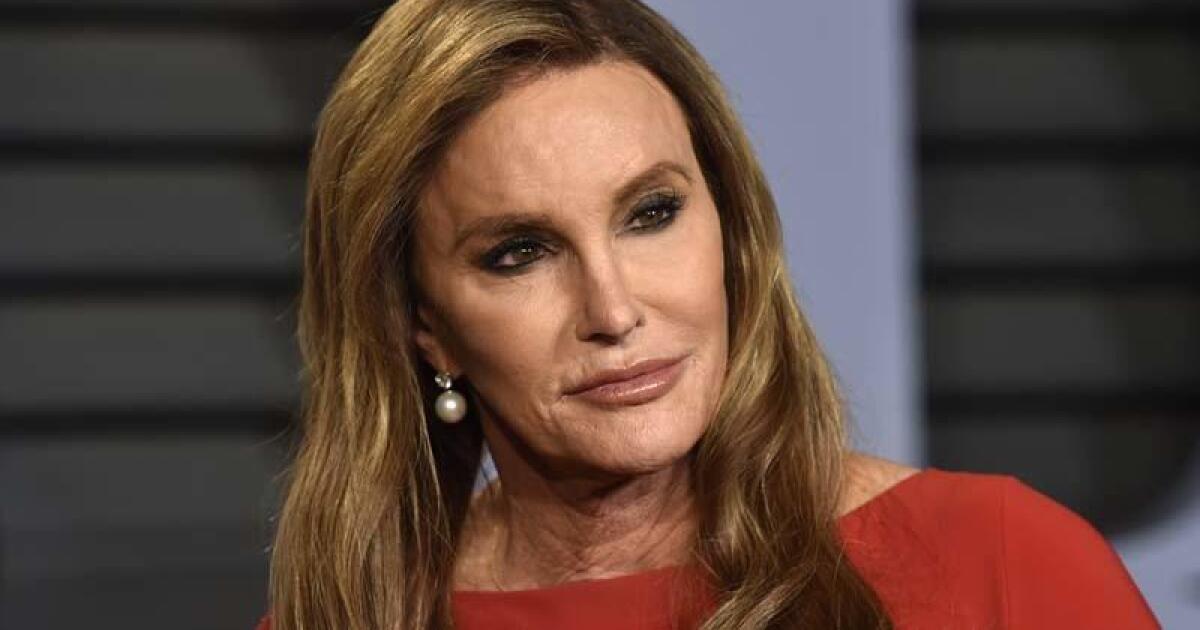
“There are times for all things under the sun, and I think that will be the right time,” she said.
Prominent Democrats in California have long eyed Feinstein’s seat as she frustrated party activists by rebuffing questions about whether she would seek another term as the chamber’s oldest sitting senator. It became clear over the past year that Feinstein was no longer actively raising money as she contended with the serious illness and subsequent death of her husband, Richard Blum. Pressure mounted for California’s senior senator to step down as she faced unflattering stories about a perceived decline in her mental acuity. And it was clear to observers on Capitol Hill that she was increasingly relying on staff to assist her with her daily duties.
In earlier election cycles, many of Feinstein’s would-be successors took pains to show deference to her. But those dynamics shifted earlier this year when Democratic Reps. Katie Porter, 49, and Adam B. Schiff, 62, entered the California Senate race before the 89-year-old senator made her plans public — an acknowledgment of the rigors of running in a state as complex and exorbitantly expensive as California. Rep. Barbara Lee (D-Calif.), 76, also has told colleagues that she plans to run, and others are expected to join the field.
In a statement, President Biden touched on the personal and professional relationship he and first lady Jill Biden shared with the longtime senator, lauding Feinstein for leading “the fight to get the assault weapons ban passed.”
“Over the three decades I’ve known her, Dianne and her late husband Richard became dear friends to Jill and me. I’ve served with more U.S. Senators than just about anyone. I can honestly say that Dianne Feinstein is one of the very best.”
On Tuesday, as word of Feinstein’s retirement spread across Capitol Hill, tributes poured in for the onetime mayor of San Francisco who has held her seat since she won the special election to replace Republican Pete Wilson in 1992.
Feinstein was elected that year alongside former California Sen. Barbara Boxer in what became known as the “Year of the Woman” — a campaign cycle fueled by outrage among female voters over the Senate’s treatment of Anita Hill, who accused Clarence Thomas of sexual harassment when he was a nominee for Supreme Court justice. Thomas denied the charges.
Reflecting on that race Tuesday, Boxer described the “Year of the Woman” moniker as a “ridiculous overstatement, because we did triple our numbers, but we went from two to six — 94 men and six women.” At the same time, Boxer said it was a critical milestone in the push for equity that she and Feinstein achieved together.
“We wanted to prove that two women could get elected from the same state,” Boxer said. “I can’t tell you how much prejudice there was when we ran. People would say to me ‘I could vote for one Jewish woman for the Senate, but I can’t vote for two.’ We knew that it would send such a strong signal of inclusion and the expansion of rights. The fact that we got there was just huge.”
Sen. Bernie Sanders (I-Vt.) called Feinstein “an extraordinarily brave senator.”
“Before it was fashionable she took on the gun lobby. She defended women’s rights at a time when it wasn’t so easy to do that. So I have a lot of affection for Dianne,” he said.
Feinstein received a standing ovation from her colleagues Tuesday as she spoke about her decision to retire at the Democratic caucus lunch, where she was introduced by Sen. Alex Padilla (D-Calif.). Senate Majority Leader Charles E. Schumer (D-N.Y.) called her an American institution who had broken “innumerable glass ceilings.”
“She’s a legend — a legend in California, a legend in the Senate,” Schumer said. “She gave a very heartwarming and teary address because she talked about her husband and how she so regretted his loss.”
Sen. Christopher A. Coons (D-Del.) grew emotional as he described her as “a remarkable leader with a big impact on the Intelligence Committee, on the Judiciary Committee, on the caucus as a whole.” And Rep. Nancy Pelosi (D-Calif.), who has endorsed Schiff, described Feinstein as “a titan in the United States Senate with a record that stands among the finest in history.”
In a statement Tuesday, Feinstein said that in her remaining time she would continue her efforts to pass legislation to help prevent and combat wildfires; assuage California’s homelessness crisis; and protect access to affordable, high-quality health care.
“Congress has enacted legislation on all of these topics over the past several years, but more needs to be done — and I will continue these efforts,” Feinstein said.
“Even with a divided Congress, we can still pass bills that will improve lives. Each of us was sent here to solve problems,” Feinstein said. “That’s what I’ve done for the last 30 years, and that’s what I plan to do for the next two years.”
Feinstein entered politics at the age of 36 when she was elected to the Board of Supervisors in 1969. Her political career was forged in tragedy when she became acting mayor of San Francisco in 1978 after the assassinations of Mayor George Moscone and Supervisor Harvey Milk. Recalling that moment in a statement Tuesday, Pelosi said Feinstein “broke barriers as the first woman to serve as Mayor of San Francisco — and in a moment of horror and heartbreak, she offered our City poised, courageous and hopeful leadership.”
Feinstein was in City Hall at the time of the murders and found Milk dead in his office. Describing that moment to the San Francisco Chronicle in 2008, she said it was one of the hardest moments of her life as she recalled how she tried to get a pulse and put her finger through a bullet hole.
That experience helped drive her relentless pursuit of legislation to reduce gun violence, most notably her push for the passage of the federal Assault Weapons Ban in 1994 and her unsuccessful efforts to get it reinstated after it expired.
She also played prominent roles on both the Senate Judiciary Committee and the Senate Intelligence Committee. Among her greatest accomplishments, she has cited the more-than-five-year review of the CIA’s detention and interrogation program and the 2014 release of the report’s executive summary. The report led to the passage of legislation to ensure that certain post-9/11 interrogation methods were never used again.
Through those and other endeavors, Feinstein built a reputation in the Senate as a skilled and dogged negotiator who was able to work across the aisle with her Republican colleagues. But her centrist brand of politics increasingly fell from favor among progressive Democrats in California as the two parties grew more polarized after President Donald Trump was elected.
In 2017, she was challenged by state Senate president pro tempore Kevin de León, who argued that the state needed “a new voice” and that she no longer represented the views of the state’s Democratic voters. Her Democratic challenger was not subtle in his jabs at her age, and he charged that Feinstein had failed to aggressively challenge Trump’s policies.
But she easily won reelection. She laughed off de León’s allusions to her age, telling reporters after one debate that while she wasn’t a “perfect person” she still had “something to offer the people of California and I want to offer it.”
“I’m a pretty good problem solver,” she told reporters at the time. “If you asked me what is my strength, I would say that’s my strength — solving problems — and that’s what legislation is supposed to do.”
But as the ranking Democratic member on the Senate Judiciary Committee in 2020, she infuriated liberal Democrats and activists once again during the confirmation hearings of Trump’s Supreme Court nominee Amy Coney Barrett when she hugged and thanked Senate Judiciary Committee chairman Lindsey O. Graham, a Republican, telling him it was “one of the best set of hearings” that she had participated in at a time when activists were calling the proceedings a sham.
Though Feinstein has waved off questions about her age and ability to serve, she has also relinquished key roles in recent years. She stepped down as the top Democrat on the Senate Judiciary Committee before the 117th Congress, when she would have been the first woman to lead that committee. And last year, Feinstein declined consideration to become president pro tempore of the Senate, the position third in line to the presidency that traditionally goes to the most senior senator of the party in power. The role instead went to Sen. Patty Murray (D-Wash.).
Feinstein last year filed initial paperwork to run for reelection in 2024 but until Tuesday had not explicitly said whether she would seek another term. That did not stop Porter and Schiff from launching their campaigns.
California is a heavily Democratic state that holds an all-party primary system. The top two candidates advance to the general election regardless of party affiliation.
California’s other senator, Padilla, 49, won his first full term in November and won’t be up for election again until 2028.
The race for Feinstein’s seat is likely to be a competitive and expensive one. The most recent Federal Election Commission reports show Schiff had $20.6 million in available campaign funds. Porter had $7.7 million in cash on hand and Lee had $54,940.
Paul Kane, Liz Goodwin, Camila DeChalus and Dylan Wells contributed to this report.