

SAG-AFTRA is taking steps to restrict its approval of side agreements with independent producers after the union faced criticism that such deals undermine the efforts of Hollywood’s dual strikes.
The 160,000-member performers union on Monday said it would now exclude independent productions in the U.S. that have contracts with the Writers Guild of America from receiving interim agreements that allow actors to keep working during a work stoppage.
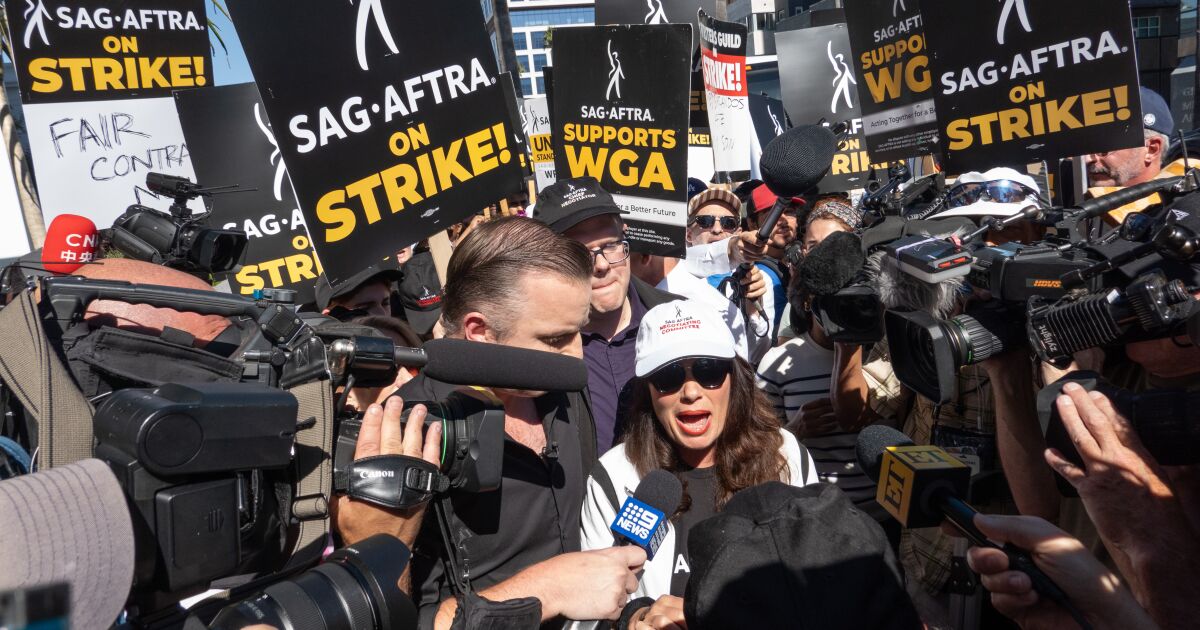
Both unions are in the midst of historic strikes against the major studios. Screenwriters have been on picket lines since May 2; actors joined them last month.
“We have been advised by the WGA that this modification will assist them in executing their strike strategy, and we believe it does not undermine the utility and effectiveness of ours,” SAG-AFTRA’s TV/Theatrical/Streaming negotiating committee said in a note to its members. “It is a win-win change.”
SAG-AFTRA has approved more than 200 interim agreements for movies and series — some involving A-list stars including Anne Hathaway, Kevin Costner, Mel Gibson, Glenn Close and Dakota Fanning — allowing production to continue despite the ongoing strikes that have crippled Hollywood.
But the volume and rapid pace of such approvals has stirred debate across Hollywood.
Some striking actors and writers have expressed concerns about the interim agreements, questioning why so many high-profile members are continuing to work while they are walking picket lines. Critics also argued that many of these projects will ultimately be distributed by members of the Alliance of Motion Picture and Television Producers.
SAG-AFTRA leaders have defended the deals, arguing that they allow actors and other crew members to keep working, while supporting independent productions that have agreed to the union’s deal points. Those include providing actors with an 11% boost in minimum pay and sharing streaming revenue with performers, among other concessions the AMPTP had rejected.
“These agreements are also designed to undermine the production slates and timing of the AMPTP companies and ensure that they come back to the table,” wrote SAG-AFTRA President Fran Drescher and chief negotiator and national executive director Duncan Crabtree-Ireland in a note to SAG-AFTRA members last week.
SAG-AFTRA and the AMPTP remain at odds over issues including streaming residuals and regulating the use of artificial intelligence technology.
Representatives of the WGA and the AMPTP are scheduled to resume bargaining this week.

SAG-AFTRA is taking steps to restrict its approval of side agreements with independent producers after the union faced criticism that such deals undermine the efforts of Hollywood’s dual strikes.
The 160,000-member performers union on Monday said it would now exclude independent productions in the U.S. that have contracts with the Writers Guild of America from receiving interim agreements that allow actors to keep working during a work stoppage.
Both unions are in the midst of historic strikes against the major studios. Screenwriters have been on picket lines since May 2; actors joined them last month.
“We have been advised by the WGA that this modification will assist them in executing their strike strategy, and we believe it does not undermine the utility and effectiveness of ours,” SAG-AFTRA’s TV/Theatrical/Streaming negotiating committee said in a note to its members. “It is a win-win change.”
SAG-AFTRA has approved more than 200 interim agreements for movies and series — some involving A-list stars including Anne Hathaway, Kevin Costner, Mel Gibson, Glenn Close and Dakota Fanning — allowing production to continue despite the ongoing strikes that have crippled Hollywood.
But the volume and rapid pace of such approvals has stirred debate across Hollywood.
Some striking actors and writers have expressed concerns about the interim agreements, questioning why so many high-profile members are continuing to work while they are walking picket lines. Critics also argued that many of these projects will ultimately be distributed by members of the Alliance of Motion Picture and Television Producers.
SAG-AFTRA leaders have defended the deals, arguing that they allow actors and other crew members to keep working, while supporting independent productions that have agreed to the union’s deal points. Those include providing actors with an 11% boost in minimum pay and sharing streaming revenue with performers, among other concessions the AMPTP had rejected.
“These agreements are also designed to undermine the production slates and timing of the AMPTP companies and ensure that they come back to the table,” wrote SAG-AFTRA President Fran Drescher and chief negotiator and national executive director Duncan Crabtree-Ireland in a note to SAG-AFTRA members last week.
SAG-AFTRA and the AMPTP remain at odds over issues including streaming residuals and regulating the use of artificial intelligence technology.
Representatives of the WGA and the AMPTP are scheduled to resume bargaining this week.

SAG-AFTRA is taking steps to restrict its approval of side agreements with independent producers after the union faced criticism that such deals undermine the efforts of Hollywood’s dual strikes.
The 160,000-member performers union on Monday said it would now exclude independent productions in the U.S. that have contracts with the Writers Guild of America from receiving interim agreements that allow actors to keep working during a work stoppage.
Both unions are in the midst of historic strikes against the major studios. Screenwriters have been on picket lines since May 2; actors joined them last month.
“We have been advised by the WGA that this modification will assist them in executing their strike strategy, and we believe it does not undermine the utility and effectiveness of ours,” SAG-AFTRA’s TV/Theatrical/Streaming negotiating committee said in a note to its members. “It is a win-win change.”
SAG-AFTRA has approved more than 200 interim agreements for movies and series — some involving A-list stars including Anne Hathaway, Kevin Costner, Mel Gibson, Glenn Close and Dakota Fanning — allowing production to continue despite the ongoing strikes that have crippled Hollywood.
But the volume and rapid pace of such approvals has stirred debate across Hollywood.
Some striking actors and writers have expressed concerns about the interim agreements, questioning why so many high-profile members are continuing to work while they are walking picket lines. Critics also argued that many of these projects will ultimately be distributed by members of the Alliance of Motion Picture and Television Producers.
SAG-AFTRA leaders have defended the deals, arguing that they allow actors and other crew members to keep working, while supporting independent productions that have agreed to the union’s deal points. Those include providing actors with an 11% boost in minimum pay and sharing streaming revenue with performers, among other concessions the AMPTP had rejected.
“These agreements are also designed to undermine the production slates and timing of the AMPTP companies and ensure that they come back to the table,” wrote SAG-AFTRA President Fran Drescher and chief negotiator and national executive director Duncan Crabtree-Ireland in a note to SAG-AFTRA members last week.
SAG-AFTRA and the AMPTP remain at odds over issues including streaming residuals and regulating the use of artificial intelligence technology.
Representatives of the WGA and the AMPTP are scheduled to resume bargaining this week.
SAG-AFTRA is taking steps to restrict its approval of side agreements with independent producers after the union faced criticism that such deals undermine the efforts of Hollywood’s dual strikes.
The 160,000-member performers union on Monday said it would now exclude independent productions in the U.S. that have contracts with the Writers Guild of America from receiving interim agreements that allow actors to keep working during a work stoppage.
Both unions are in the midst of historic strikes against the major studios. Screenwriters have been on picket lines since May 2; actors joined them last month.
“We have been advised by the WGA that this modification will assist them in executing their strike strategy, and we believe it does not undermine the utility and effectiveness of ours,” SAG-AFTRA’s TV/Theatrical/Streaming negotiating committee said in a note to its members. “It is a win-win change.”
SAG-AFTRA has approved more than 200 interim agreements for movies and series — some involving A-list stars including Anne Hathaway, Kevin Costner, Mel Gibson, Glenn Close and Dakota Fanning — allowing production to continue despite the ongoing strikes that have crippled Hollywood.
But the volume and rapid pace of such approvals has stirred debate across Hollywood.
Some striking actors and writers have expressed concerns about the interim agreements, questioning why so many high-profile members are continuing to work while they are walking picket lines. Critics also argued that many of these projects will ultimately be distributed by members of the Alliance of Motion Picture and Television Producers.
SAG-AFTRA leaders have defended the deals, arguing that they allow actors and other crew members to keep working, while supporting independent productions that have agreed to the union’s deal points. Those include providing actors with an 11% boost in minimum pay and sharing streaming revenue with performers, among other concessions the AMPTP had rejected.
“These agreements are also designed to undermine the production slates and timing of the AMPTP companies and ensure that they come back to the table,” wrote SAG-AFTRA President Fran Drescher and chief negotiator and national executive director Duncan Crabtree-Ireland in a note to SAG-AFTRA members last week.
SAG-AFTRA and the AMPTP remain at odds over issues including streaming residuals and regulating the use of artificial intelligence technology.
Representatives of the WGA and the AMPTP are scheduled to resume bargaining this week.

SAG-AFTRA is taking steps to restrict its approval of side agreements with independent producers after the union faced criticism that such deals undermine the efforts of Hollywood’s dual strikes.
The 160,000-member performers union on Monday said it would now exclude independent productions in the U.S. that have contracts with the Writers Guild of America from receiving interim agreements that allow actors to keep working during a work stoppage.
Both unions are in the midst of historic strikes against the major studios. Screenwriters have been on picket lines since May 2; actors joined them last month.
“We have been advised by the WGA that this modification will assist them in executing their strike strategy, and we believe it does not undermine the utility and effectiveness of ours,” SAG-AFTRA’s TV/Theatrical/Streaming negotiating committee said in a note to its members. “It is a win-win change.”
SAG-AFTRA has approved more than 200 interim agreements for movies and series — some involving A-list stars including Anne Hathaway, Kevin Costner, Mel Gibson, Glenn Close and Dakota Fanning — allowing production to continue despite the ongoing strikes that have crippled Hollywood.
But the volume and rapid pace of such approvals has stirred debate across Hollywood.
Some striking actors and writers have expressed concerns about the interim agreements, questioning why so many high-profile members are continuing to work while they are walking picket lines. Critics also argued that many of these projects will ultimately be distributed by members of the Alliance of Motion Picture and Television Producers.
SAG-AFTRA leaders have defended the deals, arguing that they allow actors and other crew members to keep working, while supporting independent productions that have agreed to the union’s deal points. Those include providing actors with an 11% boost in minimum pay and sharing streaming revenue with performers, among other concessions the AMPTP had rejected.
“These agreements are also designed to undermine the production slates and timing of the AMPTP companies and ensure that they come back to the table,” wrote SAG-AFTRA President Fran Drescher and chief negotiator and national executive director Duncan Crabtree-Ireland in a note to SAG-AFTRA members last week.
SAG-AFTRA and the AMPTP remain at odds over issues including streaming residuals and regulating the use of artificial intelligence technology.
Representatives of the WGA and the AMPTP are scheduled to resume bargaining this week.
SAG-AFTRA is taking steps to restrict its approval of side agreements with independent producers after the union faced criticism that such deals undermine the efforts of Hollywood’s dual strikes.
The 160,000-member performers union on Monday said it would now exclude independent productions in the U.S. that have contracts with the Writers Guild of America from receiving interim agreements that allow actors to keep working during a work stoppage.
Both unions are in the midst of historic strikes against the major studios. Screenwriters have been on picket lines since May 2; actors joined them last month.
“We have been advised by the WGA that this modification will assist them in executing their strike strategy, and we believe it does not undermine the utility and effectiveness of ours,” SAG-AFTRA’s TV/Theatrical/Streaming negotiating committee said in a note to its members. “It is a win-win change.”
SAG-AFTRA has approved more than 200 interim agreements for movies and series — some involving A-list stars including Anne Hathaway, Kevin Costner, Mel Gibson, Glenn Close and Dakota Fanning — allowing production to continue despite the ongoing strikes that have crippled Hollywood.
But the volume and rapid pace of such approvals has stirred debate across Hollywood.
Some striking actors and writers have expressed concerns about the interim agreements, questioning why so many high-profile members are continuing to work while they are walking picket lines. Critics also argued that many of these projects will ultimately be distributed by members of the Alliance of Motion Picture and Television Producers.
SAG-AFTRA leaders have defended the deals, arguing that they allow actors and other crew members to keep working, while supporting independent productions that have agreed to the union’s deal points. Those include providing actors with an 11% boost in minimum pay and sharing streaming revenue with performers, among other concessions the AMPTP had rejected.
“These agreements are also designed to undermine the production slates and timing of the AMPTP companies and ensure that they come back to the table,” wrote SAG-AFTRA President Fran Drescher and chief negotiator and national executive director Duncan Crabtree-Ireland in a note to SAG-AFTRA members last week.
SAG-AFTRA and the AMPTP remain at odds over issues including streaming residuals and regulating the use of artificial intelligence technology.
Representatives of the WGA and the AMPTP are scheduled to resume bargaining this week.
SAG-AFTRA is taking steps to restrict its approval of side agreements with independent producers after the union faced criticism that such deals undermine the efforts of Hollywood’s dual strikes.
The 160,000-member performers union on Monday said it would now exclude independent productions in the U.S. that have contracts with the Writers Guild of America from receiving interim agreements that allow actors to keep working during a work stoppage.
Both unions are in the midst of historic strikes against the major studios. Screenwriters have been on picket lines since May 2; actors joined them last month.
“We have been advised by the WGA that this modification will assist them in executing their strike strategy, and we believe it does not undermine the utility and effectiveness of ours,” SAG-AFTRA’s TV/Theatrical/Streaming negotiating committee said in a note to its members. “It is a win-win change.”
SAG-AFTRA has approved more than 200 interim agreements for movies and series — some involving A-list stars including Anne Hathaway, Kevin Costner, Mel Gibson, Glenn Close and Dakota Fanning — allowing production to continue despite the ongoing strikes that have crippled Hollywood.
But the volume and rapid pace of such approvals has stirred debate across Hollywood.
Some striking actors and writers have expressed concerns about the interim agreements, questioning why so many high-profile members are continuing to work while they are walking picket lines. Critics also argued that many of these projects will ultimately be distributed by members of the Alliance of Motion Picture and Television Producers.
SAG-AFTRA leaders have defended the deals, arguing that they allow actors and other crew members to keep working, while supporting independent productions that have agreed to the union’s deal points. Those include providing actors with an 11% boost in minimum pay and sharing streaming revenue with performers, among other concessions the AMPTP had rejected.
“These agreements are also designed to undermine the production slates and timing of the AMPTP companies and ensure that they come back to the table,” wrote SAG-AFTRA President Fran Drescher and chief negotiator and national executive director Duncan Crabtree-Ireland in a note to SAG-AFTRA members last week.
SAG-AFTRA and the AMPTP remain at odds over issues including streaming residuals and regulating the use of artificial intelligence technology.
Representatives of the WGA and the AMPTP are scheduled to resume bargaining this week.
SAG-AFTRA is taking steps to restrict its approval of side agreements with independent producers after the union faced criticism that such deals undermine the efforts of Hollywood’s dual strikes.
The 160,000-member performers union on Monday said it would now exclude independent productions in the U.S. that have contracts with the Writers Guild of America from receiving interim agreements that allow actors to keep working during a work stoppage.
Both unions are in the midst of historic strikes against the major studios. Screenwriters have been on picket lines since May 2; actors joined them last month.
“We have been advised by the WGA that this modification will assist them in executing their strike strategy, and we believe it does not undermine the utility and effectiveness of ours,” SAG-AFTRA’s TV/Theatrical/Streaming negotiating committee said in a note to its members. “It is a win-win change.”
SAG-AFTRA has approved more than 200 interim agreements for movies and series — some involving A-list stars including Anne Hathaway, Kevin Costner, Mel Gibson, Glenn Close and Dakota Fanning — allowing production to continue despite the ongoing strikes that have crippled Hollywood.
But the volume and rapid pace of such approvals has stirred debate across Hollywood.
Some striking actors and writers have expressed concerns about the interim agreements, questioning why so many high-profile members are continuing to work while they are walking picket lines. Critics also argued that many of these projects will ultimately be distributed by members of the Alliance of Motion Picture and Television Producers.
SAG-AFTRA leaders have defended the deals, arguing that they allow actors and other crew members to keep working, while supporting independent productions that have agreed to the union’s deal points. Those include providing actors with an 11% boost in minimum pay and sharing streaming revenue with performers, among other concessions the AMPTP had rejected.
“These agreements are also designed to undermine the production slates and timing of the AMPTP companies and ensure that they come back to the table,” wrote SAG-AFTRA President Fran Drescher and chief negotiator and national executive director Duncan Crabtree-Ireland in a note to SAG-AFTRA members last week.
SAG-AFTRA and the AMPTP remain at odds over issues including streaming residuals and regulating the use of artificial intelligence technology.
Representatives of the WGA and the AMPTP are scheduled to resume bargaining this week.


