Leaders of SAG-AFTRA signaled they are making good headway in contract negotiations with the major studios, suggesting Hollywood may avert a second strike.
In a video message to members Saturday, SAG-AFTRA President Fran Drescher and Chief Negotiator Duncan Crabtree-Ireland shared no details of the talks but said they were progressing well.
“We are having an extremely productive negotiations that are laser focused on all of the crucial issues you told us are most important to you,” Drescher said.
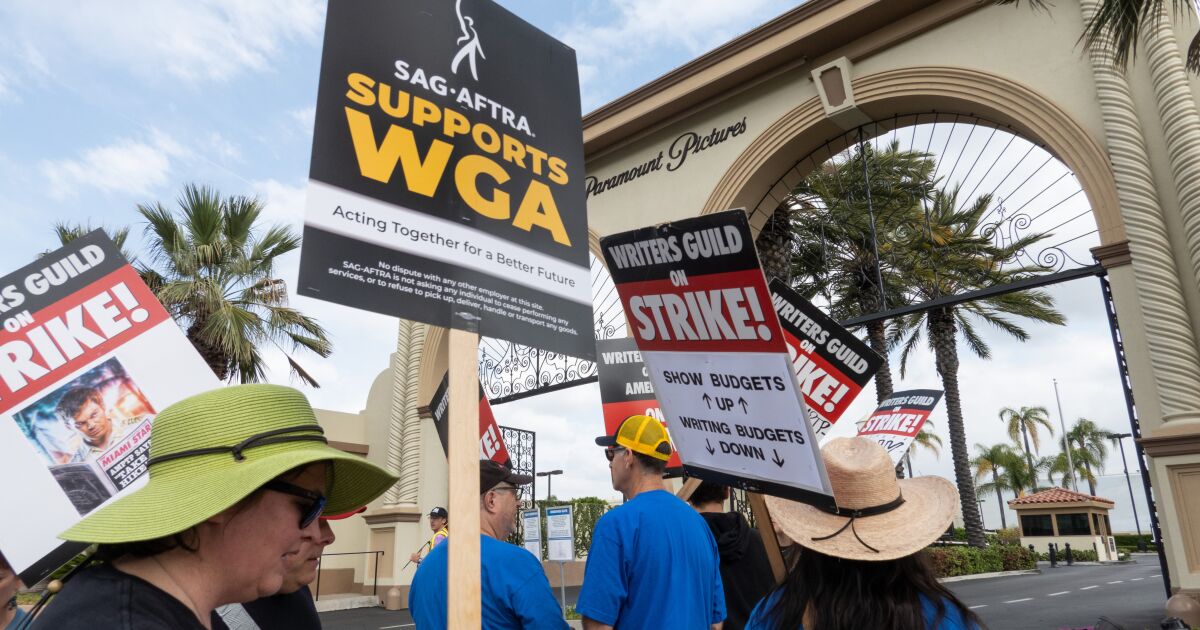
The talks with the Alliance of Motion Picture and Television Producers began June 7 and are being closely watched in light of the writers’ strike, which began May 2.
The writers’ strike has brought nearly all scripted production to a halt in Los Angeles. But an actors’ strike could be even more destabilizing for the film and TV industry.
An agreement with the actors, coming on the heels of a contract recently negotiated by the Directors Guild of America, would probably put more pressure on Writers Guild of America and the AMPTP to resolve their standoff, although guild leaders have emphasized they would not be bound by terms negotiated by other guilds.
Actors have been vocal in their support of writers and share many of the same demands to boost pay and improve working conditions that they say have eroded during the streaming era.
SAG-AFTRA members have already authorized their leaders to call a strike if they can’t reach a deal on a new film and TV contract before their contract expires June 30.
The last time actors went on strike was in 2000 in a dispute over their commercials contract. The previous actors’ strike against the major film and TV studios was in 1980.
Despite the tensions, SAG-AFTRA leaders expressed optimism they could reach a deal that would avert another walkout.
“We have a very narrow window of time remaining before our contract expires,” Crabtree-Ireland said in the video. “We remain optimistic that we will be able to bring the studios, networks and streamers along to make a fair deal.”
SAG-AFTRA, which represents some 160,000 performers and broadcasters, is seeking increased wages to counter inflation, higher residuals from streaming and protections from the use of AI. Additionally, the union wants to bolster contributions to its health and pension plans and curb the practice of self-taped auditions, a trend that accelerated during the pandemic.
The video message was first reported by Deadline.

Leaders of SAG-AFTRA signaled they are making good headway in contract negotiations with the major studios, suggesting Hollywood may avert a second strike.
In a video message to members Saturday, SAG-AFTRA President Fran Drescher and Chief Negotiator Duncan Crabtree-Ireland shared no details of the talks but said they were progressing well.
“We are having an extremely productive negotiations that are laser focused on all of the crucial issues you told us are most important to you,” Drescher said.
The talks with the Alliance of Motion Picture and Television Producers began June 7 and are being closely watched in light of the writers’ strike, which began May 2.
The writers’ strike has brought nearly all scripted production to a halt in Los Angeles. But an actors’ strike could be even more destabilizing for the film and TV industry.
An agreement with the actors, coming on the heels of a contract recently negotiated by the Directors Guild of America, would probably put more pressure on Writers Guild of America and the AMPTP to resolve their standoff, although guild leaders have emphasized they would not be bound by terms negotiated by other guilds.
Actors have been vocal in their support of writers and share many of the same demands to boost pay and improve working conditions that they say have eroded during the streaming era.
SAG-AFTRA members have already authorized their leaders to call a strike if they can’t reach a deal on a new film and TV contract before their contract expires June 30.
The last time actors went on strike was in 2000 in a dispute over their commercials contract. The previous actors’ strike against the major film and TV studios was in 1980.
Despite the tensions, SAG-AFTRA leaders expressed optimism they could reach a deal that would avert another walkout.
“We have a very narrow window of time remaining before our contract expires,” Crabtree-Ireland said in the video. “We remain optimistic that we will be able to bring the studios, networks and streamers along to make a fair deal.”
SAG-AFTRA, which represents some 160,000 performers and broadcasters, is seeking increased wages to counter inflation, higher residuals from streaming and protections from the use of AI. Additionally, the union wants to bolster contributions to its health and pension plans and curb the practice of self-taped auditions, a trend that accelerated during the pandemic.
The video message was first reported by Deadline.

Leaders of SAG-AFTRA signaled they are making good headway in contract negotiations with the major studios, suggesting Hollywood may avert a second strike.
In a video message to members Saturday, SAG-AFTRA President Fran Drescher and Chief Negotiator Duncan Crabtree-Ireland shared no details of the talks but said they were progressing well.
“We are having an extremely productive negotiations that are laser focused on all of the crucial issues you told us are most important to you,” Drescher said.
The talks with the Alliance of Motion Picture and Television Producers began June 7 and are being closely watched in light of the writers’ strike, which began May 2.
The writers’ strike has brought nearly all scripted production to a halt in Los Angeles. But an actors’ strike could be even more destabilizing for the film and TV industry.
An agreement with the actors, coming on the heels of a contract recently negotiated by the Directors Guild of America, would probably put more pressure on Writers Guild of America and the AMPTP to resolve their standoff, although guild leaders have emphasized they would not be bound by terms negotiated by other guilds.
Actors have been vocal in their support of writers and share many of the same demands to boost pay and improve working conditions that they say have eroded during the streaming era.
SAG-AFTRA members have already authorized their leaders to call a strike if they can’t reach a deal on a new film and TV contract before their contract expires June 30.
The last time actors went on strike was in 2000 in a dispute over their commercials contract. The previous actors’ strike against the major film and TV studios was in 1980.
Despite the tensions, SAG-AFTRA leaders expressed optimism they could reach a deal that would avert another walkout.
“We have a very narrow window of time remaining before our contract expires,” Crabtree-Ireland said in the video. “We remain optimistic that we will be able to bring the studios, networks and streamers along to make a fair deal.”
SAG-AFTRA, which represents some 160,000 performers and broadcasters, is seeking increased wages to counter inflation, higher residuals from streaming and protections from the use of AI. Additionally, the union wants to bolster contributions to its health and pension plans and curb the practice of self-taped auditions, a trend that accelerated during the pandemic.
The video message was first reported by Deadline.
Leaders of SAG-AFTRA signaled they are making good headway in contract negotiations with the major studios, suggesting Hollywood may avert a second strike.
In a video message to members Saturday, SAG-AFTRA President Fran Drescher and Chief Negotiator Duncan Crabtree-Ireland shared no details of the talks but said they were progressing well.
“We are having an extremely productive negotiations that are laser focused on all of the crucial issues you told us are most important to you,” Drescher said.
The talks with the Alliance of Motion Picture and Television Producers began June 7 and are being closely watched in light of the writers’ strike, which began May 2.
The writers’ strike has brought nearly all scripted production to a halt in Los Angeles. But an actors’ strike could be even more destabilizing for the film and TV industry.
An agreement with the actors, coming on the heels of a contract recently negotiated by the Directors Guild of America, would probably put more pressure on Writers Guild of America and the AMPTP to resolve their standoff, although guild leaders have emphasized they would not be bound by terms negotiated by other guilds.
Actors have been vocal in their support of writers and share many of the same demands to boost pay and improve working conditions that they say have eroded during the streaming era.
SAG-AFTRA members have already authorized their leaders to call a strike if they can’t reach a deal on a new film and TV contract before their contract expires June 30.
The last time actors went on strike was in 2000 in a dispute over their commercials contract. The previous actors’ strike against the major film and TV studios was in 1980.
Despite the tensions, SAG-AFTRA leaders expressed optimism they could reach a deal that would avert another walkout.
“We have a very narrow window of time remaining before our contract expires,” Crabtree-Ireland said in the video. “We remain optimistic that we will be able to bring the studios, networks and streamers along to make a fair deal.”
SAG-AFTRA, which represents some 160,000 performers and broadcasters, is seeking increased wages to counter inflation, higher residuals from streaming and protections from the use of AI. Additionally, the union wants to bolster contributions to its health and pension plans and curb the practice of self-taped auditions, a trend that accelerated during the pandemic.
The video message was first reported by Deadline.

Leaders of SAG-AFTRA signaled they are making good headway in contract negotiations with the major studios, suggesting Hollywood may avert a second strike.
In a video message to members Saturday, SAG-AFTRA President Fran Drescher and Chief Negotiator Duncan Crabtree-Ireland shared no details of the talks but said they were progressing well.
“We are having an extremely productive negotiations that are laser focused on all of the crucial issues you told us are most important to you,” Drescher said.
The talks with the Alliance of Motion Picture and Television Producers began June 7 and are being closely watched in light of the writers’ strike, which began May 2.
The writers’ strike has brought nearly all scripted production to a halt in Los Angeles. But an actors’ strike could be even more destabilizing for the film and TV industry.
An agreement with the actors, coming on the heels of a contract recently negotiated by the Directors Guild of America, would probably put more pressure on Writers Guild of America and the AMPTP to resolve their standoff, although guild leaders have emphasized they would not be bound by terms negotiated by other guilds.
Actors have been vocal in their support of writers and share many of the same demands to boost pay and improve working conditions that they say have eroded during the streaming era.
SAG-AFTRA members have already authorized their leaders to call a strike if they can’t reach a deal on a new film and TV contract before their contract expires June 30.
The last time actors went on strike was in 2000 in a dispute over their commercials contract. The previous actors’ strike against the major film and TV studios was in 1980.
Despite the tensions, SAG-AFTRA leaders expressed optimism they could reach a deal that would avert another walkout.
“We have a very narrow window of time remaining before our contract expires,” Crabtree-Ireland said in the video. “We remain optimistic that we will be able to bring the studios, networks and streamers along to make a fair deal.”
SAG-AFTRA, which represents some 160,000 performers and broadcasters, is seeking increased wages to counter inflation, higher residuals from streaming and protections from the use of AI. Additionally, the union wants to bolster contributions to its health and pension plans and curb the practice of self-taped auditions, a trend that accelerated during the pandemic.
The video message was first reported by Deadline.
Leaders of SAG-AFTRA signaled they are making good headway in contract negotiations with the major studios, suggesting Hollywood may avert a second strike.
In a video message to members Saturday, SAG-AFTRA President Fran Drescher and Chief Negotiator Duncan Crabtree-Ireland shared no details of the talks but said they were progressing well.
“We are having an extremely productive negotiations that are laser focused on all of the crucial issues you told us are most important to you,” Drescher said.
The talks with the Alliance of Motion Picture and Television Producers began June 7 and are being closely watched in light of the writers’ strike, which began May 2.
The writers’ strike has brought nearly all scripted production to a halt in Los Angeles. But an actors’ strike could be even more destabilizing for the film and TV industry.
An agreement with the actors, coming on the heels of a contract recently negotiated by the Directors Guild of America, would probably put more pressure on Writers Guild of America and the AMPTP to resolve their standoff, although guild leaders have emphasized they would not be bound by terms negotiated by other guilds.
Actors have been vocal in their support of writers and share many of the same demands to boost pay and improve working conditions that they say have eroded during the streaming era.
SAG-AFTRA members have already authorized their leaders to call a strike if they can’t reach a deal on a new film and TV contract before their contract expires June 30.
The last time actors went on strike was in 2000 in a dispute over their commercials contract. The previous actors’ strike against the major film and TV studios was in 1980.
Despite the tensions, SAG-AFTRA leaders expressed optimism they could reach a deal that would avert another walkout.
“We have a very narrow window of time remaining before our contract expires,” Crabtree-Ireland said in the video. “We remain optimistic that we will be able to bring the studios, networks and streamers along to make a fair deal.”
SAG-AFTRA, which represents some 160,000 performers and broadcasters, is seeking increased wages to counter inflation, higher residuals from streaming and protections from the use of AI. Additionally, the union wants to bolster contributions to its health and pension plans and curb the practice of self-taped auditions, a trend that accelerated during the pandemic.
The video message was first reported by Deadline.
Leaders of SAG-AFTRA signaled they are making good headway in contract negotiations with the major studios, suggesting Hollywood may avert a second strike.
In a video message to members Saturday, SAG-AFTRA President Fran Drescher and Chief Negotiator Duncan Crabtree-Ireland shared no details of the talks but said they were progressing well.
“We are having an extremely productive negotiations that are laser focused on all of the crucial issues you told us are most important to you,” Drescher said.
The talks with the Alliance of Motion Picture and Television Producers began June 7 and are being closely watched in light of the writers’ strike, which began May 2.
The writers’ strike has brought nearly all scripted production to a halt in Los Angeles. But an actors’ strike could be even more destabilizing for the film and TV industry.
An agreement with the actors, coming on the heels of a contract recently negotiated by the Directors Guild of America, would probably put more pressure on Writers Guild of America and the AMPTP to resolve their standoff, although guild leaders have emphasized they would not be bound by terms negotiated by other guilds.
Actors have been vocal in their support of writers and share many of the same demands to boost pay and improve working conditions that they say have eroded during the streaming era.
SAG-AFTRA members have already authorized their leaders to call a strike if they can’t reach a deal on a new film and TV contract before their contract expires June 30.
The last time actors went on strike was in 2000 in a dispute over their commercials contract. The previous actors’ strike against the major film and TV studios was in 1980.
Despite the tensions, SAG-AFTRA leaders expressed optimism they could reach a deal that would avert another walkout.
“We have a very narrow window of time remaining before our contract expires,” Crabtree-Ireland said in the video. “We remain optimistic that we will be able to bring the studios, networks and streamers along to make a fair deal.”
SAG-AFTRA, which represents some 160,000 performers and broadcasters, is seeking increased wages to counter inflation, higher residuals from streaming and protections from the use of AI. Additionally, the union wants to bolster contributions to its health and pension plans and curb the practice of self-taped auditions, a trend that accelerated during the pandemic.
The video message was first reported by Deadline.
Leaders of SAG-AFTRA signaled they are making good headway in contract negotiations with the major studios, suggesting Hollywood may avert a second strike.
In a video message to members Saturday, SAG-AFTRA President Fran Drescher and Chief Negotiator Duncan Crabtree-Ireland shared no details of the talks but said they were progressing well.
“We are having an extremely productive negotiations that are laser focused on all of the crucial issues you told us are most important to you,” Drescher said.
The talks with the Alliance of Motion Picture and Television Producers began June 7 and are being closely watched in light of the writers’ strike, which began May 2.
The writers’ strike has brought nearly all scripted production to a halt in Los Angeles. But an actors’ strike could be even more destabilizing for the film and TV industry.
An agreement with the actors, coming on the heels of a contract recently negotiated by the Directors Guild of America, would probably put more pressure on Writers Guild of America and the AMPTP to resolve their standoff, although guild leaders have emphasized they would not be bound by terms negotiated by other guilds.
Actors have been vocal in their support of writers and share many of the same demands to boost pay and improve working conditions that they say have eroded during the streaming era.
SAG-AFTRA members have already authorized their leaders to call a strike if they can’t reach a deal on a new film and TV contract before their contract expires June 30.
The last time actors went on strike was in 2000 in a dispute over their commercials contract. The previous actors’ strike against the major film and TV studios was in 1980.
Despite the tensions, SAG-AFTRA leaders expressed optimism they could reach a deal that would avert another walkout.
“We have a very narrow window of time remaining before our contract expires,” Crabtree-Ireland said in the video. “We remain optimistic that we will be able to bring the studios, networks and streamers along to make a fair deal.”
SAG-AFTRA, which represents some 160,000 performers and broadcasters, is seeking increased wages to counter inflation, higher residuals from streaming and protections from the use of AI. Additionally, the union wants to bolster contributions to its health and pension plans and curb the practice of self-taped auditions, a trend that accelerated during the pandemic.
The video message was first reported by Deadline.