
SAG-AFTRA, Hollywood’s biggest union, has agreed to extend negotiations with the studios to allow more time for the two sides to hash out an agreement that could avert Hollywood’s second strike.
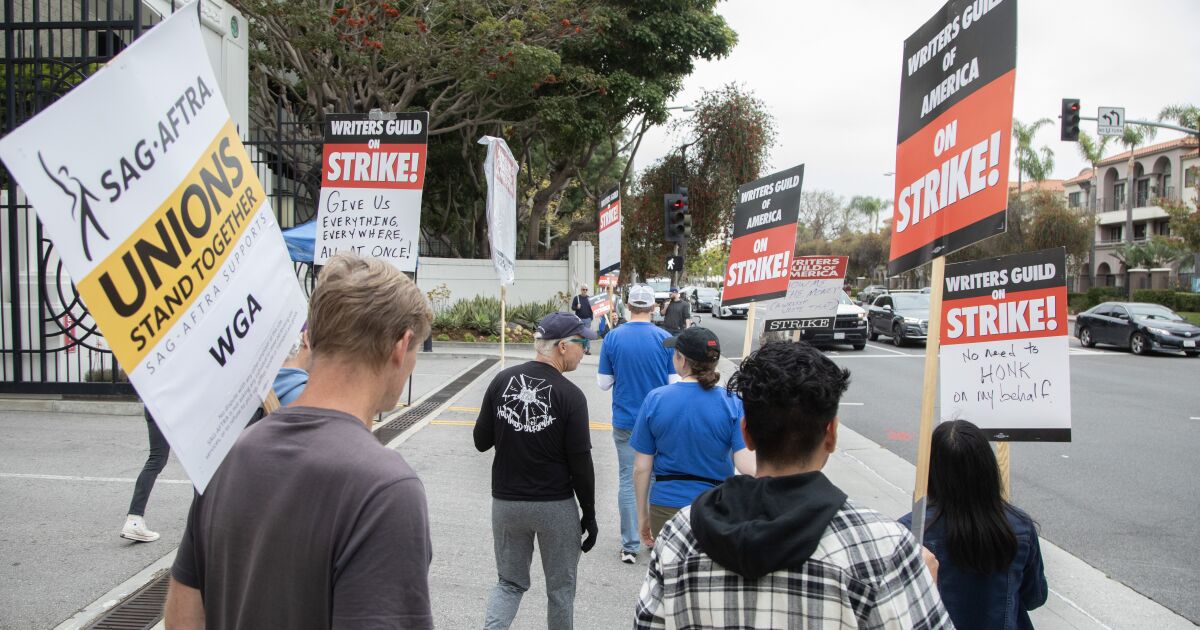
Writers have been on strike since May 2, and many have predicted actors would join them on the picket lines.
SAG-AFTRA members had already voted overwhelmingly in favor of allowing their leaders to call a walkout as early as Saturday if no deal was reached. The current three-year film and TV contract expires at 11:59 p.m. on June 30.
But in a statement Friday, the 160,000-member union and the Alliance of Motion Picture and Television Producers, which bargains on behalf of the studios, agreed to continue talks past the contract deadline to allow more time for the two sides to reach a deal. The current contract will be extended to July 12.
The union has extended negotiations in previous bargaining rounds in 2014 and 2017 before eventually reaching deals.
But the situation is more contentious this time around.
Despite progress in talks, significant differences remain between the parties, which have sparred over how to measure streaming residuals and secure protections against the abuse of artificial intelligence, among other issues, sources told The Times.
Guild politics have also added uncertainty over the outcome of negotiations. Union leaders face heavy pressure from their members to hold the line in bargaining.
After guild leaders Fran Drescher and Duncan Crabtree-Ireland expressed optimism about how negotiations were going, more than 300 actors, including many A-listers, delivered a blunt message this week that they’re prepared to strike if the union couldn’t deliver a “transformative deal.”
For now, the decision avoids or postpones a possibly painful second strike for Hollywood, with the actors joining in a national walkout for the first time since 1960.
The last time actors went on strike was in 2000 in a dispute over their commercials contract. The previous strike against major studios was in 1988.
The extension probably also means the writers’ strike could drag on as the AMPTP tries to secure a deal with the actors. Earlier this month, the studios agreed to a contract with the Directors Guild of America that was recently ratified by members.
SAG-AFTRA has been in talks with the studios since June 7. Negotiations got off to a contentious start when leaders secured a strike authorization even before bargaining began.
Like writers, actors want pay increases to counter the effects of inflation, as well as increased pay from streaming as more content shifts away from traditional broadcast platforms.
They’re also seeking more regulations surrounding how actors’ voices and images are used by AI, higher contributions to the union’s health plan and curbs on the practice of self-taped auditions that accelerated during the COVID-19 pandemic.

SAG-AFTRA, Hollywood’s biggest union, has agreed to extend negotiations with the studios to allow more time for the two sides to hash out an agreement that could avert Hollywood’s second strike.
Writers have been on strike since May 2, and many have predicted actors would join them on the picket lines.
SAG-AFTRA members had already voted overwhelmingly in favor of allowing their leaders to call a walkout as early as Saturday if no deal was reached. The current three-year film and TV contract expires at 11:59 p.m. on June 30.
But in a statement Friday, the 160,000-member union and the Alliance of Motion Picture and Television Producers, which bargains on behalf of the studios, agreed to continue talks past the contract deadline to allow more time for the two sides to reach a deal. The current contract will be extended to July 12.
The union has extended negotiations in previous bargaining rounds in 2014 and 2017 before eventually reaching deals.
But the situation is more contentious this time around.
Despite progress in talks, significant differences remain between the parties, which have sparred over how to measure streaming residuals and secure protections against the abuse of artificial intelligence, among other issues, sources told The Times.
Guild politics have also added uncertainty over the outcome of negotiations. Union leaders face heavy pressure from their members to hold the line in bargaining.
After guild leaders Fran Drescher and Duncan Crabtree-Ireland expressed optimism about how negotiations were going, more than 300 actors, including many A-listers, delivered a blunt message this week that they’re prepared to strike if the union couldn’t deliver a “transformative deal.”
For now, the decision avoids or postpones a possibly painful second strike for Hollywood, with the actors joining in a national walkout for the first time since 1960.
The last time actors went on strike was in 2000 in a dispute over their commercials contract. The previous strike against major studios was in 1988.
The extension probably also means the writers’ strike could drag on as the AMPTP tries to secure a deal with the actors. Earlier this month, the studios agreed to a contract with the Directors Guild of America that was recently ratified by members.
SAG-AFTRA has been in talks with the studios since June 7. Negotiations got off to a contentious start when leaders secured a strike authorization even before bargaining began.
Like writers, actors want pay increases to counter the effects of inflation, as well as increased pay from streaming as more content shifts away from traditional broadcast platforms.
They’re also seeking more regulations surrounding how actors’ voices and images are used by AI, higher contributions to the union’s health plan and curbs on the practice of self-taped auditions that accelerated during the COVID-19 pandemic.

SAG-AFTRA, Hollywood’s biggest union, has agreed to extend negotiations with the studios to allow more time for the two sides to hash out an agreement that could avert Hollywood’s second strike.
Writers have been on strike since May 2, and many have predicted actors would join them on the picket lines.
SAG-AFTRA members had already voted overwhelmingly in favor of allowing their leaders to call a walkout as early as Saturday if no deal was reached. The current three-year film and TV contract expires at 11:59 p.m. on June 30.
But in a statement Friday, the 160,000-member union and the Alliance of Motion Picture and Television Producers, which bargains on behalf of the studios, agreed to continue talks past the contract deadline to allow more time for the two sides to reach a deal. The current contract will be extended to July 12.
The union has extended negotiations in previous bargaining rounds in 2014 and 2017 before eventually reaching deals.
But the situation is more contentious this time around.
Despite progress in talks, significant differences remain between the parties, which have sparred over how to measure streaming residuals and secure protections against the abuse of artificial intelligence, among other issues, sources told The Times.
Guild politics have also added uncertainty over the outcome of negotiations. Union leaders face heavy pressure from their members to hold the line in bargaining.
After guild leaders Fran Drescher and Duncan Crabtree-Ireland expressed optimism about how negotiations were going, more than 300 actors, including many A-listers, delivered a blunt message this week that they’re prepared to strike if the union couldn’t deliver a “transformative deal.”
For now, the decision avoids or postpones a possibly painful second strike for Hollywood, with the actors joining in a national walkout for the first time since 1960.
The last time actors went on strike was in 2000 in a dispute over their commercials contract. The previous strike against major studios was in 1988.
The extension probably also means the writers’ strike could drag on as the AMPTP tries to secure a deal with the actors. Earlier this month, the studios agreed to a contract with the Directors Guild of America that was recently ratified by members.
SAG-AFTRA has been in talks with the studios since June 7. Negotiations got off to a contentious start when leaders secured a strike authorization even before bargaining began.
Like writers, actors want pay increases to counter the effects of inflation, as well as increased pay from streaming as more content shifts away from traditional broadcast platforms.
They’re also seeking more regulations surrounding how actors’ voices and images are used by AI, higher contributions to the union’s health plan and curbs on the practice of self-taped auditions that accelerated during the COVID-19 pandemic.
SAG-AFTRA, Hollywood’s biggest union, has agreed to extend negotiations with the studios to allow more time for the two sides to hash out an agreement that could avert Hollywood’s second strike.
Writers have been on strike since May 2, and many have predicted actors would join them on the picket lines.
SAG-AFTRA members had already voted overwhelmingly in favor of allowing their leaders to call a walkout as early as Saturday if no deal was reached. The current three-year film and TV contract expires at 11:59 p.m. on June 30.
But in a statement Friday, the 160,000-member union and the Alliance of Motion Picture and Television Producers, which bargains on behalf of the studios, agreed to continue talks past the contract deadline to allow more time for the two sides to reach a deal. The current contract will be extended to July 12.
The union has extended negotiations in previous bargaining rounds in 2014 and 2017 before eventually reaching deals.
But the situation is more contentious this time around.
Despite progress in talks, significant differences remain between the parties, which have sparred over how to measure streaming residuals and secure protections against the abuse of artificial intelligence, among other issues, sources told The Times.
Guild politics have also added uncertainty over the outcome of negotiations. Union leaders face heavy pressure from their members to hold the line in bargaining.
After guild leaders Fran Drescher and Duncan Crabtree-Ireland expressed optimism about how negotiations were going, more than 300 actors, including many A-listers, delivered a blunt message this week that they’re prepared to strike if the union couldn’t deliver a “transformative deal.”
For now, the decision avoids or postpones a possibly painful second strike for Hollywood, with the actors joining in a national walkout for the first time since 1960.
The last time actors went on strike was in 2000 in a dispute over their commercials contract. The previous strike against major studios was in 1988.
The extension probably also means the writers’ strike could drag on as the AMPTP tries to secure a deal with the actors. Earlier this month, the studios agreed to a contract with the Directors Guild of America that was recently ratified by members.
SAG-AFTRA has been in talks with the studios since June 7. Negotiations got off to a contentious start when leaders secured a strike authorization even before bargaining began.
Like writers, actors want pay increases to counter the effects of inflation, as well as increased pay from streaming as more content shifts away from traditional broadcast platforms.
They’re also seeking more regulations surrounding how actors’ voices and images are used by AI, higher contributions to the union’s health plan and curbs on the practice of self-taped auditions that accelerated during the COVID-19 pandemic.