The lovely and lyrical “Blueback” is a transporting mother-daughter (and fish) drama as well as a beautifully shot memory piece that will reward patient viewers able to settle in and enjoy the film’s accessibly low-key vibe.
There’s something comfortably old-fashioned, yet also vitally female-forward about this touching ecological tale, directed and scripted by Robert Connolly, based on the 1998 novel by Tim Winton (he receives an “additional writing by” credit here).
The action begins when dedicated marine biologist Abby Jackson (Mia Wasikowska) is summoned back to her childhood home on Australia’s west coast after her mother, Dora (Liz Alexander), experiences a life-altering stroke. (Southwest Australia’s dazzling Bremer Bay served as the story’s fictional Longboat Bay.)
Abby’s return to her idyllic hometown sparks recollections of her youth and early fascination with the ocean and its environs. We first travel back to Abby at 8 years old (played by Ariel Donoghue) when her love of the aquatic was jump-started by an underwater encounter with a western blue groper, a giant, reef-dwelling fish that can live up to 70 years. The meeting began her uncommon friendship with this striking, soulful creature, which she affectionately called Blueback for its cobalt color.
The film continues to shift between present and past as the adult Abby patiently attempts to jog her ailing mum’s stalled speech and vacant memory with stories, paintings and other remnants of their shared past.
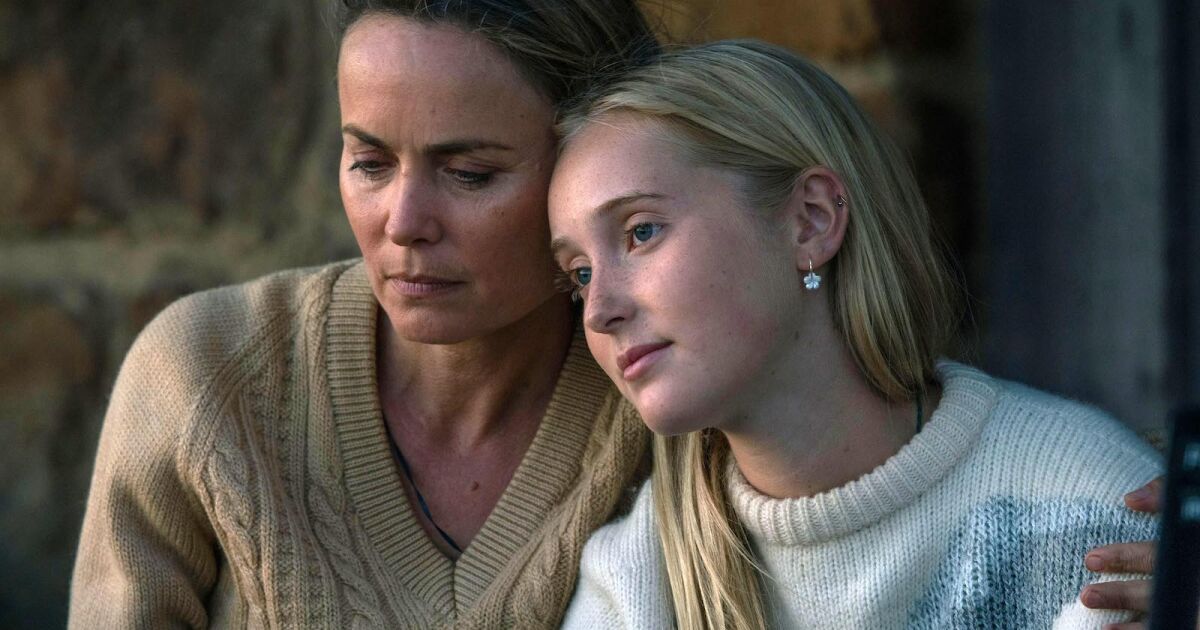
The bulk of the flashbacks find Abby at 15 (well played by Ilsa Fogg) and involve her close but occasionally combative relationship with the then-fiery Dora (an excellent Radha Mitchell), an environmental activist fighting to preserve the ocean and its endangered species. Of special interest to Dora, and by extension Abby, is a luxury housing tract being proposed by a local developer (Erik Thomson) that threatens not only their seaside home but the bay and its prized natural resources.
Mother and daughter are a longtime duo since Dora’s husband — Abby’s dad — disappeared ages ago, the presumed victim of a pearl-diving accident. But while Dora has a take-no-prisoners approach to her commitment to the environment (she’s particularly vigilant about local overfishing), Abby, though passionate about the land and sea, can be a bit more circumspect. This sometimes angers Dora but, as perhaps two sides of the same coin, they always find their way back to each other — even when it involves Abby’s plans for a future away from Dora’s beloved Longboat Bay.
But it’s the underwater scenes, mainly following the younger Abby and Dora’s ocean dives, that lend the film its special power. Cinematographer Andrew Commis and his camera team stirringly capture life beneath the Australian waters (shot in the country’s northwestern Ningaloo Reef) in all its colorful, exotic grandeur. As for Blueback, authentic as the big fish may look, it’s actually a state-of-the-art animatronic puppet enhanced with further visual effects.
There’s also a thrilling, late-breaking arrival of a group of humpback whales. This is a nature lover’s film for sure.
Eric Bana, who starred in Connolly’s well-received 2020 crime drama “The Dry,” makes a welcome, if brief appearance as a lovably unruly local fisherman. The capable cast also includes Pedrea Jackson as the teen Abby’s friend and romantic interest, Briggs, as well as Clarence Ryan as the adult Briggs.
“Blueback” may be a bit too wistful, leisurely paced and serious-minded for the kid audiences it seemingly hopes to attract. This isn’t to say it’s not a worthy family film — it is — as well as a worthy film about family. It’s also a vivid reminder of the urgent need to protect our increasingly fragile ecosystem at all costs.
An inspiring, strings-centric score by Nigel Westlake plus a nice cover-version use of the 1980s-era, Crowded House hit “Don’t Dream It’s Over,” are bonuses.
‘Blueback’
Rated: PG, for some thematic elements, peril and brief mild language
Running time: 1 hour, 42 minutes
Playing: Starts March 3 in general release

The lovely and lyrical “Blueback” is a transporting mother-daughter (and fish) drama as well as a beautifully shot memory piece that will reward patient viewers able to settle in and enjoy the film’s accessibly low-key vibe.
There’s something comfortably old-fashioned, yet also vitally female-forward about this touching ecological tale, directed and scripted by Robert Connolly, based on the 1998 novel by Tim Winton (he receives an “additional writing by” credit here).
The action begins when dedicated marine biologist Abby Jackson (Mia Wasikowska) is summoned back to her childhood home on Australia’s west coast after her mother, Dora (Liz Alexander), experiences a life-altering stroke. (Southwest Australia’s dazzling Bremer Bay served as the story’s fictional Longboat Bay.)
Abby’s return to her idyllic hometown sparks recollections of her youth and early fascination with the ocean and its environs. We first travel back to Abby at 8 years old (played by Ariel Donoghue) when her love of the aquatic was jump-started by an underwater encounter with a western blue groper, a giant, reef-dwelling fish that can live up to 70 years. The meeting began her uncommon friendship with this striking, soulful creature, which she affectionately called Blueback for its cobalt color.
The film continues to shift between present and past as the adult Abby patiently attempts to jog her ailing mum’s stalled speech and vacant memory with stories, paintings and other remnants of their shared past.
The bulk of the flashbacks find Abby at 15 (well played by Ilsa Fogg) and involve her close but occasionally combative relationship with the then-fiery Dora (an excellent Radha Mitchell), an environmental activist fighting to preserve the ocean and its endangered species. Of special interest to Dora, and by extension Abby, is a luxury housing tract being proposed by a local developer (Erik Thomson) that threatens not only their seaside home but the bay and its prized natural resources.
Mother and daughter are a longtime duo since Dora’s husband — Abby’s dad — disappeared ages ago, the presumed victim of a pearl-diving accident. But while Dora has a take-no-prisoners approach to her commitment to the environment (she’s particularly vigilant about local overfishing), Abby, though passionate about the land and sea, can be a bit more circumspect. This sometimes angers Dora but, as perhaps two sides of the same coin, they always find their way back to each other — even when it involves Abby’s plans for a future away from Dora’s beloved Longboat Bay.
But it’s the underwater scenes, mainly following the younger Abby and Dora’s ocean dives, that lend the film its special power. Cinematographer Andrew Commis and his camera team stirringly capture life beneath the Australian waters (shot in the country’s northwestern Ningaloo Reef) in all its colorful, exotic grandeur. As for Blueback, authentic as the big fish may look, it’s actually a state-of-the-art animatronic puppet enhanced with further visual effects.
There’s also a thrilling, late-breaking arrival of a group of humpback whales. This is a nature lover’s film for sure.
Eric Bana, who starred in Connolly’s well-received 2020 crime drama “The Dry,” makes a welcome, if brief appearance as a lovably unruly local fisherman. The capable cast also includes Pedrea Jackson as the teen Abby’s friend and romantic interest, Briggs, as well as Clarence Ryan as the adult Briggs.
“Blueback” may be a bit too wistful, leisurely paced and serious-minded for the kid audiences it seemingly hopes to attract. This isn’t to say it’s not a worthy family film — it is — as well as a worthy film about family. It’s also a vivid reminder of the urgent need to protect our increasingly fragile ecosystem at all costs.
An inspiring, strings-centric score by Nigel Westlake plus a nice cover-version use of the 1980s-era, Crowded House hit “Don’t Dream It’s Over,” are bonuses.
‘Blueback’
Rated: PG, for some thematic elements, peril and brief mild language
Running time: 1 hour, 42 minutes
Playing: Starts March 3 in general release

The lovely and lyrical “Blueback” is a transporting mother-daughter (and fish) drama as well as a beautifully shot memory piece that will reward patient viewers able to settle in and enjoy the film’s accessibly low-key vibe.
There’s something comfortably old-fashioned, yet also vitally female-forward about this touching ecological tale, directed and scripted by Robert Connolly, based on the 1998 novel by Tim Winton (he receives an “additional writing by” credit here).
The action begins when dedicated marine biologist Abby Jackson (Mia Wasikowska) is summoned back to her childhood home on Australia’s west coast after her mother, Dora (Liz Alexander), experiences a life-altering stroke. (Southwest Australia’s dazzling Bremer Bay served as the story’s fictional Longboat Bay.)
Abby’s return to her idyllic hometown sparks recollections of her youth and early fascination with the ocean and its environs. We first travel back to Abby at 8 years old (played by Ariel Donoghue) when her love of the aquatic was jump-started by an underwater encounter with a western blue groper, a giant, reef-dwelling fish that can live up to 70 years. The meeting began her uncommon friendship with this striking, soulful creature, which she affectionately called Blueback for its cobalt color.
The film continues to shift between present and past as the adult Abby patiently attempts to jog her ailing mum’s stalled speech and vacant memory with stories, paintings and other remnants of their shared past.
The bulk of the flashbacks find Abby at 15 (well played by Ilsa Fogg) and involve her close but occasionally combative relationship with the then-fiery Dora (an excellent Radha Mitchell), an environmental activist fighting to preserve the ocean and its endangered species. Of special interest to Dora, and by extension Abby, is a luxury housing tract being proposed by a local developer (Erik Thomson) that threatens not only their seaside home but the bay and its prized natural resources.
Mother and daughter are a longtime duo since Dora’s husband — Abby’s dad — disappeared ages ago, the presumed victim of a pearl-diving accident. But while Dora has a take-no-prisoners approach to her commitment to the environment (she’s particularly vigilant about local overfishing), Abby, though passionate about the land and sea, can be a bit more circumspect. This sometimes angers Dora but, as perhaps two sides of the same coin, they always find their way back to each other — even when it involves Abby’s plans for a future away from Dora’s beloved Longboat Bay.
But it’s the underwater scenes, mainly following the younger Abby and Dora’s ocean dives, that lend the film its special power. Cinematographer Andrew Commis and his camera team stirringly capture life beneath the Australian waters (shot in the country’s northwestern Ningaloo Reef) in all its colorful, exotic grandeur. As for Blueback, authentic as the big fish may look, it’s actually a state-of-the-art animatronic puppet enhanced with further visual effects.
There’s also a thrilling, late-breaking arrival of a group of humpback whales. This is a nature lover’s film for sure.
Eric Bana, who starred in Connolly’s well-received 2020 crime drama “The Dry,” makes a welcome, if brief appearance as a lovably unruly local fisherman. The capable cast also includes Pedrea Jackson as the teen Abby’s friend and romantic interest, Briggs, as well as Clarence Ryan as the adult Briggs.
“Blueback” may be a bit too wistful, leisurely paced and serious-minded for the kid audiences it seemingly hopes to attract. This isn’t to say it’s not a worthy family film — it is — as well as a worthy film about family. It’s also a vivid reminder of the urgent need to protect our increasingly fragile ecosystem at all costs.
An inspiring, strings-centric score by Nigel Westlake plus a nice cover-version use of the 1980s-era, Crowded House hit “Don’t Dream It’s Over,” are bonuses.
‘Blueback’
Rated: PG, for some thematic elements, peril and brief mild language
Running time: 1 hour, 42 minutes
Playing: Starts March 3 in general release
The lovely and lyrical “Blueback” is a transporting mother-daughter (and fish) drama as well as a beautifully shot memory piece that will reward patient viewers able to settle in and enjoy the film’s accessibly low-key vibe.
There’s something comfortably old-fashioned, yet also vitally female-forward about this touching ecological tale, directed and scripted by Robert Connolly, based on the 1998 novel by Tim Winton (he receives an “additional writing by” credit here).
The action begins when dedicated marine biologist Abby Jackson (Mia Wasikowska) is summoned back to her childhood home on Australia’s west coast after her mother, Dora (Liz Alexander), experiences a life-altering stroke. (Southwest Australia’s dazzling Bremer Bay served as the story’s fictional Longboat Bay.)
Abby’s return to her idyllic hometown sparks recollections of her youth and early fascination with the ocean and its environs. We first travel back to Abby at 8 years old (played by Ariel Donoghue) when her love of the aquatic was jump-started by an underwater encounter with a western blue groper, a giant, reef-dwelling fish that can live up to 70 years. The meeting began her uncommon friendship with this striking, soulful creature, which she affectionately called Blueback for its cobalt color.
The film continues to shift between present and past as the adult Abby patiently attempts to jog her ailing mum’s stalled speech and vacant memory with stories, paintings and other remnants of their shared past.
The bulk of the flashbacks find Abby at 15 (well played by Ilsa Fogg) and involve her close but occasionally combative relationship with the then-fiery Dora (an excellent Radha Mitchell), an environmental activist fighting to preserve the ocean and its endangered species. Of special interest to Dora, and by extension Abby, is a luxury housing tract being proposed by a local developer (Erik Thomson) that threatens not only their seaside home but the bay and its prized natural resources.
Mother and daughter are a longtime duo since Dora’s husband — Abby’s dad — disappeared ages ago, the presumed victim of a pearl-diving accident. But while Dora has a take-no-prisoners approach to her commitment to the environment (she’s particularly vigilant about local overfishing), Abby, though passionate about the land and sea, can be a bit more circumspect. This sometimes angers Dora but, as perhaps two sides of the same coin, they always find their way back to each other — even when it involves Abby’s plans for a future away from Dora’s beloved Longboat Bay.
But it’s the underwater scenes, mainly following the younger Abby and Dora’s ocean dives, that lend the film its special power. Cinematographer Andrew Commis and his camera team stirringly capture life beneath the Australian waters (shot in the country’s northwestern Ningaloo Reef) in all its colorful, exotic grandeur. As for Blueback, authentic as the big fish may look, it’s actually a state-of-the-art animatronic puppet enhanced with further visual effects.
There’s also a thrilling, late-breaking arrival of a group of humpback whales. This is a nature lover’s film for sure.
Eric Bana, who starred in Connolly’s well-received 2020 crime drama “The Dry,” makes a welcome, if brief appearance as a lovably unruly local fisherman. The capable cast also includes Pedrea Jackson as the teen Abby’s friend and romantic interest, Briggs, as well as Clarence Ryan as the adult Briggs.
“Blueback” may be a bit too wistful, leisurely paced and serious-minded for the kid audiences it seemingly hopes to attract. This isn’t to say it’s not a worthy family film — it is — as well as a worthy film about family. It’s also a vivid reminder of the urgent need to protect our increasingly fragile ecosystem at all costs.
An inspiring, strings-centric score by Nigel Westlake plus a nice cover-version use of the 1980s-era, Crowded House hit “Don’t Dream It’s Over,” are bonuses.
‘Blueback’
Rated: PG, for some thematic elements, peril and brief mild language
Running time: 1 hour, 42 minutes
Playing: Starts March 3 in general release

The lovely and lyrical “Blueback” is a transporting mother-daughter (and fish) drama as well as a beautifully shot memory piece that will reward patient viewers able to settle in and enjoy the film’s accessibly low-key vibe.
There’s something comfortably old-fashioned, yet also vitally female-forward about this touching ecological tale, directed and scripted by Robert Connolly, based on the 1998 novel by Tim Winton (he receives an “additional writing by” credit here).
The action begins when dedicated marine biologist Abby Jackson (Mia Wasikowska) is summoned back to her childhood home on Australia’s west coast after her mother, Dora (Liz Alexander), experiences a life-altering stroke. (Southwest Australia’s dazzling Bremer Bay served as the story’s fictional Longboat Bay.)
Abby’s return to her idyllic hometown sparks recollections of her youth and early fascination with the ocean and its environs. We first travel back to Abby at 8 years old (played by Ariel Donoghue) when her love of the aquatic was jump-started by an underwater encounter with a western blue groper, a giant, reef-dwelling fish that can live up to 70 years. The meeting began her uncommon friendship with this striking, soulful creature, which she affectionately called Blueback for its cobalt color.
The film continues to shift between present and past as the adult Abby patiently attempts to jog her ailing mum’s stalled speech and vacant memory with stories, paintings and other remnants of their shared past.
The bulk of the flashbacks find Abby at 15 (well played by Ilsa Fogg) and involve her close but occasionally combative relationship with the then-fiery Dora (an excellent Radha Mitchell), an environmental activist fighting to preserve the ocean and its endangered species. Of special interest to Dora, and by extension Abby, is a luxury housing tract being proposed by a local developer (Erik Thomson) that threatens not only their seaside home but the bay and its prized natural resources.
Mother and daughter are a longtime duo since Dora’s husband — Abby’s dad — disappeared ages ago, the presumed victim of a pearl-diving accident. But while Dora has a take-no-prisoners approach to her commitment to the environment (she’s particularly vigilant about local overfishing), Abby, though passionate about the land and sea, can be a bit more circumspect. This sometimes angers Dora but, as perhaps two sides of the same coin, they always find their way back to each other — even when it involves Abby’s plans for a future away from Dora’s beloved Longboat Bay.
But it’s the underwater scenes, mainly following the younger Abby and Dora’s ocean dives, that lend the film its special power. Cinematographer Andrew Commis and his camera team stirringly capture life beneath the Australian waters (shot in the country’s northwestern Ningaloo Reef) in all its colorful, exotic grandeur. As for Blueback, authentic as the big fish may look, it’s actually a state-of-the-art animatronic puppet enhanced with further visual effects.
There’s also a thrilling, late-breaking arrival of a group of humpback whales. This is a nature lover’s film for sure.
Eric Bana, who starred in Connolly’s well-received 2020 crime drama “The Dry,” makes a welcome, if brief appearance as a lovably unruly local fisherman. The capable cast also includes Pedrea Jackson as the teen Abby’s friend and romantic interest, Briggs, as well as Clarence Ryan as the adult Briggs.
“Blueback” may be a bit too wistful, leisurely paced and serious-minded for the kid audiences it seemingly hopes to attract. This isn’t to say it’s not a worthy family film — it is — as well as a worthy film about family. It’s also a vivid reminder of the urgent need to protect our increasingly fragile ecosystem at all costs.
An inspiring, strings-centric score by Nigel Westlake plus a nice cover-version use of the 1980s-era, Crowded House hit “Don’t Dream It’s Over,” are bonuses.
‘Blueback’
Rated: PG, for some thematic elements, peril and brief mild language
Running time: 1 hour, 42 minutes
Playing: Starts March 3 in general release
The lovely and lyrical “Blueback” is a transporting mother-daughter (and fish) drama as well as a beautifully shot memory piece that will reward patient viewers able to settle in and enjoy the film’s accessibly low-key vibe.
There’s something comfortably old-fashioned, yet also vitally female-forward about this touching ecological tale, directed and scripted by Robert Connolly, based on the 1998 novel by Tim Winton (he receives an “additional writing by” credit here).
The action begins when dedicated marine biologist Abby Jackson (Mia Wasikowska) is summoned back to her childhood home on Australia’s west coast after her mother, Dora (Liz Alexander), experiences a life-altering stroke. (Southwest Australia’s dazzling Bremer Bay served as the story’s fictional Longboat Bay.)
Abby’s return to her idyllic hometown sparks recollections of her youth and early fascination with the ocean and its environs. We first travel back to Abby at 8 years old (played by Ariel Donoghue) when her love of the aquatic was jump-started by an underwater encounter with a western blue groper, a giant, reef-dwelling fish that can live up to 70 years. The meeting began her uncommon friendship with this striking, soulful creature, which she affectionately called Blueback for its cobalt color.
The film continues to shift between present and past as the adult Abby patiently attempts to jog her ailing mum’s stalled speech and vacant memory with stories, paintings and other remnants of their shared past.
The bulk of the flashbacks find Abby at 15 (well played by Ilsa Fogg) and involve her close but occasionally combative relationship with the then-fiery Dora (an excellent Radha Mitchell), an environmental activist fighting to preserve the ocean and its endangered species. Of special interest to Dora, and by extension Abby, is a luxury housing tract being proposed by a local developer (Erik Thomson) that threatens not only their seaside home but the bay and its prized natural resources.
Mother and daughter are a longtime duo since Dora’s husband — Abby’s dad — disappeared ages ago, the presumed victim of a pearl-diving accident. But while Dora has a take-no-prisoners approach to her commitment to the environment (she’s particularly vigilant about local overfishing), Abby, though passionate about the land and sea, can be a bit more circumspect. This sometimes angers Dora but, as perhaps two sides of the same coin, they always find their way back to each other — even when it involves Abby’s plans for a future away from Dora’s beloved Longboat Bay.
But it’s the underwater scenes, mainly following the younger Abby and Dora’s ocean dives, that lend the film its special power. Cinematographer Andrew Commis and his camera team stirringly capture life beneath the Australian waters (shot in the country’s northwestern Ningaloo Reef) in all its colorful, exotic grandeur. As for Blueback, authentic as the big fish may look, it’s actually a state-of-the-art animatronic puppet enhanced with further visual effects.
There’s also a thrilling, late-breaking arrival of a group of humpback whales. This is a nature lover’s film for sure.
Eric Bana, who starred in Connolly’s well-received 2020 crime drama “The Dry,” makes a welcome, if brief appearance as a lovably unruly local fisherman. The capable cast also includes Pedrea Jackson as the teen Abby’s friend and romantic interest, Briggs, as well as Clarence Ryan as the adult Briggs.
“Blueback” may be a bit too wistful, leisurely paced and serious-minded for the kid audiences it seemingly hopes to attract. This isn’t to say it’s not a worthy family film — it is — as well as a worthy film about family. It’s also a vivid reminder of the urgent need to protect our increasingly fragile ecosystem at all costs.
An inspiring, strings-centric score by Nigel Westlake plus a nice cover-version use of the 1980s-era, Crowded House hit “Don’t Dream It’s Over,” are bonuses.
‘Blueback’
Rated: PG, for some thematic elements, peril and brief mild language
Running time: 1 hour, 42 minutes
Playing: Starts March 3 in general release
The lovely and lyrical “Blueback” is a transporting mother-daughter (and fish) drama as well as a beautifully shot memory piece that will reward patient viewers able to settle in and enjoy the film’s accessibly low-key vibe.
There’s something comfortably old-fashioned, yet also vitally female-forward about this touching ecological tale, directed and scripted by Robert Connolly, based on the 1998 novel by Tim Winton (he receives an “additional writing by” credit here).
The action begins when dedicated marine biologist Abby Jackson (Mia Wasikowska) is summoned back to her childhood home on Australia’s west coast after her mother, Dora (Liz Alexander), experiences a life-altering stroke. (Southwest Australia’s dazzling Bremer Bay served as the story’s fictional Longboat Bay.)
Abby’s return to her idyllic hometown sparks recollections of her youth and early fascination with the ocean and its environs. We first travel back to Abby at 8 years old (played by Ariel Donoghue) when her love of the aquatic was jump-started by an underwater encounter with a western blue groper, a giant, reef-dwelling fish that can live up to 70 years. The meeting began her uncommon friendship with this striking, soulful creature, which she affectionately called Blueback for its cobalt color.
The film continues to shift between present and past as the adult Abby patiently attempts to jog her ailing mum’s stalled speech and vacant memory with stories, paintings and other remnants of their shared past.
The bulk of the flashbacks find Abby at 15 (well played by Ilsa Fogg) and involve her close but occasionally combative relationship with the then-fiery Dora (an excellent Radha Mitchell), an environmental activist fighting to preserve the ocean and its endangered species. Of special interest to Dora, and by extension Abby, is a luxury housing tract being proposed by a local developer (Erik Thomson) that threatens not only their seaside home but the bay and its prized natural resources.
Mother and daughter are a longtime duo since Dora’s husband — Abby’s dad — disappeared ages ago, the presumed victim of a pearl-diving accident. But while Dora has a take-no-prisoners approach to her commitment to the environment (she’s particularly vigilant about local overfishing), Abby, though passionate about the land and sea, can be a bit more circumspect. This sometimes angers Dora but, as perhaps two sides of the same coin, they always find their way back to each other — even when it involves Abby’s plans for a future away from Dora’s beloved Longboat Bay.
But it’s the underwater scenes, mainly following the younger Abby and Dora’s ocean dives, that lend the film its special power. Cinematographer Andrew Commis and his camera team stirringly capture life beneath the Australian waters (shot in the country’s northwestern Ningaloo Reef) in all its colorful, exotic grandeur. As for Blueback, authentic as the big fish may look, it’s actually a state-of-the-art animatronic puppet enhanced with further visual effects.
There’s also a thrilling, late-breaking arrival of a group of humpback whales. This is a nature lover’s film for sure.
Eric Bana, who starred in Connolly’s well-received 2020 crime drama “The Dry,” makes a welcome, if brief appearance as a lovably unruly local fisherman. The capable cast also includes Pedrea Jackson as the teen Abby’s friend and romantic interest, Briggs, as well as Clarence Ryan as the adult Briggs.
“Blueback” may be a bit too wistful, leisurely paced and serious-minded for the kid audiences it seemingly hopes to attract. This isn’t to say it’s not a worthy family film — it is — as well as a worthy film about family. It’s also a vivid reminder of the urgent need to protect our increasingly fragile ecosystem at all costs.
An inspiring, strings-centric score by Nigel Westlake plus a nice cover-version use of the 1980s-era, Crowded House hit “Don’t Dream It’s Over,” are bonuses.
‘Blueback’
Rated: PG, for some thematic elements, peril and brief mild language
Running time: 1 hour, 42 minutes
Playing: Starts March 3 in general release
The lovely and lyrical “Blueback” is a transporting mother-daughter (and fish) drama as well as a beautifully shot memory piece that will reward patient viewers able to settle in and enjoy the film’s accessibly low-key vibe.
There’s something comfortably old-fashioned, yet also vitally female-forward about this touching ecological tale, directed and scripted by Robert Connolly, based on the 1998 novel by Tim Winton (he receives an “additional writing by” credit here).
The action begins when dedicated marine biologist Abby Jackson (Mia Wasikowska) is summoned back to her childhood home on Australia’s west coast after her mother, Dora (Liz Alexander), experiences a life-altering stroke. (Southwest Australia’s dazzling Bremer Bay served as the story’s fictional Longboat Bay.)
Abby’s return to her idyllic hometown sparks recollections of her youth and early fascination with the ocean and its environs. We first travel back to Abby at 8 years old (played by Ariel Donoghue) when her love of the aquatic was jump-started by an underwater encounter with a western blue groper, a giant, reef-dwelling fish that can live up to 70 years. The meeting began her uncommon friendship with this striking, soulful creature, which she affectionately called Blueback for its cobalt color.
The film continues to shift between present and past as the adult Abby patiently attempts to jog her ailing mum’s stalled speech and vacant memory with stories, paintings and other remnants of their shared past.
The bulk of the flashbacks find Abby at 15 (well played by Ilsa Fogg) and involve her close but occasionally combative relationship with the then-fiery Dora (an excellent Radha Mitchell), an environmental activist fighting to preserve the ocean and its endangered species. Of special interest to Dora, and by extension Abby, is a luxury housing tract being proposed by a local developer (Erik Thomson) that threatens not only their seaside home but the bay and its prized natural resources.
Mother and daughter are a longtime duo since Dora’s husband — Abby’s dad — disappeared ages ago, the presumed victim of a pearl-diving accident. But while Dora has a take-no-prisoners approach to her commitment to the environment (she’s particularly vigilant about local overfishing), Abby, though passionate about the land and sea, can be a bit more circumspect. This sometimes angers Dora but, as perhaps two sides of the same coin, they always find their way back to each other — even when it involves Abby’s plans for a future away from Dora’s beloved Longboat Bay.
But it’s the underwater scenes, mainly following the younger Abby and Dora’s ocean dives, that lend the film its special power. Cinematographer Andrew Commis and his camera team stirringly capture life beneath the Australian waters (shot in the country’s northwestern Ningaloo Reef) in all its colorful, exotic grandeur. As for Blueback, authentic as the big fish may look, it’s actually a state-of-the-art animatronic puppet enhanced with further visual effects.
There’s also a thrilling, late-breaking arrival of a group of humpback whales. This is a nature lover’s film for sure.
Eric Bana, who starred in Connolly’s well-received 2020 crime drama “The Dry,” makes a welcome, if brief appearance as a lovably unruly local fisherman. The capable cast also includes Pedrea Jackson as the teen Abby’s friend and romantic interest, Briggs, as well as Clarence Ryan as the adult Briggs.
“Blueback” may be a bit too wistful, leisurely paced and serious-minded for the kid audiences it seemingly hopes to attract. This isn’t to say it’s not a worthy family film — it is — as well as a worthy film about family. It’s also a vivid reminder of the urgent need to protect our increasingly fragile ecosystem at all costs.
An inspiring, strings-centric score by Nigel Westlake plus a nice cover-version use of the 1980s-era, Crowded House hit “Don’t Dream It’s Over,” are bonuses.
‘Blueback’
Rated: PG, for some thematic elements, peril and brief mild language
Running time: 1 hour, 42 minutes
Playing: Starts March 3 in general release