
Thursday, July 9, 2026
Washington DC
New York
Toronto
Distribution: (800) 510 9863
Press ID
  • Login
RH NEWSROOM National News and Press Releases. Local and Regional Perspectives. Media Advisories.
Yonkers Observer
  • Home
  • World
  • Politics
  • Finance
  • Technology
  • Health
  • Culture
  • Entertainment
  • Trend
No Result
View All Result
  • Home
  • World
  • Politics
  • Finance
  • Technology
  • Health
  • Culture
  • Entertainment
  • Trend
No Result
View All Result
Yonkers Observer
No Result
View All Result
Home Culture

Review: ‘Miracle Mile’ depicts ‘the kind of apocalypse that L.A. people imagine’

by Yonkers Observer Report
August 10, 2025
in Culture
Share on FacebookShare on Twitter

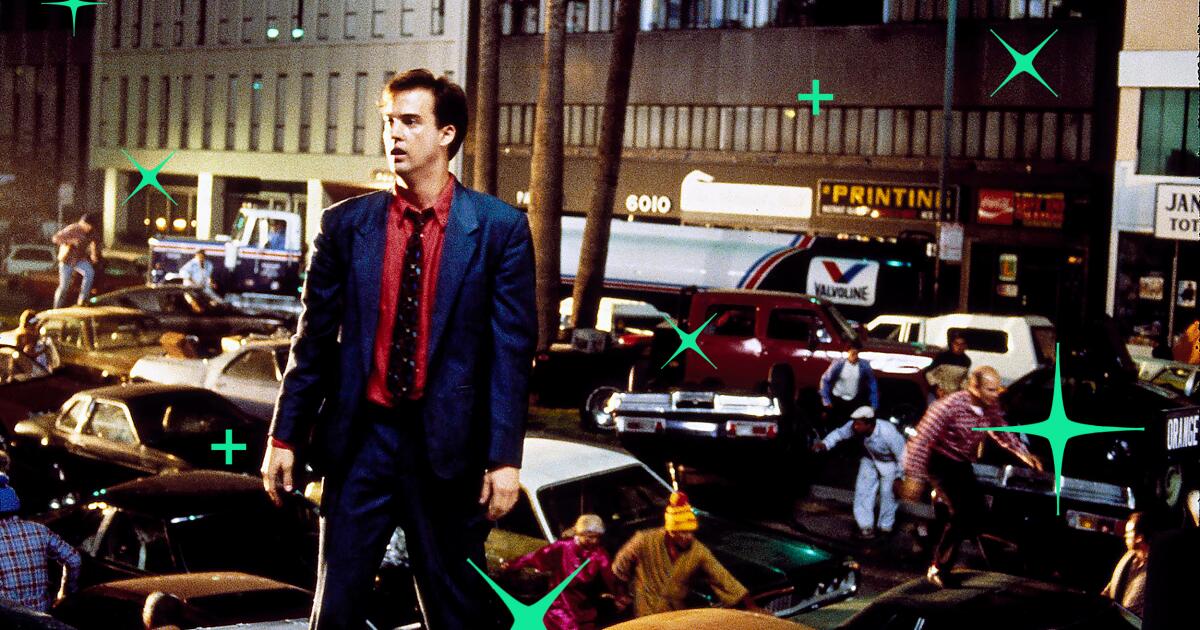
“Miracle Mile” takes place in a city in the throes of chaos as Angelenos flee the threat of a nuclear strike. The film was released in 1988, but it has resurfaced in the last few years, attracting sold-out crowds at the American Cinematheque and the Academy of Motion Picture Arts and Sciences.

Written and directed by Steve De Jarnatt and made for $3 million, the film was restored and re-released by boutique film distributor Kino Lorber in 2024. In her commentary for the Blu-ray, author Janet Fitch (“White Oleander”) said “Miracle Mile” depicts “the kind of apocalypse that L.A. people imagine.”

Los Angeles knows how to weather a crisis — or two or three. Angelenos are tapping into that resilience, striving to build a city for everyone.

And even though it did not make a big impression when it opened, De Jarnatt said the film has gained what he called “cult status.”

Much of the appeal of “Miracle Mile” appeal can be attributed to the film’s obvious affection for the stretch of Wilshire Boulevard bordered by La Brea and Fairfax Avenues. Featured locations include the May Co. and Orbach’s department stores (now the Academy Museum of Motion Pictures and the Petersen Automotive Museum, respectively), the nearby Park La Brea towers and Johnnie’s Coffee Shop, which is closed and used primarily for film and TV productions.

The movie, which takes place over the course of 24 hours, starts out as a lighthearted romance. Anthony Edwards plays Harry Washello, a struggling trombone player who falls for coffee shop waitress Julie Waters (Mare Winningham) after they meet cute at the La Brea Tar Pits. The couple make a date to meet after her evening shift is over.

But their plans fall apart. Harry unwittingly intercepts a call at a phone booth, and the caller tells him nuclear missiles will strike Los Angeles within the hour. As the city unravels, Harry and Julie try to save their upended romance.

The ending is both sad and happy. “To be with the one you love at the end, even if it’s a brand new love who you met at the La Brea Tar Pits, which is like a time portal and a museum dedicated to extinction, is as good a way as any to go out,” De Jarnatt says.

(And it was a particularly happy ending for Edwards and Winningham, who bonded while filming the project. At the time, both were married to other people and stayed friends while working together on other projects — including “ER,” in which Edwards played the lead role as Dr. Mark Greene. The two eventually became a couple and wed in 2021.)

“Miracle Mile” takes place in a city in the throes of chaos as Angelenos flee the threat of a nuclear strike. The film was released in 1988, but it has resurfaced in the last few years, attracting sold-out crowds at the American Cinematheque and the Academy of Motion Picture Arts and Sciences.

Written and directed by Steve De Jarnatt and made for $3 million, the film was restored and re-released by boutique film distributor Kino Lorber in 2024. In her commentary for the Blu-ray, author Janet Fitch (“White Oleander”) said “Miracle Mile” depicts “the kind of apocalypse that L.A. people imagine.”

Los Angeles knows how to weather a crisis — or two or three. Angelenos are tapping into that resilience, striving to build a city for everyone.

And even though it did not make a big impression when it opened, De Jarnatt said the film has gained what he called “cult status.”

Much of the appeal of “Miracle Mile” appeal can be attributed to the film’s obvious affection for the stretch of Wilshire Boulevard bordered by La Brea and Fairfax Avenues. Featured locations include the May Co. and Orbach’s department stores (now the Academy Museum of Motion Pictures and the Petersen Automotive Museum, respectively), the nearby Park La Brea towers and Johnnie’s Coffee Shop, which is closed and used primarily for film and TV productions.

The movie, which takes place over the course of 24 hours, starts out as a lighthearted romance. Anthony Edwards plays Harry Washello, a struggling trombone player who falls for coffee shop waitress Julie Waters (Mare Winningham) after they meet cute at the La Brea Tar Pits. The couple make a date to meet after her evening shift is over.

But their plans fall apart. Harry unwittingly intercepts a call at a phone booth, and the caller tells him nuclear missiles will strike Los Angeles within the hour. As the city unravels, Harry and Julie try to save their upended romance.

The ending is both sad and happy. “To be with the one you love at the end, even if it’s a brand new love who you met at the La Brea Tar Pits, which is like a time portal and a museum dedicated to extinction, is as good a way as any to go out,” De Jarnatt says.

(And it was a particularly happy ending for Edwards and Winningham, who bonded while filming the project. At the time, both were married to other people and stayed friends while working together on other projects — including “ER,” in which Edwards played the lead role as Dr. Mark Greene. The two eventually became a couple and wed in 2021.)

“Miracle Mile” takes place in a city in the throes of chaos as Angelenos flee the threat of a nuclear strike. The film was released in 1988, but it has resurfaced in the last few years, attracting sold-out crowds at the American Cinematheque and the Academy of Motion Picture Arts and Sciences.

Written and directed by Steve De Jarnatt and made for $3 million, the film was restored and re-released by boutique film distributor Kino Lorber in 2024. In her commentary for the Blu-ray, author Janet Fitch (“White Oleander”) said “Miracle Mile” depicts “the kind of apocalypse that L.A. people imagine.”

Los Angeles knows how to weather a crisis — or two or three. Angelenos are tapping into that resilience, striving to build a city for everyone.

And even though it did not make a big impression when it opened, De Jarnatt said the film has gained what he called “cult status.”

Much of the appeal of “Miracle Mile” appeal can be attributed to the film’s obvious affection for the stretch of Wilshire Boulevard bordered by La Brea and Fairfax Avenues. Featured locations include the May Co. and Orbach’s department stores (now the Academy Museum of Motion Pictures and the Petersen Automotive Museum, respectively), the nearby Park La Brea towers and Johnnie’s Coffee Shop, which is closed and used primarily for film and TV productions.

The movie, which takes place over the course of 24 hours, starts out as a lighthearted romance. Anthony Edwards plays Harry Washello, a struggling trombone player who falls for coffee shop waitress Julie Waters (Mare Winningham) after they meet cute at the La Brea Tar Pits. The couple make a date to meet after her evening shift is over.

But their plans fall apart. Harry unwittingly intercepts a call at a phone booth, and the caller tells him nuclear missiles will strike Los Angeles within the hour. As the city unravels, Harry and Julie try to save their upended romance.

The ending is both sad and happy. “To be with the one you love at the end, even if it’s a brand new love who you met at the La Brea Tar Pits, which is like a time portal and a museum dedicated to extinction, is as good a way as any to go out,” De Jarnatt says.

(And it was a particularly happy ending for Edwards and Winningham, who bonded while filming the project. At the time, both were married to other people and stayed friends while working together on other projects — including “ER,” in which Edwards played the lead role as Dr. Mark Greene. The two eventually became a couple and wed in 2021.)

“Miracle Mile” takes place in a city in the throes of chaos as Angelenos flee the threat of a nuclear strike. The film was released in 1988, but it has resurfaced in the last few years, attracting sold-out crowds at the American Cinematheque and the Academy of Motion Picture Arts and Sciences.

Written and directed by Steve De Jarnatt and made for $3 million, the film was restored and re-released by boutique film distributor Kino Lorber in 2024. In her commentary for the Blu-ray, author Janet Fitch (“White Oleander”) said “Miracle Mile” depicts “the kind of apocalypse that L.A. people imagine.”

Los Angeles knows how to weather a crisis — or two or three. Angelenos are tapping into that resilience, striving to build a city for everyone.

And even though it did not make a big impression when it opened, De Jarnatt said the film has gained what he called “cult status.”

Much of the appeal of “Miracle Mile” appeal can be attributed to the film’s obvious affection for the stretch of Wilshire Boulevard bordered by La Brea and Fairfax Avenues. Featured locations include the May Co. and Orbach’s department stores (now the Academy Museum of Motion Pictures and the Petersen Automotive Museum, respectively), the nearby Park La Brea towers and Johnnie’s Coffee Shop, which is closed and used primarily for film and TV productions.

The movie, which takes place over the course of 24 hours, starts out as a lighthearted romance. Anthony Edwards plays Harry Washello, a struggling trombone player who falls for coffee shop waitress Julie Waters (Mare Winningham) after they meet cute at the La Brea Tar Pits. The couple make a date to meet after her evening shift is over.

But their plans fall apart. Harry unwittingly intercepts a call at a phone booth, and the caller tells him nuclear missiles will strike Los Angeles within the hour. As the city unravels, Harry and Julie try to save their upended romance.

The ending is both sad and happy. “To be with the one you love at the end, even if it’s a brand new love who you met at the La Brea Tar Pits, which is like a time portal and a museum dedicated to extinction, is as good a way as any to go out,” De Jarnatt says.

(And it was a particularly happy ending for Edwards and Winningham, who bonded while filming the project. At the time, both were married to other people and stayed friends while working together on other projects — including “ER,” in which Edwards played the lead role as Dr. Mark Greene. The two eventually became a couple and wed in 2021.)

“Miracle Mile” takes place in a city in the throes of chaos as Angelenos flee the threat of a nuclear strike. The film was released in 1988, but it has resurfaced in the last few years, attracting sold-out crowds at the American Cinematheque and the Academy of Motion Picture Arts and Sciences.

Written and directed by Steve De Jarnatt and made for $3 million, the film was restored and re-released by boutique film distributor Kino Lorber in 2024. In her commentary for the Blu-ray, author Janet Fitch (“White Oleander”) said “Miracle Mile” depicts “the kind of apocalypse that L.A. people imagine.”

Los Angeles knows how to weather a crisis — or two or three. Angelenos are tapping into that resilience, striving to build a city for everyone.

And even though it did not make a big impression when it opened, De Jarnatt said the film has gained what he called “cult status.”

Much of the appeal of “Miracle Mile” appeal can be attributed to the film’s obvious affection for the stretch of Wilshire Boulevard bordered by La Brea and Fairfax Avenues. Featured locations include the May Co. and Orbach’s department stores (now the Academy Museum of Motion Pictures and the Petersen Automotive Museum, respectively), the nearby Park La Brea towers and Johnnie’s Coffee Shop, which is closed and used primarily for film and TV productions.

The movie, which takes place over the course of 24 hours, starts out as a lighthearted romance. Anthony Edwards plays Harry Washello, a struggling trombone player who falls for coffee shop waitress Julie Waters (Mare Winningham) after they meet cute at the La Brea Tar Pits. The couple make a date to meet after her evening shift is over.

But their plans fall apart. Harry unwittingly intercepts a call at a phone booth, and the caller tells him nuclear missiles will strike Los Angeles within the hour. As the city unravels, Harry and Julie try to save their upended romance.

The ending is both sad and happy. “To be with the one you love at the end, even if it’s a brand new love who you met at the La Brea Tar Pits, which is like a time portal and a museum dedicated to extinction, is as good a way as any to go out,” De Jarnatt says.

(And it was a particularly happy ending for Edwards and Winningham, who bonded while filming the project. At the time, both were married to other people and stayed friends while working together on other projects — including “ER,” in which Edwards played the lead role as Dr. Mark Greene. The two eventually became a couple and wed in 2021.)

“Miracle Mile” takes place in a city in the throes of chaos as Angelenos flee the threat of a nuclear strike. The film was released in 1988, but it has resurfaced in the last few years, attracting sold-out crowds at the American Cinematheque and the Academy of Motion Picture Arts and Sciences.

Written and directed by Steve De Jarnatt and made for $3 million, the film was restored and re-released by boutique film distributor Kino Lorber in 2024. In her commentary for the Blu-ray, author Janet Fitch (“White Oleander”) said “Miracle Mile” depicts “the kind of apocalypse that L.A. people imagine.”

Los Angeles knows how to weather a crisis — or two or three. Angelenos are tapping into that resilience, striving to build a city for everyone.

And even though it did not make a big impression when it opened, De Jarnatt said the film has gained what he called “cult status.”

Much of the appeal of “Miracle Mile” appeal can be attributed to the film’s obvious affection for the stretch of Wilshire Boulevard bordered by La Brea and Fairfax Avenues. Featured locations include the May Co. and Orbach’s department stores (now the Academy Museum of Motion Pictures and the Petersen Automotive Museum, respectively), the nearby Park La Brea towers and Johnnie’s Coffee Shop, which is closed and used primarily for film and TV productions.

The movie, which takes place over the course of 24 hours, starts out as a lighthearted romance. Anthony Edwards plays Harry Washello, a struggling trombone player who falls for coffee shop waitress Julie Waters (Mare Winningham) after they meet cute at the La Brea Tar Pits. The couple make a date to meet after her evening shift is over.

But their plans fall apart. Harry unwittingly intercepts a call at a phone booth, and the caller tells him nuclear missiles will strike Los Angeles within the hour. As the city unravels, Harry and Julie try to save their upended romance.

The ending is both sad and happy. “To be with the one you love at the end, even if it’s a brand new love who you met at the La Brea Tar Pits, which is like a time portal and a museum dedicated to extinction, is as good a way as any to go out,” De Jarnatt says.

(And it was a particularly happy ending for Edwards and Winningham, who bonded while filming the project. At the time, both were married to other people and stayed friends while working together on other projects — including “ER,” in which Edwards played the lead role as Dr. Mark Greene. The two eventually became a couple and wed in 2021.)

“Miracle Mile” takes place in a city in the throes of chaos as Angelenos flee the threat of a nuclear strike. The film was released in 1988, but it has resurfaced in the last few years, attracting sold-out crowds at the American Cinematheque and the Academy of Motion Picture Arts and Sciences.

Written and directed by Steve De Jarnatt and made for $3 million, the film was restored and re-released by boutique film distributor Kino Lorber in 2024. In her commentary for the Blu-ray, author Janet Fitch (“White Oleander”) said “Miracle Mile” depicts “the kind of apocalypse that L.A. people imagine.”

Los Angeles knows how to weather a crisis — or two or three. Angelenos are tapping into that resilience, striving to build a city for everyone.

And even though it did not make a big impression when it opened, De Jarnatt said the film has gained what he called “cult status.”

Much of the appeal of “Miracle Mile” appeal can be attributed to the film’s obvious affection for the stretch of Wilshire Boulevard bordered by La Brea and Fairfax Avenues. Featured locations include the May Co. and Orbach’s department stores (now the Academy Museum of Motion Pictures and the Petersen Automotive Museum, respectively), the nearby Park La Brea towers and Johnnie’s Coffee Shop, which is closed and used primarily for film and TV productions.

The movie, which takes place over the course of 24 hours, starts out as a lighthearted romance. Anthony Edwards plays Harry Washello, a struggling trombone player who falls for coffee shop waitress Julie Waters (Mare Winningham) after they meet cute at the La Brea Tar Pits. The couple make a date to meet after her evening shift is over.

But their plans fall apart. Harry unwittingly intercepts a call at a phone booth, and the caller tells him nuclear missiles will strike Los Angeles within the hour. As the city unravels, Harry and Julie try to save their upended romance.

The ending is both sad and happy. “To be with the one you love at the end, even if it’s a brand new love who you met at the La Brea Tar Pits, which is like a time portal and a museum dedicated to extinction, is as good a way as any to go out,” De Jarnatt says.

(And it was a particularly happy ending for Edwards and Winningham, who bonded while filming the project. At the time, both were married to other people and stayed friends while working together on other projects — including “ER,” in which Edwards played the lead role as Dr. Mark Greene. The two eventually became a couple and wed in 2021.)

“Miracle Mile” takes place in a city in the throes of chaos as Angelenos flee the threat of a nuclear strike. The film was released in 1988, but it has resurfaced in the last few years, attracting sold-out crowds at the American Cinematheque and the Academy of Motion Picture Arts and Sciences.

Written and directed by Steve De Jarnatt and made for $3 million, the film was restored and re-released by boutique film distributor Kino Lorber in 2024. In her commentary for the Blu-ray, author Janet Fitch (“White Oleander”) said “Miracle Mile” depicts “the kind of apocalypse that L.A. people imagine.”

Los Angeles knows how to weather a crisis — or two or three. Angelenos are tapping into that resilience, striving to build a city for everyone.

And even though it did not make a big impression when it opened, De Jarnatt said the film has gained what he called “cult status.”

Much of the appeal of “Miracle Mile” appeal can be attributed to the film’s obvious affection for the stretch of Wilshire Boulevard bordered by La Brea and Fairfax Avenues. Featured locations include the May Co. and Orbach’s department stores (now the Academy Museum of Motion Pictures and the Petersen Automotive Museum, respectively), the nearby Park La Brea towers and Johnnie’s Coffee Shop, which is closed and used primarily for film and TV productions.

The movie, which takes place over the course of 24 hours, starts out as a lighthearted romance. Anthony Edwards plays Harry Washello, a struggling trombone player who falls for coffee shop waitress Julie Waters (Mare Winningham) after they meet cute at the La Brea Tar Pits. The couple make a date to meet after her evening shift is over.

But their plans fall apart. Harry unwittingly intercepts a call at a phone booth, and the caller tells him nuclear missiles will strike Los Angeles within the hour. As the city unravels, Harry and Julie try to save their upended romance.

The ending is both sad and happy. “To be with the one you love at the end, even if it’s a brand new love who you met at the La Brea Tar Pits, which is like a time portal and a museum dedicated to extinction, is as good a way as any to go out,” De Jarnatt says.

(And it was a particularly happy ending for Edwards and Winningham, who bonded while filming the project. At the time, both were married to other people and stayed friends while working together on other projects — including “ER,” in which Edwards played the lead role as Dr. Mark Greene. The two eventually became a couple and wed in 2021.)

Leave a Reply Cancel reply

Your email address will not be published. Required fields are marked *

Recommended

Theaters want you to wait longer to stream movies. Why that probably won’t happen

1 year ago

Trump Campaigns in Nevada, Where He Has Virtually No Rival

2 years ago

The week’s bestselling books, May 12

2 years ago

Was Election Denial Just a Passing Threat?

4 years ago
Yonkers Observer

© 2025 Yonkers Observer or its affiliated companies.

Navigate Site

  • About
  • Advertise
  • Terms & Conditions
  • Privacy Policy
  • Disclaimer
  • Contact

Follow Us

No Result
View All Result
  • Home
  • World
  • Politics
  • Finance
  • Technology
  • Health
  • Culture
  • Entertainment
  • Trend

© 2025 Yonkers Observer or its affiliated companies.

Welcome Back!

Login to your account below

Forgotten Password?

Retrieve your password

Please enter your username or email address to reset your password.

Log In