

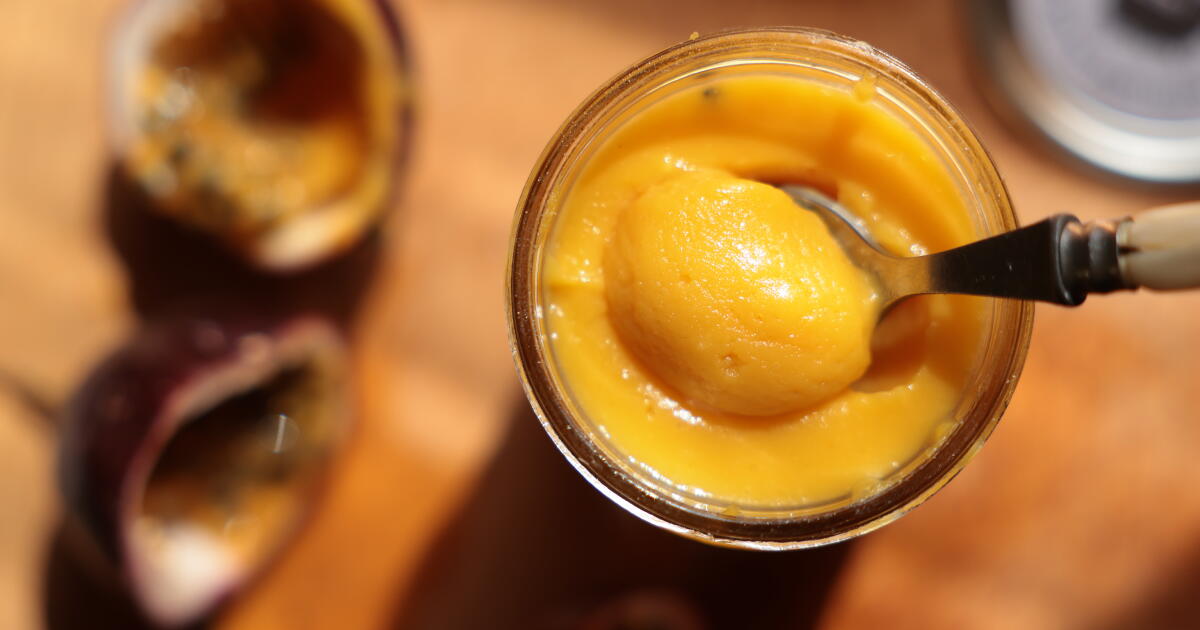
Curd is a sweet-tart, thick, velvety spread or filling. It’s most commonly made with lemon, consisting of the fruit juice cooked with sugar, eggs and butter. It’s made with acidic fruits, as the acidity of the fruit interacts with the protein molecules in the egg to help it thicken and give it a custard-like consistency. Passion fruit is more acidic than lemon with an even more concentrated flavor, making for an ideal variation on the classic. Smear it on a scone or toast, use it in thumbprint cookies or spread it between layers of chocolate or pistachio cake. It’s also delicious swirled into a bowl of yogurt. If sunshine had a flavor, this would be it.
The challenge when cooking curd is to cook the eggs gently so they don’t turn into scrambled eggs. The secret: go slowly. This recipe calls for using a double boiler — or a makeshift double boiler, setting a heat-proof bowl or saucier over a pot of simmering water. With a double boiler, you are cooking with steam rather than direct heat, which prevents the eggs from cooking too quickly. If you’re feeling daring (or impatient), cook the curd in a pot directly over the heat, just note that it will cook much quicker and requires constant attention. If you do end up with a few bits of scrambled egg in your curd, pour it through a sieve to strain them out.

Curd is a sweet-tart, thick, velvety spread or filling. It’s most commonly made with lemon, consisting of the fruit juice cooked with sugar, eggs and butter. It’s made with acidic fruits, as the acidity of the fruit interacts with the protein molecules in the egg to help it thicken and give it a custard-like consistency. Passion fruit is more acidic than lemon with an even more concentrated flavor, making for an ideal variation on the classic. Smear it on a scone or toast, use it in thumbprint cookies or spread it between layers of chocolate or pistachio cake. It’s also delicious swirled into a bowl of yogurt. If sunshine had a flavor, this would be it.
The challenge when cooking curd is to cook the eggs gently so they don’t turn into scrambled eggs. The secret: go slowly. This recipe calls for using a double boiler — or a makeshift double boiler, setting a heat-proof bowl or saucier over a pot of simmering water. With a double boiler, you are cooking with steam rather than direct heat, which prevents the eggs from cooking too quickly. If you’re feeling daring (or impatient), cook the curd in a pot directly over the heat, just note that it will cook much quicker and requires constant attention. If you do end up with a few bits of scrambled egg in your curd, pour it through a sieve to strain them out.

Curd is a sweet-tart, thick, velvety spread or filling. It’s most commonly made with lemon, consisting of the fruit juice cooked with sugar, eggs and butter. It’s made with acidic fruits, as the acidity of the fruit interacts with the protein molecules in the egg to help it thicken and give it a custard-like consistency. Passion fruit is more acidic than lemon with an even more concentrated flavor, making for an ideal variation on the classic. Smear it on a scone or toast, use it in thumbprint cookies or spread it between layers of chocolate or pistachio cake. It’s also delicious swirled into a bowl of yogurt. If sunshine had a flavor, this would be it.
The challenge when cooking curd is to cook the eggs gently so they don’t turn into scrambled eggs. The secret: go slowly. This recipe calls for using a double boiler — or a makeshift double boiler, setting a heat-proof bowl or saucier over a pot of simmering water. With a double boiler, you are cooking with steam rather than direct heat, which prevents the eggs from cooking too quickly. If you’re feeling daring (or impatient), cook the curd in a pot directly over the heat, just note that it will cook much quicker and requires constant attention. If you do end up with a few bits of scrambled egg in your curd, pour it through a sieve to strain them out.
Curd is a sweet-tart, thick, velvety spread or filling. It’s most commonly made with lemon, consisting of the fruit juice cooked with sugar, eggs and butter. It’s made with acidic fruits, as the acidity of the fruit interacts with the protein molecules in the egg to help it thicken and give it a custard-like consistency. Passion fruit is more acidic than lemon with an even more concentrated flavor, making for an ideal variation on the classic. Smear it on a scone or toast, use it in thumbprint cookies or spread it between layers of chocolate or pistachio cake. It’s also delicious swirled into a bowl of yogurt. If sunshine had a flavor, this would be it.
The challenge when cooking curd is to cook the eggs gently so they don’t turn into scrambled eggs. The secret: go slowly. This recipe calls for using a double boiler — or a makeshift double boiler, setting a heat-proof bowl or saucier over a pot of simmering water. With a double boiler, you are cooking with steam rather than direct heat, which prevents the eggs from cooking too quickly. If you’re feeling daring (or impatient), cook the curd in a pot directly over the heat, just note that it will cook much quicker and requires constant attention. If you do end up with a few bits of scrambled egg in your curd, pour it through a sieve to strain them out.

Curd is a sweet-tart, thick, velvety spread or filling. It’s most commonly made with lemon, consisting of the fruit juice cooked with sugar, eggs and butter. It’s made with acidic fruits, as the acidity of the fruit interacts with the protein molecules in the egg to help it thicken and give it a custard-like consistency. Passion fruit is more acidic than lemon with an even more concentrated flavor, making for an ideal variation on the classic. Smear it on a scone or toast, use it in thumbprint cookies or spread it between layers of chocolate or pistachio cake. It’s also delicious swirled into a bowl of yogurt. If sunshine had a flavor, this would be it.
The challenge when cooking curd is to cook the eggs gently so they don’t turn into scrambled eggs. The secret: go slowly. This recipe calls for using a double boiler — or a makeshift double boiler, setting a heat-proof bowl or saucier over a pot of simmering water. With a double boiler, you are cooking with steam rather than direct heat, which prevents the eggs from cooking too quickly. If you’re feeling daring (or impatient), cook the curd in a pot directly over the heat, just note that it will cook much quicker and requires constant attention. If you do end up with a few bits of scrambled egg in your curd, pour it through a sieve to strain them out.
Curd is a sweet-tart, thick, velvety spread or filling. It’s most commonly made with lemon, consisting of the fruit juice cooked with sugar, eggs and butter. It’s made with acidic fruits, as the acidity of the fruit interacts with the protein molecules in the egg to help it thicken and give it a custard-like consistency. Passion fruit is more acidic than lemon with an even more concentrated flavor, making for an ideal variation on the classic. Smear it on a scone or toast, use it in thumbprint cookies or spread it between layers of chocolate or pistachio cake. It’s also delicious swirled into a bowl of yogurt. If sunshine had a flavor, this would be it.
The challenge when cooking curd is to cook the eggs gently so they don’t turn into scrambled eggs. The secret: go slowly. This recipe calls for using a double boiler — or a makeshift double boiler, setting a heat-proof bowl or saucier over a pot of simmering water. With a double boiler, you are cooking with steam rather than direct heat, which prevents the eggs from cooking too quickly. If you’re feeling daring (or impatient), cook the curd in a pot directly over the heat, just note that it will cook much quicker and requires constant attention. If you do end up with a few bits of scrambled egg in your curd, pour it through a sieve to strain them out.
Curd is a sweet-tart, thick, velvety spread or filling. It’s most commonly made with lemon, consisting of the fruit juice cooked with sugar, eggs and butter. It’s made with acidic fruits, as the acidity of the fruit interacts with the protein molecules in the egg to help it thicken and give it a custard-like consistency. Passion fruit is more acidic than lemon with an even more concentrated flavor, making for an ideal variation on the classic. Smear it on a scone or toast, use it in thumbprint cookies or spread it between layers of chocolate or pistachio cake. It’s also delicious swirled into a bowl of yogurt. If sunshine had a flavor, this would be it.
The challenge when cooking curd is to cook the eggs gently so they don’t turn into scrambled eggs. The secret: go slowly. This recipe calls for using a double boiler — or a makeshift double boiler, setting a heat-proof bowl or saucier over a pot of simmering water. With a double boiler, you are cooking with steam rather than direct heat, which prevents the eggs from cooking too quickly. If you’re feeling daring (or impatient), cook the curd in a pot directly over the heat, just note that it will cook much quicker and requires constant attention. If you do end up with a few bits of scrambled egg in your curd, pour it through a sieve to strain them out.
Curd is a sweet-tart, thick, velvety spread or filling. It’s most commonly made with lemon, consisting of the fruit juice cooked with sugar, eggs and butter. It’s made with acidic fruits, as the acidity of the fruit interacts with the protein molecules in the egg to help it thicken and give it a custard-like consistency. Passion fruit is more acidic than lemon with an even more concentrated flavor, making for an ideal variation on the classic. Smear it on a scone or toast, use it in thumbprint cookies or spread it between layers of chocolate or pistachio cake. It’s also delicious swirled into a bowl of yogurt. If sunshine had a flavor, this would be it.
The challenge when cooking curd is to cook the eggs gently so they don’t turn into scrambled eggs. The secret: go slowly. This recipe calls for using a double boiler — or a makeshift double boiler, setting a heat-proof bowl or saucier over a pot of simmering water. With a double boiler, you are cooking with steam rather than direct heat, which prevents the eggs from cooking too quickly. If you’re feeling daring (or impatient), cook the curd in a pot directly over the heat, just note that it will cook much quicker and requires constant attention. If you do end up with a few bits of scrambled egg in your curd, pour it through a sieve to strain them out.


