
Many of the Academy Awards categories have long histories that stretch back nearly 100 years. That’s not true for the hair and makeup artisans, though. Their artistry was left out of the awards prior to 1981, when a groundswell of support for the recognition of the work done on 1980’s “The Elephant Man” led to the creation of a makeup-only category (and “Elephant” wasn’t the first winner). Hair wasn’t included until 1993, and is still considered part of the package deal, now known as the Academy Award for makeup and hairstyling.
Meanwhile, hair and makeup nominees are chosen slightly differently than most other categories — a shortlist of seven titles are selected by the academy’s makeup branch, then winnowed down during a “bake-off” into a final list of nominees (usually three). Such was the case for the 2004 Oscars, held on Feb. 29 at the Kodak Theatre in Hollywood: Three nominees, one winner.
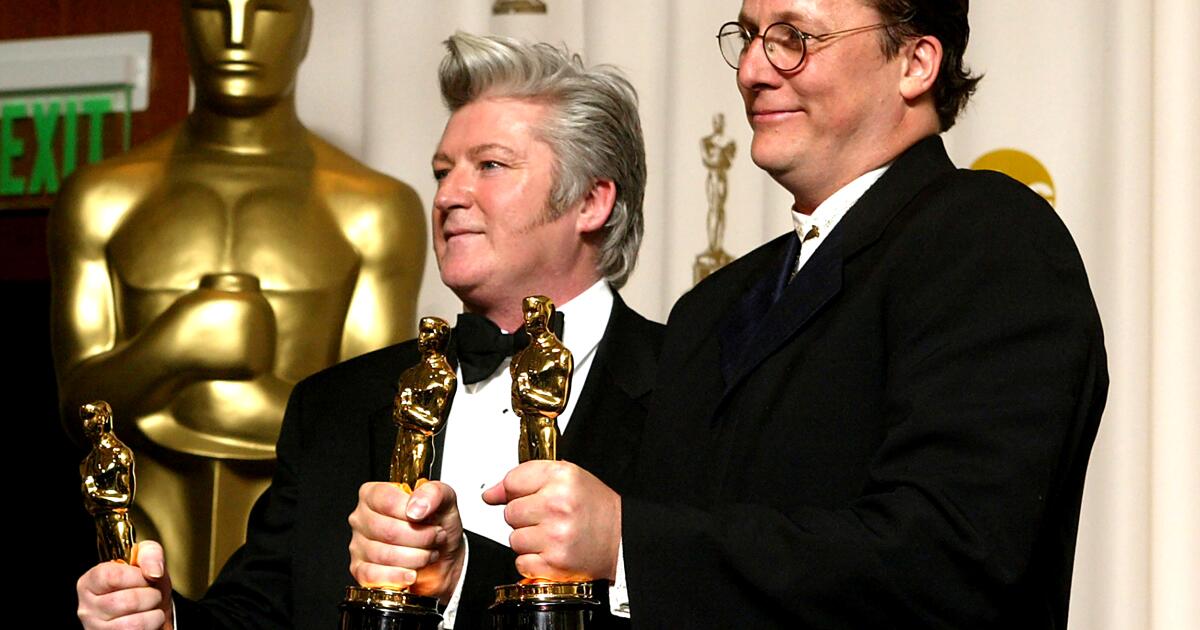
The winners likely surprised no one in the audience. By the time the award was handed out by Scarlett Johansson to Richard Taylor and Peter King, their film “The Lord of the Rings: The Return of the King,” was already well on its way to earning all 11 awards for its 11 nominations. It was Taylor’s second chance on stage that night; earlier in the evening he’d picked up his first Oscar for the film’s costume design, an award he shared with Ngila Dickson. He also has previous Oscars for makeup (shared with Peter Owen) and visual effects (shared with Jim Rygiel, Randall William Cook and Mark Stetson) from 2002 for the first film in the trilogy, “The Lord of the Rings: The Fellowship of the Ring.”
Taylor shared the applause in his speech, crediting several other crew members who were instrumental with the manufacture and care of over 10,000 prosthetics used during the “Lord of the Rings” series of films. He also then spoke to the various former Middle Earth residents in the audience, giving credit to “the cast that had to wear it all over all those months. I apologize for the rubbery feet and funny noses but cheers to you all.”
King was picking up his first (and so far, only) Oscar; he’d go on to be nominated again in 2013 for “The Hobbit: an Unexpected Journey.” “God, it’s scary up here,” he said. After thanking the studio and fellow crew, he added, “I’d like to thank my gorgeous wife Sarah for being there every night with a glass of wine when I got home. I thank my gorgeous daughter for just being gorgeous.”
The other two nominees that went home certainly presented formidable competition, but it was hard to deny “King’s” dominance. Edouard F. Henriques and Yolanda Toussieng had been nominated for “Master & Commander: The Far Side of the World.” This was Henriques’ second of three nominations; he would be tapped in 2011 for working on another Peter Weir-helmed film, “The Way Back,” and his first nomination came from work on “The Cell” in 2001. Meanwhile, Toussieng won two Oscars in back-to-back-years: 1994 for “Mrs. Doubtfire” and 1995 for “Ed Wood”; she also would be nominated for working with Henriques and Greg Funk on “The Way Back.”
Completing the trio of long-titled nominated movies were Ve Neill and Martin Samuel, who were nominated for their work on “Pirates of the Caribbean: The Curse of the Black Pearl.” Neill already was well-stocked with Oscars — she has three, from “Beetlejuice” (1989, shared with Steve LaPorte and Robert Short); “Mrs. Doubtfire” (shared with her competitor this year Toussieng and Greg Cannom); and “Ed Wood” (shared with Toussieng and Rick Baker).

Many of the Academy Awards categories have long histories that stretch back nearly 100 years. That’s not true for the hair and makeup artisans, though. Their artistry was left out of the awards prior to 1981, when a groundswell of support for the recognition of the work done on 1980’s “The Elephant Man” led to the creation of a makeup-only category (and “Elephant” wasn’t the first winner). Hair wasn’t included until 1993, and is still considered part of the package deal, now known as the Academy Award for makeup and hairstyling.
Meanwhile, hair and makeup nominees are chosen slightly differently than most other categories — a shortlist of seven titles are selected by the academy’s makeup branch, then winnowed down during a “bake-off” into a final list of nominees (usually three). Such was the case for the 2004 Oscars, held on Feb. 29 at the Kodak Theatre in Hollywood: Three nominees, one winner.
The winners likely surprised no one in the audience. By the time the award was handed out by Scarlett Johansson to Richard Taylor and Peter King, their film “The Lord of the Rings: The Return of the King,” was already well on its way to earning all 11 awards for its 11 nominations. It was Taylor’s second chance on stage that night; earlier in the evening he’d picked up his first Oscar for the film’s costume design, an award he shared with Ngila Dickson. He also has previous Oscars for makeup (shared with Peter Owen) and visual effects (shared with Jim Rygiel, Randall William Cook and Mark Stetson) from 2002 for the first film in the trilogy, “The Lord of the Rings: The Fellowship of the Ring.”
Taylor shared the applause in his speech, crediting several other crew members who were instrumental with the manufacture and care of over 10,000 prosthetics used during the “Lord of the Rings” series of films. He also then spoke to the various former Middle Earth residents in the audience, giving credit to “the cast that had to wear it all over all those months. I apologize for the rubbery feet and funny noses but cheers to you all.”
King was picking up his first (and so far, only) Oscar; he’d go on to be nominated again in 2013 for “The Hobbit: an Unexpected Journey.” “God, it’s scary up here,” he said. After thanking the studio and fellow crew, he added, “I’d like to thank my gorgeous wife Sarah for being there every night with a glass of wine when I got home. I thank my gorgeous daughter for just being gorgeous.”
The other two nominees that went home certainly presented formidable competition, but it was hard to deny “King’s” dominance. Edouard F. Henriques and Yolanda Toussieng had been nominated for “Master & Commander: The Far Side of the World.” This was Henriques’ second of three nominations; he would be tapped in 2011 for working on another Peter Weir-helmed film, “The Way Back,” and his first nomination came from work on “The Cell” in 2001. Meanwhile, Toussieng won two Oscars in back-to-back-years: 1994 for “Mrs. Doubtfire” and 1995 for “Ed Wood”; she also would be nominated for working with Henriques and Greg Funk on “The Way Back.”
Completing the trio of long-titled nominated movies were Ve Neill and Martin Samuel, who were nominated for their work on “Pirates of the Caribbean: The Curse of the Black Pearl.” Neill already was well-stocked with Oscars — she has three, from “Beetlejuice” (1989, shared with Steve LaPorte and Robert Short); “Mrs. Doubtfire” (shared with her competitor this year Toussieng and Greg Cannom); and “Ed Wood” (shared with Toussieng and Rick Baker).

Many of the Academy Awards categories have long histories that stretch back nearly 100 years. That’s not true for the hair and makeup artisans, though. Their artistry was left out of the awards prior to 1981, when a groundswell of support for the recognition of the work done on 1980’s “The Elephant Man” led to the creation of a makeup-only category (and “Elephant” wasn’t the first winner). Hair wasn’t included until 1993, and is still considered part of the package deal, now known as the Academy Award for makeup and hairstyling.
Meanwhile, hair and makeup nominees are chosen slightly differently than most other categories — a shortlist of seven titles are selected by the academy’s makeup branch, then winnowed down during a “bake-off” into a final list of nominees (usually three). Such was the case for the 2004 Oscars, held on Feb. 29 at the Kodak Theatre in Hollywood: Three nominees, one winner.
The winners likely surprised no one in the audience. By the time the award was handed out by Scarlett Johansson to Richard Taylor and Peter King, their film “The Lord of the Rings: The Return of the King,” was already well on its way to earning all 11 awards for its 11 nominations. It was Taylor’s second chance on stage that night; earlier in the evening he’d picked up his first Oscar for the film’s costume design, an award he shared with Ngila Dickson. He also has previous Oscars for makeup (shared with Peter Owen) and visual effects (shared with Jim Rygiel, Randall William Cook and Mark Stetson) from 2002 for the first film in the trilogy, “The Lord of the Rings: The Fellowship of the Ring.”
Taylor shared the applause in his speech, crediting several other crew members who were instrumental with the manufacture and care of over 10,000 prosthetics used during the “Lord of the Rings” series of films. He also then spoke to the various former Middle Earth residents in the audience, giving credit to “the cast that had to wear it all over all those months. I apologize for the rubbery feet and funny noses but cheers to you all.”
King was picking up his first (and so far, only) Oscar; he’d go on to be nominated again in 2013 for “The Hobbit: an Unexpected Journey.” “God, it’s scary up here,” he said. After thanking the studio and fellow crew, he added, “I’d like to thank my gorgeous wife Sarah for being there every night with a glass of wine when I got home. I thank my gorgeous daughter for just being gorgeous.”
The other two nominees that went home certainly presented formidable competition, but it was hard to deny “King’s” dominance. Edouard F. Henriques and Yolanda Toussieng had been nominated for “Master & Commander: The Far Side of the World.” This was Henriques’ second of three nominations; he would be tapped in 2011 for working on another Peter Weir-helmed film, “The Way Back,” and his first nomination came from work on “The Cell” in 2001. Meanwhile, Toussieng won two Oscars in back-to-back-years: 1994 for “Mrs. Doubtfire” and 1995 for “Ed Wood”; she also would be nominated for working with Henriques and Greg Funk on “The Way Back.”
Completing the trio of long-titled nominated movies were Ve Neill and Martin Samuel, who were nominated for their work on “Pirates of the Caribbean: The Curse of the Black Pearl.” Neill already was well-stocked with Oscars — she has three, from “Beetlejuice” (1989, shared with Steve LaPorte and Robert Short); “Mrs. Doubtfire” (shared with her competitor this year Toussieng and Greg Cannom); and “Ed Wood” (shared with Toussieng and Rick Baker).
Many of the Academy Awards categories have long histories that stretch back nearly 100 years. That’s not true for the hair and makeup artisans, though. Their artistry was left out of the awards prior to 1981, when a groundswell of support for the recognition of the work done on 1980’s “The Elephant Man” led to the creation of a makeup-only category (and “Elephant” wasn’t the first winner). Hair wasn’t included until 1993, and is still considered part of the package deal, now known as the Academy Award for makeup and hairstyling.
Meanwhile, hair and makeup nominees are chosen slightly differently than most other categories — a shortlist of seven titles are selected by the academy’s makeup branch, then winnowed down during a “bake-off” into a final list of nominees (usually three). Such was the case for the 2004 Oscars, held on Feb. 29 at the Kodak Theatre in Hollywood: Three nominees, one winner.
The winners likely surprised no one in the audience. By the time the award was handed out by Scarlett Johansson to Richard Taylor and Peter King, their film “The Lord of the Rings: The Return of the King,” was already well on its way to earning all 11 awards for its 11 nominations. It was Taylor’s second chance on stage that night; earlier in the evening he’d picked up his first Oscar for the film’s costume design, an award he shared with Ngila Dickson. He also has previous Oscars for makeup (shared with Peter Owen) and visual effects (shared with Jim Rygiel, Randall William Cook and Mark Stetson) from 2002 for the first film in the trilogy, “The Lord of the Rings: The Fellowship of the Ring.”
Taylor shared the applause in his speech, crediting several other crew members who were instrumental with the manufacture and care of over 10,000 prosthetics used during the “Lord of the Rings” series of films. He also then spoke to the various former Middle Earth residents in the audience, giving credit to “the cast that had to wear it all over all those months. I apologize for the rubbery feet and funny noses but cheers to you all.”
King was picking up his first (and so far, only) Oscar; he’d go on to be nominated again in 2013 for “The Hobbit: an Unexpected Journey.” “God, it’s scary up here,” he said. After thanking the studio and fellow crew, he added, “I’d like to thank my gorgeous wife Sarah for being there every night with a glass of wine when I got home. I thank my gorgeous daughter for just being gorgeous.”
The other two nominees that went home certainly presented formidable competition, but it was hard to deny “King’s” dominance. Edouard F. Henriques and Yolanda Toussieng had been nominated for “Master & Commander: The Far Side of the World.” This was Henriques’ second of three nominations; he would be tapped in 2011 for working on another Peter Weir-helmed film, “The Way Back,” and his first nomination came from work on “The Cell” in 2001. Meanwhile, Toussieng won two Oscars in back-to-back-years: 1994 for “Mrs. Doubtfire” and 1995 for “Ed Wood”; she also would be nominated for working with Henriques and Greg Funk on “The Way Back.”
Completing the trio of long-titled nominated movies were Ve Neill and Martin Samuel, who were nominated for their work on “Pirates of the Caribbean: The Curse of the Black Pearl.” Neill already was well-stocked with Oscars — she has three, from “Beetlejuice” (1989, shared with Steve LaPorte and Robert Short); “Mrs. Doubtfire” (shared with her competitor this year Toussieng and Greg Cannom); and “Ed Wood” (shared with Toussieng and Rick Baker).