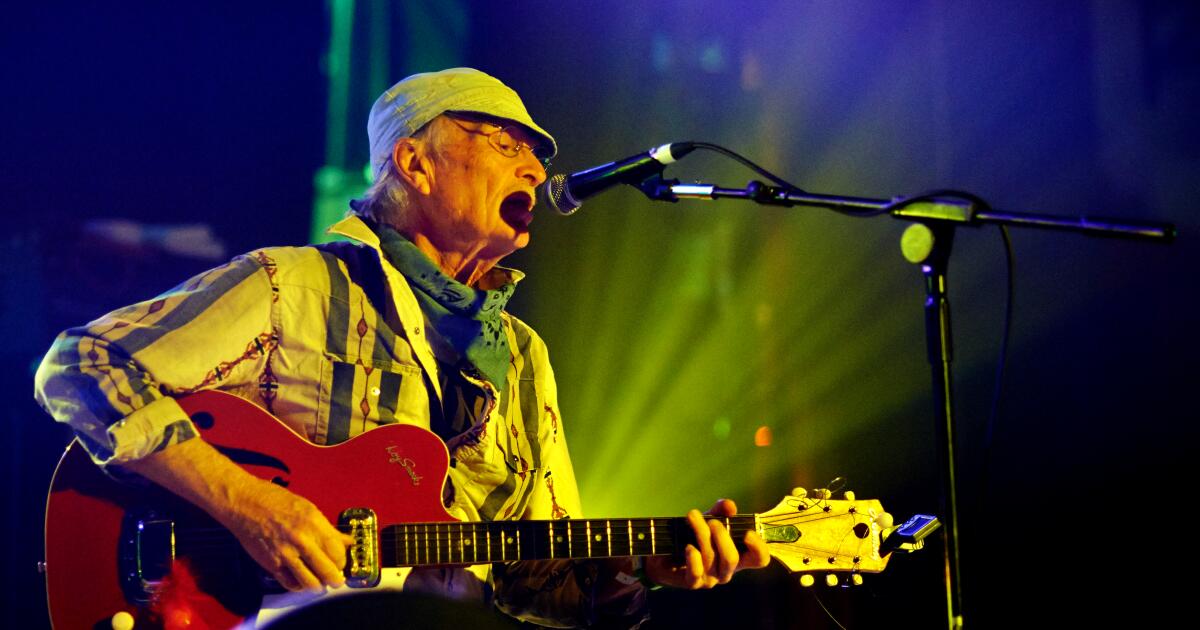
Michael Hurley, the eccentric singer and songwriter who pioneered the “freak-folk” movement and inspired generations of artists, has died. He was 83.
“It is with a resounding sadness that the Hurley family announces the recent sudden passing of the inimitable Michael Hurley,” Hurley’s family said in a statement to Rolling Stone. “The ‘Godfather of freak folk’ was for a prolific half-century the purveyor of an eccentric genius and compassionate wit. He alone was Snock. There is no other. Friends, family, and the music community deeply mourn his loss.”
The family did not offer cause of death or a list of survivors.
Hurley, born in Pennsylvania, honed his cracked perspective on bluegrass, blues and folk in the Greenwich Village folk scene in New York in the ‘60s, after producer and folklorist Fred Ramsey picked him up on a hitchiking ramble. He released his debut album, 1964’s “First Songs,” on Folkways, the acclaimed home of Woody Guthrie and curator Harry Smith’s “Anthology of American Folk Music.”
Hurley’s talents were manifold — he designed and illustrated most of his charming hand-drawn album art, and learned a diversity of instruments including banjo and fiddle. His songs had a stark, strange quality that could be both beautiful (as on “Be Kind to Me” and “Valley of Tears”) and surreal (“What Made My Hamburger Disappear?” or “You’re a Dog; Don’t Talk to Me”). He was a childhood friend of future Youngbloods singer Jesse Colin Young, who would champion Hurley’s skewed vision by releasing 1971’s “Armchair Boogie” and 1972’s “Hi Fi Snock Uptown” on his Warner Bros. imprint Raccoon.
1976’s “Have Moicy!” became an underground cult favorite, and his rapidly expanding catalog would grow to more than 30 LPs. Along the way, indie rockers and like-minded singer songwriters like Lucinda Williams and Cat Power (who hauntingly interpreted his single “Werewolf” on her classic 2003 LP “You Are Free”) would champion his work. Devendra Banhart released Hurley albums on his Gnomonsong label, and Hurley appeared in the 2018 film “Leave No Trace,” where he performed “O My Stars.”
“Calling me an outsider artist … yes, I think it’s apt,” he told the Guardian in 2021. “It’s taken me a long time to join the gang… I didn’t enjoy the process of applying for gigs, that determination to penetrate things, all this trouble you had to go through. I preferred playing parties. Little gatherings. Drinking with friends, hopping across the river.”
Hurley lived in rural Oregon in his final years, releasing his last album, “The Time of the Foxgloves,” in 2021. He continued to write and perform at gigs including the Big Ears festival in Tennessee just days before his death.

Michael Hurley, the eccentric singer and songwriter who pioneered the “freak-folk” movement and inspired generations of artists, has died. He was 83.
“It is with a resounding sadness that the Hurley family announces the recent sudden passing of the inimitable Michael Hurley,” Hurley’s family said in a statement to Rolling Stone. “The ‘Godfather of freak folk’ was for a prolific half-century the purveyor of an eccentric genius and compassionate wit. He alone was Snock. There is no other. Friends, family, and the music community deeply mourn his loss.”
The family did not offer cause of death or a list of survivors.
Hurley, born in Pennsylvania, honed his cracked perspective on bluegrass, blues and folk in the Greenwich Village folk scene in New York in the ‘60s, after producer and folklorist Fred Ramsey picked him up on a hitchiking ramble. He released his debut album, 1964’s “First Songs,” on Folkways, the acclaimed home of Woody Guthrie and curator Harry Smith’s “Anthology of American Folk Music.”
Hurley’s talents were manifold — he designed and illustrated most of his charming hand-drawn album art, and learned a diversity of instruments including banjo and fiddle. His songs had a stark, strange quality that could be both beautiful (as on “Be Kind to Me” and “Valley of Tears”) and surreal (“What Made My Hamburger Disappear?” or “You’re a Dog; Don’t Talk to Me”). He was a childhood friend of future Youngbloods singer Jesse Colin Young, who would champion Hurley’s skewed vision by releasing 1971’s “Armchair Boogie” and 1972’s “Hi Fi Snock Uptown” on his Warner Bros. imprint Raccoon.
1976’s “Have Moicy!” became an underground cult favorite, and his rapidly expanding catalog would grow to more than 30 LPs. Along the way, indie rockers and like-minded singer songwriters like Lucinda Williams and Cat Power (who hauntingly interpreted his single “Werewolf” on her classic 2003 LP “You Are Free”) would champion his work. Devendra Banhart released Hurley albums on his Gnomonsong label, and Hurley appeared in the 2018 film “Leave No Trace,” where he performed “O My Stars.”
“Calling me an outsider artist … yes, I think it’s apt,” he told the Guardian in 2021. “It’s taken me a long time to join the gang… I didn’t enjoy the process of applying for gigs, that determination to penetrate things, all this trouble you had to go through. I preferred playing parties. Little gatherings. Drinking with friends, hopping across the river.”
Hurley lived in rural Oregon in his final years, releasing his last album, “The Time of the Foxgloves,” in 2021. He continued to write and perform at gigs including the Big Ears festival in Tennessee just days before his death.

Michael Hurley, the eccentric singer and songwriter who pioneered the “freak-folk” movement and inspired generations of artists, has died. He was 83.
“It is with a resounding sadness that the Hurley family announces the recent sudden passing of the inimitable Michael Hurley,” Hurley’s family said in a statement to Rolling Stone. “The ‘Godfather of freak folk’ was for a prolific half-century the purveyor of an eccentric genius and compassionate wit. He alone was Snock. There is no other. Friends, family, and the music community deeply mourn his loss.”
The family did not offer cause of death or a list of survivors.
Hurley, born in Pennsylvania, honed his cracked perspective on bluegrass, blues and folk in the Greenwich Village folk scene in New York in the ‘60s, after producer and folklorist Fred Ramsey picked him up on a hitchiking ramble. He released his debut album, 1964’s “First Songs,” on Folkways, the acclaimed home of Woody Guthrie and curator Harry Smith’s “Anthology of American Folk Music.”
Hurley’s talents were manifold — he designed and illustrated most of his charming hand-drawn album art, and learned a diversity of instruments including banjo and fiddle. His songs had a stark, strange quality that could be both beautiful (as on “Be Kind to Me” and “Valley of Tears”) and surreal (“What Made My Hamburger Disappear?” or “You’re a Dog; Don’t Talk to Me”). He was a childhood friend of future Youngbloods singer Jesse Colin Young, who would champion Hurley’s skewed vision by releasing 1971’s “Armchair Boogie” and 1972’s “Hi Fi Snock Uptown” on his Warner Bros. imprint Raccoon.
1976’s “Have Moicy!” became an underground cult favorite, and his rapidly expanding catalog would grow to more than 30 LPs. Along the way, indie rockers and like-minded singer songwriters like Lucinda Williams and Cat Power (who hauntingly interpreted his single “Werewolf” on her classic 2003 LP “You Are Free”) would champion his work. Devendra Banhart released Hurley albums on his Gnomonsong label, and Hurley appeared in the 2018 film “Leave No Trace,” where he performed “O My Stars.”
“Calling me an outsider artist … yes, I think it’s apt,” he told the Guardian in 2021. “It’s taken me a long time to join the gang… I didn’t enjoy the process of applying for gigs, that determination to penetrate things, all this trouble you had to go through. I preferred playing parties. Little gatherings. Drinking with friends, hopping across the river.”
Hurley lived in rural Oregon in his final years, releasing his last album, “The Time of the Foxgloves,” in 2021. He continued to write and perform at gigs including the Big Ears festival in Tennessee just days before his death.
Michael Hurley, the eccentric singer and songwriter who pioneered the “freak-folk” movement and inspired generations of artists, has died. He was 83.
“It is with a resounding sadness that the Hurley family announces the recent sudden passing of the inimitable Michael Hurley,” Hurley’s family said in a statement to Rolling Stone. “The ‘Godfather of freak folk’ was for a prolific half-century the purveyor of an eccentric genius and compassionate wit. He alone was Snock. There is no other. Friends, family, and the music community deeply mourn his loss.”
The family did not offer cause of death or a list of survivors.
Hurley, born in Pennsylvania, honed his cracked perspective on bluegrass, blues and folk in the Greenwich Village folk scene in New York in the ‘60s, after producer and folklorist Fred Ramsey picked him up on a hitchiking ramble. He released his debut album, 1964’s “First Songs,” on Folkways, the acclaimed home of Woody Guthrie and curator Harry Smith’s “Anthology of American Folk Music.”
Hurley’s talents were manifold — he designed and illustrated most of his charming hand-drawn album art, and learned a diversity of instruments including banjo and fiddle. His songs had a stark, strange quality that could be both beautiful (as on “Be Kind to Me” and “Valley of Tears”) and surreal (“What Made My Hamburger Disappear?” or “You’re a Dog; Don’t Talk to Me”). He was a childhood friend of future Youngbloods singer Jesse Colin Young, who would champion Hurley’s skewed vision by releasing 1971’s “Armchair Boogie” and 1972’s “Hi Fi Snock Uptown” on his Warner Bros. imprint Raccoon.
1976’s “Have Moicy!” became an underground cult favorite, and his rapidly expanding catalog would grow to more than 30 LPs. Along the way, indie rockers and like-minded singer songwriters like Lucinda Williams and Cat Power (who hauntingly interpreted his single “Werewolf” on her classic 2003 LP “You Are Free”) would champion his work. Devendra Banhart released Hurley albums on his Gnomonsong label, and Hurley appeared in the 2018 film “Leave No Trace,” where he performed “O My Stars.”
“Calling me an outsider artist … yes, I think it’s apt,” he told the Guardian in 2021. “It’s taken me a long time to join the gang… I didn’t enjoy the process of applying for gigs, that determination to penetrate things, all this trouble you had to go through. I preferred playing parties. Little gatherings. Drinking with friends, hopping across the river.”
Hurley lived in rural Oregon in his final years, releasing his last album, “The Time of the Foxgloves,” in 2021. He continued to write and perform at gigs including the Big Ears festival in Tennessee just days before his death.

Michael Hurley, the eccentric singer and songwriter who pioneered the “freak-folk” movement and inspired generations of artists, has died. He was 83.
“It is with a resounding sadness that the Hurley family announces the recent sudden passing of the inimitable Michael Hurley,” Hurley’s family said in a statement to Rolling Stone. “The ‘Godfather of freak folk’ was for a prolific half-century the purveyor of an eccentric genius and compassionate wit. He alone was Snock. There is no other. Friends, family, and the music community deeply mourn his loss.”
The family did not offer cause of death or a list of survivors.
Hurley, born in Pennsylvania, honed his cracked perspective on bluegrass, blues and folk in the Greenwich Village folk scene in New York in the ‘60s, after producer and folklorist Fred Ramsey picked him up on a hitchiking ramble. He released his debut album, 1964’s “First Songs,” on Folkways, the acclaimed home of Woody Guthrie and curator Harry Smith’s “Anthology of American Folk Music.”
Hurley’s talents were manifold — he designed and illustrated most of his charming hand-drawn album art, and learned a diversity of instruments including banjo and fiddle. His songs had a stark, strange quality that could be both beautiful (as on “Be Kind to Me” and “Valley of Tears”) and surreal (“What Made My Hamburger Disappear?” or “You’re a Dog; Don’t Talk to Me”). He was a childhood friend of future Youngbloods singer Jesse Colin Young, who would champion Hurley’s skewed vision by releasing 1971’s “Armchair Boogie” and 1972’s “Hi Fi Snock Uptown” on his Warner Bros. imprint Raccoon.
1976’s “Have Moicy!” became an underground cult favorite, and his rapidly expanding catalog would grow to more than 30 LPs. Along the way, indie rockers and like-minded singer songwriters like Lucinda Williams and Cat Power (who hauntingly interpreted his single “Werewolf” on her classic 2003 LP “You Are Free”) would champion his work. Devendra Banhart released Hurley albums on his Gnomonsong label, and Hurley appeared in the 2018 film “Leave No Trace,” where he performed “O My Stars.”
“Calling me an outsider artist … yes, I think it’s apt,” he told the Guardian in 2021. “It’s taken me a long time to join the gang… I didn’t enjoy the process of applying for gigs, that determination to penetrate things, all this trouble you had to go through. I preferred playing parties. Little gatherings. Drinking with friends, hopping across the river.”
Hurley lived in rural Oregon in his final years, releasing his last album, “The Time of the Foxgloves,” in 2021. He continued to write and perform at gigs including the Big Ears festival in Tennessee just days before his death.
Michael Hurley, the eccentric singer and songwriter who pioneered the “freak-folk” movement and inspired generations of artists, has died. He was 83.
“It is with a resounding sadness that the Hurley family announces the recent sudden passing of the inimitable Michael Hurley,” Hurley’s family said in a statement to Rolling Stone. “The ‘Godfather of freak folk’ was for a prolific half-century the purveyor of an eccentric genius and compassionate wit. He alone was Snock. There is no other. Friends, family, and the music community deeply mourn his loss.”
The family did not offer cause of death or a list of survivors.
Hurley, born in Pennsylvania, honed his cracked perspective on bluegrass, blues and folk in the Greenwich Village folk scene in New York in the ‘60s, after producer and folklorist Fred Ramsey picked him up on a hitchiking ramble. He released his debut album, 1964’s “First Songs,” on Folkways, the acclaimed home of Woody Guthrie and curator Harry Smith’s “Anthology of American Folk Music.”
Hurley’s talents were manifold — he designed and illustrated most of his charming hand-drawn album art, and learned a diversity of instruments including banjo and fiddle. His songs had a stark, strange quality that could be both beautiful (as on “Be Kind to Me” and “Valley of Tears”) and surreal (“What Made My Hamburger Disappear?” or “You’re a Dog; Don’t Talk to Me”). He was a childhood friend of future Youngbloods singer Jesse Colin Young, who would champion Hurley’s skewed vision by releasing 1971’s “Armchair Boogie” and 1972’s “Hi Fi Snock Uptown” on his Warner Bros. imprint Raccoon.
1976’s “Have Moicy!” became an underground cult favorite, and his rapidly expanding catalog would grow to more than 30 LPs. Along the way, indie rockers and like-minded singer songwriters like Lucinda Williams and Cat Power (who hauntingly interpreted his single “Werewolf” on her classic 2003 LP “You Are Free”) would champion his work. Devendra Banhart released Hurley albums on his Gnomonsong label, and Hurley appeared in the 2018 film “Leave No Trace,” where he performed “O My Stars.”
“Calling me an outsider artist … yes, I think it’s apt,” he told the Guardian in 2021. “It’s taken me a long time to join the gang… I didn’t enjoy the process of applying for gigs, that determination to penetrate things, all this trouble you had to go through. I preferred playing parties. Little gatherings. Drinking with friends, hopping across the river.”
Hurley lived in rural Oregon in his final years, releasing his last album, “The Time of the Foxgloves,” in 2021. He continued to write and perform at gigs including the Big Ears festival in Tennessee just days before his death.
Michael Hurley, the eccentric singer and songwriter who pioneered the “freak-folk” movement and inspired generations of artists, has died. He was 83.
“It is with a resounding sadness that the Hurley family announces the recent sudden passing of the inimitable Michael Hurley,” Hurley’s family said in a statement to Rolling Stone. “The ‘Godfather of freak folk’ was for a prolific half-century the purveyor of an eccentric genius and compassionate wit. He alone was Snock. There is no other. Friends, family, and the music community deeply mourn his loss.”
The family did not offer cause of death or a list of survivors.
Hurley, born in Pennsylvania, honed his cracked perspective on bluegrass, blues and folk in the Greenwich Village folk scene in New York in the ‘60s, after producer and folklorist Fred Ramsey picked him up on a hitchiking ramble. He released his debut album, 1964’s “First Songs,” on Folkways, the acclaimed home of Woody Guthrie and curator Harry Smith’s “Anthology of American Folk Music.”
Hurley’s talents were manifold — he designed and illustrated most of his charming hand-drawn album art, and learned a diversity of instruments including banjo and fiddle. His songs had a stark, strange quality that could be both beautiful (as on “Be Kind to Me” and “Valley of Tears”) and surreal (“What Made My Hamburger Disappear?” or “You’re a Dog; Don’t Talk to Me”). He was a childhood friend of future Youngbloods singer Jesse Colin Young, who would champion Hurley’s skewed vision by releasing 1971’s “Armchair Boogie” and 1972’s “Hi Fi Snock Uptown” on his Warner Bros. imprint Raccoon.
1976’s “Have Moicy!” became an underground cult favorite, and his rapidly expanding catalog would grow to more than 30 LPs. Along the way, indie rockers and like-minded singer songwriters like Lucinda Williams and Cat Power (who hauntingly interpreted his single “Werewolf” on her classic 2003 LP “You Are Free”) would champion his work. Devendra Banhart released Hurley albums on his Gnomonsong label, and Hurley appeared in the 2018 film “Leave No Trace,” where he performed “O My Stars.”
“Calling me an outsider artist … yes, I think it’s apt,” he told the Guardian in 2021. “It’s taken me a long time to join the gang… I didn’t enjoy the process of applying for gigs, that determination to penetrate things, all this trouble you had to go through. I preferred playing parties. Little gatherings. Drinking with friends, hopping across the river.”
Hurley lived in rural Oregon in his final years, releasing his last album, “The Time of the Foxgloves,” in 2021. He continued to write and perform at gigs including the Big Ears festival in Tennessee just days before his death.
Michael Hurley, the eccentric singer and songwriter who pioneered the “freak-folk” movement and inspired generations of artists, has died. He was 83.
“It is with a resounding sadness that the Hurley family announces the recent sudden passing of the inimitable Michael Hurley,” Hurley’s family said in a statement to Rolling Stone. “The ‘Godfather of freak folk’ was for a prolific half-century the purveyor of an eccentric genius and compassionate wit. He alone was Snock. There is no other. Friends, family, and the music community deeply mourn his loss.”
The family did not offer cause of death or a list of survivors.
Hurley, born in Pennsylvania, honed his cracked perspective on bluegrass, blues and folk in the Greenwich Village folk scene in New York in the ‘60s, after producer and folklorist Fred Ramsey picked him up on a hitchiking ramble. He released his debut album, 1964’s “First Songs,” on Folkways, the acclaimed home of Woody Guthrie and curator Harry Smith’s “Anthology of American Folk Music.”
Hurley’s talents were manifold — he designed and illustrated most of his charming hand-drawn album art, and learned a diversity of instruments including banjo and fiddle. His songs had a stark, strange quality that could be both beautiful (as on “Be Kind to Me” and “Valley of Tears”) and surreal (“What Made My Hamburger Disappear?” or “You’re a Dog; Don’t Talk to Me”). He was a childhood friend of future Youngbloods singer Jesse Colin Young, who would champion Hurley’s skewed vision by releasing 1971’s “Armchair Boogie” and 1972’s “Hi Fi Snock Uptown” on his Warner Bros. imprint Raccoon.
1976’s “Have Moicy!” became an underground cult favorite, and his rapidly expanding catalog would grow to more than 30 LPs. Along the way, indie rockers and like-minded singer songwriters like Lucinda Williams and Cat Power (who hauntingly interpreted his single “Werewolf” on her classic 2003 LP “You Are Free”) would champion his work. Devendra Banhart released Hurley albums on his Gnomonsong label, and Hurley appeared in the 2018 film “Leave No Trace,” where he performed “O My Stars.”
“Calling me an outsider artist … yes, I think it’s apt,” he told the Guardian in 2021. “It’s taken me a long time to join the gang… I didn’t enjoy the process of applying for gigs, that determination to penetrate things, all this trouble you had to go through. I preferred playing parties. Little gatherings. Drinking with friends, hopping across the river.”
Hurley lived in rural Oregon in his final years, releasing his last album, “The Time of the Foxgloves,” in 2021. He continued to write and perform at gigs including the Big Ears festival in Tennessee just days before his death.