

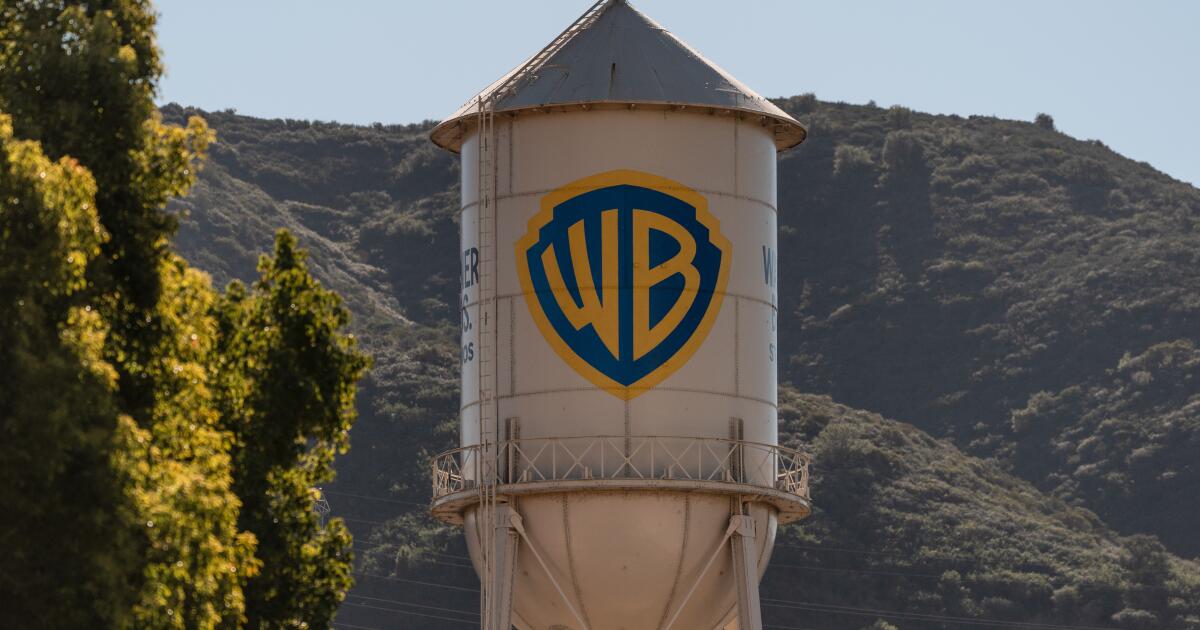

Warner Bros. Discovery’s impending sale has rattled Hollywood — and the company’s balance sheet as the auction’s high costs increasingly come into focus.
The New York-based media company released its first-quarter earnings report Wednesday, which included a $2.9-billion loss. That amount includes $1.3 billion in restructuring expenses, including updated valuations for Warner’s declining linear cable television networks.
Contributing to the net loss was the $2.8-billion termination fee paid to Netflix in late February when the streaming giant bowed out of the bidding for Warner. The auction winner, Paramount Skydance, covered the payment to Netflix, but Warner still must carry the obligation on its balance sheet in case the Paramount takeover falls apart. Should that happen, Warner would have to reimburse Paramount.
Warner also spent an additional $100 million to run the auction and prepare for the upcoming transaction, according to its regulatory filing.
Stockholders late last month overwhelmingly approved Warner’s sale to Paramount.
The $111-billion deal faces opposition among film and television industry workers, many of whom have been sidelined after previous consolidations among the original studios and a pullback in production that has hurt the L.A. economy.
“As we prepare for our next chapter, our focus remains on executing our key strategic priorities: scaling HBO Max globally, returning our Studios to industry leadership, and optimizing our Global Linear Networks,” Warner Bros. Discovery leaders said Wednesday in a letter to shareholders.
In the January-March period, Warner generated $8.9 billion in revenue, a 3% decline from the same quarter one year ago, excluding the effect of foreign exchange rate fluctuations.
The company’s results fell short of Wall Street estimates. It posted a $1.17-per-share loss, much wider than analysts’ expectations for a loss of about 11 cents per share.
Warner’s streaming services, including HBO Max, notched milestones in the quarter and 9% revenue growth to $2.9 billion. The company launched HBO Max in Germany, Italy, Britain and Ireland during the quarter.
Advertising revenue for streaming was up 20% compared with the first quarter of 2025.
The streaming unit posted a 17% increase to $438 million in adjusted earnings before interest, taxes, depreciation and amortization, or EBITDA.
Warner’s studios, primarily its TV business, had a strong quarter, in part because of those international rollouts.
Studio revenue rose 35% to $3.1 billion compared with the prior-year quarter.
Television revenue soared 58% (excluding exchange rate fluctuations) because of increased program licensing fees to support the launch of HBO Max in the international markets. The launches also propelled the movie studio, which saw revenue increase 21%.
Video game revenue declined 30% because of lower library revenues.
Adjusted EBITDA for the studios grew $516 million (156%) to $775 million compared with the same quarter last year.
The company’s vast linear television networks — including CNN, TBS, Cartoon Network, HGTV, Animal Planet and TLC — saw revenue fall 8% to $4.4 billion.
TV distribution revenue tumbled 7% largely because of a 10% decrease in domestic linear pay TV subscribers.
The company also felt the loss of its NBA contract for its TNT channel, which NBC picked up for its network and streaming service. Advertising revenue fell 11%. “The absence of the NBA negatively impacted the year-over-year growth rate,” Warner said.
The collapse of the legacy cable TV business is one of the drivers behind Paramount’s quest to acquire Warner. Both companies have long relied on their cable TV profits to shore up more volatile business segments, including their film studios. Paramount also wants Warner’s prestigious properties, including its film and TV studios and HBO Max, which now has 140 million subscribers.
But as the Paramount-Warner merger draws closer, the opposition has grown louder.
More than 4,000 artists and entertainment industry workers, including Bryan Cranston, Noah Wyle, Kristen Stewart and Jane Fonda, have signed an open letter warning about the dangers of the merger with Paramount.
“This transaction would further consolidate an already concentrated media landscape, reducing competition at a moment when our industries — and the audiences we serve — can least afford it,” according to the letter.
“The result will be fewer opportunities for creators, fewer jobs across the production ecosystem, higher costs, and less choice for audiences in the United States and around the world.”
The merger still needs the approval of regulators in the U.S. and abroad.
Adjusted EBITDA for the television networks fell 10% to $1.6 billion.
Warner ended the quarter with $3.3 billion in cash on hand and $33.4 billion of gross debt.

Warner Bros. Discovery’s impending sale has rattled Hollywood — and the company’s balance sheet as the auction’s high costs increasingly come into focus.
The New York-based media company released its first-quarter earnings report Wednesday, which included a $2.9-billion loss. That amount includes $1.3 billion in restructuring expenses, including updated valuations for Warner’s declining linear cable television networks.
Contributing to the net loss was the $2.8-billion termination fee paid to Netflix in late February when the streaming giant bowed out of the bidding for Warner. The auction winner, Paramount Skydance, covered the payment to Netflix, but Warner still must carry the obligation on its balance sheet in case the Paramount takeover falls apart. Should that happen, Warner would have to reimburse Paramount.
Warner also spent an additional $100 million to run the auction and prepare for the upcoming transaction, according to its regulatory filing.
Stockholders late last month overwhelmingly approved Warner’s sale to Paramount.
The $111-billion deal faces opposition among film and television industry workers, many of whom have been sidelined after previous consolidations among the original studios and a pullback in production that has hurt the L.A. economy.
“As we prepare for our next chapter, our focus remains on executing our key strategic priorities: scaling HBO Max globally, returning our Studios to industry leadership, and optimizing our Global Linear Networks,” Warner Bros. Discovery leaders said Wednesday in a letter to shareholders.
In the January-March period, Warner generated $8.9 billion in revenue, a 3% decline from the same quarter one year ago, excluding the effect of foreign exchange rate fluctuations.
The company’s results fell short of Wall Street estimates. It posted a $1.17-per-share loss, much wider than analysts’ expectations for a loss of about 11 cents per share.
Warner’s streaming services, including HBO Max, notched milestones in the quarter and 9% revenue growth to $2.9 billion. The company launched HBO Max in Germany, Italy, Britain and Ireland during the quarter.
Advertising revenue for streaming was up 20% compared with the first quarter of 2025.
The streaming unit posted a 17% increase to $438 million in adjusted earnings before interest, taxes, depreciation and amortization, or EBITDA.
Warner’s studios, primarily its TV business, had a strong quarter, in part because of those international rollouts.
Studio revenue rose 35% to $3.1 billion compared with the prior-year quarter.
Television revenue soared 58% (excluding exchange rate fluctuations) because of increased program licensing fees to support the launch of HBO Max in the international markets. The launches also propelled the movie studio, which saw revenue increase 21%.
Video game revenue declined 30% because of lower library revenues.
Adjusted EBITDA for the studios grew $516 million (156%) to $775 million compared with the same quarter last year.
The company’s vast linear television networks — including CNN, TBS, Cartoon Network, HGTV, Animal Planet and TLC — saw revenue fall 8% to $4.4 billion.
TV distribution revenue tumbled 7% largely because of a 10% decrease in domestic linear pay TV subscribers.
The company also felt the loss of its NBA contract for its TNT channel, which NBC picked up for its network and streaming service. Advertising revenue fell 11%. “The absence of the NBA negatively impacted the year-over-year growth rate,” Warner said.
The collapse of the legacy cable TV business is one of the drivers behind Paramount’s quest to acquire Warner. Both companies have long relied on their cable TV profits to shore up more volatile business segments, including their film studios. Paramount also wants Warner’s prestigious properties, including its film and TV studios and HBO Max, which now has 140 million subscribers.
But as the Paramount-Warner merger draws closer, the opposition has grown louder.
More than 4,000 artists and entertainment industry workers, including Bryan Cranston, Noah Wyle, Kristen Stewart and Jane Fonda, have signed an open letter warning about the dangers of the merger with Paramount.
“This transaction would further consolidate an already concentrated media landscape, reducing competition at a moment when our industries — and the audiences we serve — can least afford it,” according to the letter.
“The result will be fewer opportunities for creators, fewer jobs across the production ecosystem, higher costs, and less choice for audiences in the United States and around the world.”
The merger still needs the approval of regulators in the U.S. and abroad.
Adjusted EBITDA for the television networks fell 10% to $1.6 billion.
Warner ended the quarter with $3.3 billion in cash on hand and $33.4 billion of gross debt.

Warner Bros. Discovery’s impending sale has rattled Hollywood — and the company’s balance sheet as the auction’s high costs increasingly come into focus.
The New York-based media company released its first-quarter earnings report Wednesday, which included a $2.9-billion loss. That amount includes $1.3 billion in restructuring expenses, including updated valuations for Warner’s declining linear cable television networks.
Contributing to the net loss was the $2.8-billion termination fee paid to Netflix in late February when the streaming giant bowed out of the bidding for Warner. The auction winner, Paramount Skydance, covered the payment to Netflix, but Warner still must carry the obligation on its balance sheet in case the Paramount takeover falls apart. Should that happen, Warner would have to reimburse Paramount.
Warner also spent an additional $100 million to run the auction and prepare for the upcoming transaction, according to its regulatory filing.
Stockholders late last month overwhelmingly approved Warner’s sale to Paramount.
The $111-billion deal faces opposition among film and television industry workers, many of whom have been sidelined after previous consolidations among the original studios and a pullback in production that has hurt the L.A. economy.
“As we prepare for our next chapter, our focus remains on executing our key strategic priorities: scaling HBO Max globally, returning our Studios to industry leadership, and optimizing our Global Linear Networks,” Warner Bros. Discovery leaders said Wednesday in a letter to shareholders.
In the January-March period, Warner generated $8.9 billion in revenue, a 3% decline from the same quarter one year ago, excluding the effect of foreign exchange rate fluctuations.
The company’s results fell short of Wall Street estimates. It posted a $1.17-per-share loss, much wider than analysts’ expectations for a loss of about 11 cents per share.
Warner’s streaming services, including HBO Max, notched milestones in the quarter and 9% revenue growth to $2.9 billion. The company launched HBO Max in Germany, Italy, Britain and Ireland during the quarter.
Advertising revenue for streaming was up 20% compared with the first quarter of 2025.
The streaming unit posted a 17% increase to $438 million in adjusted earnings before interest, taxes, depreciation and amortization, or EBITDA.
Warner’s studios, primarily its TV business, had a strong quarter, in part because of those international rollouts.
Studio revenue rose 35% to $3.1 billion compared with the prior-year quarter.
Television revenue soared 58% (excluding exchange rate fluctuations) because of increased program licensing fees to support the launch of HBO Max in the international markets. The launches also propelled the movie studio, which saw revenue increase 21%.
Video game revenue declined 30% because of lower library revenues.
Adjusted EBITDA for the studios grew $516 million (156%) to $775 million compared with the same quarter last year.
The company’s vast linear television networks — including CNN, TBS, Cartoon Network, HGTV, Animal Planet and TLC — saw revenue fall 8% to $4.4 billion.
TV distribution revenue tumbled 7% largely because of a 10% decrease in domestic linear pay TV subscribers.
The company also felt the loss of its NBA contract for its TNT channel, which NBC picked up for its network and streaming service. Advertising revenue fell 11%. “The absence of the NBA negatively impacted the year-over-year growth rate,” Warner said.
The collapse of the legacy cable TV business is one of the drivers behind Paramount’s quest to acquire Warner. Both companies have long relied on their cable TV profits to shore up more volatile business segments, including their film studios. Paramount also wants Warner’s prestigious properties, including its film and TV studios and HBO Max, which now has 140 million subscribers.
But as the Paramount-Warner merger draws closer, the opposition has grown louder.
More than 4,000 artists and entertainment industry workers, including Bryan Cranston, Noah Wyle, Kristen Stewart and Jane Fonda, have signed an open letter warning about the dangers of the merger with Paramount.
“This transaction would further consolidate an already concentrated media landscape, reducing competition at a moment when our industries — and the audiences we serve — can least afford it,” according to the letter.
“The result will be fewer opportunities for creators, fewer jobs across the production ecosystem, higher costs, and less choice for audiences in the United States and around the world.”
The merger still needs the approval of regulators in the U.S. and abroad.
Adjusted EBITDA for the television networks fell 10% to $1.6 billion.
Warner ended the quarter with $3.3 billion in cash on hand and $33.4 billion of gross debt.
Warner Bros. Discovery’s impending sale has rattled Hollywood — and the company’s balance sheet as the auction’s high costs increasingly come into focus.
The New York-based media company released its first-quarter earnings report Wednesday, which included a $2.9-billion loss. That amount includes $1.3 billion in restructuring expenses, including updated valuations for Warner’s declining linear cable television networks.
Contributing to the net loss was the $2.8-billion termination fee paid to Netflix in late February when the streaming giant bowed out of the bidding for Warner. The auction winner, Paramount Skydance, covered the payment to Netflix, but Warner still must carry the obligation on its balance sheet in case the Paramount takeover falls apart. Should that happen, Warner would have to reimburse Paramount.
Warner also spent an additional $100 million to run the auction and prepare for the upcoming transaction, according to its regulatory filing.
Stockholders late last month overwhelmingly approved Warner’s sale to Paramount.
The $111-billion deal faces opposition among film and television industry workers, many of whom have been sidelined after previous consolidations among the original studios and a pullback in production that has hurt the L.A. economy.
“As we prepare for our next chapter, our focus remains on executing our key strategic priorities: scaling HBO Max globally, returning our Studios to industry leadership, and optimizing our Global Linear Networks,” Warner Bros. Discovery leaders said Wednesday in a letter to shareholders.
In the January-March period, Warner generated $8.9 billion in revenue, a 3% decline from the same quarter one year ago, excluding the effect of foreign exchange rate fluctuations.
The company’s results fell short of Wall Street estimates. It posted a $1.17-per-share loss, much wider than analysts’ expectations for a loss of about 11 cents per share.
Warner’s streaming services, including HBO Max, notched milestones in the quarter and 9% revenue growth to $2.9 billion. The company launched HBO Max in Germany, Italy, Britain and Ireland during the quarter.
Advertising revenue for streaming was up 20% compared with the first quarter of 2025.
The streaming unit posted a 17% increase to $438 million in adjusted earnings before interest, taxes, depreciation and amortization, or EBITDA.
Warner’s studios, primarily its TV business, had a strong quarter, in part because of those international rollouts.
Studio revenue rose 35% to $3.1 billion compared with the prior-year quarter.
Television revenue soared 58% (excluding exchange rate fluctuations) because of increased program licensing fees to support the launch of HBO Max in the international markets. The launches also propelled the movie studio, which saw revenue increase 21%.
Video game revenue declined 30% because of lower library revenues.
Adjusted EBITDA for the studios grew $516 million (156%) to $775 million compared with the same quarter last year.
The company’s vast linear television networks — including CNN, TBS, Cartoon Network, HGTV, Animal Planet and TLC — saw revenue fall 8% to $4.4 billion.
TV distribution revenue tumbled 7% largely because of a 10% decrease in domestic linear pay TV subscribers.
The company also felt the loss of its NBA contract for its TNT channel, which NBC picked up for its network and streaming service. Advertising revenue fell 11%. “The absence of the NBA negatively impacted the year-over-year growth rate,” Warner said.
The collapse of the legacy cable TV business is one of the drivers behind Paramount’s quest to acquire Warner. Both companies have long relied on their cable TV profits to shore up more volatile business segments, including their film studios. Paramount also wants Warner’s prestigious properties, including its film and TV studios and HBO Max, which now has 140 million subscribers.
But as the Paramount-Warner merger draws closer, the opposition has grown louder.
More than 4,000 artists and entertainment industry workers, including Bryan Cranston, Noah Wyle, Kristen Stewart and Jane Fonda, have signed an open letter warning about the dangers of the merger with Paramount.
“This transaction would further consolidate an already concentrated media landscape, reducing competition at a moment when our industries — and the audiences we serve — can least afford it,” according to the letter.
“The result will be fewer opportunities for creators, fewer jobs across the production ecosystem, higher costs, and less choice for audiences in the United States and around the world.”
The merger still needs the approval of regulators in the U.S. and abroad.
Adjusted EBITDA for the television networks fell 10% to $1.6 billion.
Warner ended the quarter with $3.3 billion in cash on hand and $33.4 billion of gross debt.


