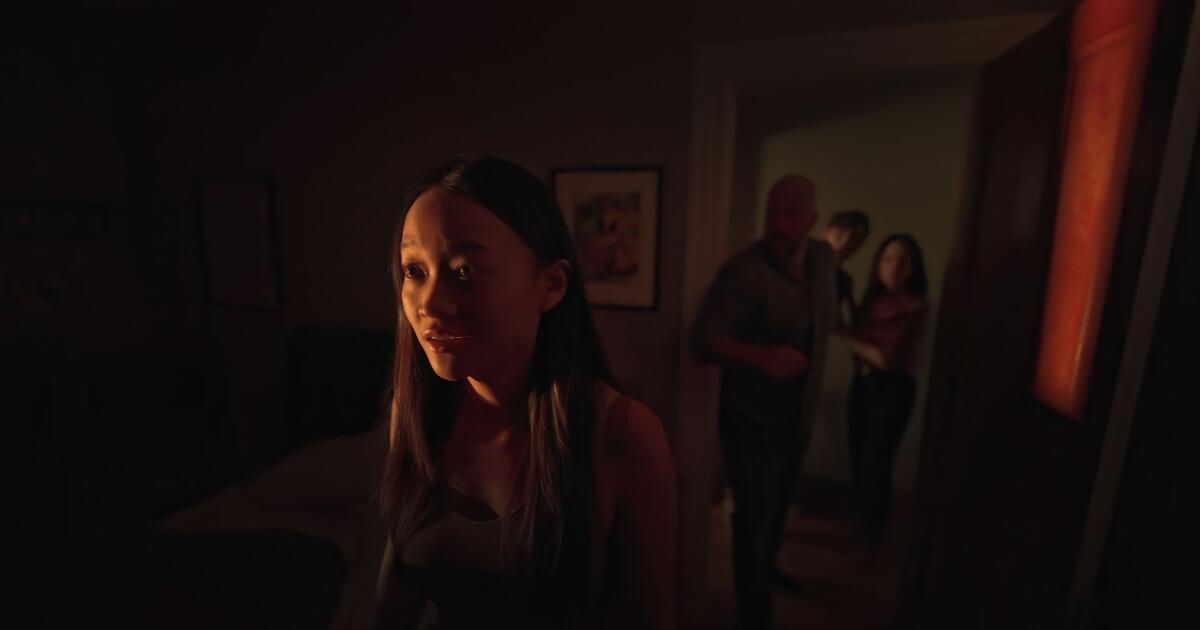

There’s no defending what Anne, a successful lawyer and mother, does when she begins an affair with her 17-year-old stepson, Théo, in the incandescent French drama “Last Summer.” And the director, Catherine Breillat, does not try to defend her, nor condemn her. That’s because her bracing new film is above all a study of human behavior, when the follies of desire knock even the most settled life off its axis.
Taboo French dramas can still conjure up the image of old-school art-house cinema promising forbidden pleasures. But Breillat is a sharp-eyed veteran of provocation with a purpose. She’s spent decades revamping how the movies portray sex, love and the power dynamics and complicated attractions between men and women. “Last Summer” shows us Anne (an incredibly nuanced, frankly Oscar-worthy performance from Léa Drucker) and gives us not highbrow titillation but one woman in full.
The film opens audaciously with Anne at her law office, prepping a tearful teenager for testifying about a sexual assault. She warns her client about how she may be judged. Then Anne drives home to a life of sun-kissed bourgeois comfort: two adorable little daughters, a hardworking and sincere husband, a tree-shaded house. Maybe she’s bored by dinner parties, but Anne chops it up with her scrappy sister and loves her family.
Théo (newcomer Samuel Kircher) moves back home in the wake of problems at school and concerns from his dad, Pierre (Olivier Rabourdin), Anne’s husband. The kid looks the part of a summer crush, but there’s a coltishness and a petulance to him, which neither Kircher nor Breillat plays as cool. The unruffled Anne probably regards Théo as a household problem to be managed, more Pierre’s project anyway.
Samuel Kircher and Léa Drucker in the movie “Last Summer.”
(Sideshow / Janus Films)
The days pass in indifferent cohabitation, until we start noticing Anne’s flicker of interest, which first manifests itself in her going AWOL to join Théo at a tavern. The believability of the ensuing mess depends on the supreme talents of star and director: Drucker, in showing how an otherwise civilized person glides clear-eyed straight into disaster; and Breillat in nailing all the nitty-gritty craft of finely tuned camerawork and blocking that doesn’t get nearly enough credit but creates an emotional reality.
The unpredictable buildup around their first kiss exemplifies Breillat’s mastery, happening while Pierre is away on business as the two look at something on a cellphone. When Anne and Théo do have sex, she says it must never happen again, but of course it does. Without centering sex scenes or seduction, the narrative makes it clear that the affair continues, while Anne almost absurdly tries to conceal it from her husband. There’s nearly a “don’t go into the basement!” quality to witnessing Anne’s helpless fascination and the pair’s libido-addled decision-making.
One of the film’s three sex scenes lingers on Anne’s orgasmic pleasure, in a shot that Breillat says she modeled on a Caravaggio painting. We witness her fulfillment as a sexual being but within a wildly inappropriate relationship. She is unmistakably jazzed; at one point she’s shown cruising in her car to a demonically catchy Sonic Youth song.
Uncomfortable stories have been Breillat’s passion since her debut feature, 1976’s “A Real Young Girl,” about a teenager exploring her sensuality with no heed for propriety. That film was held back from release for decades, more because its protagonist’s freewheeling desire was all about her, not the audience looking at her. (In a recent press interview for “Last Summer,” Breillat casually observed, “Eroticism is men gazing at women as consumer goods.”)
Since then, Breillat has gone on to create one of the world’s foremost oeuvres chronicling how women and girls experience sex and understand their sexuality (comparable in some ways to the films of Jane Campion). The standouts range from 2001’s “Fat Girl,” about a 12-year-old’s sexual awakening alongside her older sister on vacation, to the crushing game of sexual succession in her Asia Argento-starring period drama “The Last Mistress.”
Throughout her career and in “Last Summer,” Breillat has zeroed in on unequal and even harmful dynamics, because she recognizes both the realities of oppressive gender relations and the fact that self-discovery often involves transgression, whether society approves or not — which it mostly does not, she argues, when it comes to female sexuality.
If anything, “Last Summer” is more commercial-looking and less shocking than much of Breillat’s previous work, but her eye and her insights are sharp as ever. Her own story bespeaks an iron-willed mind that won’t quit: Now 75, Breillat soldiered on after a stroke in 2004 that left her partly paralyzed and contributed to the 10-year gap since her last project.
Her latest movie arrives in a filmgoing landscape where, until quite recently, people griped about the sexlessness of new releases. Well, Breillat’s been here the whole time, and with “Last Summer” she roars back once more.
‘Last Summer’
Not rated
In French, with subtitles
Running time: 1 hour, 44 minutes
Playing: Starts June 28 at Landmark’s Nuart Theatre, West Los Angeles

There’s no defending what Anne, a successful lawyer and mother, does when she begins an affair with her 17-year-old stepson, Théo, in the incandescent French drama “Last Summer.” And the director, Catherine Breillat, does not try to defend her, nor condemn her. That’s because her bracing new film is above all a study of human behavior, when the follies of desire knock even the most settled life off its axis.
Taboo French dramas can still conjure up the image of old-school art-house cinema promising forbidden pleasures. But Breillat is a sharp-eyed veteran of provocation with a purpose. She’s spent decades revamping how the movies portray sex, love and the power dynamics and complicated attractions between men and women. “Last Summer” shows us Anne (an incredibly nuanced, frankly Oscar-worthy performance from Léa Drucker) and gives us not highbrow titillation but one woman in full.
The film opens audaciously with Anne at her law office, prepping a tearful teenager for testifying about a sexual assault. She warns her client about how she may be judged. Then Anne drives home to a life of sun-kissed bourgeois comfort: two adorable little daughters, a hardworking and sincere husband, a tree-shaded house. Maybe she’s bored by dinner parties, but Anne chops it up with her scrappy sister and loves her family.
Théo (newcomer Samuel Kircher) moves back home in the wake of problems at school and concerns from his dad, Pierre (Olivier Rabourdin), Anne’s husband. The kid looks the part of a summer crush, but there’s a coltishness and a petulance to him, which neither Kircher nor Breillat plays as cool. The unruffled Anne probably regards Théo as a household problem to be managed, more Pierre’s project anyway.
Samuel Kircher and Léa Drucker in the movie “Last Summer.”
(Sideshow / Janus Films)
The days pass in indifferent cohabitation, until we start noticing Anne’s flicker of interest, which first manifests itself in her going AWOL to join Théo at a tavern. The believability of the ensuing mess depends on the supreme talents of star and director: Drucker, in showing how an otherwise civilized person glides clear-eyed straight into disaster; and Breillat in nailing all the nitty-gritty craft of finely tuned camerawork and blocking that doesn’t get nearly enough credit but creates an emotional reality.
The unpredictable buildup around their first kiss exemplifies Breillat’s mastery, happening while Pierre is away on business as the two look at something on a cellphone. When Anne and Théo do have sex, she says it must never happen again, but of course it does. Without centering sex scenes or seduction, the narrative makes it clear that the affair continues, while Anne almost absurdly tries to conceal it from her husband. There’s nearly a “don’t go into the basement!” quality to witnessing Anne’s helpless fascination and the pair’s libido-addled decision-making.
One of the film’s three sex scenes lingers on Anne’s orgasmic pleasure, in a shot that Breillat says she modeled on a Caravaggio painting. We witness her fulfillment as a sexual being but within a wildly inappropriate relationship. She is unmistakably jazzed; at one point she’s shown cruising in her car to a demonically catchy Sonic Youth song.
Uncomfortable stories have been Breillat’s passion since her debut feature, 1976’s “A Real Young Girl,” about a teenager exploring her sensuality with no heed for propriety. That film was held back from release for decades, more because its protagonist’s freewheeling desire was all about her, not the audience looking at her. (In a recent press interview for “Last Summer,” Breillat casually observed, “Eroticism is men gazing at women as consumer goods.”)
Since then, Breillat has gone on to create one of the world’s foremost oeuvres chronicling how women and girls experience sex and understand their sexuality (comparable in some ways to the films of Jane Campion). The standouts range from 2001’s “Fat Girl,” about a 12-year-old’s sexual awakening alongside her older sister on vacation, to the crushing game of sexual succession in her Asia Argento-starring period drama “The Last Mistress.”
Throughout her career and in “Last Summer,” Breillat has zeroed in on unequal and even harmful dynamics, because she recognizes both the realities of oppressive gender relations and the fact that self-discovery often involves transgression, whether society approves or not — which it mostly does not, she argues, when it comes to female sexuality.
If anything, “Last Summer” is more commercial-looking and less shocking than much of Breillat’s previous work, but her eye and her insights are sharp as ever. Her own story bespeaks an iron-willed mind that won’t quit: Now 75, Breillat soldiered on after a stroke in 2004 that left her partly paralyzed and contributed to the 10-year gap since her last project.
Her latest movie arrives in a filmgoing landscape where, until quite recently, people griped about the sexlessness of new releases. Well, Breillat’s been here the whole time, and with “Last Summer” she roars back once more.
‘Last Summer’
Not rated
In French, with subtitles
Running time: 1 hour, 44 minutes
Playing: Starts June 28 at Landmark’s Nuart Theatre, West Los Angeles

There’s no defending what Anne, a successful lawyer and mother, does when she begins an affair with her 17-year-old stepson, Théo, in the incandescent French drama “Last Summer.” And the director, Catherine Breillat, does not try to defend her, nor condemn her. That’s because her bracing new film is above all a study of human behavior, when the follies of desire knock even the most settled life off its axis.
Taboo French dramas can still conjure up the image of old-school art-house cinema promising forbidden pleasures. But Breillat is a sharp-eyed veteran of provocation with a purpose. She’s spent decades revamping how the movies portray sex, love and the power dynamics and complicated attractions between men and women. “Last Summer” shows us Anne (an incredibly nuanced, frankly Oscar-worthy performance from Léa Drucker) and gives us not highbrow titillation but one woman in full.
The film opens audaciously with Anne at her law office, prepping a tearful teenager for testifying about a sexual assault. She warns her client about how she may be judged. Then Anne drives home to a life of sun-kissed bourgeois comfort: two adorable little daughters, a hardworking and sincere husband, a tree-shaded house. Maybe she’s bored by dinner parties, but Anne chops it up with her scrappy sister and loves her family.
Théo (newcomer Samuel Kircher) moves back home in the wake of problems at school and concerns from his dad, Pierre (Olivier Rabourdin), Anne’s husband. The kid looks the part of a summer crush, but there’s a coltishness and a petulance to him, which neither Kircher nor Breillat plays as cool. The unruffled Anne probably regards Théo as a household problem to be managed, more Pierre’s project anyway.
Samuel Kircher and Léa Drucker in the movie “Last Summer.”
(Sideshow / Janus Films)
The days pass in indifferent cohabitation, until we start noticing Anne’s flicker of interest, which first manifests itself in her going AWOL to join Théo at a tavern. The believability of the ensuing mess depends on the supreme talents of star and director: Drucker, in showing how an otherwise civilized person glides clear-eyed straight into disaster; and Breillat in nailing all the nitty-gritty craft of finely tuned camerawork and blocking that doesn’t get nearly enough credit but creates an emotional reality.
The unpredictable buildup around their first kiss exemplifies Breillat’s mastery, happening while Pierre is away on business as the two look at something on a cellphone. When Anne and Théo do have sex, she says it must never happen again, but of course it does. Without centering sex scenes or seduction, the narrative makes it clear that the affair continues, while Anne almost absurdly tries to conceal it from her husband. There’s nearly a “don’t go into the basement!” quality to witnessing Anne’s helpless fascination and the pair’s libido-addled decision-making.
One of the film’s three sex scenes lingers on Anne’s orgasmic pleasure, in a shot that Breillat says she modeled on a Caravaggio painting. We witness her fulfillment as a sexual being but within a wildly inappropriate relationship. She is unmistakably jazzed; at one point she’s shown cruising in her car to a demonically catchy Sonic Youth song.
Uncomfortable stories have been Breillat’s passion since her debut feature, 1976’s “A Real Young Girl,” about a teenager exploring her sensuality with no heed for propriety. That film was held back from release for decades, more because its protagonist’s freewheeling desire was all about her, not the audience looking at her. (In a recent press interview for “Last Summer,” Breillat casually observed, “Eroticism is men gazing at women as consumer goods.”)
Since then, Breillat has gone on to create one of the world’s foremost oeuvres chronicling how women and girls experience sex and understand their sexuality (comparable in some ways to the films of Jane Campion). The standouts range from 2001’s “Fat Girl,” about a 12-year-old’s sexual awakening alongside her older sister on vacation, to the crushing game of sexual succession in her Asia Argento-starring period drama “The Last Mistress.”
Throughout her career and in “Last Summer,” Breillat has zeroed in on unequal and even harmful dynamics, because she recognizes both the realities of oppressive gender relations and the fact that self-discovery often involves transgression, whether society approves or not — which it mostly does not, she argues, when it comes to female sexuality.
If anything, “Last Summer” is more commercial-looking and less shocking than much of Breillat’s previous work, but her eye and her insights are sharp as ever. Her own story bespeaks an iron-willed mind that won’t quit: Now 75, Breillat soldiered on after a stroke in 2004 that left her partly paralyzed and contributed to the 10-year gap since her last project.
Her latest movie arrives in a filmgoing landscape where, until quite recently, people griped about the sexlessness of new releases. Well, Breillat’s been here the whole time, and with “Last Summer” she roars back once more.
‘Last Summer’
Not rated
In French, with subtitles
Running time: 1 hour, 44 minutes
Playing: Starts June 28 at Landmark’s Nuart Theatre, West Los Angeles
There’s no defending what Anne, a successful lawyer and mother, does when she begins an affair with her 17-year-old stepson, Théo, in the incandescent French drama “Last Summer.” And the director, Catherine Breillat, does not try to defend her, nor condemn her. That’s because her bracing new film is above all a study of human behavior, when the follies of desire knock even the most settled life off its axis.
Taboo French dramas can still conjure up the image of old-school art-house cinema promising forbidden pleasures. But Breillat is a sharp-eyed veteran of provocation with a purpose. She’s spent decades revamping how the movies portray sex, love and the power dynamics and complicated attractions between men and women. “Last Summer” shows us Anne (an incredibly nuanced, frankly Oscar-worthy performance from Léa Drucker) and gives us not highbrow titillation but one woman in full.
The film opens audaciously with Anne at her law office, prepping a tearful teenager for testifying about a sexual assault. She warns her client about how she may be judged. Then Anne drives home to a life of sun-kissed bourgeois comfort: two adorable little daughters, a hardworking and sincere husband, a tree-shaded house. Maybe she’s bored by dinner parties, but Anne chops it up with her scrappy sister and loves her family.
Théo (newcomer Samuel Kircher) moves back home in the wake of problems at school and concerns from his dad, Pierre (Olivier Rabourdin), Anne’s husband. The kid looks the part of a summer crush, but there’s a coltishness and a petulance to him, which neither Kircher nor Breillat plays as cool. The unruffled Anne probably regards Théo as a household problem to be managed, more Pierre’s project anyway.
Samuel Kircher and Léa Drucker in the movie “Last Summer.”
(Sideshow / Janus Films)
The days pass in indifferent cohabitation, until we start noticing Anne’s flicker of interest, which first manifests itself in her going AWOL to join Théo at a tavern. The believability of the ensuing mess depends on the supreme talents of star and director: Drucker, in showing how an otherwise civilized person glides clear-eyed straight into disaster; and Breillat in nailing all the nitty-gritty craft of finely tuned camerawork and blocking that doesn’t get nearly enough credit but creates an emotional reality.
The unpredictable buildup around their first kiss exemplifies Breillat’s mastery, happening while Pierre is away on business as the two look at something on a cellphone. When Anne and Théo do have sex, she says it must never happen again, but of course it does. Without centering sex scenes or seduction, the narrative makes it clear that the affair continues, while Anne almost absurdly tries to conceal it from her husband. There’s nearly a “don’t go into the basement!” quality to witnessing Anne’s helpless fascination and the pair’s libido-addled decision-making.
One of the film’s three sex scenes lingers on Anne’s orgasmic pleasure, in a shot that Breillat says she modeled on a Caravaggio painting. We witness her fulfillment as a sexual being but within a wildly inappropriate relationship. She is unmistakably jazzed; at one point she’s shown cruising in her car to a demonically catchy Sonic Youth song.
Uncomfortable stories have been Breillat’s passion since her debut feature, 1976’s “A Real Young Girl,” about a teenager exploring her sensuality with no heed for propriety. That film was held back from release for decades, more because its protagonist’s freewheeling desire was all about her, not the audience looking at her. (In a recent press interview for “Last Summer,” Breillat casually observed, “Eroticism is men gazing at women as consumer goods.”)
Since then, Breillat has gone on to create one of the world’s foremost oeuvres chronicling how women and girls experience sex and understand their sexuality (comparable in some ways to the films of Jane Campion). The standouts range from 2001’s “Fat Girl,” about a 12-year-old’s sexual awakening alongside her older sister on vacation, to the crushing game of sexual succession in her Asia Argento-starring period drama “The Last Mistress.”
Throughout her career and in “Last Summer,” Breillat has zeroed in on unequal and even harmful dynamics, because she recognizes both the realities of oppressive gender relations and the fact that self-discovery often involves transgression, whether society approves or not — which it mostly does not, she argues, when it comes to female sexuality.
If anything, “Last Summer” is more commercial-looking and less shocking than much of Breillat’s previous work, but her eye and her insights are sharp as ever. Her own story bespeaks an iron-willed mind that won’t quit: Now 75, Breillat soldiered on after a stroke in 2004 that left her partly paralyzed and contributed to the 10-year gap since her last project.
Her latest movie arrives in a filmgoing landscape where, until quite recently, people griped about the sexlessness of new releases. Well, Breillat’s been here the whole time, and with “Last Summer” she roars back once more.
‘Last Summer’
Not rated
In French, with subtitles
Running time: 1 hour, 44 minutes
Playing: Starts June 28 at Landmark’s Nuart Theatre, West Los Angeles

There’s no defending what Anne, a successful lawyer and mother, does when she begins an affair with her 17-year-old stepson, Théo, in the incandescent French drama “Last Summer.” And the director, Catherine Breillat, does not try to defend her, nor condemn her. That’s because her bracing new film is above all a study of human behavior, when the follies of desire knock even the most settled life off its axis.
Taboo French dramas can still conjure up the image of old-school art-house cinema promising forbidden pleasures. But Breillat is a sharp-eyed veteran of provocation with a purpose. She’s spent decades revamping how the movies portray sex, love and the power dynamics and complicated attractions between men and women. “Last Summer” shows us Anne (an incredibly nuanced, frankly Oscar-worthy performance from Léa Drucker) and gives us not highbrow titillation but one woman in full.
The film opens audaciously with Anne at her law office, prepping a tearful teenager for testifying about a sexual assault. She warns her client about how she may be judged. Then Anne drives home to a life of sun-kissed bourgeois comfort: two adorable little daughters, a hardworking and sincere husband, a tree-shaded house. Maybe she’s bored by dinner parties, but Anne chops it up with her scrappy sister and loves her family.
Théo (newcomer Samuel Kircher) moves back home in the wake of problems at school and concerns from his dad, Pierre (Olivier Rabourdin), Anne’s husband. The kid looks the part of a summer crush, but there’s a coltishness and a petulance to him, which neither Kircher nor Breillat plays as cool. The unruffled Anne probably regards Théo as a household problem to be managed, more Pierre’s project anyway.
Samuel Kircher and Léa Drucker in the movie “Last Summer.”
(Sideshow / Janus Films)
The days pass in indifferent cohabitation, until we start noticing Anne’s flicker of interest, which first manifests itself in her going AWOL to join Théo at a tavern. The believability of the ensuing mess depends on the supreme talents of star and director: Drucker, in showing how an otherwise civilized person glides clear-eyed straight into disaster; and Breillat in nailing all the nitty-gritty craft of finely tuned camerawork and blocking that doesn’t get nearly enough credit but creates an emotional reality.
The unpredictable buildup around their first kiss exemplifies Breillat’s mastery, happening while Pierre is away on business as the two look at something on a cellphone. When Anne and Théo do have sex, she says it must never happen again, but of course it does. Without centering sex scenes or seduction, the narrative makes it clear that the affair continues, while Anne almost absurdly tries to conceal it from her husband. There’s nearly a “don’t go into the basement!” quality to witnessing Anne’s helpless fascination and the pair’s libido-addled decision-making.
One of the film’s three sex scenes lingers on Anne’s orgasmic pleasure, in a shot that Breillat says she modeled on a Caravaggio painting. We witness her fulfillment as a sexual being but within a wildly inappropriate relationship. She is unmistakably jazzed; at one point she’s shown cruising in her car to a demonically catchy Sonic Youth song.
Uncomfortable stories have been Breillat’s passion since her debut feature, 1976’s “A Real Young Girl,” about a teenager exploring her sensuality with no heed for propriety. That film was held back from release for decades, more because its protagonist’s freewheeling desire was all about her, not the audience looking at her. (In a recent press interview for “Last Summer,” Breillat casually observed, “Eroticism is men gazing at women as consumer goods.”)
Since then, Breillat has gone on to create one of the world’s foremost oeuvres chronicling how women and girls experience sex and understand their sexuality (comparable in some ways to the films of Jane Campion). The standouts range from 2001’s “Fat Girl,” about a 12-year-old’s sexual awakening alongside her older sister on vacation, to the crushing game of sexual succession in her Asia Argento-starring period drama “The Last Mistress.”
Throughout her career and in “Last Summer,” Breillat has zeroed in on unequal and even harmful dynamics, because she recognizes both the realities of oppressive gender relations and the fact that self-discovery often involves transgression, whether society approves or not — which it mostly does not, she argues, when it comes to female sexuality.
If anything, “Last Summer” is more commercial-looking and less shocking than much of Breillat’s previous work, but her eye and her insights are sharp as ever. Her own story bespeaks an iron-willed mind that won’t quit: Now 75, Breillat soldiered on after a stroke in 2004 that left her partly paralyzed and contributed to the 10-year gap since her last project.
Her latest movie arrives in a filmgoing landscape where, until quite recently, people griped about the sexlessness of new releases. Well, Breillat’s been here the whole time, and with “Last Summer” she roars back once more.
‘Last Summer’
Not rated
In French, with subtitles
Running time: 1 hour, 44 minutes
Playing: Starts June 28 at Landmark’s Nuart Theatre, West Los Angeles
There’s no defending what Anne, a successful lawyer and mother, does when she begins an affair with her 17-year-old stepson, Théo, in the incandescent French drama “Last Summer.” And the director, Catherine Breillat, does not try to defend her, nor condemn her. That’s because her bracing new film is above all a study of human behavior, when the follies of desire knock even the most settled life off its axis.
Taboo French dramas can still conjure up the image of old-school art-house cinema promising forbidden pleasures. But Breillat is a sharp-eyed veteran of provocation with a purpose. She’s spent decades revamping how the movies portray sex, love and the power dynamics and complicated attractions between men and women. “Last Summer” shows us Anne (an incredibly nuanced, frankly Oscar-worthy performance from Léa Drucker) and gives us not highbrow titillation but one woman in full.
The film opens audaciously with Anne at her law office, prepping a tearful teenager for testifying about a sexual assault. She warns her client about how she may be judged. Then Anne drives home to a life of sun-kissed bourgeois comfort: two adorable little daughters, a hardworking and sincere husband, a tree-shaded house. Maybe she’s bored by dinner parties, but Anne chops it up with her scrappy sister and loves her family.
Théo (newcomer Samuel Kircher) moves back home in the wake of problems at school and concerns from his dad, Pierre (Olivier Rabourdin), Anne’s husband. The kid looks the part of a summer crush, but there’s a coltishness and a petulance to him, which neither Kircher nor Breillat plays as cool. The unruffled Anne probably regards Théo as a household problem to be managed, more Pierre’s project anyway.
Samuel Kircher and Léa Drucker in the movie “Last Summer.”
(Sideshow / Janus Films)
The days pass in indifferent cohabitation, until we start noticing Anne’s flicker of interest, which first manifests itself in her going AWOL to join Théo at a tavern. The believability of the ensuing mess depends on the supreme talents of star and director: Drucker, in showing how an otherwise civilized person glides clear-eyed straight into disaster; and Breillat in nailing all the nitty-gritty craft of finely tuned camerawork and blocking that doesn’t get nearly enough credit but creates an emotional reality.
The unpredictable buildup around their first kiss exemplifies Breillat’s mastery, happening while Pierre is away on business as the two look at something on a cellphone. When Anne and Théo do have sex, she says it must never happen again, but of course it does. Without centering sex scenes or seduction, the narrative makes it clear that the affair continues, while Anne almost absurdly tries to conceal it from her husband. There’s nearly a “don’t go into the basement!” quality to witnessing Anne’s helpless fascination and the pair’s libido-addled decision-making.
One of the film’s three sex scenes lingers on Anne’s orgasmic pleasure, in a shot that Breillat says she modeled on a Caravaggio painting. We witness her fulfillment as a sexual being but within a wildly inappropriate relationship. She is unmistakably jazzed; at one point she’s shown cruising in her car to a demonically catchy Sonic Youth song.
Uncomfortable stories have been Breillat’s passion since her debut feature, 1976’s “A Real Young Girl,” about a teenager exploring her sensuality with no heed for propriety. That film was held back from release for decades, more because its protagonist’s freewheeling desire was all about her, not the audience looking at her. (In a recent press interview for “Last Summer,” Breillat casually observed, “Eroticism is men gazing at women as consumer goods.”)
Since then, Breillat has gone on to create one of the world’s foremost oeuvres chronicling how women and girls experience sex and understand their sexuality (comparable in some ways to the films of Jane Campion). The standouts range from 2001’s “Fat Girl,” about a 12-year-old’s sexual awakening alongside her older sister on vacation, to the crushing game of sexual succession in her Asia Argento-starring period drama “The Last Mistress.”
Throughout her career and in “Last Summer,” Breillat has zeroed in on unequal and even harmful dynamics, because she recognizes both the realities of oppressive gender relations and the fact that self-discovery often involves transgression, whether society approves or not — which it mostly does not, she argues, when it comes to female sexuality.
If anything, “Last Summer” is more commercial-looking and less shocking than much of Breillat’s previous work, but her eye and her insights are sharp as ever. Her own story bespeaks an iron-willed mind that won’t quit: Now 75, Breillat soldiered on after a stroke in 2004 that left her partly paralyzed and contributed to the 10-year gap since her last project.
Her latest movie arrives in a filmgoing landscape where, until quite recently, people griped about the sexlessness of new releases. Well, Breillat’s been here the whole time, and with “Last Summer” she roars back once more.
‘Last Summer’
Not rated
In French, with subtitles
Running time: 1 hour, 44 minutes
Playing: Starts June 28 at Landmark’s Nuart Theatre, West Los Angeles
There’s no defending what Anne, a successful lawyer and mother, does when she begins an affair with her 17-year-old stepson, Théo, in the incandescent French drama “Last Summer.” And the director, Catherine Breillat, does not try to defend her, nor condemn her. That’s because her bracing new film is above all a study of human behavior, when the follies of desire knock even the most settled life off its axis.
Taboo French dramas can still conjure up the image of old-school art-house cinema promising forbidden pleasures. But Breillat is a sharp-eyed veteran of provocation with a purpose. She’s spent decades revamping how the movies portray sex, love and the power dynamics and complicated attractions between men and women. “Last Summer” shows us Anne (an incredibly nuanced, frankly Oscar-worthy performance from Léa Drucker) and gives us not highbrow titillation but one woman in full.
The film opens audaciously with Anne at her law office, prepping a tearful teenager for testifying about a sexual assault. She warns her client about how she may be judged. Then Anne drives home to a life of sun-kissed bourgeois comfort: two adorable little daughters, a hardworking and sincere husband, a tree-shaded house. Maybe she’s bored by dinner parties, but Anne chops it up with her scrappy sister and loves her family.
Théo (newcomer Samuel Kircher) moves back home in the wake of problems at school and concerns from his dad, Pierre (Olivier Rabourdin), Anne’s husband. The kid looks the part of a summer crush, but there’s a coltishness and a petulance to him, which neither Kircher nor Breillat plays as cool. The unruffled Anne probably regards Théo as a household problem to be managed, more Pierre’s project anyway.
Samuel Kircher and Léa Drucker in the movie “Last Summer.”
(Sideshow / Janus Films)
The days pass in indifferent cohabitation, until we start noticing Anne’s flicker of interest, which first manifests itself in her going AWOL to join Théo at a tavern. The believability of the ensuing mess depends on the supreme talents of star and director: Drucker, in showing how an otherwise civilized person glides clear-eyed straight into disaster; and Breillat in nailing all the nitty-gritty craft of finely tuned camerawork and blocking that doesn’t get nearly enough credit but creates an emotional reality.
The unpredictable buildup around their first kiss exemplifies Breillat’s mastery, happening while Pierre is away on business as the two look at something on a cellphone. When Anne and Théo do have sex, she says it must never happen again, but of course it does. Without centering sex scenes or seduction, the narrative makes it clear that the affair continues, while Anne almost absurdly tries to conceal it from her husband. There’s nearly a “don’t go into the basement!” quality to witnessing Anne’s helpless fascination and the pair’s libido-addled decision-making.
One of the film’s three sex scenes lingers on Anne’s orgasmic pleasure, in a shot that Breillat says she modeled on a Caravaggio painting. We witness her fulfillment as a sexual being but within a wildly inappropriate relationship. She is unmistakably jazzed; at one point she’s shown cruising in her car to a demonically catchy Sonic Youth song.
Uncomfortable stories have been Breillat’s passion since her debut feature, 1976’s “A Real Young Girl,” about a teenager exploring her sensuality with no heed for propriety. That film was held back from release for decades, more because its protagonist’s freewheeling desire was all about her, not the audience looking at her. (In a recent press interview for “Last Summer,” Breillat casually observed, “Eroticism is men gazing at women as consumer goods.”)
Since then, Breillat has gone on to create one of the world’s foremost oeuvres chronicling how women and girls experience sex and understand their sexuality (comparable in some ways to the films of Jane Campion). The standouts range from 2001’s “Fat Girl,” about a 12-year-old’s sexual awakening alongside her older sister on vacation, to the crushing game of sexual succession in her Asia Argento-starring period drama “The Last Mistress.”
Throughout her career and in “Last Summer,” Breillat has zeroed in on unequal and even harmful dynamics, because she recognizes both the realities of oppressive gender relations and the fact that self-discovery often involves transgression, whether society approves or not — which it mostly does not, she argues, when it comes to female sexuality.
If anything, “Last Summer” is more commercial-looking and less shocking than much of Breillat’s previous work, but her eye and her insights are sharp as ever. Her own story bespeaks an iron-willed mind that won’t quit: Now 75, Breillat soldiered on after a stroke in 2004 that left her partly paralyzed and contributed to the 10-year gap since her last project.
Her latest movie arrives in a filmgoing landscape where, until quite recently, people griped about the sexlessness of new releases. Well, Breillat’s been here the whole time, and with “Last Summer” she roars back once more.
‘Last Summer’
Not rated
In French, with subtitles
Running time: 1 hour, 44 minutes
Playing: Starts June 28 at Landmark’s Nuart Theatre, West Los Angeles
There’s no defending what Anne, a successful lawyer and mother, does when she begins an affair with her 17-year-old stepson, Théo, in the incandescent French drama “Last Summer.” And the director, Catherine Breillat, does not try to defend her, nor condemn her. That’s because her bracing new film is above all a study of human behavior, when the follies of desire knock even the most settled life off its axis.
Taboo French dramas can still conjure up the image of old-school art-house cinema promising forbidden pleasures. But Breillat is a sharp-eyed veteran of provocation with a purpose. She’s spent decades revamping how the movies portray sex, love and the power dynamics and complicated attractions between men and women. “Last Summer” shows us Anne (an incredibly nuanced, frankly Oscar-worthy performance from Léa Drucker) and gives us not highbrow titillation but one woman in full.
The film opens audaciously with Anne at her law office, prepping a tearful teenager for testifying about a sexual assault. She warns her client about how she may be judged. Then Anne drives home to a life of sun-kissed bourgeois comfort: two adorable little daughters, a hardworking and sincere husband, a tree-shaded house. Maybe she’s bored by dinner parties, but Anne chops it up with her scrappy sister and loves her family.
Théo (newcomer Samuel Kircher) moves back home in the wake of problems at school and concerns from his dad, Pierre (Olivier Rabourdin), Anne’s husband. The kid looks the part of a summer crush, but there’s a coltishness and a petulance to him, which neither Kircher nor Breillat plays as cool. The unruffled Anne probably regards Théo as a household problem to be managed, more Pierre’s project anyway.
Samuel Kircher and Léa Drucker in the movie “Last Summer.”
(Sideshow / Janus Films)
The days pass in indifferent cohabitation, until we start noticing Anne’s flicker of interest, which first manifests itself in her going AWOL to join Théo at a tavern. The believability of the ensuing mess depends on the supreme talents of star and director: Drucker, in showing how an otherwise civilized person glides clear-eyed straight into disaster; and Breillat in nailing all the nitty-gritty craft of finely tuned camerawork and blocking that doesn’t get nearly enough credit but creates an emotional reality.
The unpredictable buildup around their first kiss exemplifies Breillat’s mastery, happening while Pierre is away on business as the two look at something on a cellphone. When Anne and Théo do have sex, she says it must never happen again, but of course it does. Without centering sex scenes or seduction, the narrative makes it clear that the affair continues, while Anne almost absurdly tries to conceal it from her husband. There’s nearly a “don’t go into the basement!” quality to witnessing Anne’s helpless fascination and the pair’s libido-addled decision-making.
One of the film’s three sex scenes lingers on Anne’s orgasmic pleasure, in a shot that Breillat says she modeled on a Caravaggio painting. We witness her fulfillment as a sexual being but within a wildly inappropriate relationship. She is unmistakably jazzed; at one point she’s shown cruising in her car to a demonically catchy Sonic Youth song.
Uncomfortable stories have been Breillat’s passion since her debut feature, 1976’s “A Real Young Girl,” about a teenager exploring her sensuality with no heed for propriety. That film was held back from release for decades, more because its protagonist’s freewheeling desire was all about her, not the audience looking at her. (In a recent press interview for “Last Summer,” Breillat casually observed, “Eroticism is men gazing at women as consumer goods.”)
Since then, Breillat has gone on to create one of the world’s foremost oeuvres chronicling how women and girls experience sex and understand their sexuality (comparable in some ways to the films of Jane Campion). The standouts range from 2001’s “Fat Girl,” about a 12-year-old’s sexual awakening alongside her older sister on vacation, to the crushing game of sexual succession in her Asia Argento-starring period drama “The Last Mistress.”
Throughout her career and in “Last Summer,” Breillat has zeroed in on unequal and even harmful dynamics, because she recognizes both the realities of oppressive gender relations and the fact that self-discovery often involves transgression, whether society approves or not — which it mostly does not, she argues, when it comes to female sexuality.
If anything, “Last Summer” is more commercial-looking and less shocking than much of Breillat’s previous work, but her eye and her insights are sharp as ever. Her own story bespeaks an iron-willed mind that won’t quit: Now 75, Breillat soldiered on after a stroke in 2004 that left her partly paralyzed and contributed to the 10-year gap since her last project.
Her latest movie arrives in a filmgoing landscape where, until quite recently, people griped about the sexlessness of new releases. Well, Breillat’s been here the whole time, and with “Last Summer” she roars back once more.
‘Last Summer’
Not rated
In French, with subtitles
Running time: 1 hour, 44 minutes
Playing: Starts June 28 at Landmark’s Nuart Theatre, West Los Angeles