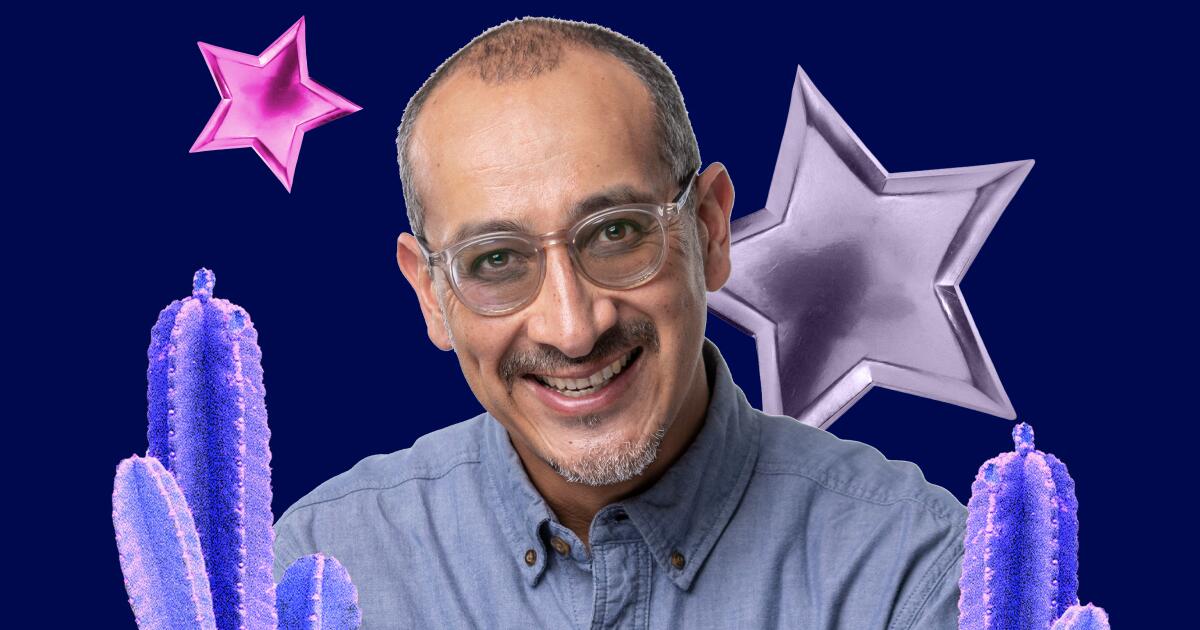

Daniel Hernández’s career has been full of twists and turns. A proud product of San Diego and Tijuana, Hernández authored his first food story on L.A.’s iconic and once-restricted vendors of bacon-wrapped hot dogs — which garnered praise from legendary food critic Jonathan Gold.
Long before Hernández became the food editor of the L.A. Times, the author and editor was a young freelance reporter, an era he recounted to De Los Podcast hosts Suzy Exposito and Fidel Martinez.
It was 2008 in CDMX when Hernández stumbled upon one of his most memorable stories. A street clash had broken out between two alternative subcultures: Hard-line punk rockers rallied against the fledgling emo scene, which culminated in violence. As Exposito describes it, “if you were punk or emo, it was like the Berlin Wall fell.”
“Initially the mainstream media, myself included, wanted to laugh it off,” said Hernández. “[But] the core tenet of culture journalism is [that] you have to meet culture where it’s at.”
As sensationalism spread across multiple news networks surrounding the alternative scuffle, Hernández returned to L.A. with a newfound approach to journalism — and pushed to write about culture through topics like art and, eventually, food.
“I don’t like food for food itself. Food should always be a conduit for us as writers and journalists to talk about culture, politics and society,” Hernández said. “Anything could be seen through the lens of food.”
From the Inland Empire’s “rancho” feel to the L.A. obsession with standing in lines, Hernández interrogated the social capital that comes from food in Southern California. At the end of the day, said Hernández, the heart of L.A. is the taco.
Yet compiling The Times’ 101 Best Tacos list was no easy feat, admitted Hernández, who once served as editor of the blog L.A. Taco. Beyond personal tastes that may cause arguments within the newsroom, what makes an authentic taco itself can be hard to define.
But, as Hernández said, it’s more than a taco: it’s a cultural identity.
“Taco is the primary unit of L.A. El taco. Everyone eats it,” Hernández said. “We should always look at street food, and tacos in particular, as the thing that unites us in a place that’s so fractured.”
As an editor in journalism, a field rife with barriers to Latino representation, Hernández said he learned to reject any feelings that he didn’t belong.
“I’m acutely aware that there has not been a food editor that looks like me,” Hernández said. “And I’m not ashamed of that. I don’t believe in imposter syndrome. If I’ve ever had an inkling of it, I think: ‘Hell no!’ Every space that we’re in, we need to act like we own it already.”

Daniel Hernández’s career has been full of twists and turns. A proud product of San Diego and Tijuana, Hernández authored his first food story on L.A.’s iconic and once-restricted vendors of bacon-wrapped hot dogs — which garnered praise from legendary food critic Jonathan Gold.
Long before Hernández became the food editor of the L.A. Times, the author and editor was a young freelance reporter, an era he recounted to De Los Podcast hosts Suzy Exposito and Fidel Martinez.
It was 2008 in CDMX when Hernández stumbled upon one of his most memorable stories. A street clash had broken out between two alternative subcultures: Hard-line punk rockers rallied against the fledgling emo scene, which culminated in violence. As Exposito describes it, “if you were punk or emo, it was like the Berlin Wall fell.”
“Initially the mainstream media, myself included, wanted to laugh it off,” said Hernández. “[But] the core tenet of culture journalism is [that] you have to meet culture where it’s at.”
As sensationalism spread across multiple news networks surrounding the alternative scuffle, Hernández returned to L.A. with a newfound approach to journalism — and pushed to write about culture through topics like art and, eventually, food.
“I don’t like food for food itself. Food should always be a conduit for us as writers and journalists to talk about culture, politics and society,” Hernández said. “Anything could be seen through the lens of food.”
From the Inland Empire’s “rancho” feel to the L.A. obsession with standing in lines, Hernández interrogated the social capital that comes from food in Southern California. At the end of the day, said Hernández, the heart of L.A. is the taco.
Yet compiling The Times’ 101 Best Tacos list was no easy feat, admitted Hernández, who once served as editor of the blog L.A. Taco. Beyond personal tastes that may cause arguments within the newsroom, what makes an authentic taco itself can be hard to define.
But, as Hernández said, it’s more than a taco: it’s a cultural identity.
“Taco is the primary unit of L.A. El taco. Everyone eats it,” Hernández said. “We should always look at street food, and tacos in particular, as the thing that unites us in a place that’s so fractured.”
As an editor in journalism, a field rife with barriers to Latino representation, Hernández said he learned to reject any feelings that he didn’t belong.
“I’m acutely aware that there has not been a food editor that looks like me,” Hernández said. “And I’m not ashamed of that. I don’t believe in imposter syndrome. If I’ve ever had an inkling of it, I think: ‘Hell no!’ Every space that we’re in, we need to act like we own it already.”

Daniel Hernández’s career has been full of twists and turns. A proud product of San Diego and Tijuana, Hernández authored his first food story on L.A.’s iconic and once-restricted vendors of bacon-wrapped hot dogs — which garnered praise from legendary food critic Jonathan Gold.
Long before Hernández became the food editor of the L.A. Times, the author and editor was a young freelance reporter, an era he recounted to De Los Podcast hosts Suzy Exposito and Fidel Martinez.
It was 2008 in CDMX when Hernández stumbled upon one of his most memorable stories. A street clash had broken out between two alternative subcultures: Hard-line punk rockers rallied against the fledgling emo scene, which culminated in violence. As Exposito describes it, “if you were punk or emo, it was like the Berlin Wall fell.”
“Initially the mainstream media, myself included, wanted to laugh it off,” said Hernández. “[But] the core tenet of culture journalism is [that] you have to meet culture where it’s at.”
As sensationalism spread across multiple news networks surrounding the alternative scuffle, Hernández returned to L.A. with a newfound approach to journalism — and pushed to write about culture through topics like art and, eventually, food.
“I don’t like food for food itself. Food should always be a conduit for us as writers and journalists to talk about culture, politics and society,” Hernández said. “Anything could be seen through the lens of food.”
From the Inland Empire’s “rancho” feel to the L.A. obsession with standing in lines, Hernández interrogated the social capital that comes from food in Southern California. At the end of the day, said Hernández, the heart of L.A. is the taco.
Yet compiling The Times’ 101 Best Tacos list was no easy feat, admitted Hernández, who once served as editor of the blog L.A. Taco. Beyond personal tastes that may cause arguments within the newsroom, what makes an authentic taco itself can be hard to define.
But, as Hernández said, it’s more than a taco: it’s a cultural identity.
“Taco is the primary unit of L.A. El taco. Everyone eats it,” Hernández said. “We should always look at street food, and tacos in particular, as the thing that unites us in a place that’s so fractured.”
As an editor in journalism, a field rife with barriers to Latino representation, Hernández said he learned to reject any feelings that he didn’t belong.
“I’m acutely aware that there has not been a food editor that looks like me,” Hernández said. “And I’m not ashamed of that. I don’t believe in imposter syndrome. If I’ve ever had an inkling of it, I think: ‘Hell no!’ Every space that we’re in, we need to act like we own it already.”
Daniel Hernández’s career has been full of twists and turns. A proud product of San Diego and Tijuana, Hernández authored his first food story on L.A.’s iconic and once-restricted vendors of bacon-wrapped hot dogs — which garnered praise from legendary food critic Jonathan Gold.
Long before Hernández became the food editor of the L.A. Times, the author and editor was a young freelance reporter, an era he recounted to De Los Podcast hosts Suzy Exposito and Fidel Martinez.
It was 2008 in CDMX when Hernández stumbled upon one of his most memorable stories. A street clash had broken out between two alternative subcultures: Hard-line punk rockers rallied against the fledgling emo scene, which culminated in violence. As Exposito describes it, “if you were punk or emo, it was like the Berlin Wall fell.”
“Initially the mainstream media, myself included, wanted to laugh it off,” said Hernández. “[But] the core tenet of culture journalism is [that] you have to meet culture where it’s at.”
As sensationalism spread across multiple news networks surrounding the alternative scuffle, Hernández returned to L.A. with a newfound approach to journalism — and pushed to write about culture through topics like art and, eventually, food.
“I don’t like food for food itself. Food should always be a conduit for us as writers and journalists to talk about culture, politics and society,” Hernández said. “Anything could be seen through the lens of food.”
From the Inland Empire’s “rancho” feel to the L.A. obsession with standing in lines, Hernández interrogated the social capital that comes from food in Southern California. At the end of the day, said Hernández, the heart of L.A. is the taco.
Yet compiling The Times’ 101 Best Tacos list was no easy feat, admitted Hernández, who once served as editor of the blog L.A. Taco. Beyond personal tastes that may cause arguments within the newsroom, what makes an authentic taco itself can be hard to define.
But, as Hernández said, it’s more than a taco: it’s a cultural identity.
“Taco is the primary unit of L.A. El taco. Everyone eats it,” Hernández said. “We should always look at street food, and tacos in particular, as the thing that unites us in a place that’s so fractured.”
As an editor in journalism, a field rife with barriers to Latino representation, Hernández said he learned to reject any feelings that he didn’t belong.
“I’m acutely aware that there has not been a food editor that looks like me,” Hernández said. “And I’m not ashamed of that. I don’t believe in imposter syndrome. If I’ve ever had an inkling of it, I think: ‘Hell no!’ Every space that we’re in, we need to act like we own it already.”