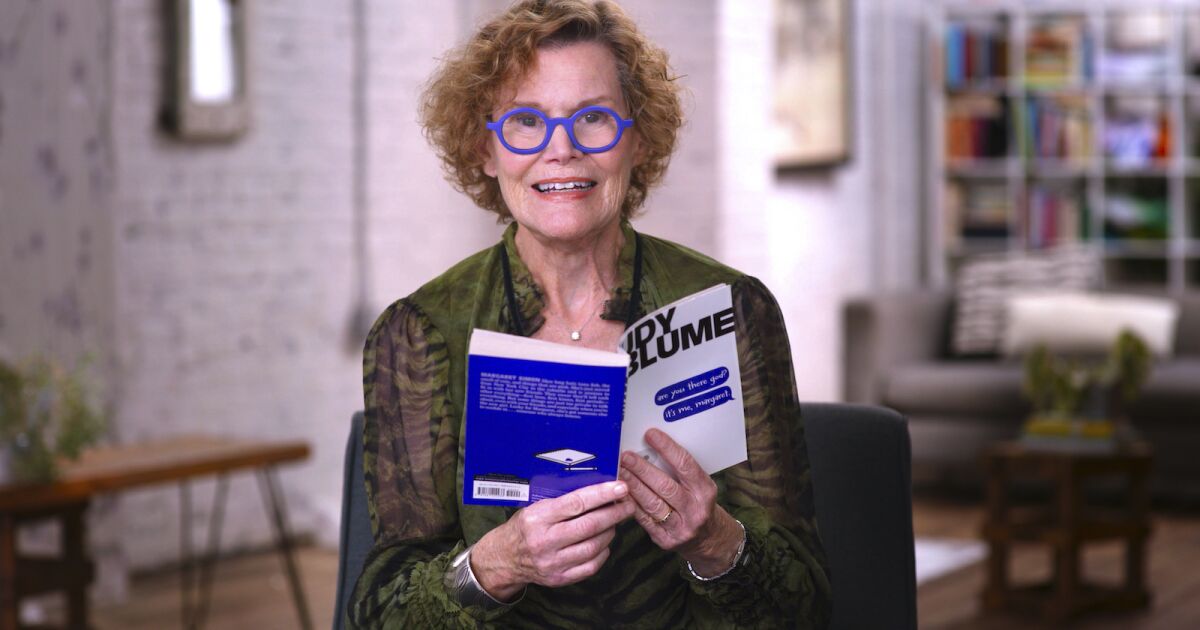
In the more than 50 years that Judy Blume has been a bestselling author, she has endured wave after wave of bans and backlashes, provoked by parents organizations outraged by how honest her characters can be about their desires and their bodies. Yet her pioneering young adult novels like “Are You There God? It’s Me, Margaret,” “Blubber” and “Forever…” still get read, generation after generation, because the adolescents in Blume’s stories talk like real kids: moody, anxious and preoccupied with the wrenching physical and emotional changes of growing up.
Davina Pardo and Leah Wolchok’s touching documentary “Judy Blume Forever” is anchored by a comprehensive conversation with Blume, now in her 80s and as disarmingly frank and cheery as ever. She looks back at her life and career, and discusses how they intertwined in ways that inspired her best work. A suburban housewife and aspiring writer in the 1960s, Blume hit on the idea of writing from the perspective of the child she used to be and the children she saw every day. Her audience — used to simplistic books about teen detectives and heroic animals — could tell right away these novels were different. They spread the world and turned reading Blume into a rite of passage.
Pardo and Wolchok supplement their Blume interview with input from her now-grown children and some famous fans — from actors such as Lena Dunham and Molly Ringwald to writers including Mary H.K. Choi and Jacqueline Woodson. They all offer their own insights into the feeling of sitting alone with a Blume book, reading words that seemed to describe situations directly pulled from their own lives — but which no one had ever articulated to them before.
Throughout the film, Pardo and Wolchok include interviews with some of the people who wrote letters to Blume, and include scenes of Blume rereading those letters today — as well as her reading her own replies, because she was unusually diligent about answering fan mail. The letters are full of confessions and questions. Even today, Blume’s readers often see her as the one adult who isn’t actively trying to shelter them from the truth.
“Judy Blume Forever” also gets into the efforts to ban her books from public libraries in the Reagan era — and again today. The story of the censorship campaigns and the story of Blume’s correspondence are what really elevate this documentary from being just another nice movie about a beloved artist. There’s something else being expressed here, having to do with the power of great writing to connect with people in ways sometimes so intense that it’s scary. That’s why even when Blume’s books get pulled from shelves, kids still pass them around, with certain pages dogeared and passages circled. Because some things can’t be suppressed.
‘Judy Blume Forever’
Not rated
Running time: 1 hour, 37 minutes
Playing: Starts April 21, Laemmle Royal, West Los Angeles; also available on Prime Video

In the more than 50 years that Judy Blume has been a bestselling author, she has endured wave after wave of bans and backlashes, provoked by parents organizations outraged by how honest her characters can be about their desires and their bodies. Yet her pioneering young adult novels like “Are You There God? It’s Me, Margaret,” “Blubber” and “Forever…” still get read, generation after generation, because the adolescents in Blume’s stories talk like real kids: moody, anxious and preoccupied with the wrenching physical and emotional changes of growing up.
Davina Pardo and Leah Wolchok’s touching documentary “Judy Blume Forever” is anchored by a comprehensive conversation with Blume, now in her 80s and as disarmingly frank and cheery as ever. She looks back at her life and career, and discusses how they intertwined in ways that inspired her best work. A suburban housewife and aspiring writer in the 1960s, Blume hit on the idea of writing from the perspective of the child she used to be and the children she saw every day. Her audience — used to simplistic books about teen detectives and heroic animals — could tell right away these novels were different. They spread the world and turned reading Blume into a rite of passage.
Pardo and Wolchok supplement their Blume interview with input from her now-grown children and some famous fans — from actors such as Lena Dunham and Molly Ringwald to writers including Mary H.K. Choi and Jacqueline Woodson. They all offer their own insights into the feeling of sitting alone with a Blume book, reading words that seemed to describe situations directly pulled from their own lives — but which no one had ever articulated to them before.
Throughout the film, Pardo and Wolchok include interviews with some of the people who wrote letters to Blume, and include scenes of Blume rereading those letters today — as well as her reading her own replies, because she was unusually diligent about answering fan mail. The letters are full of confessions and questions. Even today, Blume’s readers often see her as the one adult who isn’t actively trying to shelter them from the truth.
“Judy Blume Forever” also gets into the efforts to ban her books from public libraries in the Reagan era — and again today. The story of the censorship campaigns and the story of Blume’s correspondence are what really elevate this documentary from being just another nice movie about a beloved artist. There’s something else being expressed here, having to do with the power of great writing to connect with people in ways sometimes so intense that it’s scary. That’s why even when Blume’s books get pulled from shelves, kids still pass them around, with certain pages dogeared and passages circled. Because some things can’t be suppressed.
‘Judy Blume Forever’
Not rated
Running time: 1 hour, 37 minutes
Playing: Starts April 21, Laemmle Royal, West Los Angeles; also available on Prime Video

In the more than 50 years that Judy Blume has been a bestselling author, she has endured wave after wave of bans and backlashes, provoked by parents organizations outraged by how honest her characters can be about their desires and their bodies. Yet her pioneering young adult novels like “Are You There God? It’s Me, Margaret,” “Blubber” and “Forever…” still get read, generation after generation, because the adolescents in Blume’s stories talk like real kids: moody, anxious and preoccupied with the wrenching physical and emotional changes of growing up.
Davina Pardo and Leah Wolchok’s touching documentary “Judy Blume Forever” is anchored by a comprehensive conversation with Blume, now in her 80s and as disarmingly frank and cheery as ever. She looks back at her life and career, and discusses how they intertwined in ways that inspired her best work. A suburban housewife and aspiring writer in the 1960s, Blume hit on the idea of writing from the perspective of the child she used to be and the children she saw every day. Her audience — used to simplistic books about teen detectives and heroic animals — could tell right away these novels were different. They spread the world and turned reading Blume into a rite of passage.
Pardo and Wolchok supplement their Blume interview with input from her now-grown children and some famous fans — from actors such as Lena Dunham and Molly Ringwald to writers including Mary H.K. Choi and Jacqueline Woodson. They all offer their own insights into the feeling of sitting alone with a Blume book, reading words that seemed to describe situations directly pulled from their own lives — but which no one had ever articulated to them before.
Throughout the film, Pardo and Wolchok include interviews with some of the people who wrote letters to Blume, and include scenes of Blume rereading those letters today — as well as her reading her own replies, because she was unusually diligent about answering fan mail. The letters are full of confessions and questions. Even today, Blume’s readers often see her as the one adult who isn’t actively trying to shelter them from the truth.
“Judy Blume Forever” also gets into the efforts to ban her books from public libraries in the Reagan era — and again today. The story of the censorship campaigns and the story of Blume’s correspondence are what really elevate this documentary from being just another nice movie about a beloved artist. There’s something else being expressed here, having to do with the power of great writing to connect with people in ways sometimes so intense that it’s scary. That’s why even when Blume’s books get pulled from shelves, kids still pass them around, with certain pages dogeared and passages circled. Because some things can’t be suppressed.
‘Judy Blume Forever’
Not rated
Running time: 1 hour, 37 minutes
Playing: Starts April 21, Laemmle Royal, West Los Angeles; also available on Prime Video
In the more than 50 years that Judy Blume has been a bestselling author, she has endured wave after wave of bans and backlashes, provoked by parents organizations outraged by how honest her characters can be about their desires and their bodies. Yet her pioneering young adult novels like “Are You There God? It’s Me, Margaret,” “Blubber” and “Forever…” still get read, generation after generation, because the adolescents in Blume’s stories talk like real kids: moody, anxious and preoccupied with the wrenching physical and emotional changes of growing up.
Davina Pardo and Leah Wolchok’s touching documentary “Judy Blume Forever” is anchored by a comprehensive conversation with Blume, now in her 80s and as disarmingly frank and cheery as ever. She looks back at her life and career, and discusses how they intertwined in ways that inspired her best work. A suburban housewife and aspiring writer in the 1960s, Blume hit on the idea of writing from the perspective of the child she used to be and the children she saw every day. Her audience — used to simplistic books about teen detectives and heroic animals — could tell right away these novels were different. They spread the world and turned reading Blume into a rite of passage.
Pardo and Wolchok supplement their Blume interview with input from her now-grown children and some famous fans — from actors such as Lena Dunham and Molly Ringwald to writers including Mary H.K. Choi and Jacqueline Woodson. They all offer their own insights into the feeling of sitting alone with a Blume book, reading words that seemed to describe situations directly pulled from their own lives — but which no one had ever articulated to them before.
Throughout the film, Pardo and Wolchok include interviews with some of the people who wrote letters to Blume, and include scenes of Blume rereading those letters today — as well as her reading her own replies, because she was unusually diligent about answering fan mail. The letters are full of confessions and questions. Even today, Blume’s readers often see her as the one adult who isn’t actively trying to shelter them from the truth.
“Judy Blume Forever” also gets into the efforts to ban her books from public libraries in the Reagan era — and again today. The story of the censorship campaigns and the story of Blume’s correspondence are what really elevate this documentary from being just another nice movie about a beloved artist. There’s something else being expressed here, having to do with the power of great writing to connect with people in ways sometimes so intense that it’s scary. That’s why even when Blume’s books get pulled from shelves, kids still pass them around, with certain pages dogeared and passages circled. Because some things can’t be suppressed.
‘Judy Blume Forever’
Not rated
Running time: 1 hour, 37 minutes
Playing: Starts April 21, Laemmle Royal, West Los Angeles; also available on Prime Video

In the more than 50 years that Judy Blume has been a bestselling author, she has endured wave after wave of bans and backlashes, provoked by parents organizations outraged by how honest her characters can be about their desires and their bodies. Yet her pioneering young adult novels like “Are You There God? It’s Me, Margaret,” “Blubber” and “Forever…” still get read, generation after generation, because the adolescents in Blume’s stories talk like real kids: moody, anxious and preoccupied with the wrenching physical and emotional changes of growing up.
Davina Pardo and Leah Wolchok’s touching documentary “Judy Blume Forever” is anchored by a comprehensive conversation with Blume, now in her 80s and as disarmingly frank and cheery as ever. She looks back at her life and career, and discusses how they intertwined in ways that inspired her best work. A suburban housewife and aspiring writer in the 1960s, Blume hit on the idea of writing from the perspective of the child she used to be and the children she saw every day. Her audience — used to simplistic books about teen detectives and heroic animals — could tell right away these novels were different. They spread the world and turned reading Blume into a rite of passage.
Pardo and Wolchok supplement their Blume interview with input from her now-grown children and some famous fans — from actors such as Lena Dunham and Molly Ringwald to writers including Mary H.K. Choi and Jacqueline Woodson. They all offer their own insights into the feeling of sitting alone with a Blume book, reading words that seemed to describe situations directly pulled from their own lives — but which no one had ever articulated to them before.
Throughout the film, Pardo and Wolchok include interviews with some of the people who wrote letters to Blume, and include scenes of Blume rereading those letters today — as well as her reading her own replies, because she was unusually diligent about answering fan mail. The letters are full of confessions and questions. Even today, Blume’s readers often see her as the one adult who isn’t actively trying to shelter them from the truth.
“Judy Blume Forever” also gets into the efforts to ban her books from public libraries in the Reagan era — and again today. The story of the censorship campaigns and the story of Blume’s correspondence are what really elevate this documentary from being just another nice movie about a beloved artist. There’s something else being expressed here, having to do with the power of great writing to connect with people in ways sometimes so intense that it’s scary. That’s why even when Blume’s books get pulled from shelves, kids still pass them around, with certain pages dogeared and passages circled. Because some things can’t be suppressed.
‘Judy Blume Forever’
Not rated
Running time: 1 hour, 37 minutes
Playing: Starts April 21, Laemmle Royal, West Los Angeles; also available on Prime Video
In the more than 50 years that Judy Blume has been a bestselling author, she has endured wave after wave of bans and backlashes, provoked by parents organizations outraged by how honest her characters can be about their desires and their bodies. Yet her pioneering young adult novels like “Are You There God? It’s Me, Margaret,” “Blubber” and “Forever…” still get read, generation after generation, because the adolescents in Blume’s stories talk like real kids: moody, anxious and preoccupied with the wrenching physical and emotional changes of growing up.
Davina Pardo and Leah Wolchok’s touching documentary “Judy Blume Forever” is anchored by a comprehensive conversation with Blume, now in her 80s and as disarmingly frank and cheery as ever. She looks back at her life and career, and discusses how they intertwined in ways that inspired her best work. A suburban housewife and aspiring writer in the 1960s, Blume hit on the idea of writing from the perspective of the child she used to be and the children she saw every day. Her audience — used to simplistic books about teen detectives and heroic animals — could tell right away these novels were different. They spread the world and turned reading Blume into a rite of passage.
Pardo and Wolchok supplement their Blume interview with input from her now-grown children and some famous fans — from actors such as Lena Dunham and Molly Ringwald to writers including Mary H.K. Choi and Jacqueline Woodson. They all offer their own insights into the feeling of sitting alone with a Blume book, reading words that seemed to describe situations directly pulled from their own lives — but which no one had ever articulated to them before.
Throughout the film, Pardo and Wolchok include interviews with some of the people who wrote letters to Blume, and include scenes of Blume rereading those letters today — as well as her reading her own replies, because she was unusually diligent about answering fan mail. The letters are full of confessions and questions. Even today, Blume’s readers often see her as the one adult who isn’t actively trying to shelter them from the truth.
“Judy Blume Forever” also gets into the efforts to ban her books from public libraries in the Reagan era — and again today. The story of the censorship campaigns and the story of Blume’s correspondence are what really elevate this documentary from being just another nice movie about a beloved artist. There’s something else being expressed here, having to do with the power of great writing to connect with people in ways sometimes so intense that it’s scary. That’s why even when Blume’s books get pulled from shelves, kids still pass them around, with certain pages dogeared and passages circled. Because some things can’t be suppressed.
‘Judy Blume Forever’
Not rated
Running time: 1 hour, 37 minutes
Playing: Starts April 21, Laemmle Royal, West Los Angeles; also available on Prime Video
In the more than 50 years that Judy Blume has been a bestselling author, she has endured wave after wave of bans and backlashes, provoked by parents organizations outraged by how honest her characters can be about their desires and their bodies. Yet her pioneering young adult novels like “Are You There God? It’s Me, Margaret,” “Blubber” and “Forever…” still get read, generation after generation, because the adolescents in Blume’s stories talk like real kids: moody, anxious and preoccupied with the wrenching physical and emotional changes of growing up.
Davina Pardo and Leah Wolchok’s touching documentary “Judy Blume Forever” is anchored by a comprehensive conversation with Blume, now in her 80s and as disarmingly frank and cheery as ever. She looks back at her life and career, and discusses how they intertwined in ways that inspired her best work. A suburban housewife and aspiring writer in the 1960s, Blume hit on the idea of writing from the perspective of the child she used to be and the children she saw every day. Her audience — used to simplistic books about teen detectives and heroic animals — could tell right away these novels were different. They spread the world and turned reading Blume into a rite of passage.
Pardo and Wolchok supplement their Blume interview with input from her now-grown children and some famous fans — from actors such as Lena Dunham and Molly Ringwald to writers including Mary H.K. Choi and Jacqueline Woodson. They all offer their own insights into the feeling of sitting alone with a Blume book, reading words that seemed to describe situations directly pulled from their own lives — but which no one had ever articulated to them before.
Throughout the film, Pardo and Wolchok include interviews with some of the people who wrote letters to Blume, and include scenes of Blume rereading those letters today — as well as her reading her own replies, because she was unusually diligent about answering fan mail. The letters are full of confessions and questions. Even today, Blume’s readers often see her as the one adult who isn’t actively trying to shelter them from the truth.
“Judy Blume Forever” also gets into the efforts to ban her books from public libraries in the Reagan era — and again today. The story of the censorship campaigns and the story of Blume’s correspondence are what really elevate this documentary from being just another nice movie about a beloved artist. There’s something else being expressed here, having to do with the power of great writing to connect with people in ways sometimes so intense that it’s scary. That’s why even when Blume’s books get pulled from shelves, kids still pass them around, with certain pages dogeared and passages circled. Because some things can’t be suppressed.
‘Judy Blume Forever’
Not rated
Running time: 1 hour, 37 minutes
Playing: Starts April 21, Laemmle Royal, West Los Angeles; also available on Prime Video
In the more than 50 years that Judy Blume has been a bestselling author, she has endured wave after wave of bans and backlashes, provoked by parents organizations outraged by how honest her characters can be about their desires and their bodies. Yet her pioneering young adult novels like “Are You There God? It’s Me, Margaret,” “Blubber” and “Forever…” still get read, generation after generation, because the adolescents in Blume’s stories talk like real kids: moody, anxious and preoccupied with the wrenching physical and emotional changes of growing up.
Davina Pardo and Leah Wolchok’s touching documentary “Judy Blume Forever” is anchored by a comprehensive conversation with Blume, now in her 80s and as disarmingly frank and cheery as ever. She looks back at her life and career, and discusses how they intertwined in ways that inspired her best work. A suburban housewife and aspiring writer in the 1960s, Blume hit on the idea of writing from the perspective of the child she used to be and the children she saw every day. Her audience — used to simplistic books about teen detectives and heroic animals — could tell right away these novels were different. They spread the world and turned reading Blume into a rite of passage.
Pardo and Wolchok supplement their Blume interview with input from her now-grown children and some famous fans — from actors such as Lena Dunham and Molly Ringwald to writers including Mary H.K. Choi and Jacqueline Woodson. They all offer their own insights into the feeling of sitting alone with a Blume book, reading words that seemed to describe situations directly pulled from their own lives — but which no one had ever articulated to them before.
Throughout the film, Pardo and Wolchok include interviews with some of the people who wrote letters to Blume, and include scenes of Blume rereading those letters today — as well as her reading her own replies, because she was unusually diligent about answering fan mail. The letters are full of confessions and questions. Even today, Blume’s readers often see her as the one adult who isn’t actively trying to shelter them from the truth.
“Judy Blume Forever” also gets into the efforts to ban her books from public libraries in the Reagan era — and again today. The story of the censorship campaigns and the story of Blume’s correspondence are what really elevate this documentary from being just another nice movie about a beloved artist. There’s something else being expressed here, having to do with the power of great writing to connect with people in ways sometimes so intense that it’s scary. That’s why even when Blume’s books get pulled from shelves, kids still pass them around, with certain pages dogeared and passages circled. Because some things can’t be suppressed.
‘Judy Blume Forever’
Not rated
Running time: 1 hour, 37 minutes
Playing: Starts April 21, Laemmle Royal, West Los Angeles; also available on Prime Video