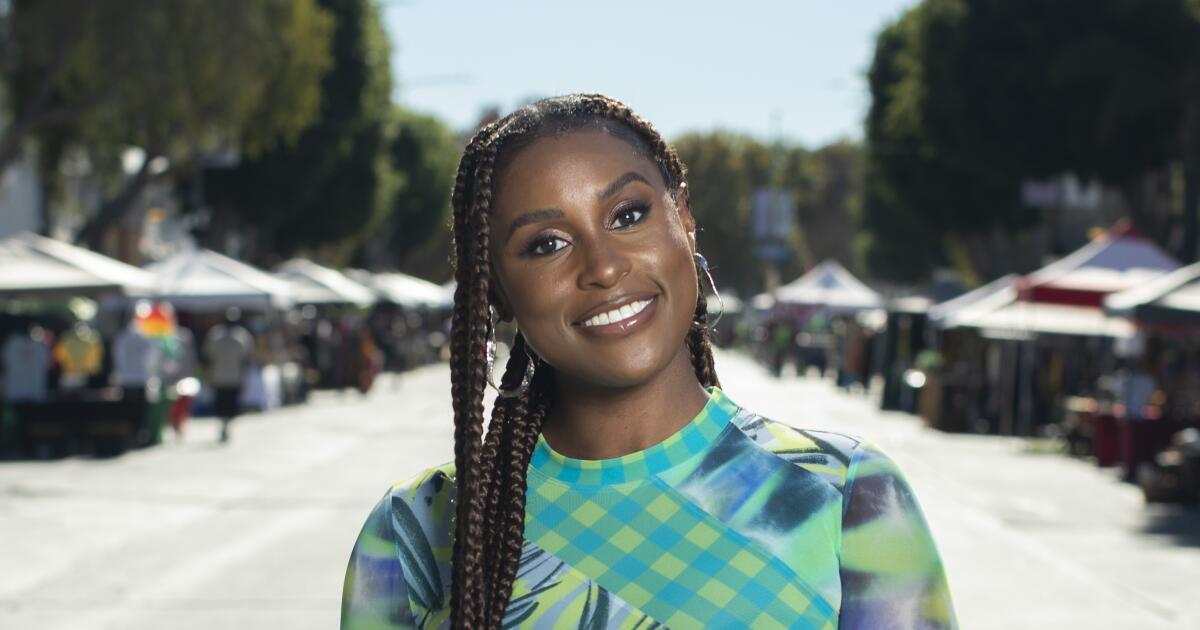

Issa Rae says she went from being “stupidly optimistic” early in her career to pessimistic about Black stories being made a priority in Hollywood.
Despite starring in three of last year’s critically acclaimed and Oscar-nominated films — “Barbie,” “American Fiction” and “Spider-Man: Across the Spider-Verse” — Rae still worries about her outlook in the ever-changing industry, particularly in television, and her place in it.
The “Insecure” creator, writer and star expressed concern in her cover story for Net-a-Porter’s digital title, Porter, telling Otegha Uwagba that the encroachment of streamers and the influence of Wall Street investors could lead to greater homogeneity and fewer Black stories coming to fruition. And, perhaps, it’s a push for her to be more independent in the wake of her Max series “Rap S—” being canceled earlier this month after two seasons.
“It’s already happening,” the 39-year-old said. “You’re seeing so many Black shows get canceled, you’re seeing so many executives — especially on the DEI [diversity, equity and inclusion] side — get canned. You’re seeing very clearly now that our stories are less of a priority.”
That narrative plays in the social satire about publishing, “American Fiction,” which touches on feelings of selling out and pandering to white audiences and biases. Rae also said she remembers feeling “”enraged about what wasn’t being made, and being mad at who was in the spotlight” when she got her start online with “The Misadventures of Awkward Black Girl.”
Rae’s remarks come on the heels of viral statements made by “Empire” and “The Color Purple” star Taraji P. Henson, who lamented the state of Black women in Hollywood late last year — calling out the gaping pay disparity and getting broad support from colleagues.
“I’m just tired of working so hard, being gracious at what I do, getting paid a fraction of the cost,” Henson told Gayle King on SiriusXM. “I’m tired of hearing my sisters say the same thing over and over. You get tired. I hear people go, ‘You work a lot.’ Well, I have to. The math ain’t mathing.”
As Uwagba pointed out in the profile, Hollywood studios are still falling short of their 2020 pledges to diversify and struggling to translate last year’s women-driven successes into actual gains in diversity, according to the findings of a recent study by USC’s Annenberg Inclusion Initiative. The study also found that progress in hiring women and people of color as film directors stalled in 2023.
“I am pessimistic, because there’s no one holding anybody accountable — and I can, sure, but also at what cost? I can’t force you to make my stuff. It’s made me take more steps to try to be independent down the line if I have to,” Rae said.
Rae noted that she’s still writing a few projects, including one for herself and another to produce and create with others. She felt inspired to get back to work after the end of Hollywood’s debilitating labor strikes last year, and is “embracing that challenge.”
“The industry is in flux, so it’s really inspired me to focus and hone in on what stories I want to tell. I’ve been laser-focused on getting these projects up and running,” added the Hoorae Media leader, whose production company — like her early Stanford University theater company — is focused on telling Black stories.
But even that might be short-lived. The Emmy and Golden Globe Award winner might be looking to pivot down the line
“I want, in 10 years’ time, to be transitioning towards service. This is fun, but at some point, it’ll feel like not enough — and I want to be able to do more,” Rae said.

Issa Rae says she went from being “stupidly optimistic” early in her career to pessimistic about Black stories being made a priority in Hollywood.
Despite starring in three of last year’s critically acclaimed and Oscar-nominated films — “Barbie,” “American Fiction” and “Spider-Man: Across the Spider-Verse” — Rae still worries about her outlook in the ever-changing industry, particularly in television, and her place in it.
The “Insecure” creator, writer and star expressed concern in her cover story for Net-a-Porter’s digital title, Porter, telling Otegha Uwagba that the encroachment of streamers and the influence of Wall Street investors could lead to greater homogeneity and fewer Black stories coming to fruition. And, perhaps, it’s a push for her to be more independent in the wake of her Max series “Rap S—” being canceled earlier this month after two seasons.
“It’s already happening,” the 39-year-old said. “You’re seeing so many Black shows get canceled, you’re seeing so many executives — especially on the DEI [diversity, equity and inclusion] side — get canned. You’re seeing very clearly now that our stories are less of a priority.”
That narrative plays in the social satire about publishing, “American Fiction,” which touches on feelings of selling out and pandering to white audiences and biases. Rae also said she remembers feeling “”enraged about what wasn’t being made, and being mad at who was in the spotlight” when she got her start online with “The Misadventures of Awkward Black Girl.”
Rae’s remarks come on the heels of viral statements made by “Empire” and “The Color Purple” star Taraji P. Henson, who lamented the state of Black women in Hollywood late last year — calling out the gaping pay disparity and getting broad support from colleagues.
“I’m just tired of working so hard, being gracious at what I do, getting paid a fraction of the cost,” Henson told Gayle King on SiriusXM. “I’m tired of hearing my sisters say the same thing over and over. You get tired. I hear people go, ‘You work a lot.’ Well, I have to. The math ain’t mathing.”
As Uwagba pointed out in the profile, Hollywood studios are still falling short of their 2020 pledges to diversify and struggling to translate last year’s women-driven successes into actual gains in diversity, according to the findings of a recent study by USC’s Annenberg Inclusion Initiative. The study also found that progress in hiring women and people of color as film directors stalled in 2023.
“I am pessimistic, because there’s no one holding anybody accountable — and I can, sure, but also at what cost? I can’t force you to make my stuff. It’s made me take more steps to try to be independent down the line if I have to,” Rae said.
Rae noted that she’s still writing a few projects, including one for herself and another to produce and create with others. She felt inspired to get back to work after the end of Hollywood’s debilitating labor strikes last year, and is “embracing that challenge.”
“The industry is in flux, so it’s really inspired me to focus and hone in on what stories I want to tell. I’ve been laser-focused on getting these projects up and running,” added the Hoorae Media leader, whose production company — like her early Stanford University theater company — is focused on telling Black stories.
But even that might be short-lived. The Emmy and Golden Globe Award winner might be looking to pivot down the line
“I want, in 10 years’ time, to be transitioning towards service. This is fun, but at some point, it’ll feel like not enough — and I want to be able to do more,” Rae said.

Issa Rae says she went from being “stupidly optimistic” early in her career to pessimistic about Black stories being made a priority in Hollywood.
Despite starring in three of last year’s critically acclaimed and Oscar-nominated films — “Barbie,” “American Fiction” and “Spider-Man: Across the Spider-Verse” — Rae still worries about her outlook in the ever-changing industry, particularly in television, and her place in it.
The “Insecure” creator, writer and star expressed concern in her cover story for Net-a-Porter’s digital title, Porter, telling Otegha Uwagba that the encroachment of streamers and the influence of Wall Street investors could lead to greater homogeneity and fewer Black stories coming to fruition. And, perhaps, it’s a push for her to be more independent in the wake of her Max series “Rap S—” being canceled earlier this month after two seasons.
“It’s already happening,” the 39-year-old said. “You’re seeing so many Black shows get canceled, you’re seeing so many executives — especially on the DEI [diversity, equity and inclusion] side — get canned. You’re seeing very clearly now that our stories are less of a priority.”
That narrative plays in the social satire about publishing, “American Fiction,” which touches on feelings of selling out and pandering to white audiences and biases. Rae also said she remembers feeling “”enraged about what wasn’t being made, and being mad at who was in the spotlight” when she got her start online with “The Misadventures of Awkward Black Girl.”
Rae’s remarks come on the heels of viral statements made by “Empire” and “The Color Purple” star Taraji P. Henson, who lamented the state of Black women in Hollywood late last year — calling out the gaping pay disparity and getting broad support from colleagues.
“I’m just tired of working so hard, being gracious at what I do, getting paid a fraction of the cost,” Henson told Gayle King on SiriusXM. “I’m tired of hearing my sisters say the same thing over and over. You get tired. I hear people go, ‘You work a lot.’ Well, I have to. The math ain’t mathing.”
As Uwagba pointed out in the profile, Hollywood studios are still falling short of their 2020 pledges to diversify and struggling to translate last year’s women-driven successes into actual gains in diversity, according to the findings of a recent study by USC’s Annenberg Inclusion Initiative. The study also found that progress in hiring women and people of color as film directors stalled in 2023.
“I am pessimistic, because there’s no one holding anybody accountable — and I can, sure, but also at what cost? I can’t force you to make my stuff. It’s made me take more steps to try to be independent down the line if I have to,” Rae said.
Rae noted that she’s still writing a few projects, including one for herself and another to produce and create with others. She felt inspired to get back to work after the end of Hollywood’s debilitating labor strikes last year, and is “embracing that challenge.”
“The industry is in flux, so it’s really inspired me to focus and hone in on what stories I want to tell. I’ve been laser-focused on getting these projects up and running,” added the Hoorae Media leader, whose production company — like her early Stanford University theater company — is focused on telling Black stories.
But even that might be short-lived. The Emmy and Golden Globe Award winner might be looking to pivot down the line
“I want, in 10 years’ time, to be transitioning towards service. This is fun, but at some point, it’ll feel like not enough — and I want to be able to do more,” Rae said.
Issa Rae says she went from being “stupidly optimistic” early in her career to pessimistic about Black stories being made a priority in Hollywood.
Despite starring in three of last year’s critically acclaimed and Oscar-nominated films — “Barbie,” “American Fiction” and “Spider-Man: Across the Spider-Verse” — Rae still worries about her outlook in the ever-changing industry, particularly in television, and her place in it.
The “Insecure” creator, writer and star expressed concern in her cover story for Net-a-Porter’s digital title, Porter, telling Otegha Uwagba that the encroachment of streamers and the influence of Wall Street investors could lead to greater homogeneity and fewer Black stories coming to fruition. And, perhaps, it’s a push for her to be more independent in the wake of her Max series “Rap S—” being canceled earlier this month after two seasons.
“It’s already happening,” the 39-year-old said. “You’re seeing so many Black shows get canceled, you’re seeing so many executives — especially on the DEI [diversity, equity and inclusion] side — get canned. You’re seeing very clearly now that our stories are less of a priority.”
That narrative plays in the social satire about publishing, “American Fiction,” which touches on feelings of selling out and pandering to white audiences and biases. Rae also said she remembers feeling “”enraged about what wasn’t being made, and being mad at who was in the spotlight” when she got her start online with “The Misadventures of Awkward Black Girl.”
Rae’s remarks come on the heels of viral statements made by “Empire” and “The Color Purple” star Taraji P. Henson, who lamented the state of Black women in Hollywood late last year — calling out the gaping pay disparity and getting broad support from colleagues.
“I’m just tired of working so hard, being gracious at what I do, getting paid a fraction of the cost,” Henson told Gayle King on SiriusXM. “I’m tired of hearing my sisters say the same thing over and over. You get tired. I hear people go, ‘You work a lot.’ Well, I have to. The math ain’t mathing.”
As Uwagba pointed out in the profile, Hollywood studios are still falling short of their 2020 pledges to diversify and struggling to translate last year’s women-driven successes into actual gains in diversity, according to the findings of a recent study by USC’s Annenberg Inclusion Initiative. The study also found that progress in hiring women and people of color as film directors stalled in 2023.
“I am pessimistic, because there’s no one holding anybody accountable — and I can, sure, but also at what cost? I can’t force you to make my stuff. It’s made me take more steps to try to be independent down the line if I have to,” Rae said.
Rae noted that she’s still writing a few projects, including one for herself and another to produce and create with others. She felt inspired to get back to work after the end of Hollywood’s debilitating labor strikes last year, and is “embracing that challenge.”
“The industry is in flux, so it’s really inspired me to focus and hone in on what stories I want to tell. I’ve been laser-focused on getting these projects up and running,” added the Hoorae Media leader, whose production company — like her early Stanford University theater company — is focused on telling Black stories.
But even that might be short-lived. The Emmy and Golden Globe Award winner might be looking to pivot down the line
“I want, in 10 years’ time, to be transitioning towards service. This is fun, but at some point, it’ll feel like not enough — and I want to be able to do more,” Rae said.