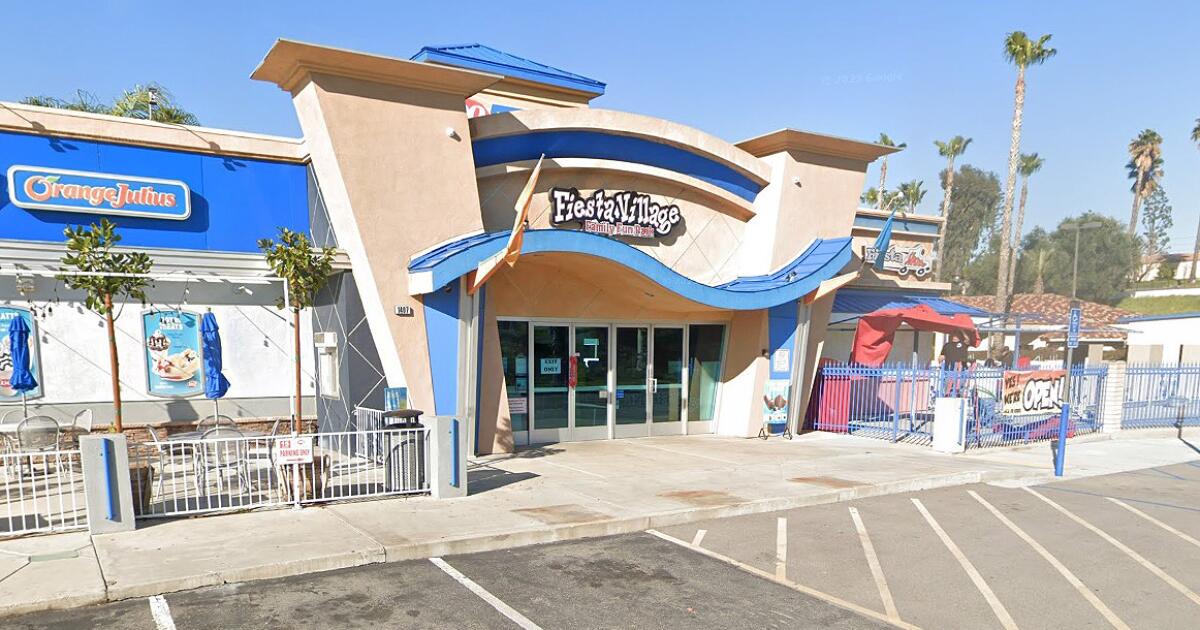
After 52 years of providing the Inland Empire with mini golf, roller skating and go-karting, Fiesta Village Fun Park is shutting down.
The Colton amusement park said in a statement Tuesday that it will remain open to the public for its final days this weekend.
“This decision has not been easy. For decades, Fiesta Village has been a place where families gathered, friendships grew and memories were made,” the company said in the statement.
Owner Michelle O’Brien told SFGate that rising operation costs and declining attendance were the main reasons behind the closure.
The park first opened in 1974, with a mini golf course, waterslides and go-karts. O’Brien purchased it in 2002 and has operated it ever since. Under her and her husband Patrick’s ownership, the park added attractions such as the Scrambler and Tilt-a-Whirl, along with laser tag and a roller skating rink.
Since the COVID-19 pandemic, the theme park industry has struggled to fully rebound. Rising costs and a lack of tourism have made the business increasingly difficult to sustain.
Last year, California’s Great America, a Silicon Valley park operated by Six Flags Entertainment, had to cut its workforce and shorten its season. Even theme park giants such as Disneyland are seeing slight downturns in attendance. Disney previously said its U.S. theme parks saw a 1% drop in attendance compared with the prior year, which the company attributed to “continued softness” in attendance by international visitors. Disneyland’s Anaheim park also recently began offering $71 tickets to draw more local visitors.
For parks like Fiesta Village, the rising cost of essentials such as food ultimately makes survival harder, said Dennis Speigel, president of International Theme Park Services, a consulting firm. He added that competition from nearby parks is also drawing business away. As a Southern California venue, Fiesta Village sits within driving distance of destinations such as Knott’s Berry Farm and Disneyland.
“It’s hard for smaller parks to compete with the big entities that surround them. Particularly now as we continue to see this amazing growth in technology for rides and attractions,” Speigel said. “Big attractions are very expensive propositions for parks to put in, and parks like Fiesta Village can’t keep up with that.”
Given the current economic uncertainty, Speigel said, theme parks will probably see a “flat year” — meaning no major growth or decline industrywide.
After Fiesta Village’s final celebration with the public on Friday and Saturday, the park will host a private event Sunday before shutting down for good. It’s unclear what will happen to the property afterward.
“Thank you for allowing us to be part of your lives and your family traditions,” the company wrote. “We will always cherish the role Fiesta Village has played in bringing people together.”
Times staff writer Samantha Masunaga contributed to this report.

After 52 years of providing the Inland Empire with mini golf, roller skating and go-karting, Fiesta Village Fun Park is shutting down.
The Colton amusement park said in a statement Tuesday that it will remain open to the public for its final days this weekend.
“This decision has not been easy. For decades, Fiesta Village has been a place where families gathered, friendships grew and memories were made,” the company said in the statement.
Owner Michelle O’Brien told SFGate that rising operation costs and declining attendance were the main reasons behind the closure.
The park first opened in 1974, with a mini golf course, waterslides and go-karts. O’Brien purchased it in 2002 and has operated it ever since. Under her and her husband Patrick’s ownership, the park added attractions such as the Scrambler and Tilt-a-Whirl, along with laser tag and a roller skating rink.
Since the COVID-19 pandemic, the theme park industry has struggled to fully rebound. Rising costs and a lack of tourism have made the business increasingly difficult to sustain.
Last year, California’s Great America, a Silicon Valley park operated by Six Flags Entertainment, had to cut its workforce and shorten its season. Even theme park giants such as Disneyland are seeing slight downturns in attendance. Disney previously said its U.S. theme parks saw a 1% drop in attendance compared with the prior year, which the company attributed to “continued softness” in attendance by international visitors. Disneyland’s Anaheim park also recently began offering $71 tickets to draw more local visitors.
For parks like Fiesta Village, the rising cost of essentials such as food ultimately makes survival harder, said Dennis Speigel, president of International Theme Park Services, a consulting firm. He added that competition from nearby parks is also drawing business away. As a Southern California venue, Fiesta Village sits within driving distance of destinations such as Knott’s Berry Farm and Disneyland.
“It’s hard for smaller parks to compete with the big entities that surround them. Particularly now as we continue to see this amazing growth in technology for rides and attractions,” Speigel said. “Big attractions are very expensive propositions for parks to put in, and parks like Fiesta Village can’t keep up with that.”
Given the current economic uncertainty, Speigel said, theme parks will probably see a “flat year” — meaning no major growth or decline industrywide.
After Fiesta Village’s final celebration with the public on Friday and Saturday, the park will host a private event Sunday before shutting down for good. It’s unclear what will happen to the property afterward.
“Thank you for allowing us to be part of your lives and your family traditions,” the company wrote. “We will always cherish the role Fiesta Village has played in bringing people together.”
Times staff writer Samantha Masunaga contributed to this report.

After 52 years of providing the Inland Empire with mini golf, roller skating and go-karting, Fiesta Village Fun Park is shutting down.
The Colton amusement park said in a statement Tuesday that it will remain open to the public for its final days this weekend.
“This decision has not been easy. For decades, Fiesta Village has been a place where families gathered, friendships grew and memories were made,” the company said in the statement.
Owner Michelle O’Brien told SFGate that rising operation costs and declining attendance were the main reasons behind the closure.
The park first opened in 1974, with a mini golf course, waterslides and go-karts. O’Brien purchased it in 2002 and has operated it ever since. Under her and her husband Patrick’s ownership, the park added attractions such as the Scrambler and Tilt-a-Whirl, along with laser tag and a roller skating rink.
Since the COVID-19 pandemic, the theme park industry has struggled to fully rebound. Rising costs and a lack of tourism have made the business increasingly difficult to sustain.
Last year, California’s Great America, a Silicon Valley park operated by Six Flags Entertainment, had to cut its workforce and shorten its season. Even theme park giants such as Disneyland are seeing slight downturns in attendance. Disney previously said its U.S. theme parks saw a 1% drop in attendance compared with the prior year, which the company attributed to “continued softness” in attendance by international visitors. Disneyland’s Anaheim park also recently began offering $71 tickets to draw more local visitors.
For parks like Fiesta Village, the rising cost of essentials such as food ultimately makes survival harder, said Dennis Speigel, president of International Theme Park Services, a consulting firm. He added that competition from nearby parks is also drawing business away. As a Southern California venue, Fiesta Village sits within driving distance of destinations such as Knott’s Berry Farm and Disneyland.
“It’s hard for smaller parks to compete with the big entities that surround them. Particularly now as we continue to see this amazing growth in technology for rides and attractions,” Speigel said. “Big attractions are very expensive propositions for parks to put in, and parks like Fiesta Village can’t keep up with that.”
Given the current economic uncertainty, Speigel said, theme parks will probably see a “flat year” — meaning no major growth or decline industrywide.
After Fiesta Village’s final celebration with the public on Friday and Saturday, the park will host a private event Sunday before shutting down for good. It’s unclear what will happen to the property afterward.
“Thank you for allowing us to be part of your lives and your family traditions,” the company wrote. “We will always cherish the role Fiesta Village has played in bringing people together.”
Times staff writer Samantha Masunaga contributed to this report.
After 52 years of providing the Inland Empire with mini golf, roller skating and go-karting, Fiesta Village Fun Park is shutting down.
The Colton amusement park said in a statement Tuesday that it will remain open to the public for its final days this weekend.
“This decision has not been easy. For decades, Fiesta Village has been a place where families gathered, friendships grew and memories were made,” the company said in the statement.
Owner Michelle O’Brien told SFGate that rising operation costs and declining attendance were the main reasons behind the closure.
The park first opened in 1974, with a mini golf course, waterslides and go-karts. O’Brien purchased it in 2002 and has operated it ever since. Under her and her husband Patrick’s ownership, the park added attractions such as the Scrambler and Tilt-a-Whirl, along with laser tag and a roller skating rink.
Since the COVID-19 pandemic, the theme park industry has struggled to fully rebound. Rising costs and a lack of tourism have made the business increasingly difficult to sustain.
Last year, California’s Great America, a Silicon Valley park operated by Six Flags Entertainment, had to cut its workforce and shorten its season. Even theme park giants such as Disneyland are seeing slight downturns in attendance. Disney previously said its U.S. theme parks saw a 1% drop in attendance compared with the prior year, which the company attributed to “continued softness” in attendance by international visitors. Disneyland’s Anaheim park also recently began offering $71 tickets to draw more local visitors.
For parks like Fiesta Village, the rising cost of essentials such as food ultimately makes survival harder, said Dennis Speigel, president of International Theme Park Services, a consulting firm. He added that competition from nearby parks is also drawing business away. As a Southern California venue, Fiesta Village sits within driving distance of destinations such as Knott’s Berry Farm and Disneyland.
“It’s hard for smaller parks to compete with the big entities that surround them. Particularly now as we continue to see this amazing growth in technology for rides and attractions,” Speigel said. “Big attractions are very expensive propositions for parks to put in, and parks like Fiesta Village can’t keep up with that.”
Given the current economic uncertainty, Speigel said, theme parks will probably see a “flat year” — meaning no major growth or decline industrywide.
After Fiesta Village’s final celebration with the public on Friday and Saturday, the park will host a private event Sunday before shutting down for good. It’s unclear what will happen to the property afterward.
“Thank you for allowing us to be part of your lives and your family traditions,” the company wrote. “We will always cherish the role Fiesta Village has played in bringing people together.”
Times staff writer Samantha Masunaga contributed to this report.

After 52 years of providing the Inland Empire with mini golf, roller skating and go-karting, Fiesta Village Fun Park is shutting down.
The Colton amusement park said in a statement Tuesday that it will remain open to the public for its final days this weekend.
“This decision has not been easy. For decades, Fiesta Village has been a place where families gathered, friendships grew and memories were made,” the company said in the statement.
Owner Michelle O’Brien told SFGate that rising operation costs and declining attendance were the main reasons behind the closure.
The park first opened in 1974, with a mini golf course, waterslides and go-karts. O’Brien purchased it in 2002 and has operated it ever since. Under her and her husband Patrick’s ownership, the park added attractions such as the Scrambler and Tilt-a-Whirl, along with laser tag and a roller skating rink.
Since the COVID-19 pandemic, the theme park industry has struggled to fully rebound. Rising costs and a lack of tourism have made the business increasingly difficult to sustain.
Last year, California’s Great America, a Silicon Valley park operated by Six Flags Entertainment, had to cut its workforce and shorten its season. Even theme park giants such as Disneyland are seeing slight downturns in attendance. Disney previously said its U.S. theme parks saw a 1% drop in attendance compared with the prior year, which the company attributed to “continued softness” in attendance by international visitors. Disneyland’s Anaheim park also recently began offering $71 tickets to draw more local visitors.
For parks like Fiesta Village, the rising cost of essentials such as food ultimately makes survival harder, said Dennis Speigel, president of International Theme Park Services, a consulting firm. He added that competition from nearby parks is also drawing business away. As a Southern California venue, Fiesta Village sits within driving distance of destinations such as Knott’s Berry Farm and Disneyland.
“It’s hard for smaller parks to compete with the big entities that surround them. Particularly now as we continue to see this amazing growth in technology for rides and attractions,” Speigel said. “Big attractions are very expensive propositions for parks to put in, and parks like Fiesta Village can’t keep up with that.”
Given the current economic uncertainty, Speigel said, theme parks will probably see a “flat year” — meaning no major growth or decline industrywide.
After Fiesta Village’s final celebration with the public on Friday and Saturday, the park will host a private event Sunday before shutting down for good. It’s unclear what will happen to the property afterward.
“Thank you for allowing us to be part of your lives and your family traditions,” the company wrote. “We will always cherish the role Fiesta Village has played in bringing people together.”
Times staff writer Samantha Masunaga contributed to this report.
After 52 years of providing the Inland Empire with mini golf, roller skating and go-karting, Fiesta Village Fun Park is shutting down.
The Colton amusement park said in a statement Tuesday that it will remain open to the public for its final days this weekend.
“This decision has not been easy. For decades, Fiesta Village has been a place where families gathered, friendships grew and memories were made,” the company said in the statement.
Owner Michelle O’Brien told SFGate that rising operation costs and declining attendance were the main reasons behind the closure.
The park first opened in 1974, with a mini golf course, waterslides and go-karts. O’Brien purchased it in 2002 and has operated it ever since. Under her and her husband Patrick’s ownership, the park added attractions such as the Scrambler and Tilt-a-Whirl, along with laser tag and a roller skating rink.
Since the COVID-19 pandemic, the theme park industry has struggled to fully rebound. Rising costs and a lack of tourism have made the business increasingly difficult to sustain.
Last year, California’s Great America, a Silicon Valley park operated by Six Flags Entertainment, had to cut its workforce and shorten its season. Even theme park giants such as Disneyland are seeing slight downturns in attendance. Disney previously said its U.S. theme parks saw a 1% drop in attendance compared with the prior year, which the company attributed to “continued softness” in attendance by international visitors. Disneyland’s Anaheim park also recently began offering $71 tickets to draw more local visitors.
For parks like Fiesta Village, the rising cost of essentials such as food ultimately makes survival harder, said Dennis Speigel, president of International Theme Park Services, a consulting firm. He added that competition from nearby parks is also drawing business away. As a Southern California venue, Fiesta Village sits within driving distance of destinations such as Knott’s Berry Farm and Disneyland.
“It’s hard for smaller parks to compete with the big entities that surround them. Particularly now as we continue to see this amazing growth in technology for rides and attractions,” Speigel said. “Big attractions are very expensive propositions for parks to put in, and parks like Fiesta Village can’t keep up with that.”
Given the current economic uncertainty, Speigel said, theme parks will probably see a “flat year” — meaning no major growth or decline industrywide.
After Fiesta Village’s final celebration with the public on Friday and Saturday, the park will host a private event Sunday before shutting down for good. It’s unclear what will happen to the property afterward.
“Thank you for allowing us to be part of your lives and your family traditions,” the company wrote. “We will always cherish the role Fiesta Village has played in bringing people together.”
Times staff writer Samantha Masunaga contributed to this report.
After 52 years of providing the Inland Empire with mini golf, roller skating and go-karting, Fiesta Village Fun Park is shutting down.
The Colton amusement park said in a statement Tuesday that it will remain open to the public for its final days this weekend.
“This decision has not been easy. For decades, Fiesta Village has been a place where families gathered, friendships grew and memories were made,” the company said in the statement.
Owner Michelle O’Brien told SFGate that rising operation costs and declining attendance were the main reasons behind the closure.
The park first opened in 1974, with a mini golf course, waterslides and go-karts. O’Brien purchased it in 2002 and has operated it ever since. Under her and her husband Patrick’s ownership, the park added attractions such as the Scrambler and Tilt-a-Whirl, along with laser tag and a roller skating rink.
Since the COVID-19 pandemic, the theme park industry has struggled to fully rebound. Rising costs and a lack of tourism have made the business increasingly difficult to sustain.
Last year, California’s Great America, a Silicon Valley park operated by Six Flags Entertainment, had to cut its workforce and shorten its season. Even theme park giants such as Disneyland are seeing slight downturns in attendance. Disney previously said its U.S. theme parks saw a 1% drop in attendance compared with the prior year, which the company attributed to “continued softness” in attendance by international visitors. Disneyland’s Anaheim park also recently began offering $71 tickets to draw more local visitors.
For parks like Fiesta Village, the rising cost of essentials such as food ultimately makes survival harder, said Dennis Speigel, president of International Theme Park Services, a consulting firm. He added that competition from nearby parks is also drawing business away. As a Southern California venue, Fiesta Village sits within driving distance of destinations such as Knott’s Berry Farm and Disneyland.
“It’s hard for smaller parks to compete with the big entities that surround them. Particularly now as we continue to see this amazing growth in technology for rides and attractions,” Speigel said. “Big attractions are very expensive propositions for parks to put in, and parks like Fiesta Village can’t keep up with that.”
Given the current economic uncertainty, Speigel said, theme parks will probably see a “flat year” — meaning no major growth or decline industrywide.
After Fiesta Village’s final celebration with the public on Friday and Saturday, the park will host a private event Sunday before shutting down for good. It’s unclear what will happen to the property afterward.
“Thank you for allowing us to be part of your lives and your family traditions,” the company wrote. “We will always cherish the role Fiesta Village has played in bringing people together.”
Times staff writer Samantha Masunaga contributed to this report.
After 52 years of providing the Inland Empire with mini golf, roller skating and go-karting, Fiesta Village Fun Park is shutting down.
The Colton amusement park said in a statement Tuesday that it will remain open to the public for its final days this weekend.
“This decision has not been easy. For decades, Fiesta Village has been a place where families gathered, friendships grew and memories were made,” the company said in the statement.
Owner Michelle O’Brien told SFGate that rising operation costs and declining attendance were the main reasons behind the closure.
The park first opened in 1974, with a mini golf course, waterslides and go-karts. O’Brien purchased it in 2002 and has operated it ever since. Under her and her husband Patrick’s ownership, the park added attractions such as the Scrambler and Tilt-a-Whirl, along with laser tag and a roller skating rink.
Since the COVID-19 pandemic, the theme park industry has struggled to fully rebound. Rising costs and a lack of tourism have made the business increasingly difficult to sustain.
Last year, California’s Great America, a Silicon Valley park operated by Six Flags Entertainment, had to cut its workforce and shorten its season. Even theme park giants such as Disneyland are seeing slight downturns in attendance. Disney previously said its U.S. theme parks saw a 1% drop in attendance compared with the prior year, which the company attributed to “continued softness” in attendance by international visitors. Disneyland’s Anaheim park also recently began offering $71 tickets to draw more local visitors.
For parks like Fiesta Village, the rising cost of essentials such as food ultimately makes survival harder, said Dennis Speigel, president of International Theme Park Services, a consulting firm. He added that competition from nearby parks is also drawing business away. As a Southern California venue, Fiesta Village sits within driving distance of destinations such as Knott’s Berry Farm and Disneyland.
“It’s hard for smaller parks to compete with the big entities that surround them. Particularly now as we continue to see this amazing growth in technology for rides and attractions,” Speigel said. “Big attractions are very expensive propositions for parks to put in, and parks like Fiesta Village can’t keep up with that.”
Given the current economic uncertainty, Speigel said, theme parks will probably see a “flat year” — meaning no major growth or decline industrywide.
After Fiesta Village’s final celebration with the public on Friday and Saturday, the park will host a private event Sunday before shutting down for good. It’s unclear what will happen to the property afterward.
“Thank you for allowing us to be part of your lives and your family traditions,” the company wrote. “We will always cherish the role Fiesta Village has played in bringing people together.”
Times staff writer Samantha Masunaga contributed to this report.