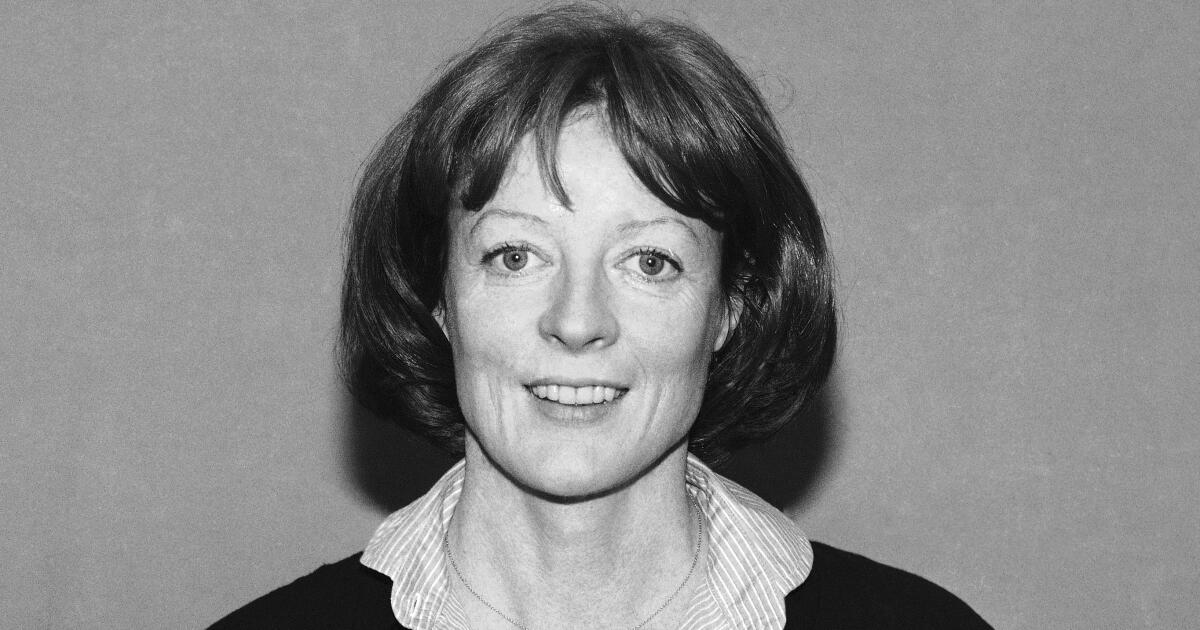
When I first heard that Chloé Zhao was interested in making a film of my novel, “Hamnet,” I was instantly intrigued. Having seen all her films, I knew she wasn’t going to be the kind of director who would render from “Hamnet” a pristine, conventional costume drama. You know the ones: There’s always a high count of mobcaps, and the landscapes appear pastoral and idealized, like a shampoo advertisement, and actors look anachronistically clean and go about saying things like, “Pass me my reticule, good sir.” I also knew that she was not a bardolater; she wouldn’t, as I had feared when a screen adaptation was first mooted, put William Shakespeare front and center, obscuring the story of his children and wife.
I had been told that she wanted to co-write the script with me. I went into our first-ever Zoom call with the full and firm intention that I would politely decline: I was working on other things, I was planning to say, and while I wished her well with the script I didn’t want to be involved. The working life of a novelist is, by nature, a very solitary one; I had never collaborated on a writing project and I didn’t think I wanted to start.
Forty minutes later, I shut my laptop, wondering what on earth had just happened. I had agreed to write the script with her, and I had just heard myself say that, sure, I would write the first pass and deliver it in a couple of months.
Jessie Buckley and Paul Mescal in “Hamnet.”
(Agata Grzybowska / Focus Features)
What can I say about this complete volte-face? Chloé is a very persuasive and surprising person. I can’t remember what I expected to glimpse on a Zoom call with an Oscar-winning film director — gold door handles, perhaps, a butler at the very least? It certainly wasn’t what appeared to be a small caravan with multiple dogs wandering about in the background, and an impassioned person in a hoodie with ocean-wet hair, fiercely brandishing a copy of my book at me, saying, “I want to make this.”
So we wrote the script together, across continents and time zones, with Chloé mostly in California and me in the U.K. Right from the start, it was a wholly synergistic process: We passed the drafts back and forth between us, discussing all the while; I created a new scene, she introduced an idea; there was never a draft that was clearly hers or mine.
Another surprise she had up her sleeve was that this was a collaboration to be forged in the crucible of voice notes, which feels somewhat antithetical to a story set in the 16th century, but needs must. Chloé is the queen of voice notes. There were days when I would wake in Scotland and switch on my phone, only for it to emit a rapid series of pings, and I would think to myself: Chloé’s been busy.


1. Chloé Zhao. 2. Maggie O’Farrell. (Anthony Avellano / For The Times)
Some mornings there might be three or four messages; other times, Chloé might have got carried away and recorded 12 or 13 trains of thought. The shortest might be 30 seconds or a minute; the longest-ever was 58 minutes. When my daughter came into the kitchen and heard me listening to this epic — stop-start, stop-start, taking notes all the while — she asked me, “Are you listening to a podcast?” There were voice notes about immense questions, such as: What is the overarching theme of this film? And there were voice notes about tiny yet crucial details: If Hamnet imagines himself working with his father in the playhouse, what might he see himself doing there? Scrolling back through our chats, I see that there may also have been messages about less relevant but equally important subjects: photographs of Chloé’s dogs, for example, the exploits of my cats, trees we happened to like, the best kind of vitamin for chest infections, our favorite geothermal hot springs, music we were listening to, and so on.
When it comes to scriptwriting, Chloé and I have very different but compatible skills. As evidenced by the slew of voice notes, she likes to extemporize, to work out how she feels about an idea by verbalizing it; I, by contrast, need a pen and paper to realize where something might be going. Right from the start, she had a very clear vision of the shape of the film she wanted to make, and which threads of the book she wished to keep and which to discard; I retained a pervasive sense of the narrative’s dramatic beats that I was able to tell which of these threads were structurally important. And at the risk of stating the toweringly obvious, she has an intuitive grasp of the language of cinema, whereas I am such a massive nerd that I can transcribe any putative utterance into 16th century dialogue.
I’ve never been sorry that I changed my mind that day.

When I first heard that Chloé Zhao was interested in making a film of my novel, “Hamnet,” I was instantly intrigued. Having seen all her films, I knew she wasn’t going to be the kind of director who would render from “Hamnet” a pristine, conventional costume drama. You know the ones: There’s always a high count of mobcaps, and the landscapes appear pastoral and idealized, like a shampoo advertisement, and actors look anachronistically clean and go about saying things like, “Pass me my reticule, good sir.” I also knew that she was not a bardolater; she wouldn’t, as I had feared when a screen adaptation was first mooted, put William Shakespeare front and center, obscuring the story of his children and wife.
I had been told that she wanted to co-write the script with me. I went into our first-ever Zoom call with the full and firm intention that I would politely decline: I was working on other things, I was planning to say, and while I wished her well with the script I didn’t want to be involved. The working life of a novelist is, by nature, a very solitary one; I had never collaborated on a writing project and I didn’t think I wanted to start.
Forty minutes later, I shut my laptop, wondering what on earth had just happened. I had agreed to write the script with her, and I had just heard myself say that, sure, I would write the first pass and deliver it in a couple of months.
Jessie Buckley and Paul Mescal in “Hamnet.”
(Agata Grzybowska / Focus Features)
What can I say about this complete volte-face? Chloé is a very persuasive and surprising person. I can’t remember what I expected to glimpse on a Zoom call with an Oscar-winning film director — gold door handles, perhaps, a butler at the very least? It certainly wasn’t what appeared to be a small caravan with multiple dogs wandering about in the background, and an impassioned person in a hoodie with ocean-wet hair, fiercely brandishing a copy of my book at me, saying, “I want to make this.”
So we wrote the script together, across continents and time zones, with Chloé mostly in California and me in the U.K. Right from the start, it was a wholly synergistic process: We passed the drafts back and forth between us, discussing all the while; I created a new scene, she introduced an idea; there was never a draft that was clearly hers or mine.
Another surprise she had up her sleeve was that this was a collaboration to be forged in the crucible of voice notes, which feels somewhat antithetical to a story set in the 16th century, but needs must. Chloé is the queen of voice notes. There were days when I would wake in Scotland and switch on my phone, only for it to emit a rapid series of pings, and I would think to myself: Chloé’s been busy.
1. Chloé Zhao. 2. Maggie O’Farrell. (Anthony Avellano / For The Times)
Some mornings there might be three or four messages; other times, Chloé might have got carried away and recorded 12 or 13 trains of thought. The shortest might be 30 seconds or a minute; the longest-ever was 58 minutes. When my daughter came into the kitchen and heard me listening to this epic — stop-start, stop-start, taking notes all the while — she asked me, “Are you listening to a podcast?” There were voice notes about immense questions, such as: What is the overarching theme of this film? And there were voice notes about tiny yet crucial details: If Hamnet imagines himself working with his father in the playhouse, what might he see himself doing there? Scrolling back through our chats, I see that there may also have been messages about less relevant but equally important subjects: photographs of Chloé’s dogs, for example, the exploits of my cats, trees we happened to like, the best kind of vitamin for chest infections, our favorite geothermal hot springs, music we were listening to, and so on.
When it comes to scriptwriting, Chloé and I have very different but compatible skills. As evidenced by the slew of voice notes, she likes to extemporize, to work out how she feels about an idea by verbalizing it; I, by contrast, need a pen and paper to realize where something might be going. Right from the start, she had a very clear vision of the shape of the film she wanted to make, and which threads of the book she wished to keep and which to discard; I retained a pervasive sense of the narrative’s dramatic beats that I was able to tell which of these threads were structurally important. And at the risk of stating the toweringly obvious, she has an intuitive grasp of the language of cinema, whereas I am such a massive nerd that I can transcribe any putative utterance into 16th century dialogue.
I’ve never been sorry that I changed my mind that day.

When I first heard that Chloé Zhao was interested in making a film of my novel, “Hamnet,” I was instantly intrigued. Having seen all her films, I knew she wasn’t going to be the kind of director who would render from “Hamnet” a pristine, conventional costume drama. You know the ones: There’s always a high count of mobcaps, and the landscapes appear pastoral and idealized, like a shampoo advertisement, and actors look anachronistically clean and go about saying things like, “Pass me my reticule, good sir.” I also knew that she was not a bardolater; she wouldn’t, as I had feared when a screen adaptation was first mooted, put William Shakespeare front and center, obscuring the story of his children and wife.
I had been told that she wanted to co-write the script with me. I went into our first-ever Zoom call with the full and firm intention that I would politely decline: I was working on other things, I was planning to say, and while I wished her well with the script I didn’t want to be involved. The working life of a novelist is, by nature, a very solitary one; I had never collaborated on a writing project and I didn’t think I wanted to start.
Forty minutes later, I shut my laptop, wondering what on earth had just happened. I had agreed to write the script with her, and I had just heard myself say that, sure, I would write the first pass and deliver it in a couple of months.
Jessie Buckley and Paul Mescal in “Hamnet.”
(Agata Grzybowska / Focus Features)
What can I say about this complete volte-face? Chloé is a very persuasive and surprising person. I can’t remember what I expected to glimpse on a Zoom call with an Oscar-winning film director — gold door handles, perhaps, a butler at the very least? It certainly wasn’t what appeared to be a small caravan with multiple dogs wandering about in the background, and an impassioned person in a hoodie with ocean-wet hair, fiercely brandishing a copy of my book at me, saying, “I want to make this.”
So we wrote the script together, across continents and time zones, with Chloé mostly in California and me in the U.K. Right from the start, it was a wholly synergistic process: We passed the drafts back and forth between us, discussing all the while; I created a new scene, she introduced an idea; there was never a draft that was clearly hers or mine.
Another surprise she had up her sleeve was that this was a collaboration to be forged in the crucible of voice notes, which feels somewhat antithetical to a story set in the 16th century, but needs must. Chloé is the queen of voice notes. There were days when I would wake in Scotland and switch on my phone, only for it to emit a rapid series of pings, and I would think to myself: Chloé’s been busy.
1. Chloé Zhao. 2. Maggie O’Farrell. (Anthony Avellano / For The Times)
Some mornings there might be three or four messages; other times, Chloé might have got carried away and recorded 12 or 13 trains of thought. The shortest might be 30 seconds or a minute; the longest-ever was 58 minutes. When my daughter came into the kitchen and heard me listening to this epic — stop-start, stop-start, taking notes all the while — she asked me, “Are you listening to a podcast?” There were voice notes about immense questions, such as: What is the overarching theme of this film? And there were voice notes about tiny yet crucial details: If Hamnet imagines himself working with his father in the playhouse, what might he see himself doing there? Scrolling back through our chats, I see that there may also have been messages about less relevant but equally important subjects: photographs of Chloé’s dogs, for example, the exploits of my cats, trees we happened to like, the best kind of vitamin for chest infections, our favorite geothermal hot springs, music we were listening to, and so on.
When it comes to scriptwriting, Chloé and I have very different but compatible skills. As evidenced by the slew of voice notes, she likes to extemporize, to work out how she feels about an idea by verbalizing it; I, by contrast, need a pen and paper to realize where something might be going. Right from the start, she had a very clear vision of the shape of the film she wanted to make, and which threads of the book she wished to keep and which to discard; I retained a pervasive sense of the narrative’s dramatic beats that I was able to tell which of these threads were structurally important. And at the risk of stating the toweringly obvious, she has an intuitive grasp of the language of cinema, whereas I am such a massive nerd that I can transcribe any putative utterance into 16th century dialogue.
I’ve never been sorry that I changed my mind that day.
When I first heard that Chloé Zhao was interested in making a film of my novel, “Hamnet,” I was instantly intrigued. Having seen all her films, I knew she wasn’t going to be the kind of director who would render from “Hamnet” a pristine, conventional costume drama. You know the ones: There’s always a high count of mobcaps, and the landscapes appear pastoral and idealized, like a shampoo advertisement, and actors look anachronistically clean and go about saying things like, “Pass me my reticule, good sir.” I also knew that she was not a bardolater; she wouldn’t, as I had feared when a screen adaptation was first mooted, put William Shakespeare front and center, obscuring the story of his children and wife.
I had been told that she wanted to co-write the script with me. I went into our first-ever Zoom call with the full and firm intention that I would politely decline: I was working on other things, I was planning to say, and while I wished her well with the script I didn’t want to be involved. The working life of a novelist is, by nature, a very solitary one; I had never collaborated on a writing project and I didn’t think I wanted to start.
Forty minutes later, I shut my laptop, wondering what on earth had just happened. I had agreed to write the script with her, and I had just heard myself say that, sure, I would write the first pass and deliver it in a couple of months.
Jessie Buckley and Paul Mescal in “Hamnet.”
(Agata Grzybowska / Focus Features)
What can I say about this complete volte-face? Chloé is a very persuasive and surprising person. I can’t remember what I expected to glimpse on a Zoom call with an Oscar-winning film director — gold door handles, perhaps, a butler at the very least? It certainly wasn’t what appeared to be a small caravan with multiple dogs wandering about in the background, and an impassioned person in a hoodie with ocean-wet hair, fiercely brandishing a copy of my book at me, saying, “I want to make this.”
So we wrote the script together, across continents and time zones, with Chloé mostly in California and me in the U.K. Right from the start, it was a wholly synergistic process: We passed the drafts back and forth between us, discussing all the while; I created a new scene, she introduced an idea; there was never a draft that was clearly hers or mine.
Another surprise she had up her sleeve was that this was a collaboration to be forged in the crucible of voice notes, which feels somewhat antithetical to a story set in the 16th century, but needs must. Chloé is the queen of voice notes. There were days when I would wake in Scotland and switch on my phone, only for it to emit a rapid series of pings, and I would think to myself: Chloé’s been busy.
1. Chloé Zhao. 2. Maggie O’Farrell. (Anthony Avellano / For The Times)
Some mornings there might be three or four messages; other times, Chloé might have got carried away and recorded 12 or 13 trains of thought. The shortest might be 30 seconds or a minute; the longest-ever was 58 minutes. When my daughter came into the kitchen and heard me listening to this epic — stop-start, stop-start, taking notes all the while — she asked me, “Are you listening to a podcast?” There were voice notes about immense questions, such as: What is the overarching theme of this film? And there were voice notes about tiny yet crucial details: If Hamnet imagines himself working with his father in the playhouse, what might he see himself doing there? Scrolling back through our chats, I see that there may also have been messages about less relevant but equally important subjects: photographs of Chloé’s dogs, for example, the exploits of my cats, trees we happened to like, the best kind of vitamin for chest infections, our favorite geothermal hot springs, music we were listening to, and so on.
When it comes to scriptwriting, Chloé and I have very different but compatible skills. As evidenced by the slew of voice notes, she likes to extemporize, to work out how she feels about an idea by verbalizing it; I, by contrast, need a pen and paper to realize where something might be going. Right from the start, she had a very clear vision of the shape of the film she wanted to make, and which threads of the book she wished to keep and which to discard; I retained a pervasive sense of the narrative’s dramatic beats that I was able to tell which of these threads were structurally important. And at the risk of stating the toweringly obvious, she has an intuitive grasp of the language of cinema, whereas I am such a massive nerd that I can transcribe any putative utterance into 16th century dialogue.
I’ve never been sorry that I changed my mind that day.

When I first heard that Chloé Zhao was interested in making a film of my novel, “Hamnet,” I was instantly intrigued. Having seen all her films, I knew she wasn’t going to be the kind of director who would render from “Hamnet” a pristine, conventional costume drama. You know the ones: There’s always a high count of mobcaps, and the landscapes appear pastoral and idealized, like a shampoo advertisement, and actors look anachronistically clean and go about saying things like, “Pass me my reticule, good sir.” I also knew that she was not a bardolater; she wouldn’t, as I had feared when a screen adaptation was first mooted, put William Shakespeare front and center, obscuring the story of his children and wife.
I had been told that she wanted to co-write the script with me. I went into our first-ever Zoom call with the full and firm intention that I would politely decline: I was working on other things, I was planning to say, and while I wished her well with the script I didn’t want to be involved. The working life of a novelist is, by nature, a very solitary one; I had never collaborated on a writing project and I didn’t think I wanted to start.
Forty minutes later, I shut my laptop, wondering what on earth had just happened. I had agreed to write the script with her, and I had just heard myself say that, sure, I would write the first pass and deliver it in a couple of months.
Jessie Buckley and Paul Mescal in “Hamnet.”
(Agata Grzybowska / Focus Features)
What can I say about this complete volte-face? Chloé is a very persuasive and surprising person. I can’t remember what I expected to glimpse on a Zoom call with an Oscar-winning film director — gold door handles, perhaps, a butler at the very least? It certainly wasn’t what appeared to be a small caravan with multiple dogs wandering about in the background, and an impassioned person in a hoodie with ocean-wet hair, fiercely brandishing a copy of my book at me, saying, “I want to make this.”
So we wrote the script together, across continents and time zones, with Chloé mostly in California and me in the U.K. Right from the start, it was a wholly synergistic process: We passed the drafts back and forth between us, discussing all the while; I created a new scene, she introduced an idea; there was never a draft that was clearly hers or mine.
Another surprise she had up her sleeve was that this was a collaboration to be forged in the crucible of voice notes, which feels somewhat antithetical to a story set in the 16th century, but needs must. Chloé is the queen of voice notes. There were days when I would wake in Scotland and switch on my phone, only for it to emit a rapid series of pings, and I would think to myself: Chloé’s been busy.
1. Chloé Zhao. 2. Maggie O’Farrell. (Anthony Avellano / For The Times)
Some mornings there might be three or four messages; other times, Chloé might have got carried away and recorded 12 or 13 trains of thought. The shortest might be 30 seconds or a minute; the longest-ever was 58 minutes. When my daughter came into the kitchen and heard me listening to this epic — stop-start, stop-start, taking notes all the while — she asked me, “Are you listening to a podcast?” There were voice notes about immense questions, such as: What is the overarching theme of this film? And there were voice notes about tiny yet crucial details: If Hamnet imagines himself working with his father in the playhouse, what might he see himself doing there? Scrolling back through our chats, I see that there may also have been messages about less relevant but equally important subjects: photographs of Chloé’s dogs, for example, the exploits of my cats, trees we happened to like, the best kind of vitamin for chest infections, our favorite geothermal hot springs, music we were listening to, and so on.
When it comes to scriptwriting, Chloé and I have very different but compatible skills. As evidenced by the slew of voice notes, she likes to extemporize, to work out how she feels about an idea by verbalizing it; I, by contrast, need a pen and paper to realize where something might be going. Right from the start, she had a very clear vision of the shape of the film she wanted to make, and which threads of the book she wished to keep and which to discard; I retained a pervasive sense of the narrative’s dramatic beats that I was able to tell which of these threads were structurally important. And at the risk of stating the toweringly obvious, she has an intuitive grasp of the language of cinema, whereas I am such a massive nerd that I can transcribe any putative utterance into 16th century dialogue.
I’ve never been sorry that I changed my mind that day.
When I first heard that Chloé Zhao was interested in making a film of my novel, “Hamnet,” I was instantly intrigued. Having seen all her films, I knew she wasn’t going to be the kind of director who would render from “Hamnet” a pristine, conventional costume drama. You know the ones: There’s always a high count of mobcaps, and the landscapes appear pastoral and idealized, like a shampoo advertisement, and actors look anachronistically clean and go about saying things like, “Pass me my reticule, good sir.” I also knew that she was not a bardolater; she wouldn’t, as I had feared when a screen adaptation was first mooted, put William Shakespeare front and center, obscuring the story of his children and wife.
I had been told that she wanted to co-write the script with me. I went into our first-ever Zoom call with the full and firm intention that I would politely decline: I was working on other things, I was planning to say, and while I wished her well with the script I didn’t want to be involved. The working life of a novelist is, by nature, a very solitary one; I had never collaborated on a writing project and I didn’t think I wanted to start.
Forty minutes later, I shut my laptop, wondering what on earth had just happened. I had agreed to write the script with her, and I had just heard myself say that, sure, I would write the first pass and deliver it in a couple of months.
Jessie Buckley and Paul Mescal in “Hamnet.”
(Agata Grzybowska / Focus Features)
What can I say about this complete volte-face? Chloé is a very persuasive and surprising person. I can’t remember what I expected to glimpse on a Zoom call with an Oscar-winning film director — gold door handles, perhaps, a butler at the very least? It certainly wasn’t what appeared to be a small caravan with multiple dogs wandering about in the background, and an impassioned person in a hoodie with ocean-wet hair, fiercely brandishing a copy of my book at me, saying, “I want to make this.”
So we wrote the script together, across continents and time zones, with Chloé mostly in California and me in the U.K. Right from the start, it was a wholly synergistic process: We passed the drafts back and forth between us, discussing all the while; I created a new scene, she introduced an idea; there was never a draft that was clearly hers or mine.
Another surprise she had up her sleeve was that this was a collaboration to be forged in the crucible of voice notes, which feels somewhat antithetical to a story set in the 16th century, but needs must. Chloé is the queen of voice notes. There were days when I would wake in Scotland and switch on my phone, only for it to emit a rapid series of pings, and I would think to myself: Chloé’s been busy.
1. Chloé Zhao. 2. Maggie O’Farrell. (Anthony Avellano / For The Times)
Some mornings there might be three or four messages; other times, Chloé might have got carried away and recorded 12 or 13 trains of thought. The shortest might be 30 seconds or a minute; the longest-ever was 58 minutes. When my daughter came into the kitchen and heard me listening to this epic — stop-start, stop-start, taking notes all the while — she asked me, “Are you listening to a podcast?” There were voice notes about immense questions, such as: What is the overarching theme of this film? And there were voice notes about tiny yet crucial details: If Hamnet imagines himself working with his father in the playhouse, what might he see himself doing there? Scrolling back through our chats, I see that there may also have been messages about less relevant but equally important subjects: photographs of Chloé’s dogs, for example, the exploits of my cats, trees we happened to like, the best kind of vitamin for chest infections, our favorite geothermal hot springs, music we were listening to, and so on.
When it comes to scriptwriting, Chloé and I have very different but compatible skills. As evidenced by the slew of voice notes, she likes to extemporize, to work out how she feels about an idea by verbalizing it; I, by contrast, need a pen and paper to realize where something might be going. Right from the start, she had a very clear vision of the shape of the film she wanted to make, and which threads of the book she wished to keep and which to discard; I retained a pervasive sense of the narrative’s dramatic beats that I was able to tell which of these threads were structurally important. And at the risk of stating the toweringly obvious, she has an intuitive grasp of the language of cinema, whereas I am such a massive nerd that I can transcribe any putative utterance into 16th century dialogue.
I’ve never been sorry that I changed my mind that day.
When I first heard that Chloé Zhao was interested in making a film of my novel, “Hamnet,” I was instantly intrigued. Having seen all her films, I knew she wasn’t going to be the kind of director who would render from “Hamnet” a pristine, conventional costume drama. You know the ones: There’s always a high count of mobcaps, and the landscapes appear pastoral and idealized, like a shampoo advertisement, and actors look anachronistically clean and go about saying things like, “Pass me my reticule, good sir.” I also knew that she was not a bardolater; she wouldn’t, as I had feared when a screen adaptation was first mooted, put William Shakespeare front and center, obscuring the story of his children and wife.
I had been told that she wanted to co-write the script with me. I went into our first-ever Zoom call with the full and firm intention that I would politely decline: I was working on other things, I was planning to say, and while I wished her well with the script I didn’t want to be involved. The working life of a novelist is, by nature, a very solitary one; I had never collaborated on a writing project and I didn’t think I wanted to start.
Forty minutes later, I shut my laptop, wondering what on earth had just happened. I had agreed to write the script with her, and I had just heard myself say that, sure, I would write the first pass and deliver it in a couple of months.
Jessie Buckley and Paul Mescal in “Hamnet.”
(Agata Grzybowska / Focus Features)
What can I say about this complete volte-face? Chloé is a very persuasive and surprising person. I can’t remember what I expected to glimpse on a Zoom call with an Oscar-winning film director — gold door handles, perhaps, a butler at the very least? It certainly wasn’t what appeared to be a small caravan with multiple dogs wandering about in the background, and an impassioned person in a hoodie with ocean-wet hair, fiercely brandishing a copy of my book at me, saying, “I want to make this.”
So we wrote the script together, across continents and time zones, with Chloé mostly in California and me in the U.K. Right from the start, it was a wholly synergistic process: We passed the drafts back and forth between us, discussing all the while; I created a new scene, she introduced an idea; there was never a draft that was clearly hers or mine.
Another surprise she had up her sleeve was that this was a collaboration to be forged in the crucible of voice notes, which feels somewhat antithetical to a story set in the 16th century, but needs must. Chloé is the queen of voice notes. There were days when I would wake in Scotland and switch on my phone, only for it to emit a rapid series of pings, and I would think to myself: Chloé’s been busy.
1. Chloé Zhao. 2. Maggie O’Farrell. (Anthony Avellano / For The Times)
Some mornings there might be three or four messages; other times, Chloé might have got carried away and recorded 12 or 13 trains of thought. The shortest might be 30 seconds or a minute; the longest-ever was 58 minutes. When my daughter came into the kitchen and heard me listening to this epic — stop-start, stop-start, taking notes all the while — she asked me, “Are you listening to a podcast?” There were voice notes about immense questions, such as: What is the overarching theme of this film? And there were voice notes about tiny yet crucial details: If Hamnet imagines himself working with his father in the playhouse, what might he see himself doing there? Scrolling back through our chats, I see that there may also have been messages about less relevant but equally important subjects: photographs of Chloé’s dogs, for example, the exploits of my cats, trees we happened to like, the best kind of vitamin for chest infections, our favorite geothermal hot springs, music we were listening to, and so on.
When it comes to scriptwriting, Chloé and I have very different but compatible skills. As evidenced by the slew of voice notes, she likes to extemporize, to work out how she feels about an idea by verbalizing it; I, by contrast, need a pen and paper to realize where something might be going. Right from the start, she had a very clear vision of the shape of the film she wanted to make, and which threads of the book she wished to keep and which to discard; I retained a pervasive sense of the narrative’s dramatic beats that I was able to tell which of these threads were structurally important. And at the risk of stating the toweringly obvious, she has an intuitive grasp of the language of cinema, whereas I am such a massive nerd that I can transcribe any putative utterance into 16th century dialogue.
I’ve never been sorry that I changed my mind that day.
When I first heard that Chloé Zhao was interested in making a film of my novel, “Hamnet,” I was instantly intrigued. Having seen all her films, I knew she wasn’t going to be the kind of director who would render from “Hamnet” a pristine, conventional costume drama. You know the ones: There’s always a high count of mobcaps, and the landscapes appear pastoral and idealized, like a shampoo advertisement, and actors look anachronistically clean and go about saying things like, “Pass me my reticule, good sir.” I also knew that she was not a bardolater; she wouldn’t, as I had feared when a screen adaptation was first mooted, put William Shakespeare front and center, obscuring the story of his children and wife.
I had been told that she wanted to co-write the script with me. I went into our first-ever Zoom call with the full and firm intention that I would politely decline: I was working on other things, I was planning to say, and while I wished her well with the script I didn’t want to be involved. The working life of a novelist is, by nature, a very solitary one; I had never collaborated on a writing project and I didn’t think I wanted to start.
Forty minutes later, I shut my laptop, wondering what on earth had just happened. I had agreed to write the script with her, and I had just heard myself say that, sure, I would write the first pass and deliver it in a couple of months.
Jessie Buckley and Paul Mescal in “Hamnet.”
(Agata Grzybowska / Focus Features)
What can I say about this complete volte-face? Chloé is a very persuasive and surprising person. I can’t remember what I expected to glimpse on a Zoom call with an Oscar-winning film director — gold door handles, perhaps, a butler at the very least? It certainly wasn’t what appeared to be a small caravan with multiple dogs wandering about in the background, and an impassioned person in a hoodie with ocean-wet hair, fiercely brandishing a copy of my book at me, saying, “I want to make this.”
So we wrote the script together, across continents and time zones, with Chloé mostly in California and me in the U.K. Right from the start, it was a wholly synergistic process: We passed the drafts back and forth between us, discussing all the while; I created a new scene, she introduced an idea; there was never a draft that was clearly hers or mine.
Another surprise she had up her sleeve was that this was a collaboration to be forged in the crucible of voice notes, which feels somewhat antithetical to a story set in the 16th century, but needs must. Chloé is the queen of voice notes. There were days when I would wake in Scotland and switch on my phone, only for it to emit a rapid series of pings, and I would think to myself: Chloé’s been busy.
1. Chloé Zhao. 2. Maggie O’Farrell. (Anthony Avellano / For The Times)
Some mornings there might be three or four messages; other times, Chloé might have got carried away and recorded 12 or 13 trains of thought. The shortest might be 30 seconds or a minute; the longest-ever was 58 minutes. When my daughter came into the kitchen and heard me listening to this epic — stop-start, stop-start, taking notes all the while — she asked me, “Are you listening to a podcast?” There were voice notes about immense questions, such as: What is the overarching theme of this film? And there were voice notes about tiny yet crucial details: If Hamnet imagines himself working with his father in the playhouse, what might he see himself doing there? Scrolling back through our chats, I see that there may also have been messages about less relevant but equally important subjects: photographs of Chloé’s dogs, for example, the exploits of my cats, trees we happened to like, the best kind of vitamin for chest infections, our favorite geothermal hot springs, music we were listening to, and so on.
When it comes to scriptwriting, Chloé and I have very different but compatible skills. As evidenced by the slew of voice notes, she likes to extemporize, to work out how she feels about an idea by verbalizing it; I, by contrast, need a pen and paper to realize where something might be going. Right from the start, she had a very clear vision of the shape of the film she wanted to make, and which threads of the book she wished to keep and which to discard; I retained a pervasive sense of the narrative’s dramatic beats that I was able to tell which of these threads were structurally important. And at the risk of stating the toweringly obvious, she has an intuitive grasp of the language of cinema, whereas I am such a massive nerd that I can transcribe any putative utterance into 16th century dialogue.
I’ve never been sorry that I changed my mind that day.