Ticketmaster, the country’s largest ticket seller, will begin disclosing fees up front after angry Taylor Swift fans demanded change and the Federal Trade Commission proposed new regulations.
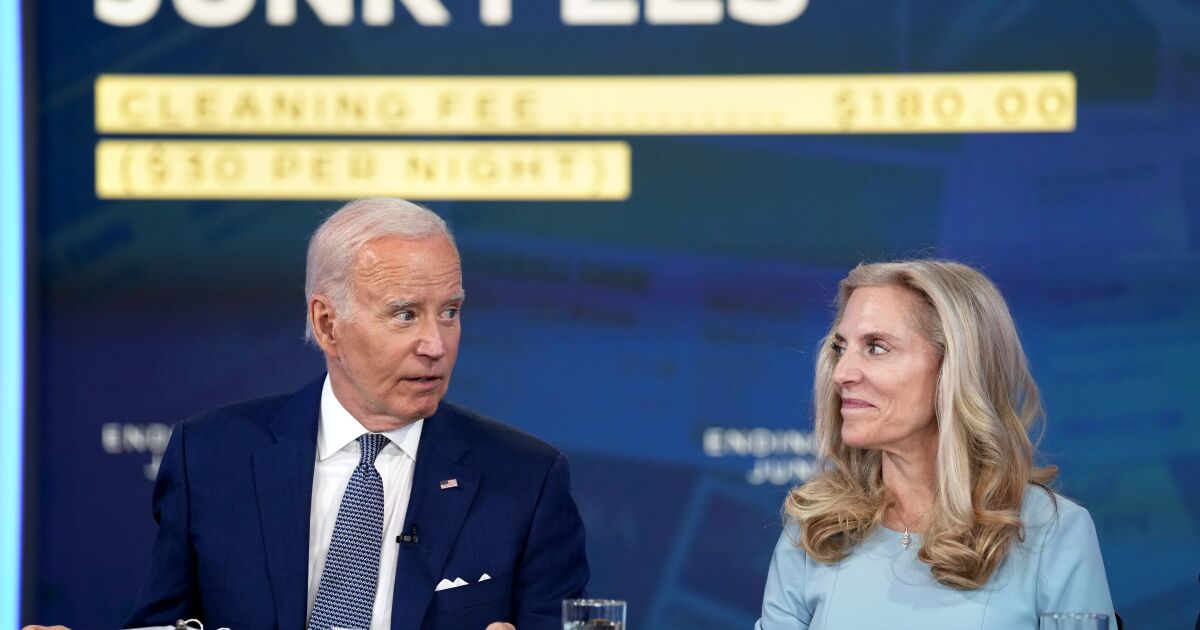
Ticketing companies including SeatGeek and Live Nation, which owns Ticketmaster, committed at a White House roundtable Thursday to disclose all fees at the start of the sale process, eliminating what President Biden and the FTC have described as “junk fees.”
Two parallel forces probably prompted Live Nation’s announcement, former FTC officials told The Times: a pending FTC rule that would regulate added fees and a public campaign against Ticketmaster by an army of Swift fans who struggled to get tickets to the singer’s 2023 U.S. tour. Ticket sellers may also be thinking about lawmakers in Washington, who are weighing legislation to prohibit junk fees.
“When we look back on this, this could easily be the Taylor Swift rule,” said William Kovacic, former chair of the FTC. “The Taylor Swift policy adjustment. Unmistakably.”
The FTC has in recent years waged a quiet campaign against “junk fees,” or fees that the agency considers unfair and deceptive. Critics of Ticketmaster’s policies argue that fees added to the end of a sale qualify as both.
FTC officials last year announced they were exploring a rule to regulate such fees. The commission voted 3 to 1 to tell the public it was considering policies that would crack down on three types of fees: unnecessary charges for “worthless, free, or fake products or services”; unavoidable charges imposed on “captive consumers”; and surprise charges that “secretly push up the purchase price.”
Ticketmaster’s fees could fall into the third category.
The companies probably promised to stop the fees because the coalition arrayed against them — the public, which doesn’t want to pay fees; Congress, which is pursuing laws to ban the fees; and the FTC, which may pass a rule against them — was so formidable, former FTC officials explained.
“There’s been real concern that there hasn’t been clarity about pricing for these kinds of events,” said David Vladeck, who led the consumer protection branch of the FTC a decade ago. “A company like Live Nation doesn’t want the stigma of a company trying to mislead consumers.”
In a news release, Live Nation pointed to February 2020 testimony Ticketmaster gave to the FTC in support of an all-in pricing mandate.
“Live Nation is proud to provide fans with a better ticket buying experience,” Tom See, president of Live Nation Venues, said in a statement. “We have thousands of crew working behind the scenes every day to help artists share their music live with fans, and we’ll continue advocating for innovations and reforms that protect that amazing connection.”
Congress has taken steps to regulate Ticketmaster and junk fees. Rep. Ruben Gallego, an Arizona Democrat who’s running for U.S. Senate, is sponsoring the Junk Fee Prevention Act, which would make the upfront pricing model law.
“Today’s announcement that major companies are stepping up to increase price transparency is a big win for consumers,” Gallego wrote in a statement. “Lowering costs for working families is one of my top priorities. That’s why we’re pushing Congress to pass my Junk Fee Prevention Act so all companies provide consumers upfront pricing.”
Although Live Nation’s announcement is good news for consumer advocates, lawmakers need to ensure that the company keeps its promises, Sen. Richard Blumenthal (D-Conn.), who is sponsoring the Senate companion to Gallego’s bill, told The Times on Thursday.
“Trust, but verify,” Blumenthal said. “I want to be sure that they actually do show fees up front. … It’s not only the fees; it’s the exorbitant prices that can be charged — with the complicity of Ticketmaster — to fans who want to go and see these concerts.”
Now that it has publicly committed to cutting junk fees, Live Nation will have a tough time changing its position, Vladeck noted. If the company doesn’t abide by this promise, he added, it can expect to be attacked by the FTC and state agencies.
And Live Nation didn’t make its statement quietly. By announcing the policy change from Washington, it has a chance to quiet public discontent — but risks further backlash if it continues to charge junk fees.
“They’ve put themselves in the noose, and they’re hoping no one tightens it,” Vladeck said. “But once you make these kinds of claims publicly, you’re stuck with them.”
The White House shared that Live Nation will roll out its upfront pricing model in September. The company first inquired about making the announcement in Washington after Biden’s State of the Union in February, where he spoke about cracking down on junk fees.
That was three months after the Taylor Swift ticket debacle.
“It’s all about Taylor Swift,” said a former FTC official granted anonymity to speak candidly. “There’s an enormous amount of pressure that stems from … it pains me to say … the Taylor Swift fiasco. It sort of drove home the fact that there’s a lot of consumer frustration about the purchasing process in certain markets.”
Those critical of Ticketmaster don’t just point to its surprise fees. They also express concerns with its control of the market, and its partnership with Live Nation in particular. Kovacic suspected that the company’s commitment to showing fees will not fully satisfy critics.
“I think there’s gonna be continued pressure on the Department of Justice to revisit decisions they made in any earlier time when they approved the earlier merger in 2009, 2010,” he said. “I don’t think it relaxes the pressure on the DOJ to reengage on the antitrust issues. Not at all.”
Still, the White House considers Thursday’s development a major win. In a fact sheet distributed to reporters, White House officials wrote that the commitments the companies made will “improve the purchasing experience for tens of millions of customers annually.”
The White House is touting SeatGeek’s commitment to roll out features in the coming months that will allow ticket buyers to sort options by “all-in price.” The administration notes that since the president first asked for a crackdown on junk fees last year, a handful of other companies have made similar commitments. Airbnb, for example, introduced a “total price” tool to see fees before taxes.
“Junk fees are not a matter for the wealthy very much, but they are a matter for working folks like the homes I grew up in, and they can add hundreds of dollars a month and make it harder for families to pay their bills,” Biden said at the roundtable Thursday.
Sen. Elizabeth Warren, a vocal critic of Ticketmaster, also considers Live Nation’s and SeatGeek’s commitments a win for consumers.
“It’s one more strike against junk fees,” the Massachusetts Democrat said on her way to the Senate on Thursday morning. “Go, President Biden!”
“Go get ‘em!” she shouted from the elevator.
Swift’s publicist did not return a request for comment Thursday.

Ticketmaster, the country’s largest ticket seller, will begin disclosing fees up front after angry Taylor Swift fans demanded change and the Federal Trade Commission proposed new regulations.
Ticketing companies including SeatGeek and Live Nation, which owns Ticketmaster, committed at a White House roundtable Thursday to disclose all fees at the start of the sale process, eliminating what President Biden and the FTC have described as “junk fees.”
Two parallel forces probably prompted Live Nation’s announcement, former FTC officials told The Times: a pending FTC rule that would regulate added fees and a public campaign against Ticketmaster by an army of Swift fans who struggled to get tickets to the singer’s 2023 U.S. tour. Ticket sellers may also be thinking about lawmakers in Washington, who are weighing legislation to prohibit junk fees.
“When we look back on this, this could easily be the Taylor Swift rule,” said William Kovacic, former chair of the FTC. “The Taylor Swift policy adjustment. Unmistakably.”
The FTC has in recent years waged a quiet campaign against “junk fees,” or fees that the agency considers unfair and deceptive. Critics of Ticketmaster’s policies argue that fees added to the end of a sale qualify as both.
FTC officials last year announced they were exploring a rule to regulate such fees. The commission voted 3 to 1 to tell the public it was considering policies that would crack down on three types of fees: unnecessary charges for “worthless, free, or fake products or services”; unavoidable charges imposed on “captive consumers”; and surprise charges that “secretly push up the purchase price.”
Ticketmaster’s fees could fall into the third category.
The companies probably promised to stop the fees because the coalition arrayed against them — the public, which doesn’t want to pay fees; Congress, which is pursuing laws to ban the fees; and the FTC, which may pass a rule against them — was so formidable, former FTC officials explained.
“There’s been real concern that there hasn’t been clarity about pricing for these kinds of events,” said David Vladeck, who led the consumer protection branch of the FTC a decade ago. “A company like Live Nation doesn’t want the stigma of a company trying to mislead consumers.”
In a news release, Live Nation pointed to February 2020 testimony Ticketmaster gave to the FTC in support of an all-in pricing mandate.
“Live Nation is proud to provide fans with a better ticket buying experience,” Tom See, president of Live Nation Venues, said in a statement. “We have thousands of crew working behind the scenes every day to help artists share their music live with fans, and we’ll continue advocating for innovations and reforms that protect that amazing connection.”
Congress has taken steps to regulate Ticketmaster and junk fees. Rep. Ruben Gallego, an Arizona Democrat who’s running for U.S. Senate, is sponsoring the Junk Fee Prevention Act, which would make the upfront pricing model law.
“Today’s announcement that major companies are stepping up to increase price transparency is a big win for consumers,” Gallego wrote in a statement. “Lowering costs for working families is one of my top priorities. That’s why we’re pushing Congress to pass my Junk Fee Prevention Act so all companies provide consumers upfront pricing.”
Although Live Nation’s announcement is good news for consumer advocates, lawmakers need to ensure that the company keeps its promises, Sen. Richard Blumenthal (D-Conn.), who is sponsoring the Senate companion to Gallego’s bill, told The Times on Thursday.
“Trust, but verify,” Blumenthal said. “I want to be sure that they actually do show fees up front. … It’s not only the fees; it’s the exorbitant prices that can be charged — with the complicity of Ticketmaster — to fans who want to go and see these concerts.”
Now that it has publicly committed to cutting junk fees, Live Nation will have a tough time changing its position, Vladeck noted. If the company doesn’t abide by this promise, he added, it can expect to be attacked by the FTC and state agencies.
And Live Nation didn’t make its statement quietly. By announcing the policy change from Washington, it has a chance to quiet public discontent — but risks further backlash if it continues to charge junk fees.
“They’ve put themselves in the noose, and they’re hoping no one tightens it,” Vladeck said. “But once you make these kinds of claims publicly, you’re stuck with them.”
The White House shared that Live Nation will roll out its upfront pricing model in September. The company first inquired about making the announcement in Washington after Biden’s State of the Union in February, where he spoke about cracking down on junk fees.
That was three months after the Taylor Swift ticket debacle.
“It’s all about Taylor Swift,” said a former FTC official granted anonymity to speak candidly. “There’s an enormous amount of pressure that stems from … it pains me to say … the Taylor Swift fiasco. It sort of drove home the fact that there’s a lot of consumer frustration about the purchasing process in certain markets.”
Those critical of Ticketmaster don’t just point to its surprise fees. They also express concerns with its control of the market, and its partnership with Live Nation in particular. Kovacic suspected that the company’s commitment to showing fees will not fully satisfy critics.
“I think there’s gonna be continued pressure on the Department of Justice to revisit decisions they made in any earlier time when they approved the earlier merger in 2009, 2010,” he said. “I don’t think it relaxes the pressure on the DOJ to reengage on the antitrust issues. Not at all.”
Still, the White House considers Thursday’s development a major win. In a fact sheet distributed to reporters, White House officials wrote that the commitments the companies made will “improve the purchasing experience for tens of millions of customers annually.”
The White House is touting SeatGeek’s commitment to roll out features in the coming months that will allow ticket buyers to sort options by “all-in price.” The administration notes that since the president first asked for a crackdown on junk fees last year, a handful of other companies have made similar commitments. Airbnb, for example, introduced a “total price” tool to see fees before taxes.
“Junk fees are not a matter for the wealthy very much, but they are a matter for working folks like the homes I grew up in, and they can add hundreds of dollars a month and make it harder for families to pay their bills,” Biden said at the roundtable Thursday.
Sen. Elizabeth Warren, a vocal critic of Ticketmaster, also considers Live Nation’s and SeatGeek’s commitments a win for consumers.
“It’s one more strike against junk fees,” the Massachusetts Democrat said on her way to the Senate on Thursday morning. “Go, President Biden!”
“Go get ‘em!” she shouted from the elevator.
Swift’s publicist did not return a request for comment Thursday.

Ticketmaster, the country’s largest ticket seller, will begin disclosing fees up front after angry Taylor Swift fans demanded change and the Federal Trade Commission proposed new regulations.
Ticketing companies including SeatGeek and Live Nation, which owns Ticketmaster, committed at a White House roundtable Thursday to disclose all fees at the start of the sale process, eliminating what President Biden and the FTC have described as “junk fees.”
Two parallel forces probably prompted Live Nation’s announcement, former FTC officials told The Times: a pending FTC rule that would regulate added fees and a public campaign against Ticketmaster by an army of Swift fans who struggled to get tickets to the singer’s 2023 U.S. tour. Ticket sellers may also be thinking about lawmakers in Washington, who are weighing legislation to prohibit junk fees.
“When we look back on this, this could easily be the Taylor Swift rule,” said William Kovacic, former chair of the FTC. “The Taylor Swift policy adjustment. Unmistakably.”
The FTC has in recent years waged a quiet campaign against “junk fees,” or fees that the agency considers unfair and deceptive. Critics of Ticketmaster’s policies argue that fees added to the end of a sale qualify as both.
FTC officials last year announced they were exploring a rule to regulate such fees. The commission voted 3 to 1 to tell the public it was considering policies that would crack down on three types of fees: unnecessary charges for “worthless, free, or fake products or services”; unavoidable charges imposed on “captive consumers”; and surprise charges that “secretly push up the purchase price.”
Ticketmaster’s fees could fall into the third category.
The companies probably promised to stop the fees because the coalition arrayed against them — the public, which doesn’t want to pay fees; Congress, which is pursuing laws to ban the fees; and the FTC, which may pass a rule against them — was so formidable, former FTC officials explained.
“There’s been real concern that there hasn’t been clarity about pricing for these kinds of events,” said David Vladeck, who led the consumer protection branch of the FTC a decade ago. “A company like Live Nation doesn’t want the stigma of a company trying to mislead consumers.”
In a news release, Live Nation pointed to February 2020 testimony Ticketmaster gave to the FTC in support of an all-in pricing mandate.
“Live Nation is proud to provide fans with a better ticket buying experience,” Tom See, president of Live Nation Venues, said in a statement. “We have thousands of crew working behind the scenes every day to help artists share their music live with fans, and we’ll continue advocating for innovations and reforms that protect that amazing connection.”
Congress has taken steps to regulate Ticketmaster and junk fees. Rep. Ruben Gallego, an Arizona Democrat who’s running for U.S. Senate, is sponsoring the Junk Fee Prevention Act, which would make the upfront pricing model law.
“Today’s announcement that major companies are stepping up to increase price transparency is a big win for consumers,” Gallego wrote in a statement. “Lowering costs for working families is one of my top priorities. That’s why we’re pushing Congress to pass my Junk Fee Prevention Act so all companies provide consumers upfront pricing.”
Although Live Nation’s announcement is good news for consumer advocates, lawmakers need to ensure that the company keeps its promises, Sen. Richard Blumenthal (D-Conn.), who is sponsoring the Senate companion to Gallego’s bill, told The Times on Thursday.
“Trust, but verify,” Blumenthal said. “I want to be sure that they actually do show fees up front. … It’s not only the fees; it’s the exorbitant prices that can be charged — with the complicity of Ticketmaster — to fans who want to go and see these concerts.”
Now that it has publicly committed to cutting junk fees, Live Nation will have a tough time changing its position, Vladeck noted. If the company doesn’t abide by this promise, he added, it can expect to be attacked by the FTC and state agencies.
And Live Nation didn’t make its statement quietly. By announcing the policy change from Washington, it has a chance to quiet public discontent — but risks further backlash if it continues to charge junk fees.
“They’ve put themselves in the noose, and they’re hoping no one tightens it,” Vladeck said. “But once you make these kinds of claims publicly, you’re stuck with them.”
The White House shared that Live Nation will roll out its upfront pricing model in September. The company first inquired about making the announcement in Washington after Biden’s State of the Union in February, where he spoke about cracking down on junk fees.
That was three months after the Taylor Swift ticket debacle.
“It’s all about Taylor Swift,” said a former FTC official granted anonymity to speak candidly. “There’s an enormous amount of pressure that stems from … it pains me to say … the Taylor Swift fiasco. It sort of drove home the fact that there’s a lot of consumer frustration about the purchasing process in certain markets.”
Those critical of Ticketmaster don’t just point to its surprise fees. They also express concerns with its control of the market, and its partnership with Live Nation in particular. Kovacic suspected that the company’s commitment to showing fees will not fully satisfy critics.
“I think there’s gonna be continued pressure on the Department of Justice to revisit decisions they made in any earlier time when they approved the earlier merger in 2009, 2010,” he said. “I don’t think it relaxes the pressure on the DOJ to reengage on the antitrust issues. Not at all.”
Still, the White House considers Thursday’s development a major win. In a fact sheet distributed to reporters, White House officials wrote that the commitments the companies made will “improve the purchasing experience for tens of millions of customers annually.”
The White House is touting SeatGeek’s commitment to roll out features in the coming months that will allow ticket buyers to sort options by “all-in price.” The administration notes that since the president first asked for a crackdown on junk fees last year, a handful of other companies have made similar commitments. Airbnb, for example, introduced a “total price” tool to see fees before taxes.
“Junk fees are not a matter for the wealthy very much, but they are a matter for working folks like the homes I grew up in, and they can add hundreds of dollars a month and make it harder for families to pay their bills,” Biden said at the roundtable Thursday.
Sen. Elizabeth Warren, a vocal critic of Ticketmaster, also considers Live Nation’s and SeatGeek’s commitments a win for consumers.
“It’s one more strike against junk fees,” the Massachusetts Democrat said on her way to the Senate on Thursday morning. “Go, President Biden!”
“Go get ‘em!” she shouted from the elevator.
Swift’s publicist did not return a request for comment Thursday.
Ticketmaster, the country’s largest ticket seller, will begin disclosing fees up front after angry Taylor Swift fans demanded change and the Federal Trade Commission proposed new regulations.
Ticketing companies including SeatGeek and Live Nation, which owns Ticketmaster, committed at a White House roundtable Thursday to disclose all fees at the start of the sale process, eliminating what President Biden and the FTC have described as “junk fees.”
Two parallel forces probably prompted Live Nation’s announcement, former FTC officials told The Times: a pending FTC rule that would regulate added fees and a public campaign against Ticketmaster by an army of Swift fans who struggled to get tickets to the singer’s 2023 U.S. tour. Ticket sellers may also be thinking about lawmakers in Washington, who are weighing legislation to prohibit junk fees.
“When we look back on this, this could easily be the Taylor Swift rule,” said William Kovacic, former chair of the FTC. “The Taylor Swift policy adjustment. Unmistakably.”
The FTC has in recent years waged a quiet campaign against “junk fees,” or fees that the agency considers unfair and deceptive. Critics of Ticketmaster’s policies argue that fees added to the end of a sale qualify as both.
FTC officials last year announced they were exploring a rule to regulate such fees. The commission voted 3 to 1 to tell the public it was considering policies that would crack down on three types of fees: unnecessary charges for “worthless, free, or fake products or services”; unavoidable charges imposed on “captive consumers”; and surprise charges that “secretly push up the purchase price.”
Ticketmaster’s fees could fall into the third category.
The companies probably promised to stop the fees because the coalition arrayed against them — the public, which doesn’t want to pay fees; Congress, which is pursuing laws to ban the fees; and the FTC, which may pass a rule against them — was so formidable, former FTC officials explained.
“There’s been real concern that there hasn’t been clarity about pricing for these kinds of events,” said David Vladeck, who led the consumer protection branch of the FTC a decade ago. “A company like Live Nation doesn’t want the stigma of a company trying to mislead consumers.”
In a news release, Live Nation pointed to February 2020 testimony Ticketmaster gave to the FTC in support of an all-in pricing mandate.
“Live Nation is proud to provide fans with a better ticket buying experience,” Tom See, president of Live Nation Venues, said in a statement. “We have thousands of crew working behind the scenes every day to help artists share their music live with fans, and we’ll continue advocating for innovations and reforms that protect that amazing connection.”
Congress has taken steps to regulate Ticketmaster and junk fees. Rep. Ruben Gallego, an Arizona Democrat who’s running for U.S. Senate, is sponsoring the Junk Fee Prevention Act, which would make the upfront pricing model law.
“Today’s announcement that major companies are stepping up to increase price transparency is a big win for consumers,” Gallego wrote in a statement. “Lowering costs for working families is one of my top priorities. That’s why we’re pushing Congress to pass my Junk Fee Prevention Act so all companies provide consumers upfront pricing.”
Although Live Nation’s announcement is good news for consumer advocates, lawmakers need to ensure that the company keeps its promises, Sen. Richard Blumenthal (D-Conn.), who is sponsoring the Senate companion to Gallego’s bill, told The Times on Thursday.
“Trust, but verify,” Blumenthal said. “I want to be sure that they actually do show fees up front. … It’s not only the fees; it’s the exorbitant prices that can be charged — with the complicity of Ticketmaster — to fans who want to go and see these concerts.”
Now that it has publicly committed to cutting junk fees, Live Nation will have a tough time changing its position, Vladeck noted. If the company doesn’t abide by this promise, he added, it can expect to be attacked by the FTC and state agencies.
And Live Nation didn’t make its statement quietly. By announcing the policy change from Washington, it has a chance to quiet public discontent — but risks further backlash if it continues to charge junk fees.
“They’ve put themselves in the noose, and they’re hoping no one tightens it,” Vladeck said. “But once you make these kinds of claims publicly, you’re stuck with them.”
The White House shared that Live Nation will roll out its upfront pricing model in September. The company first inquired about making the announcement in Washington after Biden’s State of the Union in February, where he spoke about cracking down on junk fees.
That was three months after the Taylor Swift ticket debacle.
“It’s all about Taylor Swift,” said a former FTC official granted anonymity to speak candidly. “There’s an enormous amount of pressure that stems from … it pains me to say … the Taylor Swift fiasco. It sort of drove home the fact that there’s a lot of consumer frustration about the purchasing process in certain markets.”
Those critical of Ticketmaster don’t just point to its surprise fees. They also express concerns with its control of the market, and its partnership with Live Nation in particular. Kovacic suspected that the company’s commitment to showing fees will not fully satisfy critics.
“I think there’s gonna be continued pressure on the Department of Justice to revisit decisions they made in any earlier time when they approved the earlier merger in 2009, 2010,” he said. “I don’t think it relaxes the pressure on the DOJ to reengage on the antitrust issues. Not at all.”
Still, the White House considers Thursday’s development a major win. In a fact sheet distributed to reporters, White House officials wrote that the commitments the companies made will “improve the purchasing experience for tens of millions of customers annually.”
The White House is touting SeatGeek’s commitment to roll out features in the coming months that will allow ticket buyers to sort options by “all-in price.” The administration notes that since the president first asked for a crackdown on junk fees last year, a handful of other companies have made similar commitments. Airbnb, for example, introduced a “total price” tool to see fees before taxes.
“Junk fees are not a matter for the wealthy very much, but they are a matter for working folks like the homes I grew up in, and they can add hundreds of dollars a month and make it harder for families to pay their bills,” Biden said at the roundtable Thursday.
Sen. Elizabeth Warren, a vocal critic of Ticketmaster, also considers Live Nation’s and SeatGeek’s commitments a win for consumers.
“It’s one more strike against junk fees,” the Massachusetts Democrat said on her way to the Senate on Thursday morning. “Go, President Biden!”
“Go get ‘em!” she shouted from the elevator.
Swift’s publicist did not return a request for comment Thursday.

Ticketmaster, the country’s largest ticket seller, will begin disclosing fees up front after angry Taylor Swift fans demanded change and the Federal Trade Commission proposed new regulations.
Ticketing companies including SeatGeek and Live Nation, which owns Ticketmaster, committed at a White House roundtable Thursday to disclose all fees at the start of the sale process, eliminating what President Biden and the FTC have described as “junk fees.”
Two parallel forces probably prompted Live Nation’s announcement, former FTC officials told The Times: a pending FTC rule that would regulate added fees and a public campaign against Ticketmaster by an army of Swift fans who struggled to get tickets to the singer’s 2023 U.S. tour. Ticket sellers may also be thinking about lawmakers in Washington, who are weighing legislation to prohibit junk fees.
“When we look back on this, this could easily be the Taylor Swift rule,” said William Kovacic, former chair of the FTC. “The Taylor Swift policy adjustment. Unmistakably.”
The FTC has in recent years waged a quiet campaign against “junk fees,” or fees that the agency considers unfair and deceptive. Critics of Ticketmaster’s policies argue that fees added to the end of a sale qualify as both.
FTC officials last year announced they were exploring a rule to regulate such fees. The commission voted 3 to 1 to tell the public it was considering policies that would crack down on three types of fees: unnecessary charges for “worthless, free, or fake products or services”; unavoidable charges imposed on “captive consumers”; and surprise charges that “secretly push up the purchase price.”
Ticketmaster’s fees could fall into the third category.
The companies probably promised to stop the fees because the coalition arrayed against them — the public, which doesn’t want to pay fees; Congress, which is pursuing laws to ban the fees; and the FTC, which may pass a rule against them — was so formidable, former FTC officials explained.
“There’s been real concern that there hasn’t been clarity about pricing for these kinds of events,” said David Vladeck, who led the consumer protection branch of the FTC a decade ago. “A company like Live Nation doesn’t want the stigma of a company trying to mislead consumers.”
In a news release, Live Nation pointed to February 2020 testimony Ticketmaster gave to the FTC in support of an all-in pricing mandate.
“Live Nation is proud to provide fans with a better ticket buying experience,” Tom See, president of Live Nation Venues, said in a statement. “We have thousands of crew working behind the scenes every day to help artists share their music live with fans, and we’ll continue advocating for innovations and reforms that protect that amazing connection.”
Congress has taken steps to regulate Ticketmaster and junk fees. Rep. Ruben Gallego, an Arizona Democrat who’s running for U.S. Senate, is sponsoring the Junk Fee Prevention Act, which would make the upfront pricing model law.
“Today’s announcement that major companies are stepping up to increase price transparency is a big win for consumers,” Gallego wrote in a statement. “Lowering costs for working families is one of my top priorities. That’s why we’re pushing Congress to pass my Junk Fee Prevention Act so all companies provide consumers upfront pricing.”
Although Live Nation’s announcement is good news for consumer advocates, lawmakers need to ensure that the company keeps its promises, Sen. Richard Blumenthal (D-Conn.), who is sponsoring the Senate companion to Gallego’s bill, told The Times on Thursday.
“Trust, but verify,” Blumenthal said. “I want to be sure that they actually do show fees up front. … It’s not only the fees; it’s the exorbitant prices that can be charged — with the complicity of Ticketmaster — to fans who want to go and see these concerts.”
Now that it has publicly committed to cutting junk fees, Live Nation will have a tough time changing its position, Vladeck noted. If the company doesn’t abide by this promise, he added, it can expect to be attacked by the FTC and state agencies.
And Live Nation didn’t make its statement quietly. By announcing the policy change from Washington, it has a chance to quiet public discontent — but risks further backlash if it continues to charge junk fees.
“They’ve put themselves in the noose, and they’re hoping no one tightens it,” Vladeck said. “But once you make these kinds of claims publicly, you’re stuck with them.”
The White House shared that Live Nation will roll out its upfront pricing model in September. The company first inquired about making the announcement in Washington after Biden’s State of the Union in February, where he spoke about cracking down on junk fees.
That was three months after the Taylor Swift ticket debacle.
“It’s all about Taylor Swift,” said a former FTC official granted anonymity to speak candidly. “There’s an enormous amount of pressure that stems from … it pains me to say … the Taylor Swift fiasco. It sort of drove home the fact that there’s a lot of consumer frustration about the purchasing process in certain markets.”
Those critical of Ticketmaster don’t just point to its surprise fees. They also express concerns with its control of the market, and its partnership with Live Nation in particular. Kovacic suspected that the company’s commitment to showing fees will not fully satisfy critics.
“I think there’s gonna be continued pressure on the Department of Justice to revisit decisions they made in any earlier time when they approved the earlier merger in 2009, 2010,” he said. “I don’t think it relaxes the pressure on the DOJ to reengage on the antitrust issues. Not at all.”
Still, the White House considers Thursday’s development a major win. In a fact sheet distributed to reporters, White House officials wrote that the commitments the companies made will “improve the purchasing experience for tens of millions of customers annually.”
The White House is touting SeatGeek’s commitment to roll out features in the coming months that will allow ticket buyers to sort options by “all-in price.” The administration notes that since the president first asked for a crackdown on junk fees last year, a handful of other companies have made similar commitments. Airbnb, for example, introduced a “total price” tool to see fees before taxes.
“Junk fees are not a matter for the wealthy very much, but they are a matter for working folks like the homes I grew up in, and they can add hundreds of dollars a month and make it harder for families to pay their bills,” Biden said at the roundtable Thursday.
Sen. Elizabeth Warren, a vocal critic of Ticketmaster, also considers Live Nation’s and SeatGeek’s commitments a win for consumers.
“It’s one more strike against junk fees,” the Massachusetts Democrat said on her way to the Senate on Thursday morning. “Go, President Biden!”
“Go get ‘em!” she shouted from the elevator.
Swift’s publicist did not return a request for comment Thursday.
Ticketmaster, the country’s largest ticket seller, will begin disclosing fees up front after angry Taylor Swift fans demanded change and the Federal Trade Commission proposed new regulations.
Ticketing companies including SeatGeek and Live Nation, which owns Ticketmaster, committed at a White House roundtable Thursday to disclose all fees at the start of the sale process, eliminating what President Biden and the FTC have described as “junk fees.”
Two parallel forces probably prompted Live Nation’s announcement, former FTC officials told The Times: a pending FTC rule that would regulate added fees and a public campaign against Ticketmaster by an army of Swift fans who struggled to get tickets to the singer’s 2023 U.S. tour. Ticket sellers may also be thinking about lawmakers in Washington, who are weighing legislation to prohibit junk fees.
“When we look back on this, this could easily be the Taylor Swift rule,” said William Kovacic, former chair of the FTC. “The Taylor Swift policy adjustment. Unmistakably.”
The FTC has in recent years waged a quiet campaign against “junk fees,” or fees that the agency considers unfair and deceptive. Critics of Ticketmaster’s policies argue that fees added to the end of a sale qualify as both.
FTC officials last year announced they were exploring a rule to regulate such fees. The commission voted 3 to 1 to tell the public it was considering policies that would crack down on three types of fees: unnecessary charges for “worthless, free, or fake products or services”; unavoidable charges imposed on “captive consumers”; and surprise charges that “secretly push up the purchase price.”
Ticketmaster’s fees could fall into the third category.
The companies probably promised to stop the fees because the coalition arrayed against them — the public, which doesn’t want to pay fees; Congress, which is pursuing laws to ban the fees; and the FTC, which may pass a rule against them — was so formidable, former FTC officials explained.
“There’s been real concern that there hasn’t been clarity about pricing for these kinds of events,” said David Vladeck, who led the consumer protection branch of the FTC a decade ago. “A company like Live Nation doesn’t want the stigma of a company trying to mislead consumers.”
In a news release, Live Nation pointed to February 2020 testimony Ticketmaster gave to the FTC in support of an all-in pricing mandate.
“Live Nation is proud to provide fans with a better ticket buying experience,” Tom See, president of Live Nation Venues, said in a statement. “We have thousands of crew working behind the scenes every day to help artists share their music live with fans, and we’ll continue advocating for innovations and reforms that protect that amazing connection.”
Congress has taken steps to regulate Ticketmaster and junk fees. Rep. Ruben Gallego, an Arizona Democrat who’s running for U.S. Senate, is sponsoring the Junk Fee Prevention Act, which would make the upfront pricing model law.
“Today’s announcement that major companies are stepping up to increase price transparency is a big win for consumers,” Gallego wrote in a statement. “Lowering costs for working families is one of my top priorities. That’s why we’re pushing Congress to pass my Junk Fee Prevention Act so all companies provide consumers upfront pricing.”
Although Live Nation’s announcement is good news for consumer advocates, lawmakers need to ensure that the company keeps its promises, Sen. Richard Blumenthal (D-Conn.), who is sponsoring the Senate companion to Gallego’s bill, told The Times on Thursday.
“Trust, but verify,” Blumenthal said. “I want to be sure that they actually do show fees up front. … It’s not only the fees; it’s the exorbitant prices that can be charged — with the complicity of Ticketmaster — to fans who want to go and see these concerts.”
Now that it has publicly committed to cutting junk fees, Live Nation will have a tough time changing its position, Vladeck noted. If the company doesn’t abide by this promise, he added, it can expect to be attacked by the FTC and state agencies.
And Live Nation didn’t make its statement quietly. By announcing the policy change from Washington, it has a chance to quiet public discontent — but risks further backlash if it continues to charge junk fees.
“They’ve put themselves in the noose, and they’re hoping no one tightens it,” Vladeck said. “But once you make these kinds of claims publicly, you’re stuck with them.”
The White House shared that Live Nation will roll out its upfront pricing model in September. The company first inquired about making the announcement in Washington after Biden’s State of the Union in February, where he spoke about cracking down on junk fees.
That was three months after the Taylor Swift ticket debacle.
“It’s all about Taylor Swift,” said a former FTC official granted anonymity to speak candidly. “There’s an enormous amount of pressure that stems from … it pains me to say … the Taylor Swift fiasco. It sort of drove home the fact that there’s a lot of consumer frustration about the purchasing process in certain markets.”
Those critical of Ticketmaster don’t just point to its surprise fees. They also express concerns with its control of the market, and its partnership with Live Nation in particular. Kovacic suspected that the company’s commitment to showing fees will not fully satisfy critics.
“I think there’s gonna be continued pressure on the Department of Justice to revisit decisions they made in any earlier time when they approved the earlier merger in 2009, 2010,” he said. “I don’t think it relaxes the pressure on the DOJ to reengage on the antitrust issues. Not at all.”
Still, the White House considers Thursday’s development a major win. In a fact sheet distributed to reporters, White House officials wrote that the commitments the companies made will “improve the purchasing experience for tens of millions of customers annually.”
The White House is touting SeatGeek’s commitment to roll out features in the coming months that will allow ticket buyers to sort options by “all-in price.” The administration notes that since the president first asked for a crackdown on junk fees last year, a handful of other companies have made similar commitments. Airbnb, for example, introduced a “total price” tool to see fees before taxes.
“Junk fees are not a matter for the wealthy very much, but they are a matter for working folks like the homes I grew up in, and they can add hundreds of dollars a month and make it harder for families to pay their bills,” Biden said at the roundtable Thursday.
Sen. Elizabeth Warren, a vocal critic of Ticketmaster, also considers Live Nation’s and SeatGeek’s commitments a win for consumers.
“It’s one more strike against junk fees,” the Massachusetts Democrat said on her way to the Senate on Thursday morning. “Go, President Biden!”
“Go get ‘em!” she shouted from the elevator.
Swift’s publicist did not return a request for comment Thursday.
Ticketmaster, the country’s largest ticket seller, will begin disclosing fees up front after angry Taylor Swift fans demanded change and the Federal Trade Commission proposed new regulations.
Ticketing companies including SeatGeek and Live Nation, which owns Ticketmaster, committed at a White House roundtable Thursday to disclose all fees at the start of the sale process, eliminating what President Biden and the FTC have described as “junk fees.”
Two parallel forces probably prompted Live Nation’s announcement, former FTC officials told The Times: a pending FTC rule that would regulate added fees and a public campaign against Ticketmaster by an army of Swift fans who struggled to get tickets to the singer’s 2023 U.S. tour. Ticket sellers may also be thinking about lawmakers in Washington, who are weighing legislation to prohibit junk fees.
“When we look back on this, this could easily be the Taylor Swift rule,” said William Kovacic, former chair of the FTC. “The Taylor Swift policy adjustment. Unmistakably.”
The FTC has in recent years waged a quiet campaign against “junk fees,” or fees that the agency considers unfair and deceptive. Critics of Ticketmaster’s policies argue that fees added to the end of a sale qualify as both.
FTC officials last year announced they were exploring a rule to regulate such fees. The commission voted 3 to 1 to tell the public it was considering policies that would crack down on three types of fees: unnecessary charges for “worthless, free, or fake products or services”; unavoidable charges imposed on “captive consumers”; and surprise charges that “secretly push up the purchase price.”
Ticketmaster’s fees could fall into the third category.
The companies probably promised to stop the fees because the coalition arrayed against them — the public, which doesn’t want to pay fees; Congress, which is pursuing laws to ban the fees; and the FTC, which may pass a rule against them — was so formidable, former FTC officials explained.
“There’s been real concern that there hasn’t been clarity about pricing for these kinds of events,” said David Vladeck, who led the consumer protection branch of the FTC a decade ago. “A company like Live Nation doesn’t want the stigma of a company trying to mislead consumers.”
In a news release, Live Nation pointed to February 2020 testimony Ticketmaster gave to the FTC in support of an all-in pricing mandate.
“Live Nation is proud to provide fans with a better ticket buying experience,” Tom See, president of Live Nation Venues, said in a statement. “We have thousands of crew working behind the scenes every day to help artists share their music live with fans, and we’ll continue advocating for innovations and reforms that protect that amazing connection.”
Congress has taken steps to regulate Ticketmaster and junk fees. Rep. Ruben Gallego, an Arizona Democrat who’s running for U.S. Senate, is sponsoring the Junk Fee Prevention Act, which would make the upfront pricing model law.
“Today’s announcement that major companies are stepping up to increase price transparency is a big win for consumers,” Gallego wrote in a statement. “Lowering costs for working families is one of my top priorities. That’s why we’re pushing Congress to pass my Junk Fee Prevention Act so all companies provide consumers upfront pricing.”
Although Live Nation’s announcement is good news for consumer advocates, lawmakers need to ensure that the company keeps its promises, Sen. Richard Blumenthal (D-Conn.), who is sponsoring the Senate companion to Gallego’s bill, told The Times on Thursday.
“Trust, but verify,” Blumenthal said. “I want to be sure that they actually do show fees up front. … It’s not only the fees; it’s the exorbitant prices that can be charged — with the complicity of Ticketmaster — to fans who want to go and see these concerts.”
Now that it has publicly committed to cutting junk fees, Live Nation will have a tough time changing its position, Vladeck noted. If the company doesn’t abide by this promise, he added, it can expect to be attacked by the FTC and state agencies.
And Live Nation didn’t make its statement quietly. By announcing the policy change from Washington, it has a chance to quiet public discontent — but risks further backlash if it continues to charge junk fees.
“They’ve put themselves in the noose, and they’re hoping no one tightens it,” Vladeck said. “But once you make these kinds of claims publicly, you’re stuck with them.”
The White House shared that Live Nation will roll out its upfront pricing model in September. The company first inquired about making the announcement in Washington after Biden’s State of the Union in February, where he spoke about cracking down on junk fees.
That was three months after the Taylor Swift ticket debacle.
“It’s all about Taylor Swift,” said a former FTC official granted anonymity to speak candidly. “There’s an enormous amount of pressure that stems from … it pains me to say … the Taylor Swift fiasco. It sort of drove home the fact that there’s a lot of consumer frustration about the purchasing process in certain markets.”
Those critical of Ticketmaster don’t just point to its surprise fees. They also express concerns with its control of the market, and its partnership with Live Nation in particular. Kovacic suspected that the company’s commitment to showing fees will not fully satisfy critics.
“I think there’s gonna be continued pressure on the Department of Justice to revisit decisions they made in any earlier time when they approved the earlier merger in 2009, 2010,” he said. “I don’t think it relaxes the pressure on the DOJ to reengage on the antitrust issues. Not at all.”
Still, the White House considers Thursday’s development a major win. In a fact sheet distributed to reporters, White House officials wrote that the commitments the companies made will “improve the purchasing experience for tens of millions of customers annually.”
The White House is touting SeatGeek’s commitment to roll out features in the coming months that will allow ticket buyers to sort options by “all-in price.” The administration notes that since the president first asked for a crackdown on junk fees last year, a handful of other companies have made similar commitments. Airbnb, for example, introduced a “total price” tool to see fees before taxes.
“Junk fees are not a matter for the wealthy very much, but they are a matter for working folks like the homes I grew up in, and they can add hundreds of dollars a month and make it harder for families to pay their bills,” Biden said at the roundtable Thursday.
Sen. Elizabeth Warren, a vocal critic of Ticketmaster, also considers Live Nation’s and SeatGeek’s commitments a win for consumers.
“It’s one more strike against junk fees,” the Massachusetts Democrat said on her way to the Senate on Thursday morning. “Go, President Biden!”
“Go get ‘em!” she shouted from the elevator.
Swift’s publicist did not return a request for comment Thursday.
Ticketmaster, the country’s largest ticket seller, will begin disclosing fees up front after angry Taylor Swift fans demanded change and the Federal Trade Commission proposed new regulations.
Ticketing companies including SeatGeek and Live Nation, which owns Ticketmaster, committed at a White House roundtable Thursday to disclose all fees at the start of the sale process, eliminating what President Biden and the FTC have described as “junk fees.”
Two parallel forces probably prompted Live Nation’s announcement, former FTC officials told The Times: a pending FTC rule that would regulate added fees and a public campaign against Ticketmaster by an army of Swift fans who struggled to get tickets to the singer’s 2023 U.S. tour. Ticket sellers may also be thinking about lawmakers in Washington, who are weighing legislation to prohibit junk fees.
“When we look back on this, this could easily be the Taylor Swift rule,” said William Kovacic, former chair of the FTC. “The Taylor Swift policy adjustment. Unmistakably.”
The FTC has in recent years waged a quiet campaign against “junk fees,” or fees that the agency considers unfair and deceptive. Critics of Ticketmaster’s policies argue that fees added to the end of a sale qualify as both.
FTC officials last year announced they were exploring a rule to regulate such fees. The commission voted 3 to 1 to tell the public it was considering policies that would crack down on three types of fees: unnecessary charges for “worthless, free, or fake products or services”; unavoidable charges imposed on “captive consumers”; and surprise charges that “secretly push up the purchase price.”
Ticketmaster’s fees could fall into the third category.
The companies probably promised to stop the fees because the coalition arrayed against them — the public, which doesn’t want to pay fees; Congress, which is pursuing laws to ban the fees; and the FTC, which may pass a rule against them — was so formidable, former FTC officials explained.
“There’s been real concern that there hasn’t been clarity about pricing for these kinds of events,” said David Vladeck, who led the consumer protection branch of the FTC a decade ago. “A company like Live Nation doesn’t want the stigma of a company trying to mislead consumers.”
In a news release, Live Nation pointed to February 2020 testimony Ticketmaster gave to the FTC in support of an all-in pricing mandate.
“Live Nation is proud to provide fans with a better ticket buying experience,” Tom See, president of Live Nation Venues, said in a statement. “We have thousands of crew working behind the scenes every day to help artists share their music live with fans, and we’ll continue advocating for innovations and reforms that protect that amazing connection.”
Congress has taken steps to regulate Ticketmaster and junk fees. Rep. Ruben Gallego, an Arizona Democrat who’s running for U.S. Senate, is sponsoring the Junk Fee Prevention Act, which would make the upfront pricing model law.
“Today’s announcement that major companies are stepping up to increase price transparency is a big win for consumers,” Gallego wrote in a statement. “Lowering costs for working families is one of my top priorities. That’s why we’re pushing Congress to pass my Junk Fee Prevention Act so all companies provide consumers upfront pricing.”
Although Live Nation’s announcement is good news for consumer advocates, lawmakers need to ensure that the company keeps its promises, Sen. Richard Blumenthal (D-Conn.), who is sponsoring the Senate companion to Gallego’s bill, told The Times on Thursday.
“Trust, but verify,” Blumenthal said. “I want to be sure that they actually do show fees up front. … It’s not only the fees; it’s the exorbitant prices that can be charged — with the complicity of Ticketmaster — to fans who want to go and see these concerts.”
Now that it has publicly committed to cutting junk fees, Live Nation will have a tough time changing its position, Vladeck noted. If the company doesn’t abide by this promise, he added, it can expect to be attacked by the FTC and state agencies.
And Live Nation didn’t make its statement quietly. By announcing the policy change from Washington, it has a chance to quiet public discontent — but risks further backlash if it continues to charge junk fees.
“They’ve put themselves in the noose, and they’re hoping no one tightens it,” Vladeck said. “But once you make these kinds of claims publicly, you’re stuck with them.”
The White House shared that Live Nation will roll out its upfront pricing model in September. The company first inquired about making the announcement in Washington after Biden’s State of the Union in February, where he spoke about cracking down on junk fees.
That was three months after the Taylor Swift ticket debacle.
“It’s all about Taylor Swift,” said a former FTC official granted anonymity to speak candidly. “There’s an enormous amount of pressure that stems from … it pains me to say … the Taylor Swift fiasco. It sort of drove home the fact that there’s a lot of consumer frustration about the purchasing process in certain markets.”
Those critical of Ticketmaster don’t just point to its surprise fees. They also express concerns with its control of the market, and its partnership with Live Nation in particular. Kovacic suspected that the company’s commitment to showing fees will not fully satisfy critics.
“I think there’s gonna be continued pressure on the Department of Justice to revisit decisions they made in any earlier time when they approved the earlier merger in 2009, 2010,” he said. “I don’t think it relaxes the pressure on the DOJ to reengage on the antitrust issues. Not at all.”
Still, the White House considers Thursday’s development a major win. In a fact sheet distributed to reporters, White House officials wrote that the commitments the companies made will “improve the purchasing experience for tens of millions of customers annually.”
The White House is touting SeatGeek’s commitment to roll out features in the coming months that will allow ticket buyers to sort options by “all-in price.” The administration notes that since the president first asked for a crackdown on junk fees last year, a handful of other companies have made similar commitments. Airbnb, for example, introduced a “total price” tool to see fees before taxes.
“Junk fees are not a matter for the wealthy very much, but they are a matter for working folks like the homes I grew up in, and they can add hundreds of dollars a month and make it harder for families to pay their bills,” Biden said at the roundtable Thursday.
Sen. Elizabeth Warren, a vocal critic of Ticketmaster, also considers Live Nation’s and SeatGeek’s commitments a win for consumers.
“It’s one more strike against junk fees,” the Massachusetts Democrat said on her way to the Senate on Thursday morning. “Go, President Biden!”
“Go get ‘em!” she shouted from the elevator.
Swift’s publicist did not return a request for comment Thursday.