

Gloria Steinem always listened more than she spoke, which is one reason her words had such lasting impact.
Ten years ago, I went with my older daughter and a group of her classmates to see Gloria Steinem speak. Though they were part of a feminist group recently formed at their all-girls Catholic high school, some were not quite sure who Gloria was, exactly. My daughter knew her mostly as my former “boss”; my first job out of college had been as an editorial assistant at Ms. magazine. That was back in the ‘80s — ancient history.
I was a tiny bit nervous about how the evening would go. Gloria herself was in her 80’s by then; how would she connect with a group of teenagers who had come of age post-post-everything in a social media world of makeup tutorials, fit checks, and so much rage bait?
By being precisely herself, as it turned out. Calm and witty, impassioned and informed, clear-eyed yet hopeful, Gloria enthralled them — and the entire audience — for almost two hours. By the time we left, the girls were ready to follow her anywhere.
“She’s a rock star,” my daughter breathed.
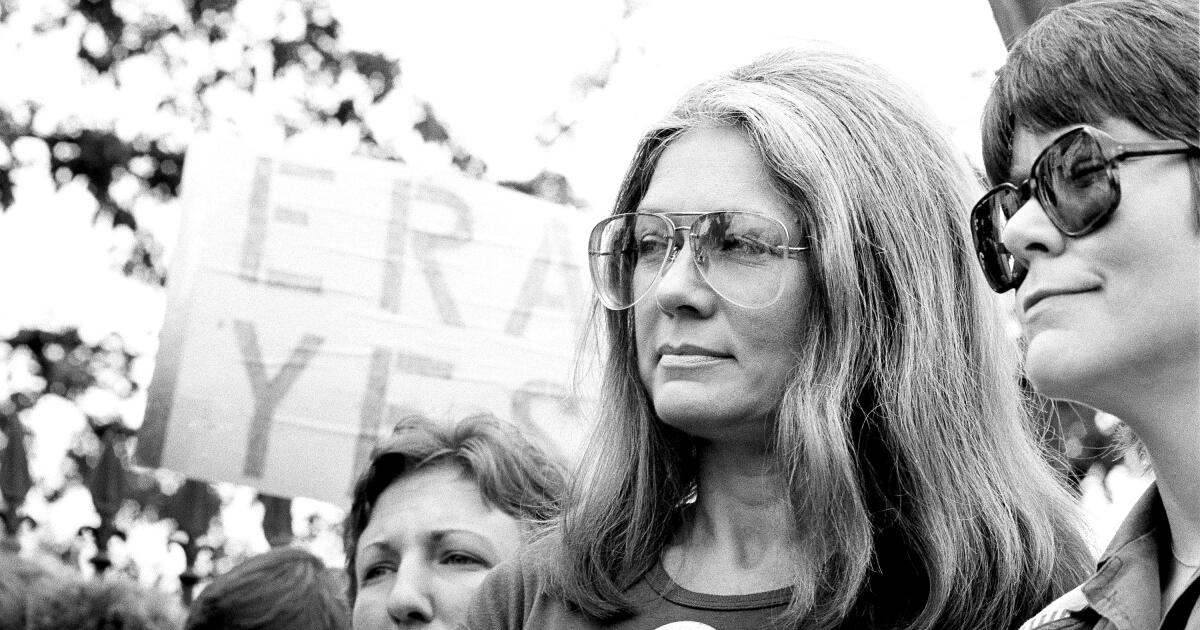
That she was. Gloria Steinem did not invent feminism, not even its second wave, but for many years she was its most recognizable frontwoman. Tall, slender, with (for many years) aviator glasses framed by her signature long, straight hair, she was the Jackie Kennedy of the women’s movement: a physical dismissal of all those childish critics who deride feminists as an army of unlovely and unloved women, devoid of humor and, most likely, surrounded by far too many cats.
Even so, how she looked was beside the point. No feminist I know ever wanted to look like Gloria; we all wanted to be like her. Smart, funny, incisive, generous and, perhaps above all, unflappable.
For an activist organizer, she had a low center of gravity. Her speech was measured, her tone was mellow — even when calling out the most outrageous hypocrisies, the most sinister forms of oppression, she rarely if ever raised it. Though by her own admission she was often furious about many things, her sharpest weapon was always a deadly talent for stating the obvious. “If women could sleep their way to the top, there‘d be a lot more women at the top.” “I have yet to hear a man ask for advice on how to combine marriage and a career. ” “A pedestal is as much a prison as any small, confined space.” “This is what 40 [or 50] looks like.”
She believed in shaping the future by being fearlessly frank about the present and the past. For more than seven decades, she helped millions strip away the veils of hierarchy, patriarchy and all the stories spun about gendered expectations to confront the actual experience of women’s lives. “If the shoe doesn’t fit, must we change the foot?”
She never incited anger; she simply pointed out the facts as she saw them and let human nature take its course. “The truth will set you free, but first it will piss you off.”
Gloria listened as much as she spoke, and with great attention and democracy. When I worked at Ms., she was always running late, invariably having been pulled into some conversation or other. Her assistant groaned over her calendar; Gloria would say “yes” when asked for help, even if it meant being two places at once.
She often came in for staff meetings to which everyone was invited and, when discussing ideas for future issues, would ask for, and attentively listen to, the opinions of even a lowly editorial assistant like me. Her interest was sincere, astonishing and made for very long meetings. Wherever she went, it was the same. She needed to know what all manner of women thought about a wide variety of topics. More important, she wanted them to learn the habit of speaking up. In a private meeting or a public forum, to colleagues, politicians, friends, the boss or even a feminist icon, she wanted women to be unafraid of saying what they thought.
When I worked at Ms., and for many years after, people would invariably ask me: “What’s Gloria Steinem like?” and it was, and remains, impossible to describe. She was kind when she didn’t need to be, generous with her attention when no one expected it. She didn’t want laws and social constructs to be fairer, less dangerous, more fulfilling for women as a concept; she wanted it for you, for me, for the lady in the back row.
She gave aura but also advice about where to find discount shoes. She instantly claimed any room she entered and then made sure there were snacks. She believed that the world could change, that with work, we could change it. But she also believed in having fun; otherwise why bother?
On the day Gloria Steinem died at 92, I awoke to a text from one of the friends I made all those years ago at Ms.; soon there were four of us on the thread. I had just arrived in New York to take my youngest daughter back to college, and we had planned to meet one of those friends in Union Square at noon. Instead, we met at Gloria’s brownstone and laid flowers along the fence outside her door. It seemed the least we could do.
My youngest never got to hear Gloria speak and, at 19, she is too young to know who Gloria was, exactly. Which was always the point of all that Gloria did. She didn’t want the future to feel beholden to the past; she just wanted it to be better. And despite the recent setbacks, particularly in reproductive rights, and all the work that still has to be done, it is.
There stood my daughter. Like her sister, she never doubts for one minute that she is a first-class citizen, entitled to equal rights, bodily autonomy, basic respect and a life of her choosing. God help the poor souls who try to tell them different.
“She’s a big part of why you are here,” I tell her. “Of why your life at 19 is so better than mine was, and why mine, at 19, was so much better than hers.”
That’s not just a rock star; that’s a revolutionary.

Gloria Steinem always listened more than she spoke, which is one reason her words had such lasting impact.
Ten years ago, I went with my older daughter and a group of her classmates to see Gloria Steinem speak. Though they were part of a feminist group recently formed at their all-girls Catholic high school, some were not quite sure who Gloria was, exactly. My daughter knew her mostly as my former “boss”; my first job out of college had been as an editorial assistant at Ms. magazine. That was back in the ‘80s — ancient history.
I was a tiny bit nervous about how the evening would go. Gloria herself was in her 80’s by then; how would she connect with a group of teenagers who had come of age post-post-everything in a social media world of makeup tutorials, fit checks, and so much rage bait?
By being precisely herself, as it turned out. Calm and witty, impassioned and informed, clear-eyed yet hopeful, Gloria enthralled them — and the entire audience — for almost two hours. By the time we left, the girls were ready to follow her anywhere.
“She’s a rock star,” my daughter breathed.
That she was. Gloria Steinem did not invent feminism, not even its second wave, but for many years she was its most recognizable frontwoman. Tall, slender, with (for many years) aviator glasses framed by her signature long, straight hair, she was the Jackie Kennedy of the women’s movement: a physical dismissal of all those childish critics who deride feminists as an army of unlovely and unloved women, devoid of humor and, most likely, surrounded by far too many cats.
Even so, how she looked was beside the point. No feminist I know ever wanted to look like Gloria; we all wanted to be like her. Smart, funny, incisive, generous and, perhaps above all, unflappable.
For an activist organizer, she had a low center of gravity. Her speech was measured, her tone was mellow — even when calling out the most outrageous hypocrisies, the most sinister forms of oppression, she rarely if ever raised it. Though by her own admission she was often furious about many things, her sharpest weapon was always a deadly talent for stating the obvious. “If women could sleep their way to the top, there‘d be a lot more women at the top.” “I have yet to hear a man ask for advice on how to combine marriage and a career. ” “A pedestal is as much a prison as any small, confined space.” “This is what 40 [or 50] looks like.”
She believed in shaping the future by being fearlessly frank about the present and the past. For more than seven decades, she helped millions strip away the veils of hierarchy, patriarchy and all the stories spun about gendered expectations to confront the actual experience of women’s lives. “If the shoe doesn’t fit, must we change the foot?”
She never incited anger; she simply pointed out the facts as she saw them and let human nature take its course. “The truth will set you free, but first it will piss you off.”
Gloria listened as much as she spoke, and with great attention and democracy. When I worked at Ms., she was always running late, invariably having been pulled into some conversation or other. Her assistant groaned over her calendar; Gloria would say “yes” when asked for help, even if it meant being two places at once.
She often came in for staff meetings to which everyone was invited and, when discussing ideas for future issues, would ask for, and attentively listen to, the opinions of even a lowly editorial assistant like me. Her interest was sincere, astonishing and made for very long meetings. Wherever she went, it was the same. She needed to know what all manner of women thought about a wide variety of topics. More important, she wanted them to learn the habit of speaking up. In a private meeting or a public forum, to colleagues, politicians, friends, the boss or even a feminist icon, she wanted women to be unafraid of saying what they thought.
When I worked at Ms., and for many years after, people would invariably ask me: “What’s Gloria Steinem like?” and it was, and remains, impossible to describe. She was kind when she didn’t need to be, generous with her attention when no one expected it. She didn’t want laws and social constructs to be fairer, less dangerous, more fulfilling for women as a concept; she wanted it for you, for me, for the lady in the back row.
She gave aura but also advice about where to find discount shoes. She instantly claimed any room she entered and then made sure there were snacks. She believed that the world could change, that with work, we could change it. But she also believed in having fun; otherwise why bother?
On the day Gloria Steinem died at 92, I awoke to a text from one of the friends I made all those years ago at Ms.; soon there were four of us on the thread. I had just arrived in New York to take my youngest daughter back to college, and we had planned to meet one of those friends in Union Square at noon. Instead, we met at Gloria’s brownstone and laid flowers along the fence outside her door. It seemed the least we could do.
My youngest never got to hear Gloria speak and, at 19, she is too young to know who Gloria was, exactly. Which was always the point of all that Gloria did. She didn’t want the future to feel beholden to the past; she just wanted it to be better. And despite the recent setbacks, particularly in reproductive rights, and all the work that still has to be done, it is.
There stood my daughter. Like her sister, she never doubts for one minute that she is a first-class citizen, entitled to equal rights, bodily autonomy, basic respect and a life of her choosing. God help the poor souls who try to tell them different.
“She’s a big part of why you are here,” I tell her. “Of why your life at 19 is so better than mine was, and why mine, at 19, was so much better than hers.”
That’s not just a rock star; that’s a revolutionary.

Gloria Steinem always listened more than she spoke, which is one reason her words had such lasting impact.
Ten years ago, I went with my older daughter and a group of her classmates to see Gloria Steinem speak. Though they were part of a feminist group recently formed at their all-girls Catholic high school, some were not quite sure who Gloria was, exactly. My daughter knew her mostly as my former “boss”; my first job out of college had been as an editorial assistant at Ms. magazine. That was back in the ‘80s — ancient history.
I was a tiny bit nervous about how the evening would go. Gloria herself was in her 80’s by then; how would she connect with a group of teenagers who had come of age post-post-everything in a social media world of makeup tutorials, fit checks, and so much rage bait?
By being precisely herself, as it turned out. Calm and witty, impassioned and informed, clear-eyed yet hopeful, Gloria enthralled them — and the entire audience — for almost two hours. By the time we left, the girls were ready to follow her anywhere.
“She’s a rock star,” my daughter breathed.
That she was. Gloria Steinem did not invent feminism, not even its second wave, but for many years she was its most recognizable frontwoman. Tall, slender, with (for many years) aviator glasses framed by her signature long, straight hair, she was the Jackie Kennedy of the women’s movement: a physical dismissal of all those childish critics who deride feminists as an army of unlovely and unloved women, devoid of humor and, most likely, surrounded by far too many cats.
Even so, how she looked was beside the point. No feminist I know ever wanted to look like Gloria; we all wanted to be like her. Smart, funny, incisive, generous and, perhaps above all, unflappable.
For an activist organizer, she had a low center of gravity. Her speech was measured, her tone was mellow — even when calling out the most outrageous hypocrisies, the most sinister forms of oppression, she rarely if ever raised it. Though by her own admission she was often furious about many things, her sharpest weapon was always a deadly talent for stating the obvious. “If women could sleep their way to the top, there‘d be a lot more women at the top.” “I have yet to hear a man ask for advice on how to combine marriage and a career. ” “A pedestal is as much a prison as any small, confined space.” “This is what 40 [or 50] looks like.”
She believed in shaping the future by being fearlessly frank about the present and the past. For more than seven decades, she helped millions strip away the veils of hierarchy, patriarchy and all the stories spun about gendered expectations to confront the actual experience of women’s lives. “If the shoe doesn’t fit, must we change the foot?”
She never incited anger; she simply pointed out the facts as she saw them and let human nature take its course. “The truth will set you free, but first it will piss you off.”
Gloria listened as much as she spoke, and with great attention and democracy. When I worked at Ms., she was always running late, invariably having been pulled into some conversation or other. Her assistant groaned over her calendar; Gloria would say “yes” when asked for help, even if it meant being two places at once.
She often came in for staff meetings to which everyone was invited and, when discussing ideas for future issues, would ask for, and attentively listen to, the opinions of even a lowly editorial assistant like me. Her interest was sincere, astonishing and made for very long meetings. Wherever she went, it was the same. She needed to know what all manner of women thought about a wide variety of topics. More important, she wanted them to learn the habit of speaking up. In a private meeting or a public forum, to colleagues, politicians, friends, the boss or even a feminist icon, she wanted women to be unafraid of saying what they thought.
When I worked at Ms., and for many years after, people would invariably ask me: “What’s Gloria Steinem like?” and it was, and remains, impossible to describe. She was kind when she didn’t need to be, generous with her attention when no one expected it. She didn’t want laws and social constructs to be fairer, less dangerous, more fulfilling for women as a concept; she wanted it for you, for me, for the lady in the back row.
She gave aura but also advice about where to find discount shoes. She instantly claimed any room she entered and then made sure there were snacks. She believed that the world could change, that with work, we could change it. But she also believed in having fun; otherwise why bother?
On the day Gloria Steinem died at 92, I awoke to a text from one of the friends I made all those years ago at Ms.; soon there were four of us on the thread. I had just arrived in New York to take my youngest daughter back to college, and we had planned to meet one of those friends in Union Square at noon. Instead, we met at Gloria’s brownstone and laid flowers along the fence outside her door. It seemed the least we could do.
My youngest never got to hear Gloria speak and, at 19, she is too young to know who Gloria was, exactly. Which was always the point of all that Gloria did. She didn’t want the future to feel beholden to the past; she just wanted it to be better. And despite the recent setbacks, particularly in reproductive rights, and all the work that still has to be done, it is.
There stood my daughter. Like her sister, she never doubts for one minute that she is a first-class citizen, entitled to equal rights, bodily autonomy, basic respect and a life of her choosing. God help the poor souls who try to tell them different.
“She’s a big part of why you are here,” I tell her. “Of why your life at 19 is so better than mine was, and why mine, at 19, was so much better than hers.”
That’s not just a rock star; that’s a revolutionary.
Gloria Steinem always listened more than she spoke, which is one reason her words had such lasting impact.
Ten years ago, I went with my older daughter and a group of her classmates to see Gloria Steinem speak. Though they were part of a feminist group recently formed at their all-girls Catholic high school, some were not quite sure who Gloria was, exactly. My daughter knew her mostly as my former “boss”; my first job out of college had been as an editorial assistant at Ms. magazine. That was back in the ‘80s — ancient history.
I was a tiny bit nervous about how the evening would go. Gloria herself was in her 80’s by then; how would she connect with a group of teenagers who had come of age post-post-everything in a social media world of makeup tutorials, fit checks, and so much rage bait?
By being precisely herself, as it turned out. Calm and witty, impassioned and informed, clear-eyed yet hopeful, Gloria enthralled them — and the entire audience — for almost two hours. By the time we left, the girls were ready to follow her anywhere.
“She’s a rock star,” my daughter breathed.
That she was. Gloria Steinem did not invent feminism, not even its second wave, but for many years she was its most recognizable frontwoman. Tall, slender, with (for many years) aviator glasses framed by her signature long, straight hair, she was the Jackie Kennedy of the women’s movement: a physical dismissal of all those childish critics who deride feminists as an army of unlovely and unloved women, devoid of humor and, most likely, surrounded by far too many cats.
Even so, how she looked was beside the point. No feminist I know ever wanted to look like Gloria; we all wanted to be like her. Smart, funny, incisive, generous and, perhaps above all, unflappable.
For an activist organizer, she had a low center of gravity. Her speech was measured, her tone was mellow — even when calling out the most outrageous hypocrisies, the most sinister forms of oppression, she rarely if ever raised it. Though by her own admission she was often furious about many things, her sharpest weapon was always a deadly talent for stating the obvious. “If women could sleep their way to the top, there‘d be a lot more women at the top.” “I have yet to hear a man ask for advice on how to combine marriage and a career. ” “A pedestal is as much a prison as any small, confined space.” “This is what 40 [or 50] looks like.”
She believed in shaping the future by being fearlessly frank about the present and the past. For more than seven decades, she helped millions strip away the veils of hierarchy, patriarchy and all the stories spun about gendered expectations to confront the actual experience of women’s lives. “If the shoe doesn’t fit, must we change the foot?”
She never incited anger; she simply pointed out the facts as she saw them and let human nature take its course. “The truth will set you free, but first it will piss you off.”
Gloria listened as much as she spoke, and with great attention and democracy. When I worked at Ms., she was always running late, invariably having been pulled into some conversation or other. Her assistant groaned over her calendar; Gloria would say “yes” when asked for help, even if it meant being two places at once.
She often came in for staff meetings to which everyone was invited and, when discussing ideas for future issues, would ask for, and attentively listen to, the opinions of even a lowly editorial assistant like me. Her interest was sincere, astonishing and made for very long meetings. Wherever she went, it was the same. She needed to know what all manner of women thought about a wide variety of topics. More important, she wanted them to learn the habit of speaking up. In a private meeting or a public forum, to colleagues, politicians, friends, the boss or even a feminist icon, she wanted women to be unafraid of saying what they thought.
When I worked at Ms., and for many years after, people would invariably ask me: “What’s Gloria Steinem like?” and it was, and remains, impossible to describe. She was kind when she didn’t need to be, generous with her attention when no one expected it. She didn’t want laws and social constructs to be fairer, less dangerous, more fulfilling for women as a concept; she wanted it for you, for me, for the lady in the back row.
She gave aura but also advice about where to find discount shoes. She instantly claimed any room she entered and then made sure there were snacks. She believed that the world could change, that with work, we could change it. But she also believed in having fun; otherwise why bother?
On the day Gloria Steinem died at 92, I awoke to a text from one of the friends I made all those years ago at Ms.; soon there were four of us on the thread. I had just arrived in New York to take my youngest daughter back to college, and we had planned to meet one of those friends in Union Square at noon. Instead, we met at Gloria’s brownstone and laid flowers along the fence outside her door. It seemed the least we could do.
My youngest never got to hear Gloria speak and, at 19, she is too young to know who Gloria was, exactly. Which was always the point of all that Gloria did. She didn’t want the future to feel beholden to the past; she just wanted it to be better. And despite the recent setbacks, particularly in reproductive rights, and all the work that still has to be done, it is.
There stood my daughter. Like her sister, she never doubts for one minute that she is a first-class citizen, entitled to equal rights, bodily autonomy, basic respect and a life of her choosing. God help the poor souls who try to tell them different.
“She’s a big part of why you are here,” I tell her. “Of why your life at 19 is so better than mine was, and why mine, at 19, was so much better than hers.”
That’s not just a rock star; that’s a revolutionary.

Gloria Steinem always listened more than she spoke, which is one reason her words had such lasting impact.
Ten years ago, I went with my older daughter and a group of her classmates to see Gloria Steinem speak. Though they were part of a feminist group recently formed at their all-girls Catholic high school, some were not quite sure who Gloria was, exactly. My daughter knew her mostly as my former “boss”; my first job out of college had been as an editorial assistant at Ms. magazine. That was back in the ‘80s — ancient history.
I was a tiny bit nervous about how the evening would go. Gloria herself was in her 80’s by then; how would she connect with a group of teenagers who had come of age post-post-everything in a social media world of makeup tutorials, fit checks, and so much rage bait?
By being precisely herself, as it turned out. Calm and witty, impassioned and informed, clear-eyed yet hopeful, Gloria enthralled them — and the entire audience — for almost two hours. By the time we left, the girls were ready to follow her anywhere.
“She’s a rock star,” my daughter breathed.
That she was. Gloria Steinem did not invent feminism, not even its second wave, but for many years she was its most recognizable frontwoman. Tall, slender, with (for many years) aviator glasses framed by her signature long, straight hair, she was the Jackie Kennedy of the women’s movement: a physical dismissal of all those childish critics who deride feminists as an army of unlovely and unloved women, devoid of humor and, most likely, surrounded by far too many cats.
Even so, how she looked was beside the point. No feminist I know ever wanted to look like Gloria; we all wanted to be like her. Smart, funny, incisive, generous and, perhaps above all, unflappable.
For an activist organizer, she had a low center of gravity. Her speech was measured, her tone was mellow — even when calling out the most outrageous hypocrisies, the most sinister forms of oppression, she rarely if ever raised it. Though by her own admission she was often furious about many things, her sharpest weapon was always a deadly talent for stating the obvious. “If women could sleep their way to the top, there‘d be a lot more women at the top.” “I have yet to hear a man ask for advice on how to combine marriage and a career. ” “A pedestal is as much a prison as any small, confined space.” “This is what 40 [or 50] looks like.”
She believed in shaping the future by being fearlessly frank about the present and the past. For more than seven decades, she helped millions strip away the veils of hierarchy, patriarchy and all the stories spun about gendered expectations to confront the actual experience of women’s lives. “If the shoe doesn’t fit, must we change the foot?”
She never incited anger; she simply pointed out the facts as she saw them and let human nature take its course. “The truth will set you free, but first it will piss you off.”
Gloria listened as much as she spoke, and with great attention and democracy. When I worked at Ms., she was always running late, invariably having been pulled into some conversation or other. Her assistant groaned over her calendar; Gloria would say “yes” when asked for help, even if it meant being two places at once.
She often came in for staff meetings to which everyone was invited and, when discussing ideas for future issues, would ask for, and attentively listen to, the opinions of even a lowly editorial assistant like me. Her interest was sincere, astonishing and made for very long meetings. Wherever she went, it was the same. She needed to know what all manner of women thought about a wide variety of topics. More important, she wanted them to learn the habit of speaking up. In a private meeting or a public forum, to colleagues, politicians, friends, the boss or even a feminist icon, she wanted women to be unafraid of saying what they thought.
When I worked at Ms., and for many years after, people would invariably ask me: “What’s Gloria Steinem like?” and it was, and remains, impossible to describe. She was kind when she didn’t need to be, generous with her attention when no one expected it. She didn’t want laws and social constructs to be fairer, less dangerous, more fulfilling for women as a concept; she wanted it for you, for me, for the lady in the back row.
She gave aura but also advice about where to find discount shoes. She instantly claimed any room she entered and then made sure there were snacks. She believed that the world could change, that with work, we could change it. But she also believed in having fun; otherwise why bother?
On the day Gloria Steinem died at 92, I awoke to a text from one of the friends I made all those years ago at Ms.; soon there were four of us on the thread. I had just arrived in New York to take my youngest daughter back to college, and we had planned to meet one of those friends in Union Square at noon. Instead, we met at Gloria’s brownstone and laid flowers along the fence outside her door. It seemed the least we could do.
My youngest never got to hear Gloria speak and, at 19, she is too young to know who Gloria was, exactly. Which was always the point of all that Gloria did. She didn’t want the future to feel beholden to the past; she just wanted it to be better. And despite the recent setbacks, particularly in reproductive rights, and all the work that still has to be done, it is.
There stood my daughter. Like her sister, she never doubts for one minute that she is a first-class citizen, entitled to equal rights, bodily autonomy, basic respect and a life of her choosing. God help the poor souls who try to tell them different.
“She’s a big part of why you are here,” I tell her. “Of why your life at 19 is so better than mine was, and why mine, at 19, was so much better than hers.”
That’s not just a rock star; that’s a revolutionary.
Gloria Steinem always listened more than she spoke, which is one reason her words had such lasting impact.
Ten years ago, I went with my older daughter and a group of her classmates to see Gloria Steinem speak. Though they were part of a feminist group recently formed at their all-girls Catholic high school, some were not quite sure who Gloria was, exactly. My daughter knew her mostly as my former “boss”; my first job out of college had been as an editorial assistant at Ms. magazine. That was back in the ‘80s — ancient history.
I was a tiny bit nervous about how the evening would go. Gloria herself was in her 80’s by then; how would she connect with a group of teenagers who had come of age post-post-everything in a social media world of makeup tutorials, fit checks, and so much rage bait?
By being precisely herself, as it turned out. Calm and witty, impassioned and informed, clear-eyed yet hopeful, Gloria enthralled them — and the entire audience — for almost two hours. By the time we left, the girls were ready to follow her anywhere.
“She’s a rock star,” my daughter breathed.
That she was. Gloria Steinem did not invent feminism, not even its second wave, but for many years she was its most recognizable frontwoman. Tall, slender, with (for many years) aviator glasses framed by her signature long, straight hair, she was the Jackie Kennedy of the women’s movement: a physical dismissal of all those childish critics who deride feminists as an army of unlovely and unloved women, devoid of humor and, most likely, surrounded by far too many cats.
Even so, how she looked was beside the point. No feminist I know ever wanted to look like Gloria; we all wanted to be like her. Smart, funny, incisive, generous and, perhaps above all, unflappable.
For an activist organizer, she had a low center of gravity. Her speech was measured, her tone was mellow — even when calling out the most outrageous hypocrisies, the most sinister forms of oppression, she rarely if ever raised it. Though by her own admission she was often furious about many things, her sharpest weapon was always a deadly talent for stating the obvious. “If women could sleep their way to the top, there‘d be a lot more women at the top.” “I have yet to hear a man ask for advice on how to combine marriage and a career. ” “A pedestal is as much a prison as any small, confined space.” “This is what 40 [or 50] looks like.”
She believed in shaping the future by being fearlessly frank about the present and the past. For more than seven decades, she helped millions strip away the veils of hierarchy, patriarchy and all the stories spun about gendered expectations to confront the actual experience of women’s lives. “If the shoe doesn’t fit, must we change the foot?”
She never incited anger; she simply pointed out the facts as she saw them and let human nature take its course. “The truth will set you free, but first it will piss you off.”
Gloria listened as much as she spoke, and with great attention and democracy. When I worked at Ms., she was always running late, invariably having been pulled into some conversation or other. Her assistant groaned over her calendar; Gloria would say “yes” when asked for help, even if it meant being two places at once.
She often came in for staff meetings to which everyone was invited and, when discussing ideas for future issues, would ask for, and attentively listen to, the opinions of even a lowly editorial assistant like me. Her interest was sincere, astonishing and made for very long meetings. Wherever she went, it was the same. She needed to know what all manner of women thought about a wide variety of topics. More important, she wanted them to learn the habit of speaking up. In a private meeting or a public forum, to colleagues, politicians, friends, the boss or even a feminist icon, she wanted women to be unafraid of saying what they thought.
When I worked at Ms., and for many years after, people would invariably ask me: “What’s Gloria Steinem like?” and it was, and remains, impossible to describe. She was kind when she didn’t need to be, generous with her attention when no one expected it. She didn’t want laws and social constructs to be fairer, less dangerous, more fulfilling for women as a concept; she wanted it for you, for me, for the lady in the back row.
She gave aura but also advice about where to find discount shoes. She instantly claimed any room she entered and then made sure there were snacks. She believed that the world could change, that with work, we could change it. But she also believed in having fun; otherwise why bother?
On the day Gloria Steinem died at 92, I awoke to a text from one of the friends I made all those years ago at Ms.; soon there were four of us on the thread. I had just arrived in New York to take my youngest daughter back to college, and we had planned to meet one of those friends in Union Square at noon. Instead, we met at Gloria’s brownstone and laid flowers along the fence outside her door. It seemed the least we could do.
My youngest never got to hear Gloria speak and, at 19, she is too young to know who Gloria was, exactly. Which was always the point of all that Gloria did. She didn’t want the future to feel beholden to the past; she just wanted it to be better. And despite the recent setbacks, particularly in reproductive rights, and all the work that still has to be done, it is.
There stood my daughter. Like her sister, she never doubts for one minute that she is a first-class citizen, entitled to equal rights, bodily autonomy, basic respect and a life of her choosing. God help the poor souls who try to tell them different.
“She’s a big part of why you are here,” I tell her. “Of why your life at 19 is so better than mine was, and why mine, at 19, was so much better than hers.”
That’s not just a rock star; that’s a revolutionary.
Gloria Steinem always listened more than she spoke, which is one reason her words had such lasting impact.
Ten years ago, I went with my older daughter and a group of her classmates to see Gloria Steinem speak. Though they were part of a feminist group recently formed at their all-girls Catholic high school, some were not quite sure who Gloria was, exactly. My daughter knew her mostly as my former “boss”; my first job out of college had been as an editorial assistant at Ms. magazine. That was back in the ‘80s — ancient history.
I was a tiny bit nervous about how the evening would go. Gloria herself was in her 80’s by then; how would she connect with a group of teenagers who had come of age post-post-everything in a social media world of makeup tutorials, fit checks, and so much rage bait?
By being precisely herself, as it turned out. Calm and witty, impassioned and informed, clear-eyed yet hopeful, Gloria enthralled them — and the entire audience — for almost two hours. By the time we left, the girls were ready to follow her anywhere.
“She’s a rock star,” my daughter breathed.
That she was. Gloria Steinem did not invent feminism, not even its second wave, but for many years she was its most recognizable frontwoman. Tall, slender, with (for many years) aviator glasses framed by her signature long, straight hair, she was the Jackie Kennedy of the women’s movement: a physical dismissal of all those childish critics who deride feminists as an army of unlovely and unloved women, devoid of humor and, most likely, surrounded by far too many cats.
Even so, how she looked was beside the point. No feminist I know ever wanted to look like Gloria; we all wanted to be like her. Smart, funny, incisive, generous and, perhaps above all, unflappable.
For an activist organizer, she had a low center of gravity. Her speech was measured, her tone was mellow — even when calling out the most outrageous hypocrisies, the most sinister forms of oppression, she rarely if ever raised it. Though by her own admission she was often furious about many things, her sharpest weapon was always a deadly talent for stating the obvious. “If women could sleep their way to the top, there‘d be a lot more women at the top.” “I have yet to hear a man ask for advice on how to combine marriage and a career. ” “A pedestal is as much a prison as any small, confined space.” “This is what 40 [or 50] looks like.”
She believed in shaping the future by being fearlessly frank about the present and the past. For more than seven decades, she helped millions strip away the veils of hierarchy, patriarchy and all the stories spun about gendered expectations to confront the actual experience of women’s lives. “If the shoe doesn’t fit, must we change the foot?”
She never incited anger; she simply pointed out the facts as she saw them and let human nature take its course. “The truth will set you free, but first it will piss you off.”
Gloria listened as much as she spoke, and with great attention and democracy. When I worked at Ms., she was always running late, invariably having been pulled into some conversation or other. Her assistant groaned over her calendar; Gloria would say “yes” when asked for help, even if it meant being two places at once.
She often came in for staff meetings to which everyone was invited and, when discussing ideas for future issues, would ask for, and attentively listen to, the opinions of even a lowly editorial assistant like me. Her interest was sincere, astonishing and made for very long meetings. Wherever she went, it was the same. She needed to know what all manner of women thought about a wide variety of topics. More important, she wanted them to learn the habit of speaking up. In a private meeting or a public forum, to colleagues, politicians, friends, the boss or even a feminist icon, she wanted women to be unafraid of saying what they thought.
When I worked at Ms., and for many years after, people would invariably ask me: “What’s Gloria Steinem like?” and it was, and remains, impossible to describe. She was kind when she didn’t need to be, generous with her attention when no one expected it. She didn’t want laws and social constructs to be fairer, less dangerous, more fulfilling for women as a concept; she wanted it for you, for me, for the lady in the back row.
She gave aura but also advice about where to find discount shoes. She instantly claimed any room she entered and then made sure there were snacks. She believed that the world could change, that with work, we could change it. But she also believed in having fun; otherwise why bother?
On the day Gloria Steinem died at 92, I awoke to a text from one of the friends I made all those years ago at Ms.; soon there were four of us on the thread. I had just arrived in New York to take my youngest daughter back to college, and we had planned to meet one of those friends in Union Square at noon. Instead, we met at Gloria’s brownstone and laid flowers along the fence outside her door. It seemed the least we could do.
My youngest never got to hear Gloria speak and, at 19, she is too young to know who Gloria was, exactly. Which was always the point of all that Gloria did. She didn’t want the future to feel beholden to the past; she just wanted it to be better. And despite the recent setbacks, particularly in reproductive rights, and all the work that still has to be done, it is.
There stood my daughter. Like her sister, she never doubts for one minute that she is a first-class citizen, entitled to equal rights, bodily autonomy, basic respect and a life of her choosing. God help the poor souls who try to tell them different.
“She’s a big part of why you are here,” I tell her. “Of why your life at 19 is so better than mine was, and why mine, at 19, was so much better than hers.”
That’s not just a rock star; that’s a revolutionary.
Gloria Steinem always listened more than she spoke, which is one reason her words had such lasting impact.
Ten years ago, I went with my older daughter and a group of her classmates to see Gloria Steinem speak. Though they were part of a feminist group recently formed at their all-girls Catholic high school, some were not quite sure who Gloria was, exactly. My daughter knew her mostly as my former “boss”; my first job out of college had been as an editorial assistant at Ms. magazine. That was back in the ‘80s — ancient history.
I was a tiny bit nervous about how the evening would go. Gloria herself was in her 80’s by then; how would she connect with a group of teenagers who had come of age post-post-everything in a social media world of makeup tutorials, fit checks, and so much rage bait?
By being precisely herself, as it turned out. Calm and witty, impassioned and informed, clear-eyed yet hopeful, Gloria enthralled them — and the entire audience — for almost two hours. By the time we left, the girls were ready to follow her anywhere.
“She’s a rock star,” my daughter breathed.
That she was. Gloria Steinem did not invent feminism, not even its second wave, but for many years she was its most recognizable frontwoman. Tall, slender, with (for many years) aviator glasses framed by her signature long, straight hair, she was the Jackie Kennedy of the women’s movement: a physical dismissal of all those childish critics who deride feminists as an army of unlovely and unloved women, devoid of humor and, most likely, surrounded by far too many cats.
Even so, how she looked was beside the point. No feminist I know ever wanted to look like Gloria; we all wanted to be like her. Smart, funny, incisive, generous and, perhaps above all, unflappable.
For an activist organizer, she had a low center of gravity. Her speech was measured, her tone was mellow — even when calling out the most outrageous hypocrisies, the most sinister forms of oppression, she rarely if ever raised it. Though by her own admission she was often furious about many things, her sharpest weapon was always a deadly talent for stating the obvious. “If women could sleep their way to the top, there‘d be a lot more women at the top.” “I have yet to hear a man ask for advice on how to combine marriage and a career. ” “A pedestal is as much a prison as any small, confined space.” “This is what 40 [or 50] looks like.”
She believed in shaping the future by being fearlessly frank about the present and the past. For more than seven decades, she helped millions strip away the veils of hierarchy, patriarchy and all the stories spun about gendered expectations to confront the actual experience of women’s lives. “If the shoe doesn’t fit, must we change the foot?”
She never incited anger; she simply pointed out the facts as she saw them and let human nature take its course. “The truth will set you free, but first it will piss you off.”
Gloria listened as much as she spoke, and with great attention and democracy. When I worked at Ms., she was always running late, invariably having been pulled into some conversation or other. Her assistant groaned over her calendar; Gloria would say “yes” when asked for help, even if it meant being two places at once.
She often came in for staff meetings to which everyone was invited and, when discussing ideas for future issues, would ask for, and attentively listen to, the opinions of even a lowly editorial assistant like me. Her interest was sincere, astonishing and made for very long meetings. Wherever she went, it was the same. She needed to know what all manner of women thought about a wide variety of topics. More important, she wanted them to learn the habit of speaking up. In a private meeting or a public forum, to colleagues, politicians, friends, the boss or even a feminist icon, she wanted women to be unafraid of saying what they thought.
When I worked at Ms., and for many years after, people would invariably ask me: “What’s Gloria Steinem like?” and it was, and remains, impossible to describe. She was kind when she didn’t need to be, generous with her attention when no one expected it. She didn’t want laws and social constructs to be fairer, less dangerous, more fulfilling for women as a concept; she wanted it for you, for me, for the lady in the back row.
She gave aura but also advice about where to find discount shoes. She instantly claimed any room she entered and then made sure there were snacks. She believed that the world could change, that with work, we could change it. But she also believed in having fun; otherwise why bother?
On the day Gloria Steinem died at 92, I awoke to a text from one of the friends I made all those years ago at Ms.; soon there were four of us on the thread. I had just arrived in New York to take my youngest daughter back to college, and we had planned to meet one of those friends in Union Square at noon. Instead, we met at Gloria’s brownstone and laid flowers along the fence outside her door. It seemed the least we could do.
My youngest never got to hear Gloria speak and, at 19, she is too young to know who Gloria was, exactly. Which was always the point of all that Gloria did. She didn’t want the future to feel beholden to the past; she just wanted it to be better. And despite the recent setbacks, particularly in reproductive rights, and all the work that still has to be done, it is.
There stood my daughter. Like her sister, she never doubts for one minute that she is a first-class citizen, entitled to equal rights, bodily autonomy, basic respect and a life of her choosing. God help the poor souls who try to tell them different.
“She’s a big part of why you are here,” I tell her. “Of why your life at 19 is so better than mine was, and why mine, at 19, was so much better than hers.”
That’s not just a rock star; that’s a revolutionary.


