
Thursday, April 16, 2026
Washington DC
New York
Toronto
Distribution: (800) 510 9863
Press ID
  • Login
RH NEWSROOM National News and Press Releases. Local and Regional Perspectives. Media Advisories.
Yonkers Observer
  • Home
  • World
  • Politics
  • Finance
  • Technology
  • Health
  • Culture
  • Entertainment
  • Trend
No Result
View All Result
  • Home
  • World
  • Politics
  • Finance
  • Technology
  • Health
  • Culture
  • Entertainment
  • Trend
No Result
View All Result
Yonkers Observer
No Result
View All Result
Home Health

Food recalls reach highest level since the pandemic.

by Yonkers Observer Report
April 26, 2024
in Health
Share on FacebookShare on Twitter

Food recalls across the U.S. last year continued to rise following a drop during the pandemic, with nearly half due to undeclared allergens, according to a report released Thursday.

The U.S. Department of Agriculture — which regulates meat, poultry, and eggs — and the U.S. Food and Drug Administration — which regulates all other foods — recorded a total of 313 food recalls and public health alerts in 2023, according to the report published by Public Interest Research Group.

Public health alerts are issued for products with potential health risks but that cannot be recalled. For example, the product may be no longer available for purchase or the source of the food-borne illness had not been identified yet.

California retailers sold 139, or 44%, of last year’s recalled products, only second to New York retailers who sold 146 recalled products, according to PIRG consumer watchdog Teresa Murray. Texas followed California with 133 recalled products.

“New York, California and Texas are heavily populated states and they happen to be more culturally diverse,” she said. “With a lot of ethnic grocery stores and diverse populations, it’s not surprising.”

While FDA recalled roughly the same number of products every year since the pandemic, USDA issued 31% more recalls in 2023 compared to the previous year, according to the report. Some of that increase comes from the uptick in products found with undeclared allergens, which has been the leading cause for food recalls in recent years, Murray said.

A federal law passed in 2021 introduced sesame as the ninth allergen required on food labels at the start of 2023, the first time an allergen was added to the list in nearly 20 years. Other allergens on the list include milk, eggs, fish, and peanuts.

The addition of sesame coincided with a 27% increase in products found with undeclared allergens in 2023. But Murray said manufactures had ample time to prepare for the change. She blamed some recalls and health alerts to a lack of care and attention from manufacturers, emphasizing the importance of disclosing the presence of allergens in products to the American public, 6% of who have a food allergy.

“Allergens are serious. They can kill people,” she said. “The allergens are different from just a food intolerance that can give you an upset stomach.”

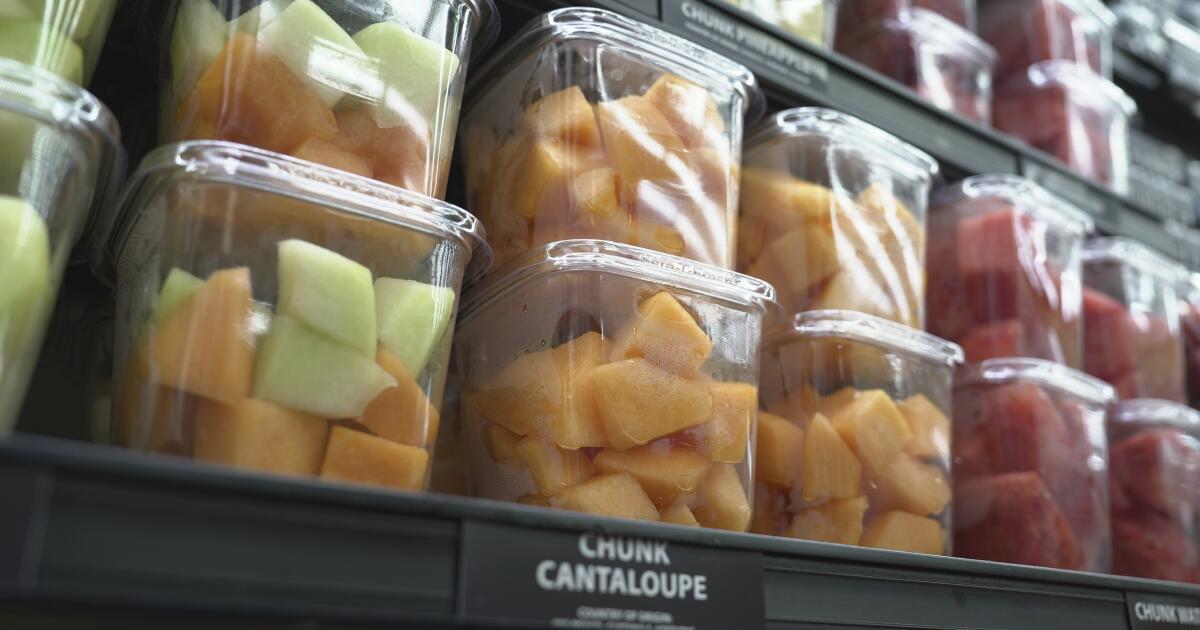
Snacks such as cookies, granola bars, candy and popcorn were the most commonly recalled food in 2023, most of which had undeclared allergens. Cantaloupe found with potential salmonella contamination and other fruits with potential listeria contamination were the next most commonly recalled foods.

In February, Modesto-based Rizo Lopez Foods Inc. was found to be the source of an outbreak of listeria food poisoning dating back to 2014 that killed two people and sickened more than two dozen. The cheese and dairy company recalled all of its packaged goods, including various types of cotija cheese, yogurt and sour cream.

Last year’s food recall numbers are part of a natural upward trend back to pre-pandemic levels, Murray said. The dip in recalls in 2021 can be attributed to a multitude of reasons, including the closures of meat processors and restaurants as well as a decrease in food inspections, creating fewer opportunities for recalls.

“Without somebody noticing there’s a problem, you never get to the point of actually saying we have a product that we should recall,” Murray said.

Cutting down food recalls is as simple as reading the fine print, she added.

“They just need to care more,” Murray said.

Food recalls across the U.S. last year continued to rise following a drop during the pandemic, with nearly half due to undeclared allergens, according to a report released Thursday.

The U.S. Department of Agriculture — which regulates meat, poultry, and eggs — and the U.S. Food and Drug Administration — which regulates all other foods — recorded a total of 313 food recalls and public health alerts in 2023, according to the report published by Public Interest Research Group.

Public health alerts are issued for products with potential health risks but that cannot be recalled. For example, the product may be no longer available for purchase or the source of the food-borne illness had not been identified yet.

California retailers sold 139, or 44%, of last year’s recalled products, only second to New York retailers who sold 146 recalled products, according to PIRG consumer watchdog Teresa Murray. Texas followed California with 133 recalled products.

“New York, California and Texas are heavily populated states and they happen to be more culturally diverse,” she said. “With a lot of ethnic grocery stores and diverse populations, it’s not surprising.”

While FDA recalled roughly the same number of products every year since the pandemic, USDA issued 31% more recalls in 2023 compared to the previous year, according to the report. Some of that increase comes from the uptick in products found with undeclared allergens, which has been the leading cause for food recalls in recent years, Murray said.

A federal law passed in 2021 introduced sesame as the ninth allergen required on food labels at the start of 2023, the first time an allergen was added to the list in nearly 20 years. Other allergens on the list include milk, eggs, fish, and peanuts.

The addition of sesame coincided with a 27% increase in products found with undeclared allergens in 2023. But Murray said manufactures had ample time to prepare for the change. She blamed some recalls and health alerts to a lack of care and attention from manufacturers, emphasizing the importance of disclosing the presence of allergens in products to the American public, 6% of who have a food allergy.

“Allergens are serious. They can kill people,” she said. “The allergens are different from just a food intolerance that can give you an upset stomach.”

Snacks such as cookies, granola bars, candy and popcorn were the most commonly recalled food in 2023, most of which had undeclared allergens. Cantaloupe found with potential salmonella contamination and other fruits with potential listeria contamination were the next most commonly recalled foods.

In February, Modesto-based Rizo Lopez Foods Inc. was found to be the source of an outbreak of listeria food poisoning dating back to 2014 that killed two people and sickened more than two dozen. The cheese and dairy company recalled all of its packaged goods, including various types of cotija cheese, yogurt and sour cream.

Last year’s food recall numbers are part of a natural upward trend back to pre-pandemic levels, Murray said. The dip in recalls in 2021 can be attributed to a multitude of reasons, including the closures of meat processors and restaurants as well as a decrease in food inspections, creating fewer opportunities for recalls.

“Without somebody noticing there’s a problem, you never get to the point of actually saying we have a product that we should recall,” Murray said.

Cutting down food recalls is as simple as reading the fine print, she added.

“They just need to care more,” Murray said.

Food recalls across the U.S. last year continued to rise following a drop during the pandemic, with nearly half due to undeclared allergens, according to a report released Thursday.

The U.S. Department of Agriculture — which regulates meat, poultry, and eggs — and the U.S. Food and Drug Administration — which regulates all other foods — recorded a total of 313 food recalls and public health alerts in 2023, according to the report published by Public Interest Research Group.

Public health alerts are issued for products with potential health risks but that cannot be recalled. For example, the product may be no longer available for purchase or the source of the food-borne illness had not been identified yet.

California retailers sold 139, or 44%, of last year’s recalled products, only second to New York retailers who sold 146 recalled products, according to PIRG consumer watchdog Teresa Murray. Texas followed California with 133 recalled products.

“New York, California and Texas are heavily populated states and they happen to be more culturally diverse,” she said. “With a lot of ethnic grocery stores and diverse populations, it’s not surprising.”

While FDA recalled roughly the same number of products every year since the pandemic, USDA issued 31% more recalls in 2023 compared to the previous year, according to the report. Some of that increase comes from the uptick in products found with undeclared allergens, which has been the leading cause for food recalls in recent years, Murray said.

A federal law passed in 2021 introduced sesame as the ninth allergen required on food labels at the start of 2023, the first time an allergen was added to the list in nearly 20 years. Other allergens on the list include milk, eggs, fish, and peanuts.

The addition of sesame coincided with a 27% increase in products found with undeclared allergens in 2023. But Murray said manufactures had ample time to prepare for the change. She blamed some recalls and health alerts to a lack of care and attention from manufacturers, emphasizing the importance of disclosing the presence of allergens in products to the American public, 6% of who have a food allergy.

“Allergens are serious. They can kill people,” she said. “The allergens are different from just a food intolerance that can give you an upset stomach.”

Snacks such as cookies, granola bars, candy and popcorn were the most commonly recalled food in 2023, most of which had undeclared allergens. Cantaloupe found with potential salmonella contamination and other fruits with potential listeria contamination were the next most commonly recalled foods.

In February, Modesto-based Rizo Lopez Foods Inc. was found to be the source of an outbreak of listeria food poisoning dating back to 2014 that killed two people and sickened more than two dozen. The cheese and dairy company recalled all of its packaged goods, including various types of cotija cheese, yogurt and sour cream.

Last year’s food recall numbers are part of a natural upward trend back to pre-pandemic levels, Murray said. The dip in recalls in 2021 can be attributed to a multitude of reasons, including the closures of meat processors and restaurants as well as a decrease in food inspections, creating fewer opportunities for recalls.

“Without somebody noticing there’s a problem, you never get to the point of actually saying we have a product that we should recall,” Murray said.

Cutting down food recalls is as simple as reading the fine print, she added.

“They just need to care more,” Murray said.

Food recalls across the U.S. last year continued to rise following a drop during the pandemic, with nearly half due to undeclared allergens, according to a report released Thursday.

The U.S. Department of Agriculture — which regulates meat, poultry, and eggs — and the U.S. Food and Drug Administration — which regulates all other foods — recorded a total of 313 food recalls and public health alerts in 2023, according to the report published by Public Interest Research Group.

Public health alerts are issued for products with potential health risks but that cannot be recalled. For example, the product may be no longer available for purchase or the source of the food-borne illness had not been identified yet.

California retailers sold 139, or 44%, of last year’s recalled products, only second to New York retailers who sold 146 recalled products, according to PIRG consumer watchdog Teresa Murray. Texas followed California with 133 recalled products.

“New York, California and Texas are heavily populated states and they happen to be more culturally diverse,” she said. “With a lot of ethnic grocery stores and diverse populations, it’s not surprising.”

While FDA recalled roughly the same number of products every year since the pandemic, USDA issued 31% more recalls in 2023 compared to the previous year, according to the report. Some of that increase comes from the uptick in products found with undeclared allergens, which has been the leading cause for food recalls in recent years, Murray said.

A federal law passed in 2021 introduced sesame as the ninth allergen required on food labels at the start of 2023, the first time an allergen was added to the list in nearly 20 years. Other allergens on the list include milk, eggs, fish, and peanuts.

The addition of sesame coincided with a 27% increase in products found with undeclared allergens in 2023. But Murray said manufactures had ample time to prepare for the change. She blamed some recalls and health alerts to a lack of care and attention from manufacturers, emphasizing the importance of disclosing the presence of allergens in products to the American public, 6% of who have a food allergy.

“Allergens are serious. They can kill people,” she said. “The allergens are different from just a food intolerance that can give you an upset stomach.”

Snacks such as cookies, granola bars, candy and popcorn were the most commonly recalled food in 2023, most of which had undeclared allergens. Cantaloupe found with potential salmonella contamination and other fruits with potential listeria contamination were the next most commonly recalled foods.

In February, Modesto-based Rizo Lopez Foods Inc. was found to be the source of an outbreak of listeria food poisoning dating back to 2014 that killed two people and sickened more than two dozen. The cheese and dairy company recalled all of its packaged goods, including various types of cotija cheese, yogurt and sour cream.

Last year’s food recall numbers are part of a natural upward trend back to pre-pandemic levels, Murray said. The dip in recalls in 2021 can be attributed to a multitude of reasons, including the closures of meat processors and restaurants as well as a decrease in food inspections, creating fewer opportunities for recalls.

“Without somebody noticing there’s a problem, you never get to the point of actually saying we have a product that we should recall,” Murray said.

Cutting down food recalls is as simple as reading the fine print, she added.

“They just need to care more,” Murray said.

Leave a Reply Cancel reply

Your email address will not be published. Required fields are marked *

Recommended

How ‘Avatar: The Way of Water’ can help give theaters a lift

3 years ago

Israel Ziv, a Retired General, Grabbed His Pistol to Take on Hamas

3 years ago

Embalmer by day, rock star by night: How Carla Harvey bridges death and music in L.A.

5 months ago

Britney Spears says she will ‘never return’ to music biz

2 years ago
Yonkers Observer

© 2025 Yonkers Observer or its affiliated companies.

Navigate Site

  • About
  • Advertise
  • Terms & Conditions
  • Privacy Policy
  • Disclaimer
  • Contact

Follow Us

No Result
View All Result
  • Home
  • World
  • Politics
  • Finance
  • Technology
  • Health
  • Culture
  • Entertainment
  • Trend

© 2025 Yonkers Observer or its affiliated companies.

Welcome Back!

Login to your account below

Forgotten Password?

Retrieve your password

Please enter your username or email address to reset your password.

Log In