

Gustavo’s gone.
The Hollywood Bowl felt a little forlorn Tuesday night after four long evenings of boisterous 18,000-strong crowds showing L.A.’s many-splendored love for Gustavo Dudamel.
He was off to New York or almost — Dudamel did quietly fit in a conversation at the Grammy Museum on Tuesday with Anthony Hopkins about the actor’s new dreamy album, “Life Is a Dream.” There were no more lines for many different Dudamel T-shirts, just leftover Hollywood Bowl ones, and no wait for popcorn or ice cream. The Bowl wasn’t more than a third full for a Beethoven program. That’s not a bad turnout, but we were mostly quiet as mice (until noisy choppers arrived near the end).
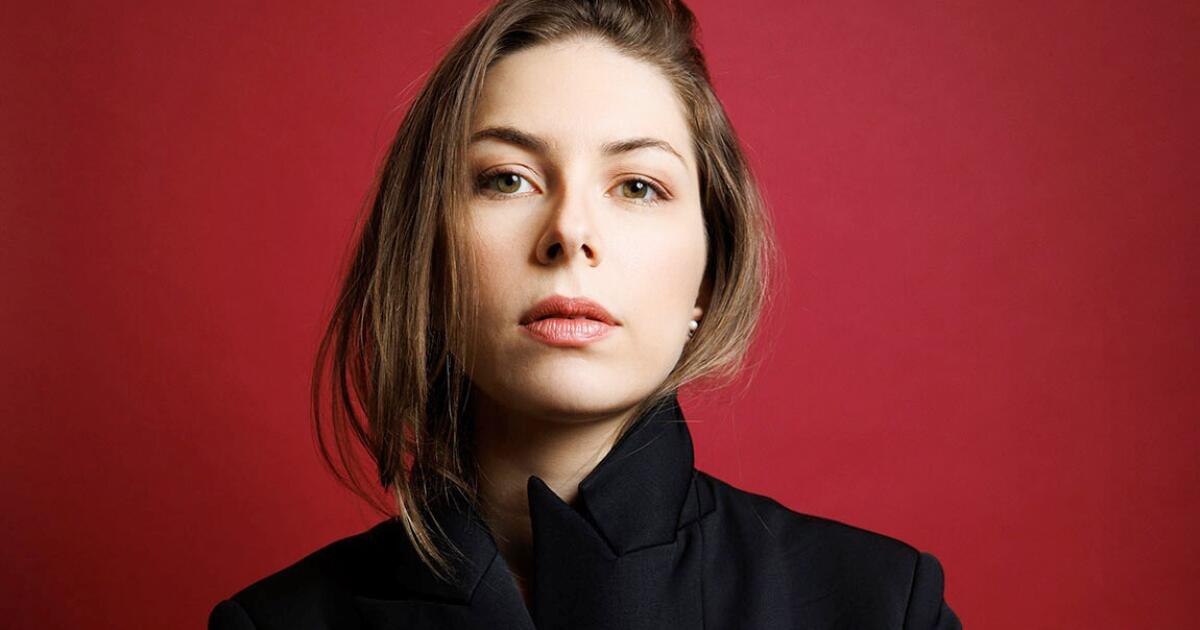
But this also left Anna Handler, who becomes the Los Angeles Philharmonic’s conductor-in-residence this fall, with the trickiest conducting assignment of the summer anywhere. At 30 and a former Dudamel fellow, she represents a generation shift for an orchestra that seeks eternal youth. The orchestra was said to have fallen for her when she made her Bowl debut last summer.
Even so, Tuesday she faced an orchestra that had just returned a week earlier from a grueling U.K. tour with Dudamel before jumping into the emotional and grueling farewell Bowl extravaganza. That began with a performance of Beethoven’s Ninth that was a highlight of Dudamel’s 17-year L.A. Phil tenure and instantly part of Bowl lore.
How much juice could the orchestra have left? The video monitors showed many substitute players. On the other hand, this was also an opportunity for the L.A. Phil to celebrate itself. Along with an atmospheric five-minute opener by a young British composer, Grace-Evangeline Mason, the program combined two major middle-period Beethoven scores — his famous Fifth Symphony and his Triple Concerto, with a trio of L.A. Phil principal players.
Handler’s reputation thus far is as a musician of her time, fascinated by A.I. and all else of her era. This fall she starts as music director of the Ulster Orchestra, bringing innovation to techy Ireland. At the other extreme, she becomes artist-in-residence of the Beethoven-Haus Bonn, where she will serve as pianist, conductor and curator in Beethoven’s birthplace. Keeping Beethoven lively will be her mission as Bonn and the world mark the 200th anniversary of Beethoven’s death in 2027.
However, reinventing Beethoven at the Bowl, doing so following Dudamel and with little rehearsal time, could easily become a fool’s errand. Handler, instead, went for stability. The Triple Concerto, for instance, is full of obstacles. Often star soloists are employed, each exhibiting ego and leaving the conductor as ringmaster.
This time, though, Bing Wang (associate concertmaster), Robert deMaine (principal cello) and Joanne Pearce Martin (the orchestra’s pianist) have long been playing together in the orchestra, as well as in chamber music settings. Individually, they are stylists with distinct musical personalities, but they are exceptionally practiced in fitting in not only with each other but also with the orchestra at large. Together they gave the concerto a sense of unity that is rare, albeit with fewer fireworks. Handler appeared to defer to the soloists, while the trio looked to encourage her. Beethoven sans ego, in almost any setting, is a marvel.
Handler’s Fifth was also straightforward. She relied on the advantages of a modern orchestra rather than sampling the fashionable music-history approach. Hers is a big, blended sound. The video cameras caught her smiling happily simply letting Beethoven be. It was old-school, but not parochial, Beethoven, which proved refreshing on a warm night. The new amplification was her friend.
Mason introduced from the stage her “Ablaze the Moon,” written in 2023 when she was 29, as a kind of song without words, although written to the words of early 20th century American poet Sara Teasdale’s “Tonight.” The score follows the text in conjuring through glittery orchestral writing the golden moon (ours wasn’t quite yet full) and our eternal twinkling celestial space. It was a nice invitation to settle in for alfresco Beethoven.
When Handler returns to the L.A. Phil at Walt Disney Concert Hall in March, it will be to give the West Coast premiere of Philip Glass’ Symphony No. 15 (“Lincoln”), the one that made news when the composer withdrew it from a National Symphony Semiquincentennial commission, because he feared the Kennedy Center had lost touch with Lincoln. In May, Handler will lead the West Coast premiere of John Williams’ new Piano Concerto written for, and performed by, Emanuel Ax. She will also act as pianist and curator in a special L.A. Phil all-Beethoven chamber music concert on March 14, a dozen days before the 200th anniversary of Beethoven’s death.
Handler may already have become indispensable.

Gustavo’s gone.
The Hollywood Bowl felt a little forlorn Tuesday night after four long evenings of boisterous 18,000-strong crowds showing L.A.’s many-splendored love for Gustavo Dudamel.
He was off to New York or almost — Dudamel did quietly fit in a conversation at the Grammy Museum on Tuesday with Anthony Hopkins about the actor’s new dreamy album, “Life Is a Dream.” There were no more lines for many different Dudamel T-shirts, just leftover Hollywood Bowl ones, and no wait for popcorn or ice cream. The Bowl wasn’t more than a third full for a Beethoven program. That’s not a bad turnout, but we were mostly quiet as mice (until noisy choppers arrived near the end).
But this also left Anna Handler, who becomes the Los Angeles Philharmonic’s conductor-in-residence this fall, with the trickiest conducting assignment of the summer anywhere. At 30 and a former Dudamel fellow, she represents a generation shift for an orchestra that seeks eternal youth. The orchestra was said to have fallen for her when she made her Bowl debut last summer.
Even so, Tuesday she faced an orchestra that had just returned a week earlier from a grueling U.K. tour with Dudamel before jumping into the emotional and grueling farewell Bowl extravaganza. That began with a performance of Beethoven’s Ninth that was a highlight of Dudamel’s 17-year L.A. Phil tenure and instantly part of Bowl lore.
How much juice could the orchestra have left? The video monitors showed many substitute players. On the other hand, this was also an opportunity for the L.A. Phil to celebrate itself. Along with an atmospheric five-minute opener by a young British composer, Grace-Evangeline Mason, the program combined two major middle-period Beethoven scores — his famous Fifth Symphony and his Triple Concerto, with a trio of L.A. Phil principal players.
Handler’s reputation thus far is as a musician of her time, fascinated by A.I. and all else of her era. This fall she starts as music director of the Ulster Orchestra, bringing innovation to techy Ireland. At the other extreme, she becomes artist-in-residence of the Beethoven-Haus Bonn, where she will serve as pianist, conductor and curator in Beethoven’s birthplace. Keeping Beethoven lively will be her mission as Bonn and the world mark the 200th anniversary of Beethoven’s death in 2027.
However, reinventing Beethoven at the Bowl, doing so following Dudamel and with little rehearsal time, could easily become a fool’s errand. Handler, instead, went for stability. The Triple Concerto, for instance, is full of obstacles. Often star soloists are employed, each exhibiting ego and leaving the conductor as ringmaster.
This time, though, Bing Wang (associate concertmaster), Robert deMaine (principal cello) and Joanne Pearce Martin (the orchestra’s pianist) have long been playing together in the orchestra, as well as in chamber music settings. Individually, they are stylists with distinct musical personalities, but they are exceptionally practiced in fitting in not only with each other but also with the orchestra at large. Together they gave the concerto a sense of unity that is rare, albeit with fewer fireworks. Handler appeared to defer to the soloists, while the trio looked to encourage her. Beethoven sans ego, in almost any setting, is a marvel.
Handler’s Fifth was also straightforward. She relied on the advantages of a modern orchestra rather than sampling the fashionable music-history approach. Hers is a big, blended sound. The video cameras caught her smiling happily simply letting Beethoven be. It was old-school, but not parochial, Beethoven, which proved refreshing on a warm night. The new amplification was her friend.
Mason introduced from the stage her “Ablaze the Moon,” written in 2023 when she was 29, as a kind of song without words, although written to the words of early 20th century American poet Sara Teasdale’s “Tonight.” The score follows the text in conjuring through glittery orchestral writing the golden moon (ours wasn’t quite yet full) and our eternal twinkling celestial space. It was a nice invitation to settle in for alfresco Beethoven.
When Handler returns to the L.A. Phil at Walt Disney Concert Hall in March, it will be to give the West Coast premiere of Philip Glass’ Symphony No. 15 (“Lincoln”), the one that made news when the composer withdrew it from a National Symphony Semiquincentennial commission, because he feared the Kennedy Center had lost touch with Lincoln. In May, Handler will lead the West Coast premiere of John Williams’ new Piano Concerto written for, and performed by, Emanuel Ax. She will also act as pianist and curator in a special L.A. Phil all-Beethoven chamber music concert on March 14, a dozen days before the 200th anniversary of Beethoven’s death.
Handler may already have become indispensable.

Gustavo’s gone.
The Hollywood Bowl felt a little forlorn Tuesday night after four long evenings of boisterous 18,000-strong crowds showing L.A.’s many-splendored love for Gustavo Dudamel.
He was off to New York or almost — Dudamel did quietly fit in a conversation at the Grammy Museum on Tuesday with Anthony Hopkins about the actor’s new dreamy album, “Life Is a Dream.” There were no more lines for many different Dudamel T-shirts, just leftover Hollywood Bowl ones, and no wait for popcorn or ice cream. The Bowl wasn’t more than a third full for a Beethoven program. That’s not a bad turnout, but we were mostly quiet as mice (until noisy choppers arrived near the end).
But this also left Anna Handler, who becomes the Los Angeles Philharmonic’s conductor-in-residence this fall, with the trickiest conducting assignment of the summer anywhere. At 30 and a former Dudamel fellow, she represents a generation shift for an orchestra that seeks eternal youth. The orchestra was said to have fallen for her when she made her Bowl debut last summer.
Even so, Tuesday she faced an orchestra that had just returned a week earlier from a grueling U.K. tour with Dudamel before jumping into the emotional and grueling farewell Bowl extravaganza. That began with a performance of Beethoven’s Ninth that was a highlight of Dudamel’s 17-year L.A. Phil tenure and instantly part of Bowl lore.
How much juice could the orchestra have left? The video monitors showed many substitute players. On the other hand, this was also an opportunity for the L.A. Phil to celebrate itself. Along with an atmospheric five-minute opener by a young British composer, Grace-Evangeline Mason, the program combined two major middle-period Beethoven scores — his famous Fifth Symphony and his Triple Concerto, with a trio of L.A. Phil principal players.
Handler’s reputation thus far is as a musician of her time, fascinated by A.I. and all else of her era. This fall she starts as music director of the Ulster Orchestra, bringing innovation to techy Ireland. At the other extreme, she becomes artist-in-residence of the Beethoven-Haus Bonn, where she will serve as pianist, conductor and curator in Beethoven’s birthplace. Keeping Beethoven lively will be her mission as Bonn and the world mark the 200th anniversary of Beethoven’s death in 2027.
However, reinventing Beethoven at the Bowl, doing so following Dudamel and with little rehearsal time, could easily become a fool’s errand. Handler, instead, went for stability. The Triple Concerto, for instance, is full of obstacles. Often star soloists are employed, each exhibiting ego and leaving the conductor as ringmaster.
This time, though, Bing Wang (associate concertmaster), Robert deMaine (principal cello) and Joanne Pearce Martin (the orchestra’s pianist) have long been playing together in the orchestra, as well as in chamber music settings. Individually, they are stylists with distinct musical personalities, but they are exceptionally practiced in fitting in not only with each other but also with the orchestra at large. Together they gave the concerto a sense of unity that is rare, albeit with fewer fireworks. Handler appeared to defer to the soloists, while the trio looked to encourage her. Beethoven sans ego, in almost any setting, is a marvel.
Handler’s Fifth was also straightforward. She relied on the advantages of a modern orchestra rather than sampling the fashionable music-history approach. Hers is a big, blended sound. The video cameras caught her smiling happily simply letting Beethoven be. It was old-school, but not parochial, Beethoven, which proved refreshing on a warm night. The new amplification was her friend.
Mason introduced from the stage her “Ablaze the Moon,” written in 2023 when she was 29, as a kind of song without words, although written to the words of early 20th century American poet Sara Teasdale’s “Tonight.” The score follows the text in conjuring through glittery orchestral writing the golden moon (ours wasn’t quite yet full) and our eternal twinkling celestial space. It was a nice invitation to settle in for alfresco Beethoven.
When Handler returns to the L.A. Phil at Walt Disney Concert Hall in March, it will be to give the West Coast premiere of Philip Glass’ Symphony No. 15 (“Lincoln”), the one that made news when the composer withdrew it from a National Symphony Semiquincentennial commission, because he feared the Kennedy Center had lost touch with Lincoln. In May, Handler will lead the West Coast premiere of John Williams’ new Piano Concerto written for, and performed by, Emanuel Ax. She will also act as pianist and curator in a special L.A. Phil all-Beethoven chamber music concert on March 14, a dozen days before the 200th anniversary of Beethoven’s death.
Handler may already have become indispensable.
Gustavo’s gone.
The Hollywood Bowl felt a little forlorn Tuesday night after four long evenings of boisterous 18,000-strong crowds showing L.A.’s many-splendored love for Gustavo Dudamel.
He was off to New York or almost — Dudamel did quietly fit in a conversation at the Grammy Museum on Tuesday with Anthony Hopkins about the actor’s new dreamy album, “Life Is a Dream.” There were no more lines for many different Dudamel T-shirts, just leftover Hollywood Bowl ones, and no wait for popcorn or ice cream. The Bowl wasn’t more than a third full for a Beethoven program. That’s not a bad turnout, but we were mostly quiet as mice (until noisy choppers arrived near the end).
But this also left Anna Handler, who becomes the Los Angeles Philharmonic’s conductor-in-residence this fall, with the trickiest conducting assignment of the summer anywhere. At 30 and a former Dudamel fellow, she represents a generation shift for an orchestra that seeks eternal youth. The orchestra was said to have fallen for her when she made her Bowl debut last summer.
Even so, Tuesday she faced an orchestra that had just returned a week earlier from a grueling U.K. tour with Dudamel before jumping into the emotional and grueling farewell Bowl extravaganza. That began with a performance of Beethoven’s Ninth that was a highlight of Dudamel’s 17-year L.A. Phil tenure and instantly part of Bowl lore.
How much juice could the orchestra have left? The video monitors showed many substitute players. On the other hand, this was also an opportunity for the L.A. Phil to celebrate itself. Along with an atmospheric five-minute opener by a young British composer, Grace-Evangeline Mason, the program combined two major middle-period Beethoven scores — his famous Fifth Symphony and his Triple Concerto, with a trio of L.A. Phil principal players.
Handler’s reputation thus far is as a musician of her time, fascinated by A.I. and all else of her era. This fall she starts as music director of the Ulster Orchestra, bringing innovation to techy Ireland. At the other extreme, she becomes artist-in-residence of the Beethoven-Haus Bonn, where she will serve as pianist, conductor and curator in Beethoven’s birthplace. Keeping Beethoven lively will be her mission as Bonn and the world mark the 200th anniversary of Beethoven’s death in 2027.
However, reinventing Beethoven at the Bowl, doing so following Dudamel and with little rehearsal time, could easily become a fool’s errand. Handler, instead, went for stability. The Triple Concerto, for instance, is full of obstacles. Often star soloists are employed, each exhibiting ego and leaving the conductor as ringmaster.
This time, though, Bing Wang (associate concertmaster), Robert deMaine (principal cello) and Joanne Pearce Martin (the orchestra’s pianist) have long been playing together in the orchestra, as well as in chamber music settings. Individually, they are stylists with distinct musical personalities, but they are exceptionally practiced in fitting in not only with each other but also with the orchestra at large. Together they gave the concerto a sense of unity that is rare, albeit with fewer fireworks. Handler appeared to defer to the soloists, while the trio looked to encourage her. Beethoven sans ego, in almost any setting, is a marvel.
Handler’s Fifth was also straightforward. She relied on the advantages of a modern orchestra rather than sampling the fashionable music-history approach. Hers is a big, blended sound. The video cameras caught her smiling happily simply letting Beethoven be. It was old-school, but not parochial, Beethoven, which proved refreshing on a warm night. The new amplification was her friend.
Mason introduced from the stage her “Ablaze the Moon,” written in 2023 when she was 29, as a kind of song without words, although written to the words of early 20th century American poet Sara Teasdale’s “Tonight.” The score follows the text in conjuring through glittery orchestral writing the golden moon (ours wasn’t quite yet full) and our eternal twinkling celestial space. It was a nice invitation to settle in for alfresco Beethoven.
When Handler returns to the L.A. Phil at Walt Disney Concert Hall in March, it will be to give the West Coast premiere of Philip Glass’ Symphony No. 15 (“Lincoln”), the one that made news when the composer withdrew it from a National Symphony Semiquincentennial commission, because he feared the Kennedy Center had lost touch with Lincoln. In May, Handler will lead the West Coast premiere of John Williams’ new Piano Concerto written for, and performed by, Emanuel Ax. She will also act as pianist and curator in a special L.A. Phil all-Beethoven chamber music concert on March 14, a dozen days before the 200th anniversary of Beethoven’s death.
Handler may already have become indispensable.

Gustavo’s gone.
The Hollywood Bowl felt a little forlorn Tuesday night after four long evenings of boisterous 18,000-strong crowds showing L.A.’s many-splendored love for Gustavo Dudamel.
He was off to New York or almost — Dudamel did quietly fit in a conversation at the Grammy Museum on Tuesday with Anthony Hopkins about the actor’s new dreamy album, “Life Is a Dream.” There were no more lines for many different Dudamel T-shirts, just leftover Hollywood Bowl ones, and no wait for popcorn or ice cream. The Bowl wasn’t more than a third full for a Beethoven program. That’s not a bad turnout, but we were mostly quiet as mice (until noisy choppers arrived near the end).
But this also left Anna Handler, who becomes the Los Angeles Philharmonic’s conductor-in-residence this fall, with the trickiest conducting assignment of the summer anywhere. At 30 and a former Dudamel fellow, she represents a generation shift for an orchestra that seeks eternal youth. The orchestra was said to have fallen for her when she made her Bowl debut last summer.
Even so, Tuesday she faced an orchestra that had just returned a week earlier from a grueling U.K. tour with Dudamel before jumping into the emotional and grueling farewell Bowl extravaganza. That began with a performance of Beethoven’s Ninth that was a highlight of Dudamel’s 17-year L.A. Phil tenure and instantly part of Bowl lore.
How much juice could the orchestra have left? The video monitors showed many substitute players. On the other hand, this was also an opportunity for the L.A. Phil to celebrate itself. Along with an atmospheric five-minute opener by a young British composer, Grace-Evangeline Mason, the program combined two major middle-period Beethoven scores — his famous Fifth Symphony and his Triple Concerto, with a trio of L.A. Phil principal players.
Handler’s reputation thus far is as a musician of her time, fascinated by A.I. and all else of her era. This fall she starts as music director of the Ulster Orchestra, bringing innovation to techy Ireland. At the other extreme, she becomes artist-in-residence of the Beethoven-Haus Bonn, where she will serve as pianist, conductor and curator in Beethoven’s birthplace. Keeping Beethoven lively will be her mission as Bonn and the world mark the 200th anniversary of Beethoven’s death in 2027.
However, reinventing Beethoven at the Bowl, doing so following Dudamel and with little rehearsal time, could easily become a fool’s errand. Handler, instead, went for stability. The Triple Concerto, for instance, is full of obstacles. Often star soloists are employed, each exhibiting ego and leaving the conductor as ringmaster.
This time, though, Bing Wang (associate concertmaster), Robert deMaine (principal cello) and Joanne Pearce Martin (the orchestra’s pianist) have long been playing together in the orchestra, as well as in chamber music settings. Individually, they are stylists with distinct musical personalities, but they are exceptionally practiced in fitting in not only with each other but also with the orchestra at large. Together they gave the concerto a sense of unity that is rare, albeit with fewer fireworks. Handler appeared to defer to the soloists, while the trio looked to encourage her. Beethoven sans ego, in almost any setting, is a marvel.
Handler’s Fifth was also straightforward. She relied on the advantages of a modern orchestra rather than sampling the fashionable music-history approach. Hers is a big, blended sound. The video cameras caught her smiling happily simply letting Beethoven be. It was old-school, but not parochial, Beethoven, which proved refreshing on a warm night. The new amplification was her friend.
Mason introduced from the stage her “Ablaze the Moon,” written in 2023 when she was 29, as a kind of song without words, although written to the words of early 20th century American poet Sara Teasdale’s “Tonight.” The score follows the text in conjuring through glittery orchestral writing the golden moon (ours wasn’t quite yet full) and our eternal twinkling celestial space. It was a nice invitation to settle in for alfresco Beethoven.
When Handler returns to the L.A. Phil at Walt Disney Concert Hall in March, it will be to give the West Coast premiere of Philip Glass’ Symphony No. 15 (“Lincoln”), the one that made news when the composer withdrew it from a National Symphony Semiquincentennial commission, because he feared the Kennedy Center had lost touch with Lincoln. In May, Handler will lead the West Coast premiere of John Williams’ new Piano Concerto written for, and performed by, Emanuel Ax. She will also act as pianist and curator in a special L.A. Phil all-Beethoven chamber music concert on March 14, a dozen days before the 200th anniversary of Beethoven’s death.
Handler may already have become indispensable.
Gustavo’s gone.
The Hollywood Bowl felt a little forlorn Tuesday night after four long evenings of boisterous 18,000-strong crowds showing L.A.’s many-splendored love for Gustavo Dudamel.
He was off to New York or almost — Dudamel did quietly fit in a conversation at the Grammy Museum on Tuesday with Anthony Hopkins about the actor’s new dreamy album, “Life Is a Dream.” There were no more lines for many different Dudamel T-shirts, just leftover Hollywood Bowl ones, and no wait for popcorn or ice cream. The Bowl wasn’t more than a third full for a Beethoven program. That’s not a bad turnout, but we were mostly quiet as mice (until noisy choppers arrived near the end).
But this also left Anna Handler, who becomes the Los Angeles Philharmonic’s conductor-in-residence this fall, with the trickiest conducting assignment of the summer anywhere. At 30 and a former Dudamel fellow, she represents a generation shift for an orchestra that seeks eternal youth. The orchestra was said to have fallen for her when she made her Bowl debut last summer.
Even so, Tuesday she faced an orchestra that had just returned a week earlier from a grueling U.K. tour with Dudamel before jumping into the emotional and grueling farewell Bowl extravaganza. That began with a performance of Beethoven’s Ninth that was a highlight of Dudamel’s 17-year L.A. Phil tenure and instantly part of Bowl lore.
How much juice could the orchestra have left? The video monitors showed many substitute players. On the other hand, this was also an opportunity for the L.A. Phil to celebrate itself. Along with an atmospheric five-minute opener by a young British composer, Grace-Evangeline Mason, the program combined two major middle-period Beethoven scores — his famous Fifth Symphony and his Triple Concerto, with a trio of L.A. Phil principal players.
Handler’s reputation thus far is as a musician of her time, fascinated by A.I. and all else of her era. This fall she starts as music director of the Ulster Orchestra, bringing innovation to techy Ireland. At the other extreme, she becomes artist-in-residence of the Beethoven-Haus Bonn, where she will serve as pianist, conductor and curator in Beethoven’s birthplace. Keeping Beethoven lively will be her mission as Bonn and the world mark the 200th anniversary of Beethoven’s death in 2027.
However, reinventing Beethoven at the Bowl, doing so following Dudamel and with little rehearsal time, could easily become a fool’s errand. Handler, instead, went for stability. The Triple Concerto, for instance, is full of obstacles. Often star soloists are employed, each exhibiting ego and leaving the conductor as ringmaster.
This time, though, Bing Wang (associate concertmaster), Robert deMaine (principal cello) and Joanne Pearce Martin (the orchestra’s pianist) have long been playing together in the orchestra, as well as in chamber music settings. Individually, they are stylists with distinct musical personalities, but they are exceptionally practiced in fitting in not only with each other but also with the orchestra at large. Together they gave the concerto a sense of unity that is rare, albeit with fewer fireworks. Handler appeared to defer to the soloists, while the trio looked to encourage her. Beethoven sans ego, in almost any setting, is a marvel.
Handler’s Fifth was also straightforward. She relied on the advantages of a modern orchestra rather than sampling the fashionable music-history approach. Hers is a big, blended sound. The video cameras caught her smiling happily simply letting Beethoven be. It was old-school, but not parochial, Beethoven, which proved refreshing on a warm night. The new amplification was her friend.
Mason introduced from the stage her “Ablaze the Moon,” written in 2023 when she was 29, as a kind of song without words, although written to the words of early 20th century American poet Sara Teasdale’s “Tonight.” The score follows the text in conjuring through glittery orchestral writing the golden moon (ours wasn’t quite yet full) and our eternal twinkling celestial space. It was a nice invitation to settle in for alfresco Beethoven.
When Handler returns to the L.A. Phil at Walt Disney Concert Hall in March, it will be to give the West Coast premiere of Philip Glass’ Symphony No. 15 (“Lincoln”), the one that made news when the composer withdrew it from a National Symphony Semiquincentennial commission, because he feared the Kennedy Center had lost touch with Lincoln. In May, Handler will lead the West Coast premiere of John Williams’ new Piano Concerto written for, and performed by, Emanuel Ax. She will also act as pianist and curator in a special L.A. Phil all-Beethoven chamber music concert on March 14, a dozen days before the 200th anniversary of Beethoven’s death.
Handler may already have become indispensable.
Gustavo’s gone.
The Hollywood Bowl felt a little forlorn Tuesday night after four long evenings of boisterous 18,000-strong crowds showing L.A.’s many-splendored love for Gustavo Dudamel.
He was off to New York or almost — Dudamel did quietly fit in a conversation at the Grammy Museum on Tuesday with Anthony Hopkins about the actor’s new dreamy album, “Life Is a Dream.” There were no more lines for many different Dudamel T-shirts, just leftover Hollywood Bowl ones, and no wait for popcorn or ice cream. The Bowl wasn’t more than a third full for a Beethoven program. That’s not a bad turnout, but we were mostly quiet as mice (until noisy choppers arrived near the end).
But this also left Anna Handler, who becomes the Los Angeles Philharmonic’s conductor-in-residence this fall, with the trickiest conducting assignment of the summer anywhere. At 30 and a former Dudamel fellow, she represents a generation shift for an orchestra that seeks eternal youth. The orchestra was said to have fallen for her when she made her Bowl debut last summer.
Even so, Tuesday she faced an orchestra that had just returned a week earlier from a grueling U.K. tour with Dudamel before jumping into the emotional and grueling farewell Bowl extravaganza. That began with a performance of Beethoven’s Ninth that was a highlight of Dudamel’s 17-year L.A. Phil tenure and instantly part of Bowl lore.
How much juice could the orchestra have left? The video monitors showed many substitute players. On the other hand, this was also an opportunity for the L.A. Phil to celebrate itself. Along with an atmospheric five-minute opener by a young British composer, Grace-Evangeline Mason, the program combined two major middle-period Beethoven scores — his famous Fifth Symphony and his Triple Concerto, with a trio of L.A. Phil principal players.
Handler’s reputation thus far is as a musician of her time, fascinated by A.I. and all else of her era. This fall she starts as music director of the Ulster Orchestra, bringing innovation to techy Ireland. At the other extreme, she becomes artist-in-residence of the Beethoven-Haus Bonn, where she will serve as pianist, conductor and curator in Beethoven’s birthplace. Keeping Beethoven lively will be her mission as Bonn and the world mark the 200th anniversary of Beethoven’s death in 2027.
However, reinventing Beethoven at the Bowl, doing so following Dudamel and with little rehearsal time, could easily become a fool’s errand. Handler, instead, went for stability. The Triple Concerto, for instance, is full of obstacles. Often star soloists are employed, each exhibiting ego and leaving the conductor as ringmaster.
This time, though, Bing Wang (associate concertmaster), Robert deMaine (principal cello) and Joanne Pearce Martin (the orchestra’s pianist) have long been playing together in the orchestra, as well as in chamber music settings. Individually, they are stylists with distinct musical personalities, but they are exceptionally practiced in fitting in not only with each other but also with the orchestra at large. Together they gave the concerto a sense of unity that is rare, albeit with fewer fireworks. Handler appeared to defer to the soloists, while the trio looked to encourage her. Beethoven sans ego, in almost any setting, is a marvel.
Handler’s Fifth was also straightforward. She relied on the advantages of a modern orchestra rather than sampling the fashionable music-history approach. Hers is a big, blended sound. The video cameras caught her smiling happily simply letting Beethoven be. It was old-school, but not parochial, Beethoven, which proved refreshing on a warm night. The new amplification was her friend.
Mason introduced from the stage her “Ablaze the Moon,” written in 2023 when she was 29, as a kind of song without words, although written to the words of early 20th century American poet Sara Teasdale’s “Tonight.” The score follows the text in conjuring through glittery orchestral writing the golden moon (ours wasn’t quite yet full) and our eternal twinkling celestial space. It was a nice invitation to settle in for alfresco Beethoven.
When Handler returns to the L.A. Phil at Walt Disney Concert Hall in March, it will be to give the West Coast premiere of Philip Glass’ Symphony No. 15 (“Lincoln”), the one that made news when the composer withdrew it from a National Symphony Semiquincentennial commission, because he feared the Kennedy Center had lost touch with Lincoln. In May, Handler will lead the West Coast premiere of John Williams’ new Piano Concerto written for, and performed by, Emanuel Ax. She will also act as pianist and curator in a special L.A. Phil all-Beethoven chamber music concert on March 14, a dozen days before the 200th anniversary of Beethoven’s death.
Handler may already have become indispensable.
Gustavo’s gone.
The Hollywood Bowl felt a little forlorn Tuesday night after four long evenings of boisterous 18,000-strong crowds showing L.A.’s many-splendored love for Gustavo Dudamel.
He was off to New York or almost — Dudamel did quietly fit in a conversation at the Grammy Museum on Tuesday with Anthony Hopkins about the actor’s new dreamy album, “Life Is a Dream.” There were no more lines for many different Dudamel T-shirts, just leftover Hollywood Bowl ones, and no wait for popcorn or ice cream. The Bowl wasn’t more than a third full for a Beethoven program. That’s not a bad turnout, but we were mostly quiet as mice (until noisy choppers arrived near the end).
But this also left Anna Handler, who becomes the Los Angeles Philharmonic’s conductor-in-residence this fall, with the trickiest conducting assignment of the summer anywhere. At 30 and a former Dudamel fellow, she represents a generation shift for an orchestra that seeks eternal youth. The orchestra was said to have fallen for her when she made her Bowl debut last summer.
Even so, Tuesday she faced an orchestra that had just returned a week earlier from a grueling U.K. tour with Dudamel before jumping into the emotional and grueling farewell Bowl extravaganza. That began with a performance of Beethoven’s Ninth that was a highlight of Dudamel’s 17-year L.A. Phil tenure and instantly part of Bowl lore.
How much juice could the orchestra have left? The video monitors showed many substitute players. On the other hand, this was also an opportunity for the L.A. Phil to celebrate itself. Along with an atmospheric five-minute opener by a young British composer, Grace-Evangeline Mason, the program combined two major middle-period Beethoven scores — his famous Fifth Symphony and his Triple Concerto, with a trio of L.A. Phil principal players.
Handler’s reputation thus far is as a musician of her time, fascinated by A.I. and all else of her era. This fall she starts as music director of the Ulster Orchestra, bringing innovation to techy Ireland. At the other extreme, she becomes artist-in-residence of the Beethoven-Haus Bonn, where she will serve as pianist, conductor and curator in Beethoven’s birthplace. Keeping Beethoven lively will be her mission as Bonn and the world mark the 200th anniversary of Beethoven’s death in 2027.
However, reinventing Beethoven at the Bowl, doing so following Dudamel and with little rehearsal time, could easily become a fool’s errand. Handler, instead, went for stability. The Triple Concerto, for instance, is full of obstacles. Often star soloists are employed, each exhibiting ego and leaving the conductor as ringmaster.
This time, though, Bing Wang (associate concertmaster), Robert deMaine (principal cello) and Joanne Pearce Martin (the orchestra’s pianist) have long been playing together in the orchestra, as well as in chamber music settings. Individually, they are stylists with distinct musical personalities, but they are exceptionally practiced in fitting in not only with each other but also with the orchestra at large. Together they gave the concerto a sense of unity that is rare, albeit with fewer fireworks. Handler appeared to defer to the soloists, while the trio looked to encourage her. Beethoven sans ego, in almost any setting, is a marvel.
Handler’s Fifth was also straightforward. She relied on the advantages of a modern orchestra rather than sampling the fashionable music-history approach. Hers is a big, blended sound. The video cameras caught her smiling happily simply letting Beethoven be. It was old-school, but not parochial, Beethoven, which proved refreshing on a warm night. The new amplification was her friend.
Mason introduced from the stage her “Ablaze the Moon,” written in 2023 when she was 29, as a kind of song without words, although written to the words of early 20th century American poet Sara Teasdale’s “Tonight.” The score follows the text in conjuring through glittery orchestral writing the golden moon (ours wasn’t quite yet full) and our eternal twinkling celestial space. It was a nice invitation to settle in for alfresco Beethoven.
When Handler returns to the L.A. Phil at Walt Disney Concert Hall in March, it will be to give the West Coast premiere of Philip Glass’ Symphony No. 15 (“Lincoln”), the one that made news when the composer withdrew it from a National Symphony Semiquincentennial commission, because he feared the Kennedy Center had lost touch with Lincoln. In May, Handler will lead the West Coast premiere of John Williams’ new Piano Concerto written for, and performed by, Emanuel Ax. She will also act as pianist and curator in a special L.A. Phil all-Beethoven chamber music concert on March 14, a dozen days before the 200th anniversary of Beethoven’s death.
Handler may already have become indispensable.


/m1wzs5pd.JPG)

