

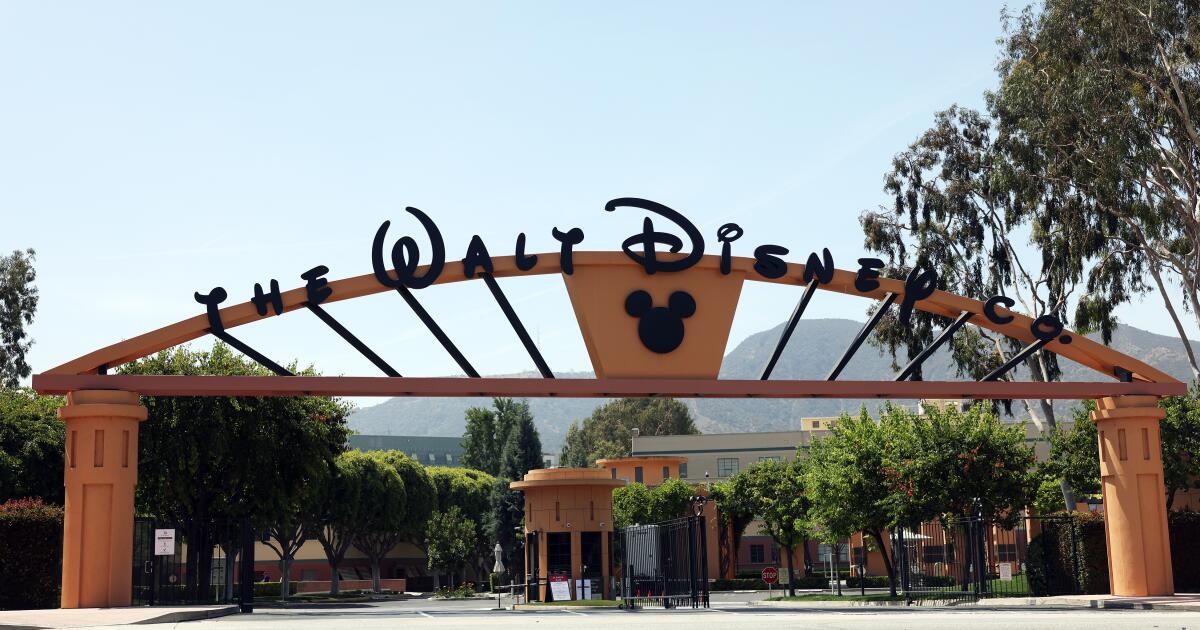

Walt Disney Co. has picked up a vocal ally in its fight against the Federal Communications Commission: one of the panel’s three commissioners.
FCC Commissioner Anna M. Gomez — the panel’s lone Democrat — took a rare step of sending a letter to Disney Chief Executive Officer Josh D’Amaro on Monday to describe what she sees as a pressure campaign to weaken not just Disney’s ABC network — but also all media outlets that provide critical coverage of President Trump.
“What Disney and ABC are facing is not a series of coincidental regulatory actions but a sustained, coordinated campaign of censorship and control, carried out through the weaponization of the FCC’s authority as a federal regulator,” Gomez wrote.
The FCC’s efforts were all about “pressuring a free and independent press and all media into submission,” Gomez wrote in the four-page missive to D’Amaro.
Her outreach comes after the FCC, in a highly unusual move, initiated an early review of the broadcast licenses for ABC stations that Disney owns, including KABC-TV in Los Angeles. Disney owns eight stations and its licenses were not set to expire for two to five years. Now, the company must defend its licenses by providing extensive documentation to demonstrate that its stations serve the public interest.
“Using the licenses of individual local stations as leverage against a parent company is an extraordinary and dangerous misapplication of this agency’s authority,” Gomez wrote.
The FCC also demanded that Disney’s Houston television station explain why the ABC daytime show, “The View,” should be entitled to an exemption from providing equal airtime for a politician whose opponent appears on a program.
Disney has said “The View” was granted an exemption from the FCC’s equal opportunity rule in 2002 and the show has not changed its format or some of its hosts.
The FCC has long granted the exemption to news programs, but this year FCC Chairman Brendan Carr, a Trump appointee, questioned how it was being used and suggested that certain talk shows shouldn’t qualify.
On Thursday, Disney filed a blistering petition to the FCC, challenging its inquiry on “The View,” which began in February when Texas Democrat James Talerico, a candidate for the U.S. Senate, appeared on the show as his campaign was attracting national attention.
The FCC wanted to know why the Texas station didn’t invite other Texas candidates on to “The View.”
Last week, the FCC defended its inquiry.
“Decades ago, Congress passed a law that generally prohibits broadcast television programs from putting a thumb on the scale in favor of one political candidate over another,” the FCC said in a statement. “Congress put protections in place to ensure that covered programs offer legally qualified candidates for office (both Republican and Democrat) equal time on the public airwaves.”
Some conservatives noted that when Democrats were in power in 2023, the FCC opened public comment during a license review for a Fox station in Philadelphia after Fox News, a sister outlet, paid $787 million to settle a lawsuit over misrepresentations about voting machines in 2020. The FCC renewed the station license and did not widen the inquiry.
Gomez has been outspoken about the tactics of her colleague Carr, who steers the agency and influences the direction of the FCC’s regulatory Media Bureau.
For months, Gomez has called out certain FCC actions, which she says represent a danger to 1st Amendment freedoms, including Carr’s criticism of ABC late-night host Jimmy Kimmel, which help prompt Disney’s decision to briefly bench the comedian in September.
Monday’s letter escalated her criticism and gives Disney potent ammunition to use in its legal battle against the FCC.
Disney and the FCC did not immediately comment.
Gomez, a telecommunications attorney, listed four key events, which began when Disney decided to settle a defamation lawsuit brought by Trump one month after he was reelected for a second term.
Some free-speech experts at the time felt Disney had a chance to win that case, which revolved around erroneous statements made by ABC News anchor George Stephanopoulos. Some activists urged Disney to fight.
However, Disney agreed to pay Trump $15 million in late 2024 to make the case go away.
“Whatever the legal calculations behind that decision, its effect was immediate and unmistakable,” Gomez wrote of Disney’s decision to settle the Stephanopoulos case.
“It told this administration that pressure works,” she said. “It told every other company watching that capitulation was an option. And it opened the door to every action that has followed.”
Gomez said the administration’s goal has not been to bring legal challenges that it would have to defend in court, but rather, to prompt TV networks to self-censor and tone down their news coverage about Trump as a way to avoid getting pulled into fights with the president and Carr.
“Most [FCC investigations] are destined never to be brought to any enforcement conclusion that could face judicial review,” Gomez wrote. “That is because the threat is the point.”

Walt Disney Co. has picked up a vocal ally in its fight against the Federal Communications Commission: one of the panel’s three commissioners.
FCC Commissioner Anna M. Gomez — the panel’s lone Democrat — took a rare step of sending a letter to Disney Chief Executive Officer Josh D’Amaro on Monday to describe what she sees as a pressure campaign to weaken not just Disney’s ABC network — but also all media outlets that provide critical coverage of President Trump.
“What Disney and ABC are facing is not a series of coincidental regulatory actions but a sustained, coordinated campaign of censorship and control, carried out through the weaponization of the FCC’s authority as a federal regulator,” Gomez wrote.
The FCC’s efforts were all about “pressuring a free and independent press and all media into submission,” Gomez wrote in the four-page missive to D’Amaro.
Her outreach comes after the FCC, in a highly unusual move, initiated an early review of the broadcast licenses for ABC stations that Disney owns, including KABC-TV in Los Angeles. Disney owns eight stations and its licenses were not set to expire for two to five years. Now, the company must defend its licenses by providing extensive documentation to demonstrate that its stations serve the public interest.
“Using the licenses of individual local stations as leverage against a parent company is an extraordinary and dangerous misapplication of this agency’s authority,” Gomez wrote.
The FCC also demanded that Disney’s Houston television station explain why the ABC daytime show, “The View,” should be entitled to an exemption from providing equal airtime for a politician whose opponent appears on a program.
Disney has said “The View” was granted an exemption from the FCC’s equal opportunity rule in 2002 and the show has not changed its format or some of its hosts.
The FCC has long granted the exemption to news programs, but this year FCC Chairman Brendan Carr, a Trump appointee, questioned how it was being used and suggested that certain talk shows shouldn’t qualify.
On Thursday, Disney filed a blistering petition to the FCC, challenging its inquiry on “The View,” which began in February when Texas Democrat James Talerico, a candidate for the U.S. Senate, appeared on the show as his campaign was attracting national attention.
The FCC wanted to know why the Texas station didn’t invite other Texas candidates on to “The View.”
Last week, the FCC defended its inquiry.
“Decades ago, Congress passed a law that generally prohibits broadcast television programs from putting a thumb on the scale in favor of one political candidate over another,” the FCC said in a statement. “Congress put protections in place to ensure that covered programs offer legally qualified candidates for office (both Republican and Democrat) equal time on the public airwaves.”
Some conservatives noted that when Democrats were in power in 2023, the FCC opened public comment during a license review for a Fox station in Philadelphia after Fox News, a sister outlet, paid $787 million to settle a lawsuit over misrepresentations about voting machines in 2020. The FCC renewed the station license and did not widen the inquiry.
Gomez has been outspoken about the tactics of her colleague Carr, who steers the agency and influences the direction of the FCC’s regulatory Media Bureau.
For months, Gomez has called out certain FCC actions, which she says represent a danger to 1st Amendment freedoms, including Carr’s criticism of ABC late-night host Jimmy Kimmel, which help prompt Disney’s decision to briefly bench the comedian in September.
Monday’s letter escalated her criticism and gives Disney potent ammunition to use in its legal battle against the FCC.
Disney and the FCC did not immediately comment.
Gomez, a telecommunications attorney, listed four key events, which began when Disney decided to settle a defamation lawsuit brought by Trump one month after he was reelected for a second term.
Some free-speech experts at the time felt Disney had a chance to win that case, which revolved around erroneous statements made by ABC News anchor George Stephanopoulos. Some activists urged Disney to fight.
However, Disney agreed to pay Trump $15 million in late 2024 to make the case go away.
“Whatever the legal calculations behind that decision, its effect was immediate and unmistakable,” Gomez wrote of Disney’s decision to settle the Stephanopoulos case.
“It told this administration that pressure works,” she said. “It told every other company watching that capitulation was an option. And it opened the door to every action that has followed.”
Gomez said the administration’s goal has not been to bring legal challenges that it would have to defend in court, but rather, to prompt TV networks to self-censor and tone down their news coverage about Trump as a way to avoid getting pulled into fights with the president and Carr.
“Most [FCC investigations] are destined never to be brought to any enforcement conclusion that could face judicial review,” Gomez wrote. “That is because the threat is the point.”

Walt Disney Co. has picked up a vocal ally in its fight against the Federal Communications Commission: one of the panel’s three commissioners.
FCC Commissioner Anna M. Gomez — the panel’s lone Democrat — took a rare step of sending a letter to Disney Chief Executive Officer Josh D’Amaro on Monday to describe what she sees as a pressure campaign to weaken not just Disney’s ABC network — but also all media outlets that provide critical coverage of President Trump.
“What Disney and ABC are facing is not a series of coincidental regulatory actions but a sustained, coordinated campaign of censorship and control, carried out through the weaponization of the FCC’s authority as a federal regulator,” Gomez wrote.
The FCC’s efforts were all about “pressuring a free and independent press and all media into submission,” Gomez wrote in the four-page missive to D’Amaro.
Her outreach comes after the FCC, in a highly unusual move, initiated an early review of the broadcast licenses for ABC stations that Disney owns, including KABC-TV in Los Angeles. Disney owns eight stations and its licenses were not set to expire for two to five years. Now, the company must defend its licenses by providing extensive documentation to demonstrate that its stations serve the public interest.
“Using the licenses of individual local stations as leverage against a parent company is an extraordinary and dangerous misapplication of this agency’s authority,” Gomez wrote.
The FCC also demanded that Disney’s Houston television station explain why the ABC daytime show, “The View,” should be entitled to an exemption from providing equal airtime for a politician whose opponent appears on a program.
Disney has said “The View” was granted an exemption from the FCC’s equal opportunity rule in 2002 and the show has not changed its format or some of its hosts.
The FCC has long granted the exemption to news programs, but this year FCC Chairman Brendan Carr, a Trump appointee, questioned how it was being used and suggested that certain talk shows shouldn’t qualify.
On Thursday, Disney filed a blistering petition to the FCC, challenging its inquiry on “The View,” which began in February when Texas Democrat James Talerico, a candidate for the U.S. Senate, appeared on the show as his campaign was attracting national attention.
The FCC wanted to know why the Texas station didn’t invite other Texas candidates on to “The View.”
Last week, the FCC defended its inquiry.
“Decades ago, Congress passed a law that generally prohibits broadcast television programs from putting a thumb on the scale in favor of one political candidate over another,” the FCC said in a statement. “Congress put protections in place to ensure that covered programs offer legally qualified candidates for office (both Republican and Democrat) equal time on the public airwaves.”
Some conservatives noted that when Democrats were in power in 2023, the FCC opened public comment during a license review for a Fox station in Philadelphia after Fox News, a sister outlet, paid $787 million to settle a lawsuit over misrepresentations about voting machines in 2020. The FCC renewed the station license and did not widen the inquiry.
Gomez has been outspoken about the tactics of her colleague Carr, who steers the agency and influences the direction of the FCC’s regulatory Media Bureau.
For months, Gomez has called out certain FCC actions, which she says represent a danger to 1st Amendment freedoms, including Carr’s criticism of ABC late-night host Jimmy Kimmel, which help prompt Disney’s decision to briefly bench the comedian in September.
Monday’s letter escalated her criticism and gives Disney potent ammunition to use in its legal battle against the FCC.
Disney and the FCC did not immediately comment.
Gomez, a telecommunications attorney, listed four key events, which began when Disney decided to settle a defamation lawsuit brought by Trump one month after he was reelected for a second term.
Some free-speech experts at the time felt Disney had a chance to win that case, which revolved around erroneous statements made by ABC News anchor George Stephanopoulos. Some activists urged Disney to fight.
However, Disney agreed to pay Trump $15 million in late 2024 to make the case go away.
“Whatever the legal calculations behind that decision, its effect was immediate and unmistakable,” Gomez wrote of Disney’s decision to settle the Stephanopoulos case.
“It told this administration that pressure works,” she said. “It told every other company watching that capitulation was an option. And it opened the door to every action that has followed.”
Gomez said the administration’s goal has not been to bring legal challenges that it would have to defend in court, but rather, to prompt TV networks to self-censor and tone down their news coverage about Trump as a way to avoid getting pulled into fights with the president and Carr.
“Most [FCC investigations] are destined never to be brought to any enforcement conclusion that could face judicial review,” Gomez wrote. “That is because the threat is the point.”
Walt Disney Co. has picked up a vocal ally in its fight against the Federal Communications Commission: one of the panel’s three commissioners.
FCC Commissioner Anna M. Gomez — the panel’s lone Democrat — took a rare step of sending a letter to Disney Chief Executive Officer Josh D’Amaro on Monday to describe what she sees as a pressure campaign to weaken not just Disney’s ABC network — but also all media outlets that provide critical coverage of President Trump.
“What Disney and ABC are facing is not a series of coincidental regulatory actions but a sustained, coordinated campaign of censorship and control, carried out through the weaponization of the FCC’s authority as a federal regulator,” Gomez wrote.
The FCC’s efforts were all about “pressuring a free and independent press and all media into submission,” Gomez wrote in the four-page missive to D’Amaro.
Her outreach comes after the FCC, in a highly unusual move, initiated an early review of the broadcast licenses for ABC stations that Disney owns, including KABC-TV in Los Angeles. Disney owns eight stations and its licenses were not set to expire for two to five years. Now, the company must defend its licenses by providing extensive documentation to demonstrate that its stations serve the public interest.
“Using the licenses of individual local stations as leverage against a parent company is an extraordinary and dangerous misapplication of this agency’s authority,” Gomez wrote.
The FCC also demanded that Disney’s Houston television station explain why the ABC daytime show, “The View,” should be entitled to an exemption from providing equal airtime for a politician whose opponent appears on a program.
Disney has said “The View” was granted an exemption from the FCC’s equal opportunity rule in 2002 and the show has not changed its format or some of its hosts.
The FCC has long granted the exemption to news programs, but this year FCC Chairman Brendan Carr, a Trump appointee, questioned how it was being used and suggested that certain talk shows shouldn’t qualify.
On Thursday, Disney filed a blistering petition to the FCC, challenging its inquiry on “The View,” which began in February when Texas Democrat James Talerico, a candidate for the U.S. Senate, appeared on the show as his campaign was attracting national attention.
The FCC wanted to know why the Texas station didn’t invite other Texas candidates on to “The View.”
Last week, the FCC defended its inquiry.
“Decades ago, Congress passed a law that generally prohibits broadcast television programs from putting a thumb on the scale in favor of one political candidate over another,” the FCC said in a statement. “Congress put protections in place to ensure that covered programs offer legally qualified candidates for office (both Republican and Democrat) equal time on the public airwaves.”
Some conservatives noted that when Democrats were in power in 2023, the FCC opened public comment during a license review for a Fox station in Philadelphia after Fox News, a sister outlet, paid $787 million to settle a lawsuit over misrepresentations about voting machines in 2020. The FCC renewed the station license and did not widen the inquiry.
Gomez has been outspoken about the tactics of her colleague Carr, who steers the agency and influences the direction of the FCC’s regulatory Media Bureau.
For months, Gomez has called out certain FCC actions, which she says represent a danger to 1st Amendment freedoms, including Carr’s criticism of ABC late-night host Jimmy Kimmel, which help prompt Disney’s decision to briefly bench the comedian in September.
Monday’s letter escalated her criticism and gives Disney potent ammunition to use in its legal battle against the FCC.
Disney and the FCC did not immediately comment.
Gomez, a telecommunications attorney, listed four key events, which began when Disney decided to settle a defamation lawsuit brought by Trump one month after he was reelected for a second term.
Some free-speech experts at the time felt Disney had a chance to win that case, which revolved around erroneous statements made by ABC News anchor George Stephanopoulos. Some activists urged Disney to fight.
However, Disney agreed to pay Trump $15 million in late 2024 to make the case go away.
“Whatever the legal calculations behind that decision, its effect was immediate and unmistakable,” Gomez wrote of Disney’s decision to settle the Stephanopoulos case.
“It told this administration that pressure works,” she said. “It told every other company watching that capitulation was an option. And it opened the door to every action that has followed.”
Gomez said the administration’s goal has not been to bring legal challenges that it would have to defend in court, but rather, to prompt TV networks to self-censor and tone down their news coverage about Trump as a way to avoid getting pulled into fights with the president and Carr.
“Most [FCC investigations] are destined never to be brought to any enforcement conclusion that could face judicial review,” Gomez wrote. “That is because the threat is the point.”


