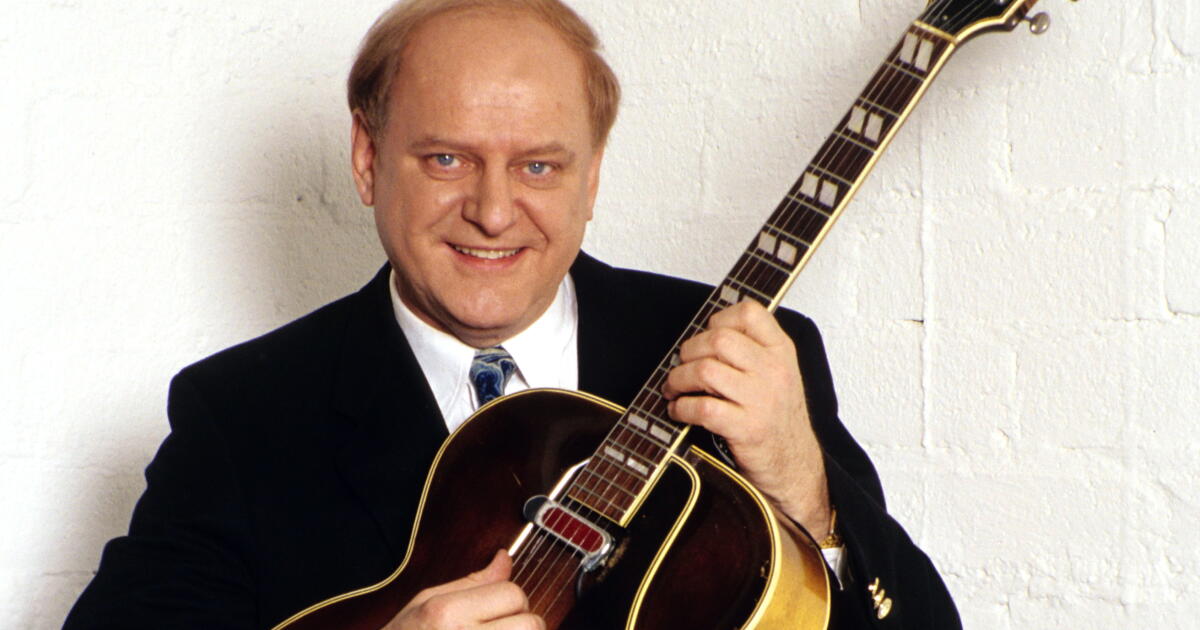
Del Casher, the guitarist who invented the wah-wah pedal that transformed the sound of classic rock, has died. He was 88.
Casher died Oct. 1 after battling cancer, according to a GoFundMe account posted Oct. 29 by family friends to support his widow.
Born Delton Kacher in Indiana, the guitarist played with the famed session ensemble the Wrecking Crew. He performed with Gene Autry and Lawrence Welk, and appeared on screen with Elvis Presley in the musical film “Roustabout” and Jerry Lewis in comedy film “The Patsy.”
While tinkering with new electronics to innovate his sound in the late ‘60s, he had the idea for a pedal that could alter the instrument’s EQ frequencies mid-performance. Along with engineer Brad Plunkett, he developed the first “Cry Baby” pedal with the Thomas Organ Co. The pedal added a distinct, elastic and almost vocal-like tone to lead playing — which gave it its onomatopoeic nickname.
Though the pedal wasn’t an instant sensation, after Frank Zappa gave one to Jimi Hendrix, the wah-wah became a core part of Hendrix’s sound, bringing new textures and expressiveness to his revolutionary riffs on “Voodoo Child” and “All Along the Watchtower.”
Countless bands like Pink Floyd, Led Zeppelin and Rage Against the Machine made the pedal fixtures in their rigs, and funk musicians savored the rich tang it could bring to R&B playing. The pedal’s most recognizable use is probably on Isaac Hayes’ theme from “Shaft,” which became a top-selling record and won an Oscar.
Alongside his hallmark invention, Casher helped develop, invent and popularize the Ecco-Fonic, a compact tape echo system, the Fender Electronic Echo Chamber and the Roland Guitar Synthesizer. He composed for many films and TV show’s including “Chico & the Man” and, under a pseudonym, the score for “Italian Stallion,” the cult-classic softcore pornographic romance starring Sylvester Stallone. Casher also owned and ran CDP Sound, a Burbank recording and sound studio he first built in 1967 in Hollywood.
Speaking about his “Americana Suite” composition before a 2006 performance, Casher told The Times that “There’s a story to the suite, it’s not just a composition. My father came to America from Austria when he was 13, and by 21 years old, he was an accomplished musician and he became a teacher and orchestra arranger and conductor … ‘Americana Suite’ is an inspiration of the American dream. And because I compose my music on the guitar, I translate it then to the orchestra sound, and the first movement is called ‘The Pursuit.’ It is a fast and lively song with vivid anticipation of the American dream.”