
Charles Namba is the chef and co-owner of Tsubaki and Ototo, a modern izakaya and its next-door sake bar, in Los Angeles. He grew up eating the Japanese dumplings gyoza. “It’s always been around throughout my life,” he says. “My dad still makes it, my mom makes every other week, basically.”
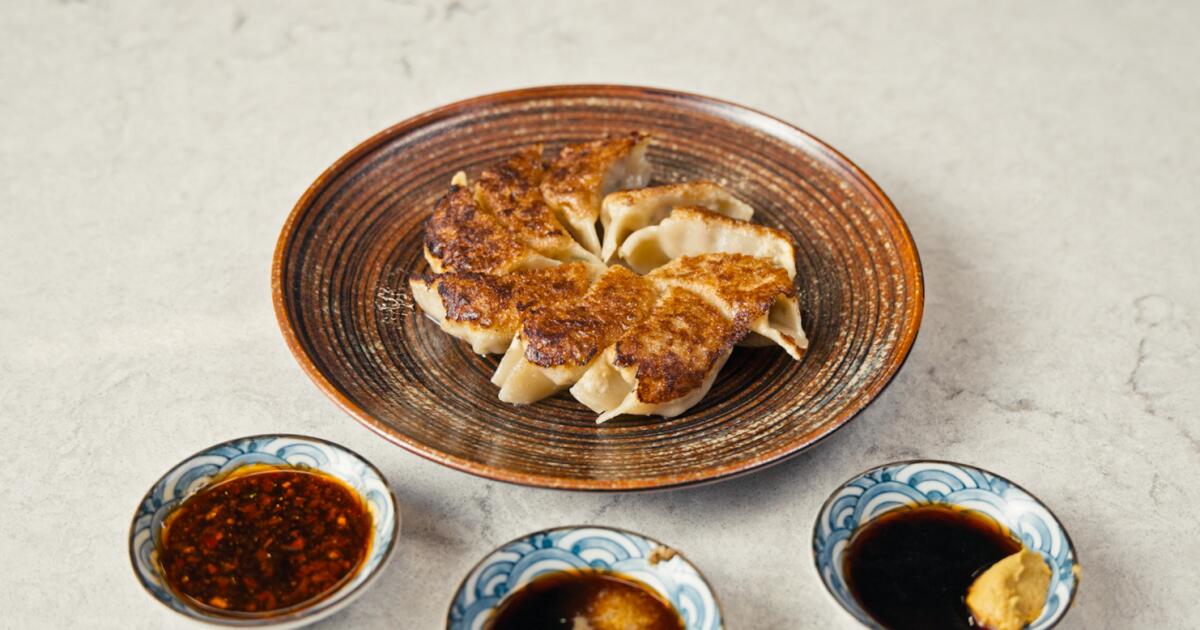
These gyoza can be pan-fried or boiled. “I always prefer the pan-sautéed because you get crispy and then you get a little bit of steamed” in each bite. For its dipping sauce — called “Boss Sauce” — he makes his own chile oil, mixed with rice vinegar, soy sauce, sansho pepper and broad bean paste. Or serve with soy sauce and Japanese hot mustard.
This recipe makes more Boss Sauce than you will need for the gyoza. Save for another use; store in a covered container in the refrigerator for up to 4 weeks.
Tsubaki and Ototo chef Charles Namba’s boiled or sui gyoza.
(Cody Long / Los Angeles Times)

Charles Namba is the chef and co-owner of Tsubaki and Ototo, a modern izakaya and its next-door sake bar, in Los Angeles. He grew up eating the Japanese dumplings gyoza. “It’s always been around throughout my life,” he says. “My dad still makes it, my mom makes every other week, basically.”
These gyoza can be pan-fried or boiled. “I always prefer the pan-sautéed because you get crispy and then you get a little bit of steamed” in each bite. For its dipping sauce — called “Boss Sauce” — he makes his own chile oil, mixed with rice vinegar, soy sauce, sansho pepper and broad bean paste. Or serve with soy sauce and Japanese hot mustard.
This recipe makes more Boss Sauce than you will need for the gyoza. Save for another use; store in a covered container in the refrigerator for up to 4 weeks.
Tsubaki and Ototo chef Charles Namba’s boiled or sui gyoza.
(Cody Long / Los Angeles Times)

Charles Namba is the chef and co-owner of Tsubaki and Ototo, a modern izakaya and its next-door sake bar, in Los Angeles. He grew up eating the Japanese dumplings gyoza. “It’s always been around throughout my life,” he says. “My dad still makes it, my mom makes every other week, basically.”
These gyoza can be pan-fried or boiled. “I always prefer the pan-sautéed because you get crispy and then you get a little bit of steamed” in each bite. For its dipping sauce — called “Boss Sauce” — he makes his own chile oil, mixed with rice vinegar, soy sauce, sansho pepper and broad bean paste. Or serve with soy sauce and Japanese hot mustard.
This recipe makes more Boss Sauce than you will need for the gyoza. Save for another use; store in a covered container in the refrigerator for up to 4 weeks.
Tsubaki and Ototo chef Charles Namba’s boiled or sui gyoza.
(Cody Long / Los Angeles Times)
Charles Namba is the chef and co-owner of Tsubaki and Ototo, a modern izakaya and its next-door sake bar, in Los Angeles. He grew up eating the Japanese dumplings gyoza. “It’s always been around throughout my life,” he says. “My dad still makes it, my mom makes every other week, basically.”
These gyoza can be pan-fried or boiled. “I always prefer the pan-sautéed because you get crispy and then you get a little bit of steamed” in each bite. For its dipping sauce — called “Boss Sauce” — he makes his own chile oil, mixed with rice vinegar, soy sauce, sansho pepper and broad bean paste. Or serve with soy sauce and Japanese hot mustard.
This recipe makes more Boss Sauce than you will need for the gyoza. Save for another use; store in a covered container in the refrigerator for up to 4 weeks.
Tsubaki and Ototo chef Charles Namba’s boiled or sui gyoza.
(Cody Long / Los Angeles Times)

Charles Namba is the chef and co-owner of Tsubaki and Ototo, a modern izakaya and its next-door sake bar, in Los Angeles. He grew up eating the Japanese dumplings gyoza. “It’s always been around throughout my life,” he says. “My dad still makes it, my mom makes every other week, basically.”
These gyoza can be pan-fried or boiled. “I always prefer the pan-sautéed because you get crispy and then you get a little bit of steamed” in each bite. For its dipping sauce — called “Boss Sauce” — he makes his own chile oil, mixed with rice vinegar, soy sauce, sansho pepper and broad bean paste. Or serve with soy sauce and Japanese hot mustard.
This recipe makes more Boss Sauce than you will need for the gyoza. Save for another use; store in a covered container in the refrigerator for up to 4 weeks.
Tsubaki and Ototo chef Charles Namba’s boiled or sui gyoza.
(Cody Long / Los Angeles Times)
Charles Namba is the chef and co-owner of Tsubaki and Ototo, a modern izakaya and its next-door sake bar, in Los Angeles. He grew up eating the Japanese dumplings gyoza. “It’s always been around throughout my life,” he says. “My dad still makes it, my mom makes every other week, basically.”
These gyoza can be pan-fried or boiled. “I always prefer the pan-sautéed because you get crispy and then you get a little bit of steamed” in each bite. For its dipping sauce — called “Boss Sauce” — he makes his own chile oil, mixed with rice vinegar, soy sauce, sansho pepper and broad bean paste. Or serve with soy sauce and Japanese hot mustard.
This recipe makes more Boss Sauce than you will need for the gyoza. Save for another use; store in a covered container in the refrigerator for up to 4 weeks.
Tsubaki and Ototo chef Charles Namba’s boiled or sui gyoza.
(Cody Long / Los Angeles Times)
Charles Namba is the chef and co-owner of Tsubaki and Ototo, a modern izakaya and its next-door sake bar, in Los Angeles. He grew up eating the Japanese dumplings gyoza. “It’s always been around throughout my life,” he says. “My dad still makes it, my mom makes every other week, basically.”
These gyoza can be pan-fried or boiled. “I always prefer the pan-sautéed because you get crispy and then you get a little bit of steamed” in each bite. For its dipping sauce — called “Boss Sauce” — he makes his own chile oil, mixed with rice vinegar, soy sauce, sansho pepper and broad bean paste. Or serve with soy sauce and Japanese hot mustard.
This recipe makes more Boss Sauce than you will need for the gyoza. Save for another use; store in a covered container in the refrigerator for up to 4 weeks.
Tsubaki and Ototo chef Charles Namba’s boiled or sui gyoza.
(Cody Long / Los Angeles Times)
Charles Namba is the chef and co-owner of Tsubaki and Ototo, a modern izakaya and its next-door sake bar, in Los Angeles. He grew up eating the Japanese dumplings gyoza. “It’s always been around throughout my life,” he says. “My dad still makes it, my mom makes every other week, basically.”
These gyoza can be pan-fried or boiled. “I always prefer the pan-sautéed because you get crispy and then you get a little bit of steamed” in each bite. For its dipping sauce — called “Boss Sauce” — he makes his own chile oil, mixed with rice vinegar, soy sauce, sansho pepper and broad bean paste. Or serve with soy sauce and Japanese hot mustard.
This recipe makes more Boss Sauce than you will need for the gyoza. Save for another use; store in a covered container in the refrigerator for up to 4 weeks.
Tsubaki and Ototo chef Charles Namba’s boiled or sui gyoza.
(Cody Long / Los Angeles Times)