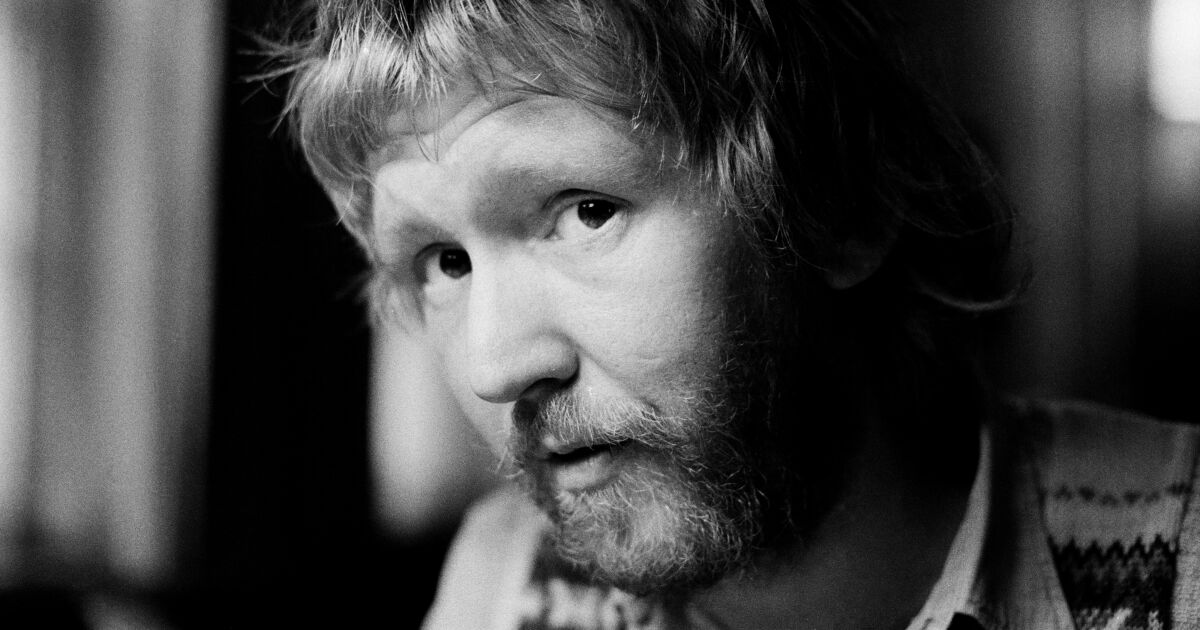
Harry Nilsson’s melodic pop music endeared him to the Beatles and won him the admiration of everyone from Monty Python’s Terry Gilliam to Carly Rae Jepsen. But ask someone on the street if they recognize the name, and they’ll probably either respond with knowing reverence or a quizzical stare.
Nilsson, a Brooklyn-born L.A. transplant who rose to fame with the inclusion of “Everybody’s Talkin’” on the soundtrack to 1969’s “Midnight Cowboy,” is a singer-songwriter’s singer-songwriter. He got rich penning hits including “One,” performed by Three Dog Night, released successful 1970s albums with “Nilsson Schmilsson” and “Son of Schmilsson,” won a couple Grammys and composed for films including Robert Altman’s “Popeye.” But heavy drinking and smoking contributed to a downturn in his health, and he died of a heart attack in 1994 at age 52.
Though he influenced many musicians, he never achieved the level of long-lasting fame enjoyed by John Lennon, Ringo Starr and other collaborators. As chronicled in a 2010 documentary, his predilection for self-destruction overshadowed his considerable musical gifts.
But that under-the-radar credibility is exactly what made his catalog attractive to BMG, the German-owned music company that has carved a niche for itself by acquiring dozens of catalogs from legacy artists.
Newsletter
Inside the business of entertainment
The Wide Shot brings you news, analysis and insights on everything from streaming wars to production — and what it all means for the future.
You may occasionally receive promotional content from the Los Angeles Times.
BMG, owned by the Gütersloh-based media conglomerate Bertelsmann, has acquired Nilsson’s song publishing catalog, along with artist and writer revenue streams, in a deal with the singer’s estate, the company told The Times this week. Financial terms were not disclosed.
The company said it plans to work with Nilsson’s estate to bring renewed attention to the artist’s work and legacy, with possible projects spanning books, film, television and stage productions.
Part of what made Nilsson attractive was his ability to write and play in a variety of styles, including eclectic pop and classic standards, said BMG Chief Executive Hartwig Masuch, in an interview at the company’s Mid-Wilshire Los Angeles offices.
Even people who don’t know Nilsson’s name may recognize his work, which has shown up in various films and television shows. His oft-covered one-chord ditty “Coconut” played over the closing credits of Quentin Tarantino’s “Reservoir Dogs,” and the tune “Gotta Get Up” played repeatedly in Netflix’s hit “Russian Doll.”
Drinking buddies known as “The Hollywood Vampires,” from left: John Lennon (during his “Lost Weekend” period), Harry Nilsson, Alice Cooper and Micky Dolenz celebrate an early Thanksgiving with singer Anne Murray (second from left) at the Troubadour on Nov. 21, 1973, in Los Angeles.
(Richard Creamer / Michael Ochs Archives / Getty Images)
“There are writers like him who have a massive influence on artists that maybe have a bigger audience,” Masuch said. “I think it’s very important to understand how artists really have staying power if they’re able to diversify their offering to their audiences and don’t get stuck in a very small formula.”
Nilsson’s is among the latest in a series of catalog acquisitions for BMG as music companies gobble up legacy artists’ song rights to take advantage of the boom in consumption of older music on streaming. The rise of not only Spotify and Apple Music, but also Netflix, Disney+, TikTok and Peloton, have all contributed to the recovery of the music industry from the dark days of the Napster piracy boom, and much of the benefit has gone to older artists. People tend to be set in their music tastes by their 30s, research suggests. Yet the bulk of listeners are older than that.
“More people are looking for the rerelease of Fleetwood Mac than are looking for a new artist,” Masuch said.
BMG has invested more than half a billion Euros (over $500 million) in music rights during the last 18 months, increasing its investment 40% this year from 2021. The company has closed more than 30 deals this year, including rights belonging to John Lee Hooker in the U.S., Simple Minds and Primal Scream in the U.K. and Jean-Michel Jarre in France, along with rappers E-40 and Gucci Mane, metal band Five Finger Death Punch and Downtown Records. More deals are on the way.
As publishers, record labels and private equity funds poured money into the space, the gold rush for music catalogs led older artists to cash in on their rights. At the height, David Bowie’s estate sold his catalog to Warner Chappell Music for $250 million and Bruce Springsteen sold his songs and master recordings for $500 million to Sony Music Entertainment.
BMG isn’t playing at that level. Instead, it’s buying up more obscure artists’ rights in what Masuch describes as a strategic effort to generate long-term profits by finding new audiences for artists that are influential but not on the Mt. Rushmore of pop and rock. Part of its strategy is organizing special events to highlight certain music, such as the Peter Green era of Fleetwood Mac. There’s also opportunity to better promote legacy artists in international countries, including in South America, where streaming is growing fast.
“There’s a large number of absolutely fascinating, culture-defining artists that don’t get that attention, and that’s attractive for us,” Masuch said. “There’s a bigger upside there than in going in the direction where everybody goes.”
Bertelsmann has been riding the music industry’s recovery through a strategy of focusing not on hitmakers but on enduring catalogs that can be exploited across numerous media.
To that end, BMG has contributed to the popular music documentary space, which has found an audience both in theaters and on streaming services. One of its latest efforts, Brett Morgen’s critically acclaimed Bowie film “Moonage Daydream” — produced with concert promoter Live Nation — was released in theaters, including Imax, this year, following docs about David Crosby and Joan Jett.
The company essentially exited the music industry in the late 2000s when the business was in a state of disarray, selling its music publishing business to Universal Music in 2007. It sold its 50% stake in joint venture Sony BMG to Sony Corp. in 2008.
Bertelsmann relaunched BMG in 2008, teaming with New York private equity firm KKR in the following year to grow the business by acquiring independent record labels and publishers including Chrysalis Music and Bug Music. BMG, now wholly owned by Bertelsmann, has done deals for rights held by ZZ Top, John Legend and Tina Turner.
BMG expects to generate about $1 billion in revenue starting in 2024, achieving the milestone two years ahead of its previous targets, the company said.
“The real significance of this market in rights is it is creating new power bases in music outside the traditional hit-driven record labels,” Masuch said. “They are no longer the only game in town.”

Harry Nilsson’s melodic pop music endeared him to the Beatles and won him the admiration of everyone from Monty Python’s Terry Gilliam to Carly Rae Jepsen. But ask someone on the street if they recognize the name, and they’ll probably either respond with knowing reverence or a quizzical stare.
Nilsson, a Brooklyn-born L.A. transplant who rose to fame with the inclusion of “Everybody’s Talkin’” on the soundtrack to 1969’s “Midnight Cowboy,” is a singer-songwriter’s singer-songwriter. He got rich penning hits including “One,” performed by Three Dog Night, released successful 1970s albums with “Nilsson Schmilsson” and “Son of Schmilsson,” won a couple Grammys and composed for films including Robert Altman’s “Popeye.” But heavy drinking and smoking contributed to a downturn in his health, and he died of a heart attack in 1994 at age 52.
Though he influenced many musicians, he never achieved the level of long-lasting fame enjoyed by John Lennon, Ringo Starr and other collaborators. As chronicled in a 2010 documentary, his predilection for self-destruction overshadowed his considerable musical gifts.
But that under-the-radar credibility is exactly what made his catalog attractive to BMG, the German-owned music company that has carved a niche for itself by acquiring dozens of catalogs from legacy artists.
Newsletter
Inside the business of entertainment
The Wide Shot brings you news, analysis and insights on everything from streaming wars to production — and what it all means for the future.
You may occasionally receive promotional content from the Los Angeles Times.
BMG, owned by the Gütersloh-based media conglomerate Bertelsmann, has acquired Nilsson’s song publishing catalog, along with artist and writer revenue streams, in a deal with the singer’s estate, the company told The Times this week. Financial terms were not disclosed.
The company said it plans to work with Nilsson’s estate to bring renewed attention to the artist’s work and legacy, with possible projects spanning books, film, television and stage productions.
Part of what made Nilsson attractive was his ability to write and play in a variety of styles, including eclectic pop and classic standards, said BMG Chief Executive Hartwig Masuch, in an interview at the company’s Mid-Wilshire Los Angeles offices.
Even people who don’t know Nilsson’s name may recognize his work, which has shown up in various films and television shows. His oft-covered one-chord ditty “Coconut” played over the closing credits of Quentin Tarantino’s “Reservoir Dogs,” and the tune “Gotta Get Up” played repeatedly in Netflix’s hit “Russian Doll.”
Drinking buddies known as “The Hollywood Vampires,” from left: John Lennon (during his “Lost Weekend” period), Harry Nilsson, Alice Cooper and Micky Dolenz celebrate an early Thanksgiving with singer Anne Murray (second from left) at the Troubadour on Nov. 21, 1973, in Los Angeles.
(Richard Creamer / Michael Ochs Archives / Getty Images)
“There are writers like him who have a massive influence on artists that maybe have a bigger audience,” Masuch said. “I think it’s very important to understand how artists really have staying power if they’re able to diversify their offering to their audiences and don’t get stuck in a very small formula.”
Nilsson’s is among the latest in a series of catalog acquisitions for BMG as music companies gobble up legacy artists’ song rights to take advantage of the boom in consumption of older music on streaming. The rise of not only Spotify and Apple Music, but also Netflix, Disney+, TikTok and Peloton, have all contributed to the recovery of the music industry from the dark days of the Napster piracy boom, and much of the benefit has gone to older artists. People tend to be set in their music tastes by their 30s, research suggests. Yet the bulk of listeners are older than that.
“More people are looking for the rerelease of Fleetwood Mac than are looking for a new artist,” Masuch said.
BMG has invested more than half a billion Euros (over $500 million) in music rights during the last 18 months, increasing its investment 40% this year from 2021. The company has closed more than 30 deals this year, including rights belonging to John Lee Hooker in the U.S., Simple Minds and Primal Scream in the U.K. and Jean-Michel Jarre in France, along with rappers E-40 and Gucci Mane, metal band Five Finger Death Punch and Downtown Records. More deals are on the way.
As publishers, record labels and private equity funds poured money into the space, the gold rush for music catalogs led older artists to cash in on their rights. At the height, David Bowie’s estate sold his catalog to Warner Chappell Music for $250 million and Bruce Springsteen sold his songs and master recordings for $500 million to Sony Music Entertainment.
BMG isn’t playing at that level. Instead, it’s buying up more obscure artists’ rights in what Masuch describes as a strategic effort to generate long-term profits by finding new audiences for artists that are influential but not on the Mt. Rushmore of pop and rock. Part of its strategy is organizing special events to highlight certain music, such as the Peter Green era of Fleetwood Mac. There’s also opportunity to better promote legacy artists in international countries, including in South America, where streaming is growing fast.
“There’s a large number of absolutely fascinating, culture-defining artists that don’t get that attention, and that’s attractive for us,” Masuch said. “There’s a bigger upside there than in going in the direction where everybody goes.”
Bertelsmann has been riding the music industry’s recovery through a strategy of focusing not on hitmakers but on enduring catalogs that can be exploited across numerous media.
To that end, BMG has contributed to the popular music documentary space, which has found an audience both in theaters and on streaming services. One of its latest efforts, Brett Morgen’s critically acclaimed Bowie film “Moonage Daydream” — produced with concert promoter Live Nation — was released in theaters, including Imax, this year, following docs about David Crosby and Joan Jett.
The company essentially exited the music industry in the late 2000s when the business was in a state of disarray, selling its music publishing business to Universal Music in 2007. It sold its 50% stake in joint venture Sony BMG to Sony Corp. in 2008.
Bertelsmann relaunched BMG in 2008, teaming with New York private equity firm KKR in the following year to grow the business by acquiring independent record labels and publishers including Chrysalis Music and Bug Music. BMG, now wholly owned by Bertelsmann, has done deals for rights held by ZZ Top, John Legend and Tina Turner.
BMG expects to generate about $1 billion in revenue starting in 2024, achieving the milestone two years ahead of its previous targets, the company said.
“The real significance of this market in rights is it is creating new power bases in music outside the traditional hit-driven record labels,” Masuch said. “They are no longer the only game in town.”

Harry Nilsson’s melodic pop music endeared him to the Beatles and won him the admiration of everyone from Monty Python’s Terry Gilliam to Carly Rae Jepsen. But ask someone on the street if they recognize the name, and they’ll probably either respond with knowing reverence or a quizzical stare.
Nilsson, a Brooklyn-born L.A. transplant who rose to fame with the inclusion of “Everybody’s Talkin’” on the soundtrack to 1969’s “Midnight Cowboy,” is a singer-songwriter’s singer-songwriter. He got rich penning hits including “One,” performed by Three Dog Night, released successful 1970s albums with “Nilsson Schmilsson” and “Son of Schmilsson,” won a couple Grammys and composed for films including Robert Altman’s “Popeye.” But heavy drinking and smoking contributed to a downturn in his health, and he died of a heart attack in 1994 at age 52.
Though he influenced many musicians, he never achieved the level of long-lasting fame enjoyed by John Lennon, Ringo Starr and other collaborators. As chronicled in a 2010 documentary, his predilection for self-destruction overshadowed his considerable musical gifts.
But that under-the-radar credibility is exactly what made his catalog attractive to BMG, the German-owned music company that has carved a niche for itself by acquiring dozens of catalogs from legacy artists.
Newsletter
Inside the business of entertainment
The Wide Shot brings you news, analysis and insights on everything from streaming wars to production — and what it all means for the future.
You may occasionally receive promotional content from the Los Angeles Times.
BMG, owned by the Gütersloh-based media conglomerate Bertelsmann, has acquired Nilsson’s song publishing catalog, along with artist and writer revenue streams, in a deal with the singer’s estate, the company told The Times this week. Financial terms were not disclosed.
The company said it plans to work with Nilsson’s estate to bring renewed attention to the artist’s work and legacy, with possible projects spanning books, film, television and stage productions.
Part of what made Nilsson attractive was his ability to write and play in a variety of styles, including eclectic pop and classic standards, said BMG Chief Executive Hartwig Masuch, in an interview at the company’s Mid-Wilshire Los Angeles offices.
Even people who don’t know Nilsson’s name may recognize his work, which has shown up in various films and television shows. His oft-covered one-chord ditty “Coconut” played over the closing credits of Quentin Tarantino’s “Reservoir Dogs,” and the tune “Gotta Get Up” played repeatedly in Netflix’s hit “Russian Doll.”
Drinking buddies known as “The Hollywood Vampires,” from left: John Lennon (during his “Lost Weekend” period), Harry Nilsson, Alice Cooper and Micky Dolenz celebrate an early Thanksgiving with singer Anne Murray (second from left) at the Troubadour on Nov. 21, 1973, in Los Angeles.
(Richard Creamer / Michael Ochs Archives / Getty Images)
“There are writers like him who have a massive influence on artists that maybe have a bigger audience,” Masuch said. “I think it’s very important to understand how artists really have staying power if they’re able to diversify their offering to their audiences and don’t get stuck in a very small formula.”
Nilsson’s is among the latest in a series of catalog acquisitions for BMG as music companies gobble up legacy artists’ song rights to take advantage of the boom in consumption of older music on streaming. The rise of not only Spotify and Apple Music, but also Netflix, Disney+, TikTok and Peloton, have all contributed to the recovery of the music industry from the dark days of the Napster piracy boom, and much of the benefit has gone to older artists. People tend to be set in their music tastes by their 30s, research suggests. Yet the bulk of listeners are older than that.
“More people are looking for the rerelease of Fleetwood Mac than are looking for a new artist,” Masuch said.
BMG has invested more than half a billion Euros (over $500 million) in music rights during the last 18 months, increasing its investment 40% this year from 2021. The company has closed more than 30 deals this year, including rights belonging to John Lee Hooker in the U.S., Simple Minds and Primal Scream in the U.K. and Jean-Michel Jarre in France, along with rappers E-40 and Gucci Mane, metal band Five Finger Death Punch and Downtown Records. More deals are on the way.
As publishers, record labels and private equity funds poured money into the space, the gold rush for music catalogs led older artists to cash in on their rights. At the height, David Bowie’s estate sold his catalog to Warner Chappell Music for $250 million and Bruce Springsteen sold his songs and master recordings for $500 million to Sony Music Entertainment.
BMG isn’t playing at that level. Instead, it’s buying up more obscure artists’ rights in what Masuch describes as a strategic effort to generate long-term profits by finding new audiences for artists that are influential but not on the Mt. Rushmore of pop and rock. Part of its strategy is organizing special events to highlight certain music, such as the Peter Green era of Fleetwood Mac. There’s also opportunity to better promote legacy artists in international countries, including in South America, where streaming is growing fast.
“There’s a large number of absolutely fascinating, culture-defining artists that don’t get that attention, and that’s attractive for us,” Masuch said. “There’s a bigger upside there than in going in the direction where everybody goes.”
Bertelsmann has been riding the music industry’s recovery through a strategy of focusing not on hitmakers but on enduring catalogs that can be exploited across numerous media.
To that end, BMG has contributed to the popular music documentary space, which has found an audience both in theaters and on streaming services. One of its latest efforts, Brett Morgen’s critically acclaimed Bowie film “Moonage Daydream” — produced with concert promoter Live Nation — was released in theaters, including Imax, this year, following docs about David Crosby and Joan Jett.
The company essentially exited the music industry in the late 2000s when the business was in a state of disarray, selling its music publishing business to Universal Music in 2007. It sold its 50% stake in joint venture Sony BMG to Sony Corp. in 2008.
Bertelsmann relaunched BMG in 2008, teaming with New York private equity firm KKR in the following year to grow the business by acquiring independent record labels and publishers including Chrysalis Music and Bug Music. BMG, now wholly owned by Bertelsmann, has done deals for rights held by ZZ Top, John Legend and Tina Turner.
BMG expects to generate about $1 billion in revenue starting in 2024, achieving the milestone two years ahead of its previous targets, the company said.
“The real significance of this market in rights is it is creating new power bases in music outside the traditional hit-driven record labels,” Masuch said. “They are no longer the only game in town.”
Harry Nilsson’s melodic pop music endeared him to the Beatles and won him the admiration of everyone from Monty Python’s Terry Gilliam to Carly Rae Jepsen. But ask someone on the street if they recognize the name, and they’ll probably either respond with knowing reverence or a quizzical stare.
Nilsson, a Brooklyn-born L.A. transplant who rose to fame with the inclusion of “Everybody’s Talkin’” on the soundtrack to 1969’s “Midnight Cowboy,” is a singer-songwriter’s singer-songwriter. He got rich penning hits including “One,” performed by Three Dog Night, released successful 1970s albums with “Nilsson Schmilsson” and “Son of Schmilsson,” won a couple Grammys and composed for films including Robert Altman’s “Popeye.” But heavy drinking and smoking contributed to a downturn in his health, and he died of a heart attack in 1994 at age 52.
Though he influenced many musicians, he never achieved the level of long-lasting fame enjoyed by John Lennon, Ringo Starr and other collaborators. As chronicled in a 2010 documentary, his predilection for self-destruction overshadowed his considerable musical gifts.
But that under-the-radar credibility is exactly what made his catalog attractive to BMG, the German-owned music company that has carved a niche for itself by acquiring dozens of catalogs from legacy artists.
Newsletter
Inside the business of entertainment
The Wide Shot brings you news, analysis and insights on everything from streaming wars to production — and what it all means for the future.
You may occasionally receive promotional content from the Los Angeles Times.
BMG, owned by the Gütersloh-based media conglomerate Bertelsmann, has acquired Nilsson’s song publishing catalog, along with artist and writer revenue streams, in a deal with the singer’s estate, the company told The Times this week. Financial terms were not disclosed.
The company said it plans to work with Nilsson’s estate to bring renewed attention to the artist’s work and legacy, with possible projects spanning books, film, television and stage productions.
Part of what made Nilsson attractive was his ability to write and play in a variety of styles, including eclectic pop and classic standards, said BMG Chief Executive Hartwig Masuch, in an interview at the company’s Mid-Wilshire Los Angeles offices.
Even people who don’t know Nilsson’s name may recognize his work, which has shown up in various films and television shows. His oft-covered one-chord ditty “Coconut” played over the closing credits of Quentin Tarantino’s “Reservoir Dogs,” and the tune “Gotta Get Up” played repeatedly in Netflix’s hit “Russian Doll.”
Drinking buddies known as “The Hollywood Vampires,” from left: John Lennon (during his “Lost Weekend” period), Harry Nilsson, Alice Cooper and Micky Dolenz celebrate an early Thanksgiving with singer Anne Murray (second from left) at the Troubadour on Nov. 21, 1973, in Los Angeles.
(Richard Creamer / Michael Ochs Archives / Getty Images)
“There are writers like him who have a massive influence on artists that maybe have a bigger audience,” Masuch said. “I think it’s very important to understand how artists really have staying power if they’re able to diversify their offering to their audiences and don’t get stuck in a very small formula.”
Nilsson’s is among the latest in a series of catalog acquisitions for BMG as music companies gobble up legacy artists’ song rights to take advantage of the boom in consumption of older music on streaming. The rise of not only Spotify and Apple Music, but also Netflix, Disney+, TikTok and Peloton, have all contributed to the recovery of the music industry from the dark days of the Napster piracy boom, and much of the benefit has gone to older artists. People tend to be set in their music tastes by their 30s, research suggests. Yet the bulk of listeners are older than that.
“More people are looking for the rerelease of Fleetwood Mac than are looking for a new artist,” Masuch said.
BMG has invested more than half a billion Euros (over $500 million) in music rights during the last 18 months, increasing its investment 40% this year from 2021. The company has closed more than 30 deals this year, including rights belonging to John Lee Hooker in the U.S., Simple Minds and Primal Scream in the U.K. and Jean-Michel Jarre in France, along with rappers E-40 and Gucci Mane, metal band Five Finger Death Punch and Downtown Records. More deals are on the way.
As publishers, record labels and private equity funds poured money into the space, the gold rush for music catalogs led older artists to cash in on their rights. At the height, David Bowie’s estate sold his catalog to Warner Chappell Music for $250 million and Bruce Springsteen sold his songs and master recordings for $500 million to Sony Music Entertainment.
BMG isn’t playing at that level. Instead, it’s buying up more obscure artists’ rights in what Masuch describes as a strategic effort to generate long-term profits by finding new audiences for artists that are influential but not on the Mt. Rushmore of pop and rock. Part of its strategy is organizing special events to highlight certain music, such as the Peter Green era of Fleetwood Mac. There’s also opportunity to better promote legacy artists in international countries, including in South America, where streaming is growing fast.
“There’s a large number of absolutely fascinating, culture-defining artists that don’t get that attention, and that’s attractive for us,” Masuch said. “There’s a bigger upside there than in going in the direction where everybody goes.”
Bertelsmann has been riding the music industry’s recovery through a strategy of focusing not on hitmakers but on enduring catalogs that can be exploited across numerous media.
To that end, BMG has contributed to the popular music documentary space, which has found an audience both in theaters and on streaming services. One of its latest efforts, Brett Morgen’s critically acclaimed Bowie film “Moonage Daydream” — produced with concert promoter Live Nation — was released in theaters, including Imax, this year, following docs about David Crosby and Joan Jett.
The company essentially exited the music industry in the late 2000s when the business was in a state of disarray, selling its music publishing business to Universal Music in 2007. It sold its 50% stake in joint venture Sony BMG to Sony Corp. in 2008.
Bertelsmann relaunched BMG in 2008, teaming with New York private equity firm KKR in the following year to grow the business by acquiring independent record labels and publishers including Chrysalis Music and Bug Music. BMG, now wholly owned by Bertelsmann, has done deals for rights held by ZZ Top, John Legend and Tina Turner.
BMG expects to generate about $1 billion in revenue starting in 2024, achieving the milestone two years ahead of its previous targets, the company said.
“The real significance of this market in rights is it is creating new power bases in music outside the traditional hit-driven record labels,” Masuch said. “They are no longer the only game in town.”

Harry Nilsson’s melodic pop music endeared him to the Beatles and won him the admiration of everyone from Monty Python’s Terry Gilliam to Carly Rae Jepsen. But ask someone on the street if they recognize the name, and they’ll probably either respond with knowing reverence or a quizzical stare.
Nilsson, a Brooklyn-born L.A. transplant who rose to fame with the inclusion of “Everybody’s Talkin’” on the soundtrack to 1969’s “Midnight Cowboy,” is a singer-songwriter’s singer-songwriter. He got rich penning hits including “One,” performed by Three Dog Night, released successful 1970s albums with “Nilsson Schmilsson” and “Son of Schmilsson,” won a couple Grammys and composed for films including Robert Altman’s “Popeye.” But heavy drinking and smoking contributed to a downturn in his health, and he died of a heart attack in 1994 at age 52.
Though he influenced many musicians, he never achieved the level of long-lasting fame enjoyed by John Lennon, Ringo Starr and other collaborators. As chronicled in a 2010 documentary, his predilection for self-destruction overshadowed his considerable musical gifts.
But that under-the-radar credibility is exactly what made his catalog attractive to BMG, the German-owned music company that has carved a niche for itself by acquiring dozens of catalogs from legacy artists.
Newsletter
Inside the business of entertainment
The Wide Shot brings you news, analysis and insights on everything from streaming wars to production — and what it all means for the future.
You may occasionally receive promotional content from the Los Angeles Times.
BMG, owned by the Gütersloh-based media conglomerate Bertelsmann, has acquired Nilsson’s song publishing catalog, along with artist and writer revenue streams, in a deal with the singer’s estate, the company told The Times this week. Financial terms were not disclosed.
The company said it plans to work with Nilsson’s estate to bring renewed attention to the artist’s work and legacy, with possible projects spanning books, film, television and stage productions.
Part of what made Nilsson attractive was his ability to write and play in a variety of styles, including eclectic pop and classic standards, said BMG Chief Executive Hartwig Masuch, in an interview at the company’s Mid-Wilshire Los Angeles offices.
Even people who don’t know Nilsson’s name may recognize his work, which has shown up in various films and television shows. His oft-covered one-chord ditty “Coconut” played over the closing credits of Quentin Tarantino’s “Reservoir Dogs,” and the tune “Gotta Get Up” played repeatedly in Netflix’s hit “Russian Doll.”
Drinking buddies known as “The Hollywood Vampires,” from left: John Lennon (during his “Lost Weekend” period), Harry Nilsson, Alice Cooper and Micky Dolenz celebrate an early Thanksgiving with singer Anne Murray (second from left) at the Troubadour on Nov. 21, 1973, in Los Angeles.
(Richard Creamer / Michael Ochs Archives / Getty Images)
“There are writers like him who have a massive influence on artists that maybe have a bigger audience,” Masuch said. “I think it’s very important to understand how artists really have staying power if they’re able to diversify their offering to their audiences and don’t get stuck in a very small formula.”
Nilsson’s is among the latest in a series of catalog acquisitions for BMG as music companies gobble up legacy artists’ song rights to take advantage of the boom in consumption of older music on streaming. The rise of not only Spotify and Apple Music, but also Netflix, Disney+, TikTok and Peloton, have all contributed to the recovery of the music industry from the dark days of the Napster piracy boom, and much of the benefit has gone to older artists. People tend to be set in their music tastes by their 30s, research suggests. Yet the bulk of listeners are older than that.
“More people are looking for the rerelease of Fleetwood Mac than are looking for a new artist,” Masuch said.
BMG has invested more than half a billion Euros (over $500 million) in music rights during the last 18 months, increasing its investment 40% this year from 2021. The company has closed more than 30 deals this year, including rights belonging to John Lee Hooker in the U.S., Simple Minds and Primal Scream in the U.K. and Jean-Michel Jarre in France, along with rappers E-40 and Gucci Mane, metal band Five Finger Death Punch and Downtown Records. More deals are on the way.
As publishers, record labels and private equity funds poured money into the space, the gold rush for music catalogs led older artists to cash in on their rights. At the height, David Bowie’s estate sold his catalog to Warner Chappell Music for $250 million and Bruce Springsteen sold his songs and master recordings for $500 million to Sony Music Entertainment.
BMG isn’t playing at that level. Instead, it’s buying up more obscure artists’ rights in what Masuch describes as a strategic effort to generate long-term profits by finding new audiences for artists that are influential but not on the Mt. Rushmore of pop and rock. Part of its strategy is organizing special events to highlight certain music, such as the Peter Green era of Fleetwood Mac. There’s also opportunity to better promote legacy artists in international countries, including in South America, where streaming is growing fast.
“There’s a large number of absolutely fascinating, culture-defining artists that don’t get that attention, and that’s attractive for us,” Masuch said. “There’s a bigger upside there than in going in the direction where everybody goes.”
Bertelsmann has been riding the music industry’s recovery through a strategy of focusing not on hitmakers but on enduring catalogs that can be exploited across numerous media.
To that end, BMG has contributed to the popular music documentary space, which has found an audience both in theaters and on streaming services. One of its latest efforts, Brett Morgen’s critically acclaimed Bowie film “Moonage Daydream” — produced with concert promoter Live Nation — was released in theaters, including Imax, this year, following docs about David Crosby and Joan Jett.
The company essentially exited the music industry in the late 2000s when the business was in a state of disarray, selling its music publishing business to Universal Music in 2007. It sold its 50% stake in joint venture Sony BMG to Sony Corp. in 2008.
Bertelsmann relaunched BMG in 2008, teaming with New York private equity firm KKR in the following year to grow the business by acquiring independent record labels and publishers including Chrysalis Music and Bug Music. BMG, now wholly owned by Bertelsmann, has done deals for rights held by ZZ Top, John Legend and Tina Turner.
BMG expects to generate about $1 billion in revenue starting in 2024, achieving the milestone two years ahead of its previous targets, the company said.
“The real significance of this market in rights is it is creating new power bases in music outside the traditional hit-driven record labels,” Masuch said. “They are no longer the only game in town.”
Harry Nilsson’s melodic pop music endeared him to the Beatles and won him the admiration of everyone from Monty Python’s Terry Gilliam to Carly Rae Jepsen. But ask someone on the street if they recognize the name, and they’ll probably either respond with knowing reverence or a quizzical stare.
Nilsson, a Brooklyn-born L.A. transplant who rose to fame with the inclusion of “Everybody’s Talkin’” on the soundtrack to 1969’s “Midnight Cowboy,” is a singer-songwriter’s singer-songwriter. He got rich penning hits including “One,” performed by Three Dog Night, released successful 1970s albums with “Nilsson Schmilsson” and “Son of Schmilsson,” won a couple Grammys and composed for films including Robert Altman’s “Popeye.” But heavy drinking and smoking contributed to a downturn in his health, and he died of a heart attack in 1994 at age 52.
Though he influenced many musicians, he never achieved the level of long-lasting fame enjoyed by John Lennon, Ringo Starr and other collaborators. As chronicled in a 2010 documentary, his predilection for self-destruction overshadowed his considerable musical gifts.
But that under-the-radar credibility is exactly what made his catalog attractive to BMG, the German-owned music company that has carved a niche for itself by acquiring dozens of catalogs from legacy artists.
Newsletter
Inside the business of entertainment
The Wide Shot brings you news, analysis and insights on everything from streaming wars to production — and what it all means for the future.
You may occasionally receive promotional content from the Los Angeles Times.
BMG, owned by the Gütersloh-based media conglomerate Bertelsmann, has acquired Nilsson’s song publishing catalog, along with artist and writer revenue streams, in a deal with the singer’s estate, the company told The Times this week. Financial terms were not disclosed.
The company said it plans to work with Nilsson’s estate to bring renewed attention to the artist’s work and legacy, with possible projects spanning books, film, television and stage productions.
Part of what made Nilsson attractive was his ability to write and play in a variety of styles, including eclectic pop and classic standards, said BMG Chief Executive Hartwig Masuch, in an interview at the company’s Mid-Wilshire Los Angeles offices.
Even people who don’t know Nilsson’s name may recognize his work, which has shown up in various films and television shows. His oft-covered one-chord ditty “Coconut” played over the closing credits of Quentin Tarantino’s “Reservoir Dogs,” and the tune “Gotta Get Up” played repeatedly in Netflix’s hit “Russian Doll.”
Drinking buddies known as “The Hollywood Vampires,” from left: John Lennon (during his “Lost Weekend” period), Harry Nilsson, Alice Cooper and Micky Dolenz celebrate an early Thanksgiving with singer Anne Murray (second from left) at the Troubadour on Nov. 21, 1973, in Los Angeles.
(Richard Creamer / Michael Ochs Archives / Getty Images)
“There are writers like him who have a massive influence on artists that maybe have a bigger audience,” Masuch said. “I think it’s very important to understand how artists really have staying power if they’re able to diversify their offering to their audiences and don’t get stuck in a very small formula.”
Nilsson’s is among the latest in a series of catalog acquisitions for BMG as music companies gobble up legacy artists’ song rights to take advantage of the boom in consumption of older music on streaming. The rise of not only Spotify and Apple Music, but also Netflix, Disney+, TikTok and Peloton, have all contributed to the recovery of the music industry from the dark days of the Napster piracy boom, and much of the benefit has gone to older artists. People tend to be set in their music tastes by their 30s, research suggests. Yet the bulk of listeners are older than that.
“More people are looking for the rerelease of Fleetwood Mac than are looking for a new artist,” Masuch said.
BMG has invested more than half a billion Euros (over $500 million) in music rights during the last 18 months, increasing its investment 40% this year from 2021. The company has closed more than 30 deals this year, including rights belonging to John Lee Hooker in the U.S., Simple Minds and Primal Scream in the U.K. and Jean-Michel Jarre in France, along with rappers E-40 and Gucci Mane, metal band Five Finger Death Punch and Downtown Records. More deals are on the way.
As publishers, record labels and private equity funds poured money into the space, the gold rush for music catalogs led older artists to cash in on their rights. At the height, David Bowie’s estate sold his catalog to Warner Chappell Music for $250 million and Bruce Springsteen sold his songs and master recordings for $500 million to Sony Music Entertainment.
BMG isn’t playing at that level. Instead, it’s buying up more obscure artists’ rights in what Masuch describes as a strategic effort to generate long-term profits by finding new audiences for artists that are influential but not on the Mt. Rushmore of pop and rock. Part of its strategy is organizing special events to highlight certain music, such as the Peter Green era of Fleetwood Mac. There’s also opportunity to better promote legacy artists in international countries, including in South America, where streaming is growing fast.
“There’s a large number of absolutely fascinating, culture-defining artists that don’t get that attention, and that’s attractive for us,” Masuch said. “There’s a bigger upside there than in going in the direction where everybody goes.”
Bertelsmann has been riding the music industry’s recovery through a strategy of focusing not on hitmakers but on enduring catalogs that can be exploited across numerous media.
To that end, BMG has contributed to the popular music documentary space, which has found an audience both in theaters and on streaming services. One of its latest efforts, Brett Morgen’s critically acclaimed Bowie film “Moonage Daydream” — produced with concert promoter Live Nation — was released in theaters, including Imax, this year, following docs about David Crosby and Joan Jett.
The company essentially exited the music industry in the late 2000s when the business was in a state of disarray, selling its music publishing business to Universal Music in 2007. It sold its 50% stake in joint venture Sony BMG to Sony Corp. in 2008.
Bertelsmann relaunched BMG in 2008, teaming with New York private equity firm KKR in the following year to grow the business by acquiring independent record labels and publishers including Chrysalis Music and Bug Music. BMG, now wholly owned by Bertelsmann, has done deals for rights held by ZZ Top, John Legend and Tina Turner.
BMG expects to generate about $1 billion in revenue starting in 2024, achieving the milestone two years ahead of its previous targets, the company said.
“The real significance of this market in rights is it is creating new power bases in music outside the traditional hit-driven record labels,” Masuch said. “They are no longer the only game in town.”
Harry Nilsson’s melodic pop music endeared him to the Beatles and won him the admiration of everyone from Monty Python’s Terry Gilliam to Carly Rae Jepsen. But ask someone on the street if they recognize the name, and they’ll probably either respond with knowing reverence or a quizzical stare.
Nilsson, a Brooklyn-born L.A. transplant who rose to fame with the inclusion of “Everybody’s Talkin’” on the soundtrack to 1969’s “Midnight Cowboy,” is a singer-songwriter’s singer-songwriter. He got rich penning hits including “One,” performed by Three Dog Night, released successful 1970s albums with “Nilsson Schmilsson” and “Son of Schmilsson,” won a couple Grammys and composed for films including Robert Altman’s “Popeye.” But heavy drinking and smoking contributed to a downturn in his health, and he died of a heart attack in 1994 at age 52.
Though he influenced many musicians, he never achieved the level of long-lasting fame enjoyed by John Lennon, Ringo Starr and other collaborators. As chronicled in a 2010 documentary, his predilection for self-destruction overshadowed his considerable musical gifts.
But that under-the-radar credibility is exactly what made his catalog attractive to BMG, the German-owned music company that has carved a niche for itself by acquiring dozens of catalogs from legacy artists.
Newsletter
Inside the business of entertainment
The Wide Shot brings you news, analysis and insights on everything from streaming wars to production — and what it all means for the future.
You may occasionally receive promotional content from the Los Angeles Times.
BMG, owned by the Gütersloh-based media conglomerate Bertelsmann, has acquired Nilsson’s song publishing catalog, along with artist and writer revenue streams, in a deal with the singer’s estate, the company told The Times this week. Financial terms were not disclosed.
The company said it plans to work with Nilsson’s estate to bring renewed attention to the artist’s work and legacy, with possible projects spanning books, film, television and stage productions.
Part of what made Nilsson attractive was his ability to write and play in a variety of styles, including eclectic pop and classic standards, said BMG Chief Executive Hartwig Masuch, in an interview at the company’s Mid-Wilshire Los Angeles offices.
Even people who don’t know Nilsson’s name may recognize his work, which has shown up in various films and television shows. His oft-covered one-chord ditty “Coconut” played over the closing credits of Quentin Tarantino’s “Reservoir Dogs,” and the tune “Gotta Get Up” played repeatedly in Netflix’s hit “Russian Doll.”
Drinking buddies known as “The Hollywood Vampires,” from left: John Lennon (during his “Lost Weekend” period), Harry Nilsson, Alice Cooper and Micky Dolenz celebrate an early Thanksgiving with singer Anne Murray (second from left) at the Troubadour on Nov. 21, 1973, in Los Angeles.
(Richard Creamer / Michael Ochs Archives / Getty Images)
“There are writers like him who have a massive influence on artists that maybe have a bigger audience,” Masuch said. “I think it’s very important to understand how artists really have staying power if they’re able to diversify their offering to their audiences and don’t get stuck in a very small formula.”
Nilsson’s is among the latest in a series of catalog acquisitions for BMG as music companies gobble up legacy artists’ song rights to take advantage of the boom in consumption of older music on streaming. The rise of not only Spotify and Apple Music, but also Netflix, Disney+, TikTok and Peloton, have all contributed to the recovery of the music industry from the dark days of the Napster piracy boom, and much of the benefit has gone to older artists. People tend to be set in their music tastes by their 30s, research suggests. Yet the bulk of listeners are older than that.
“More people are looking for the rerelease of Fleetwood Mac than are looking for a new artist,” Masuch said.
BMG has invested more than half a billion Euros (over $500 million) in music rights during the last 18 months, increasing its investment 40% this year from 2021. The company has closed more than 30 deals this year, including rights belonging to John Lee Hooker in the U.S., Simple Minds and Primal Scream in the U.K. and Jean-Michel Jarre in France, along with rappers E-40 and Gucci Mane, metal band Five Finger Death Punch and Downtown Records. More deals are on the way.
As publishers, record labels and private equity funds poured money into the space, the gold rush for music catalogs led older artists to cash in on their rights. At the height, David Bowie’s estate sold his catalog to Warner Chappell Music for $250 million and Bruce Springsteen sold his songs and master recordings for $500 million to Sony Music Entertainment.
BMG isn’t playing at that level. Instead, it’s buying up more obscure artists’ rights in what Masuch describes as a strategic effort to generate long-term profits by finding new audiences for artists that are influential but not on the Mt. Rushmore of pop and rock. Part of its strategy is organizing special events to highlight certain music, such as the Peter Green era of Fleetwood Mac. There’s also opportunity to better promote legacy artists in international countries, including in South America, where streaming is growing fast.
“There’s a large number of absolutely fascinating, culture-defining artists that don’t get that attention, and that’s attractive for us,” Masuch said. “There’s a bigger upside there than in going in the direction where everybody goes.”
Bertelsmann has been riding the music industry’s recovery through a strategy of focusing not on hitmakers but on enduring catalogs that can be exploited across numerous media.
To that end, BMG has contributed to the popular music documentary space, which has found an audience both in theaters and on streaming services. One of its latest efforts, Brett Morgen’s critically acclaimed Bowie film “Moonage Daydream” — produced with concert promoter Live Nation — was released in theaters, including Imax, this year, following docs about David Crosby and Joan Jett.
The company essentially exited the music industry in the late 2000s when the business was in a state of disarray, selling its music publishing business to Universal Music in 2007. It sold its 50% stake in joint venture Sony BMG to Sony Corp. in 2008.
Bertelsmann relaunched BMG in 2008, teaming with New York private equity firm KKR in the following year to grow the business by acquiring independent record labels and publishers including Chrysalis Music and Bug Music. BMG, now wholly owned by Bertelsmann, has done deals for rights held by ZZ Top, John Legend and Tina Turner.
BMG expects to generate about $1 billion in revenue starting in 2024, achieving the milestone two years ahead of its previous targets, the company said.
“The real significance of this market in rights is it is creating new power bases in music outside the traditional hit-driven record labels,” Masuch said. “They are no longer the only game in town.”
Harry Nilsson’s melodic pop music endeared him to the Beatles and won him the admiration of everyone from Monty Python’s Terry Gilliam to Carly Rae Jepsen. But ask someone on the street if they recognize the name, and they’ll probably either respond with knowing reverence or a quizzical stare.
Nilsson, a Brooklyn-born L.A. transplant who rose to fame with the inclusion of “Everybody’s Talkin’” on the soundtrack to 1969’s “Midnight Cowboy,” is a singer-songwriter’s singer-songwriter. He got rich penning hits including “One,” performed by Three Dog Night, released successful 1970s albums with “Nilsson Schmilsson” and “Son of Schmilsson,” won a couple Grammys and composed for films including Robert Altman’s “Popeye.” But heavy drinking and smoking contributed to a downturn in his health, and he died of a heart attack in 1994 at age 52.
Though he influenced many musicians, he never achieved the level of long-lasting fame enjoyed by John Lennon, Ringo Starr and other collaborators. As chronicled in a 2010 documentary, his predilection for self-destruction overshadowed his considerable musical gifts.
But that under-the-radar credibility is exactly what made his catalog attractive to BMG, the German-owned music company that has carved a niche for itself by acquiring dozens of catalogs from legacy artists.
Newsletter
Inside the business of entertainment
The Wide Shot brings you news, analysis and insights on everything from streaming wars to production — and what it all means for the future.
You may occasionally receive promotional content from the Los Angeles Times.
BMG, owned by the Gütersloh-based media conglomerate Bertelsmann, has acquired Nilsson’s song publishing catalog, along with artist and writer revenue streams, in a deal with the singer’s estate, the company told The Times this week. Financial terms were not disclosed.
The company said it plans to work with Nilsson’s estate to bring renewed attention to the artist’s work and legacy, with possible projects spanning books, film, television and stage productions.
Part of what made Nilsson attractive was his ability to write and play in a variety of styles, including eclectic pop and classic standards, said BMG Chief Executive Hartwig Masuch, in an interview at the company’s Mid-Wilshire Los Angeles offices.
Even people who don’t know Nilsson’s name may recognize his work, which has shown up in various films and television shows. His oft-covered one-chord ditty “Coconut” played over the closing credits of Quentin Tarantino’s “Reservoir Dogs,” and the tune “Gotta Get Up” played repeatedly in Netflix’s hit “Russian Doll.”
Drinking buddies known as “The Hollywood Vampires,” from left: John Lennon (during his “Lost Weekend” period), Harry Nilsson, Alice Cooper and Micky Dolenz celebrate an early Thanksgiving with singer Anne Murray (second from left) at the Troubadour on Nov. 21, 1973, in Los Angeles.
(Richard Creamer / Michael Ochs Archives / Getty Images)
“There are writers like him who have a massive influence on artists that maybe have a bigger audience,” Masuch said. “I think it’s very important to understand how artists really have staying power if they’re able to diversify their offering to their audiences and don’t get stuck in a very small formula.”
Nilsson’s is among the latest in a series of catalog acquisitions for BMG as music companies gobble up legacy artists’ song rights to take advantage of the boom in consumption of older music on streaming. The rise of not only Spotify and Apple Music, but also Netflix, Disney+, TikTok and Peloton, have all contributed to the recovery of the music industry from the dark days of the Napster piracy boom, and much of the benefit has gone to older artists. People tend to be set in their music tastes by their 30s, research suggests. Yet the bulk of listeners are older than that.
“More people are looking for the rerelease of Fleetwood Mac than are looking for a new artist,” Masuch said.
BMG has invested more than half a billion Euros (over $500 million) in music rights during the last 18 months, increasing its investment 40% this year from 2021. The company has closed more than 30 deals this year, including rights belonging to John Lee Hooker in the U.S., Simple Minds and Primal Scream in the U.K. and Jean-Michel Jarre in France, along with rappers E-40 and Gucci Mane, metal band Five Finger Death Punch and Downtown Records. More deals are on the way.
As publishers, record labels and private equity funds poured money into the space, the gold rush for music catalogs led older artists to cash in on their rights. At the height, David Bowie’s estate sold his catalog to Warner Chappell Music for $250 million and Bruce Springsteen sold his songs and master recordings for $500 million to Sony Music Entertainment.
BMG isn’t playing at that level. Instead, it’s buying up more obscure artists’ rights in what Masuch describes as a strategic effort to generate long-term profits by finding new audiences for artists that are influential but not on the Mt. Rushmore of pop and rock. Part of its strategy is organizing special events to highlight certain music, such as the Peter Green era of Fleetwood Mac. There’s also opportunity to better promote legacy artists in international countries, including in South America, where streaming is growing fast.
“There’s a large number of absolutely fascinating, culture-defining artists that don’t get that attention, and that’s attractive for us,” Masuch said. “There’s a bigger upside there than in going in the direction where everybody goes.”
Bertelsmann has been riding the music industry’s recovery through a strategy of focusing not on hitmakers but on enduring catalogs that can be exploited across numerous media.
To that end, BMG has contributed to the popular music documentary space, which has found an audience both in theaters and on streaming services. One of its latest efforts, Brett Morgen’s critically acclaimed Bowie film “Moonage Daydream” — produced with concert promoter Live Nation — was released in theaters, including Imax, this year, following docs about David Crosby and Joan Jett.
The company essentially exited the music industry in the late 2000s when the business was in a state of disarray, selling its music publishing business to Universal Music in 2007. It sold its 50% stake in joint venture Sony BMG to Sony Corp. in 2008.
Bertelsmann relaunched BMG in 2008, teaming with New York private equity firm KKR in the following year to grow the business by acquiring independent record labels and publishers including Chrysalis Music and Bug Music. BMG, now wholly owned by Bertelsmann, has done deals for rights held by ZZ Top, John Legend and Tina Turner.
BMG expects to generate about $1 billion in revenue starting in 2024, achieving the milestone two years ahead of its previous targets, the company said.
“The real significance of this market in rights is it is creating new power bases in music outside the traditional hit-driven record labels,” Masuch said. “They are no longer the only game in town.”