You can quite literally see everything in the new meta-documentary about Theranos fraudster Elizabeth Holmes.
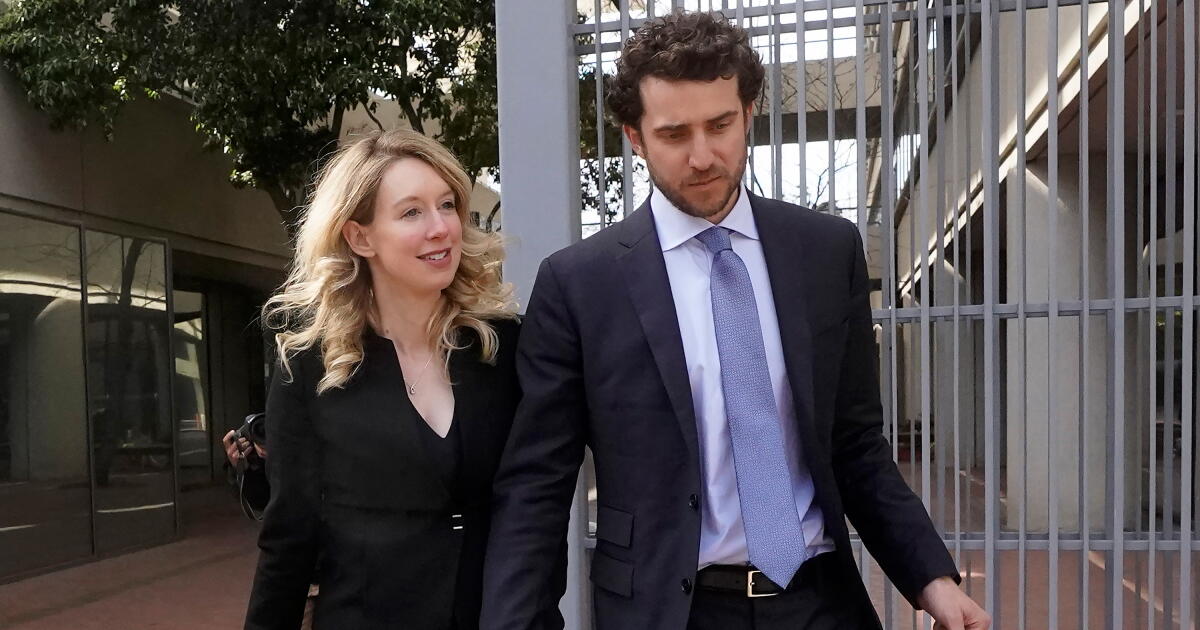
The film, co-directed by Lance Oppenheim and comedian Nathan Fielder, who also appears on-screen, reinvents the genre — or perhaps returns it to its roots. Initial filming took place in the 34 days before Holmes began her federal prison sentence for defrauding investors, during which time Fielder lived with Holmes and her partner Billy Evans in their rented Del Mar beach house. The crew had much more access than filmmakers typically do — the title refers to a text Holmes sent Fielder about his freedom to film.
In a recent interview with GQ, Oppenheim (who also directed the “To Catch a Predator” drama “Primetime”) speculated about why Evans agreed to be completely nude, in the shower, on-camera. The scene is one of many standout moments that left audiences and Fielder himself both stunned and uncomfortable.
“I don’t know. I honestly don’t know,” Oppenheim said when asked why Evans did the scene. “It’s beyond me, but I’ve heard interesting theories that people have when they see it. I mean, in terms of the way the moment was captured, it’s sort of how you see it. There’s a camera in the bathroom, there’s a camera that was on Nathan, there’s a camera outside the bathroom, and there’s an interaction that we see after Billy leaves where he sort of looks at the camera and smiles.”
“So I don’t know what that means, but I feel like there’s enough stuff in there that gives me the impression that maybe he was excited that people could see everything and that there was full access, I guess,” he continued. “But it really beats me, honestly. We were in the car ride on the way back from the gym and I said to Billy, ‘We will give you some time to shower.’ And Billy responded, ‘Want to film me showering?’ I offered to film him in a way that could avoid seeing his genitals, but Billy said he didn’t care about being seen naked.”
The filmmaker likened “You Can See Everything” to an observational vérité movie, one of the oldest forms of documentary filmmaking. He referenced Michael Moore and Ross McElwee films as similar cases in which a director becomes an on-screen presence. Oppenheim compared the second half of the film, which relies on reenactments, to the style of Errol Morris’ “The Thin Blue Line.”
“So actually it feels like we’ve made a jumbo purely out of responding to what was in front of us,” he said, “with all of the basic tenets of documentary cinema.”
An exercise in truth, perception and distortion, most viewers walk out of the theater unclear about what’s real — including whether Fielder is playing a character. Oppenheimer, for his part, thinks this is “as close to the real him as possible.”