



Jonathan Frakes, best known as Cmdr. William Riker on “Star Trek: The Next Generation,” has revealed he battled bladder cancer.
While attending a Phoenix convention with former costar Brent Spiner, Frakes, 74, noticed his urine had turned pink, he said in the most recent episode of their podcast “Dropping Names With Brent and Jonny.”
Though Frakes had hoped it was something he ate, what he had experienced was “painless gross hematuria,” said his surgeon, Dr. Ram Narayanan, the Disney Family Cancer Center section head of urologic oncology. Narayana joined the duo in the podcast episode published Nov. 21.
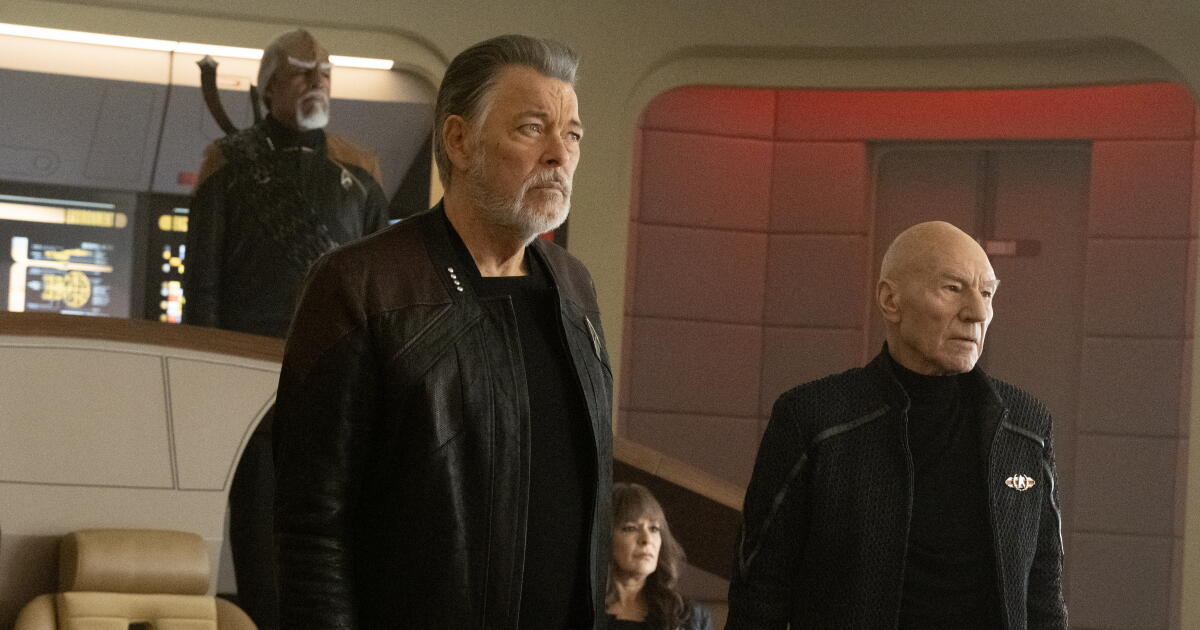
Michael Dorn, Jonathan Frakes, Marina Sirtis and Patrick Stewart in “Star Trek: Picard.”
(Trae Patton / Paramount+)
“So that means: ‘gross,’ which basically you can see with your eyes, [and] ‘hematuria,’ which means blood in the urine,” Narayanan explained to Frakes and Spiner. “So when it’s painless blood that you see with your eyes, that’s always a red flag.
“When you come to the urologist as the specialty, what we want to do is we want to figure out, number one —”
“You don’t have to call me ‘Number One,’ ” Frakes interrupted with a laugh, referring to his “Star Trek” character’s rank.

A urologist determines where the potential bleeding is coming from, Narayanan continued, by performing a cystoscopy, in which a small camera is inserted through the urethra to examine the passageway and the bladder.
“The camera goes in through the penis, and it takes about 30 seconds. It’s very fast,” Narayanan explained. “You get numbed up and … bottom line is that you have to buy in to do that. A lot of times guys are like, ‘I don’t … not sure if I’m ready for it right away,’ and that’s OK too, but the cystoscopy is a must.”
Frakes also had a deeper scan called a blue light cystoscopy, which uses an imaging solution and high contrast to better identify tumors and their edges, according to the Urology Care Foundation website.
“Bladder cancer is confirmed during an outpatient surgery called transurethral resection of a bladder tumor (TURBT),” the Urology Care Foundation explains. “The combination of an imaging study (such as CT scan) and the results from transurethral resection of bladder tumor (TURBT) can find out the stage of your cancer.”
Narayanan said tumors look like “ferns,” “a shrub,” or “a sea anemone” and are scraped away.
After tumors in Frakes’ bladder were identified and removed, the actor and director underwent chemotherapy.
Frakes initially hesitated to share his diagnosis publicly, but Narayanan urged him to speak out and raise awareness about a warning sign that requires prompt evaluation to avoid the cancer progressing into the bladder muscle, which may necessitate removal of the organ.

Jonathan Frakes, best known as Cmdr. William Riker on “Star Trek: The Next Generation,” has revealed he battled bladder cancer.
While attending a Phoenix convention with former costar Brent Spiner, Frakes, 74, noticed his urine had turned pink, he said in the most recent episode of their podcast “Dropping Names With Brent and Jonny.”
Though Frakes had hoped it was something he ate, what he had experienced was “painless gross hematuria,” said his surgeon, Dr. Ram Narayanan, the Disney Family Cancer Center section head of urologic oncology. Narayana joined the duo in the podcast episode published Nov. 21.
Michael Dorn, Jonathan Frakes, Marina Sirtis and Patrick Stewart in “Star Trek: Picard.”
(Trae Patton / Paramount+)
“So that means: ‘gross,’ which basically you can see with your eyes, [and] ‘hematuria,’ which means blood in the urine,” Narayanan explained to Frakes and Spiner. “So when it’s painless blood that you see with your eyes, that’s always a red flag.
“When you come to the urologist as the specialty, what we want to do is we want to figure out, number one —”
“You don’t have to call me ‘Number One,’ ” Frakes interrupted with a laugh, referring to his “Star Trek” character’s rank.
A urologist determines where the potential bleeding is coming from, Narayanan continued, by performing a cystoscopy, in which a small camera is inserted through the urethra to examine the passageway and the bladder.
“The camera goes in through the penis, and it takes about 30 seconds. It’s very fast,” Narayanan explained. “You get numbed up and … bottom line is that you have to buy in to do that. A lot of times guys are like, ‘I don’t … not sure if I’m ready for it right away,’ and that’s OK too, but the cystoscopy is a must.”
Frakes also had a deeper scan called a blue light cystoscopy, which uses an imaging solution and high contrast to better identify tumors and their edges, according to the Urology Care Foundation website.
“Bladder cancer is confirmed during an outpatient surgery called transurethral resection of a bladder tumor (TURBT),” the Urology Care Foundation explains. “The combination of an imaging study (such as CT scan) and the results from transurethral resection of bladder tumor (TURBT) can find out the stage of your cancer.”
Narayanan said tumors look like “ferns,” “a shrub,” or “a sea anemone” and are scraped away.
After tumors in Frakes’ bladder were identified and removed, the actor and director underwent chemotherapy.
Frakes initially hesitated to share his diagnosis publicly, but Narayanan urged him to speak out and raise awareness about a warning sign that requires prompt evaluation to avoid the cancer progressing into the bladder muscle, which may necessitate removal of the organ.


