
A new detail about the identity of the anonymous, politically minded street artist known as Banksy has been revealed thanks to a rediscovered interview from 20 years ago.
BBC Radio recently uncovered a lost interview that the painter did with reporter Nigel Wrench in 2003, in which Banksy was asked if his name is “Robert Banks.” The mysterious creator replied by saying, “It’s Robbie.”
Wrench, who worked for the British station from the 1990s into the 2000s, came upon the recording in his belongings after listening to the BBC Radio series “The Banksy Story,” which premiered over the summer and chronicled the rise and influence of the artist.
The 2003 interview was conducted while Banksy’s exhibition “Turf War” — which he described as a “celebration of vandalism” — was on display at a warehouse in East London.
In a Tuesday special episode of “The Banksy Story,” Wrench told the show’s host, James Peak, that he had no reason to believe that Banksy was lying about his name.
“No one has ever contacted me from the Banksy empire. No one ever contradicted that,” Wrench noted. He added later in the interview, “If it wasn’t his real name, why wouldn’t he just go with, ‘Yes, it’s Robert Banks’? “I thought [after he said his name was Robbie] that it was absolutely his real name.”
Banksy was later described by Wrench as being a “young bloke in a hoodie” who had a vibe that was “incredibly relaxed,” “totally engaged” and “authentic.”
Elsewhere in the reupped 2003 interview, Banksy delved a bit into his philosophy as an artist.
“I’m interested in justice. Who has the right to judge anybody else?” the British painter said. “If you’ve ever fallen foul of the justice system then it turns you very skeptical about everything, so I guess I like to turn it on its head a little bit. I’m into working out who really is the good guys.”
He rejected the notion that he is an overly political person.
“If you think about anything about your life for longer than a second, then you have to work out that the shoes you wear are made by somebody on a pathetic amount of money and the coffee you drink means somebody somewhere in the world is getting done over,” he said. “If you ever think for a second, then yeah, apparently that does make you more political than most people. I don’t know, I guess people are lazy.”
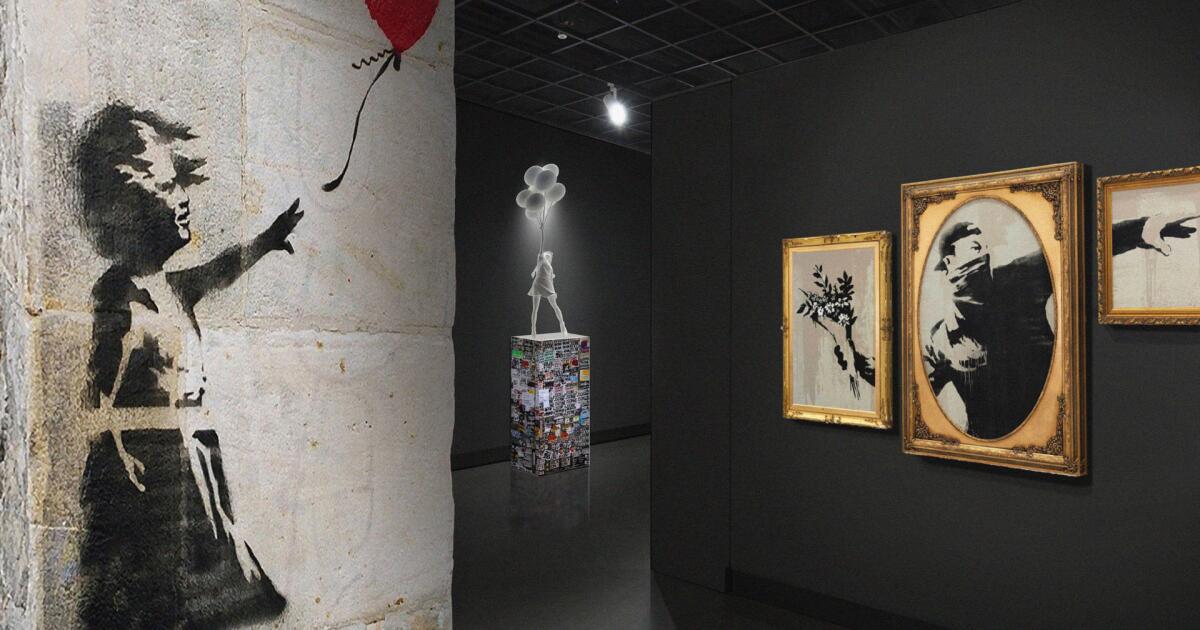
Banksy began his career in the Bristol, England, graffiti scene, tagging buildings with politically trenchant pieces critiquing police violence, Western imperialism and consumer capitalism. He frequently turns to elaborate, clandestine pranks to needle the high-end gallery and museum scene that, while making him rich, also has served as a foil for his satirical work.
Times staff writer August Brown contributed to this report.

A new detail about the identity of the anonymous, politically minded street artist known as Banksy has been revealed thanks to a rediscovered interview from 20 years ago.
BBC Radio recently uncovered a lost interview that the painter did with reporter Nigel Wrench in 2003, in which Banksy was asked if his name is “Robert Banks.” The mysterious creator replied by saying, “It’s Robbie.”
Wrench, who worked for the British station from the 1990s into the 2000s, came upon the recording in his belongings after listening to the BBC Radio series “The Banksy Story,” which premiered over the summer and chronicled the rise and influence of the artist.
The 2003 interview was conducted while Banksy’s exhibition “Turf War” — which he described as a “celebration of vandalism” — was on display at a warehouse in East London.
In a Tuesday special episode of “The Banksy Story,” Wrench told the show’s host, James Peak, that he had no reason to believe that Banksy was lying about his name.
“No one has ever contacted me from the Banksy empire. No one ever contradicted that,” Wrench noted. He added later in the interview, “If it wasn’t his real name, why wouldn’t he just go with, ‘Yes, it’s Robert Banks’? “I thought [after he said his name was Robbie] that it was absolutely his real name.”
Banksy was later described by Wrench as being a “young bloke in a hoodie” who had a vibe that was “incredibly relaxed,” “totally engaged” and “authentic.”
Elsewhere in the reupped 2003 interview, Banksy delved a bit into his philosophy as an artist.
“I’m interested in justice. Who has the right to judge anybody else?” the British painter said. “If you’ve ever fallen foul of the justice system then it turns you very skeptical about everything, so I guess I like to turn it on its head a little bit. I’m into working out who really is the good guys.”
He rejected the notion that he is an overly political person.
“If you think about anything about your life for longer than a second, then you have to work out that the shoes you wear are made by somebody on a pathetic amount of money and the coffee you drink means somebody somewhere in the world is getting done over,” he said. “If you ever think for a second, then yeah, apparently that does make you more political than most people. I don’t know, I guess people are lazy.”
Banksy began his career in the Bristol, England, graffiti scene, tagging buildings with politically trenchant pieces critiquing police violence, Western imperialism and consumer capitalism. He frequently turns to elaborate, clandestine pranks to needle the high-end gallery and museum scene that, while making him rich, also has served as a foil for his satirical work.
Times staff writer August Brown contributed to this report.

A new detail about the identity of the anonymous, politically minded street artist known as Banksy has been revealed thanks to a rediscovered interview from 20 years ago.
BBC Radio recently uncovered a lost interview that the painter did with reporter Nigel Wrench in 2003, in which Banksy was asked if his name is “Robert Banks.” The mysterious creator replied by saying, “It’s Robbie.”
Wrench, who worked for the British station from the 1990s into the 2000s, came upon the recording in his belongings after listening to the BBC Radio series “The Banksy Story,” which premiered over the summer and chronicled the rise and influence of the artist.
The 2003 interview was conducted while Banksy’s exhibition “Turf War” — which he described as a “celebration of vandalism” — was on display at a warehouse in East London.
In a Tuesday special episode of “The Banksy Story,” Wrench told the show’s host, James Peak, that he had no reason to believe that Banksy was lying about his name.
“No one has ever contacted me from the Banksy empire. No one ever contradicted that,” Wrench noted. He added later in the interview, “If it wasn’t his real name, why wouldn’t he just go with, ‘Yes, it’s Robert Banks’? “I thought [after he said his name was Robbie] that it was absolutely his real name.”
Banksy was later described by Wrench as being a “young bloke in a hoodie” who had a vibe that was “incredibly relaxed,” “totally engaged” and “authentic.”
Elsewhere in the reupped 2003 interview, Banksy delved a bit into his philosophy as an artist.
“I’m interested in justice. Who has the right to judge anybody else?” the British painter said. “If you’ve ever fallen foul of the justice system then it turns you very skeptical about everything, so I guess I like to turn it on its head a little bit. I’m into working out who really is the good guys.”
He rejected the notion that he is an overly political person.
“If you think about anything about your life for longer than a second, then you have to work out that the shoes you wear are made by somebody on a pathetic amount of money and the coffee you drink means somebody somewhere in the world is getting done over,” he said. “If you ever think for a second, then yeah, apparently that does make you more political than most people. I don’t know, I guess people are lazy.”
Banksy began his career in the Bristol, England, graffiti scene, tagging buildings with politically trenchant pieces critiquing police violence, Western imperialism and consumer capitalism. He frequently turns to elaborate, clandestine pranks to needle the high-end gallery and museum scene that, while making him rich, also has served as a foil for his satirical work.
Times staff writer August Brown contributed to this report.
A new detail about the identity of the anonymous, politically minded street artist known as Banksy has been revealed thanks to a rediscovered interview from 20 years ago.
BBC Radio recently uncovered a lost interview that the painter did with reporter Nigel Wrench in 2003, in which Banksy was asked if his name is “Robert Banks.” The mysterious creator replied by saying, “It’s Robbie.”
Wrench, who worked for the British station from the 1990s into the 2000s, came upon the recording in his belongings after listening to the BBC Radio series “The Banksy Story,” which premiered over the summer and chronicled the rise and influence of the artist.
The 2003 interview was conducted while Banksy’s exhibition “Turf War” — which he described as a “celebration of vandalism” — was on display at a warehouse in East London.
In a Tuesday special episode of “The Banksy Story,” Wrench told the show’s host, James Peak, that he had no reason to believe that Banksy was lying about his name.
“No one has ever contacted me from the Banksy empire. No one ever contradicted that,” Wrench noted. He added later in the interview, “If it wasn’t his real name, why wouldn’t he just go with, ‘Yes, it’s Robert Banks’? “I thought [after he said his name was Robbie] that it was absolutely his real name.”
Banksy was later described by Wrench as being a “young bloke in a hoodie” who had a vibe that was “incredibly relaxed,” “totally engaged” and “authentic.”
Elsewhere in the reupped 2003 interview, Banksy delved a bit into his philosophy as an artist.
“I’m interested in justice. Who has the right to judge anybody else?” the British painter said. “If you’ve ever fallen foul of the justice system then it turns you very skeptical about everything, so I guess I like to turn it on its head a little bit. I’m into working out who really is the good guys.”
He rejected the notion that he is an overly political person.
“If you think about anything about your life for longer than a second, then you have to work out that the shoes you wear are made by somebody on a pathetic amount of money and the coffee you drink means somebody somewhere in the world is getting done over,” he said. “If you ever think for a second, then yeah, apparently that does make you more political than most people. I don’t know, I guess people are lazy.”
Banksy began his career in the Bristol, England, graffiti scene, tagging buildings with politically trenchant pieces critiquing police violence, Western imperialism and consumer capitalism. He frequently turns to elaborate, clandestine pranks to needle the high-end gallery and museum scene that, while making him rich, also has served as a foil for his satirical work.
Times staff writer August Brown contributed to this report.