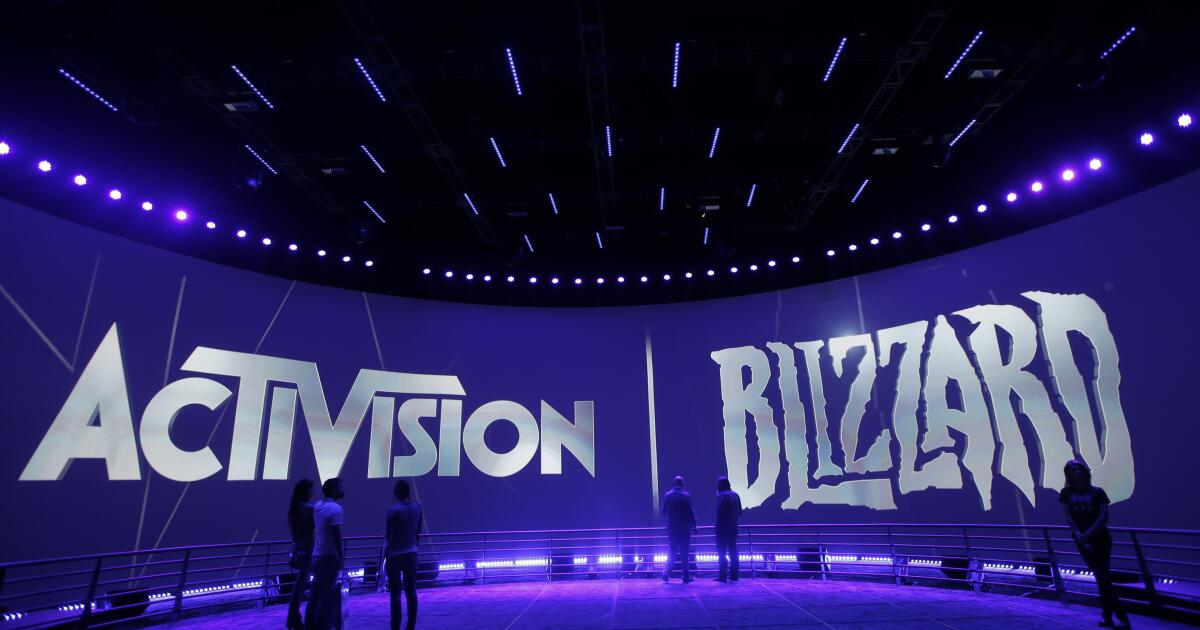
Activision Blizzard Chief Executive Bobby Kotick will leave his post at the end of December, bringing his 32-year tenure at the gaming giant to a close.
Kotick’s departure comes just two months after Microsoft acquired Activision Blizzard in October and closed the biggest deal in video game history after more than a year of close scrutiny from antitrust officials around the world. Kotick had communicated his plans to leave post-acquisition in an October email to staff, in which he noted that he would stay with the company through the end of the year. He will leave the company Dec. 29.
“I cannot adequately express the pride I have in the people who continue to contribute to our success and all those who have helped throughout my 32 years leading this company,” Kotick said in an email to staff on Wednesday. “We are now part of the world’s most admired company. That isn’t an accident.”
The company, he added, “could not be in better hands.”
“I will always be profoundly grateful to the people who contributed tirelessly to building this company and I am confident you will keep inspiring joy and uniting people through the power of play,” Kotick said.
In a memo obtained by the Verge, Microsoft Gaming Chief Executive Phil Spencer told the staff that Activision Blizzard “has been an enduring pillar of video games” under Kotick’s watch.
“Whether it’s Call of Duty, World of Warcraft, Candy Crush Saga or any number of other titles, his teams have created beloved franchises and entertained hundreds of millions of players for decades,” Spencer said in the memo. “I’d like to thank Bobby — for his invaluable contributions to this industry, his partnership in closing the Activision Blizzard acquisition and his collaboration following the close — and I wish him and his family the very best in his next chapter.”
Leadership teams for Activision Publishing, Blizzard and King will remain in place, with no changes to the structure of how the studios and business units are run, Spencer said in the note.
The $69-billion purchase of Santa Monica-based Activision Blizzard made Microsoft the third-largest gaming company in the world by revenue, behind China’s Tencent and Sony in Japan. The move came after a protracted series of labor disputes in which Activision Blizzard employees alleged that the company harbored a hostile, sexist, discriminatory workplace — something that Activision Blizzard has denied.
Last year, Activision Blizzard agreed to set up an $18-million fund for employees who experienced sexual harassment or discrimination, pregnancy discrimination or retaliation as part of a settlement with a federal employment agency.
The California Department of Fair Employment and Housing alleged that Activision, and its Blizzard division in particular, fostered a “pervasive frat boy workplace culture” where managers led employees on drunken “cube crawls” to harass and grope female employees, where pay discrimination was rampant, and where those who spoke up against the behavior were punished.
The filing kicked off months of employee unrest and new legal actions, including an employee walkout, petitions calling for the ouster of Kotick, and complaints and investigations by the EEOC, the Securities and Exchange Commission and the National Labor Relations Board.
Last week, Activision Blizzard and California’s Civil Rights Department reached a roughly $50-million settlement agreement to resolve the sexual harassment and discrimination case against the gaming company.
A copy of the settlement reviewed by The Times said that “no court or any independent investigation has substantiated any allegations that: there has been systemic or widespread sexual harassment at Activision Blizzard,” or that “Activision Blizzard senior executives ignored, condoned, or tolerated a culture of systemic, harassment, retaliation, or discrimination.”

Activision Blizzard Chief Executive Bobby Kotick will leave his post at the end of December, bringing his 32-year tenure at the gaming giant to a close.
Kotick’s departure comes just two months after Microsoft acquired Activision Blizzard in October and closed the biggest deal in video game history after more than a year of close scrutiny from antitrust officials around the world. Kotick had communicated his plans to leave post-acquisition in an October email to staff, in which he noted that he would stay with the company through the end of the year. He will leave the company Dec. 29.
“I cannot adequately express the pride I have in the people who continue to contribute to our success and all those who have helped throughout my 32 years leading this company,” Kotick said in an email to staff on Wednesday. “We are now part of the world’s most admired company. That isn’t an accident.”
The company, he added, “could not be in better hands.”
“I will always be profoundly grateful to the people who contributed tirelessly to building this company and I am confident you will keep inspiring joy and uniting people through the power of play,” Kotick said.
In a memo obtained by the Verge, Microsoft Gaming Chief Executive Phil Spencer told the staff that Activision Blizzard “has been an enduring pillar of video games” under Kotick’s watch.
“Whether it’s Call of Duty, World of Warcraft, Candy Crush Saga or any number of other titles, his teams have created beloved franchises and entertained hundreds of millions of players for decades,” Spencer said in the memo. “I’d like to thank Bobby — for his invaluable contributions to this industry, his partnership in closing the Activision Blizzard acquisition and his collaboration following the close — and I wish him and his family the very best in his next chapter.”
Leadership teams for Activision Publishing, Blizzard and King will remain in place, with no changes to the structure of how the studios and business units are run, Spencer said in the note.
The $69-billion purchase of Santa Monica-based Activision Blizzard made Microsoft the third-largest gaming company in the world by revenue, behind China’s Tencent and Sony in Japan. The move came after a protracted series of labor disputes in which Activision Blizzard employees alleged that the company harbored a hostile, sexist, discriminatory workplace — something that Activision Blizzard has denied.
Last year, Activision Blizzard agreed to set up an $18-million fund for employees who experienced sexual harassment or discrimination, pregnancy discrimination or retaliation as part of a settlement with a federal employment agency.
The California Department of Fair Employment and Housing alleged that Activision, and its Blizzard division in particular, fostered a “pervasive frat boy workplace culture” where managers led employees on drunken “cube crawls” to harass and grope female employees, where pay discrimination was rampant, and where those who spoke up against the behavior were punished.
The filing kicked off months of employee unrest and new legal actions, including an employee walkout, petitions calling for the ouster of Kotick, and complaints and investigations by the EEOC, the Securities and Exchange Commission and the National Labor Relations Board.
Last week, Activision Blizzard and California’s Civil Rights Department reached a roughly $50-million settlement agreement to resolve the sexual harassment and discrimination case against the gaming company.
A copy of the settlement reviewed by The Times said that “no court or any independent investigation has substantiated any allegations that: there has been systemic or widespread sexual harassment at Activision Blizzard,” or that “Activision Blizzard senior executives ignored, condoned, or tolerated a culture of systemic, harassment, retaliation, or discrimination.”

Activision Blizzard Chief Executive Bobby Kotick will leave his post at the end of December, bringing his 32-year tenure at the gaming giant to a close.
Kotick’s departure comes just two months after Microsoft acquired Activision Blizzard in October and closed the biggest deal in video game history after more than a year of close scrutiny from antitrust officials around the world. Kotick had communicated his plans to leave post-acquisition in an October email to staff, in which he noted that he would stay with the company through the end of the year. He will leave the company Dec. 29.
“I cannot adequately express the pride I have in the people who continue to contribute to our success and all those who have helped throughout my 32 years leading this company,” Kotick said in an email to staff on Wednesday. “We are now part of the world’s most admired company. That isn’t an accident.”
The company, he added, “could not be in better hands.”
“I will always be profoundly grateful to the people who contributed tirelessly to building this company and I am confident you will keep inspiring joy and uniting people through the power of play,” Kotick said.
In a memo obtained by the Verge, Microsoft Gaming Chief Executive Phil Spencer told the staff that Activision Blizzard “has been an enduring pillar of video games” under Kotick’s watch.
“Whether it’s Call of Duty, World of Warcraft, Candy Crush Saga or any number of other titles, his teams have created beloved franchises and entertained hundreds of millions of players for decades,” Spencer said in the memo. “I’d like to thank Bobby — for his invaluable contributions to this industry, his partnership in closing the Activision Blizzard acquisition and his collaboration following the close — and I wish him and his family the very best in his next chapter.”
Leadership teams for Activision Publishing, Blizzard and King will remain in place, with no changes to the structure of how the studios and business units are run, Spencer said in the note.
The $69-billion purchase of Santa Monica-based Activision Blizzard made Microsoft the third-largest gaming company in the world by revenue, behind China’s Tencent and Sony in Japan. The move came after a protracted series of labor disputes in which Activision Blizzard employees alleged that the company harbored a hostile, sexist, discriminatory workplace — something that Activision Blizzard has denied.
Last year, Activision Blizzard agreed to set up an $18-million fund for employees who experienced sexual harassment or discrimination, pregnancy discrimination or retaliation as part of a settlement with a federal employment agency.
The California Department of Fair Employment and Housing alleged that Activision, and its Blizzard division in particular, fostered a “pervasive frat boy workplace culture” where managers led employees on drunken “cube crawls” to harass and grope female employees, where pay discrimination was rampant, and where those who spoke up against the behavior were punished.
The filing kicked off months of employee unrest and new legal actions, including an employee walkout, petitions calling for the ouster of Kotick, and complaints and investigations by the EEOC, the Securities and Exchange Commission and the National Labor Relations Board.
Last week, Activision Blizzard and California’s Civil Rights Department reached a roughly $50-million settlement agreement to resolve the sexual harassment and discrimination case against the gaming company.
A copy of the settlement reviewed by The Times said that “no court or any independent investigation has substantiated any allegations that: there has been systemic or widespread sexual harassment at Activision Blizzard,” or that “Activision Blizzard senior executives ignored, condoned, or tolerated a culture of systemic, harassment, retaliation, or discrimination.”
Activision Blizzard Chief Executive Bobby Kotick will leave his post at the end of December, bringing his 32-year tenure at the gaming giant to a close.
Kotick’s departure comes just two months after Microsoft acquired Activision Blizzard in October and closed the biggest deal in video game history after more than a year of close scrutiny from antitrust officials around the world. Kotick had communicated his plans to leave post-acquisition in an October email to staff, in which he noted that he would stay with the company through the end of the year. He will leave the company Dec. 29.
“I cannot adequately express the pride I have in the people who continue to contribute to our success and all those who have helped throughout my 32 years leading this company,” Kotick said in an email to staff on Wednesday. “We are now part of the world’s most admired company. That isn’t an accident.”
The company, he added, “could not be in better hands.”
“I will always be profoundly grateful to the people who contributed tirelessly to building this company and I am confident you will keep inspiring joy and uniting people through the power of play,” Kotick said.
In a memo obtained by the Verge, Microsoft Gaming Chief Executive Phil Spencer told the staff that Activision Blizzard “has been an enduring pillar of video games” under Kotick’s watch.
“Whether it’s Call of Duty, World of Warcraft, Candy Crush Saga or any number of other titles, his teams have created beloved franchises and entertained hundreds of millions of players for decades,” Spencer said in the memo. “I’d like to thank Bobby — for his invaluable contributions to this industry, his partnership in closing the Activision Blizzard acquisition and his collaboration following the close — and I wish him and his family the very best in his next chapter.”
Leadership teams for Activision Publishing, Blizzard and King will remain in place, with no changes to the structure of how the studios and business units are run, Spencer said in the note.
The $69-billion purchase of Santa Monica-based Activision Blizzard made Microsoft the third-largest gaming company in the world by revenue, behind China’s Tencent and Sony in Japan. The move came after a protracted series of labor disputes in which Activision Blizzard employees alleged that the company harbored a hostile, sexist, discriminatory workplace — something that Activision Blizzard has denied.
Last year, Activision Blizzard agreed to set up an $18-million fund for employees who experienced sexual harassment or discrimination, pregnancy discrimination or retaliation as part of a settlement with a federal employment agency.
The California Department of Fair Employment and Housing alleged that Activision, and its Blizzard division in particular, fostered a “pervasive frat boy workplace culture” where managers led employees on drunken “cube crawls” to harass and grope female employees, where pay discrimination was rampant, and where those who spoke up against the behavior were punished.
The filing kicked off months of employee unrest and new legal actions, including an employee walkout, petitions calling for the ouster of Kotick, and complaints and investigations by the EEOC, the Securities and Exchange Commission and the National Labor Relations Board.
Last week, Activision Blizzard and California’s Civil Rights Department reached a roughly $50-million settlement agreement to resolve the sexual harassment and discrimination case against the gaming company.
A copy of the settlement reviewed by The Times said that “no court or any independent investigation has substantiated any allegations that: there has been systemic or widespread sexual harassment at Activision Blizzard,” or that “Activision Blizzard senior executives ignored, condoned, or tolerated a culture of systemic, harassment, retaliation, or discrimination.”

Activision Blizzard Chief Executive Bobby Kotick will leave his post at the end of December, bringing his 32-year tenure at the gaming giant to a close.
Kotick’s departure comes just two months after Microsoft acquired Activision Blizzard in October and closed the biggest deal in video game history after more than a year of close scrutiny from antitrust officials around the world. Kotick had communicated his plans to leave post-acquisition in an October email to staff, in which he noted that he would stay with the company through the end of the year. He will leave the company Dec. 29.
“I cannot adequately express the pride I have in the people who continue to contribute to our success and all those who have helped throughout my 32 years leading this company,” Kotick said in an email to staff on Wednesday. “We are now part of the world’s most admired company. That isn’t an accident.”
The company, he added, “could not be in better hands.”
“I will always be profoundly grateful to the people who contributed tirelessly to building this company and I am confident you will keep inspiring joy and uniting people through the power of play,” Kotick said.
In a memo obtained by the Verge, Microsoft Gaming Chief Executive Phil Spencer told the staff that Activision Blizzard “has been an enduring pillar of video games” under Kotick’s watch.
“Whether it’s Call of Duty, World of Warcraft, Candy Crush Saga or any number of other titles, his teams have created beloved franchises and entertained hundreds of millions of players for decades,” Spencer said in the memo. “I’d like to thank Bobby — for his invaluable contributions to this industry, his partnership in closing the Activision Blizzard acquisition and his collaboration following the close — and I wish him and his family the very best in his next chapter.”
Leadership teams for Activision Publishing, Blizzard and King will remain in place, with no changes to the structure of how the studios and business units are run, Spencer said in the note.
The $69-billion purchase of Santa Monica-based Activision Blizzard made Microsoft the third-largest gaming company in the world by revenue, behind China’s Tencent and Sony in Japan. The move came after a protracted series of labor disputes in which Activision Blizzard employees alleged that the company harbored a hostile, sexist, discriminatory workplace — something that Activision Blizzard has denied.
Last year, Activision Blizzard agreed to set up an $18-million fund for employees who experienced sexual harassment or discrimination, pregnancy discrimination or retaliation as part of a settlement with a federal employment agency.
The California Department of Fair Employment and Housing alleged that Activision, and its Blizzard division in particular, fostered a “pervasive frat boy workplace culture” where managers led employees on drunken “cube crawls” to harass and grope female employees, where pay discrimination was rampant, and where those who spoke up against the behavior were punished.
The filing kicked off months of employee unrest and new legal actions, including an employee walkout, petitions calling for the ouster of Kotick, and complaints and investigations by the EEOC, the Securities and Exchange Commission and the National Labor Relations Board.
Last week, Activision Blizzard and California’s Civil Rights Department reached a roughly $50-million settlement agreement to resolve the sexual harassment and discrimination case against the gaming company.
A copy of the settlement reviewed by The Times said that “no court or any independent investigation has substantiated any allegations that: there has been systemic or widespread sexual harassment at Activision Blizzard,” or that “Activision Blizzard senior executives ignored, condoned, or tolerated a culture of systemic, harassment, retaliation, or discrimination.”
Activision Blizzard Chief Executive Bobby Kotick will leave his post at the end of December, bringing his 32-year tenure at the gaming giant to a close.
Kotick’s departure comes just two months after Microsoft acquired Activision Blizzard in October and closed the biggest deal in video game history after more than a year of close scrutiny from antitrust officials around the world. Kotick had communicated his plans to leave post-acquisition in an October email to staff, in which he noted that he would stay with the company through the end of the year. He will leave the company Dec. 29.
“I cannot adequately express the pride I have in the people who continue to contribute to our success and all those who have helped throughout my 32 years leading this company,” Kotick said in an email to staff on Wednesday. “We are now part of the world’s most admired company. That isn’t an accident.”
The company, he added, “could not be in better hands.”
“I will always be profoundly grateful to the people who contributed tirelessly to building this company and I am confident you will keep inspiring joy and uniting people through the power of play,” Kotick said.
In a memo obtained by the Verge, Microsoft Gaming Chief Executive Phil Spencer told the staff that Activision Blizzard “has been an enduring pillar of video games” under Kotick’s watch.
“Whether it’s Call of Duty, World of Warcraft, Candy Crush Saga or any number of other titles, his teams have created beloved franchises and entertained hundreds of millions of players for decades,” Spencer said in the memo. “I’d like to thank Bobby — for his invaluable contributions to this industry, his partnership in closing the Activision Blizzard acquisition and his collaboration following the close — and I wish him and his family the very best in his next chapter.”
Leadership teams for Activision Publishing, Blizzard and King will remain in place, with no changes to the structure of how the studios and business units are run, Spencer said in the note.
The $69-billion purchase of Santa Monica-based Activision Blizzard made Microsoft the third-largest gaming company in the world by revenue, behind China’s Tencent and Sony in Japan. The move came after a protracted series of labor disputes in which Activision Blizzard employees alleged that the company harbored a hostile, sexist, discriminatory workplace — something that Activision Blizzard has denied.
Last year, Activision Blizzard agreed to set up an $18-million fund for employees who experienced sexual harassment or discrimination, pregnancy discrimination or retaliation as part of a settlement with a federal employment agency.
The California Department of Fair Employment and Housing alleged that Activision, and its Blizzard division in particular, fostered a “pervasive frat boy workplace culture” where managers led employees on drunken “cube crawls” to harass and grope female employees, where pay discrimination was rampant, and where those who spoke up against the behavior were punished.
The filing kicked off months of employee unrest and new legal actions, including an employee walkout, petitions calling for the ouster of Kotick, and complaints and investigations by the EEOC, the Securities and Exchange Commission and the National Labor Relations Board.
Last week, Activision Blizzard and California’s Civil Rights Department reached a roughly $50-million settlement agreement to resolve the sexual harassment and discrimination case against the gaming company.
A copy of the settlement reviewed by The Times said that “no court or any independent investigation has substantiated any allegations that: there has been systemic or widespread sexual harassment at Activision Blizzard,” or that “Activision Blizzard senior executives ignored, condoned, or tolerated a culture of systemic, harassment, retaliation, or discrimination.”
Activision Blizzard Chief Executive Bobby Kotick will leave his post at the end of December, bringing his 32-year tenure at the gaming giant to a close.
Kotick’s departure comes just two months after Microsoft acquired Activision Blizzard in October and closed the biggest deal in video game history after more than a year of close scrutiny from antitrust officials around the world. Kotick had communicated his plans to leave post-acquisition in an October email to staff, in which he noted that he would stay with the company through the end of the year. He will leave the company Dec. 29.
“I cannot adequately express the pride I have in the people who continue to contribute to our success and all those who have helped throughout my 32 years leading this company,” Kotick said in an email to staff on Wednesday. “We are now part of the world’s most admired company. That isn’t an accident.”
The company, he added, “could not be in better hands.”
“I will always be profoundly grateful to the people who contributed tirelessly to building this company and I am confident you will keep inspiring joy and uniting people through the power of play,” Kotick said.
In a memo obtained by the Verge, Microsoft Gaming Chief Executive Phil Spencer told the staff that Activision Blizzard “has been an enduring pillar of video games” under Kotick’s watch.
“Whether it’s Call of Duty, World of Warcraft, Candy Crush Saga or any number of other titles, his teams have created beloved franchises and entertained hundreds of millions of players for decades,” Spencer said in the memo. “I’d like to thank Bobby — for his invaluable contributions to this industry, his partnership in closing the Activision Blizzard acquisition and his collaboration following the close — and I wish him and his family the very best in his next chapter.”
Leadership teams for Activision Publishing, Blizzard and King will remain in place, with no changes to the structure of how the studios and business units are run, Spencer said in the note.
The $69-billion purchase of Santa Monica-based Activision Blizzard made Microsoft the third-largest gaming company in the world by revenue, behind China’s Tencent and Sony in Japan. The move came after a protracted series of labor disputes in which Activision Blizzard employees alleged that the company harbored a hostile, sexist, discriminatory workplace — something that Activision Blizzard has denied.
Last year, Activision Blizzard agreed to set up an $18-million fund for employees who experienced sexual harassment or discrimination, pregnancy discrimination or retaliation as part of a settlement with a federal employment agency.
The California Department of Fair Employment and Housing alleged that Activision, and its Blizzard division in particular, fostered a “pervasive frat boy workplace culture” where managers led employees on drunken “cube crawls” to harass and grope female employees, where pay discrimination was rampant, and where those who spoke up against the behavior were punished.
The filing kicked off months of employee unrest and new legal actions, including an employee walkout, petitions calling for the ouster of Kotick, and complaints and investigations by the EEOC, the Securities and Exchange Commission and the National Labor Relations Board.
Last week, Activision Blizzard and California’s Civil Rights Department reached a roughly $50-million settlement agreement to resolve the sexual harassment and discrimination case against the gaming company.
A copy of the settlement reviewed by The Times said that “no court or any independent investigation has substantiated any allegations that: there has been systemic or widespread sexual harassment at Activision Blizzard,” or that “Activision Blizzard senior executives ignored, condoned, or tolerated a culture of systemic, harassment, retaliation, or discrimination.”
Activision Blizzard Chief Executive Bobby Kotick will leave his post at the end of December, bringing his 32-year tenure at the gaming giant to a close.
Kotick’s departure comes just two months after Microsoft acquired Activision Blizzard in October and closed the biggest deal in video game history after more than a year of close scrutiny from antitrust officials around the world. Kotick had communicated his plans to leave post-acquisition in an October email to staff, in which he noted that he would stay with the company through the end of the year. He will leave the company Dec. 29.
“I cannot adequately express the pride I have in the people who continue to contribute to our success and all those who have helped throughout my 32 years leading this company,” Kotick said in an email to staff on Wednesday. “We are now part of the world’s most admired company. That isn’t an accident.”
The company, he added, “could not be in better hands.”
“I will always be profoundly grateful to the people who contributed tirelessly to building this company and I am confident you will keep inspiring joy and uniting people through the power of play,” Kotick said.
In a memo obtained by the Verge, Microsoft Gaming Chief Executive Phil Spencer told the staff that Activision Blizzard “has been an enduring pillar of video games” under Kotick’s watch.
“Whether it’s Call of Duty, World of Warcraft, Candy Crush Saga or any number of other titles, his teams have created beloved franchises and entertained hundreds of millions of players for decades,” Spencer said in the memo. “I’d like to thank Bobby — for his invaluable contributions to this industry, his partnership in closing the Activision Blizzard acquisition and his collaboration following the close — and I wish him and his family the very best in his next chapter.”
Leadership teams for Activision Publishing, Blizzard and King will remain in place, with no changes to the structure of how the studios and business units are run, Spencer said in the note.
The $69-billion purchase of Santa Monica-based Activision Blizzard made Microsoft the third-largest gaming company in the world by revenue, behind China’s Tencent and Sony in Japan. The move came after a protracted series of labor disputes in which Activision Blizzard employees alleged that the company harbored a hostile, sexist, discriminatory workplace — something that Activision Blizzard has denied.
Last year, Activision Blizzard agreed to set up an $18-million fund for employees who experienced sexual harassment or discrimination, pregnancy discrimination or retaliation as part of a settlement with a federal employment agency.
The California Department of Fair Employment and Housing alleged that Activision, and its Blizzard division in particular, fostered a “pervasive frat boy workplace culture” where managers led employees on drunken “cube crawls” to harass and grope female employees, where pay discrimination was rampant, and where those who spoke up against the behavior were punished.
The filing kicked off months of employee unrest and new legal actions, including an employee walkout, petitions calling for the ouster of Kotick, and complaints and investigations by the EEOC, the Securities and Exchange Commission and the National Labor Relations Board.
Last week, Activision Blizzard and California’s Civil Rights Department reached a roughly $50-million settlement agreement to resolve the sexual harassment and discrimination case against the gaming company.
A copy of the settlement reviewed by The Times said that “no court or any independent investigation has substantiated any allegations that: there has been systemic or widespread sexual harassment at Activision Blizzard,” or that “Activision Blizzard senior executives ignored, condoned, or tolerated a culture of systemic, harassment, retaliation, or discrimination.”