

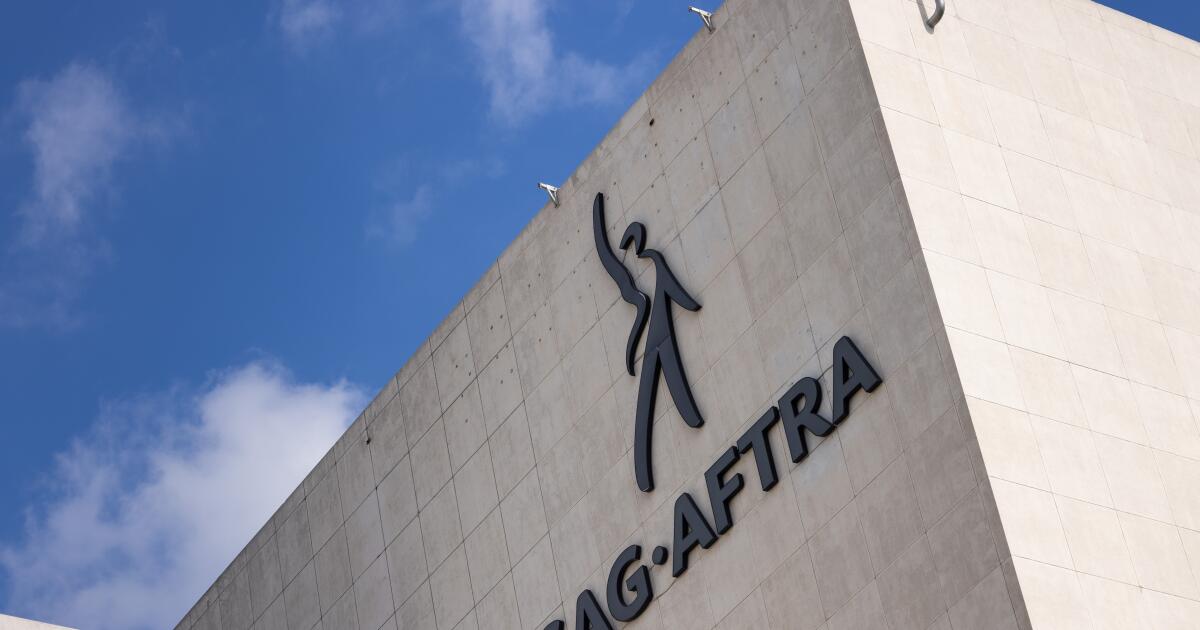

Performers union SAG-AFTRA is celebrating a key victory this week: the passage of a bill that would regulate the use of artificial intelligence in the local entertainment industry.
The California Senate on Tuesday passed Assembly Bill 2602, a measure that would prohibit employers from using AI-generated digital replicas in lieu of human performers under certain circumstances.
If the bill is signed into law, employers would not be allowed to use an AI version of a performer’s voice or likeness if such usage replaces work that the performer could have done in person; if the contract of employment doesn’t specify how the digital replica will be used (provided that usage deviates from already agreed-upon terms); and if the performer did not have legal or union representation when the deal was made.
The bill, approved 37 to 1, is now headed to the governor’s office, where Gavin Newsom will decide whether to sign it into law.
“We are thrilled that one of our top legislative priorities, bill AB 2602, has passed in the state of California,” said Duncan Crabtree-Ireland, national executive director and chief negotiator of the Screen Actors Guild-American Federation of Television and Radio Artists.
“The bill, which protects not only SAG-AFTRA performers but all performers, is a huge step forward,” Crabtree-Ireland said.
“Voice and likeness rights, in an age of digital replication, must have strong guardrails around licensing to protect from abuse, this bill provides those guardrails.”
AB 2602 is one of three bills SAG-AFTRA has helped draft in an effort to codify AI protections for performers into law. Some tech companies have pushed back on the legislation, urging caution against overregulation.
The union’s fight for AI restrictions extended this week to the picket lines, where striking video game actors continued to pressure developers to meet their demands.
Performers doing voice-over and motion-capture work in the video game industry participated in a demonstration Wednesday outside the Warner Bros. lot in Burbank as part of their ongoing contract campaign.
AI also emerged as a major sticking point during last year’s writers’ and actors’ strikes.
“SAG-AFTRA is striking this contract so that members working in interactive media (video games) can continue earning a living doing the job they love,” the union said in a statement.
“Our members’ work and likenesses are being exploited by artificial intelligence, and video game companies have refused to offer a fair deal that addresses this existential threat.”
The video game companies have expressed disappointment in the union’s decision to call a strike when the two parties were “so close to a deal,” maintaining that they are “prepared to resume negotiations.”
“We have worked hard to deliver proposals with reasonable terms that protect the rights of performers while ensuring we can continue to use the most advanced technology to create great entertainment experiences for fans,” Audrey Cooling, a spokesperson for the game companies, said in a statement Wednesday.
Times staff writer Wendy Lee contributed to this report.

Performers union SAG-AFTRA is celebrating a key victory this week: the passage of a bill that would regulate the use of artificial intelligence in the local entertainment industry.
The California Senate on Tuesday passed Assembly Bill 2602, a measure that would prohibit employers from using AI-generated digital replicas in lieu of human performers under certain circumstances.
If the bill is signed into law, employers would not be allowed to use an AI version of a performer’s voice or likeness if such usage replaces work that the performer could have done in person; if the contract of employment doesn’t specify how the digital replica will be used (provided that usage deviates from already agreed-upon terms); and if the performer did not have legal or union representation when the deal was made.
The bill, approved 37 to 1, is now headed to the governor’s office, where Gavin Newsom will decide whether to sign it into law.
“We are thrilled that one of our top legislative priorities, bill AB 2602, has passed in the state of California,” said Duncan Crabtree-Ireland, national executive director and chief negotiator of the Screen Actors Guild-American Federation of Television and Radio Artists.
“The bill, which protects not only SAG-AFTRA performers but all performers, is a huge step forward,” Crabtree-Ireland said.
“Voice and likeness rights, in an age of digital replication, must have strong guardrails around licensing to protect from abuse, this bill provides those guardrails.”
AB 2602 is one of three bills SAG-AFTRA has helped draft in an effort to codify AI protections for performers into law. Some tech companies have pushed back on the legislation, urging caution against overregulation.
The union’s fight for AI restrictions extended this week to the picket lines, where striking video game actors continued to pressure developers to meet their demands.
Performers doing voice-over and motion-capture work in the video game industry participated in a demonstration Wednesday outside the Warner Bros. lot in Burbank as part of their ongoing contract campaign.
AI also emerged as a major sticking point during last year’s writers’ and actors’ strikes.
“SAG-AFTRA is striking this contract so that members working in interactive media (video games) can continue earning a living doing the job they love,” the union said in a statement.
“Our members’ work and likenesses are being exploited by artificial intelligence, and video game companies have refused to offer a fair deal that addresses this existential threat.”
The video game companies have expressed disappointment in the union’s decision to call a strike when the two parties were “so close to a deal,” maintaining that they are “prepared to resume negotiations.”
“We have worked hard to deliver proposals with reasonable terms that protect the rights of performers while ensuring we can continue to use the most advanced technology to create great entertainment experiences for fans,” Audrey Cooling, a spokesperson for the game companies, said in a statement Wednesday.
Times staff writer Wendy Lee contributed to this report.

Performers union SAG-AFTRA is celebrating a key victory this week: the passage of a bill that would regulate the use of artificial intelligence in the local entertainment industry.
The California Senate on Tuesday passed Assembly Bill 2602, a measure that would prohibit employers from using AI-generated digital replicas in lieu of human performers under certain circumstances.
If the bill is signed into law, employers would not be allowed to use an AI version of a performer’s voice or likeness if such usage replaces work that the performer could have done in person; if the contract of employment doesn’t specify how the digital replica will be used (provided that usage deviates from already agreed-upon terms); and if the performer did not have legal or union representation when the deal was made.
The bill, approved 37 to 1, is now headed to the governor’s office, where Gavin Newsom will decide whether to sign it into law.
“We are thrilled that one of our top legislative priorities, bill AB 2602, has passed in the state of California,” said Duncan Crabtree-Ireland, national executive director and chief negotiator of the Screen Actors Guild-American Federation of Television and Radio Artists.
“The bill, which protects not only SAG-AFTRA performers but all performers, is a huge step forward,” Crabtree-Ireland said.
“Voice and likeness rights, in an age of digital replication, must have strong guardrails around licensing to protect from abuse, this bill provides those guardrails.”
AB 2602 is one of three bills SAG-AFTRA has helped draft in an effort to codify AI protections for performers into law. Some tech companies have pushed back on the legislation, urging caution against overregulation.
The union’s fight for AI restrictions extended this week to the picket lines, where striking video game actors continued to pressure developers to meet their demands.
Performers doing voice-over and motion-capture work in the video game industry participated in a demonstration Wednesday outside the Warner Bros. lot in Burbank as part of their ongoing contract campaign.
AI also emerged as a major sticking point during last year’s writers’ and actors’ strikes.
“SAG-AFTRA is striking this contract so that members working in interactive media (video games) can continue earning a living doing the job they love,” the union said in a statement.
“Our members’ work and likenesses are being exploited by artificial intelligence, and video game companies have refused to offer a fair deal that addresses this existential threat.”
The video game companies have expressed disappointment in the union’s decision to call a strike when the two parties were “so close to a deal,” maintaining that they are “prepared to resume negotiations.”
“We have worked hard to deliver proposals with reasonable terms that protect the rights of performers while ensuring we can continue to use the most advanced technology to create great entertainment experiences for fans,” Audrey Cooling, a spokesperson for the game companies, said in a statement Wednesday.
Times staff writer Wendy Lee contributed to this report.
Performers union SAG-AFTRA is celebrating a key victory this week: the passage of a bill that would regulate the use of artificial intelligence in the local entertainment industry.
The California Senate on Tuesday passed Assembly Bill 2602, a measure that would prohibit employers from using AI-generated digital replicas in lieu of human performers under certain circumstances.
If the bill is signed into law, employers would not be allowed to use an AI version of a performer’s voice or likeness if such usage replaces work that the performer could have done in person; if the contract of employment doesn’t specify how the digital replica will be used (provided that usage deviates from already agreed-upon terms); and if the performer did not have legal or union representation when the deal was made.
The bill, approved 37 to 1, is now headed to the governor’s office, where Gavin Newsom will decide whether to sign it into law.
“We are thrilled that one of our top legislative priorities, bill AB 2602, has passed in the state of California,” said Duncan Crabtree-Ireland, national executive director and chief negotiator of the Screen Actors Guild-American Federation of Television and Radio Artists.
“The bill, which protects not only SAG-AFTRA performers but all performers, is a huge step forward,” Crabtree-Ireland said.
“Voice and likeness rights, in an age of digital replication, must have strong guardrails around licensing to protect from abuse, this bill provides those guardrails.”
AB 2602 is one of three bills SAG-AFTRA has helped draft in an effort to codify AI protections for performers into law. Some tech companies have pushed back on the legislation, urging caution against overregulation.
The union’s fight for AI restrictions extended this week to the picket lines, where striking video game actors continued to pressure developers to meet their demands.
Performers doing voice-over and motion-capture work in the video game industry participated in a demonstration Wednesday outside the Warner Bros. lot in Burbank as part of their ongoing contract campaign.
AI also emerged as a major sticking point during last year’s writers’ and actors’ strikes.
“SAG-AFTRA is striking this contract so that members working in interactive media (video games) can continue earning a living doing the job they love,” the union said in a statement.
“Our members’ work and likenesses are being exploited by artificial intelligence, and video game companies have refused to offer a fair deal that addresses this existential threat.”
The video game companies have expressed disappointment in the union’s decision to call a strike when the two parties were “so close to a deal,” maintaining that they are “prepared to resume negotiations.”
“We have worked hard to deliver proposals with reasonable terms that protect the rights of performers while ensuring we can continue to use the most advanced technology to create great entertainment experiences for fans,” Audrey Cooling, a spokesperson for the game companies, said in a statement Wednesday.
Times staff writer Wendy Lee contributed to this report.


