
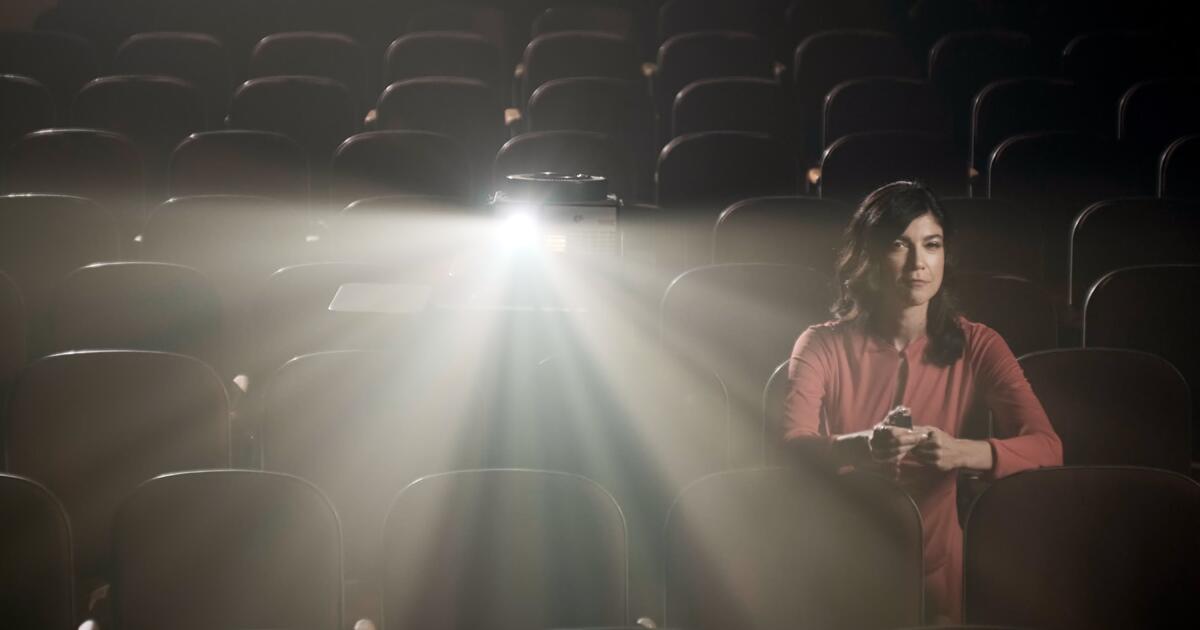
The accomplished mother that photographer-writer Rachel Elizabeth Seed never knew is the star of her deeply affecting “A Photographic Memory,” one of last year’s best documentaries, finally making its way to Los Angeles theaters. This poetic gem is a journey from the weight of absence to the serenity of presence, thanks in no small part to the inquisitive, gifted woman pulled from obscurity: Sheila Turner-Seed, whose life was short but full and worth revitalizing.
Turner-Seed, a journalist, was 42 when she died in 1979, leaving behind an 18-month-old daughter, a bereft photographer husband (Brian Seed) and a legacy of wide-ranging, globe-trotting reportage that culminated in a renowned oral and visual history called “Images of Man.” The project was anchored by Turner-Seed’s groundbreaking interviews with the world’s best living photographers at the time, including Henri Cartier-Bresson, Cecil Beaton, Lisette Model and Gordon Parks. And though she only ever referred to herself as an amateur with a camera, Turner-Seed once saw a photo of hers land on the cover of the New York Times.
That her daughter also pursued photography and nonfiction storytelling could be viewed as the manifestation of a deeply felt connection. Was following her mother’s passion the most readily available way to process a personal loss the director essentially had no memory of? Seed only began exploring the true breadth and emotion of her mother’s legacy when she herself reached the age that her mom died, a milestone fraught for many grown, parentless children.
What the younger Seed found, accompanied by memories from her mother’s colleagues, was a rich archive of adventurous work and personal expression: photos, journals, contact sheets, Super8 film, audio pieces and a trove of interviews. These discussions reveal a soulful, probing mind that not only kept her subjects on their toes, but warmly elicited thoughtful answers about the nature of their moment-in-time art.
Turner-Seed’s own writing lays bare a struggle for self-fulfillment, to reconcile the traditional values pushed by her Jewish immigrant parents with a restless need to discover and make her own way. In an especially revealing journal entry from 1972, she wonders if she’ll grow in her chosen fields if she marries and has a child — but also, will she want to? A lanky, warm presence with a sociable smile, Turner-Seed is never far from a keenly observed thought or ambivalent feeling.
Why “A Photographic Memory” stands out, however, is her daughter’s handling of this precious life. It’s a heartbreakingly imaginative conjuring of the parent-child connection that never came to be, but which Seed and her editors (including documentary cutting legend Maya Daisy Hawke) finesse to life.
With melancholy and playfulness both, Seed threads in her own introspective voice-over and contemporary footage (poring over material, visiting her dad, sparring with a boyfriend). She also adds grainy period re-creations of her mom’s interviews, Seed playing her own parent in these 8mm snippets. Eventually, technology allows these distant intimates to share a frame.
Biographical and essayistic, “A Photographic Memory” suggests both a woman interested in locating her remarkable mother, gone too soon, and an artist exploring her own place. Of the impulse to take a photo, to grab the moment, we hear Cartier-Bresson excitedly tell Turner-Seed, “Life is once, forever.” Her future daughter’s marvelous movie embodies that idea beautifully.
‘A Photographic Memory’
Not rated
Running time: 1 hour, 27 minutes
Playing: In limited release Friday, June 13

The accomplished mother that photographer-writer Rachel Elizabeth Seed never knew is the star of her deeply affecting “A Photographic Memory,” one of last year’s best documentaries, finally making its way to Los Angeles theaters. This poetic gem is a journey from the weight of absence to the serenity of presence, thanks in no small part to the inquisitive, gifted woman pulled from obscurity: Sheila Turner-Seed, whose life was short but full and worth revitalizing.
Turner-Seed, a journalist, was 42 when she died in 1979, leaving behind an 18-month-old daughter, a bereft photographer husband (Brian Seed) and a legacy of wide-ranging, globe-trotting reportage that culminated in a renowned oral and visual history called “Images of Man.” The project was anchored by Turner-Seed’s groundbreaking interviews with the world’s best living photographers at the time, including Henri Cartier-Bresson, Cecil Beaton, Lisette Model and Gordon Parks. And though she only ever referred to herself as an amateur with a camera, Turner-Seed once saw a photo of hers land on the cover of the New York Times.
That her daughter also pursued photography and nonfiction storytelling could be viewed as the manifestation of a deeply felt connection. Was following her mother’s passion the most readily available way to process a personal loss the director essentially had no memory of? Seed only began exploring the true breadth and emotion of her mother’s legacy when she herself reached the age that her mom died, a milestone fraught for many grown, parentless children.
What the younger Seed found, accompanied by memories from her mother’s colleagues, was a rich archive of adventurous work and personal expression: photos, journals, contact sheets, Super8 film, audio pieces and a trove of interviews. These discussions reveal a soulful, probing mind that not only kept her subjects on their toes, but warmly elicited thoughtful answers about the nature of their moment-in-time art.
Turner-Seed’s own writing lays bare a struggle for self-fulfillment, to reconcile the traditional values pushed by her Jewish immigrant parents with a restless need to discover and make her own way. In an especially revealing journal entry from 1972, she wonders if she’ll grow in her chosen fields if she marries and has a child — but also, will she want to? A lanky, warm presence with a sociable smile, Turner-Seed is never far from a keenly observed thought or ambivalent feeling.
Why “A Photographic Memory” stands out, however, is her daughter’s handling of this precious life. It’s a heartbreakingly imaginative conjuring of the parent-child connection that never came to be, but which Seed and her editors (including documentary cutting legend Maya Daisy Hawke) finesse to life.
With melancholy and playfulness both, Seed threads in her own introspective voice-over and contemporary footage (poring over material, visiting her dad, sparring with a boyfriend). She also adds grainy period re-creations of her mom’s interviews, Seed playing her own parent in these 8mm snippets. Eventually, technology allows these distant intimates to share a frame.
Biographical and essayistic, “A Photographic Memory” suggests both a woman interested in locating her remarkable mother, gone too soon, and an artist exploring her own place. Of the impulse to take a photo, to grab the moment, we hear Cartier-Bresson excitedly tell Turner-Seed, “Life is once, forever.” Her future daughter’s marvelous movie embodies that idea beautifully.
‘A Photographic Memory’
Not rated
Running time: 1 hour, 27 minutes
Playing: In limited release Friday, June 13

The accomplished mother that photographer-writer Rachel Elizabeth Seed never knew is the star of her deeply affecting “A Photographic Memory,” one of last year’s best documentaries, finally making its way to Los Angeles theaters. This poetic gem is a journey from the weight of absence to the serenity of presence, thanks in no small part to the inquisitive, gifted woman pulled from obscurity: Sheila Turner-Seed, whose life was short but full and worth revitalizing.
Turner-Seed, a journalist, was 42 when she died in 1979, leaving behind an 18-month-old daughter, a bereft photographer husband (Brian Seed) and a legacy of wide-ranging, globe-trotting reportage that culminated in a renowned oral and visual history called “Images of Man.” The project was anchored by Turner-Seed’s groundbreaking interviews with the world’s best living photographers at the time, including Henri Cartier-Bresson, Cecil Beaton, Lisette Model and Gordon Parks. And though she only ever referred to herself as an amateur with a camera, Turner-Seed once saw a photo of hers land on the cover of the New York Times.
That her daughter also pursued photography and nonfiction storytelling could be viewed as the manifestation of a deeply felt connection. Was following her mother’s passion the most readily available way to process a personal loss the director essentially had no memory of? Seed only began exploring the true breadth and emotion of her mother’s legacy when she herself reached the age that her mom died, a milestone fraught for many grown, parentless children.
What the younger Seed found, accompanied by memories from her mother’s colleagues, was a rich archive of adventurous work and personal expression: photos, journals, contact sheets, Super8 film, audio pieces and a trove of interviews. These discussions reveal a soulful, probing mind that not only kept her subjects on their toes, but warmly elicited thoughtful answers about the nature of their moment-in-time art.
Turner-Seed’s own writing lays bare a struggle for self-fulfillment, to reconcile the traditional values pushed by her Jewish immigrant parents with a restless need to discover and make her own way. In an especially revealing journal entry from 1972, she wonders if she’ll grow in her chosen fields if she marries and has a child — but also, will she want to? A lanky, warm presence with a sociable smile, Turner-Seed is never far from a keenly observed thought or ambivalent feeling.
Why “A Photographic Memory” stands out, however, is her daughter’s handling of this precious life. It’s a heartbreakingly imaginative conjuring of the parent-child connection that never came to be, but which Seed and her editors (including documentary cutting legend Maya Daisy Hawke) finesse to life.
With melancholy and playfulness both, Seed threads in her own introspective voice-over and contemporary footage (poring over material, visiting her dad, sparring with a boyfriend). She also adds grainy period re-creations of her mom’s interviews, Seed playing her own parent in these 8mm snippets. Eventually, technology allows these distant intimates to share a frame.
Biographical and essayistic, “A Photographic Memory” suggests both a woman interested in locating her remarkable mother, gone too soon, and an artist exploring her own place. Of the impulse to take a photo, to grab the moment, we hear Cartier-Bresson excitedly tell Turner-Seed, “Life is once, forever.” Her future daughter’s marvelous movie embodies that idea beautifully.
‘A Photographic Memory’
Not rated
Running time: 1 hour, 27 minutes
Playing: In limited release Friday, June 13
The accomplished mother that photographer-writer Rachel Elizabeth Seed never knew is the star of her deeply affecting “A Photographic Memory,” one of last year’s best documentaries, finally making its way to Los Angeles theaters. This poetic gem is a journey from the weight of absence to the serenity of presence, thanks in no small part to the inquisitive, gifted woman pulled from obscurity: Sheila Turner-Seed, whose life was short but full and worth revitalizing.
Turner-Seed, a journalist, was 42 when she died in 1979, leaving behind an 18-month-old daughter, a bereft photographer husband (Brian Seed) and a legacy of wide-ranging, globe-trotting reportage that culminated in a renowned oral and visual history called “Images of Man.” The project was anchored by Turner-Seed’s groundbreaking interviews with the world’s best living photographers at the time, including Henri Cartier-Bresson, Cecil Beaton, Lisette Model and Gordon Parks. And though she only ever referred to herself as an amateur with a camera, Turner-Seed once saw a photo of hers land on the cover of the New York Times.
That her daughter also pursued photography and nonfiction storytelling could be viewed as the manifestation of a deeply felt connection. Was following her mother’s passion the most readily available way to process a personal loss the director essentially had no memory of? Seed only began exploring the true breadth and emotion of her mother’s legacy when she herself reached the age that her mom died, a milestone fraught for many grown, parentless children.
What the younger Seed found, accompanied by memories from her mother’s colleagues, was a rich archive of adventurous work and personal expression: photos, journals, contact sheets, Super8 film, audio pieces and a trove of interviews. These discussions reveal a soulful, probing mind that not only kept her subjects on their toes, but warmly elicited thoughtful answers about the nature of their moment-in-time art.
Turner-Seed’s own writing lays bare a struggle for self-fulfillment, to reconcile the traditional values pushed by her Jewish immigrant parents with a restless need to discover and make her own way. In an especially revealing journal entry from 1972, she wonders if she’ll grow in her chosen fields if she marries and has a child — but also, will she want to? A lanky, warm presence with a sociable smile, Turner-Seed is never far from a keenly observed thought or ambivalent feeling.
Why “A Photographic Memory” stands out, however, is her daughter’s handling of this precious life. It’s a heartbreakingly imaginative conjuring of the parent-child connection that never came to be, but which Seed and her editors (including documentary cutting legend Maya Daisy Hawke) finesse to life.
With melancholy and playfulness both, Seed threads in her own introspective voice-over and contemporary footage (poring over material, visiting her dad, sparring with a boyfriend). She also adds grainy period re-creations of her mom’s interviews, Seed playing her own parent in these 8mm snippets. Eventually, technology allows these distant intimates to share a frame.
Biographical and essayistic, “A Photographic Memory” suggests both a woman interested in locating her remarkable mother, gone too soon, and an artist exploring her own place. Of the impulse to take a photo, to grab the moment, we hear Cartier-Bresson excitedly tell Turner-Seed, “Life is once, forever.” Her future daughter’s marvelous movie embodies that idea beautifully.
‘A Photographic Memory’
Not rated
Running time: 1 hour, 27 minutes
Playing: In limited release Friday, June 13

The accomplished mother that photographer-writer Rachel Elizabeth Seed never knew is the star of her deeply affecting “A Photographic Memory,” one of last year’s best documentaries, finally making its way to Los Angeles theaters. This poetic gem is a journey from the weight of absence to the serenity of presence, thanks in no small part to the inquisitive, gifted woman pulled from obscurity: Sheila Turner-Seed, whose life was short but full and worth revitalizing.
Turner-Seed, a journalist, was 42 when she died in 1979, leaving behind an 18-month-old daughter, a bereft photographer husband (Brian Seed) and a legacy of wide-ranging, globe-trotting reportage that culminated in a renowned oral and visual history called “Images of Man.” The project was anchored by Turner-Seed’s groundbreaking interviews with the world’s best living photographers at the time, including Henri Cartier-Bresson, Cecil Beaton, Lisette Model and Gordon Parks. And though she only ever referred to herself as an amateur with a camera, Turner-Seed once saw a photo of hers land on the cover of the New York Times.
That her daughter also pursued photography and nonfiction storytelling could be viewed as the manifestation of a deeply felt connection. Was following her mother’s passion the most readily available way to process a personal loss the director essentially had no memory of? Seed only began exploring the true breadth and emotion of her mother’s legacy when she herself reached the age that her mom died, a milestone fraught for many grown, parentless children.
What the younger Seed found, accompanied by memories from her mother’s colleagues, was a rich archive of adventurous work and personal expression: photos, journals, contact sheets, Super8 film, audio pieces and a trove of interviews. These discussions reveal a soulful, probing mind that not only kept her subjects on their toes, but warmly elicited thoughtful answers about the nature of their moment-in-time art.
Turner-Seed’s own writing lays bare a struggle for self-fulfillment, to reconcile the traditional values pushed by her Jewish immigrant parents with a restless need to discover and make her own way. In an especially revealing journal entry from 1972, she wonders if she’ll grow in her chosen fields if she marries and has a child — but also, will she want to? A lanky, warm presence with a sociable smile, Turner-Seed is never far from a keenly observed thought or ambivalent feeling.
Why “A Photographic Memory” stands out, however, is her daughter’s handling of this precious life. It’s a heartbreakingly imaginative conjuring of the parent-child connection that never came to be, but which Seed and her editors (including documentary cutting legend Maya Daisy Hawke) finesse to life.
With melancholy and playfulness both, Seed threads in her own introspective voice-over and contemporary footage (poring over material, visiting her dad, sparring with a boyfriend). She also adds grainy period re-creations of her mom’s interviews, Seed playing her own parent in these 8mm snippets. Eventually, technology allows these distant intimates to share a frame.
Biographical and essayistic, “A Photographic Memory” suggests both a woman interested in locating her remarkable mother, gone too soon, and an artist exploring her own place. Of the impulse to take a photo, to grab the moment, we hear Cartier-Bresson excitedly tell Turner-Seed, “Life is once, forever.” Her future daughter’s marvelous movie embodies that idea beautifully.
‘A Photographic Memory’
Not rated
Running time: 1 hour, 27 minutes
Playing: In limited release Friday, June 13
The accomplished mother that photographer-writer Rachel Elizabeth Seed never knew is the star of her deeply affecting “A Photographic Memory,” one of last year’s best documentaries, finally making its way to Los Angeles theaters. This poetic gem is a journey from the weight of absence to the serenity of presence, thanks in no small part to the inquisitive, gifted woman pulled from obscurity: Sheila Turner-Seed, whose life was short but full and worth revitalizing.
Turner-Seed, a journalist, was 42 when she died in 1979, leaving behind an 18-month-old daughter, a bereft photographer husband (Brian Seed) and a legacy of wide-ranging, globe-trotting reportage that culminated in a renowned oral and visual history called “Images of Man.” The project was anchored by Turner-Seed’s groundbreaking interviews with the world’s best living photographers at the time, including Henri Cartier-Bresson, Cecil Beaton, Lisette Model and Gordon Parks. And though she only ever referred to herself as an amateur with a camera, Turner-Seed once saw a photo of hers land on the cover of the New York Times.
That her daughter also pursued photography and nonfiction storytelling could be viewed as the manifestation of a deeply felt connection. Was following her mother’s passion the most readily available way to process a personal loss the director essentially had no memory of? Seed only began exploring the true breadth and emotion of her mother’s legacy when she herself reached the age that her mom died, a milestone fraught for many grown, parentless children.
What the younger Seed found, accompanied by memories from her mother’s colleagues, was a rich archive of adventurous work and personal expression: photos, journals, contact sheets, Super8 film, audio pieces and a trove of interviews. These discussions reveal a soulful, probing mind that not only kept her subjects on their toes, but warmly elicited thoughtful answers about the nature of their moment-in-time art.
Turner-Seed’s own writing lays bare a struggle for self-fulfillment, to reconcile the traditional values pushed by her Jewish immigrant parents with a restless need to discover and make her own way. In an especially revealing journal entry from 1972, she wonders if she’ll grow in her chosen fields if she marries and has a child — but also, will she want to? A lanky, warm presence with a sociable smile, Turner-Seed is never far from a keenly observed thought or ambivalent feeling.
Why “A Photographic Memory” stands out, however, is her daughter’s handling of this precious life. It’s a heartbreakingly imaginative conjuring of the parent-child connection that never came to be, but which Seed and her editors (including documentary cutting legend Maya Daisy Hawke) finesse to life.
With melancholy and playfulness both, Seed threads in her own introspective voice-over and contemporary footage (poring over material, visiting her dad, sparring with a boyfriend). She also adds grainy period re-creations of her mom’s interviews, Seed playing her own parent in these 8mm snippets. Eventually, technology allows these distant intimates to share a frame.
Biographical and essayistic, “A Photographic Memory” suggests both a woman interested in locating her remarkable mother, gone too soon, and an artist exploring her own place. Of the impulse to take a photo, to grab the moment, we hear Cartier-Bresson excitedly tell Turner-Seed, “Life is once, forever.” Her future daughter’s marvelous movie embodies that idea beautifully.
‘A Photographic Memory’
Not rated
Running time: 1 hour, 27 minutes
Playing: In limited release Friday, June 13
The accomplished mother that photographer-writer Rachel Elizabeth Seed never knew is the star of her deeply affecting “A Photographic Memory,” one of last year’s best documentaries, finally making its way to Los Angeles theaters. This poetic gem is a journey from the weight of absence to the serenity of presence, thanks in no small part to the inquisitive, gifted woman pulled from obscurity: Sheila Turner-Seed, whose life was short but full and worth revitalizing.
Turner-Seed, a journalist, was 42 when she died in 1979, leaving behind an 18-month-old daughter, a bereft photographer husband (Brian Seed) and a legacy of wide-ranging, globe-trotting reportage that culminated in a renowned oral and visual history called “Images of Man.” The project was anchored by Turner-Seed’s groundbreaking interviews with the world’s best living photographers at the time, including Henri Cartier-Bresson, Cecil Beaton, Lisette Model and Gordon Parks. And though she only ever referred to herself as an amateur with a camera, Turner-Seed once saw a photo of hers land on the cover of the New York Times.
That her daughter also pursued photography and nonfiction storytelling could be viewed as the manifestation of a deeply felt connection. Was following her mother’s passion the most readily available way to process a personal loss the director essentially had no memory of? Seed only began exploring the true breadth and emotion of her mother’s legacy when she herself reached the age that her mom died, a milestone fraught for many grown, parentless children.
What the younger Seed found, accompanied by memories from her mother’s colleagues, was a rich archive of adventurous work and personal expression: photos, journals, contact sheets, Super8 film, audio pieces and a trove of interviews. These discussions reveal a soulful, probing mind that not only kept her subjects on their toes, but warmly elicited thoughtful answers about the nature of their moment-in-time art.
Turner-Seed’s own writing lays bare a struggle for self-fulfillment, to reconcile the traditional values pushed by her Jewish immigrant parents with a restless need to discover and make her own way. In an especially revealing journal entry from 1972, she wonders if she’ll grow in her chosen fields if she marries and has a child — but also, will she want to? A lanky, warm presence with a sociable smile, Turner-Seed is never far from a keenly observed thought or ambivalent feeling.
Why “A Photographic Memory” stands out, however, is her daughter’s handling of this precious life. It’s a heartbreakingly imaginative conjuring of the parent-child connection that never came to be, but which Seed and her editors (including documentary cutting legend Maya Daisy Hawke) finesse to life.
With melancholy and playfulness both, Seed threads in her own introspective voice-over and contemporary footage (poring over material, visiting her dad, sparring with a boyfriend). She also adds grainy period re-creations of her mom’s interviews, Seed playing her own parent in these 8mm snippets. Eventually, technology allows these distant intimates to share a frame.
Biographical and essayistic, “A Photographic Memory” suggests both a woman interested in locating her remarkable mother, gone too soon, and an artist exploring her own place. Of the impulse to take a photo, to grab the moment, we hear Cartier-Bresson excitedly tell Turner-Seed, “Life is once, forever.” Her future daughter’s marvelous movie embodies that idea beautifully.
‘A Photographic Memory’
Not rated
Running time: 1 hour, 27 minutes
Playing: In limited release Friday, June 13
The accomplished mother that photographer-writer Rachel Elizabeth Seed never knew is the star of her deeply affecting “A Photographic Memory,” one of last year’s best documentaries, finally making its way to Los Angeles theaters. This poetic gem is a journey from the weight of absence to the serenity of presence, thanks in no small part to the inquisitive, gifted woman pulled from obscurity: Sheila Turner-Seed, whose life was short but full and worth revitalizing.
Turner-Seed, a journalist, was 42 when she died in 1979, leaving behind an 18-month-old daughter, a bereft photographer husband (Brian Seed) and a legacy of wide-ranging, globe-trotting reportage that culminated in a renowned oral and visual history called “Images of Man.” The project was anchored by Turner-Seed’s groundbreaking interviews with the world’s best living photographers at the time, including Henri Cartier-Bresson, Cecil Beaton, Lisette Model and Gordon Parks. And though she only ever referred to herself as an amateur with a camera, Turner-Seed once saw a photo of hers land on the cover of the New York Times.
That her daughter also pursued photography and nonfiction storytelling could be viewed as the manifestation of a deeply felt connection. Was following her mother’s passion the most readily available way to process a personal loss the director essentially had no memory of? Seed only began exploring the true breadth and emotion of her mother’s legacy when she herself reached the age that her mom died, a milestone fraught for many grown, parentless children.
What the younger Seed found, accompanied by memories from her mother’s colleagues, was a rich archive of adventurous work and personal expression: photos, journals, contact sheets, Super8 film, audio pieces and a trove of interviews. These discussions reveal a soulful, probing mind that not only kept her subjects on their toes, but warmly elicited thoughtful answers about the nature of their moment-in-time art.
Turner-Seed’s own writing lays bare a struggle for self-fulfillment, to reconcile the traditional values pushed by her Jewish immigrant parents with a restless need to discover and make her own way. In an especially revealing journal entry from 1972, she wonders if she’ll grow in her chosen fields if she marries and has a child — but also, will she want to? A lanky, warm presence with a sociable smile, Turner-Seed is never far from a keenly observed thought or ambivalent feeling.
Why “A Photographic Memory” stands out, however, is her daughter’s handling of this precious life. It’s a heartbreakingly imaginative conjuring of the parent-child connection that never came to be, but which Seed and her editors (including documentary cutting legend Maya Daisy Hawke) finesse to life.
With melancholy and playfulness both, Seed threads in her own introspective voice-over and contemporary footage (poring over material, visiting her dad, sparring with a boyfriend). She also adds grainy period re-creations of her mom’s interviews, Seed playing her own parent in these 8mm snippets. Eventually, technology allows these distant intimates to share a frame.
Biographical and essayistic, “A Photographic Memory” suggests both a woman interested in locating her remarkable mother, gone too soon, and an artist exploring her own place. Of the impulse to take a photo, to grab the moment, we hear Cartier-Bresson excitedly tell Turner-Seed, “Life is once, forever.” Her future daughter’s marvelous movie embodies that idea beautifully.
‘A Photographic Memory’
Not rated
Running time: 1 hour, 27 minutes
Playing: In limited release Friday, June 13