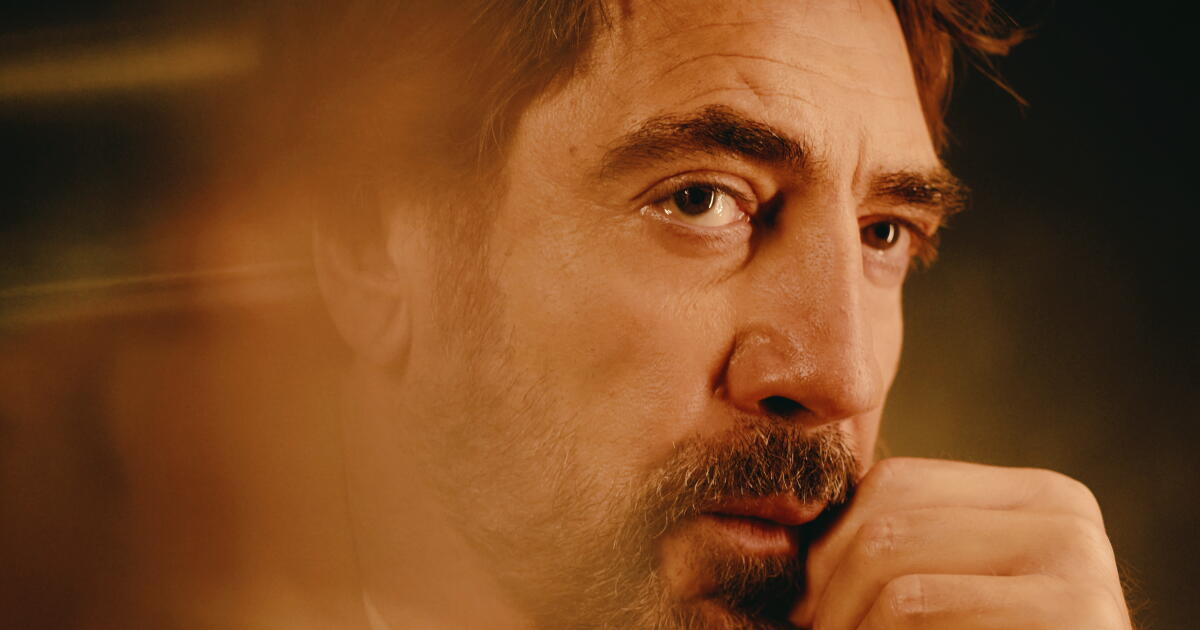
While we could call Javier Bardem the hardest-working man in show business, it makes more sense to say he’s one of the most discerning.
“Last year was very busy,” understates the Spanish actor, who dominated the “Cape Fear” miniseries, starred in European art films “Bunker” and “The Beloved” and shot his third appearance in a “Dune” blockbuster.
“But it was one of those moments when interesting things are coming your way with different characters, great directors, great stories,” Bardem adds during a Zoom call. “It was a gift to have access to those possibilities.”
The four-time Oscar nominee (who won the supporting actor prize for his chilling “No Country for Old Men” assassin Anton Chigurh) and recent Emmy contender for “Monster’s” monstrous Jose Menendez credits any good performance to what’s on the page.
Bardem in “Bunker.”
(Tamara Arranz / Sony Pictures Classics)
Florian Zeller, who directed Anthony Hopkins to a lead actor Oscar in “The Father,” wrote “Bunker” specifically for Bardem and his wife of 16 years, Penélope Cruz, who is also in the contenders “The Invite” and “La Bola Negra” this year.
The pair plays a long-married couple for the first time in their careers. Miguel is a celebrated architect; Sofia is a book editor with career frustrations; both are Spaniards transplanted to London for professional reasons — primarily his. Then a commission to design a tech billionaire’s luxury survival bunker widens the wedge between them.
But “them” is not to be confused with Javier and Penélope.
“Florian got the insecurities and fears that any married people would have in order to play a marriage onscreen,” Bardem explains. “Once we were in it, though, we didn’t think much about it. Both Penélope and I are very good at differentiating fiction from reality, knowing that their crisis is not our crisis.
“Yes, we have to go through our own darkness in order to bring light,” he continues. “That’s what actors do for a living. We risk emotionally and we like it! But not because we’re masochists. We have a passion to bring out something that we care for and share it with people.”

Bardem with Victoria Luengo in “The Beloved.”
(Festival de Cannes)
In Rodrigo Sorogoyen’s “The Beloved,” Bardem plays another creative genius, an acclaimed film director. Past a career peak marked by abuse of both substances and the people in his orbit, Esteban Martinez returns to Spain from a long stretch in Hollywood to attempt another auteur masterpiece — or is it more a pretext to reconnect with his estranged actor daughter Emilia Vera (Victoria Luengo)?
He’s not naming names, but Bardem has clearly seen this kind of personality in action.
“The most difficult part of playing Esteban was to understand why he wouldn’t say ‘I’m sorry,’” Bardem reveals. “It’s not bad, it’s not good, it is what it is. But this kind of manhood has to stop because it’s what creates the world as it is. Instead of embracing your flaws and correcting your mistakes, he thinks, ‘I will overcome them by violence, by aggressiveness and by imposing my will.’
“It sounds like the Middle Ages, but it’s happening today, all around us. I think this was a great way to expose that kind of man.”
Yet there is sensitivity in Esteban, movingly displayed in a 20-minute opening segment, much of it shot in unforgiving close-ups, where Esteban meets Emilia for the first time in 13 years at a restaurant. Bardem conducts a master class in measured neediness, manipulation and hoped-for conciliation undermined by defensive instincts.

Bardem as Max Cady in “Cape Fear.”
(Apple TV)
“We had a real lunch — delicious! — then dessert and coffee,” the actor recalls. “It was one 90-minute take, we didn’t rehearse, I hadn’t seen Victoria for months, it was the first day of the shoot. There were 10 pages that we had to go to; in order to get in and out of those pages, it was all improvisation. Those 10 pages were beautifully written and gave us lots of room to play.”
Apple TV’s 10-episode “Cape Fear” gave Bardem even more time to develop the role of vengeful ex-convict Max Cady, made iconic by Robert Mitchum and Robert De Niro in the 1962 and 1991 movie versions. He brought media-savvy guile, a trauma survivor’s pain and filial/paternal anguish when he could have easily coasted on Anton Chigurh vibes.
“I would have never dared to do it if it was just a remake,” Bardem points out. “But it was a retake, and I loved it. I tried to create an homage to the great performances of De Niro and Mitchum, with a sense of humor, the way he moves and relates, the sensuality. But I had to bring my own monster into it because the world is different. If I would have gone as crazy as De Niro did, people would be freaking out on the streets today!”

Bardem in “Dune: Part Three.”
(Warner Bros. Pictures)
Finally, the “Dune” saga’s Stilgar may be one cog in an expansive sci-fi epic, but the fanatical supporter of the independent desert leader turned autocrat Paul Atreides speaks to Bardem’s real-world concerns.
“Stilgar personifies what it means to grab power, what are we giving our faith to and what are we doing with the power of that faith,” he says.
Asked if he had any comment on current events in the Palestinian territories and the Western Sahara, the actor, who denounced Israel’s war in Gaza as a genocide on the 2025 Emmys red carpet and has spoken about the disputed northwest African territory at the United Nations, replied: “I think we have to be brave enough to point out those who are responsible for the destruction of the climate and the lives, in this case, of so many children. We have to be brave enough knowing that the ones that we’re pointing out are the ones who are controlling the narrative. That is on us, the people. The power to change things has always been and it will always be.”

While we could call Javier Bardem the hardest-working man in show business, it makes more sense to say he’s one of the most discerning.
“Last year was very busy,” understates the Spanish actor, who dominated the “Cape Fear” miniseries, starred in European art films “Bunker” and “The Beloved” and shot his third appearance in a “Dune” blockbuster.
“But it was one of those moments when interesting things are coming your way with different characters, great directors, great stories,” Bardem adds during a Zoom call. “It was a gift to have access to those possibilities.”
The four-time Oscar nominee (who won the supporting actor prize for his chilling “No Country for Old Men” assassin Anton Chigurh) and recent Emmy contender for “Monster’s” monstrous Jose Menendez credits any good performance to what’s on the page.
Bardem in “Bunker.”
(Tamara Arranz / Sony Pictures Classics)
Florian Zeller, who directed Anthony Hopkins to a lead actor Oscar in “The Father,” wrote “Bunker” specifically for Bardem and his wife of 16 years, Penélope Cruz, who is also in the contenders “The Invite” and “La Bola Negra” this year.
The pair plays a long-married couple for the first time in their careers. Miguel is a celebrated architect; Sofia is a book editor with career frustrations; both are Spaniards transplanted to London for professional reasons — primarily his. Then a commission to design a tech billionaire’s luxury survival bunker widens the wedge between them.
But “them” is not to be confused with Javier and Penélope.
“Florian got the insecurities and fears that any married people would have in order to play a marriage onscreen,” Bardem explains. “Once we were in it, though, we didn’t think much about it. Both Penélope and I are very good at differentiating fiction from reality, knowing that their crisis is not our crisis.
“Yes, we have to go through our own darkness in order to bring light,” he continues. “That’s what actors do for a living. We risk emotionally and we like it! But not because we’re masochists. We have a passion to bring out something that we care for and share it with people.”
Bardem with Victoria Luengo in “The Beloved.”
(Festival de Cannes)
In Rodrigo Sorogoyen’s “The Beloved,” Bardem plays another creative genius, an acclaimed film director. Past a career peak marked by abuse of both substances and the people in his orbit, Esteban Martinez returns to Spain from a long stretch in Hollywood to attempt another auteur masterpiece — or is it more a pretext to reconnect with his estranged actor daughter Emilia Vera (Victoria Luengo)?
He’s not naming names, but Bardem has clearly seen this kind of personality in action.
“The most difficult part of playing Esteban was to understand why he wouldn’t say ‘I’m sorry,’” Bardem reveals. “It’s not bad, it’s not good, it is what it is. But this kind of manhood has to stop because it’s what creates the world as it is. Instead of embracing your flaws and correcting your mistakes, he thinks, ‘I will overcome them by violence, by aggressiveness and by imposing my will.’
“It sounds like the Middle Ages, but it’s happening today, all around us. I think this was a great way to expose that kind of man.”
Yet there is sensitivity in Esteban, movingly displayed in a 20-minute opening segment, much of it shot in unforgiving close-ups, where Esteban meets Emilia for the first time in 13 years at a restaurant. Bardem conducts a master class in measured neediness, manipulation and hoped-for conciliation undermined by defensive instincts.
Bardem as Max Cady in “Cape Fear.”
(Apple TV)
“We had a real lunch — delicious! — then dessert and coffee,” the actor recalls. “It was one 90-minute take, we didn’t rehearse, I hadn’t seen Victoria for months, it was the first day of the shoot. There were 10 pages that we had to go to; in order to get in and out of those pages, it was all improvisation. Those 10 pages were beautifully written and gave us lots of room to play.”
Apple TV’s 10-episode “Cape Fear” gave Bardem even more time to develop the role of vengeful ex-convict Max Cady, made iconic by Robert Mitchum and Robert De Niro in the 1962 and 1991 movie versions. He brought media-savvy guile, a trauma survivor’s pain and filial/paternal anguish when he could have easily coasted on Anton Chigurh vibes.
“I would have never dared to do it if it was just a remake,” Bardem points out. “But it was a retake, and I loved it. I tried to create an homage to the great performances of De Niro and Mitchum, with a sense of humor, the way he moves and relates, the sensuality. But I had to bring my own monster into it because the world is different. If I would have gone as crazy as De Niro did, people would be freaking out on the streets today!”
Bardem in “Dune: Part Three.”
(Warner Bros. Pictures)
Finally, the “Dune” saga’s Stilgar may be one cog in an expansive sci-fi epic, but the fanatical supporter of the independent desert leader turned autocrat Paul Atreides speaks to Bardem’s real-world concerns.
“Stilgar personifies what it means to grab power, what are we giving our faith to and what are we doing with the power of that faith,” he says.
Asked if he had any comment on current events in the Palestinian territories and the Western Sahara, the actor, who denounced Israel’s war in Gaza as a genocide on the 2025 Emmys red carpet and has spoken about the disputed northwest African territory at the United Nations, replied: “I think we have to be brave enough to point out those who are responsible for the destruction of the climate and the lives, in this case, of so many children. We have to be brave enough knowing that the ones that we’re pointing out are the ones who are controlling the narrative. That is on us, the people. The power to change things has always been and it will always be.”