



“Josephine” is a sharp drama about how a child sees the world, a worthy playmate to the modern classic “The Florida Project” and the classic-classic “The 400 Blows.”
The girl, 8-year-old Josephine (an authoritative Mason Reeves), is a rough-and-tumble jock who spends her Sundays sprinting through San Francisco’s Golden Gate Park with her dad, Damien (Channing Tatum). But one morning, Josephine runs into a horrifying sight: a man (Philip Ettinger) raping a female jogger (Syra McCarthy).
The assault is brutal and brief, filmed at a distance from the girl’s point of view. Josephine herself isn’t touched and her father heroically chases down the predator, calls the police and ensures he gets arrested. Yet the girl’s naivete is suddenly gone and the fallout is so meticulous and riveting that “Josephine” won both the grand jury prize and the audience award at this year’s Sundance.
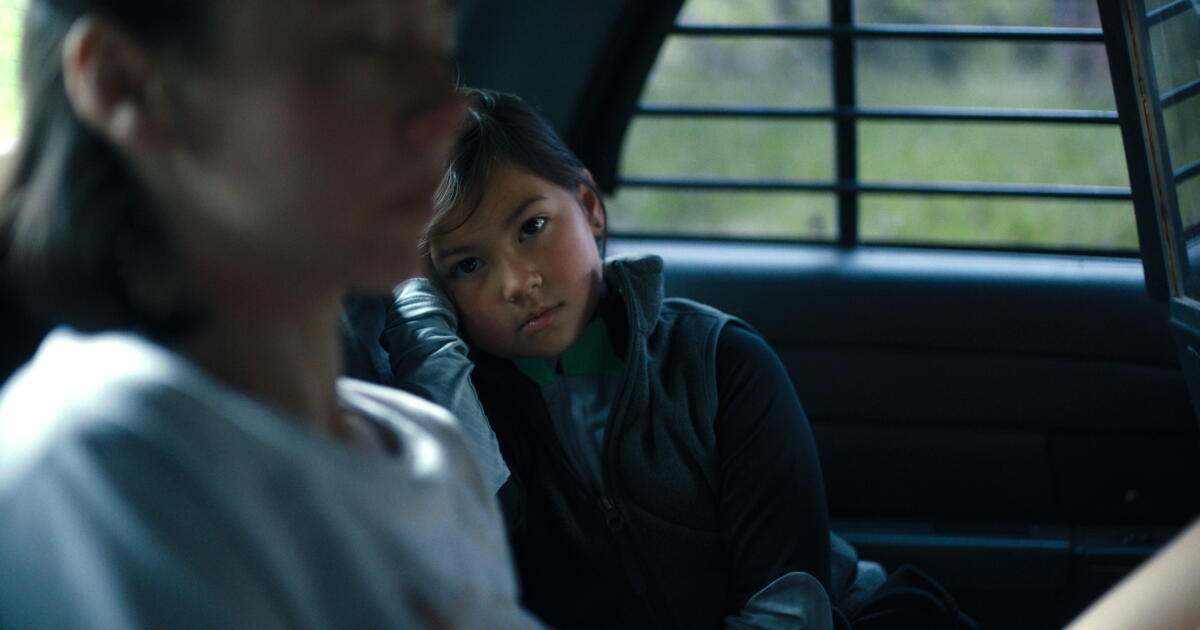
When filmmaker Beth de Araújo was young, she experienced that scene herself, as well as the awkward one afterward in which the cops stick both the bruised victim and the child in the back of their cruiser. Josephine is the watchful, curious type. She doesn’t cry or blab; she stares. But the cinematographer Greta Zozula is a whiz at making the audience pick up on everything that imprints on the girl, from McCarthy’s rattled and realistic post-traumatic response — “Did you see my hair tie out there?” she asks — to the sense that just minutes before, this shattered grown-up was exactly the kind of strong and independent athlete whom Josephine’s dad has been raising her to be.
We watch Josephine’s dawning awareness of random violence, even though she doesn’t know what she’s witnessed until she grabs a cellphone from her mother, Claire (Gemma Chan), to look up the word she’s overheard. She spells it “raipe.”
It won’t happen to her, Josephine’s father insists.
It might, counters her mother’s mournful look.
This astounding film has the telescoped intimacy of a nature documentary. Josephine’s parents observe the stoic little girl as they anxiously fumble about for the correct way to proceed and she, in turn, studies them for clues that she occasionally misreads. There’s not a phony moment because writer-director Araújo lived in this emotional wilderness herself. Mom wants to tell Josephine the full truth about sex and put her in therapy. Dad wants to preserve her innocence while enrolling her into self-defense classes. Neither is wrong, yet neither gets it right.
It’s impossible to guess the ideal balance of everything’s fine and are you sure you’re OK and Araújo is smart enough not to claim she knows the answer either. Everything that happens isn’t exactly Araújo’s story. Josephine’s parents let the child choose whether to give testimony at the rape trial. Araújo’s actual parents decided for her that she wouldn’t, which adds weight to the line in which Josephine is warned that she’ll regret not speaking up when she’s older.
Reeves feels like a real kid, a small person with a big soul who’s more solemn, headstrong and unpredictable than the cutesy tykes you usually see in movies. (Araújo discovered Reeves racing around a farmers market in her out-of-season Christmas pajamas.) She may never bother to act again, unless Araújo does the Truffaut thing of watching Josephine grow up over several movies. But as a possible one-and-done lead, she’s terrific.
Here’s a compliment I don’t say lightly: This may be Tatum’s best work. His early movies were so disposable and his charm so effortless that he hasn’t gotten enough respect as a genuine actor. I dig his flashy roles: gyrating to “Pony” in “Magic Mike XXL,” hamming it up as Gambit in “Deadpool & Wolverine,” and going full doofus in comedies like “21 Jump Street.” But lately, he’s become the rare male star who can play a regular, realistic American everyman. His recent string of scuffed dudes like last year’s “Roofman” and the 2022 dramedy “Dog” (which he also directed), a corny-sounding yet fantastic heart-tugger about an Army ranger and a Belgian Malinois, is so grounded and empathetic that a future Oscar nomination is starting to feel inevitable.
His performance here deserves a nod. By every measure, Tatum’s Damien is a great dad and an adoring husband. Yet he can’t resist trying to shape his daughter to be a mini-him, even sputtering that he hopes she’ll grow up to date women, which also makes him frustrating, narrow-minded and oblivious. He cries more than the child does — hard, complicated tears — and seems to mist up above all at his failure to protect her perfect girlhood, even when he knows that’s impossible.
“Fair is not a real thing,” he finally admits to Josephine. “We made it up as people just to make us feel better.” That’s an honest line from an honest director who captures the disillusionment of childhood exactly as it is. This is only Araújo’s second feature — her first was the 2022 South by Southwest stand-out “Soft & Quiet” — and from the film’s very first shot of the girl blinking up at her dad as he dares her to outrace the automatic garage opener, its assurance lets the audience trust that it’s in the hands of a real artist.
The lens often stays hip-height, occasionally spinning around a room or whipping back and forth like a hyperactive kid. Miles Ross’ apprehensive electronic score keeps us on edge, as does the editing, which is paced perfectly with precise micro-scenes of all the rapid-fire information coming at Josephine too soon and too fast. “Josephine” even has the confidence to keep in moments that are watchably mundane, like how every time the family waits for an elevator, they line up in front of the wrong door.
The film’s only fanciful trick is inviting the girl’s hallucinations of the attacker into the home. Ettinger’s unnervingly ordinary-looking guy appears first like an out-of-focus bogeyman sitting in the background, then like an instigator as Josephine acts out in ways that alarm the adults. When she tells a detective that she sees the rapist “everywhere,” her folks get so spooked, they want to move.
Eventually, Araújo allows the imagined creep to become dangerously, deliberately close to an invisible friend: the only character who really understands what the girl is thinking. Yet, “Josephine’s” craft is so shrewd that we feel mind-melded to the child, whether she’s wearing scary face paint to the playground or tying a martial arts belt around her waist to act brave. By the end, we’re convinced of Araújo’s own courage to live, make and share this story — and we can’t wait to see what else this fresh talent will do as she also continues to mature.
‘Josephine’
Rated: R, for rape, graphic nudity, some language and sexual content
Running time: 2 hours, 1 minute
Playing: Opens Friday, Nov. 20, in limited release


