
Book Review
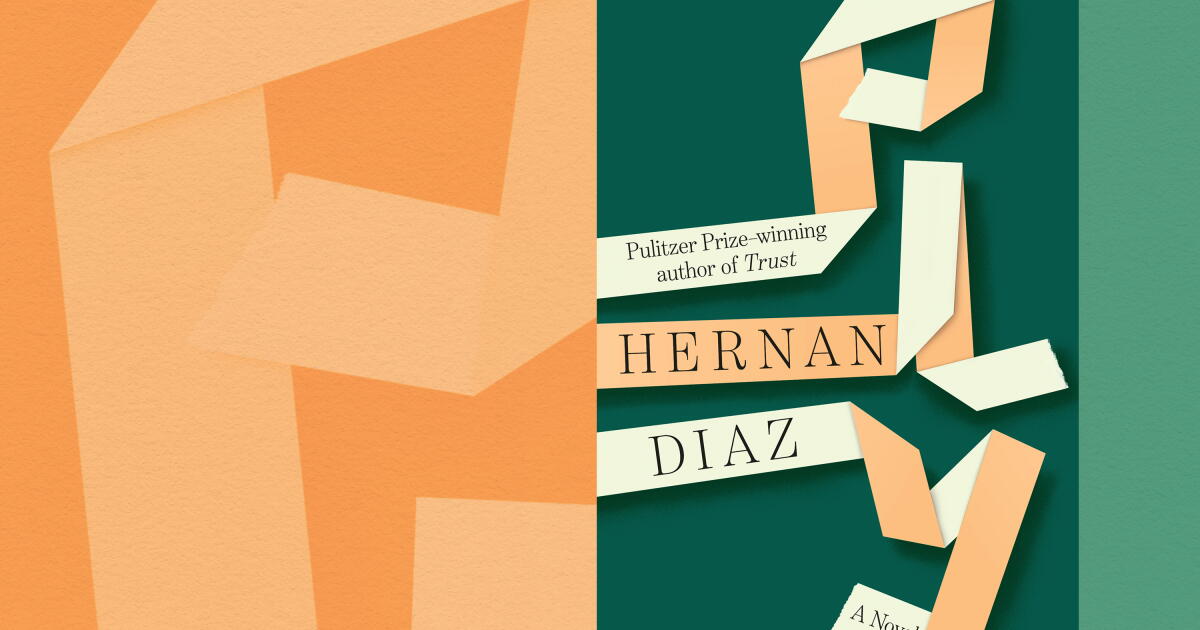
Ply
By Hernan Diaz
Riverhead Books: 464 pages, $35
If you buy books linked on our site, The Times may earn a commission from Bookshop.org, whose fees support independent bookstores.
It’s a cause for celebration when a great novelist publishes a new book. That said, readers who became fans of Hernan Diaz for his novel “Trust,” which won the Pulitzer Prize in 2023, may be disoriented by “Ply,” his latest. Where “Trust” was a sharply controlled exploration of capitalism set in the past, “Ply” is practically the opposite — a sprawling far-future narrative of a life lived on the margins. Few writers have the ambition to make such a drastic shift.
Our heroine, called simply “the pincher,” resides in a decaying city that resembles New York. Centuries of depopulation, rising seas and possibly disasters have left it mostly empty, buildings teetering.
While this might sound dystopic to us, for the pincher the city is perfect. She’s seen what it used to be, all garish consumption. “That supposed magnificence was nothing compared to the landscape before me,” she thinks, biking across the midtown bridge at twilight. “There was freedom in dissolution, joy in disorder.”
There are no schools, hospitals or public transportation; for those who remain, commerce is done via trade. The pincher’s stomping grounds are in downtown, which, like Manhattan in the 1970s, is a great place to get drugs and see music. People from the wealthier, uptown neighborhoods come for both. The only vestiges of social order are a vigilante police force and the power company.
The pincher is called that because she’s an electricity pirate. Sometimes she gives away her talents to the bands she loves; she charges those she doesn’t; and she does gigs for an ornately-spoken mafia type.
Novelist Hernan Diaz photographed in Brooklyn, N.Y.
(Pascal Perich)
Orphaned at a young age, the pincher survives by finding shelter with a sequence of found families. For a time, she’s sheltered by an affluent person uptown, where the park has been turned into heavily guarded private gardens. We learn her backstory: her mother, who was a tinkerer, died of cancer; much earlier, her father had disappeared. Later, she’s taken in by a tinkerer with a tiny cult, and bonds with another woman there.
After Diaz builds this expansive world, he throws the plot into gear. First, the pincher and her mafia friend team up for a massive heist. The pincher has invented a device that can pull a huge amount of electricity. The heist, of course, will be dangerous.
Then she connects with possibly the most improbable person to exist in this city: a physicist with a secret underground lab. Pola, too, is drawn to the pincher because of her power capacity and tinkering skills. They also team up together, in an uneasy alliance.
Often, the pincher is in the company of an elder who lectures to her. From the cult-like tinkerer, she hears about the toxicity of individualism and capitalism (echoes of “Trust”). He practices what he preaches: he gives away everything in his workshop to the downtown community. Yet, she doesn’t necessarily absorb his lessons.
Pola tells the pincher about quantum physics and metaphysics while they work together in the lab. These lectures are more difficult, mind-blowing even, yet the pincher doesn’t engage much. Is Pola a real physicist or a mad scientist? The lab is an unusual combination of wildly advanced technology and the entropy of absence. There are unoccupied workstations, forgotten trash, evidence of a fire. And yet there is also a particle accelerator, impossibly small by today’s standards.
From what I can tell — I’m just a book critic, not a physicist — Pola’s work wrestles with contemporary quantum physics. “What happens at the most fundamental level of spacetime? How can the theories of the very big and very small both be accurate on their own yet irreconcilable with one another?” Pola asks the pincher, rhetorically. “Is it possible to unify those incompatible paradigms, or do we need an altogether new theory?” With the pincher’s help, Pola hopes to run an experiment to test those questions. It may just fizzle out, but if it works, it’s going to be dangerous too.
The pincher goes back and forth between the heist, which will come first, and the lab. She meets higher-up criminals and negotiates a huge payout. This bears many of the markings of the one-last-big-score trope so common in films. The pincher hasn’t seen any movies, however, so she’s relatively untroubled.
What she loves is music, which she finds entirely transcendent. At one show, she connects with a central figure of the vestigial downtown social scene. He’s surrounded by hangers-on, speaks with an oblique, affectless wisdom, and is named Harlow (rearrange the letters).
Meanwhile, her work with Pola is interrupted by a girl who needs their help. It’s another constructed family in the pincher’s life, which has been full of them. At one point, she even leaves downtown to settle in what seems to be Brooklyn.
For a book set so far in the future, it still manages to be a paean to a familiar phase of youth, culture, metropolitan living. “We rose with a new wave of people and knew everyone. It was beautiful, but we were filled with happy disdain for beauty. It was wild, but we were invulnerable,” the pincher remembers. “It was short-lived, but while it lasted, it was a long, pure now.”
With the transportive power of music, found families and trade-based economy, “Ply” resonates with the founding ideas of Burning Man. What if, despite everything, you could create a community that is wild and anarchic and free?

Book Review
Ply
By Hernan Diaz
Riverhead Books: 464 pages, $35
If you buy books linked on our site, The Times may earn a commission from Bookshop.org, whose fees support independent bookstores.
It’s a cause for celebration when a great novelist publishes a new book. That said, readers who became fans of Hernan Diaz for his novel “Trust,” which won the Pulitzer Prize in 2023, may be disoriented by “Ply,” his latest. Where “Trust” was a sharply controlled exploration of capitalism set in the past, “Ply” is practically the opposite — a sprawling far-future narrative of a life lived on the margins. Few writers have the ambition to make such a drastic shift.
Our heroine, called simply “the pincher,” resides in a decaying city that resembles New York. Centuries of depopulation, rising seas and possibly disasters have left it mostly empty, buildings teetering.
While this might sound dystopic to us, for the pincher the city is perfect. She’s seen what it used to be, all garish consumption. “That supposed magnificence was nothing compared to the landscape before me,” she thinks, biking across the midtown bridge at twilight. “There was freedom in dissolution, joy in disorder.”
There are no schools, hospitals or public transportation; for those who remain, commerce is done via trade. The pincher’s stomping grounds are in downtown, which, like Manhattan in the 1970s, is a great place to get drugs and see music. People from the wealthier, uptown neighborhoods come for both. The only vestiges of social order are a vigilante police force and the power company.
The pincher is called that because she’s an electricity pirate. Sometimes she gives away her talents to the bands she loves; she charges those she doesn’t; and she does gigs for an ornately-spoken mafia type.
Novelist Hernan Diaz photographed in Brooklyn, N.Y.
(Pascal Perich)
Orphaned at a young age, the pincher survives by finding shelter with a sequence of found families. For a time, she’s sheltered by an affluent person uptown, where the park has been turned into heavily guarded private gardens. We learn her backstory: her mother, who was a tinkerer, died of cancer; much earlier, her father had disappeared. Later, she’s taken in by a tinkerer with a tiny cult, and bonds with another woman there.
After Diaz builds this expansive world, he throws the plot into gear. First, the pincher and her mafia friend team up for a massive heist. The pincher has invented a device that can pull a huge amount of electricity. The heist, of course, will be dangerous.
Then she connects with possibly the most improbable person to exist in this city: a physicist with a secret underground lab. Pola, too, is drawn to the pincher because of her power capacity and tinkering skills. They also team up together, in an uneasy alliance.
Often, the pincher is in the company of an elder who lectures to her. From the cult-like tinkerer, she hears about the toxicity of individualism and capitalism (echoes of “Trust”). He practices what he preaches: he gives away everything in his workshop to the downtown community. Yet, she doesn’t necessarily absorb his lessons.
Pola tells the pincher about quantum physics and metaphysics while they work together in the lab. These lectures are more difficult, mind-blowing even, yet the pincher doesn’t engage much. Is Pola a real physicist or a mad scientist? The lab is an unusual combination of wildly advanced technology and the entropy of absence. There are unoccupied workstations, forgotten trash, evidence of a fire. And yet there is also a particle accelerator, impossibly small by today’s standards.
From what I can tell — I’m just a book critic, not a physicist — Pola’s work wrestles with contemporary quantum physics. “What happens at the most fundamental level of spacetime? How can the theories of the very big and very small both be accurate on their own yet irreconcilable with one another?” Pola asks the pincher, rhetorically. “Is it possible to unify those incompatible paradigms, or do we need an altogether new theory?” With the pincher’s help, Pola hopes to run an experiment to test those questions. It may just fizzle out, but if it works, it’s going to be dangerous too.
The pincher goes back and forth between the heist, which will come first, and the lab. She meets higher-up criminals and negotiates a huge payout. This bears many of the markings of the one-last-big-score trope so common in films. The pincher hasn’t seen any movies, however, so she’s relatively untroubled.
What she loves is music, which she finds entirely transcendent. At one show, she connects with a central figure of the vestigial downtown social scene. He’s surrounded by hangers-on, speaks with an oblique, affectless wisdom, and is named Harlow (rearrange the letters).
Meanwhile, her work with Pola is interrupted by a girl who needs their help. It’s another constructed family in the pincher’s life, which has been full of them. At one point, she even leaves downtown to settle in what seems to be Brooklyn.
For a book set so far in the future, it still manages to be a paean to a familiar phase of youth, culture, metropolitan living. “We rose with a new wave of people and knew everyone. It was beautiful, but we were filled with happy disdain for beauty. It was wild, but we were invulnerable,” the pincher remembers. “It was short-lived, but while it lasted, it was a long, pure now.”
With the transportive power of music, found families and trade-based economy, “Ply” resonates with the founding ideas of Burning Man. What if, despite everything, you could create a community that is wild and anarchic and free?

Book Review
Ply
By Hernan Diaz
Riverhead Books: 464 pages, $35
If you buy books linked on our site, The Times may earn a commission from Bookshop.org, whose fees support independent bookstores.
It’s a cause for celebration when a great novelist publishes a new book. That said, readers who became fans of Hernan Diaz for his novel “Trust,” which won the Pulitzer Prize in 2023, may be disoriented by “Ply,” his latest. Where “Trust” was a sharply controlled exploration of capitalism set in the past, “Ply” is practically the opposite — a sprawling far-future narrative of a life lived on the margins. Few writers have the ambition to make such a drastic shift.
Our heroine, called simply “the pincher,” resides in a decaying city that resembles New York. Centuries of depopulation, rising seas and possibly disasters have left it mostly empty, buildings teetering.
While this might sound dystopic to us, for the pincher the city is perfect. She’s seen what it used to be, all garish consumption. “That supposed magnificence was nothing compared to the landscape before me,” she thinks, biking across the midtown bridge at twilight. “There was freedom in dissolution, joy in disorder.”
There are no schools, hospitals or public transportation; for those who remain, commerce is done via trade. The pincher’s stomping grounds are in downtown, which, like Manhattan in the 1970s, is a great place to get drugs and see music. People from the wealthier, uptown neighborhoods come for both. The only vestiges of social order are a vigilante police force and the power company.
The pincher is called that because she’s an electricity pirate. Sometimes she gives away her talents to the bands she loves; she charges those she doesn’t; and she does gigs for an ornately-spoken mafia type.
Novelist Hernan Diaz photographed in Brooklyn, N.Y.
(Pascal Perich)
Orphaned at a young age, the pincher survives by finding shelter with a sequence of found families. For a time, she’s sheltered by an affluent person uptown, where the park has been turned into heavily guarded private gardens. We learn her backstory: her mother, who was a tinkerer, died of cancer; much earlier, her father had disappeared. Later, she’s taken in by a tinkerer with a tiny cult, and bonds with another woman there.
After Diaz builds this expansive world, he throws the plot into gear. First, the pincher and her mafia friend team up for a massive heist. The pincher has invented a device that can pull a huge amount of electricity. The heist, of course, will be dangerous.
Then she connects with possibly the most improbable person to exist in this city: a physicist with a secret underground lab. Pola, too, is drawn to the pincher because of her power capacity and tinkering skills. They also team up together, in an uneasy alliance.
Often, the pincher is in the company of an elder who lectures to her. From the cult-like tinkerer, she hears about the toxicity of individualism and capitalism (echoes of “Trust”). He practices what he preaches: he gives away everything in his workshop to the downtown community. Yet, she doesn’t necessarily absorb his lessons.
Pola tells the pincher about quantum physics and metaphysics while they work together in the lab. These lectures are more difficult, mind-blowing even, yet the pincher doesn’t engage much. Is Pola a real physicist or a mad scientist? The lab is an unusual combination of wildly advanced technology and the entropy of absence. There are unoccupied workstations, forgotten trash, evidence of a fire. And yet there is also a particle accelerator, impossibly small by today’s standards.
From what I can tell — I’m just a book critic, not a physicist — Pola’s work wrestles with contemporary quantum physics. “What happens at the most fundamental level of spacetime? How can the theories of the very big and very small both be accurate on their own yet irreconcilable with one another?” Pola asks the pincher, rhetorically. “Is it possible to unify those incompatible paradigms, or do we need an altogether new theory?” With the pincher’s help, Pola hopes to run an experiment to test those questions. It may just fizzle out, but if it works, it’s going to be dangerous too.
The pincher goes back and forth between the heist, which will come first, and the lab. She meets higher-up criminals and negotiates a huge payout. This bears many of the markings of the one-last-big-score trope so common in films. The pincher hasn’t seen any movies, however, so she’s relatively untroubled.
What she loves is music, which she finds entirely transcendent. At one show, she connects with a central figure of the vestigial downtown social scene. He’s surrounded by hangers-on, speaks with an oblique, affectless wisdom, and is named Harlow (rearrange the letters).
Meanwhile, her work with Pola is interrupted by a girl who needs their help. It’s another constructed family in the pincher’s life, which has been full of them. At one point, she even leaves downtown to settle in what seems to be Brooklyn.
For a book set so far in the future, it still manages to be a paean to a familiar phase of youth, culture, metropolitan living. “We rose with a new wave of people and knew everyone. It was beautiful, but we were filled with happy disdain for beauty. It was wild, but we were invulnerable,” the pincher remembers. “It was short-lived, but while it lasted, it was a long, pure now.”
With the transportive power of music, found families and trade-based economy, “Ply” resonates with the founding ideas of Burning Man. What if, despite everything, you could create a community that is wild and anarchic and free?
Book Review
Ply
By Hernan Diaz
Riverhead Books: 464 pages, $35
If you buy books linked on our site, The Times may earn a commission from Bookshop.org, whose fees support independent bookstores.
It’s a cause for celebration when a great novelist publishes a new book. That said, readers who became fans of Hernan Diaz for his novel “Trust,” which won the Pulitzer Prize in 2023, may be disoriented by “Ply,” his latest. Where “Trust” was a sharply controlled exploration of capitalism set in the past, “Ply” is practically the opposite — a sprawling far-future narrative of a life lived on the margins. Few writers have the ambition to make such a drastic shift.
Our heroine, called simply “the pincher,” resides in a decaying city that resembles New York. Centuries of depopulation, rising seas and possibly disasters have left it mostly empty, buildings teetering.
While this might sound dystopic to us, for the pincher the city is perfect. She’s seen what it used to be, all garish consumption. “That supposed magnificence was nothing compared to the landscape before me,” she thinks, biking across the midtown bridge at twilight. “There was freedom in dissolution, joy in disorder.”
There are no schools, hospitals or public transportation; for those who remain, commerce is done via trade. The pincher’s stomping grounds are in downtown, which, like Manhattan in the 1970s, is a great place to get drugs and see music. People from the wealthier, uptown neighborhoods come for both. The only vestiges of social order are a vigilante police force and the power company.
The pincher is called that because she’s an electricity pirate. Sometimes she gives away her talents to the bands she loves; she charges those she doesn’t; and she does gigs for an ornately-spoken mafia type.
Novelist Hernan Diaz photographed in Brooklyn, N.Y.
(Pascal Perich)
Orphaned at a young age, the pincher survives by finding shelter with a sequence of found families. For a time, she’s sheltered by an affluent person uptown, where the park has been turned into heavily guarded private gardens. We learn her backstory: her mother, who was a tinkerer, died of cancer; much earlier, her father had disappeared. Later, she’s taken in by a tinkerer with a tiny cult, and bonds with another woman there.
After Diaz builds this expansive world, he throws the plot into gear. First, the pincher and her mafia friend team up for a massive heist. The pincher has invented a device that can pull a huge amount of electricity. The heist, of course, will be dangerous.
Then she connects with possibly the most improbable person to exist in this city: a physicist with a secret underground lab. Pola, too, is drawn to the pincher because of her power capacity and tinkering skills. They also team up together, in an uneasy alliance.
Often, the pincher is in the company of an elder who lectures to her. From the cult-like tinkerer, she hears about the toxicity of individualism and capitalism (echoes of “Trust”). He practices what he preaches: he gives away everything in his workshop to the downtown community. Yet, she doesn’t necessarily absorb his lessons.
Pola tells the pincher about quantum physics and metaphysics while they work together in the lab. These lectures are more difficult, mind-blowing even, yet the pincher doesn’t engage much. Is Pola a real physicist or a mad scientist? The lab is an unusual combination of wildly advanced technology and the entropy of absence. There are unoccupied workstations, forgotten trash, evidence of a fire. And yet there is also a particle accelerator, impossibly small by today’s standards.
From what I can tell — I’m just a book critic, not a physicist — Pola’s work wrestles with contemporary quantum physics. “What happens at the most fundamental level of spacetime? How can the theories of the very big and very small both be accurate on their own yet irreconcilable with one another?” Pola asks the pincher, rhetorically. “Is it possible to unify those incompatible paradigms, or do we need an altogether new theory?” With the pincher’s help, Pola hopes to run an experiment to test those questions. It may just fizzle out, but if it works, it’s going to be dangerous too.
The pincher goes back and forth between the heist, which will come first, and the lab. She meets higher-up criminals and negotiates a huge payout. This bears many of the markings of the one-last-big-score trope so common in films. The pincher hasn’t seen any movies, however, so she’s relatively untroubled.
What she loves is music, which she finds entirely transcendent. At one show, she connects with a central figure of the vestigial downtown social scene. He’s surrounded by hangers-on, speaks with an oblique, affectless wisdom, and is named Harlow (rearrange the letters).
Meanwhile, her work with Pola is interrupted by a girl who needs their help. It’s another constructed family in the pincher’s life, which has been full of them. At one point, she even leaves downtown to settle in what seems to be Brooklyn.
For a book set so far in the future, it still manages to be a paean to a familiar phase of youth, culture, metropolitan living. “We rose with a new wave of people and knew everyone. It was beautiful, but we were filled with happy disdain for beauty. It was wild, but we were invulnerable,” the pincher remembers. “It was short-lived, but while it lasted, it was a long, pure now.”
With the transportive power of music, found families and trade-based economy, “Ply” resonates with the founding ideas of Burning Man. What if, despite everything, you could create a community that is wild and anarchic and free?