On any given day, David Lynch would set out from his Hollywood Hills home with his camera and a number in mind: 10 photos in five hours, say. His son, the film director Riley Sweeney Lynch, recalls him turning these excursions into a game. “For him, taking photos was like going on a treasure hunt,” he said. The camera became “a way into the world,” another instrument for finding ideas. He’d return with images of abandoned stairwells, dilapidated neon signage, Art Deco theater facades, boiler room control valves.

The only guide you need for fall entertainment.
Evidence of these wanderings arrives in L.A. this fall. Opening Sept. 19 at Pace, “David Lynch: L.A.” will bring together 35 black-and-white and color photo-based works from five series made between 1979 and 2008. The presentation is both the first devoted solely to 30 years of the filmmaker’s photography practice in L.A. and the first exhibition in his adopted city since his death in 2025. “I think a lot of people are going to be surprised at the intensity of the work,” Pace founder Arne Glimcher said. Photography remains a lesser-known dimension of Lynch’s practice, he added, though his prints possess the same “irresistible strangeness” found across his oeuvre.

David Lynch, “Smoke on Couch,” 1992.
(The David Lynch Estate and Pace Gallery)
While only one series in the exhibition features the city itself, the remaining four capture its atmosphere. In the 2016 documentary “David Lynch: The Art Life,” Lynch described the geography of his childhood in Boise, Idaho, as both tiny and inexhaustible. “Huge worlds are in, you know, those two blocks. Huge,” he said while thumbing through sepia-toned family photos. “Everything’s there. Everything.” The scene kept returning to Bill Griffin, the managing partner of Pace’s L.A. gallery, as he and senior director Genevieve Day organized the exhibition. For Griffin, it illuminated the way Lynch came to inhabit the city he called home for more than half a century. Within its sprawl, each adumbrated alley and plate-glass storefront could hold an entire world.
“Lynch chose to live in L.A. for all the things this show contains,” Griffin said, “the architecture, film noir, cinema, color, mystery, mood.”
Born in Missoula, Mont., in 1946, Lynch studied painting at the Pennsylvania Academy of the Fine Arts. The soot-blackened Philadelphia he encountered, then in a state of urban decay, sparked his lifelong fascination with industrialism, destitution and the macabre. In 1970, he received an American Film Institute fellowship and went west. Inside the abandoned stables of Greystone Mansion in Beverly Hills, he spent the next several years producing his first feature, the surreal thriller “Eraserhead” (1977).
Lynch traced his attachment to L.A. back to his first day. In “Catching the Big Fish” (2006), he remembers arriving after dark and stepping out of a small apartment on San Vicente Boulevard the following morning: “I saw this light,” he wrote. “And it thrilled my soul. I feel lucky to live with that light.”

David Lynch, untitled (Los Angeles), 1979.
(The David Lynch Estate and Pace Gallery)
Lynch’s affection for the city and its singular luminance emanates from the intimate prints documenting its otherwise overlooked corners. In “Untitled (Los Angeles)” (1979), a tiered, skyscraper chandelier casts a flower of white light across a coffered ceiling. Another untitled 11-by-14-inch print from 1979 records the fire-burnished remains of the looping Thrifty sign above a Westwood drugstore. Lynch’s own explanation of the image was characteristically laconic: “There’d been a fire, and so I took that picture.” For Day, these photographs feel “hopeful, especially as compared to the bleakness of his earlier Philadelphia images, but also daunting.” A desire to reveal something just beneath the visible surface is manifest throughout, from the chiaroscuro studies of marble elevator banks to empty stairwells that spiral out of sight.
Although the photographs share the unnerving intensity characteristic of his films, Lynch understood the two disciplines as distinct. “For him, the medium offered the opportunity to linger on a single image,” said Los Angeles County Museum of Art curator Britt Salvesen. “Freed from narrative, sound and movement, his photographs indulge our desire to look longer and more intently than politeness would normally permit.”
Griffin similarly sees “an ocean inside every one of David’s works.” The exhibition, he argued, will reward viewers willing to slow themselves down; those who do may “come out different.”
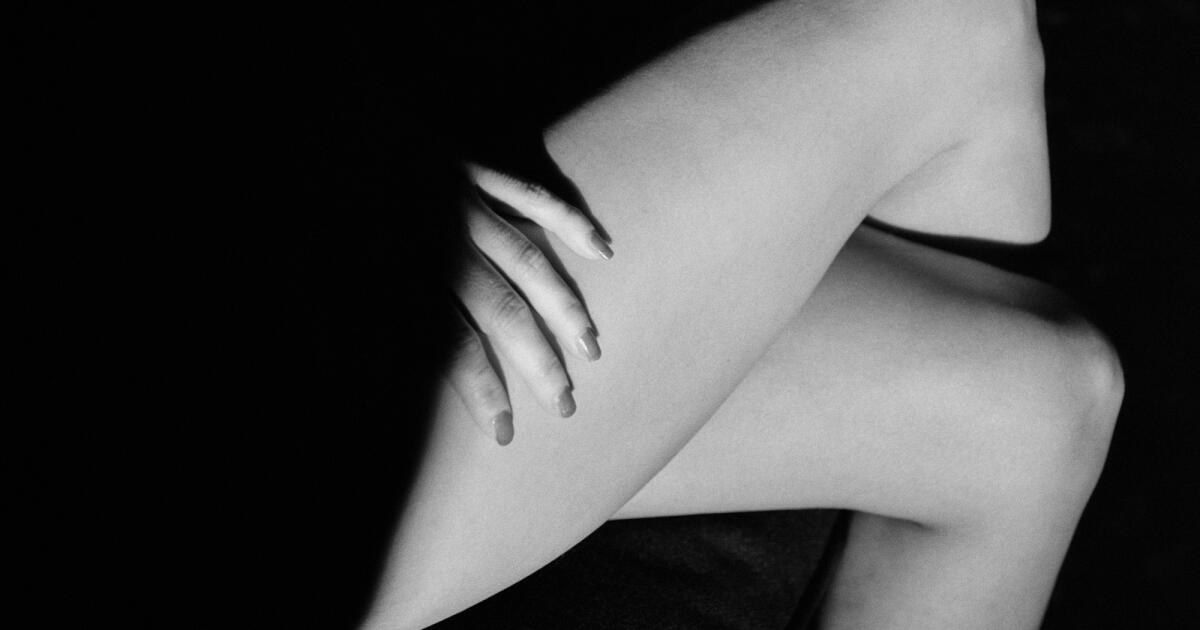
In the three series centered on women’s bodies, prolonged looking verges on the voyeuristic. Women’s faces fill the frames of five warmly lit photographs, their red-lacquered lips parted to release silky streams of smoke. The tight cropping in the monochrome nudes isolates slopes, folds, shadowed recesses and curved planes that hover between landscape and abstraction. In “Couch Series #1” (2008), layered negatives produce a ghostly, acephalic odalisque stretched atop a white modernist chaise and bifurcated by a trembling black line. The blurry double exposure evokes both his early experimental film “The Alphabet” (1968) and his magnum opus “Mulholland Drive” (2001).

David Lynch, untitled (Nudes and Smoke), c. 1994.
(The David Lynch Estate and Pace Gallery)
Lynch’s impulse to fragment takes a more playful, if morbid, turn in the “Kits.” Recalling the model airplane sets he assembled as a child, he arranged a fish, a chicken and a duck as a collection of dissected parts on a tabletop, labeling it with instructions for reconstruction. “PLACE FINISHED FISH IN WATER,” one direction reads. “WATCH YOUR FISH SWIM.” In “Bee Board” (c. 1986-87), individual bees pinned to a specimen board are assigned the names of his friends and acquaintances. The combination of text and image recurs throughout Lynch’s paintings as well, where captions often make distressing narratives explicit.
Across media, Griffin believes Lynch’s strangeness ultimately serves a humane purpose: It returns viewers to the difficult, daunting, delicious business of being an imperfect person in an imperfect world. His work, he said, could make someone “feel human again.” “Sometimes in our world, you can lose yourself,” Griffin added. “This connects you back down to the depths, to what’s true.”
That conviction raised the stakes as Griffin and Day assembled their first exhibition without Lynch. The two have worked with the artist since 2009, and in previous presentations he approached the conception and installation as a kind of director. His family, including Riley, helped to fill the void, advising them on how best to bring the five bodies of work into dialogue.
Whatever their subject, the photographer remained tethered to his city. “He had a deep, deep love for Los Angeles,” Riley said. “He would just start glowing when he would talk about it.” Moving here transformed his father’s life, he added. “He found himself.”
A wider institutional assessment of the auteur’s career, which spans painting, design, music and film, is already coming into focus. The Los Angeles County Museum of Art is in the early stages of preparing a retrospective and is in discussions with other museums, Salvesen said. It seems more than half a century after Lynch arrived, L.A. is still finding new ways to enter his world.

On any given day, David Lynch would set out from his Hollywood Hills home with his camera and a number in mind: 10 photos in five hours, say. His son, the film director Riley Sweeney Lynch, recalls him turning these excursions into a game. “For him, taking photos was like going on a treasure hunt,” he said. The camera became “a way into the world,” another instrument for finding ideas. He’d return with images of abandoned stairwells, dilapidated neon signage, Art Deco theater facades, boiler room control valves.
The only guide you need for fall entertainment.
Evidence of these wanderings arrives in L.A. this fall. Opening Sept. 19 at Pace, “David Lynch: L.A.” will bring together 35 black-and-white and color photo-based works from five series made between 1979 and 2008. The presentation is both the first devoted solely to 30 years of the filmmaker’s photography practice in L.A. and the first exhibition in his adopted city since his death in 2025. “I think a lot of people are going to be surprised at the intensity of the work,” Pace founder Arne Glimcher said. Photography remains a lesser-known dimension of Lynch’s practice, he added, though his prints possess the same “irresistible strangeness” found across his oeuvre.
David Lynch, “Smoke on Couch,” 1992.
(The David Lynch Estate and Pace Gallery)
While only one series in the exhibition features the city itself, the remaining four capture its atmosphere. In the 2016 documentary “David Lynch: The Art Life,” Lynch described the geography of his childhood in Boise, Idaho, as both tiny and inexhaustible. “Huge worlds are in, you know, those two blocks. Huge,” he said while thumbing through sepia-toned family photos. “Everything’s there. Everything.” The scene kept returning to Bill Griffin, the managing partner of Pace’s L.A. gallery, as he and senior director Genevieve Day organized the exhibition. For Griffin, it illuminated the way Lynch came to inhabit the city he called home for more than half a century. Within its sprawl, each adumbrated alley and plate-glass storefront could hold an entire world.
“Lynch chose to live in L.A. for all the things this show contains,” Griffin said, “the architecture, film noir, cinema, color, mystery, mood.”
Born in Missoula, Mont., in 1946, Lynch studied painting at the Pennsylvania Academy of the Fine Arts. The soot-blackened Philadelphia he encountered, then in a state of urban decay, sparked his lifelong fascination with industrialism, destitution and the macabre. In 1970, he received an American Film Institute fellowship and went west. Inside the abandoned stables of Greystone Mansion in Beverly Hills, he spent the next several years producing his first feature, the surreal thriller “Eraserhead” (1977).
Lynch traced his attachment to L.A. back to his first day. In “Catching the Big Fish” (2006), he remembers arriving after dark and stepping out of a small apartment on San Vicente Boulevard the following morning: “I saw this light,” he wrote. “And it thrilled my soul. I feel lucky to live with that light.”
David Lynch, untitled (Los Angeles), 1979.
(The David Lynch Estate and Pace Gallery)
Lynch’s affection for the city and its singular luminance emanates from the intimate prints documenting its otherwise overlooked corners. In “Untitled (Los Angeles)” (1979), a tiered, skyscraper chandelier casts a flower of white light across a coffered ceiling. Another untitled 11-by-14-inch print from 1979 records the fire-burnished remains of the looping Thrifty sign above a Westwood drugstore. Lynch’s own explanation of the image was characteristically laconic: “There’d been a fire, and so I took that picture.” For Day, these photographs feel “hopeful, especially as compared to the bleakness of his earlier Philadelphia images, but also daunting.” A desire to reveal something just beneath the visible surface is manifest throughout, from the chiaroscuro studies of marble elevator banks to empty stairwells that spiral out of sight.
Although the photographs share the unnerving intensity characteristic of his films, Lynch understood the two disciplines as distinct. “For him, the medium offered the opportunity to linger on a single image,” said Los Angeles County Museum of Art curator Britt Salvesen. “Freed from narrative, sound and movement, his photographs indulge our desire to look longer and more intently than politeness would normally permit.”
Griffin similarly sees “an ocean inside every one of David’s works.” The exhibition, he argued, will reward viewers willing to slow themselves down; those who do may “come out different.”
In the three series centered on women’s bodies, prolonged looking verges on the voyeuristic. Women’s faces fill the frames of five warmly lit photographs, their red-lacquered lips parted to release silky streams of smoke. The tight cropping in the monochrome nudes isolates slopes, folds, shadowed recesses and curved planes that hover between landscape and abstraction. In “Couch Series #1” (2008), layered negatives produce a ghostly, acephalic odalisque stretched atop a white modernist chaise and bifurcated by a trembling black line. The blurry double exposure evokes both his early experimental film “The Alphabet” (1968) and his magnum opus “Mulholland Drive” (2001).
David Lynch, untitled (Nudes and Smoke), c. 1994.
(The David Lynch Estate and Pace Gallery)
Lynch’s impulse to fragment takes a more playful, if morbid, turn in the “Kits.” Recalling the model airplane sets he assembled as a child, he arranged a fish, a chicken and a duck as a collection of dissected parts on a tabletop, labeling it with instructions for reconstruction. “PLACE FINISHED FISH IN WATER,” one direction reads. “WATCH YOUR FISH SWIM.” In “Bee Board” (c. 1986-87), individual bees pinned to a specimen board are assigned the names of his friends and acquaintances. The combination of text and image recurs throughout Lynch’s paintings as well, where captions often make distressing narratives explicit.
Across media, Griffin believes Lynch’s strangeness ultimately serves a humane purpose: It returns viewers to the difficult, daunting, delicious business of being an imperfect person in an imperfect world. His work, he said, could make someone “feel human again.” “Sometimes in our world, you can lose yourself,” Griffin added. “This connects you back down to the depths, to what’s true.”
That conviction raised the stakes as Griffin and Day assembled their first exhibition without Lynch. The two have worked with the artist since 2009, and in previous presentations he approached the conception and installation as a kind of director. His family, including Riley, helped to fill the void, advising them on how best to bring the five bodies of work into dialogue.
Whatever their subject, the photographer remained tethered to his city. “He had a deep, deep love for Los Angeles,” Riley said. “He would just start glowing when he would talk about it.” Moving here transformed his father’s life, he added. “He found himself.”
A wider institutional assessment of the auteur’s career, which spans painting, design, music and film, is already coming into focus. The Los Angeles County Museum of Art is in the early stages of preparing a retrospective and is in discussions with other museums, Salvesen said. It seems more than half a century after Lynch arrived, L.A. is still finding new ways to enter his world.

On any given day, David Lynch would set out from his Hollywood Hills home with his camera and a number in mind: 10 photos in five hours, say. His son, the film director Riley Sweeney Lynch, recalls him turning these excursions into a game. “For him, taking photos was like going on a treasure hunt,” he said. The camera became “a way into the world,” another instrument for finding ideas. He’d return with images of abandoned stairwells, dilapidated neon signage, Art Deco theater facades, boiler room control valves.
The only guide you need for fall entertainment.
Evidence of these wanderings arrives in L.A. this fall. Opening Sept. 19 at Pace, “David Lynch: L.A.” will bring together 35 black-and-white and color photo-based works from five series made between 1979 and 2008. The presentation is both the first devoted solely to 30 years of the filmmaker’s photography practice in L.A. and the first exhibition in his adopted city since his death in 2025. “I think a lot of people are going to be surprised at the intensity of the work,” Pace founder Arne Glimcher said. Photography remains a lesser-known dimension of Lynch’s practice, he added, though his prints possess the same “irresistible strangeness” found across his oeuvre.
David Lynch, “Smoke on Couch,” 1992.
(The David Lynch Estate and Pace Gallery)
While only one series in the exhibition features the city itself, the remaining four capture its atmosphere. In the 2016 documentary “David Lynch: The Art Life,” Lynch described the geography of his childhood in Boise, Idaho, as both tiny and inexhaustible. “Huge worlds are in, you know, those two blocks. Huge,” he said while thumbing through sepia-toned family photos. “Everything’s there. Everything.” The scene kept returning to Bill Griffin, the managing partner of Pace’s L.A. gallery, as he and senior director Genevieve Day organized the exhibition. For Griffin, it illuminated the way Lynch came to inhabit the city he called home for more than half a century. Within its sprawl, each adumbrated alley and plate-glass storefront could hold an entire world.
“Lynch chose to live in L.A. for all the things this show contains,” Griffin said, “the architecture, film noir, cinema, color, mystery, mood.”
Born in Missoula, Mont., in 1946, Lynch studied painting at the Pennsylvania Academy of the Fine Arts. The soot-blackened Philadelphia he encountered, then in a state of urban decay, sparked his lifelong fascination with industrialism, destitution and the macabre. In 1970, he received an American Film Institute fellowship and went west. Inside the abandoned stables of Greystone Mansion in Beverly Hills, he spent the next several years producing his first feature, the surreal thriller “Eraserhead” (1977).
Lynch traced his attachment to L.A. back to his first day. In “Catching the Big Fish” (2006), he remembers arriving after dark and stepping out of a small apartment on San Vicente Boulevard the following morning: “I saw this light,” he wrote. “And it thrilled my soul. I feel lucky to live with that light.”
David Lynch, untitled (Los Angeles), 1979.
(The David Lynch Estate and Pace Gallery)
Lynch’s affection for the city and its singular luminance emanates from the intimate prints documenting its otherwise overlooked corners. In “Untitled (Los Angeles)” (1979), a tiered, skyscraper chandelier casts a flower of white light across a coffered ceiling. Another untitled 11-by-14-inch print from 1979 records the fire-burnished remains of the looping Thrifty sign above a Westwood drugstore. Lynch’s own explanation of the image was characteristically laconic: “There’d been a fire, and so I took that picture.” For Day, these photographs feel “hopeful, especially as compared to the bleakness of his earlier Philadelphia images, but also daunting.” A desire to reveal something just beneath the visible surface is manifest throughout, from the chiaroscuro studies of marble elevator banks to empty stairwells that spiral out of sight.
Although the photographs share the unnerving intensity characteristic of his films, Lynch understood the two disciplines as distinct. “For him, the medium offered the opportunity to linger on a single image,” said Los Angeles County Museum of Art curator Britt Salvesen. “Freed from narrative, sound and movement, his photographs indulge our desire to look longer and more intently than politeness would normally permit.”
Griffin similarly sees “an ocean inside every one of David’s works.” The exhibition, he argued, will reward viewers willing to slow themselves down; those who do may “come out different.”
In the three series centered on women’s bodies, prolonged looking verges on the voyeuristic. Women’s faces fill the frames of five warmly lit photographs, their red-lacquered lips parted to release silky streams of smoke. The tight cropping in the monochrome nudes isolates slopes, folds, shadowed recesses and curved planes that hover between landscape and abstraction. In “Couch Series #1” (2008), layered negatives produce a ghostly, acephalic odalisque stretched atop a white modernist chaise and bifurcated by a trembling black line. The blurry double exposure evokes both his early experimental film “The Alphabet” (1968) and his magnum opus “Mulholland Drive” (2001).
David Lynch, untitled (Nudes and Smoke), c. 1994.
(The David Lynch Estate and Pace Gallery)
Lynch’s impulse to fragment takes a more playful, if morbid, turn in the “Kits.” Recalling the model airplane sets he assembled as a child, he arranged a fish, a chicken and a duck as a collection of dissected parts on a tabletop, labeling it with instructions for reconstruction. “PLACE FINISHED FISH IN WATER,” one direction reads. “WATCH YOUR FISH SWIM.” In “Bee Board” (c. 1986-87), individual bees pinned to a specimen board are assigned the names of his friends and acquaintances. The combination of text and image recurs throughout Lynch’s paintings as well, where captions often make distressing narratives explicit.
Across media, Griffin believes Lynch’s strangeness ultimately serves a humane purpose: It returns viewers to the difficult, daunting, delicious business of being an imperfect person in an imperfect world. His work, he said, could make someone “feel human again.” “Sometimes in our world, you can lose yourself,” Griffin added. “This connects you back down to the depths, to what’s true.”
That conviction raised the stakes as Griffin and Day assembled their first exhibition without Lynch. The two have worked with the artist since 2009, and in previous presentations he approached the conception and installation as a kind of director. His family, including Riley, helped to fill the void, advising them on how best to bring the five bodies of work into dialogue.
Whatever their subject, the photographer remained tethered to his city. “He had a deep, deep love for Los Angeles,” Riley said. “He would just start glowing when he would talk about it.” Moving here transformed his father’s life, he added. “He found himself.”
A wider institutional assessment of the auteur’s career, which spans painting, design, music and film, is already coming into focus. The Los Angeles County Museum of Art is in the early stages of preparing a retrospective and is in discussions with other museums, Salvesen said. It seems more than half a century after Lynch arrived, L.A. is still finding new ways to enter his world.
On any given day, David Lynch would set out from his Hollywood Hills home with his camera and a number in mind: 10 photos in five hours, say. His son, the film director Riley Sweeney Lynch, recalls him turning these excursions into a game. “For him, taking photos was like going on a treasure hunt,” he said. The camera became “a way into the world,” another instrument for finding ideas. He’d return with images of abandoned stairwells, dilapidated neon signage, Art Deco theater facades, boiler room control valves.
The only guide you need for fall entertainment.
Evidence of these wanderings arrives in L.A. this fall. Opening Sept. 19 at Pace, “David Lynch: L.A.” will bring together 35 black-and-white and color photo-based works from five series made between 1979 and 2008. The presentation is both the first devoted solely to 30 years of the filmmaker’s photography practice in L.A. and the first exhibition in his adopted city since his death in 2025. “I think a lot of people are going to be surprised at the intensity of the work,” Pace founder Arne Glimcher said. Photography remains a lesser-known dimension of Lynch’s practice, he added, though his prints possess the same “irresistible strangeness” found across his oeuvre.
David Lynch, “Smoke on Couch,” 1992.
(The David Lynch Estate and Pace Gallery)
While only one series in the exhibition features the city itself, the remaining four capture its atmosphere. In the 2016 documentary “David Lynch: The Art Life,” Lynch described the geography of his childhood in Boise, Idaho, as both tiny and inexhaustible. “Huge worlds are in, you know, those two blocks. Huge,” he said while thumbing through sepia-toned family photos. “Everything’s there. Everything.” The scene kept returning to Bill Griffin, the managing partner of Pace’s L.A. gallery, as he and senior director Genevieve Day organized the exhibition. For Griffin, it illuminated the way Lynch came to inhabit the city he called home for more than half a century. Within its sprawl, each adumbrated alley and plate-glass storefront could hold an entire world.
“Lynch chose to live in L.A. for all the things this show contains,” Griffin said, “the architecture, film noir, cinema, color, mystery, mood.”
Born in Missoula, Mont., in 1946, Lynch studied painting at the Pennsylvania Academy of the Fine Arts. The soot-blackened Philadelphia he encountered, then in a state of urban decay, sparked his lifelong fascination with industrialism, destitution and the macabre. In 1970, he received an American Film Institute fellowship and went west. Inside the abandoned stables of Greystone Mansion in Beverly Hills, he spent the next several years producing his first feature, the surreal thriller “Eraserhead” (1977).
Lynch traced his attachment to L.A. back to his first day. In “Catching the Big Fish” (2006), he remembers arriving after dark and stepping out of a small apartment on San Vicente Boulevard the following morning: “I saw this light,” he wrote. “And it thrilled my soul. I feel lucky to live with that light.”
David Lynch, untitled (Los Angeles), 1979.
(The David Lynch Estate and Pace Gallery)
Lynch’s affection for the city and its singular luminance emanates from the intimate prints documenting its otherwise overlooked corners. In “Untitled (Los Angeles)” (1979), a tiered, skyscraper chandelier casts a flower of white light across a coffered ceiling. Another untitled 11-by-14-inch print from 1979 records the fire-burnished remains of the looping Thrifty sign above a Westwood drugstore. Lynch’s own explanation of the image was characteristically laconic: “There’d been a fire, and so I took that picture.” For Day, these photographs feel “hopeful, especially as compared to the bleakness of his earlier Philadelphia images, but also daunting.” A desire to reveal something just beneath the visible surface is manifest throughout, from the chiaroscuro studies of marble elevator banks to empty stairwells that spiral out of sight.
Although the photographs share the unnerving intensity characteristic of his films, Lynch understood the two disciplines as distinct. “For him, the medium offered the opportunity to linger on a single image,” said Los Angeles County Museum of Art curator Britt Salvesen. “Freed from narrative, sound and movement, his photographs indulge our desire to look longer and more intently than politeness would normally permit.”
Griffin similarly sees “an ocean inside every one of David’s works.” The exhibition, he argued, will reward viewers willing to slow themselves down; those who do may “come out different.”
In the three series centered on women’s bodies, prolonged looking verges on the voyeuristic. Women’s faces fill the frames of five warmly lit photographs, their red-lacquered lips parted to release silky streams of smoke. The tight cropping in the monochrome nudes isolates slopes, folds, shadowed recesses and curved planes that hover between landscape and abstraction. In “Couch Series #1” (2008), layered negatives produce a ghostly, acephalic odalisque stretched atop a white modernist chaise and bifurcated by a trembling black line. The blurry double exposure evokes both his early experimental film “The Alphabet” (1968) and his magnum opus “Mulholland Drive” (2001).
David Lynch, untitled (Nudes and Smoke), c. 1994.
(The David Lynch Estate and Pace Gallery)
Lynch’s impulse to fragment takes a more playful, if morbid, turn in the “Kits.” Recalling the model airplane sets he assembled as a child, he arranged a fish, a chicken and a duck as a collection of dissected parts on a tabletop, labeling it with instructions for reconstruction. “PLACE FINISHED FISH IN WATER,” one direction reads. “WATCH YOUR FISH SWIM.” In “Bee Board” (c. 1986-87), individual bees pinned to a specimen board are assigned the names of his friends and acquaintances. The combination of text and image recurs throughout Lynch’s paintings as well, where captions often make distressing narratives explicit.
Across media, Griffin believes Lynch’s strangeness ultimately serves a humane purpose: It returns viewers to the difficult, daunting, delicious business of being an imperfect person in an imperfect world. His work, he said, could make someone “feel human again.” “Sometimes in our world, you can lose yourself,” Griffin added. “This connects you back down to the depths, to what’s true.”
That conviction raised the stakes as Griffin and Day assembled their first exhibition without Lynch. The two have worked with the artist since 2009, and in previous presentations he approached the conception and installation as a kind of director. His family, including Riley, helped to fill the void, advising them on how best to bring the five bodies of work into dialogue.
Whatever their subject, the photographer remained tethered to his city. “He had a deep, deep love for Los Angeles,” Riley said. “He would just start glowing when he would talk about it.” Moving here transformed his father’s life, he added. “He found himself.”
A wider institutional assessment of the auteur’s career, which spans painting, design, music and film, is already coming into focus. The Los Angeles County Museum of Art is in the early stages of preparing a retrospective and is in discussions with other museums, Salvesen said. It seems more than half a century after Lynch arrived, L.A. is still finding new ways to enter his world.

On any given day, David Lynch would set out from his Hollywood Hills home with his camera and a number in mind: 10 photos in five hours, say. His son, the film director Riley Sweeney Lynch, recalls him turning these excursions into a game. “For him, taking photos was like going on a treasure hunt,” he said. The camera became “a way into the world,” another instrument for finding ideas. He’d return with images of abandoned stairwells, dilapidated neon signage, Art Deco theater facades, boiler room control valves.
The only guide you need for fall entertainment.
Evidence of these wanderings arrives in L.A. this fall. Opening Sept. 19 at Pace, “David Lynch: L.A.” will bring together 35 black-and-white and color photo-based works from five series made between 1979 and 2008. The presentation is both the first devoted solely to 30 years of the filmmaker’s photography practice in L.A. and the first exhibition in his adopted city since his death in 2025. “I think a lot of people are going to be surprised at the intensity of the work,” Pace founder Arne Glimcher said. Photography remains a lesser-known dimension of Lynch’s practice, he added, though his prints possess the same “irresistible strangeness” found across his oeuvre.
David Lynch, “Smoke on Couch,” 1992.
(The David Lynch Estate and Pace Gallery)
While only one series in the exhibition features the city itself, the remaining four capture its atmosphere. In the 2016 documentary “David Lynch: The Art Life,” Lynch described the geography of his childhood in Boise, Idaho, as both tiny and inexhaustible. “Huge worlds are in, you know, those two blocks. Huge,” he said while thumbing through sepia-toned family photos. “Everything’s there. Everything.” The scene kept returning to Bill Griffin, the managing partner of Pace’s L.A. gallery, as he and senior director Genevieve Day organized the exhibition. For Griffin, it illuminated the way Lynch came to inhabit the city he called home for more than half a century. Within its sprawl, each adumbrated alley and plate-glass storefront could hold an entire world.
“Lynch chose to live in L.A. for all the things this show contains,” Griffin said, “the architecture, film noir, cinema, color, mystery, mood.”
Born in Missoula, Mont., in 1946, Lynch studied painting at the Pennsylvania Academy of the Fine Arts. The soot-blackened Philadelphia he encountered, then in a state of urban decay, sparked his lifelong fascination with industrialism, destitution and the macabre. In 1970, he received an American Film Institute fellowship and went west. Inside the abandoned stables of Greystone Mansion in Beverly Hills, he spent the next several years producing his first feature, the surreal thriller “Eraserhead” (1977).
Lynch traced his attachment to L.A. back to his first day. In “Catching the Big Fish” (2006), he remembers arriving after dark and stepping out of a small apartment on San Vicente Boulevard the following morning: “I saw this light,” he wrote. “And it thrilled my soul. I feel lucky to live with that light.”
David Lynch, untitled (Los Angeles), 1979.
(The David Lynch Estate and Pace Gallery)
Lynch’s affection for the city and its singular luminance emanates from the intimate prints documenting its otherwise overlooked corners. In “Untitled (Los Angeles)” (1979), a tiered, skyscraper chandelier casts a flower of white light across a coffered ceiling. Another untitled 11-by-14-inch print from 1979 records the fire-burnished remains of the looping Thrifty sign above a Westwood drugstore. Lynch’s own explanation of the image was characteristically laconic: “There’d been a fire, and so I took that picture.” For Day, these photographs feel “hopeful, especially as compared to the bleakness of his earlier Philadelphia images, but also daunting.” A desire to reveal something just beneath the visible surface is manifest throughout, from the chiaroscuro studies of marble elevator banks to empty stairwells that spiral out of sight.
Although the photographs share the unnerving intensity characteristic of his films, Lynch understood the two disciplines as distinct. “For him, the medium offered the opportunity to linger on a single image,” said Los Angeles County Museum of Art curator Britt Salvesen. “Freed from narrative, sound and movement, his photographs indulge our desire to look longer and more intently than politeness would normally permit.”
Griffin similarly sees “an ocean inside every one of David’s works.” The exhibition, he argued, will reward viewers willing to slow themselves down; those who do may “come out different.”
In the three series centered on women’s bodies, prolonged looking verges on the voyeuristic. Women’s faces fill the frames of five warmly lit photographs, their red-lacquered lips parted to release silky streams of smoke. The tight cropping in the monochrome nudes isolates slopes, folds, shadowed recesses and curved planes that hover between landscape and abstraction. In “Couch Series #1” (2008), layered negatives produce a ghostly, acephalic odalisque stretched atop a white modernist chaise and bifurcated by a trembling black line. The blurry double exposure evokes both his early experimental film “The Alphabet” (1968) and his magnum opus “Mulholland Drive” (2001).
David Lynch, untitled (Nudes and Smoke), c. 1994.
(The David Lynch Estate and Pace Gallery)
Lynch’s impulse to fragment takes a more playful, if morbid, turn in the “Kits.” Recalling the model airplane sets he assembled as a child, he arranged a fish, a chicken and a duck as a collection of dissected parts on a tabletop, labeling it with instructions for reconstruction. “PLACE FINISHED FISH IN WATER,” one direction reads. “WATCH YOUR FISH SWIM.” In “Bee Board” (c. 1986-87), individual bees pinned to a specimen board are assigned the names of his friends and acquaintances. The combination of text and image recurs throughout Lynch’s paintings as well, where captions often make distressing narratives explicit.
Across media, Griffin believes Lynch’s strangeness ultimately serves a humane purpose: It returns viewers to the difficult, daunting, delicious business of being an imperfect person in an imperfect world. His work, he said, could make someone “feel human again.” “Sometimes in our world, you can lose yourself,” Griffin added. “This connects you back down to the depths, to what’s true.”
That conviction raised the stakes as Griffin and Day assembled their first exhibition without Lynch. The two have worked with the artist since 2009, and in previous presentations he approached the conception and installation as a kind of director. His family, including Riley, helped to fill the void, advising them on how best to bring the five bodies of work into dialogue.
Whatever their subject, the photographer remained tethered to his city. “He had a deep, deep love for Los Angeles,” Riley said. “He would just start glowing when he would talk about it.” Moving here transformed his father’s life, he added. “He found himself.”
A wider institutional assessment of the auteur’s career, which spans painting, design, music and film, is already coming into focus. The Los Angeles County Museum of Art is in the early stages of preparing a retrospective and is in discussions with other museums, Salvesen said. It seems more than half a century after Lynch arrived, L.A. is still finding new ways to enter his world.
On any given day, David Lynch would set out from his Hollywood Hills home with his camera and a number in mind: 10 photos in five hours, say. His son, the film director Riley Sweeney Lynch, recalls him turning these excursions into a game. “For him, taking photos was like going on a treasure hunt,” he said. The camera became “a way into the world,” another instrument for finding ideas. He’d return with images of abandoned stairwells, dilapidated neon signage, Art Deco theater facades, boiler room control valves.
The only guide you need for fall entertainment.
Evidence of these wanderings arrives in L.A. this fall. Opening Sept. 19 at Pace, “David Lynch: L.A.” will bring together 35 black-and-white and color photo-based works from five series made between 1979 and 2008. The presentation is both the first devoted solely to 30 years of the filmmaker’s photography practice in L.A. and the first exhibition in his adopted city since his death in 2025. “I think a lot of people are going to be surprised at the intensity of the work,” Pace founder Arne Glimcher said. Photography remains a lesser-known dimension of Lynch’s practice, he added, though his prints possess the same “irresistible strangeness” found across his oeuvre.
David Lynch, “Smoke on Couch,” 1992.
(The David Lynch Estate and Pace Gallery)
While only one series in the exhibition features the city itself, the remaining four capture its atmosphere. In the 2016 documentary “David Lynch: The Art Life,” Lynch described the geography of his childhood in Boise, Idaho, as both tiny and inexhaustible. “Huge worlds are in, you know, those two blocks. Huge,” he said while thumbing through sepia-toned family photos. “Everything’s there. Everything.” The scene kept returning to Bill Griffin, the managing partner of Pace’s L.A. gallery, as he and senior director Genevieve Day organized the exhibition. For Griffin, it illuminated the way Lynch came to inhabit the city he called home for more than half a century. Within its sprawl, each adumbrated alley and plate-glass storefront could hold an entire world.
“Lynch chose to live in L.A. for all the things this show contains,” Griffin said, “the architecture, film noir, cinema, color, mystery, mood.”
Born in Missoula, Mont., in 1946, Lynch studied painting at the Pennsylvania Academy of the Fine Arts. The soot-blackened Philadelphia he encountered, then in a state of urban decay, sparked his lifelong fascination with industrialism, destitution and the macabre. In 1970, he received an American Film Institute fellowship and went west. Inside the abandoned stables of Greystone Mansion in Beverly Hills, he spent the next several years producing his first feature, the surreal thriller “Eraserhead” (1977).
Lynch traced his attachment to L.A. back to his first day. In “Catching the Big Fish” (2006), he remembers arriving after dark and stepping out of a small apartment on San Vicente Boulevard the following morning: “I saw this light,” he wrote. “And it thrilled my soul. I feel lucky to live with that light.”
David Lynch, untitled (Los Angeles), 1979.
(The David Lynch Estate and Pace Gallery)
Lynch’s affection for the city and its singular luminance emanates from the intimate prints documenting its otherwise overlooked corners. In “Untitled (Los Angeles)” (1979), a tiered, skyscraper chandelier casts a flower of white light across a coffered ceiling. Another untitled 11-by-14-inch print from 1979 records the fire-burnished remains of the looping Thrifty sign above a Westwood drugstore. Lynch’s own explanation of the image was characteristically laconic: “There’d been a fire, and so I took that picture.” For Day, these photographs feel “hopeful, especially as compared to the bleakness of his earlier Philadelphia images, but also daunting.” A desire to reveal something just beneath the visible surface is manifest throughout, from the chiaroscuro studies of marble elevator banks to empty stairwells that spiral out of sight.
Although the photographs share the unnerving intensity characteristic of his films, Lynch understood the two disciplines as distinct. “For him, the medium offered the opportunity to linger on a single image,” said Los Angeles County Museum of Art curator Britt Salvesen. “Freed from narrative, sound and movement, his photographs indulge our desire to look longer and more intently than politeness would normally permit.”
Griffin similarly sees “an ocean inside every one of David’s works.” The exhibition, he argued, will reward viewers willing to slow themselves down; those who do may “come out different.”
In the three series centered on women’s bodies, prolonged looking verges on the voyeuristic. Women’s faces fill the frames of five warmly lit photographs, their red-lacquered lips parted to release silky streams of smoke. The tight cropping in the monochrome nudes isolates slopes, folds, shadowed recesses and curved planes that hover between landscape and abstraction. In “Couch Series #1” (2008), layered negatives produce a ghostly, acephalic odalisque stretched atop a white modernist chaise and bifurcated by a trembling black line. The blurry double exposure evokes both his early experimental film “The Alphabet” (1968) and his magnum opus “Mulholland Drive” (2001).
David Lynch, untitled (Nudes and Smoke), c. 1994.
(The David Lynch Estate and Pace Gallery)
Lynch’s impulse to fragment takes a more playful, if morbid, turn in the “Kits.” Recalling the model airplane sets he assembled as a child, he arranged a fish, a chicken and a duck as a collection of dissected parts on a tabletop, labeling it with instructions for reconstruction. “PLACE FINISHED FISH IN WATER,” one direction reads. “WATCH YOUR FISH SWIM.” In “Bee Board” (c. 1986-87), individual bees pinned to a specimen board are assigned the names of his friends and acquaintances. The combination of text and image recurs throughout Lynch’s paintings as well, where captions often make distressing narratives explicit.
Across media, Griffin believes Lynch’s strangeness ultimately serves a humane purpose: It returns viewers to the difficult, daunting, delicious business of being an imperfect person in an imperfect world. His work, he said, could make someone “feel human again.” “Sometimes in our world, you can lose yourself,” Griffin added. “This connects you back down to the depths, to what’s true.”
That conviction raised the stakes as Griffin and Day assembled their first exhibition without Lynch. The two have worked with the artist since 2009, and in previous presentations he approached the conception and installation as a kind of director. His family, including Riley, helped to fill the void, advising them on how best to bring the five bodies of work into dialogue.
Whatever their subject, the photographer remained tethered to his city. “He had a deep, deep love for Los Angeles,” Riley said. “He would just start glowing when he would talk about it.” Moving here transformed his father’s life, he added. “He found himself.”
A wider institutional assessment of the auteur’s career, which spans painting, design, music and film, is already coming into focus. The Los Angeles County Museum of Art is in the early stages of preparing a retrospective and is in discussions with other museums, Salvesen said. It seems more than half a century after Lynch arrived, L.A. is still finding new ways to enter his world.
On any given day, David Lynch would set out from his Hollywood Hills home with his camera and a number in mind: 10 photos in five hours, say. His son, the film director Riley Sweeney Lynch, recalls him turning these excursions into a game. “For him, taking photos was like going on a treasure hunt,” he said. The camera became “a way into the world,” another instrument for finding ideas. He’d return with images of abandoned stairwells, dilapidated neon signage, Art Deco theater facades, boiler room control valves.
The only guide you need for fall entertainment.
Evidence of these wanderings arrives in L.A. this fall. Opening Sept. 19 at Pace, “David Lynch: L.A.” will bring together 35 black-and-white and color photo-based works from five series made between 1979 and 2008. The presentation is both the first devoted solely to 30 years of the filmmaker’s photography practice in L.A. and the first exhibition in his adopted city since his death in 2025. “I think a lot of people are going to be surprised at the intensity of the work,” Pace founder Arne Glimcher said. Photography remains a lesser-known dimension of Lynch’s practice, he added, though his prints possess the same “irresistible strangeness” found across his oeuvre.
David Lynch, “Smoke on Couch,” 1992.
(The David Lynch Estate and Pace Gallery)
While only one series in the exhibition features the city itself, the remaining four capture its atmosphere. In the 2016 documentary “David Lynch: The Art Life,” Lynch described the geography of his childhood in Boise, Idaho, as both tiny and inexhaustible. “Huge worlds are in, you know, those two blocks. Huge,” he said while thumbing through sepia-toned family photos. “Everything’s there. Everything.” The scene kept returning to Bill Griffin, the managing partner of Pace’s L.A. gallery, as he and senior director Genevieve Day organized the exhibition. For Griffin, it illuminated the way Lynch came to inhabit the city he called home for more than half a century. Within its sprawl, each adumbrated alley and plate-glass storefront could hold an entire world.
“Lynch chose to live in L.A. for all the things this show contains,” Griffin said, “the architecture, film noir, cinema, color, mystery, mood.”
Born in Missoula, Mont., in 1946, Lynch studied painting at the Pennsylvania Academy of the Fine Arts. The soot-blackened Philadelphia he encountered, then in a state of urban decay, sparked his lifelong fascination with industrialism, destitution and the macabre. In 1970, he received an American Film Institute fellowship and went west. Inside the abandoned stables of Greystone Mansion in Beverly Hills, he spent the next several years producing his first feature, the surreal thriller “Eraserhead” (1977).
Lynch traced his attachment to L.A. back to his first day. In “Catching the Big Fish” (2006), he remembers arriving after dark and stepping out of a small apartment on San Vicente Boulevard the following morning: “I saw this light,” he wrote. “And it thrilled my soul. I feel lucky to live with that light.”
David Lynch, untitled (Los Angeles), 1979.
(The David Lynch Estate and Pace Gallery)
Lynch’s affection for the city and its singular luminance emanates from the intimate prints documenting its otherwise overlooked corners. In “Untitled (Los Angeles)” (1979), a tiered, skyscraper chandelier casts a flower of white light across a coffered ceiling. Another untitled 11-by-14-inch print from 1979 records the fire-burnished remains of the looping Thrifty sign above a Westwood drugstore. Lynch’s own explanation of the image was characteristically laconic: “There’d been a fire, and so I took that picture.” For Day, these photographs feel “hopeful, especially as compared to the bleakness of his earlier Philadelphia images, but also daunting.” A desire to reveal something just beneath the visible surface is manifest throughout, from the chiaroscuro studies of marble elevator banks to empty stairwells that spiral out of sight.
Although the photographs share the unnerving intensity characteristic of his films, Lynch understood the two disciplines as distinct. “For him, the medium offered the opportunity to linger on a single image,” said Los Angeles County Museum of Art curator Britt Salvesen. “Freed from narrative, sound and movement, his photographs indulge our desire to look longer and more intently than politeness would normally permit.”
Griffin similarly sees “an ocean inside every one of David’s works.” The exhibition, he argued, will reward viewers willing to slow themselves down; those who do may “come out different.”
In the three series centered on women’s bodies, prolonged looking verges on the voyeuristic. Women’s faces fill the frames of five warmly lit photographs, their red-lacquered lips parted to release silky streams of smoke. The tight cropping in the monochrome nudes isolates slopes, folds, shadowed recesses and curved planes that hover between landscape and abstraction. In “Couch Series #1” (2008), layered negatives produce a ghostly, acephalic odalisque stretched atop a white modernist chaise and bifurcated by a trembling black line. The blurry double exposure evokes both his early experimental film “The Alphabet” (1968) and his magnum opus “Mulholland Drive” (2001).
David Lynch, untitled (Nudes and Smoke), c. 1994.
(The David Lynch Estate and Pace Gallery)
Lynch’s impulse to fragment takes a more playful, if morbid, turn in the “Kits.” Recalling the model airplane sets he assembled as a child, he arranged a fish, a chicken and a duck as a collection of dissected parts on a tabletop, labeling it with instructions for reconstruction. “PLACE FINISHED FISH IN WATER,” one direction reads. “WATCH YOUR FISH SWIM.” In “Bee Board” (c. 1986-87), individual bees pinned to a specimen board are assigned the names of his friends and acquaintances. The combination of text and image recurs throughout Lynch’s paintings as well, where captions often make distressing narratives explicit.
Across media, Griffin believes Lynch’s strangeness ultimately serves a humane purpose: It returns viewers to the difficult, daunting, delicious business of being an imperfect person in an imperfect world. His work, he said, could make someone “feel human again.” “Sometimes in our world, you can lose yourself,” Griffin added. “This connects you back down to the depths, to what’s true.”
That conviction raised the stakes as Griffin and Day assembled their first exhibition without Lynch. The two have worked with the artist since 2009, and in previous presentations he approached the conception and installation as a kind of director. His family, including Riley, helped to fill the void, advising them on how best to bring the five bodies of work into dialogue.
Whatever their subject, the photographer remained tethered to his city. “He had a deep, deep love for Los Angeles,” Riley said. “He would just start glowing when he would talk about it.” Moving here transformed his father’s life, he added. “He found himself.”
A wider institutional assessment of the auteur’s career, which spans painting, design, music and film, is already coming into focus. The Los Angeles County Museum of Art is in the early stages of preparing a retrospective and is in discussions with other museums, Salvesen said. It seems more than half a century after Lynch arrived, L.A. is still finding new ways to enter his world.
On any given day, David Lynch would set out from his Hollywood Hills home with his camera and a number in mind: 10 photos in five hours, say. His son, the film director Riley Sweeney Lynch, recalls him turning these excursions into a game. “For him, taking photos was like going on a treasure hunt,” he said. The camera became “a way into the world,” another instrument for finding ideas. He’d return with images of abandoned stairwells, dilapidated neon signage, Art Deco theater facades, boiler room control valves.
The only guide you need for fall entertainment.
Evidence of these wanderings arrives in L.A. this fall. Opening Sept. 19 at Pace, “David Lynch: L.A.” will bring together 35 black-and-white and color photo-based works from five series made between 1979 and 2008. The presentation is both the first devoted solely to 30 years of the filmmaker’s photography practice in L.A. and the first exhibition in his adopted city since his death in 2025. “I think a lot of people are going to be surprised at the intensity of the work,” Pace founder Arne Glimcher said. Photography remains a lesser-known dimension of Lynch’s practice, he added, though his prints possess the same “irresistible strangeness” found across his oeuvre.
David Lynch, “Smoke on Couch,” 1992.
(The David Lynch Estate and Pace Gallery)
While only one series in the exhibition features the city itself, the remaining four capture its atmosphere. In the 2016 documentary “David Lynch: The Art Life,” Lynch described the geography of his childhood in Boise, Idaho, as both tiny and inexhaustible. “Huge worlds are in, you know, those two blocks. Huge,” he said while thumbing through sepia-toned family photos. “Everything’s there. Everything.” The scene kept returning to Bill Griffin, the managing partner of Pace’s L.A. gallery, as he and senior director Genevieve Day organized the exhibition. For Griffin, it illuminated the way Lynch came to inhabit the city he called home for more than half a century. Within its sprawl, each adumbrated alley and plate-glass storefront could hold an entire world.
“Lynch chose to live in L.A. for all the things this show contains,” Griffin said, “the architecture, film noir, cinema, color, mystery, mood.”
Born in Missoula, Mont., in 1946, Lynch studied painting at the Pennsylvania Academy of the Fine Arts. The soot-blackened Philadelphia he encountered, then in a state of urban decay, sparked his lifelong fascination with industrialism, destitution and the macabre. In 1970, he received an American Film Institute fellowship and went west. Inside the abandoned stables of Greystone Mansion in Beverly Hills, he spent the next several years producing his first feature, the surreal thriller “Eraserhead” (1977).
Lynch traced his attachment to L.A. back to his first day. In “Catching the Big Fish” (2006), he remembers arriving after dark and stepping out of a small apartment on San Vicente Boulevard the following morning: “I saw this light,” he wrote. “And it thrilled my soul. I feel lucky to live with that light.”
David Lynch, untitled (Los Angeles), 1979.
(The David Lynch Estate and Pace Gallery)
Lynch’s affection for the city and its singular luminance emanates from the intimate prints documenting its otherwise overlooked corners. In “Untitled (Los Angeles)” (1979), a tiered, skyscraper chandelier casts a flower of white light across a coffered ceiling. Another untitled 11-by-14-inch print from 1979 records the fire-burnished remains of the looping Thrifty sign above a Westwood drugstore. Lynch’s own explanation of the image was characteristically laconic: “There’d been a fire, and so I took that picture.” For Day, these photographs feel “hopeful, especially as compared to the bleakness of his earlier Philadelphia images, but also daunting.” A desire to reveal something just beneath the visible surface is manifest throughout, from the chiaroscuro studies of marble elevator banks to empty stairwells that spiral out of sight.
Although the photographs share the unnerving intensity characteristic of his films, Lynch understood the two disciplines as distinct. “For him, the medium offered the opportunity to linger on a single image,” said Los Angeles County Museum of Art curator Britt Salvesen. “Freed from narrative, sound and movement, his photographs indulge our desire to look longer and more intently than politeness would normally permit.”
Griffin similarly sees “an ocean inside every one of David’s works.” The exhibition, he argued, will reward viewers willing to slow themselves down; those who do may “come out different.”
In the three series centered on women’s bodies, prolonged looking verges on the voyeuristic. Women’s faces fill the frames of five warmly lit photographs, their red-lacquered lips parted to release silky streams of smoke. The tight cropping in the monochrome nudes isolates slopes, folds, shadowed recesses and curved planes that hover between landscape and abstraction. In “Couch Series #1” (2008), layered negatives produce a ghostly, acephalic odalisque stretched atop a white modernist chaise and bifurcated by a trembling black line. The blurry double exposure evokes both his early experimental film “The Alphabet” (1968) and his magnum opus “Mulholland Drive” (2001).
David Lynch, untitled (Nudes and Smoke), c. 1994.
(The David Lynch Estate and Pace Gallery)
Lynch’s impulse to fragment takes a more playful, if morbid, turn in the “Kits.” Recalling the model airplane sets he assembled as a child, he arranged a fish, a chicken and a duck as a collection of dissected parts on a tabletop, labeling it with instructions for reconstruction. “PLACE FINISHED FISH IN WATER,” one direction reads. “WATCH YOUR FISH SWIM.” In “Bee Board” (c. 1986-87), individual bees pinned to a specimen board are assigned the names of his friends and acquaintances. The combination of text and image recurs throughout Lynch’s paintings as well, where captions often make distressing narratives explicit.
Across media, Griffin believes Lynch’s strangeness ultimately serves a humane purpose: It returns viewers to the difficult, daunting, delicious business of being an imperfect person in an imperfect world. His work, he said, could make someone “feel human again.” “Sometimes in our world, you can lose yourself,” Griffin added. “This connects you back down to the depths, to what’s true.”
That conviction raised the stakes as Griffin and Day assembled their first exhibition without Lynch. The two have worked with the artist since 2009, and in previous presentations he approached the conception and installation as a kind of director. His family, including Riley, helped to fill the void, advising them on how best to bring the five bodies of work into dialogue.
Whatever their subject, the photographer remained tethered to his city. “He had a deep, deep love for Los Angeles,” Riley said. “He would just start glowing when he would talk about it.” Moving here transformed his father’s life, he added. “He found himself.”
A wider institutional assessment of the auteur’s career, which spans painting, design, music and film, is already coming into focus. The Los Angeles County Museum of Art is in the early stages of preparing a retrospective and is in discussions with other museums, Salvesen said. It seems more than half a century after Lynch arrived, L.A. is still finding new ways to enter his world.