Book Review
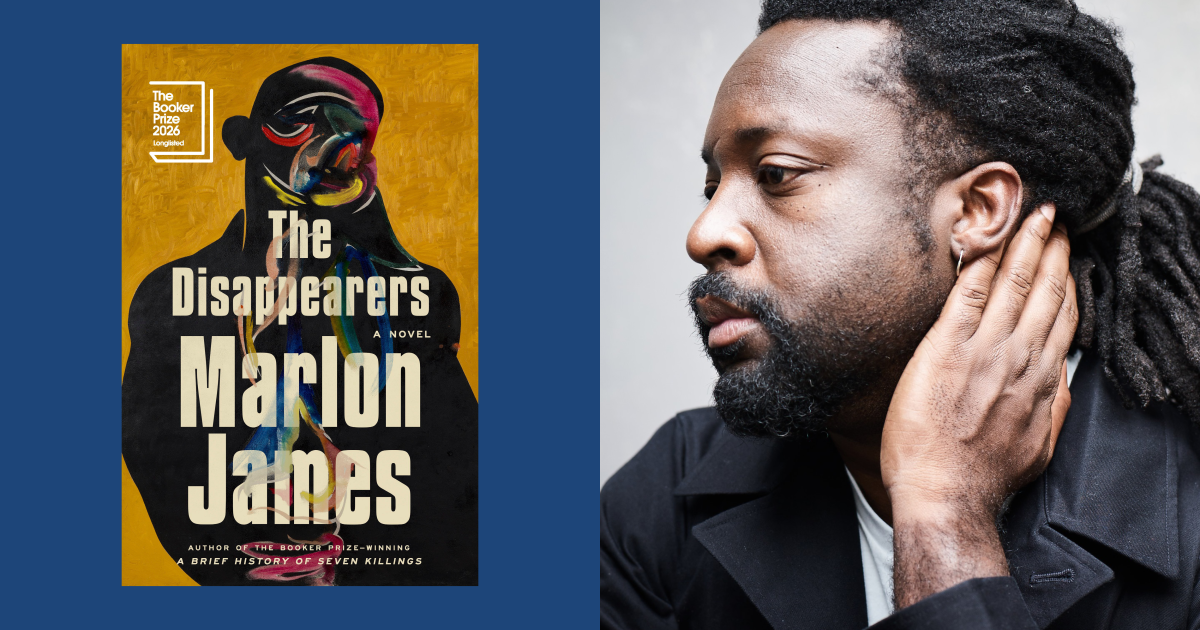
The Disappearers
By Marlon James
Riverhead Books: 640 pages, $32
If you buy books linked on our site, The Times may earn a commission from Bookshop.org, whose fees support independent bookstores.
“You do realize that there is a Jamaica underneath this Jamaica, right?” says a man named Jordan early in Marlon James’ virtuosic novel, “The Disappearers.” He means that there’s a living, breathing gay subculture in the country. So the young man he’s schooling, Eddy, doesn’t have to sublimate his lust through Prince albums and men’s swimwear catalogs.
But in the summer of 1988, the central moment of the novel’s plot, there are layers upon layers to that gay community, and its enemies. There’s a semi-out culture in which Jordan and Eddy are rehearsing for a performance of John Herbert’s 1967 gay prison play, “Fortune and Men’s Eyes.” There’s the proscriptive Christian culture; there’s a drag and gay dance-club underground engineered to sidestep it. There’s the flagrantly homophobic reggae star Streggeh Don, who berates the nation’s gay “battymen,” and a gay aristocratic class, in which a wealthy ambassador can stockpile gay porn (and gay men) with impunity.
But most important of all, there’s the violence: “The Disappearers” turns on an incident in which most of the play’s actors are assaulted by a mob (“ten phone calls to ten men with ten clubs”). They kill one and hospitalize the others, some brutally. (One man has his eyes gouged out.) Jordan, who escapes relatively unscathed, is at once cowed and traumatized yet committed to vengeance. Eddy, who missed the incident, is stalked by survivor’s guilt.
It is one moment, but James applies every tool he has as a super maximalist to it. His breakthrough novel, 2009’s “The Book of Night Women,” was a multivalent study of slavery and gender on a Jamaican sugar plantation; 2014’s Booker-winning “A Brief History of Seven Killings” ran colonialism through the lens of the death of reggae icon Bob Marley. A hefty pair of bestselling fantasy novels, 2019’s “Black Leopard, Red Wolf” and 2022’s “Moon Witch, Spider King,” reframed sword-and-sorcery themes around African folklore.
So it’s not quite enough to say that “The Disappearers” is James’ gay novel, because it aspires to be all gay novels, encompassing the coming-of-age story, the HIV/AIDS story, the gay confessional, the gay tragedy. (Among the gay-lit classics mentioned in passing are Gore Vidal’s “The City and the Pillar,” Andrew Holleran’s “Dancer From the Dance,” and John Rechy’s “The Sexual Outlaw.”) The novel’s five sections capture a host of perspectives, from Eddy’s wide-eyed innocence to the mob’s bleak scheming to a remembrance by the play’s director, Havelock, of the bigotry and homophobia he faced in England, to Jordan’s effort to funnel his rage into seducing one of the assailants.
In doing all this, James is also determined to unwind the cliches of gay fiction: the tragic victim, the heartwarming gestures of solidarity, the blunt porniness. (James is nobody’s imitator, but he in part evokes Alan Hollinghurst, who more than any modern LGBTQ+ author made the gay novel both belletristic and deeply erotic; a section comprising Havelock’s letters owes him a debt.) Mere survival will have to be enough for most of these characters; the sense of fear is pervasive, but so is a determination to work through it. Jordan may wish to exact revenge, and Eddy may want to find one of the victims who has vanished, but both have to go about their work furtively.
“So damn frighten to expose ourselves that we doing battyman hater work for them,” fumes Jordan at one point. “Now it’s we who making sure we vanish. No picture, no video, no movie, no drawing, not even an Etch a Sketch.”
So the novel’s title contains multiple layers too: The novel is full of people who wish to erase gay men, those who wish death upon the assailants in return, those who escape out of fear, those who stay in the closet or find their way back to it, those who leave the country. Eddy and Jordan tell their story to a journalist, but the article never seems to come to light. The violence and fear are memory-holed, disappeared.
The strength of the novel — and the source of its melancholy tone — is in its scope. The plot stretches from the 1940s to 2005, underscoring the long reach of the abuse the men experienced and how impossible it has been for them to escape it. There are “eight to ten Jamaicas in Jamaica, five to six Kingstons in Kingston,” James writes, and not one where its gay men can easily process the abuses they face.
That doesn’t mean “The Disappearers” lacks the satisfaction of a well-rounded novel. It even has something not unlike a happily-ever-after. But in this novel it’s a function of many years and a host of sacrifices. They have to abandon mainstream life, giving up on a church that only wants gay men who are self-denying or self-loathing. And the violence troubles the underground life too.
“There is a difference between when something ends and when something stops,” Jordan says at one point. There’s a tender, surprising moment of reconciliation in the novel’s final pages — the place where story stops. But the damage, fear and trauma keep trailing off the pages. It never ends.
Athitakis is a writer in Phoenix and author of “The New Midwest.”

Book Review
The Disappearers
By Marlon James
Riverhead Books: 640 pages, $32
If you buy books linked on our site, The Times may earn a commission from Bookshop.org, whose fees support independent bookstores.
“You do realize that there is a Jamaica underneath this Jamaica, right?” says a man named Jordan early in Marlon James’ virtuosic novel, “The Disappearers.” He means that there’s a living, breathing gay subculture in the country. So the young man he’s schooling, Eddy, doesn’t have to sublimate his lust through Prince albums and men’s swimwear catalogs.
But in the summer of 1988, the central moment of the novel’s plot, there are layers upon layers to that gay community, and its enemies. There’s a semi-out culture in which Jordan and Eddy are rehearsing for a performance of John Herbert’s 1967 gay prison play, “Fortune and Men’s Eyes.” There’s the proscriptive Christian culture; there’s a drag and gay dance-club underground engineered to sidestep it. There’s the flagrantly homophobic reggae star Streggeh Don, who berates the nation’s gay “battymen,” and a gay aristocratic class, in which a wealthy ambassador can stockpile gay porn (and gay men) with impunity.
But most important of all, there’s the violence: “The Disappearers” turns on an incident in which most of the play’s actors are assaulted by a mob (“ten phone calls to ten men with ten clubs”). They kill one and hospitalize the others, some brutally. (One man has his eyes gouged out.) Jordan, who escapes relatively unscathed, is at once cowed and traumatized yet committed to vengeance. Eddy, who missed the incident, is stalked by survivor’s guilt.
It is one moment, but James applies every tool he has as a super maximalist to it. His breakthrough novel, 2009’s “The Book of Night Women,” was a multivalent study of slavery and gender on a Jamaican sugar plantation; 2014’s Booker-winning “A Brief History of Seven Killings” ran colonialism through the lens of the death of reggae icon Bob Marley. A hefty pair of bestselling fantasy novels, 2019’s “Black Leopard, Red Wolf” and 2022’s “Moon Witch, Spider King,” reframed sword-and-sorcery themes around African folklore.
So it’s not quite enough to say that “The Disappearers” is James’ gay novel, because it aspires to be all gay novels, encompassing the coming-of-age story, the HIV/AIDS story, the gay confessional, the gay tragedy. (Among the gay-lit classics mentioned in passing are Gore Vidal’s “The City and the Pillar,” Andrew Holleran’s “Dancer From the Dance,” and John Rechy’s “The Sexual Outlaw.”) The novel’s five sections capture a host of perspectives, from Eddy’s wide-eyed innocence to the mob’s bleak scheming to a remembrance by the play’s director, Havelock, of the bigotry and homophobia he faced in England, to Jordan’s effort to funnel his rage into seducing one of the assailants.
In doing all this, James is also determined to unwind the cliches of gay fiction: the tragic victim, the heartwarming gestures of solidarity, the blunt porniness. (James is nobody’s imitator, but he in part evokes Alan Hollinghurst, who more than any modern LGBTQ+ author made the gay novel both belletristic and deeply erotic; a section comprising Havelock’s letters owes him a debt.) Mere survival will have to be enough for most of these characters; the sense of fear is pervasive, but so is a determination to work through it. Jordan may wish to exact revenge, and Eddy may want to find one of the victims who has vanished, but both have to go about their work furtively.
“So damn frighten to expose ourselves that we doing battyman hater work for them,” fumes Jordan at one point. “Now it’s we who making sure we vanish. No picture, no video, no movie, no drawing, not even an Etch a Sketch.”
So the novel’s title contains multiple layers too: The novel is full of people who wish to erase gay men, those who wish death upon the assailants in return, those who escape out of fear, those who stay in the closet or find their way back to it, those who leave the country. Eddy and Jordan tell their story to a journalist, but the article never seems to come to light. The violence and fear are memory-holed, disappeared.
The strength of the novel — and the source of its melancholy tone — is in its scope. The plot stretches from the 1940s to 2005, underscoring the long reach of the abuse the men experienced and how impossible it has been for them to escape it. There are “eight to ten Jamaicas in Jamaica, five to six Kingstons in Kingston,” James writes, and not one where its gay men can easily process the abuses they face.
That doesn’t mean “The Disappearers” lacks the satisfaction of a well-rounded novel. It even has something not unlike a happily-ever-after. But in this novel it’s a function of many years and a host of sacrifices. They have to abandon mainstream life, giving up on a church that only wants gay men who are self-denying or self-loathing. And the violence troubles the underground life too.
“There is a difference between when something ends and when something stops,” Jordan says at one point. There’s a tender, surprising moment of reconciliation in the novel’s final pages — the place where story stops. But the damage, fear and trauma keep trailing off the pages. It never ends.
Athitakis is a writer in Phoenix and author of “The New Midwest.”

Book Review
The Disappearers
By Marlon James
Riverhead Books: 640 pages, $32
If you buy books linked on our site, The Times may earn a commission from Bookshop.org, whose fees support independent bookstores.
“You do realize that there is a Jamaica underneath this Jamaica, right?” says a man named Jordan early in Marlon James’ virtuosic novel, “The Disappearers.” He means that there’s a living, breathing gay subculture in the country. So the young man he’s schooling, Eddy, doesn’t have to sublimate his lust through Prince albums and men’s swimwear catalogs.
But in the summer of 1988, the central moment of the novel’s plot, there are layers upon layers to that gay community, and its enemies. There’s a semi-out culture in which Jordan and Eddy are rehearsing for a performance of John Herbert’s 1967 gay prison play, “Fortune and Men’s Eyes.” There’s the proscriptive Christian culture; there’s a drag and gay dance-club underground engineered to sidestep it. There’s the flagrantly homophobic reggae star Streggeh Don, who berates the nation’s gay “battymen,” and a gay aristocratic class, in which a wealthy ambassador can stockpile gay porn (and gay men) with impunity.
But most important of all, there’s the violence: “The Disappearers” turns on an incident in which most of the play’s actors are assaulted by a mob (“ten phone calls to ten men with ten clubs”). They kill one and hospitalize the others, some brutally. (One man has his eyes gouged out.) Jordan, who escapes relatively unscathed, is at once cowed and traumatized yet committed to vengeance. Eddy, who missed the incident, is stalked by survivor’s guilt.
It is one moment, but James applies every tool he has as a super maximalist to it. His breakthrough novel, 2009’s “The Book of Night Women,” was a multivalent study of slavery and gender on a Jamaican sugar plantation; 2014’s Booker-winning “A Brief History of Seven Killings” ran colonialism through the lens of the death of reggae icon Bob Marley. A hefty pair of bestselling fantasy novels, 2019’s “Black Leopard, Red Wolf” and 2022’s “Moon Witch, Spider King,” reframed sword-and-sorcery themes around African folklore.
So it’s not quite enough to say that “The Disappearers” is James’ gay novel, because it aspires to be all gay novels, encompassing the coming-of-age story, the HIV/AIDS story, the gay confessional, the gay tragedy. (Among the gay-lit classics mentioned in passing are Gore Vidal’s “The City and the Pillar,” Andrew Holleran’s “Dancer From the Dance,” and John Rechy’s “The Sexual Outlaw.”) The novel’s five sections capture a host of perspectives, from Eddy’s wide-eyed innocence to the mob’s bleak scheming to a remembrance by the play’s director, Havelock, of the bigotry and homophobia he faced in England, to Jordan’s effort to funnel his rage into seducing one of the assailants.
In doing all this, James is also determined to unwind the cliches of gay fiction: the tragic victim, the heartwarming gestures of solidarity, the blunt porniness. (James is nobody’s imitator, but he in part evokes Alan Hollinghurst, who more than any modern LGBTQ+ author made the gay novel both belletristic and deeply erotic; a section comprising Havelock’s letters owes him a debt.) Mere survival will have to be enough for most of these characters; the sense of fear is pervasive, but so is a determination to work through it. Jordan may wish to exact revenge, and Eddy may want to find one of the victims who has vanished, but both have to go about their work furtively.
“So damn frighten to expose ourselves that we doing battyman hater work for them,” fumes Jordan at one point. “Now it’s we who making sure we vanish. No picture, no video, no movie, no drawing, not even an Etch a Sketch.”
So the novel’s title contains multiple layers too: The novel is full of people who wish to erase gay men, those who wish death upon the assailants in return, those who escape out of fear, those who stay in the closet or find their way back to it, those who leave the country. Eddy and Jordan tell their story to a journalist, but the article never seems to come to light. The violence and fear are memory-holed, disappeared.
The strength of the novel — and the source of its melancholy tone — is in its scope. The plot stretches from the 1940s to 2005, underscoring the long reach of the abuse the men experienced and how impossible it has been for them to escape it. There are “eight to ten Jamaicas in Jamaica, five to six Kingstons in Kingston,” James writes, and not one where its gay men can easily process the abuses they face.
That doesn’t mean “The Disappearers” lacks the satisfaction of a well-rounded novel. It even has something not unlike a happily-ever-after. But in this novel it’s a function of many years and a host of sacrifices. They have to abandon mainstream life, giving up on a church that only wants gay men who are self-denying or self-loathing. And the violence troubles the underground life too.
“There is a difference between when something ends and when something stops,” Jordan says at one point. There’s a tender, surprising moment of reconciliation in the novel’s final pages — the place where story stops. But the damage, fear and trauma keep trailing off the pages. It never ends.
Athitakis is a writer in Phoenix and author of “The New Midwest.”
Book Review
The Disappearers
By Marlon James
Riverhead Books: 640 pages, $32
If you buy books linked on our site, The Times may earn a commission from Bookshop.org, whose fees support independent bookstores.
“You do realize that there is a Jamaica underneath this Jamaica, right?” says a man named Jordan early in Marlon James’ virtuosic novel, “The Disappearers.” He means that there’s a living, breathing gay subculture in the country. So the young man he’s schooling, Eddy, doesn’t have to sublimate his lust through Prince albums and men’s swimwear catalogs.
But in the summer of 1988, the central moment of the novel’s plot, there are layers upon layers to that gay community, and its enemies. There’s a semi-out culture in which Jordan and Eddy are rehearsing for a performance of John Herbert’s 1967 gay prison play, “Fortune and Men’s Eyes.” There’s the proscriptive Christian culture; there’s a drag and gay dance-club underground engineered to sidestep it. There’s the flagrantly homophobic reggae star Streggeh Don, who berates the nation’s gay “battymen,” and a gay aristocratic class, in which a wealthy ambassador can stockpile gay porn (and gay men) with impunity.
But most important of all, there’s the violence: “The Disappearers” turns on an incident in which most of the play’s actors are assaulted by a mob (“ten phone calls to ten men with ten clubs”). They kill one and hospitalize the others, some brutally. (One man has his eyes gouged out.) Jordan, who escapes relatively unscathed, is at once cowed and traumatized yet committed to vengeance. Eddy, who missed the incident, is stalked by survivor’s guilt.
It is one moment, but James applies every tool he has as a super maximalist to it. His breakthrough novel, 2009’s “The Book of Night Women,” was a multivalent study of slavery and gender on a Jamaican sugar plantation; 2014’s Booker-winning “A Brief History of Seven Killings” ran colonialism through the lens of the death of reggae icon Bob Marley. A hefty pair of bestselling fantasy novels, 2019’s “Black Leopard, Red Wolf” and 2022’s “Moon Witch, Spider King,” reframed sword-and-sorcery themes around African folklore.
So it’s not quite enough to say that “The Disappearers” is James’ gay novel, because it aspires to be all gay novels, encompassing the coming-of-age story, the HIV/AIDS story, the gay confessional, the gay tragedy. (Among the gay-lit classics mentioned in passing are Gore Vidal’s “The City and the Pillar,” Andrew Holleran’s “Dancer From the Dance,” and John Rechy’s “The Sexual Outlaw.”) The novel’s five sections capture a host of perspectives, from Eddy’s wide-eyed innocence to the mob’s bleak scheming to a remembrance by the play’s director, Havelock, of the bigotry and homophobia he faced in England, to Jordan’s effort to funnel his rage into seducing one of the assailants.
In doing all this, James is also determined to unwind the cliches of gay fiction: the tragic victim, the heartwarming gestures of solidarity, the blunt porniness. (James is nobody’s imitator, but he in part evokes Alan Hollinghurst, who more than any modern LGBTQ+ author made the gay novel both belletristic and deeply erotic; a section comprising Havelock’s letters owes him a debt.) Mere survival will have to be enough for most of these characters; the sense of fear is pervasive, but so is a determination to work through it. Jordan may wish to exact revenge, and Eddy may want to find one of the victims who has vanished, but both have to go about their work furtively.
“So damn frighten to expose ourselves that we doing battyman hater work for them,” fumes Jordan at one point. “Now it’s we who making sure we vanish. No picture, no video, no movie, no drawing, not even an Etch a Sketch.”
So the novel’s title contains multiple layers too: The novel is full of people who wish to erase gay men, those who wish death upon the assailants in return, those who escape out of fear, those who stay in the closet or find their way back to it, those who leave the country. Eddy and Jordan tell their story to a journalist, but the article never seems to come to light. The violence and fear are memory-holed, disappeared.
The strength of the novel — and the source of its melancholy tone — is in its scope. The plot stretches from the 1940s to 2005, underscoring the long reach of the abuse the men experienced and how impossible it has been for them to escape it. There are “eight to ten Jamaicas in Jamaica, five to six Kingstons in Kingston,” James writes, and not one where its gay men can easily process the abuses they face.
That doesn’t mean “The Disappearers” lacks the satisfaction of a well-rounded novel. It even has something not unlike a happily-ever-after. But in this novel it’s a function of many years and a host of sacrifices. They have to abandon mainstream life, giving up on a church that only wants gay men who are self-denying or self-loathing. And the violence troubles the underground life too.
“There is a difference between when something ends and when something stops,” Jordan says at one point. There’s a tender, surprising moment of reconciliation in the novel’s final pages — the place where story stops. But the damage, fear and trauma keep trailing off the pages. It never ends.
Athitakis is a writer in Phoenix and author of “The New Midwest.”

Book Review
The Disappearers
By Marlon James
Riverhead Books: 640 pages, $32
If you buy books linked on our site, The Times may earn a commission from Bookshop.org, whose fees support independent bookstores.
“You do realize that there is a Jamaica underneath this Jamaica, right?” says a man named Jordan early in Marlon James’ virtuosic novel, “The Disappearers.” He means that there’s a living, breathing gay subculture in the country. So the young man he’s schooling, Eddy, doesn’t have to sublimate his lust through Prince albums and men’s swimwear catalogs.
But in the summer of 1988, the central moment of the novel’s plot, there are layers upon layers to that gay community, and its enemies. There’s a semi-out culture in which Jordan and Eddy are rehearsing for a performance of John Herbert’s 1967 gay prison play, “Fortune and Men’s Eyes.” There’s the proscriptive Christian culture; there’s a drag and gay dance-club underground engineered to sidestep it. There’s the flagrantly homophobic reggae star Streggeh Don, who berates the nation’s gay “battymen,” and a gay aristocratic class, in which a wealthy ambassador can stockpile gay porn (and gay men) with impunity.
But most important of all, there’s the violence: “The Disappearers” turns on an incident in which most of the play’s actors are assaulted by a mob (“ten phone calls to ten men with ten clubs”). They kill one and hospitalize the others, some brutally. (One man has his eyes gouged out.) Jordan, who escapes relatively unscathed, is at once cowed and traumatized yet committed to vengeance. Eddy, who missed the incident, is stalked by survivor’s guilt.
It is one moment, but James applies every tool he has as a super maximalist to it. His breakthrough novel, 2009’s “The Book of Night Women,” was a multivalent study of slavery and gender on a Jamaican sugar plantation; 2014’s Booker-winning “A Brief History of Seven Killings” ran colonialism through the lens of the death of reggae icon Bob Marley. A hefty pair of bestselling fantasy novels, 2019’s “Black Leopard, Red Wolf” and 2022’s “Moon Witch, Spider King,” reframed sword-and-sorcery themes around African folklore.
So it’s not quite enough to say that “The Disappearers” is James’ gay novel, because it aspires to be all gay novels, encompassing the coming-of-age story, the HIV/AIDS story, the gay confessional, the gay tragedy. (Among the gay-lit classics mentioned in passing are Gore Vidal’s “The City and the Pillar,” Andrew Holleran’s “Dancer From the Dance,” and John Rechy’s “The Sexual Outlaw.”) The novel’s five sections capture a host of perspectives, from Eddy’s wide-eyed innocence to the mob’s bleak scheming to a remembrance by the play’s director, Havelock, of the bigotry and homophobia he faced in England, to Jordan’s effort to funnel his rage into seducing one of the assailants.
In doing all this, James is also determined to unwind the cliches of gay fiction: the tragic victim, the heartwarming gestures of solidarity, the blunt porniness. (James is nobody’s imitator, but he in part evokes Alan Hollinghurst, who more than any modern LGBTQ+ author made the gay novel both belletristic and deeply erotic; a section comprising Havelock’s letters owes him a debt.) Mere survival will have to be enough for most of these characters; the sense of fear is pervasive, but so is a determination to work through it. Jordan may wish to exact revenge, and Eddy may want to find one of the victims who has vanished, but both have to go about their work furtively.
“So damn frighten to expose ourselves that we doing battyman hater work for them,” fumes Jordan at one point. “Now it’s we who making sure we vanish. No picture, no video, no movie, no drawing, not even an Etch a Sketch.”
So the novel’s title contains multiple layers too: The novel is full of people who wish to erase gay men, those who wish death upon the assailants in return, those who escape out of fear, those who stay in the closet or find their way back to it, those who leave the country. Eddy and Jordan tell their story to a journalist, but the article never seems to come to light. The violence and fear are memory-holed, disappeared.
The strength of the novel — and the source of its melancholy tone — is in its scope. The plot stretches from the 1940s to 2005, underscoring the long reach of the abuse the men experienced and how impossible it has been for them to escape it. There are “eight to ten Jamaicas in Jamaica, five to six Kingstons in Kingston,” James writes, and not one where its gay men can easily process the abuses they face.
That doesn’t mean “The Disappearers” lacks the satisfaction of a well-rounded novel. It even has something not unlike a happily-ever-after. But in this novel it’s a function of many years and a host of sacrifices. They have to abandon mainstream life, giving up on a church that only wants gay men who are self-denying or self-loathing. And the violence troubles the underground life too.
“There is a difference between when something ends and when something stops,” Jordan says at one point. There’s a tender, surprising moment of reconciliation in the novel’s final pages — the place where story stops. But the damage, fear and trauma keep trailing off the pages. It never ends.
Athitakis is a writer in Phoenix and author of “The New Midwest.”
Book Review
The Disappearers
By Marlon James
Riverhead Books: 640 pages, $32
If you buy books linked on our site, The Times may earn a commission from Bookshop.org, whose fees support independent bookstores.
“You do realize that there is a Jamaica underneath this Jamaica, right?” says a man named Jordan early in Marlon James’ virtuosic novel, “The Disappearers.” He means that there’s a living, breathing gay subculture in the country. So the young man he’s schooling, Eddy, doesn’t have to sublimate his lust through Prince albums and men’s swimwear catalogs.
But in the summer of 1988, the central moment of the novel’s plot, there are layers upon layers to that gay community, and its enemies. There’s a semi-out culture in which Jordan and Eddy are rehearsing for a performance of John Herbert’s 1967 gay prison play, “Fortune and Men’s Eyes.” There’s the proscriptive Christian culture; there’s a drag and gay dance-club underground engineered to sidestep it. There’s the flagrantly homophobic reggae star Streggeh Don, who berates the nation’s gay “battymen,” and a gay aristocratic class, in which a wealthy ambassador can stockpile gay porn (and gay men) with impunity.
But most important of all, there’s the violence: “The Disappearers” turns on an incident in which most of the play’s actors are assaulted by a mob (“ten phone calls to ten men with ten clubs”). They kill one and hospitalize the others, some brutally. (One man has his eyes gouged out.) Jordan, who escapes relatively unscathed, is at once cowed and traumatized yet committed to vengeance. Eddy, who missed the incident, is stalked by survivor’s guilt.
It is one moment, but James applies every tool he has as a super maximalist to it. His breakthrough novel, 2009’s “The Book of Night Women,” was a multivalent study of slavery and gender on a Jamaican sugar plantation; 2014’s Booker-winning “A Brief History of Seven Killings” ran colonialism through the lens of the death of reggae icon Bob Marley. A hefty pair of bestselling fantasy novels, 2019’s “Black Leopard, Red Wolf” and 2022’s “Moon Witch, Spider King,” reframed sword-and-sorcery themes around African folklore.
So it’s not quite enough to say that “The Disappearers” is James’ gay novel, because it aspires to be all gay novels, encompassing the coming-of-age story, the HIV/AIDS story, the gay confessional, the gay tragedy. (Among the gay-lit classics mentioned in passing are Gore Vidal’s “The City and the Pillar,” Andrew Holleran’s “Dancer From the Dance,” and John Rechy’s “The Sexual Outlaw.”) The novel’s five sections capture a host of perspectives, from Eddy’s wide-eyed innocence to the mob’s bleak scheming to a remembrance by the play’s director, Havelock, of the bigotry and homophobia he faced in England, to Jordan’s effort to funnel his rage into seducing one of the assailants.
In doing all this, James is also determined to unwind the cliches of gay fiction: the tragic victim, the heartwarming gestures of solidarity, the blunt porniness. (James is nobody’s imitator, but he in part evokes Alan Hollinghurst, who more than any modern LGBTQ+ author made the gay novel both belletristic and deeply erotic; a section comprising Havelock’s letters owes him a debt.) Mere survival will have to be enough for most of these characters; the sense of fear is pervasive, but so is a determination to work through it. Jordan may wish to exact revenge, and Eddy may want to find one of the victims who has vanished, but both have to go about their work furtively.
“So damn frighten to expose ourselves that we doing battyman hater work for them,” fumes Jordan at one point. “Now it’s we who making sure we vanish. No picture, no video, no movie, no drawing, not even an Etch a Sketch.”
So the novel’s title contains multiple layers too: The novel is full of people who wish to erase gay men, those who wish death upon the assailants in return, those who escape out of fear, those who stay in the closet or find their way back to it, those who leave the country. Eddy and Jordan tell their story to a journalist, but the article never seems to come to light. The violence and fear are memory-holed, disappeared.
The strength of the novel — and the source of its melancholy tone — is in its scope. The plot stretches from the 1940s to 2005, underscoring the long reach of the abuse the men experienced and how impossible it has been for them to escape it. There are “eight to ten Jamaicas in Jamaica, five to six Kingstons in Kingston,” James writes, and not one where its gay men can easily process the abuses they face.
That doesn’t mean “The Disappearers” lacks the satisfaction of a well-rounded novel. It even has something not unlike a happily-ever-after. But in this novel it’s a function of many years and a host of sacrifices. They have to abandon mainstream life, giving up on a church that only wants gay men who are self-denying or self-loathing. And the violence troubles the underground life too.
“There is a difference between when something ends and when something stops,” Jordan says at one point. There’s a tender, surprising moment of reconciliation in the novel’s final pages — the place where story stops. But the damage, fear and trauma keep trailing off the pages. It never ends.
Athitakis is a writer in Phoenix and author of “The New Midwest.”
Book Review
The Disappearers
By Marlon James
Riverhead Books: 640 pages, $32
If you buy books linked on our site, The Times may earn a commission from Bookshop.org, whose fees support independent bookstores.
“You do realize that there is a Jamaica underneath this Jamaica, right?” says a man named Jordan early in Marlon James’ virtuosic novel, “The Disappearers.” He means that there’s a living, breathing gay subculture in the country. So the young man he’s schooling, Eddy, doesn’t have to sublimate his lust through Prince albums and men’s swimwear catalogs.
But in the summer of 1988, the central moment of the novel’s plot, there are layers upon layers to that gay community, and its enemies. There’s a semi-out culture in which Jordan and Eddy are rehearsing for a performance of John Herbert’s 1967 gay prison play, “Fortune and Men’s Eyes.” There’s the proscriptive Christian culture; there’s a drag and gay dance-club underground engineered to sidestep it. There’s the flagrantly homophobic reggae star Streggeh Don, who berates the nation’s gay “battymen,” and a gay aristocratic class, in which a wealthy ambassador can stockpile gay porn (and gay men) with impunity.
But most important of all, there’s the violence: “The Disappearers” turns on an incident in which most of the play’s actors are assaulted by a mob (“ten phone calls to ten men with ten clubs”). They kill one and hospitalize the others, some brutally. (One man has his eyes gouged out.) Jordan, who escapes relatively unscathed, is at once cowed and traumatized yet committed to vengeance. Eddy, who missed the incident, is stalked by survivor’s guilt.
It is one moment, but James applies every tool he has as a super maximalist to it. His breakthrough novel, 2009’s “The Book of Night Women,” was a multivalent study of slavery and gender on a Jamaican sugar plantation; 2014’s Booker-winning “A Brief History of Seven Killings” ran colonialism through the lens of the death of reggae icon Bob Marley. A hefty pair of bestselling fantasy novels, 2019’s “Black Leopard, Red Wolf” and 2022’s “Moon Witch, Spider King,” reframed sword-and-sorcery themes around African folklore.
So it’s not quite enough to say that “The Disappearers” is James’ gay novel, because it aspires to be all gay novels, encompassing the coming-of-age story, the HIV/AIDS story, the gay confessional, the gay tragedy. (Among the gay-lit classics mentioned in passing are Gore Vidal’s “The City and the Pillar,” Andrew Holleran’s “Dancer From the Dance,” and John Rechy’s “The Sexual Outlaw.”) The novel’s five sections capture a host of perspectives, from Eddy’s wide-eyed innocence to the mob’s bleak scheming to a remembrance by the play’s director, Havelock, of the bigotry and homophobia he faced in England, to Jordan’s effort to funnel his rage into seducing one of the assailants.
In doing all this, James is also determined to unwind the cliches of gay fiction: the tragic victim, the heartwarming gestures of solidarity, the blunt porniness. (James is nobody’s imitator, but he in part evokes Alan Hollinghurst, who more than any modern LGBTQ+ author made the gay novel both belletristic and deeply erotic; a section comprising Havelock’s letters owes him a debt.) Mere survival will have to be enough for most of these characters; the sense of fear is pervasive, but so is a determination to work through it. Jordan may wish to exact revenge, and Eddy may want to find one of the victims who has vanished, but both have to go about their work furtively.
“So damn frighten to expose ourselves that we doing battyman hater work for them,” fumes Jordan at one point. “Now it’s we who making sure we vanish. No picture, no video, no movie, no drawing, not even an Etch a Sketch.”
So the novel’s title contains multiple layers too: The novel is full of people who wish to erase gay men, those who wish death upon the assailants in return, those who escape out of fear, those who stay in the closet or find their way back to it, those who leave the country. Eddy and Jordan tell their story to a journalist, but the article never seems to come to light. The violence and fear are memory-holed, disappeared.
The strength of the novel — and the source of its melancholy tone — is in its scope. The plot stretches from the 1940s to 2005, underscoring the long reach of the abuse the men experienced and how impossible it has been for them to escape it. There are “eight to ten Jamaicas in Jamaica, five to six Kingstons in Kingston,” James writes, and not one where its gay men can easily process the abuses they face.
That doesn’t mean “The Disappearers” lacks the satisfaction of a well-rounded novel. It even has something not unlike a happily-ever-after. But in this novel it’s a function of many years and a host of sacrifices. They have to abandon mainstream life, giving up on a church that only wants gay men who are self-denying or self-loathing. And the violence troubles the underground life too.
“There is a difference between when something ends and when something stops,” Jordan says at one point. There’s a tender, surprising moment of reconciliation in the novel’s final pages — the place where story stops. But the damage, fear and trauma keep trailing off the pages. It never ends.
Athitakis is a writer in Phoenix and author of “The New Midwest.”
Book Review
The Disappearers
By Marlon James
Riverhead Books: 640 pages, $32
If you buy books linked on our site, The Times may earn a commission from Bookshop.org, whose fees support independent bookstores.
“You do realize that there is a Jamaica underneath this Jamaica, right?” says a man named Jordan early in Marlon James’ virtuosic novel, “The Disappearers.” He means that there’s a living, breathing gay subculture in the country. So the young man he’s schooling, Eddy, doesn’t have to sublimate his lust through Prince albums and men’s swimwear catalogs.
But in the summer of 1988, the central moment of the novel’s plot, there are layers upon layers to that gay community, and its enemies. There’s a semi-out culture in which Jordan and Eddy are rehearsing for a performance of John Herbert’s 1967 gay prison play, “Fortune and Men’s Eyes.” There’s the proscriptive Christian culture; there’s a drag and gay dance-club underground engineered to sidestep it. There’s the flagrantly homophobic reggae star Streggeh Don, who berates the nation’s gay “battymen,” and a gay aristocratic class, in which a wealthy ambassador can stockpile gay porn (and gay men) with impunity.
But most important of all, there’s the violence: “The Disappearers” turns on an incident in which most of the play’s actors are assaulted by a mob (“ten phone calls to ten men with ten clubs”). They kill one and hospitalize the others, some brutally. (One man has his eyes gouged out.) Jordan, who escapes relatively unscathed, is at once cowed and traumatized yet committed to vengeance. Eddy, who missed the incident, is stalked by survivor’s guilt.
It is one moment, but James applies every tool he has as a super maximalist to it. His breakthrough novel, 2009’s “The Book of Night Women,” was a multivalent study of slavery and gender on a Jamaican sugar plantation; 2014’s Booker-winning “A Brief History of Seven Killings” ran colonialism through the lens of the death of reggae icon Bob Marley. A hefty pair of bestselling fantasy novels, 2019’s “Black Leopard, Red Wolf” and 2022’s “Moon Witch, Spider King,” reframed sword-and-sorcery themes around African folklore.
So it’s not quite enough to say that “The Disappearers” is James’ gay novel, because it aspires to be all gay novels, encompassing the coming-of-age story, the HIV/AIDS story, the gay confessional, the gay tragedy. (Among the gay-lit classics mentioned in passing are Gore Vidal’s “The City and the Pillar,” Andrew Holleran’s “Dancer From the Dance,” and John Rechy’s “The Sexual Outlaw.”) The novel’s five sections capture a host of perspectives, from Eddy’s wide-eyed innocence to the mob’s bleak scheming to a remembrance by the play’s director, Havelock, of the bigotry and homophobia he faced in England, to Jordan’s effort to funnel his rage into seducing one of the assailants.
In doing all this, James is also determined to unwind the cliches of gay fiction: the tragic victim, the heartwarming gestures of solidarity, the blunt porniness. (James is nobody’s imitator, but he in part evokes Alan Hollinghurst, who more than any modern LGBTQ+ author made the gay novel both belletristic and deeply erotic; a section comprising Havelock’s letters owes him a debt.) Mere survival will have to be enough for most of these characters; the sense of fear is pervasive, but so is a determination to work through it. Jordan may wish to exact revenge, and Eddy may want to find one of the victims who has vanished, but both have to go about their work furtively.
“So damn frighten to expose ourselves that we doing battyman hater work for them,” fumes Jordan at one point. “Now it’s we who making sure we vanish. No picture, no video, no movie, no drawing, not even an Etch a Sketch.”
So the novel’s title contains multiple layers too: The novel is full of people who wish to erase gay men, those who wish death upon the assailants in return, those who escape out of fear, those who stay in the closet or find their way back to it, those who leave the country. Eddy and Jordan tell their story to a journalist, but the article never seems to come to light. The violence and fear are memory-holed, disappeared.
The strength of the novel — and the source of its melancholy tone — is in its scope. The plot stretches from the 1940s to 2005, underscoring the long reach of the abuse the men experienced and how impossible it has been for them to escape it. There are “eight to ten Jamaicas in Jamaica, five to six Kingstons in Kingston,” James writes, and not one where its gay men can easily process the abuses they face.
That doesn’t mean “The Disappearers” lacks the satisfaction of a well-rounded novel. It even has something not unlike a happily-ever-after. But in this novel it’s a function of many years and a host of sacrifices. They have to abandon mainstream life, giving up on a church that only wants gay men who are self-denying or self-loathing. And the violence troubles the underground life too.
“There is a difference between when something ends and when something stops,” Jordan says at one point. There’s a tender, surprising moment of reconciliation in the novel’s final pages — the place where story stops. But the damage, fear and trauma keep trailing off the pages. It never ends.
Athitakis is a writer in Phoenix and author of “The New Midwest.”