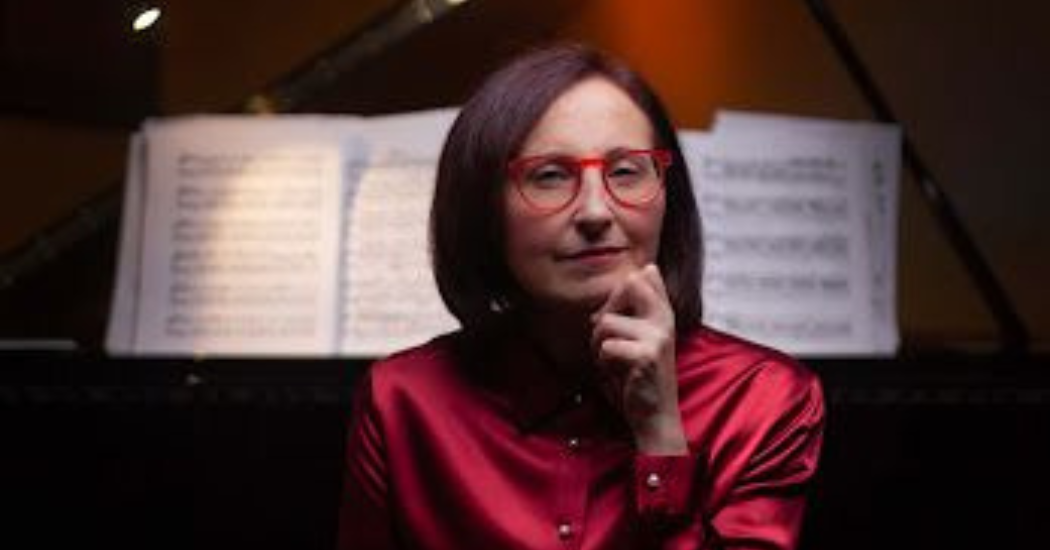
Sicilian-born composer Maria Rago speaks with remarkable honesty about the cultural roots, creative processes, and philosophical views that influence her music. From the weight of her island’s history to the unpredictability of composition, the challenges faced by contemporary artists, and the shifting realities of young people, she shares insights shaped by deep introspection and purpose. Here is our full conversation.
Yonkers Observer: You are Sicilian. How much of that culture is woven into your music?
Maria Rago:
When you are born on an island, the essence of that place—with all its contradictions, injustices, humanity, enigmas, and landscapes—becomes part of your inner fabric. It’s something you cannot escape. When I left Sicily, the memories of that land transformed into sensations: scents, flavors, sounds.
That Sicilian reality, filled with sorrow and unanswered questions, yet also incredible beauty, remains within you. It comes out in melodies, in songs, in acts of rebellion. At times, you run from it, even forcefully. Sicily awakens something deep in me—so powerful that distance becomes necessary. In the end, music becomes the perfect “bridge” between myself and that land.
Yonkers Observer: When composing, do you follow a specific method, or does it come spontaneously?
Maria Rago:
My creative process is never the same. Sometimes I take mental notes or hum fragments of melodies without knowing what they will become. I extract them slowly, layer them, allow them to coexist until they begin to reveal their identity.
Once they solidify, they wake up and often go in a direction completely different from what I first imagined. Music is unpredictable—one tries to shape it, but it ultimately takes on its own life.
For me, composing reflects the Socratic idea: “I know that I do not know.” I may understand myself, but the music remains a mystery. There are days when complex pieces emerge effortlessly, and others when simple ideas require enormous energy.
Music lives in a space where simplicity becomes profound. It leads you along unexplored paths, to a place where infinity feels briefly within reach. It is also a physical act—liberating the “notes” inside you, letting them move through your body. This release becomes a form of purification that makes space for new creations waiting to be born.

Yonkers Observer: What is your connection to reality—especially young people—and what role can music play?
Maria Rago:
My relationship with the world outside music is essential. I’m deeply curious about understanding others and the constantly evolving reality we all inhabit. We are dynamic beings, spiritually and physically, always changing. Embracing that evolution is our responsibility.
Music has the power to accelerate our transformation. It can awaken, disrupt, and reshape us in ways we often don’t anticipate.
Yonkers Observer: What significance does the contemporary composer hold in today’s world?
Maria Rago:
Unfortunately, many composers gain recognition only after they are gone. It is a sad truth. We honor the past—and we should—but in doing so, we often overlook the present.
Listening today requires time, attention, and presence, which makes it harder for audiences to connect. Composing can feel abstract, even irrelevant, in a world that demands constant speed. Without support, expressing oneself can feel like sending a small ripple into an endless ocean.
Yet it is in that very ocean that the composer lives. And ultimately, we cannot exist without it.
Yonkers Observer: How do you perceive the world today?
Maria Rago:
People align themselves with their fears. You can see how the wise and the just gather around rational fear, while the deceitful and the malicious unite around misguided fear. Much of humanity is divided by alliances created from these anxieties.
Music and art are tools of liberation. They help free us from these imposed fears. They stand as acts of resistance against established falsehoods—or at least, that is how I choose to believe in them.
Yonkers Observer: If you had not been a musician, what do you think you would have become?


Maria Rago:
Perhaps I would have become a missionary. I’ve always felt drawn to the true face of the world—the places where suffering lives openly and daily life is stripped down to essentials. In those places, love has no price. You meet God in eyes, gestures, smiles.
It is a world where surviving is a privilege, where reality, though harsh and unfair, carries a raw humanity we have forgotten or never known.
But in a way, maybe that is what I try to do through music: touch lives, offer compassion, and seek the truth hidden beneath the noise.
Through her thoughtful reflections, Maria Rago reveals a deeply human approach to art—one shaped by memory, spirituality, and a fearless confrontation with truth. Her music is not merely composed; it is lived, purified, and reborn through experience. As our conversation with the Yonkers Observer comes to a close, one message resonates: Maria Rago does not write music for the moment—she writes for the soul, creating works that echo far beyond the world of sound and into the heart of what it means to be human.