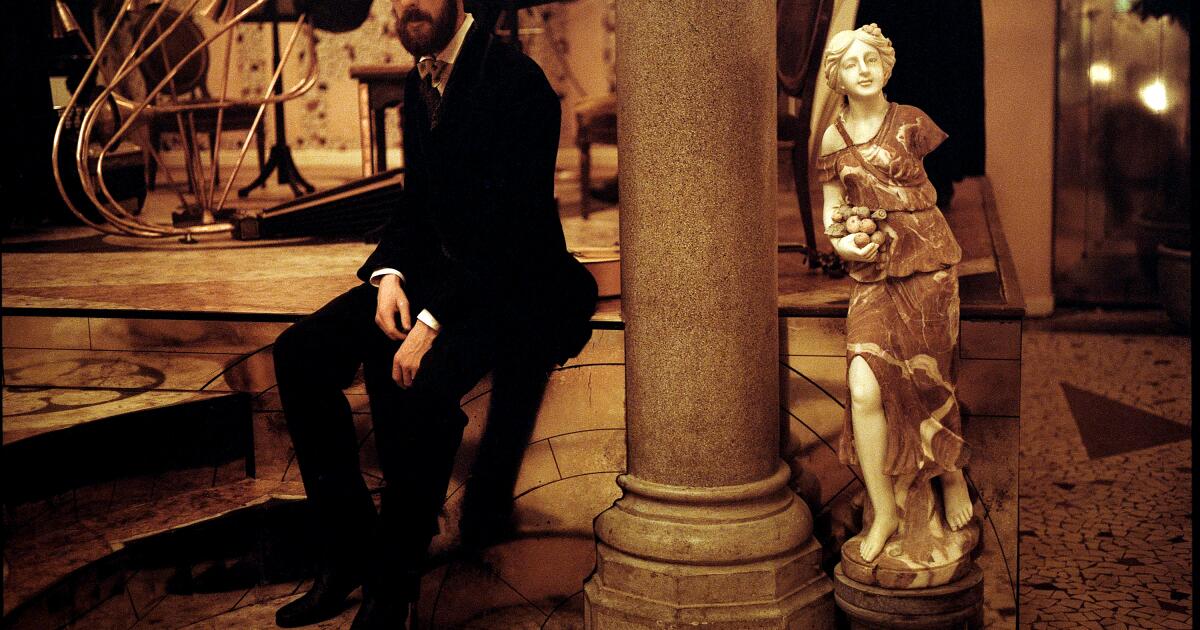


Based on a short story by Ben Shattuck, the years-spanning “The History of Sound,” from “Living” filmmaker Oliver Hermanus, has an enviable draw in its central twosome: Who wouldn’t be down for a risk-laden romance starring two of our finest, most versatile actors, Paul Mescal and Josh O’Connor? They even sing to each other, their World War I-era characters sharing a love of American folk songs that gives them a societally acceptable passion to complement the one they can’t demonstrate.
You’ll want to adore “The History of Sound” as much as farm-raised Kentuckian Lionel (Mescal) and worldly New Englander David (O’Connor) adore each other. Unfortunately, what lingers is the heartbreak of unfulfilled expectations. For all the movie’s crisp attention to bifurcated lives, “The History of Sound” more aptly resembles a painstakingly dry still life than a moving picture. “Brokeback Mountain” comparisons are inevitable, but will only serve to keep this tender but overly cautious tale in the shadow of that soulful gut-wrencher.
It’s 1917 when Lionel, a singing prodigy with a shy, polite bearing, meets charismatic amateur music historian David at a conservatory in Boston. Over a bar piano and later behind closed doors, they bond over an affinity for rural songs thick with hardship, ardor and longing. Their room-confined affair is cut short, however, by David’s getting drafted. Things resume a year or so later, when David, back in the country and writing from a music teaching post in Maine, beckons Lionel — stuck in a dreary shack with his glum parents — to go on a song-collecting trip in the northeast’s coastal backwoods.
Up till now, the movie, which novelist Shattuck adapted into a script himself, has only hinted at the kinetic intimacy between like-minded souls, with Hermanus’ emotionally staid scenes too texture-free under Alexander Dynan’s desaturated cinematography. (Earth tones never seemed less earthy.) But even as these reunited lovers record marginalized peoples by day, then rekindle their connection in a tent by night, everything still feels bottled up and presentational, like the recreations in a blandly scored educational film.
Even the scenes centered on the performing of the film’s traditional songs (“Here in the Vineyard,” “Silver Dagger”) feel clinical, though it’s the stuff we’re told has long given the powerless a voice. Surprisingly, given the depths of era-specific repression he’s achieved in previous features “Moffie” and “Living,” Hermanus struggles here to convey as much when full-throated expression pierces the air. Whether outdoors or indoors, we may as well be watching and listening from behind glass.
Even if the leads never seem more than specimens of exquisite ache, Mescal and O’Connor are too good not to sow a believable through line of love and consequence. O’Connor holds the screen with a potent economy of look and gesture. Mescal, especially, makes sadness vibrate as the plot takes us to Italy then London and back, and time apart comes to mean something entirely different than a pause between sung verses. Following his devastating turns in “Aftersun” and “All of Us Strangers,” there may be no better portraitist of sorrow-wracked loneliness.
“The History of Sound” eventually finds its truest note of bruising sensitivity and catharsis in its last act, aided by meaningful bite-sized turns by Hadley Robinson and the great Chris Cooper and a denouement you may see coming but is moving nevertheless. It’s just unfortunate that Hermanus has a better grip on how he’d prefer to leave you than how he’s chosen to get you there.
‘The History of Sound’
Rated: R, for some sexuality
Running time: 2 hours, 7 minutes
Playing: In limited release Friday, Sept. 12

Based on a short story by Ben Shattuck, the years-spanning “The History of Sound,” from “Living” filmmaker Oliver Hermanus, has an enviable draw in its central twosome: Who wouldn’t be down for a risk-laden romance starring two of our finest, most versatile actors, Paul Mescal and Josh O’Connor? They even sing to each other, their World War I-era characters sharing a love of American folk songs that gives them a societally acceptable passion to complement the one they can’t demonstrate.
You’ll want to adore “The History of Sound” as much as farm-raised Kentuckian Lionel (Mescal) and worldly New Englander David (O’Connor) adore each other. Unfortunately, what lingers is the heartbreak of unfulfilled expectations. For all the movie’s crisp attention to bifurcated lives, “The History of Sound” more aptly resembles a painstakingly dry still life than a moving picture. “Brokeback Mountain” comparisons are inevitable, but will only serve to keep this tender but overly cautious tale in the shadow of that soulful gut-wrencher.
It’s 1917 when Lionel, a singing prodigy with a shy, polite bearing, meets charismatic amateur music historian David at a conservatory in Boston. Over a bar piano and later behind closed doors, they bond over an affinity for rural songs thick with hardship, ardor and longing. Their room-confined affair is cut short, however, by David’s getting drafted. Things resume a year or so later, when David, back in the country and writing from a music teaching post in Maine, beckons Lionel — stuck in a dreary shack with his glum parents — to go on a song-collecting trip in the northeast’s coastal backwoods.
Up till now, the movie, which novelist Shattuck adapted into a script himself, has only hinted at the kinetic intimacy between like-minded souls, with Hermanus’ emotionally staid scenes too texture-free under Alexander Dynan’s desaturated cinematography. (Earth tones never seemed less earthy.) But even as these reunited lovers record marginalized peoples by day, then rekindle their connection in a tent by night, everything still feels bottled up and presentational, like the recreations in a blandly scored educational film.
Even the scenes centered on the performing of the film’s traditional songs (“Here in the Vineyard,” “Silver Dagger”) feel clinical, though it’s the stuff we’re told has long given the powerless a voice. Surprisingly, given the depths of era-specific repression he’s achieved in previous features “Moffie” and “Living,” Hermanus struggles here to convey as much when full-throated expression pierces the air. Whether outdoors or indoors, we may as well be watching and listening from behind glass.
Even if the leads never seem more than specimens of exquisite ache, Mescal and O’Connor are too good not to sow a believable through line of love and consequence. O’Connor holds the screen with a potent economy of look and gesture. Mescal, especially, makes sadness vibrate as the plot takes us to Italy then London and back, and time apart comes to mean something entirely different than a pause between sung verses. Following his devastating turns in “Aftersun” and “All of Us Strangers,” there may be no better portraitist of sorrow-wracked loneliness.
“The History of Sound” eventually finds its truest note of bruising sensitivity and catharsis in its last act, aided by meaningful bite-sized turns by Hadley Robinson and the great Chris Cooper and a denouement you may see coming but is moving nevertheless. It’s just unfortunate that Hermanus has a better grip on how he’d prefer to leave you than how he’s chosen to get you there.
‘The History of Sound’
Rated: R, for some sexuality
Running time: 2 hours, 7 minutes
Playing: In limited release Friday, Sept. 12

Based on a short story by Ben Shattuck, the years-spanning “The History of Sound,” from “Living” filmmaker Oliver Hermanus, has an enviable draw in its central twosome: Who wouldn’t be down for a risk-laden romance starring two of our finest, most versatile actors, Paul Mescal and Josh O’Connor? They even sing to each other, their World War I-era characters sharing a love of American folk songs that gives them a societally acceptable passion to complement the one they can’t demonstrate.
You’ll want to adore “The History of Sound” as much as farm-raised Kentuckian Lionel (Mescal) and worldly New Englander David (O’Connor) adore each other. Unfortunately, what lingers is the heartbreak of unfulfilled expectations. For all the movie’s crisp attention to bifurcated lives, “The History of Sound” more aptly resembles a painstakingly dry still life than a moving picture. “Brokeback Mountain” comparisons are inevitable, but will only serve to keep this tender but overly cautious tale in the shadow of that soulful gut-wrencher.
It’s 1917 when Lionel, a singing prodigy with a shy, polite bearing, meets charismatic amateur music historian David at a conservatory in Boston. Over a bar piano and later behind closed doors, they bond over an affinity for rural songs thick with hardship, ardor and longing. Their room-confined affair is cut short, however, by David’s getting drafted. Things resume a year or so later, when David, back in the country and writing from a music teaching post in Maine, beckons Lionel — stuck in a dreary shack with his glum parents — to go on a song-collecting trip in the northeast’s coastal backwoods.
Up till now, the movie, which novelist Shattuck adapted into a script himself, has only hinted at the kinetic intimacy between like-minded souls, with Hermanus’ emotionally staid scenes too texture-free under Alexander Dynan’s desaturated cinematography. (Earth tones never seemed less earthy.) But even as these reunited lovers record marginalized peoples by day, then rekindle their connection in a tent by night, everything still feels bottled up and presentational, like the recreations in a blandly scored educational film.
Even the scenes centered on the performing of the film’s traditional songs (“Here in the Vineyard,” “Silver Dagger”) feel clinical, though it’s the stuff we’re told has long given the powerless a voice. Surprisingly, given the depths of era-specific repression he’s achieved in previous features “Moffie” and “Living,” Hermanus struggles here to convey as much when full-throated expression pierces the air. Whether outdoors or indoors, we may as well be watching and listening from behind glass.
Even if the leads never seem more than specimens of exquisite ache, Mescal and O’Connor are too good not to sow a believable through line of love and consequence. O’Connor holds the screen with a potent economy of look and gesture. Mescal, especially, makes sadness vibrate as the plot takes us to Italy then London and back, and time apart comes to mean something entirely different than a pause between sung verses. Following his devastating turns in “Aftersun” and “All of Us Strangers,” there may be no better portraitist of sorrow-wracked loneliness.
“The History of Sound” eventually finds its truest note of bruising sensitivity and catharsis in its last act, aided by meaningful bite-sized turns by Hadley Robinson and the great Chris Cooper and a denouement you may see coming but is moving nevertheless. It’s just unfortunate that Hermanus has a better grip on how he’d prefer to leave you than how he’s chosen to get you there.
‘The History of Sound’
Rated: R, for some sexuality
Running time: 2 hours, 7 minutes
Playing: In limited release Friday, Sept. 12
Based on a short story by Ben Shattuck, the years-spanning “The History of Sound,” from “Living” filmmaker Oliver Hermanus, has an enviable draw in its central twosome: Who wouldn’t be down for a risk-laden romance starring two of our finest, most versatile actors, Paul Mescal and Josh O’Connor? They even sing to each other, their World War I-era characters sharing a love of American folk songs that gives them a societally acceptable passion to complement the one they can’t demonstrate.
You’ll want to adore “The History of Sound” as much as farm-raised Kentuckian Lionel (Mescal) and worldly New Englander David (O’Connor) adore each other. Unfortunately, what lingers is the heartbreak of unfulfilled expectations. For all the movie’s crisp attention to bifurcated lives, “The History of Sound” more aptly resembles a painstakingly dry still life than a moving picture. “Brokeback Mountain” comparisons are inevitable, but will only serve to keep this tender but overly cautious tale in the shadow of that soulful gut-wrencher.
It’s 1917 when Lionel, a singing prodigy with a shy, polite bearing, meets charismatic amateur music historian David at a conservatory in Boston. Over a bar piano and later behind closed doors, they bond over an affinity for rural songs thick with hardship, ardor and longing. Their room-confined affair is cut short, however, by David’s getting drafted. Things resume a year or so later, when David, back in the country and writing from a music teaching post in Maine, beckons Lionel — stuck in a dreary shack with his glum parents — to go on a song-collecting trip in the northeast’s coastal backwoods.
Up till now, the movie, which novelist Shattuck adapted into a script himself, has only hinted at the kinetic intimacy between like-minded souls, with Hermanus’ emotionally staid scenes too texture-free under Alexander Dynan’s desaturated cinematography. (Earth tones never seemed less earthy.) But even as these reunited lovers record marginalized peoples by day, then rekindle their connection in a tent by night, everything still feels bottled up and presentational, like the recreations in a blandly scored educational film.
Even the scenes centered on the performing of the film’s traditional songs (“Here in the Vineyard,” “Silver Dagger”) feel clinical, though it’s the stuff we’re told has long given the powerless a voice. Surprisingly, given the depths of era-specific repression he’s achieved in previous features “Moffie” and “Living,” Hermanus struggles here to convey as much when full-throated expression pierces the air. Whether outdoors or indoors, we may as well be watching and listening from behind glass.
Even if the leads never seem more than specimens of exquisite ache, Mescal and O’Connor are too good not to sow a believable through line of love and consequence. O’Connor holds the screen with a potent economy of look and gesture. Mescal, especially, makes sadness vibrate as the plot takes us to Italy then London and back, and time apart comes to mean something entirely different than a pause between sung verses. Following his devastating turns in “Aftersun” and “All of Us Strangers,” there may be no better portraitist of sorrow-wracked loneliness.
“The History of Sound” eventually finds its truest note of bruising sensitivity and catharsis in its last act, aided by meaningful bite-sized turns by Hadley Robinson and the great Chris Cooper and a denouement you may see coming but is moving nevertheless. It’s just unfortunate that Hermanus has a better grip on how he’d prefer to leave you than how he’s chosen to get you there.
‘The History of Sound’
Rated: R, for some sexuality
Running time: 2 hours, 7 minutes
Playing: In limited release Friday, Sept. 12