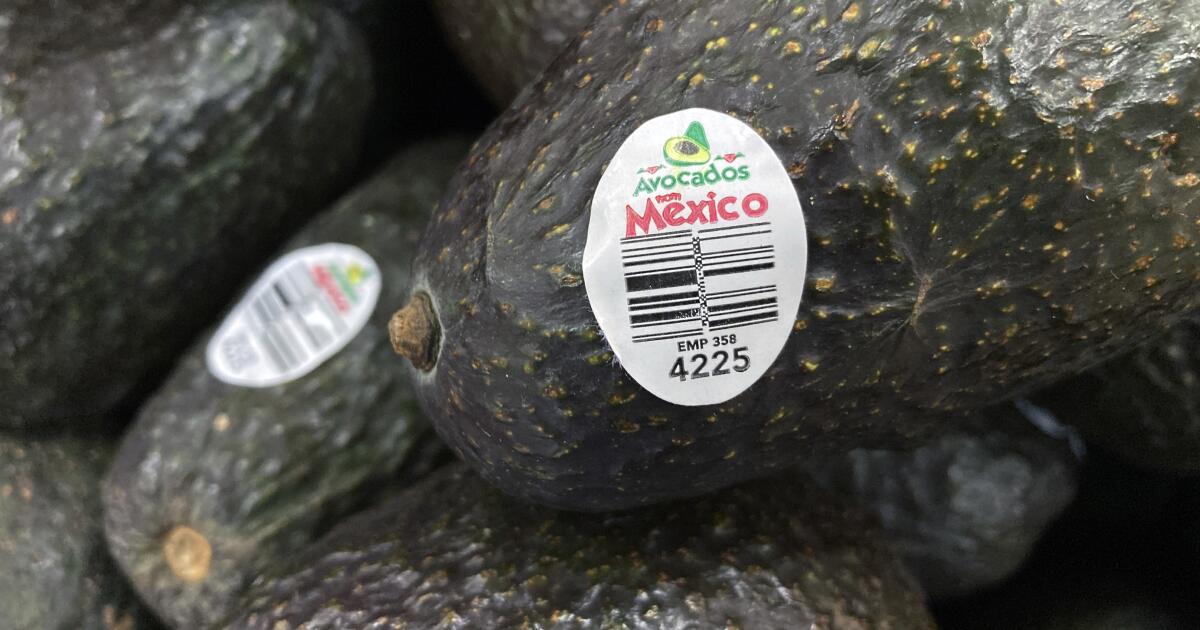

The United States will “gradually” resume inspections of avocados and mangoes from the Mexican state of Michoacán, the U.S. Embassy here said Friday, opening the way for a prospective resumption of exports to the U.S.
Inspections by the U.S. Department of Agriculture were suspended Monday after two inspectors were “attacked and detained,” according to Ken Salazar, U.S. ambassador to Mexico.
In a statement Friday, Salazar did not specify when inspectors would return to Michoacán, which is Mexico’s top producer of avocados but is convulsed by gang violence. “We are optimistic that this matter is going in a positive direction,” Salazar said.
But he added that the issue continued to be a “challenge” and that Washington would not be satisfied until inspectors “can continue their work free of threats to their security.”
The halting of Michoacán’s shipments of the popular and highly profitable fruit known colloquially as “green gold” sparked a bilateral controversy.
U.S. and Mexican officials are scheduled to meet Monday in Morelia, the capital of Michoacán state, to discuss the inspection issue.
Mexican authorities, including President Andrés Manuel López Obrador, have vowed to bolster security measures if needed to resume inspections and reopen the avocado pipeline.
“If they feel that there are threats to their inspectors, we will look to protect them, as we have always done, and help them to do their job,” López Obrador told reporters Wednesday at his regular news conference. “There won’t be any problem.”
The suspension of USDA inspections did not affect fruit already in transit or produced outside Michoacán.
In the Michoacán city of Uruapan, a center of the avocado industry, out-of-work field workers have been seeking handouts from motorists in recent days, local media have reported.
Michoacán, a sprawling state that stretches from west of Mexico City to the Pacific Ocean, exports more than $3 billion annually in avocados, officials say, mostly to the United States. Mexico is the world’s largest avocado producer.
But Michoacán is also a violent battleground for organized crime syndicates that compete for an array of lucrative rackets, including drug smuggling, kidnapping, illicit timber harvesting — and extortion in the avocado sector.
Criminals prey on avocado orchard owners, field hands and drivers who transport avocados for export, among other targets.
U.S. and Mexican officials have provided conflicting accounts of the incident that led to the shutdown of inspections. Mexican authorities have challenged Salazar’s characterization that the inspectors were “attacked and detained.”
On June 14, according to Michoacán Gov. Alfredo Ramírez Bedolla, the USDA inspectors — both Mexican citizens — were traveling in a vehicle that was among about 50 “trapped” during a road blockade in the municipality of Paracho. Criminal groups and residents protesting various issues regularly shut down roads in Michoacán and elsewhere in Mexico.
That day, police officers blocked the road, demanding missed back pay, the governor told the Mexican news outlet Radio Formula. The inspectors were not targeted, according to the governor. The inspectors stayed overnight in Paracho, the governor said.
“They weren’t kidnapped. They were never in captivity,” he said.
This was not the first time that U.S. inspectors have faced problems in Michoacán.
Two years ago, Washington suspended avocado imports from Michoacán for a few days after a plant safety inspector was threatened. In December 2020, the U.S. stopped importing avocados from one region in Michoacán for a month after an armed group burned shipments, Mexican officials said.
Avocado imports to the United States typically surge before Cinco de Mayo and Super Bowl Sunday, as U.S. consumers stock up for guacamole.
“The best avocados in the world come from Mexico,” Ambassador Salazar told reporters this week. “Without avocados we couldn’t have the Super Bowl.”
Times special correspondent Cecilia Sánchez Vidal and staff writer Kate Linthicum contributed to this report.

The United States will “gradually” resume inspections of avocados and mangoes from the Mexican state of Michoacán, the U.S. Embassy here said Friday, opening the way for a prospective resumption of exports to the U.S.
Inspections by the U.S. Department of Agriculture were suspended Monday after two inspectors were “attacked and detained,” according to Ken Salazar, U.S. ambassador to Mexico.
In a statement Friday, Salazar did not specify when inspectors would return to Michoacán, which is Mexico’s top producer of avocados but is convulsed by gang violence. “We are optimistic that this matter is going in a positive direction,” Salazar said.
But he added that the issue continued to be a “challenge” and that Washington would not be satisfied until inspectors “can continue their work free of threats to their security.”
The halting of Michoacán’s shipments of the popular and highly profitable fruit known colloquially as “green gold” sparked a bilateral controversy.
U.S. and Mexican officials are scheduled to meet Monday in Morelia, the capital of Michoacán state, to discuss the inspection issue.
Mexican authorities, including President Andrés Manuel López Obrador, have vowed to bolster security measures if needed to resume inspections and reopen the avocado pipeline.
“If they feel that there are threats to their inspectors, we will look to protect them, as we have always done, and help them to do their job,” López Obrador told reporters Wednesday at his regular news conference. “There won’t be any problem.”
The suspension of USDA inspections did not affect fruit already in transit or produced outside Michoacán.
In the Michoacán city of Uruapan, a center of the avocado industry, out-of-work field workers have been seeking handouts from motorists in recent days, local media have reported.
Michoacán, a sprawling state that stretches from west of Mexico City to the Pacific Ocean, exports more than $3 billion annually in avocados, officials say, mostly to the United States. Mexico is the world’s largest avocado producer.
But Michoacán is also a violent battleground for organized crime syndicates that compete for an array of lucrative rackets, including drug smuggling, kidnapping, illicit timber harvesting — and extortion in the avocado sector.
Criminals prey on avocado orchard owners, field hands and drivers who transport avocados for export, among other targets.
U.S. and Mexican officials have provided conflicting accounts of the incident that led to the shutdown of inspections. Mexican authorities have challenged Salazar’s characterization that the inspectors were “attacked and detained.”
On June 14, according to Michoacán Gov. Alfredo Ramírez Bedolla, the USDA inspectors — both Mexican citizens — were traveling in a vehicle that was among about 50 “trapped” during a road blockade in the municipality of Paracho. Criminal groups and residents protesting various issues regularly shut down roads in Michoacán and elsewhere in Mexico.
That day, police officers blocked the road, demanding missed back pay, the governor told the Mexican news outlet Radio Formula. The inspectors were not targeted, according to the governor. The inspectors stayed overnight in Paracho, the governor said.
“They weren’t kidnapped. They were never in captivity,” he said.
This was not the first time that U.S. inspectors have faced problems in Michoacán.
Two years ago, Washington suspended avocado imports from Michoacán for a few days after a plant safety inspector was threatened. In December 2020, the U.S. stopped importing avocados from one region in Michoacán for a month after an armed group burned shipments, Mexican officials said.
Avocado imports to the United States typically surge before Cinco de Mayo and Super Bowl Sunday, as U.S. consumers stock up for guacamole.
“The best avocados in the world come from Mexico,” Ambassador Salazar told reporters this week. “Without avocados we couldn’t have the Super Bowl.”
Times special correspondent Cecilia Sánchez Vidal and staff writer Kate Linthicum contributed to this report.

The United States will “gradually” resume inspections of avocados and mangoes from the Mexican state of Michoacán, the U.S. Embassy here said Friday, opening the way for a prospective resumption of exports to the U.S.
Inspections by the U.S. Department of Agriculture were suspended Monday after two inspectors were “attacked and detained,” according to Ken Salazar, U.S. ambassador to Mexico.
In a statement Friday, Salazar did not specify when inspectors would return to Michoacán, which is Mexico’s top producer of avocados but is convulsed by gang violence. “We are optimistic that this matter is going in a positive direction,” Salazar said.
But he added that the issue continued to be a “challenge” and that Washington would not be satisfied until inspectors “can continue their work free of threats to their security.”
The halting of Michoacán’s shipments of the popular and highly profitable fruit known colloquially as “green gold” sparked a bilateral controversy.
U.S. and Mexican officials are scheduled to meet Monday in Morelia, the capital of Michoacán state, to discuss the inspection issue.
Mexican authorities, including President Andrés Manuel López Obrador, have vowed to bolster security measures if needed to resume inspections and reopen the avocado pipeline.
“If they feel that there are threats to their inspectors, we will look to protect them, as we have always done, and help them to do their job,” López Obrador told reporters Wednesday at his regular news conference. “There won’t be any problem.”
The suspension of USDA inspections did not affect fruit already in transit or produced outside Michoacán.
In the Michoacán city of Uruapan, a center of the avocado industry, out-of-work field workers have been seeking handouts from motorists in recent days, local media have reported.
Michoacán, a sprawling state that stretches from west of Mexico City to the Pacific Ocean, exports more than $3 billion annually in avocados, officials say, mostly to the United States. Mexico is the world’s largest avocado producer.
But Michoacán is also a violent battleground for organized crime syndicates that compete for an array of lucrative rackets, including drug smuggling, kidnapping, illicit timber harvesting — and extortion in the avocado sector.
Criminals prey on avocado orchard owners, field hands and drivers who transport avocados for export, among other targets.
U.S. and Mexican officials have provided conflicting accounts of the incident that led to the shutdown of inspections. Mexican authorities have challenged Salazar’s characterization that the inspectors were “attacked and detained.”
On June 14, according to Michoacán Gov. Alfredo Ramírez Bedolla, the USDA inspectors — both Mexican citizens — were traveling in a vehicle that was among about 50 “trapped” during a road blockade in the municipality of Paracho. Criminal groups and residents protesting various issues regularly shut down roads in Michoacán and elsewhere in Mexico.
That day, police officers blocked the road, demanding missed back pay, the governor told the Mexican news outlet Radio Formula. The inspectors were not targeted, according to the governor. The inspectors stayed overnight in Paracho, the governor said.
“They weren’t kidnapped. They were never in captivity,” he said.
This was not the first time that U.S. inspectors have faced problems in Michoacán.
Two years ago, Washington suspended avocado imports from Michoacán for a few days after a plant safety inspector was threatened. In December 2020, the U.S. stopped importing avocados from one region in Michoacán for a month after an armed group burned shipments, Mexican officials said.
Avocado imports to the United States typically surge before Cinco de Mayo and Super Bowl Sunday, as U.S. consumers stock up for guacamole.
“The best avocados in the world come from Mexico,” Ambassador Salazar told reporters this week. “Without avocados we couldn’t have the Super Bowl.”
Times special correspondent Cecilia Sánchez Vidal and staff writer Kate Linthicum contributed to this report.
The United States will “gradually” resume inspections of avocados and mangoes from the Mexican state of Michoacán, the U.S. Embassy here said Friday, opening the way for a prospective resumption of exports to the U.S.
Inspections by the U.S. Department of Agriculture were suspended Monday after two inspectors were “attacked and detained,” according to Ken Salazar, U.S. ambassador to Mexico.
In a statement Friday, Salazar did not specify when inspectors would return to Michoacán, which is Mexico’s top producer of avocados but is convulsed by gang violence. “We are optimistic that this matter is going in a positive direction,” Salazar said.
But he added that the issue continued to be a “challenge” and that Washington would not be satisfied until inspectors “can continue their work free of threats to their security.”
The halting of Michoacán’s shipments of the popular and highly profitable fruit known colloquially as “green gold” sparked a bilateral controversy.
U.S. and Mexican officials are scheduled to meet Monday in Morelia, the capital of Michoacán state, to discuss the inspection issue.
Mexican authorities, including President Andrés Manuel López Obrador, have vowed to bolster security measures if needed to resume inspections and reopen the avocado pipeline.
“If they feel that there are threats to their inspectors, we will look to protect them, as we have always done, and help them to do their job,” López Obrador told reporters Wednesday at his regular news conference. “There won’t be any problem.”
The suspension of USDA inspections did not affect fruit already in transit or produced outside Michoacán.
In the Michoacán city of Uruapan, a center of the avocado industry, out-of-work field workers have been seeking handouts from motorists in recent days, local media have reported.
Michoacán, a sprawling state that stretches from west of Mexico City to the Pacific Ocean, exports more than $3 billion annually in avocados, officials say, mostly to the United States. Mexico is the world’s largest avocado producer.
But Michoacán is also a violent battleground for organized crime syndicates that compete for an array of lucrative rackets, including drug smuggling, kidnapping, illicit timber harvesting — and extortion in the avocado sector.
Criminals prey on avocado orchard owners, field hands and drivers who transport avocados for export, among other targets.
U.S. and Mexican officials have provided conflicting accounts of the incident that led to the shutdown of inspections. Mexican authorities have challenged Salazar’s characterization that the inspectors were “attacked and detained.”
On June 14, according to Michoacán Gov. Alfredo Ramírez Bedolla, the USDA inspectors — both Mexican citizens — were traveling in a vehicle that was among about 50 “trapped” during a road blockade in the municipality of Paracho. Criminal groups and residents protesting various issues regularly shut down roads in Michoacán and elsewhere in Mexico.
That day, police officers blocked the road, demanding missed back pay, the governor told the Mexican news outlet Radio Formula. The inspectors were not targeted, according to the governor. The inspectors stayed overnight in Paracho, the governor said.
“They weren’t kidnapped. They were never in captivity,” he said.
This was not the first time that U.S. inspectors have faced problems in Michoacán.
Two years ago, Washington suspended avocado imports from Michoacán for a few days after a plant safety inspector was threatened. In December 2020, the U.S. stopped importing avocados from one region in Michoacán for a month after an armed group burned shipments, Mexican officials said.
Avocado imports to the United States typically surge before Cinco de Mayo and Super Bowl Sunday, as U.S. consumers stock up for guacamole.
“The best avocados in the world come from Mexico,” Ambassador Salazar told reporters this week. “Without avocados we couldn’t have the Super Bowl.”
Times special correspondent Cecilia Sánchez Vidal and staff writer Kate Linthicum contributed to this report.