

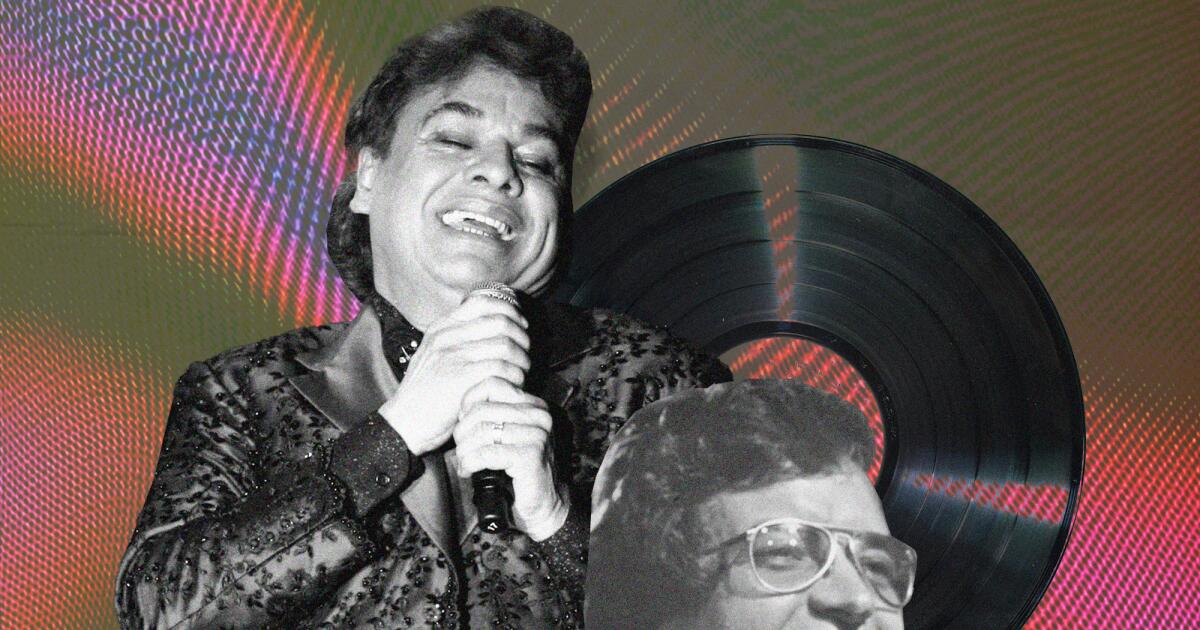

Juan Gabriel’s “Amor Eterno” and Héctor Lavoe’s “El Cantante” will be safeguarded for posterity, the Library of Congress announced Tuesday.
The two tracks are among the 25 “audio treasures” selected for induction into the National Recording Registry based on their “importance in the nation’s recorded sound heritage.” Established in 2000, the registry is a collection of 650 audio recordings preserved by the Library of Congress that are deemed to be “culturally, historically, or aesthetically significant.” Among these year’s picks are Bill Withers’ “Ain’t No Sunshine,” Blondie’s “Parallel Lines” and Green Day’s “Dookie.”
For “Amor Eterno” and “El Cantante,” their cultural importance to Latinx communities stretches back decades.
Gabriel, the iconic Mexican singer-songwriter who died in 2016 at age 66, released “Amor Eterno” in 1990 as a tribute to his late mother. Since then, the mariachi ballad has become a symbol of grief and everlasting love for those who have passed away.
In 2019, “Amor Eterno” became widely played at memorials and funerals in El Paso in the wake of a mass shooting that killed 23 people. Authorities say the gunman drove more than 700 miles to the borderland to specifically target Latinx people and opened fire in a Walmart. At the time, singer and professor Martha Gonzalez told NPR that the song had become “not just an act of grief but also an act of protest and saying that, ‘We’re here and we’re not going anywhere.’”
Gabriel’s son Ivan Gabriel Aguilera, who worked with the Library of Congress to have the song be inducted in Spanish, said the recognition is a great honor for those who loved his father’s music.
“I believe that future generations — that’s what he always wanted — that they see his music and make it relatable to their lives as well. He would always say that ‘as long as the public, people, keep singing my music, Juan Gabriel will never die,’ and it’s nice to see that happening here,” Aguilera said.
“El Cantante” is considered to be one of salsa’s most iconic anthems, recorded by one of the genre’s biggest stars and released by arguably its most important label.
Born in Puerto Rico, Lavoe moved to New York in the early ‘60s and quickly established himself as the face of the 1970s salsa boom, first as a singer for bands led by Johnny Pacheco and Willie Colón and then as a soloist. Written by Rubén Blades and produced by Colón — both Fania Records labelmates — “El Cantante” became the first single off Lavoe’s 1978 album, “Comedia.”
In 1993, Lavoe died in Manhattan of complications from AIDS. He was 46.
“Amor Eterno” and “El Cantante” now join the likes of Daddy Yankee’s “Gasolina,” Ricky Martin’s “Livin’ La Vida Loca” and Ritchie Valens’ “La Bamba” as Latin songs included in the National Recording Registry.

Juan Gabriel’s “Amor Eterno” and Héctor Lavoe’s “El Cantante” will be safeguarded for posterity, the Library of Congress announced Tuesday.
The two tracks are among the 25 “audio treasures” selected for induction into the National Recording Registry based on their “importance in the nation’s recorded sound heritage.” Established in 2000, the registry is a collection of 650 audio recordings preserved by the Library of Congress that are deemed to be “culturally, historically, or aesthetically significant.” Among these year’s picks are Bill Withers’ “Ain’t No Sunshine,” Blondie’s “Parallel Lines” and Green Day’s “Dookie.”
For “Amor Eterno” and “El Cantante,” their cultural importance to Latinx communities stretches back decades.
Gabriel, the iconic Mexican singer-songwriter who died in 2016 at age 66, released “Amor Eterno” in 1990 as a tribute to his late mother. Since then, the mariachi ballad has become a symbol of grief and everlasting love for those who have passed away.
In 2019, “Amor Eterno” became widely played at memorials and funerals in El Paso in the wake of a mass shooting that killed 23 people. Authorities say the gunman drove more than 700 miles to the borderland to specifically target Latinx people and opened fire in a Walmart. At the time, singer and professor Martha Gonzalez told NPR that the song had become “not just an act of grief but also an act of protest and saying that, ‘We’re here and we’re not going anywhere.’”
Gabriel’s son Ivan Gabriel Aguilera, who worked with the Library of Congress to have the song be inducted in Spanish, said the recognition is a great honor for those who loved his father’s music.
“I believe that future generations — that’s what he always wanted — that they see his music and make it relatable to their lives as well. He would always say that ‘as long as the public, people, keep singing my music, Juan Gabriel will never die,’ and it’s nice to see that happening here,” Aguilera said.
“El Cantante” is considered to be one of salsa’s most iconic anthems, recorded by one of the genre’s biggest stars and released by arguably its most important label.
Born in Puerto Rico, Lavoe moved to New York in the early ‘60s and quickly established himself as the face of the 1970s salsa boom, first as a singer for bands led by Johnny Pacheco and Willie Colón and then as a soloist. Written by Rubén Blades and produced by Colón — both Fania Records labelmates — “El Cantante” became the first single off Lavoe’s 1978 album, “Comedia.”
In 1993, Lavoe died in Manhattan of complications from AIDS. He was 46.
“Amor Eterno” and “El Cantante” now join the likes of Daddy Yankee’s “Gasolina,” Ricky Martin’s “Livin’ La Vida Loca” and Ritchie Valens’ “La Bamba” as Latin songs included in the National Recording Registry.

Juan Gabriel’s “Amor Eterno” and Héctor Lavoe’s “El Cantante” will be safeguarded for posterity, the Library of Congress announced Tuesday.
The two tracks are among the 25 “audio treasures” selected for induction into the National Recording Registry based on their “importance in the nation’s recorded sound heritage.” Established in 2000, the registry is a collection of 650 audio recordings preserved by the Library of Congress that are deemed to be “culturally, historically, or aesthetically significant.” Among these year’s picks are Bill Withers’ “Ain’t No Sunshine,” Blondie’s “Parallel Lines” and Green Day’s “Dookie.”
For “Amor Eterno” and “El Cantante,” their cultural importance to Latinx communities stretches back decades.
Gabriel, the iconic Mexican singer-songwriter who died in 2016 at age 66, released “Amor Eterno” in 1990 as a tribute to his late mother. Since then, the mariachi ballad has become a symbol of grief and everlasting love for those who have passed away.
In 2019, “Amor Eterno” became widely played at memorials and funerals in El Paso in the wake of a mass shooting that killed 23 people. Authorities say the gunman drove more than 700 miles to the borderland to specifically target Latinx people and opened fire in a Walmart. At the time, singer and professor Martha Gonzalez told NPR that the song had become “not just an act of grief but also an act of protest and saying that, ‘We’re here and we’re not going anywhere.’”
Gabriel’s son Ivan Gabriel Aguilera, who worked with the Library of Congress to have the song be inducted in Spanish, said the recognition is a great honor for those who loved his father’s music.
“I believe that future generations — that’s what he always wanted — that they see his music and make it relatable to their lives as well. He would always say that ‘as long as the public, people, keep singing my music, Juan Gabriel will never die,’ and it’s nice to see that happening here,” Aguilera said.
“El Cantante” is considered to be one of salsa’s most iconic anthems, recorded by one of the genre’s biggest stars and released by arguably its most important label.
Born in Puerto Rico, Lavoe moved to New York in the early ‘60s and quickly established himself as the face of the 1970s salsa boom, first as a singer for bands led by Johnny Pacheco and Willie Colón and then as a soloist. Written by Rubén Blades and produced by Colón — both Fania Records labelmates — “El Cantante” became the first single off Lavoe’s 1978 album, “Comedia.”
In 1993, Lavoe died in Manhattan of complications from AIDS. He was 46.
“Amor Eterno” and “El Cantante” now join the likes of Daddy Yankee’s “Gasolina,” Ricky Martin’s “Livin’ La Vida Loca” and Ritchie Valens’ “La Bamba” as Latin songs included in the National Recording Registry.
Juan Gabriel’s “Amor Eterno” and Héctor Lavoe’s “El Cantante” will be safeguarded for posterity, the Library of Congress announced Tuesday.
The two tracks are among the 25 “audio treasures” selected for induction into the National Recording Registry based on their “importance in the nation’s recorded sound heritage.” Established in 2000, the registry is a collection of 650 audio recordings preserved by the Library of Congress that are deemed to be “culturally, historically, or aesthetically significant.” Among these year’s picks are Bill Withers’ “Ain’t No Sunshine,” Blondie’s “Parallel Lines” and Green Day’s “Dookie.”
For “Amor Eterno” and “El Cantante,” their cultural importance to Latinx communities stretches back decades.
Gabriel, the iconic Mexican singer-songwriter who died in 2016 at age 66, released “Amor Eterno” in 1990 as a tribute to his late mother. Since then, the mariachi ballad has become a symbol of grief and everlasting love for those who have passed away.
In 2019, “Amor Eterno” became widely played at memorials and funerals in El Paso in the wake of a mass shooting that killed 23 people. Authorities say the gunman drove more than 700 miles to the borderland to specifically target Latinx people and opened fire in a Walmart. At the time, singer and professor Martha Gonzalez told NPR that the song had become “not just an act of grief but also an act of protest and saying that, ‘We’re here and we’re not going anywhere.’”
Gabriel’s son Ivan Gabriel Aguilera, who worked with the Library of Congress to have the song be inducted in Spanish, said the recognition is a great honor for those who loved his father’s music.
“I believe that future generations — that’s what he always wanted — that they see his music and make it relatable to their lives as well. He would always say that ‘as long as the public, people, keep singing my music, Juan Gabriel will never die,’ and it’s nice to see that happening here,” Aguilera said.
“El Cantante” is considered to be one of salsa’s most iconic anthems, recorded by one of the genre’s biggest stars and released by arguably its most important label.
Born in Puerto Rico, Lavoe moved to New York in the early ‘60s and quickly established himself as the face of the 1970s salsa boom, first as a singer for bands led by Johnny Pacheco and Willie Colón and then as a soloist. Written by Rubén Blades and produced by Colón — both Fania Records labelmates — “El Cantante” became the first single off Lavoe’s 1978 album, “Comedia.”
In 1993, Lavoe died in Manhattan of complications from AIDS. He was 46.
“Amor Eterno” and “El Cantante” now join the likes of Daddy Yankee’s “Gasolina,” Ricky Martin’s “Livin’ La Vida Loca” and Ritchie Valens’ “La Bamba” as Latin songs included in the National Recording Registry.


